Showing posts with label Slavery. Show all posts

Tuesday, December 1, 2015

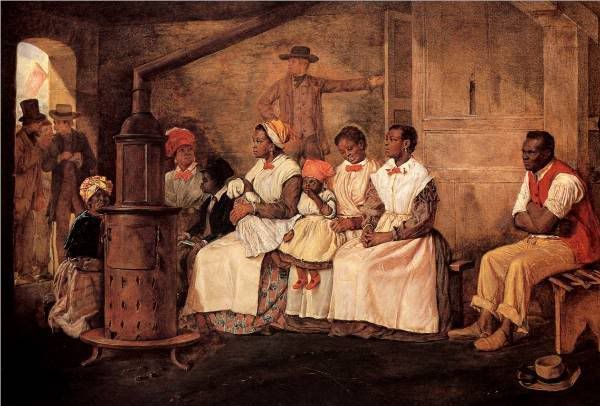
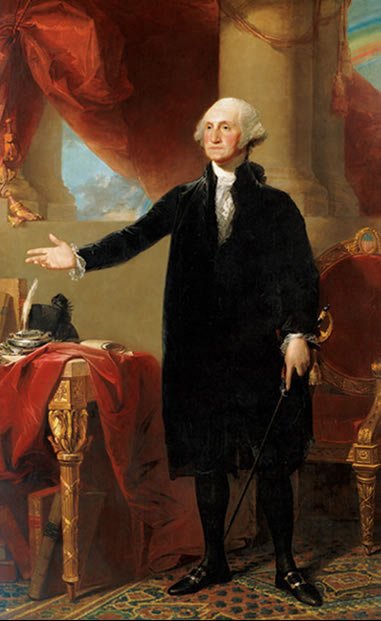
George Washington's Ice House at Mount Vernon

So did you know that one of George Washington’s favorite desserts was ice cream? In fact, he liked this soft, creamy treat so much that he had an ice house constructed near his Mount Vernon home so that he and his family could eat ice cream often.

Historians say that Washington’s icehouse was located on a riverbank about 75 yards from the Potomac. To store ice, Washington’s slaves had to use chisels and axes to pull large chunks of ice from the frozen river during the wintertime and then haul them to the icehouse where they were stacked in layers and stored for use throughout the spring and summer.

Before constructing his ice house, Washington sought advice from his friend and fellow patriot Robert Morris, who had an ice house at his home at 6th & Market Streets in Philadelphia. In a letter to Washington, Morris provided a detailed account of how his ice house had been constructed:

My Ice House is about 18 feet deep and 16 square, the bottom is a Coarse Gravell & the water which drains from the ice soaks into it as fast as the Ice melts, this prevents the necessity of a Drain...the Walls of my Ice House are built of stone without Mortar...On these [walls] the Roof is fixed...I nailed a Ceiling of Boards under the Roof flat from Wall to Wall, and filled the Space between the Ceiling and the Shingling of the Roof with Straw so that the heat of the Sun Cannot possibly have any Effect...

The Door for entering this Ice house faces the north, a Trap Door is made in the middle of the Floor through which the Ice is put in and taken out. I find it best to fill with Ice which as it is put in should be broke into small pieces and pounded down with heavy Clubs or Battons such as Pavers use, if well beat it will after a while consolidate into one solid mass and require to be cut out with a Chizell or Axe. I tried Snow one year and lost it in June. The Ice keeps until October or November and I believe if the Hole was larger so as to hold more it would keep untill Christmas...


Although Morris didn't mention what he stored in his icehouse, we do know that the Washingtons used theirs to preserve meat and butter, chill wine, and make ice cream and other frozen delicacies for their many guests at Mount Vernon.


Of course, George Washington wasn’t the only president who enjoyed ice cream. Accounts of it often appear in letters describing the many elegant dinner parties hosted by James and Dolley Madison, and the dish frequently appears in visitors' accounts of meals with Thomas Jefferson.

One particular guest wrote: "Among other things, ice-creams were produced in the form of balls of the frozen material inclosed in covers of warm pastry, exhibiting a curious contrast, as if the ice had just been taken from the oven." If you'd like to whip up some ice cream contained in warm pastry for your next dinner party, here is a simple and delicious recipe to try from puffpastry.com

1/2 of a 17.3-ounce package pastry sheets, 1 sheet, thawed
1 pint chocolate ice cream, softened
1 pint strawberry ice cream, soft
Chocolate fudge topping

Heat the oven to 400°F. Unfold the pastry sheet on a lightly floured surface. Cut the pastry sheet into 3 strips along the fold marks. Place the pastries onto a baking sheet. Bake for 15 minutes or until the pastries are golden brown. Remove the pastries from the baking sheet and let cool on a wire rack for 10 minutes. Split each pastry into 2 layers, making 6 in all.

Reserve 2 top pastry layers. Spread the chocolate ice cream on 2 bottom pastry layers. Freeze for 30 minutes. Top with another pastry layer and spread with the strawberry ice cream. Top with the reserved top pastry layers. Freeze for 30 minutes or until the ice cream is firm. Drizzle with the chocolate topping.

FAST FACT: In 1790, Robert Morris's house at 6th & Market Streets became the Executive Mansion of the United States while Philadelphia served as the temporary capital of the nation. Morris' icehouse was used by President Washington and his household until 1797, and by President John Adams and his family from 1797 to 1800.

For my new literary agent profile and submission guidelines, click here

Wednesday, March 4, 2015

Dolley Madison Fresh Strawberry Ice Cream!

Legend has it that in the early nineteenth century, a freed slave named Sallie Shadd went into her family’s catering business in Wilmington, Delaware. Sallie supposedly achieved fame there for a fabulous new dessert sensation she created with sugar, fruit and frozen cream.

When Dolley Madison heard about this new dessert, she supposedly travelled to Delaware to try it -- and she must have loved it because a magnificent dome of pink ice cream was served at President Madison’s second Inaugural Ball in 1813, and ice cream often appeared as the official dessert on the White House menus during her husband's two terms of office.

If you'd like to whip up some Fresh Strawberry Ice Cream this week, here's a tasty recipe to try from epicurious.com

1 3/4 cups heavy cream
3 (3- by 1-inch) strips fresh lemon zest
1/8 teaspoon salt
2 large eggs
3/4 cup sugar
1 lb strawberries (3 cups), trimmed and quartered
1 tablespoon fresh lemon juice

Special equipment: an ice-cream maker and an instant-read thermometer

Combine cream, zest, and salt in a heavy saucepan and bring just to a boil. Remove from heat and discard zest. Whisk eggs with 1/2 cup sugar in a bowl, then add hot cream in a slow stream, whisking. Pour back into saucepan and cook over moderately low heat, stirring constantly, until slightly thickened and an instant-read thermometer registers 170°F (do not let boil).

Immediately pour custard through a fine sieve into a metal bowl, then cool to room temperature, stirring occasionally. Chill, overed, at least until cold, about 2 hours, and up to 1 day.

While custard is chilling, purée strawberries with remaining 1/4 cup sugar and lemon juice in a blender until smooth, then force through fine sieve (to remove seeds) into chilled custard. Stir purée into custard. Freeze in ice-cream maker, then transfer to an airtight container and put in freezer to harden.

Tuesday, December 9, 2014

Dickens Meets Tyler at the White House

One of the most famous guests to dine at the White House during John Tyler’s presidency was the great English writer, Charles Dickens. Upon his arrival to the United States, Dickens was honored at an extravagant ball in New York City, where he was greeted by such famous American writers as Washington Irving, Henry Wadsworth Longfellow, Harriet Beecher Stowe, and Edgar Allan Poe.

A few days later, Dickens met with John Tyler in the White House and later penned this about the president:

He looked somewhat worn and anxious, and well he might; being at war with everybody - but the expression of his face was mild and pleasant, and his manner was remarkably unaffected, gentlemanly, and agreeable.

Although Dickens seemed to like Tyler, he strongly disliked the American institution of slavery. Describing a particular dinner in Baltimore, Dickens wrote:

We stopped to dine at Baltimore, and...were waited on, for the first time, by slaves. The sensation of exacting any service from human creatures who are bought and sold...is not an enviable one. The institution exists, perhaps, in its least repulsive and most mitigated form in such a town as this; but it IS slavery; and though I was, with respect to it, an innocent man, its presence filled me with a sense of shame and self-reproach.

After returning to England, Dickens wrote his first travel book entitled American Notes in which he criticized Americans for their poor table manners and disgusting habit of spitting tobacco. In it, he also devoted an entire chapter to slavery in the United States.

While that book was very well-received, Oliver Twist is perhaps Dickens’ most famous novel. Set in mid-19th century England, the main character is a nine-year-old orphan in a London workhouse where the boys are given only three meals of thin gruel each day. When Oliver courageously asks for more (“Please, sir, I want some more”) he's dubbed a troublemaker and treated even more cruelly.

So what, exactly, is gruel? Well, it's usually defined as a thin porridge or soup. Most forms of gruel include rice gruel, flour gruel, and millet gruel. If you'd like to get a taste of it for yourself, here's a quick and simple recipe to try:

2 teaspoons of flour
1 teaspoon of salt

Boil one cup water. Drip water on flour and salt until it turns into a thin paste. Add the paste to the boiling water. Stir to a semi-fluid consistency. Strain to eliminate film. Serve warm and say, "Please, sir, I want some more!"

Tuesday, July 12, 2011

Dickens Meets Tyler at the White House

One of the most famous guests to dine at the White House during John Tyler’s presidency was the great English writer, Charles Dickens. Upon his arrival in the United States, Dickens was honored at a lavish ball in New York City, where he was greeted by such famous American writers as Washington Irving, Henry Wadsworth Longfellow, Harriet Beecher Stowe and Edgar Allan Poe.

A few days later, Dickens met Tyler in the White House and later penned this about the president:

He looked somewhat worn and anxious, and well he might; being at war with everybody - but the expression of his face was mild and pleasant, and his manner was remarkably unaffected, gentlemanly, and agreeable.

Although Dickens seemed to like Tyler, he strongly disliked slavery. Describing a particular meal in Baltimore, Dickens wrote:

We stopped to dine at Baltimore, and…were waited on, for the first time, by slaves. The sensation of exacting any service from human creatures who are bought and sold…is not an enviable one. The institution exists, perhaps, in its least repulsive and most mitigated form in such a town as this; but it IS slavery; and though I was, with respect to it, an innocent man, its presence filled me with a sense of shame and self-reproach.

After returning to England, Dickens wrote his first travel book entitled American Notes. In it, he criticized Americans for their poor table manners and disgusting habit of chewing and spitting tobacco. He also devoted an entire chapter to slavery in the United States.

FAST FACT: Oliver Twist is perhaps Dickens’ most famous novel. Set in England, the main character is a nine-year old orphan in a London workhouse where the boys are given only three meals of thin gruel a day. When Oliver asks for more (“Please, sir, I want some more”) he is dubbed a troublemaker and treated even more cruelly. Oliver Twist called attention to the problem of poor and starving children in England and, to a lesser extent, the United States.

For the announcement of my new children's book, please click here.

Sunday, December 5, 2010

Charles Dickens at the White House

One of the most famous guests to dine at the White House during John Tyler’s presidency was the great English writer, Charles Dickens. Upon his arrival to the United States, Dickens was honored at an extravagant ball in New York City, where he was greeted by such famous American writers as Washington Irving, Henry Wadsworth Longfellow, Harriet Beecher Stowe, and Edgar Allan Poe.

A few days later, Dickens met John Tyler in the White House and later penned this about the president: He looked somewhat worn and anxious, and well he might; being at war with everybody - but the expression of his face was mild and pleasant, and his manner was remarkably unaffected, gentlemanly, and agreeable.

Although Dickens seemed to like Tyler, he strongly disliked the American institution of slavery. Describing a particular dinner in Baltimore, Dickens wrote:

We stopped to dine at Baltimore, and...were waited on, for the first time, by slaves. The sensation of exacting any service from human creatures who are bought and sold...is not an enviable one. The institution exists, perhaps, in its least repulsive and most mitigated form in such a town as this; but it IS slavery; and though I was, with respect to it, an innocent man, its presence filled me with a sense of shame and self-reproach.

After returning to England, Dickens wrote his first travel book entitled American Notes in which he criticized Americans for their poor table manners and disgusting habit of spitting tobacco. In it, he also devoted an entire chapter to slavery in the United States.

While that book was very well-received, Oliver Twist is perhaps Dickens’ most famous novel. Set in mid-ninteenth century England, the main character is a nine-year-old orphan in a London workhouse where the boys are given only three meals of thin gruel each day. When Oliver courageously asks for more (“Please, sir, I want some more”) he is dubbed a troublemaker and treated even more cruelly.

So what, exactly, is gruel? Well, it's usually defined as a thin porridge or soup. Most forms of gruel include rice gruel, flour gruel, and millet gruel. If you'd like to get a taste of it for yourself, here's a quick and simple recipe to try:

2 teaspoons of flour
1 teaspoon of salt

Boil one cup water. Drip water on flour and salt until it turns into a thin paste. Add the paste to the boiling water. Stir to a semi-fluid consistency. Strain to eliminate film. Serve warm and say, "Please, sir, I want some more!"

Saturday, July 24, 2010

Franklin Pierce, the Kansas-Nebraska Act, and a Hard-Boiled Egg

In 1854, President Franklin Pierce signed the Kansas-Nebraska Act, which outraged many northerners who believed he was supporting slavery in the new southwestern territories and old southern states. Politically disgraced, Pierce became the first president to hire a bodyguard after having been attacked by a detractor with a hard-boiled egg!

Although no one knows who threw an egg at Pierce (or if that, in fact, actually happened), we do know that human beings have been eating eggs for thousands of years. In addition to eggs from chickens, people eat eggs from turkeys, ducks, pelicans, quails, partridges, ostriches, geese, and pigeons. Turtle eggs have been delicacies in some cultures for centuries, and, in some places, people eat alligator eggs at breakfast!

Why eggs at breakfast? Food historians say that this practice dates back to those days when many people raised their own chickens and had a constant supply of fresh eggs. Eggs are usually collected early in the morning and “the fresher the egg, the better it tastes.” Eating eggs in the morning also made sense in the days before refrigeration because fewer eggs had to be stored and so fewer eggs would break or spoil. Of course, eating eggs is a great way to start your day because they are a rich source of protein and energy!

So without further ado, let me leave you with this quick and delicious recipe for Sunny Side Up Grilled Egg Sandwiches from Mr. Breakfast

8 slices of whole wheat bread
4 eggs
4-8 slices of cheese (to taste)
4 slices of ham
dehydrated onions
butter
salt and pepper

Melt butter on the grill. Fry eggs sunny side up and then flip and break the yolk, frying until yolk is completely dry. Fry ham on the grill. Layer egg, ham, onion, salt, pepper and cheese on slice of wheat bread and put another slice on top to make a sandwich. Melt more butter on the grill and fry the sandwich on both side until the bread is lightly browned and the cheese is melted. Serve warm.

FAST FACT: The Kansas-Nebraska Act repealed the Missouri Compromise of 1820, created the territories of Kansas and Nebraska, and allowed settlers in those territories to determine (vis-a-vis the concept of popular sovereignty) whether they would allow slavery within their boundaries. The Act triggered many violent conflicts between abolitionists and slaveholders and moved the nation ever closer to civil war.

To learn about my new book click here

Friday, July 9, 2010

Dolley Madison Fresh Strawberry Ice Cream

Legend has it that in the early nineteenth century, a freed slave named Sallie Shadd went into her family’s catering business in Wilmington, Delaware. Sallie supposedly achieved fame among the free black population there for a new dessert sensation she created with frozen cream, sugar, and fruit.

When Dolley Madison heard about this new dessert, she supposedly travelled to Wilmington to try it. The First Lady must have loved it because a "magnificent dome of pink ice cream" was served at President Madison’s second Inaugural Ball in 1813, and ice cream often appeared as the official dessert on the White House menu during her husband's two terms of office.

This recipe for strawberry ice cream, which may be similar to the one used by the Madison’s chef, is adapted from The White House Cookbook by Hugo Ziemann, a nineteenth century steward of the White House, and Mrs. F. L. Gillette, a celebrated 19th century cookbook author.

1 1/2 cups sugar
4 cups fresh strawberries, sliced
1 quart heavy fresh cream

In a medium bowl, mix 1 cup sugar with strawberries, let stand for three hours, then mash and strain through a coarse towel.

Add 1/2 cup sugar and combine until dissolved. Beat in cream and freeze for at least three hours.

Thanks for stopping by THE HISTORY CHEF! For a free excerpt of my new book from Simon and Schuster click here

James Hemings: Thomas Jefferson's Head Chef

Before departing for his diplomatic appointment in France, Thomas Jefferson decided to bring his teenage slave James Hemings with him for the “particular purpose” of mastering the art of French cookery.

Between 1785 and 1789, James apprenticed under famous French chefs and pastry cooks and became chef de cuisine in Jefferson’s residence on the Champs-Élysées, earning roughly $48 a year. Of course, these were the tumultuous years leading up to the French Revolution and there was no slavery in France at that time, and so James could have claimed his freedom at any time, but for reasons that remain unexplained, he chose not to do so.

Instead, he returned to the United States and later became head chef at Monticello. When James petitioned for his freedom in 1793, Jefferson agreed upon the following condition:“if the said James shall go with me to Monticello…and shall continue there until he shall have taught such persons as I shall place under him for the purpose to be a good cook…he shall be thereupon made free.”

To fulfill the terms of this manumission agreement, James taught his brother Peter all the cooking techniques he had learned in France. Three years later, James became a free man.

No one knows exactly what became of James after that, but we do know one thing: After Jefferson was elected president in 1800, he asked James to be his head chef in Washington, D.C. James declined this post, however, and a Frenchman by the name of Honoré Julien was head chef at the President’s House during most of Jefferson’s administration.

FAST FACT: Manumission is a fancy legal term for the freeing of a slave. In the United States, manumission of slaves was achieved by a variety of means, including state-ordered manumission and through private manumission agreements, like the agreement between Thomas and James.

Thursday, July 8, 2010

George Washington Glazed Baked Ham

According to historians at Mount Vernon, Martha Washington carefully supervised the preparation of the hams and bacon that were eaten by their many guests. Of all the food produced at Mount Vernon it is said that Martha was “especially proud of her hams.”

After slaughtering and butchering the hogs in December and January, slaves smoked the meat over a fire pit in the smokehouse to preserve it for eating during the coming year. After smoking, the meat was aged and stored in the smokehouse.

Occasionally a thief would break into the smokehouse at night and steal a ham. However, the most notable “ham theft” supposedly occurred in broad daylight, right off the Washingtons' dining room table. The thief was a hound named Vulcan, who “made a running pass at the table and dashed out the door with the savory prize clenched between his teeth.”

A chase ensued, and the ham was recovered but nobody wanted to eat it after that! Although Martha was said to be furious, George reportedly thought the incident was very funny and “delighted in recounting it to guests.”

When preparing this recipe for Glazed Baked Ham, it's best to make the marinade the night before or early in the morning and let the ham marinate for several hours in the refrigerator.

1/3 cup light brown sugar, packed
1/2 cup honey
1/3 cup dry red wine
1/2 cup pineapple juice
1 fully cooked ham, about 6 pounds

In a large bowl, combine the brown sugar, honey, wine, and pineapple juice. Place the ham in the marinade, turn to coat well, and let marinate for 6 hours or overnight in refrigerator.

Preheat the oven to 350°. Place the ham on a rack in a roasting pan, reserving marinade for basting. Bake the ham, basting frequently with the reserved marinade, until a meat thermometer (not touching the bone) reads about 140°, or about 10 minutes per pound.

Thanks for stopping by THE HISTORY CHEF! For a free excerpt of my new book from Simon and Schuster click here!