Showing posts with label Oysters. Show all posts

Thursday, April 23, 2015

George Washington's Fishery at Mount Vernon

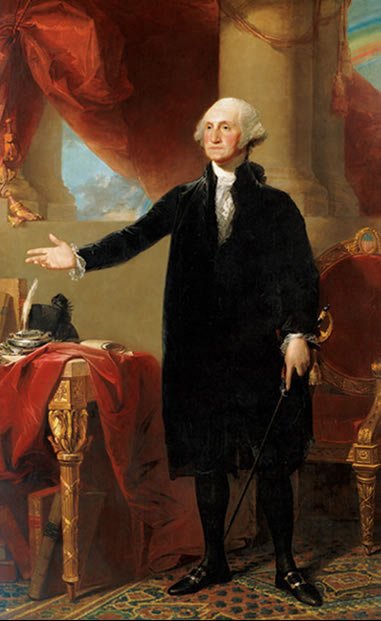
So did you know that before he became president, George Washington ran a successful fishery in the Potomac River near his Mount Vernon home? During the annual spring run, Washington's slaves would catch and harvest more than a million herring, shad, striped bass, oysters, crabs, and clams.

The Potomac River, of course, flows into the Chesapeake Bay, the largest estuary in the United States. Back in George’s day, it was known for its great abundance of shellfish and fish. Today, it's not nearly as productive due to overharvesting, pollution, runoff, and disease, but it still yields more fish and shellfish (about 500 million pounds each year) than any other estuary in the United States.

What are estuaries? Estuaries are typically defined as partially enclosed coastal bodies of water that are formed where freshwater from rivers and streams mix with salt water from an ocean. Some estuaries, like the Chesapeake Bay and the lower part of the Hudson River, were formed thousands of years ago when melting glaciers caused sea levels to rise and flood low lying valleys and lands.

Others, like those found in Northern Europe, Alaska and Canada, were formed during periods of glaciation. Still others, like the San Francisco Bay, are known as tectonic estuaries that were formed by the buckling or folding of land surfaces along major fault lines. Regardless of how they were formed, estuaries are critical for marine life and have provided an important source of food for human beings since the beginning of recorded time.

So what do estuaries have to do with George Washington and food? A lot, if you consider the fact that by the time he became president, George had lost almost all of his teeth and had to eat soft foods, like hoe cakes, mashed potatoes, and seafood, throughout most of his adult life.

Although no recipes for preparing shad are contained in Martha Washington's Booke of Cookery, historians say that cooks at Mount Vernon were "undoubtedly so familiar with it that directions for preparation were unnecessary. Like boiling eggs, cooking shad was something everyone could do!"

If you'd like to whip up some fresh shad this spring, here's a simple and simply delicious recipe for Broiled Shad with Thyme to try from Food and Wine magazine:

2 pounds shad fillets, cut to make 4 pieces
1 tablespoon olive oil
3/4 teaspoon chopped fresh thyme
1/2 teaspoon salt
1/8 teaspoon fresh-ground black pepper
1 tablespoon butter
4 lemon wedges, for serving

Heat the broiler. Lightly oil a broiler pan or baking sheet. Put the fish in the pan and rub the surface with the oil. Sprinkle with the chopped or dried thyme, the salt, and pepper. Dot with the butter. Broil the fish until golden brown and just done, about 4 minutes for 3/4-inch-thick fillets. Decorate with the thyme sprigs, if using. Serve with the lemon wedges.

FAST FACT: By the time he became president, George had lost all but one of his natural teeth. Because of constant pain from ill-fitting dentures, he had to eat soft foods throughout most of his adult life. Contrary to popular belief, George didn't wear wooden dentures. Instead, a talented dentist named John Greenwood hand-crafted his dentures from elephant ivory, hippopotamus tusks, and parts of horse and donkey teeth!!

And now for my submission guidelines at Publisher's Marketplace!

Monday, February 9, 2015

James Madison, the Potomac Oyster Wars, and the Path to the Constitutional Convention

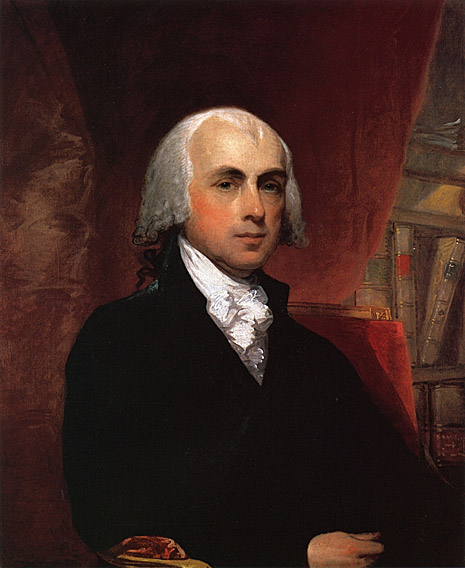
So you probably know that James Madison was one of the drafters of the Constitution and later helped spearhead the drive for the Bill of Rights. But what you might not know is that he also played a major role in negotiating an end to the Potomac Oysters Wars, which helped pave the way to the Constitutional Convention. This is how the story briefly goes:

In the seventeenth century, watermen in Maryland and Virginia battled over ownership rights to the Potomac River. Maryland traced its rights to a 1632 charter from King Charles I which included the river. At the same time, Virginia laid its claims to the river to an earlier charter from King James I and a 1688 patent from King James II, both of which also included the river.

In 1776, after more than a century of conflict, Virginia ceded ownership of the river but reserved the right to “the free navigation and use of the rivers Potowmack and Pocomoke." Maryland rejected this reservation and quickly passed a resolution asserting total control over the Potomac. After the Revolution, battles over the river intensified between watermen from both states.

To resolve this problem, leaders from Maryland and Virginia appointed two groups of commissioners which, at the invitation of George Washington, met at Mount Vernon in May of 1785. James Madison led the Virginia contingent and Samuel Chase led the Maryland delegation. Their discussions led to the Compact of 1785, which allowed oystermen from both states free use the river.

Peace prevailed until the supply of oysters began to dwindle, at which point Maryland re-imposed harvesting restrictions. Virginia retaliated by closing the mouth of the Chesapeake and watermen from both states engaged in bloody gun battles which lasted, with periodic breaks, for more than a century.

Today, these battles are known as the Potomac Oyster Wars. They're important in their own right but they have a larger historical significance because they revealed one of the main weaknesses of the Articles of Confederation, which was that the federal government didn't have the power to control commerce among the states, a setup that was creating constant chaos and conflict.

With this problem in mind, Madison and the others who convened at Mt. Vernon in May of 1785 agreed to meet the following year at Annapolis to discuss the need for a stronger federal government. Not many delegates showed up and so they agreed to convene the following May in Philadelphia, which is, of course, where the Constitution was drafted.

And so NOW you know how James Madison and a little bivalve from the Potomac helped pave the way to the Constitutional Convention!

FAST FACT: Under the Articles of Confederation, the federal government didn't have the power to raise an army, regulate interstate commerce, or coin money for the country. To pass a law, Congress needed the approval of nine out of the 13 states, and in order to amend the Articles it needed the approval of all 13 states, which made it nearly impossible to get anything done! The Articles also didn't provide for an Executive or Federal branch so there was no separation of powers.

Monday, December 2, 2013

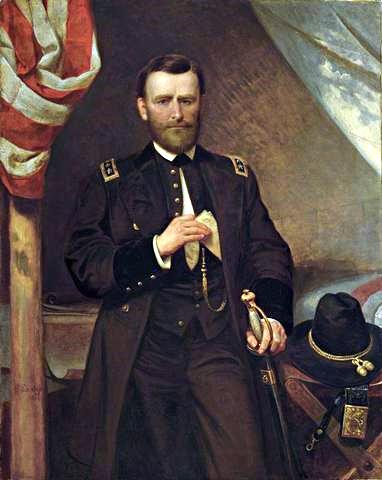
Ulysses S. Grant's Second Inaugural Ball

The menu for Ulysses S. Grant’s second Inaugural Ball reflects the opulence of the Gilded Age. A New York Times article dated March 5, 1873 contains a mind-boggling list of dishes and provisions served, including:

10,000 fried oysters; 8,000 scalloped oysters; 8,000 pickled oysters; 63 boned turkeys; 75 roast turkeys; 150 roast capons stuffed with truffles; 15 saddles of mutton; 200 dozen quails; 300 tongues ornamented with jelly; 200 hams; 30 baked salmon; 100 roasted chickens; 400 partridges; 25 stuufed boar’s heads; 2,000 head-cheese sandwiches; 3,000 ham sandwiches; 3,000 beef-tongue sandwiches; 1,600 bunches celery; 30 barrels of salad; 350 boiled chickens; 6,000 boiled eggs; 2,000 pounds of lobster; 2,500 loaves of bread; 8,000 rolls and 1,000 pounds of butter.

Dessert items inclued 300 charlotte russes; 200 moulds of wine jelly; 200 moulds of blanc mange; 300 gallons of assorted ice-cream; 400 pounds of mixed cakes; 25 barrels of Malaga grapes; 400 pounds of mixed candies; 200 pounds of shelled almonds; 200 gallons coffee; 200 gallons of tea and 100 gallons of hot chocolate.

But the best laid plans can go awry, even for a president. The weather that evening was freezing and the temporary ballroom had no heat. Guests danced in their hats and overcoats, they ran out of hot chocolate and coffee, and perhaps most tragically, most of the decorative caged canaries (which were supposed to be happily chirping) froze!

Credit: Portrait of Ulysses S. Grant by Emanuel Gottlieb Leutze

Thanks for stopping by THE HISTORY CHEF! And for a flash sale today for my book click here!

Wednesday, November 2, 2011

James Madison, the Potomac Oyster Wars, and the Constitutional Convention

So you probably know that James Madison was one of the drafters of the Constitution and later helped spearhead the drive for the Bill of Rights, but what you might not know is that he also played a major role in negotiating an end to the Potomac Oysters Wars which indirectly helped pave the way to the Constitutional Convention. This is how the story briefly goes:

In the seventeenth century, watermen in Maryland and Virginia battled over ownership rights to the Potomac River. Maryland traced its rights to a 1632 charter from King Charles I which included the river. At the same time, Virginia laid its claims to the river to an earlier charter from King James I and a 1688 patent from King James II, both of which also included the river.

In 1776, after more than a century of conflict, Virginia ceded ownership of the river but reserved the right to “the free navigation and use of the rivers Potowmack and Pocomoke." Maryland rejected this reservation and quickly passed a resolution asserting total control over the Potomac. After the Revolution, battles over the river intensified between watermen from both states.

To resolve this problem, leaders from Maryland and Virginia appointed two groups of commissioners which, at the invitation of George Washington, met at Mount Vernon in May of 1785. James Madison led the Virginia contingent and Samuel Chase led the Maryland delegation. Their discussions led to the Compact of 1785, which allowed oystermen from both states free use the river.

Peace prevailed until the supply of oysters began to dwindle, at which point Maryland re-imposed harvesting restrictions. Virginia retaliated by closing the mouth of the Chesapeake and watermen from both states engaged in bloody gun battles which lasted, with periodic breaks, for more than a century.

Today, these battles are known as the Potomac Oyster Wars. They are important in their own right, but they have a larger historical significance because they revealed one of the main weaknesses of the Articles of Confederation, which was that the federal government didn't have the power to control commerce among the states, a setup that was creating constant chaos and conflict.

With this problem in mind, Madison and the others who convened at Mt. Vernon in May of 1785 agreed to meet the following year at Annapolis to discuss the need for a stronger federal government. Not many delegates showed up and so they agreed to convene the following May in Philadelphia, which is, of course, where the Constitution was drafted.

And so NOW you know how James Madison and a little bivalve from the Potomac helped pave the way to the Constitutional Convention!

FACT: Under the Articles of Confederation, the federal government didn't have the power to raise its own army, regulate commerce between the states, or coin money for the country. To pass a law, Congress needed the approval of nine out of the 13 states, and in order to amend the Articles it needed the approval of all 13 states, which made it nearly impossible to get anything done! The Articles also didn't provide for an Executive or Judicial branch so there was no separation of powers.