Showing posts with label John F. Kennedy. Show all posts

Wednesday, January 18, 2017

John F. Kennedy's Inaugural Luncheon

In November, 1960, John F. Kennedy defeated Richard Nixon in one of the closest and most dramatic presidential elections in American history. Two and a half months later, on January 20, 1961, Kennedy was sworn in as the first Roman Catholic president of the United States and delivered his Inaugural Address on the terrace of the East Portico of the U.S. Capital.

Near the end of his address, he famously said

Let every nation know, whether it wishes us well or ill, that we shall pay any price, bear any burden, meet any hardship, support any friend, oppose any foe, to assure the survival and the success of liberty.

This much we pledge – and more.

And so, my fellow Americans: ask not what your country can do for you - ask what you can do for your country. My fellow citizens of the world: ask not what America will do for you, but what together we can do for the freedom of man...


After delivering his address, Kennedy and his wife Jacqueline were escorted to the Old Supreme Court Chamber in the U.S. Capitol for the traditional inaugural luncheon. According to Senate historians, Menu Items included Cream of Tomato Soup with Crushed Popcorn; Deviled Crab Meat Imperial; New England Boiled Stuffed Lobster with Drawn Butter; Prime Texas Ribs of Beef au jus; String Beans Amandine and Broiled Tomatoes with Grapefruit and Avocado sections with Poppyseed Dressing.


Although the traditional Inaugural Luncheon at the Capital dates back to 1897, when the Senate Committee on Arrangements hosted an official luncheon for President William McKinley and other guests, it didn't begin in its current form until 1953, when President Eisenhower, his wife Mamie, and fifty other guests dined on Creamed Chicken, Baked Ham, and Potato Puffs in the Old Senate Chamber.

Since then, the Joint Congressional Committee on Inaugural Ceremonies has organized a luncheon celebration at many presidential inaugurations. Often featuring cuisine reflecting the home states of the new president and vice president, as well as the theme of the Inauguration, the luncheon program includes speeches, gift presentations, and toasts to the new administration.


FOOD FACT: According to the John F. Kennedy Library and Museum,  Kennedy preferred orange juice, poached eggs on toast, crisp broiled bacon, milk and coffee at breakfast. For lunch, he enjoyed all kinds of soup, especially New England Fish Chowder. At dinner, there were no particular favorites, although he did like lamb chops, steak, turkey, baked beans and mashed potatoes. He also enjoyed corn muffins, and, for dessert, if he had any, it would "likely be something prepared with chocolate." Kennedy was a "food-as-fuel" kind of guy and often had to be reminded to eat because "politics always took preference over food."

For more on presidential inaugurations, click here!

Sunday, January 24, 2016

Bill Clinton Air Force One Tuna Melt on Croissant!

Regardless of where in the world the president travels, if he flies in an Air Force jet, the plane is called Air Force One. According to White House officials, Air Force One is technically the "call sign" of any Air Force aircraft carrying the president. In practice, however, the name "Air Force One" is used to refer to one of two highly customized Boeing 747-200B series aircraft, which carry the tail codes 28000 and 29000.

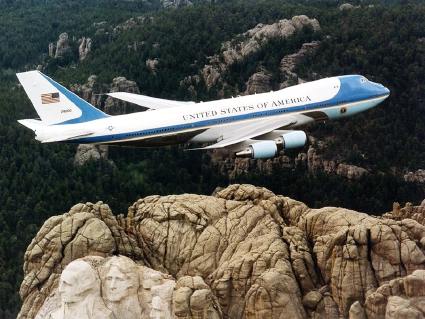
Emblazoned with the words United States of America and an image of the American flag and Seal of the President of the United States, Air Force One is an undeniable presence wherever it flies. This is how the interior of this amazing, high-tech jet is described on the White House website:

Capable of refueling midair, Air Force One has unlimited range and can carry the President wherever he needs to travel. The onboard electronics are hardened to protect against an electromagnetic pulse, and Air Force One is equipped with advanced secure communications equipment, allowing the aircraft to function as a mobile command center in the event of an attack on the United States.

Inside, the President and his travel companions enjoy 4,000 square feet of floor space on three levels, including an extensive suite for the President that features a large office, lavatory, and conference room. Air Force One includes a medical suite that can function as an operating room, and a doctor is permanently on board. The plane’s two food preparation galleys can feed 100 people at a time.


Although it's difficult to find copies of specific Air Force One menus, The Old Foodie tells us that the following luncheon items were served aboard Air Force One on February 6, 1994:

Assorted Relishes
Vegetable Soup
Tuna Melt on Croissant
Chips
Choice of Beverage
Cookies

Now, this is a surprisingly sparse and ordinary menu to present to a sitting president, don't you think? BUT...that was back in 1994, when Bill Clinton was in office, which leads me to believe that perhaps this particular menu was inspired by his advisors' well-meaning desire to steer the president away from the greasy cheeseburgers and french fries that he once seemed to enjoy so much like and nudge him toward more healthy choices to help trim his then-less-than-slender waistline.


Although that recipe for Tuna Melt on Croissant isn't easily obtainable today, Barack Obama did kindly provide his favorite recipe for Tuna Salad during an interview with "60 Minutes" correspondent Steve Kroft early in the 2008 presidential campaign. If you're in the mood for tuna salad today, here is former President Obama's take on Toasted Tuna Salad Sandwiches:

Tuna
Grey Poupon mustard
Mayonnaise
Chopped gherkins
Toasted Bread

Whatever items might appear on its many in-flight menus, be they simple Tuna Melts on Croissants or crystal-filled dishes of Russian caviar, Air Force One truly is an "undeniable presence" wherever in the world it flies!

FAST FACT: According to the White House website: Air Force One is maintained and operated by the Presidential Airlift Group, part of the White House Military Office. The Airlift Group was founded in 1944 as the Presidential Pilot Office at the direction of President Franklin D. Roosevelt.

For the next 20 years, various propeller driven aircraft served the President. In 1962, President John F. Kennedy became the first President to fly in his own jet aircraft, a modified Boeing 707. Over the years, several other jet aircraft have been used, with the first of the current aircraft being delivered in 1990 during the administration of President George H. W. Bush.

Here's a brief excerpt from my Publishers Marketplace agent profile - and for more on my manuscript wish list and "How to Submit" click here!

Thursday, August 21, 2014

Air Force One Tuna Melt on Croissant

Regardless of where in the world the President travels, "if he flies in an Air Force jet, the plane is called Air Force One." According to White House officials, Air Force One is technically the "call sign" of any Air Force aircraft carrying the President. In practice, however, the name "Air Force One" is used "to refer to one of two highly customized Boeing 747-200B series aircraft, which carry the tail codes 28000 and 29000."

Emblazoned with the words "United States of America" and an image of the American flag and the Seal of the President of the United States, Air Force One is "an undeniable presence wherever it flies." This is how the interior of this amazing, high-tech jet is described on the White House website:

Capable of refueling midair, Air Force One has unlimited range and can carry the President wherever he needs to travel. The onboard electronics are hardened to protect against an electromagnetic pulse, and Air Force One is equipped with advanced secure communications equipment, allowing the aircraft to function as a mobile command center in the event of an attack on the United States.

Inside, the President and his travel companions enjoy 4,000 square feet of floor space on three levels, including an extensive suite for the President that features a large office, lavatory, and conference room. Air Force One includes a medical suite that can function as an operating room, and a doctor is permanently on board. The plane’s two food preparation galleys can feed 100 people at a time.


Although it's proven mighty difficult to find copies of specific Air Force One menus, The Old Foodie tells us that the following luncheon items were served aboard Air Force One on February 6, 1994.

Assorted Relishes
Vegetable Soup
Tuna Melt on Croissant
Chips
Choice of Beverage
Cookies

Now, this is a surprisingly sparse and ordinary menu to present to a sitting president, don't you think? BUT...that was back in 1994, when Bill Clinton was in office, which leads me to believe that perhaps this particular menu was inspired by his wife's or advisors' well-meaning desire to steer the president away from the greasy cheeseburgers and french fries that he once seemed to so much like and nudge him toward more healthy, low-calorie choices to help trim his then-less-than-slender waistline.

Although that specific recipe for "Tuna Melt on Croissant" isn't easily obtainable today, Barack Obama did kindly provide his favorite recipe for Tuna Salad during an interview with "60 Minutes" correspondent Steve Kroft early on in the 2008 presidential campaign. If you're in the mood for tuna salad today, here is President Obama's take on Toasted Tuna Salad Sandwiches:

Tuna
Grey Poupon mustard
Mayonnaise
Chopped gherkins
Toasted Bread

Whatever items might appear on its many in-flight menus, be they simple Tuna Melts on Croissants or crystal-filled dishes of Russian caviar, Air Force One truly is an "undeniable presence" wherever in the world it flies!

FAST FACT: According to the White House website: Air Force One is maintained and operated by the Presidential Airlift Group, part of the White House Military Office. The Airlift Group was founded in 1944 as the Presidential Pilot Office at the direction of President Franklin D. Roosevelt. For the next 20 years, various propeller driven aircraft served the President. In 1962, President John F. Kennedy became the first President to fly in his own jet aircraft, a modified Boeing 707. Over the years, several other jet aircraft have been used, with the first of the current aircraft being delivered in 1990 during the administration of President George H. W. Bush.

Friday, January 21, 2011

Air Force One Tuna Melt on Croissant

Regardless of where in the world the President travels, "if he flies in an Air Force jet, the plane is called Air Force One." According to White House officials, Air Force One is technically the "call sign" of any Air Force aircraft carrying the President. In practice, however, the name "Air Force One" is used "to refer to one of two highly customized Boeing 747-200B series aircraft, which carry the tail codes 28000 and 29000."

Emblazoned with the words "United States of America" and an image of the American flag and the Seal of the President of the United States, Air Force One is "an undeniable presence wherever it flies." This is how the interior of this amazing, high-tech jet is described on the White House website:

Capable of refueling midair, Air Force One has unlimited range and can carry the President wherever he needs to travel. The onboard electronics are hardened to protect against an electromagnetic pulse, and Air Force One is equipped with advanced secure communications equipment, allowing the aircraft to function as a mobile command center in the event of an attack on the United States.

Inside, the President and his travel companions enjoy 4,000 square feet of floor space on three levels, including an extensive suite for the President that features a large office, lavatory, and conference room. Air Force One includes a medical suite that can function as an operating room, and a doctor is permanently on board. The plane’s two food preparation galleys can feed 100 people at a time.


Although it's mighty difficult to find published copies of specific Air Force One menus, The Old Foodie tells us that the following luncheon items were served aboard Air Force One on February 6, 1994.

Assorted Relishes
Vegetable Soup
Tuna Melt on Croissant
Chips
Choice of Beverage
Cookies

Now, this is a surprisingly sparse and ordinary menu to present to a sitting president, don't you think? But...that was back in 1994, when Bill Clinton was in office, which leads me to believe that perhaps this particular menu was inspired by his wife's or his advisors' well-meaning desire to steer the president away from the greasy cheeseburgers and french fries that he once seemed to so much like and nudge him toward more healthy, low-calorie choices to help trim his then-less-than-slender waistline.

Although that specific recipe for "Tuna Melt on Croissant" isn't easily obtainable today, Barack Obama did kindly provide his favorite recipe for Tuna Salad during an interview with "60 Minutes" correspondent Steve Kroft early on in the 2008 presidential campaign. If you're in the mood for tuna salad today, here is President Obama's take on Toasted Tuna Salad Sandwiches:

Tuna
Grey Poupon mustard
Mayonnaise
Chopped gherkins
Toasted Bread

Whatever items might appear on its many in-flight menus, be they simple Tuna Melts on Croissants or crystal-filled dishes of Russian caviar, Air Force One truly is an "undeniable presence" wherever in the world it flies.

To learn about my new book click here!

Monday, August 9, 2010

Franklin Delano Roosevelt and the Mysterious Origins of Country Captain Chicken

Although they may have become accustomed to elegant State Dinners, many American presidents enjoyed a wide variety of homey dishes prepared with chicken while living in the White House. James Madison was reportedly fond of Chicken and Okra Soup, James Monroe retained a childhood taste for Chicken Pudding with Fried Rice, and it has been said that Woodrow Wilson frequently requested that Chicken Salad be put on the White House luncheon menu during his two terms of office.

But that's not all. John F. Kennedy and his wife Jackie were fond of Poulet a l'Estragon (Chicken Tarragon); Richard Nixon reportedly enjoyed his daughter Tricia's homemade Chicken Divan; Bill Clinton was, and perhaps still is, partial to chicken enchildas made with a cheese similar in texture and taste to Velveeta; and one of Franklin Delano Roosevelt's favorite dishes was reportedly Country Captain Chicken, a curried-chicken dish with mysterious origins.

In her nineteenth-century cookbook, Eliza Leslie claimed that the dish got its name from a British officer who brought the recipe back from his station in India. Others maintain that the dish originated in Savannah, Georgia, which was a major shipping port for the spice trade. In Rare Bits: Unusual Origins of Popular Recipes, Paterica Bunning Steven puts forth another other theory about the origins of this slightly spicy chicken dish:

According to an oft-repeated story, a sea-captain sailed into Charleston harbor with a shipload of spices from India. Entertained by the hostesses of a city noted for its graciousness, he repaid their kindness by teaching their capable cooks to make a delicious dish of chicken and curry. Alas for legend! A virtually identical dish is known in England, where it goes by the very same name. The captain, if there ever was one, must have been a British officer stationed in the back country of India. An English writer has noted that "country captain" is also an Anglo-Indian term from the captian of a...ship...from a foreign country. Just how or if that fits into the puzzle would be difficult to say. Another suggestion is that Country Captain may be only a corruption of "country capon."

Although no one knows exactly who created and named this dish, we do know that it has been popular throughout the south for centuries. If you'd like to try it someday, here is a simple and delicious "30-minute Recipe" from the Food Network's ever-peppy Rachel Ray:

2 3/4 cups water
1 tablespoon butter
1 1/2 cups white and wild rice or long grain rice
2/3 cup flour, eyeball it
1 rounded tablespoon sweet paprika
4 pieces, 6 ounces each, boneless, skinless chicken breast
3 boneless, skinless chicken thighs
Salt and freshly ground black pepper
2 tablespoons extra-virgin olive oil, 2 turns of the pan
2 tablespoons butter
1 green bell pepper, seeded and chopped
1 red bell pepper, seeded and chopped
1 medium onion, chopped
2 or 3 large cloves garlic, smashed
1 tablespoon curry powder or mild curry paste
1 cup chicken stock
1 can diced tomatoes in puree or chunky style crushed tomatoes
1/4 cup golden raisins or currants, a couple of handfuls
2 ounces, 1 small pouch, sliced almonds, lightly toasted
3 scallions, chopped, for garnish

Bring water to a boil in a medium saucepan. Add butter and rice and return water to a boil. Reduce heat to low and cover the pot. Cook rice 20 minutes or until tender. Turn off heat and fluff rice with a fork.

Combine flour and paprika in a shallow dish. Season chicken with salt and pepper. Cut each chicken breast and thigh in 1/2 on an angle. Coat chicken pieces in paprika seasoned flour. Wash your hands and chicken work surfaces thoroughly.

Heat a large skillet over medium high heat. Add oil to the pan. Brown chicken pieces, 3 minutes on each side, and remove from the skillet. Add butter to the pan, then stir in peppers, onions and garlic. Season the veggies with salt and pepper and saute them 5 to 7 minutes to soften.

Add curry, stock, tomatoes and raisins. Slide chicken back into the skillet and simmer over moderate heat for 5 minutes to combine flavors and finish cooking the chicken through. Place skillet on a trivet and serve the chicken from the pan. Garnish the Country Captain's chicken with sliced almonds. Transfer rice to a serving dish and garnish with chopped scallions.

FOOD FACT: So now that we know which presidents liked to eat dishes prepared with chicken, it seems only fair that we consider what chickens like and need to eat for their well-being. According to experts, chickens need grains; greens (like grass, green vegetables and weeds); protein (from bugs, worms, milk and meat); calcium (from Oyster shells); as well as Vitamins A and D, and salt. And because a chicken's weight is made up of more than fifty percent water, they need a constant supply of fresh water to "drink."

Credit: Chicks Feeding, oil on canvas by Lucy Ann Leavers

Saturday, July 17, 2010

"When Thomas Jefferson Dined Alone"

A scholar, author, architect, scientist and statesman, Thomas Jefferson applied his brilliant mind to many activities. He was elected to the Virginia House of Burgesses when he was only 25, served in the Continental Congress, was governor of Virginia, and a diplomat in France where he helped negotiate the treaties that ended the Revolutionary War.

He also founded the University of Virginia, was fluent in six languages, including Latin, French, Spanish, Italian and Greek, and wrote the Declaration of Independence at the age of 33! He then served as Secretary of State under George Washington, as Vice President under John Adams, and, along with his good pal James Madison, wrote the Virginia and Kentucky Resolutions in defense of states’ rights and the freedom of speech.

During his presidency, Jefferson did many more important things: he repealed the Alien and Sedition Acts, eliminated an unpopular whiskey tax, and sent our navy to fight Barbary pirates who were harassing American ships on the Mediterranean Sea. He also doubled the size of the country by purchasing the Louisiana Territory from Napoleon in 1803 and then commissioned Lewis and Clark to explore western lands which, back then, to most Americans, were totally unknown.

It’s no wonder then that at a Nobel Prize dinner held at the White House in 1962, President John F. Kennedy joked that so many brilliant minds had never been gathered together at the White House "with the possible exception of when Thomas Jefferson dined alone."