Showing posts with label Rations. Show all posts

Wednesday, February 18, 2015

Civil War Rations and Hardtack Crackers

During the Civil War, rations generally consisted of twelve ounces of bacon or pork or one pound of fresh or salted beef; beans or peas; rice or hominy; sugar, coffee or tea and hard biscuits or crackers known as Hardtack. Hardtack was usually square or rectangular in shape with tiny holes baked into it, similar to the soda crackers we're familiar with today.

According to historians, factories in the north “baked thousands of hardtack crackers every day, packed them in crates, and shipped them out by wagon or rail.” Sometimes the hardtack didn't get to the soldiers until weeks, or even months, after they had been made. By then, the crackers were so hard that soldiers called them "tooth dullers" or "sheet iron crackers."

Older crackers were often infested with maggots or weevils so soldiers referred to them as "worm castles" because of the many holes bored through them by these tiny pests. Civil War soldiers dreaded these crackers so much that they sang a wartime tune about them called “Hard Tack, Come Again No More!” These are some of the lyrics:

Let us close our game of poker, take our tin cups in our hand
As we all stand by the cook's tent door
As dried monies of hard crackers are handed to each man.
O, hard tack, come again no more!

CHORUS: 'Tis the song, the sigh of the hungry:
"Hard tack, hard tack, come again no more."
Many days you have lingered upon our stomachs sore.
O, hard tack, come again no more!

'Tis a hungry, thirsty soldier who wears his life away
In torn clothes - his better days are o'er.
And he's sighing now for whiskey in a voice as dry as hay,
"O, hard tack, come again no more!" - CHORUS

'Tis the wail that is heard in camp both night and day,
'Tis the murmur that's mingled with each snore.
'Tis the sighing of the soul for spring chickens far away,
"O, hard tack, come again no more!" - CHORUS


But to all these cries and murmurs, there comes a sudden hush
As frail forms are fainting by the door,
For they feed us now on horse feed that the cooks call mush!
O, hard tack, come again once more!

'Tis the dying wail of the starving:
"O, hard tack, hard tack, come again once more!"
You were old and very wormy, but we pass your failings o'er.
O, hard tack, come again once more!


Despite the bad rap hardtack got, soldiers prepared it in a number of ways. Some would crumble it into coffee or tea or soften it in water and fry it in bacon grease. Others made a popular dish called "skillygallee" by crumbling the crackers into salted fried pork. If you’d like to whip up some Hardtack today, here's a simple recipe to try from americancivilwar.com:

2 cups of flour
1/2 to 3/4 cup water
1 tablespoon of Crisco or vegetable fat
6 pinches of salt

Mix the ingredients together into a stiff batter, knead several times, and spread the dough out flat to a thickness of 1/2 inch on a non-greased cookie sheet. Bake for one-half an hour at 400 degrees. Remove from oven, cut dough into 3-inch squares, and punch four rows of holes, four holes per row into the dough. Turn dough over, return to the oven and bake another half hour. Turn oven off and leave the door closed. Leave the hardtack in the oven until cool. Remove, eat with coffee or tea and sing "Hardtack, Come Again No More!"

FOOD FACT: According to visitgettysburg.com, rations also consisted of fresh vegetables (sometimes fresh carrots, onions, turnips and potatoes), dried fruit, and dried vegetables when available. Men also "foraged and scavenged the countryside for fresh food at times." Many also received supplements mailed from their family, or they could buy foods from sulters who followed the troops selling pickles, cheese, sardines, cakes, candies, beer and whisky, even though the troops were forbidden to drink alcohol.

Wednesday, February 11, 2015

George Washington, the Battle of the Chesapeake, and the Significance of Food in Military History

The Battle of the Chesapeake, also known as the Battle of the Virginia Capes, was a critical naval battle in the Revolutionary War. It also provides a fabulous example of how world and military history have been shaped in part by food.

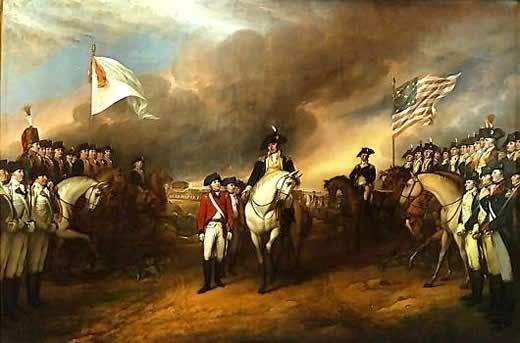
The battle took place near the mouth of the Chesapeake on September 5, 1781 between a British fleet led by Rear Admiral Sir Thomas Graves and a French fleet led by Rear Admiral François Joseph Paul, Comte de Grasse. Although it didn't end the war, the victory by the French was a major strategic defeat for the British because it prevented the Royal Navy from resupplying food, troops, and other provisions to General Charles Cornwallis’ blockaded forces at Yorktown.

Equally important, it prevented interference with the delivery of provisions that were en route to General George Washington's army through the Chesapeake. Six weeks later, with the British forces trapped, hungry and depleted, Cornwallis surrendered his army to George Washington after the Seige at Yorktown, which effectively ended the war and forced Great Britain to later recognize the independence of the United States.

Of course, many other critical factors contributed to the end of the war, but that doesn't diminish the fact that food (or the lack of it) has played an enormously important role in the course of world and military history.

FAST FACT: General Winfield Scott observed that, "The movements of an army are necessarily subordinate...to considerations of the belly." And Napoleon valued pickles as a food source for his armies so much that he offered the equivalent of $250,000 to the first person who discovered a way to safely preserve food. The man who won the prize in 1809 was a French chef and confectioner named Nicolas Appert who discovered that food wouldn’t spoil if you removed the air from a bottle and boiled it long enough. This process, of course, is known as canning and Appert's discovery was one of the most pivotal events in the modern history of food and human nutrition!

Thursday, June 16, 2011

Civil War Rations and Hard Tack Crackers

Civil War rations generally consisted of 12 ounces of pork or bacon or one pound of fresh or salt beef; beans or peas; rice or hominy; sugar; coffee or tea; and hard biscuits or crackers known as Hardtack. Hardtack was usually square or rectangular in shape with small holes baked into it, similar to the soda crackers we are familiar with today.

According to historians, factories in the north “baked thousands of hardtack crackers every day, packed them in crates, and shipped them out by wagon or rail.” Sometimes the hardtack didn't get to the soldiers until weeks, or even months, after they had been made. By then, the crackers were so hard that soldiers called them "tooth dullers" or "sheet iron crackers."

Older crackers were often infested with maggots or weevils and so soldiers referred to them as "worm castles" because of “the many holes bored through them by these tiny pests.” Civil War soldiers dreaded these crackers so much that they sang a wartime tune about them called “Hard Tack, Come Again No More!” Here are some of the lyrics:

Let us close our game of poker, take our tin cups in our hand
As we all stand by the cook's tent door
As dried monies of hard crackers are handed to each man.
O, hard tack, come again no more!

CHORUS: 'Tis the song, the sigh of the hungry:
"Hard tack, hard tack, come again no more."
Many days you have lingered upon our stomachs sore.
O, hard tack, come again no more!

'Tis a hungry, thirsty soldier who wears his life away
In torn clothes - his better days are o'er.
And he's sighing now for whiskey in a voice as dry as hay,
"O, hard tack, come again no more!" - CHORUS

'Tis the wail that is heard in camp both night and day,
'Tis the murmur that's mingled with each snore.
'Tis the sighing of the soul for spring chickens far away,
"O, hard tack, come again no more!" - CHORUS


But to all these cries and murmurs, there comes a sudden hush
As frail forms are fainting by the door,
For they feed us now on horse feed that the cooks call mush!
O, hard tack, come again once more!

'Tis the dying wail of the starving:
"O, hard tack, hard tack, come again once more!"
You were old and very wormy, but we pass your failings o'er.
O, hard tack, come again once more!


Despite the bad rap that Hardtack got, soldiers prepared it in a number of ways. Some would crumble it into coffee or tea or soften it in water and fry it in bacon grease. Others made a popular dish called "skillygallee" by crumbling the crackers into salted fried pork. If you’d like to get a sense of what Hardtack tastes like, here is a simple recipe to try from americancivilwar.com:

2 cups of flour
1/2 to 3/4 cup water
1 tablespoon of Crisco or vegetable fat
6 pinches of salt

Mix the ingredients together into a stiff batter, knead several times, and spread the dough out flat to a thickness of 1/2 inch on a non-greased cookie sheet. Bake for one-half an hour at 400 degrees. Remove from oven, cut dough into 3-inch squares, and punch four rows of holes, four holes per row into the dough. Turn dough over, return to the oven and bake another half hour. Turn oven off and leave the door closed. Leave the hardtack in the oven until cool. Remove, eat with coffee or tea and sing "Hardtack, Come Again No More!"

FOOD FACT: According to researchers at visitgettysburg.com, rations also consisted of fresh vegetables (sometimes fresh carrots, onions, turnips and potatoes), dried fruit, and dried vegetables when available. Men also "foraged and scavenged the countryside for fresh food at times." Many also "received supplements mailed from their family, or they could buy foods from sulters who followed the troops selling pickles, cheese, sardines, cakes, candies, beer, and whisky, even though the troops were forbidden to drink alcohol."

For the announcement for my new children's book, please click here!