Showing posts with label Turkey. Show all posts

Saturday, December 14, 2024

A Charles Dickens Christmas Dinner

One of the most famous guests to visit the White House during John Tyler’s presidency was the great English writer, Charles Dickens. Upon his arrival in the United States, Dickens was honored at a lavish ball in New York City, where he was greeted by such famous American writers as Washington Irving, Henry Wadsworth Longfellow, Harriet Beecher Stowe and Edgar Allan Poe.

Some days later, Dickens met Tyler in the White House and later penned this about the president:

He looked somewhat worn and anxious, -- and well he might: being at war with everybody, -- but the expression of his face was mild and pleasant, and his manner was remarkably unaffected, gentlemanly, and agreeable. I thought that, in his whole carriage and demeanour, he became his station singularly well.

After returning to England, Dickens wrote his first travel book American Notes. But of all of his books, none are more well-known than A Christmas Carol, which was published in 1843, one year after Dickens visited the White House. Among all of its famous food scenes, none are more memorable than the one depicting the Cratchit family Christmas dinner. Maybe you remember it:


Mrs. Cratchit made the gravy hissing hot; Master Peter mashed the potatoes with incredible vigour; Miss Belinda sweetened up the apple-sauce; Martha dusted the hot plates; Bob took Tiny Tim beside him in a tiny corner at the table; the two young Cratchits set chairs for everybody, not forgetting themselves, and mounting guard upon their posts, crammed spoons into their mouths, lest they should shriek for goose before their turn came to be helped.

At last the dishes were set on, and grace was said. It was succeeded by a breathless pause, as Mrs. Cratchit, looking slowly all along the carving-knife, prepared to plunge it in the breast; but when she did, and when the long expected gush of stuffing issued forth, one murmur of delight arose all round the board, and even Tiny Tim...beat on the table with the handle of his knife, and feebly cried Hurrah!


No recipes are included in the book, of course, but The Food Channel recreated the Cratchit's Christmas dinner and "the more bountiful feast at the merry gathering" at the home of Mr. Scrooge’s nephew. If you'd like to bring some Dickens Christmas spirit to your family dinner this holiday season, here's a recipe for Duchess Potatoes:


3 pounds russet potatoes, peeled and cut into 1-inch pieces
1 cup heavy cream
6 tablespoons unsalted butter, cut into 1/4-inch cubes and softened
1 large egg plus 1 egg yolk, light beaten
1 1/4 teaspoons salt
1/2 teaspoon pepper
Pinch of nutmeg
1/2 teaspoon baking powder

Fill a large pot with cold water, add salt and bring to a boil over high heat. Add the potatoes and boil until tender. While the potatoes are still hot add cream, 3 tablespoons butter, eggs, salt, pepper, nutmeg, and baking powder. Mash the potatoes until smooth. Let cool to room temperature. Gently fold in the remaining butter until pieces are evenly distributed.

Preheat oven to 350°F. Transfer potato mixture to piping bag fitted with 1/2-inch star tip (you can use a gallon size baggie with snipped off corner) and pipe eight 4-inch wide mounds of potatoes on baking sheet. Spray the tops of the potatoes lightly with butter flavored cooking spray and bake until golden brown, about 15 to 20 minutes.

FAST FACT: Oliver Twist is another classic Dickens novel that's filled with many memorable food scenes. Set in England, the main character is a nine-year old orphan in a London workhouse where the boys are given only three meals of gruel a day. When Oliver asks for more, he is dubbed a trouble maker and treated even more cruelly. Oliver Twist called attention to the problem of starving children in England and, to a lesser extent, the United States.

Tuesday, September 30, 2014

Franklin Roosevelt's "Royal Hot Dog" Diplomacy


When Franklin D. Roosevelt invited Queen Elizabeth and Prince Philip for a visit to the United States in June of 1939, the significance of the invitation reportedly did not go unnoticed. Ever since America declared its independence from England in 1776, "the United States and Great Britain had oftentimes experienced tense relations, but Roosevelt's invitation carried great significance in the history of Anglo-American relations, not only because of their colonial past, but more importantly, because it signified the dawn of a new era in American and British cooperation.”

With Europe on the brink of war, Roosevelt realized the need to forge closer ties between the two democracies and he reportedly “planned every minute detail of the visit to ensure the King’s success in winning over the sympathy and support of the American people." His efforts apparently paid off. According to historians at the Franklin D. Roosevelt Presidential Library and Museum:

Americans heartily welcomed England's royalty with thunderous applause and adulation when the King and Queen arrived in Washington on June 8, 1939. Crowds lined the streets for a chance to glimpse the King and Queen as they traveled throughout the city. In Washington, the couple was treated to all the formalities one would expect from a State Visit. There was an afternoon reception at the British Embassy, followed by a formal evening of dining and musical entertainment at the White House.

On their second day, the King and Queen took in the sights of DC as they boarded the presidential yacht and sailed up the Potomac River to George Washington's Mount Vernon and to Arlington Cemetery to lay a wreath at the Tomb of the Unknown Soldier. After two days in Washington, the...royal couple accompanied the Roosevelts to their home in Hyde Park, New York [where]...they enjoyed the simpler things in life. In contrast to the formal State Dinner at the White House, dinner at the Roosevelt's home...was described to the press as a casual dinner between the two families.


Even more informal was the following day's event - an old-fashioned, American-style picnic which included the following menu items: Virginia Ham, Smoked Turkey, Cranberry Jelly, Green Salad, Sodas, Beer and...Hot Dogs! The next day, news of the picnic made the front page of the New York Times, under the headline, “KING TRIES HOT DOG AND ASKS FOR MORE.” While the King reportedly ate his hot dog by hand like an American, the Queen daintily cut hers with a knife and fork.


Although the royal visit was surely the high point of the Roosevelt's 1939 social season, the president and the king also discussed the dire political and military situation developing in Europe.

Equally important to Roosevelt, however, was that the visit "changed the perceptions of the American people, which in turn allowed him to do more for Britain. When England declared war on Germany three months later, Americans, due in no small part to the King and Queen's visit, sympathized with England's plight. Britons were no longer strangers or the evil colonial rulers from the past but familiar friends and relatives with whom Americans could identify."

For their part, the Royal Couple was deeply appreciative of the Roosevelt’s efforts and of the outpouring of support from the American people. In a letter to Mrs. Roosevelt, the Queen later wrote:

I must tell you how moved I have been by the many charming, sympathetic, and understanding letters which I have received from kind people in the United States. Quite poor people have enclosed little sums of money to be used for our wounded, our sailors, or mine sweepers. It really has helped us, to feel such warmth of human kindness and goodness, for we still believe truly that humanity is overall.

Sometimes, during the last terrible months, we have felt rather lonely in our fight against evil things, but I can honestly say that our hearts have been lightened by the knowledge that friends in America understand what we are fighting for. We look back with such great pleasure to those lovely days we spent with you last June. We often talk of them, and of your & the President's welcome & hospitality. The picnic was great fun, and our children were so thrilled with the descriptions of the Indian singing & marvelous clothes - not to mention the hot dogs!


Monday, December 2, 2013

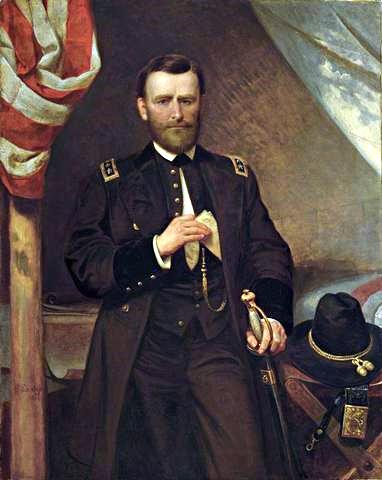
Ulysses S. Grant's Second Inaugural Ball

The menu for Ulysses S. Grant’s second Inaugural Ball reflects the opulence of the Gilded Age. A New York Times article dated March 5, 1873 contains a mind-boggling list of dishes and provisions served, including:

10,000 fried oysters; 8,000 scalloped oysters; 8,000 pickled oysters; 63 boned turkeys; 75 roast turkeys; 150 roast capons stuffed with truffles; 15 saddles of mutton; 200 dozen quails; 300 tongues ornamented with jelly; 200 hams; 30 baked salmon; 100 roasted chickens; 400 partridges; 25 stuufed boar’s heads; 2,000 head-cheese sandwiches; 3,000 ham sandwiches; 3,000 beef-tongue sandwiches; 1,600 bunches celery; 30 barrels of salad; 350 boiled chickens; 6,000 boiled eggs; 2,000 pounds of lobster; 2,500 loaves of bread; 8,000 rolls and 1,000 pounds of butter.

Dessert items inclued 300 charlotte russes; 200 moulds of wine jelly; 200 moulds of blanc mange; 300 gallons of assorted ice-cream; 400 pounds of mixed cakes; 25 barrels of Malaga grapes; 400 pounds of mixed candies; 200 pounds of shelled almonds; 200 gallons coffee; 200 gallons of tea and 100 gallons of hot chocolate.

But the best laid plans can go awry, even for a president. The weather that evening was freezing and the temporary ballroom had no heat. Guests danced in their hats and overcoats, they ran out of hot chocolate and coffee, and perhaps most tragically, most of the decorative caged canaries (which were supposed to be happily chirping) froze!

Credit: Portrait of Ulysses S. Grant by Emanuel Gottlieb Leutze

Thanks for stopping by THE HISTORY CHEF! And for a flash sale today for my book click here!