Showing posts with label Inaugural Reception. Show all posts

Wednesday, January 18, 2017

John F. Kennedy's Inaugural Luncheon

In November, 1960, John F. Kennedy defeated Richard Nixon in one of the closest and most dramatic presidential elections in American history. Two and a half months later, on January 20, 1961, Kennedy was sworn in as the first Roman Catholic president of the United States and delivered his Inaugural Address on the terrace of the East Portico of the U.S. Capital.

Near the end of his address, he famously said

Let every nation know, whether it wishes us well or ill, that we shall pay any price, bear any burden, meet any hardship, support any friend, oppose any foe, to assure the survival and the success of liberty.

This much we pledge – and more.

And so, my fellow Americans: ask not what your country can do for you - ask what you can do for your country. My fellow citizens of the world: ask not what America will do for you, but what together we can do for the freedom of man...


After delivering his address, Kennedy and his wife Jacqueline were escorted to the Old Supreme Court Chamber in the U.S. Capitol for the traditional inaugural luncheon. According to Senate historians, Menu Items included Cream of Tomato Soup with Crushed Popcorn; Deviled Crab Meat Imperial; New England Boiled Stuffed Lobster with Drawn Butter; Prime Texas Ribs of Beef au jus; String Beans Amandine and Broiled Tomatoes with Grapefruit and Avocado sections with Poppyseed Dressing.


Although the traditional Inaugural Luncheon at the Capital dates back to 1897, when the Senate Committee on Arrangements hosted an official luncheon for President William McKinley and other guests, it didn't begin in its current form until 1953, when President Eisenhower, his wife Mamie, and fifty other guests dined on Creamed Chicken, Baked Ham, and Potato Puffs in the Old Senate Chamber.

Since then, the Joint Congressional Committee on Inaugural Ceremonies has organized a luncheon celebration at many presidential inaugurations. Often featuring cuisine reflecting the home states of the new president and vice president, as well as the theme of the Inauguration, the luncheon program includes speeches, gift presentations, and toasts to the new administration.


FOOD FACT: According to the John F. Kennedy Library and Museum,  Kennedy preferred orange juice, poached eggs on toast, crisp broiled bacon, milk and coffee at breakfast. For lunch, he enjoyed all kinds of soup, especially New England Fish Chowder. At dinner, there were no particular favorites, although he did like lamb chops, steak, turkey, baked beans and mashed potatoes. He also enjoyed corn muffins, and, for dessert, if he had any, it would "likely be something prepared with chocolate." Kennedy was a "food-as-fuel" kind of guy and often had to be reminded to eat because "politics always took preference over food."

For more on presidential inaugurations, click here!

Wednesday, November 4, 2015

Ronald Reagan's Inaugural Jelly Beans

So, did you know that shortly after Ronald Reagan became Governor of California in 1967, he began eating pectin jelly beans to help him quit smoking. When a new brand of jelly beans, called Jelly Belly beans, appeared on the market in 1976, he quickly switched to them and would often enthusiastically share them with his Cabinet, staff, and visiting officials.

Reagan enjoyed these sweet little treats SO much that he later sent a letter to the chief executive of the company that produced them, stating, "we can hardly start a meeting or make a decision without passing around the jar of jelly beans."

Even after he became president, Reagan's fondness for Jelly Bellies didn't diminish, and large colorful jars of them were often prominently displayed on his desk in the Oval Office, in the Cabinet Room, and even on Air Force One!!


When Jelly Bellies first appeared on the market, there were only eight flavors: Very Cherry, Lemon, Cream Soda, Tangerine, Green Apple, Root Beer, Grape, and Licorice, which was reportedly President Reagan's favorite.

Since then, there have been hundreds of official flavors to choose from, including Bubble Gum, Buttered Popcorn, Cappuccino, Caramel Corn, Chili Mango, Chocolate Pudding, Cotton Candy, Green Apple, Kiwi, Juicy Pear, Lemon Drop, Margarita, Orange Sherbet, Piña Colada, Pomegranate, Raspberry, Sizzling Cinnamon, Strawberry Cheesecake, Toasted Marshmallow, Top Banana, Tutti-Fruitti, Very Cherry, Wild Blackberry, and Watermelon.

Of course, jelly beans taste great alone, but they can also be used in cookies, cakes, and in this official recipe for Jelly Belly Pudding Parfait:

1 5.1 ounce package vanilla instant pudding mix
1 3.4 ounce package butterscotch flavor instant pudding mix
5 cups milk
2 ounces Jelly Bellies (your choice)
8 fan wafer cookies

Directions: Select serving of parfait glasses that hold 3/4 to 1 cup capacity. In two separate bowls, prepare pudding mixes according to package directions. Fill glasses with alternating layers of vanilla and butterscotch pudding. Chill 5-10 minutes. Garnish parfaits with Jelly Belly beans on top and a fan wafer if desired.

FOOD FACT: In 1981, three-and-a-half tons of Jelly Belly beans were shipped to Washington, D.C. for Ronald Reagan’s inauguration. Blueberry, one of the most popular flavors today, was developed so there would be patriotic red, white and blue jelly beans at the festivities.

FAST FACT: In addition to official flavors, the Jelly Belly Company produces "rookie" flavors that might be added to the roster if they become popular enough. Some somewhat curious and, um, questionable flavors have included Baked Bean, Bloody Mary, Buttered Toast and...Roasted Garlic. Ummm, no thanks!!

Thursday, December 22, 2011

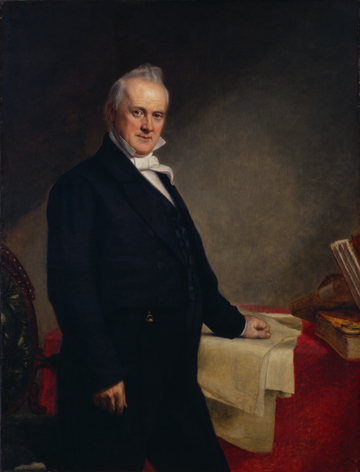
James Buchanan Snickerdoodles

Presiding over the nation during a time of great strife, James Buchanan is the only president who never had a wife. And while he dined mighty fine at his many White House parties, biographers say that James retained a childhood taste for Scrapple, Confederate Pudding, and sweet Pennsylvania Dutch-German cookies called Apees.

Snickerdoodles are another traditional Dutch-German cookie that are covered with cinnamon and sugar and baked in the shape of a snail. Some historians say that their fanciful name comes from the German term schnecke knödel which can be translated as “snail dumpling.” Others say that “snicker” comes from the Dutch word snekrad or the German word schnecke, both of which refer to a small, snail-like shape.

Although no one knows who came up with their name, we do know that these sweet little sugar cookies have been popular in Buchanan's native state of Pennsylvania for centuries. If you'd like to whip up a batch of snickerdoodles this holiday season, here is a recipe to try from Emeril Lagasse:

For the topping:

3 tablespoons sugar
1/2 teaspoon cinnamon

For the cookie dough:

3 1/2 cups flour
1 tablespoon baking powder
2 teaspoons baking soda
1/4 teaspoon salt
1/4 teaspoon cinnamon
1 cup butter
2 cups sugar
2 eggs
1 tablespoon light corn syrup
2 1/2 teaspoons vanilla extract

In a small bowl, stir together the sugar and cinnamon and set aside. To make the cookie dough, stir together the dry ingredients. In a bowl with a paddle attachment, cream the butter. Add the sugar and continue to mix, then add the eggs, corn syrup, and vanilla, and mix thoroughly. Add the dry ingredients and mix until blended. Chill dough 1 hour if it's sticky or difficult to handle.

Preheat oven to 375 degrees F. Roll balls of dough about the size of a walnut then roll in the cinnamon sugar to coat. Place on an ungreased sheet pan 2 1/2 inches apart. Bake for 10 to 12 minutes until puffed up and the surface is slightly cracked. Let cool on the sheet a few minutes then remove to a wire rack to cool.

FOOD FACT: At Buchanan’s inaugural reception in 1857, more than 5,000 guests reportedly dined on "eight rounds of beef, seventy-five hams, sixty saddles of mutton, four saddles of venison, four hundred gallons of oysters, five quarts of jellies," twelve hundred quarts of ice cream, and more than $3,000 was spent on the wines - an astronimical figure at the time. But this was just a hint of the culinary excesses to come, and, during his four years in office, Buchanan’s annual $25,000 presidential salary wasn’t always enough to cover his tabs and he often had to pay for his extravagant "bachelor" parties at the White House out of his own pocket!