Showing posts with label Election of 1840. Show all posts

Tuesday, November 8, 2022

The Election of 1828 and Andrew Jackson's First Inaugural Orange Whiskey Punch!


When John Quincy Adams took the oath of office in 1825, it was under a dark cloud of controversy. The election of 1824 had been a bitterly contested four-man race between Andrew Jackson, Henry Clay, William Crawford, and Adams.

Since no candidate had won a majority of electoral votes, the election was thrown into the House of Representatives where Clay, as Speaker of the House, threw his support to Adams, even though Jackson won the most popular and electoral votes. Adams then quickly appointed Clay as Secretary of State. Outraged and feeling cheated out of the White House, Jackson called the deal a “Corrupt Bargain" to "cheat the will of the people."”


With these accusations hanging over his head, Adams faced problems from the start and his four years in office weren't easy ones. Although his intelligence, family background, and experience could and should have made him a great president, he lacked the charisma needed to create a base of loyal supporters.

Not surprisingly, he lost the election of 1828 in a landslide, and when Andrew Jackson was inaugurated in 1829, twenty thousand of his loyal supporters, who believed he had been cheated out of the White House four years earlier, descended "like locusts" upon Washington, eager to celebrate the long-delayed victory of their champion.

According to culinary historian Poppy Cannon, Jackson's inauguration "sparked a celebration that did everything but set fire to the White House." Thousands of rowdy fans crammed into the building and "little thought was given to the delicate French furniture, elegant draperies, and fine china" as ice cream, ices and cakes "were gobbled up as fast they appeared on long serving tables."


In a letter to her sister, Margaret Bayard Smith, a prominent Washington socialite, described the chaos of Jackson's inaugural festivities this way:

But what a scene did we witness! The Majesty of the People had disappeared, and a rabble, a mob, of boys, women, children, scrambling fighting, romping. What a pity, what a pity! No arrangements had been made, no police officers placed on duty, and the whole house had been inundated by the rabble mob...

Cut glass and china to the amount of several thousand dollars had been broken in the struggle to get the refreshments, punch and other articles had been carried out in tubs and buckets, but had it been in hogsheads it would have been insufficient...

Ladies fainted, men were seen with bloody noses, and such a scene of confusion took place as is impossible to describe…This concourse had not been anticipated...Ladies and gentlemen only had been expected at this Levee, not the people en masse. But it was the People's day, and the People's President, and the People would rule!


Another observer described the day's events this way:

Orange-punch by barrels full was inside, but as the waiters opened the door to bring it out, a rush would be made, the glasses broken, the pails of liquor upset, and the most painful confusion prevailed. To such a degree was this carried, that tubs of punch were taken from the lower story into the garden to lead off the crowds from the rooms.

Although no one knows how those waiters prepared the punch that day, you can get some great whiskey tips from eatdrinkfrolic.com and The Wall Street Journal scoured some ninteeenth century cookbooks and provided this recipe for Inaugural Orange Punch that's easy to make by the bucketful if you've got a mob to entertain on election day!


3 parts fresh orange juice
1 part fresh lemon juice
1 part Mulled Orange Syrup*
1 part dark rum
1 part cognac
2 parts soda water

Mulled Orange Syrup: Combine 1 cup sugar with 1 cup water and heat to a boil, stirring to dissolve the sugar. Reduce heat to a low simmer. Add the peel from an orange and mulling spices (a couple of cinnamon sticks, some whole cloves and allspice berries). After 15 minutes, remove from heat and let it sit for several hours. Strain.

Combine Mulled Orange Syrup and all other ingredients in a punch bowl with a large block of ice. Serve in punch cups with a little crushed ice. Add a dash of Angostura bitters to each glass and enjoy!

Friday, December 2, 2011

Martin Van Buren, the Election of 1840, and the "Regal Splendor" of the Presidential Palace

Having witnessed the chaos of Andrew Jackson’s "levees" first hand, Martin Van Buren prohibited all food or drink from public receptions. Privately, however, he hosted many extravagant dinner parties at the White House.

Using gold plated spoons that James Monroe had purchased years earlier in France, Van Buren added the finest quality cut wine glasses, water bottles and goblets. He also purchased expensive European finger bowls in which he rinsed his fingers after a night of fine dining.

Shortly before the election of 1840, Charles Ogle, a Whig Congressman from Pennsylvania, rose to speak in the House of Representatives and launched into a

Wednesday, August 11, 2010

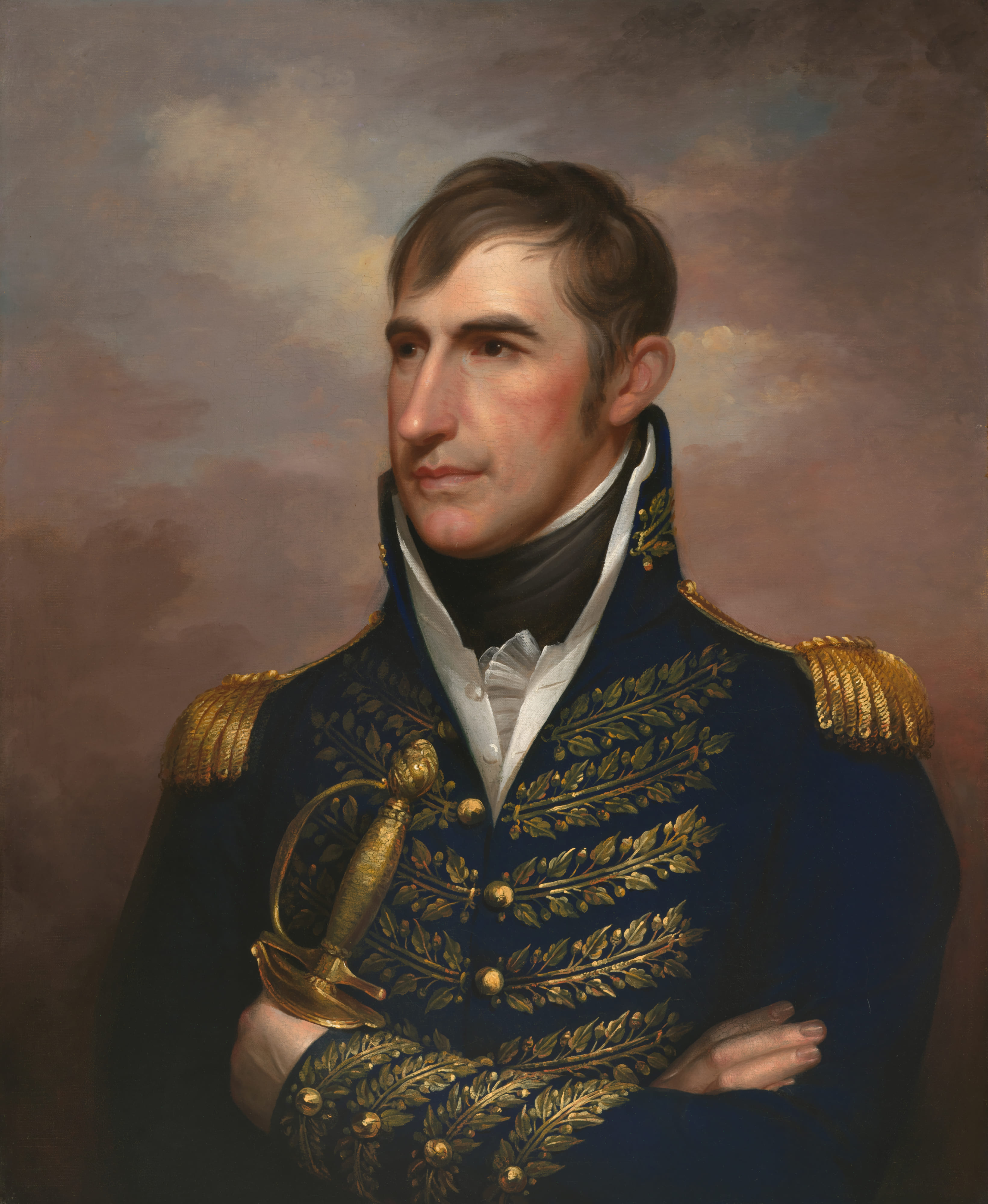
William Henry Harrison, The Election of 1840 and "Tippicanoe and Burgoo, Too!"

During William Henry Harrison's presidential campaign, hard cider flowed so fast that he became known as the “Hard Cider Candidate.” To feed his many rowdy supporters, Harrison's cooks served an election dish called Burgoo which was made by dropping chopped vegetables into warm squirrel stew.

Hailing his victory over Tecumseh thirty years earlier, Harrison’s supporters came up with the slogan, TIPPICANOE AND TYLER, TOO!” With its shrewd and heavy use of slogans, poems, ditties, and songs, and organized picnics, rallies, bonfires, and parades, the Election of 1840 is considered to be the first modern American presidential campaign!

Of course, the custom of plying potential voters with food and drink has been practiced by politicians since George Washington's day. But it reached its zenith in the campaign of 1840, when Harrison and his lieutenants "wined and dined the populace throughout the West."

The first step, according to historian Poppy Cannon, was to erect a log cabin, then "invite all eligible males to a feast of cornbread, cheese, and hard cider." Little by little, the feasts became more elaborate, "culminating in a spread in Wheeling, West Virginia, in which 30,000 hungry voters were served 360 hams, 20 calves, 1,500 pounds of beef, 1,000 pounds of cheese, 8,000 pounds of bread and 4,500 pounds of Burgoo."

Perfected in Kentucky and popular throughout the western territories, Burgoo was the perfect election dish since it could be easily expanded to feed large crowds simply by adding more water, vegetables and squirrel meat to it. Although squirrel was once deemed essential to this classic American dish, most modern recipes, like this one for Kentucky Burgoo from Emeril Lagasse, call for beef, lamb and chicken.

2 tablespoons vegetable oil
2 pounds boneless beef shank, trimmed of excess fat
2 pound boneless lamb shoulder, trimmed of excess fat
Salt and freshly ground black pepper
2 medium onions, quartered
4 cloves peeled garlic
1 medium fresh hot red pepper, quartered
Water, to cover
1 (3 to 4 pound) whole chicken or hen, cut into 8 pieces
2 cups chopped onions
2 cups medium diced carrots
1 cup medium diced green bell peppers
1 pound baking potatoes, like russets, peeled and medium diced
2 cups peeled, seeded and chopped tomatoes
1/2 pound fresh green beans, strings removed and cut into 2-inch pieces
2 cups fresh corn kernels
2 tablespoons light brown sugar
1 tablespoon finely chopped fresh parsley leaves
Serving suggestions:
8 fresh cornbread muffins, hot
8 fresh biscuits, hot

In a large, heavy pot, over medium heat, add the oil. Season the beef and lamb with salt and pepper. When the oil is hot, sear the meat, in batches, for a couple of minutes on all sides. Add the onions, garlic, cloves, and pepper. Cover with water. (about 3 to 4 quarts). Bring to boil, reduce the heat to medium low, and simmer until tender, about 3 hours.

Season the chicken with salt and pepper. During the last 1 1/2 hours of cooking, add the chicken. Remove the meat, chicken and vegetables from the pan, set aside and cool. Discard the vegetables. Add the remaining vegetables and brown sugar to the pot of hot liquid. Continue to cook for 1 hour.

After the meat has cooled, cube the beef and lamb into 1-inch pieces. Remove the skin and bones from the chicken and discard. Dice the chicken into 1-inch pieces. Add the cubed meat and chicken to the vegetables and continue to cook for 30 minutes. Re-season if necessary. Ladle the stew into serving bowls. Serve with hot cornbread or biscuits. Garnish with parsley.

A LITTLE BACKGROUND: “Tippecanoe and Tyler, Too!” was originally a song written for Harrison and his running mate, John Tyler. Harrison was known as “Old Tippecanoe” for his military victory over the Shawnee chieftan Tecumseh at the Battle of Tippecanoe in 1811. Thirty years later, Whigs used Harrison’s nickname in a campaign song that portrayed Harrison as a “simple, homespun hero” in contrast to the Democratic candidate, Martin Van Buren, who was depicted as a wealthy elitist. Here are some of the lyrics:

Sure, let 'em talk about hard cider
and log cabins too
't'will only help to speed the ball
for Tippecanoe and Tyler too
and with him we'll beat Little Van, Van
Van is a used up man
and with him we'll beat Little Van…


Although Harrison wasn't born in a log cabin, he was the first to use one as a symbol to suggest that he was a man of humble origins. Other candidates followed his example, making the idea of a log cabin (and a non-wealthy background) a recurring theme in presidential elections for the next half century.

Credit: William Henry Harrison, oil on canvas by Rembrandt Peale (National Portrait Gallery, Smithsonian Institution, Washington D.C.)