Monday, October 31, 2022

A Brief History of Trick-or-Treating


Trick-or-treating has been a popular American Halloween tradition for nearly a century, but its origins remain unclear. Ancient Celtic festivals, early Roman Catholic holidays, medieval practices, and even British politics all lay claim as possible antecedents of the present-day practice of trick-or-treating.

Ancient Origins of Trick-or-Treating

Some say that the origins of the practice of trick-or-treating might lie in the ancient, pre-Christian Celtic festival of Samhain, which was celebrated on the night of October 31. The following day, November 1, marked the new year. On the Celtic calendar, this day signaled the end of summer and the beginning of the cold, dark winter, an uncertain and frightening time that was often associated with death.

The Celts, who lived 2,000 years ago in the area that is now Ireland, the United Kingdom and northern France, believed that on Samhain the barrier between the living and dead was blurred more so than on any other night and that the ghosts of the dead returned to earth as they transitioned to the otherworld. On the night of Samhain, people gathered to light bonfires, offer sacrifices, and pay homage to the dead.


In some Celtic celebrations of Samhain, villagers disguised themselves in costumes made of animal skins to drive away spirits while banquet tables were prepared and offerings of food and drink were left out to placate them. In later centuries, people began dressing as ghosts, demons and other malevolent creatures, performing antics in exchange for food and drink. This custom, known as mumming, dates back to the Middle Ages and is thought to be another possible antecedent of trick-or-treating.

Early Christian and Medieval Antecedents

In the first few centuries of the first millennium, Christianity spread into Celtic lands, where it gradually blended with and supplanted older pagan rites. In the eighth century, Pope Gregory III designated November 1 as All Saints Day, or All Hallows Day, a time to honor all martyrs and saints. The night before (October 31) was known as All Hallows Eve, which eventually became Hallowe’en and finally Halloween.

In 1000 A.D., the church designated Nov. 2 as All Souls Day, a day when the living prayed for the souls of the dead. All Souls Day was celebrated in ways similar to Celtic commemorations of Samhain. People lit bonfires, dressed in customs as saints and devils, and masqueraded in parades.

Poor families would also visit the homes of wealthier families who would give them pastries called "soul cakes" in exchange for their promise to pray for the souls of the family's dead relatives. This practice, known as “souling,” was later taken up by children who would go from home-to-home and be given “treats” such as food, money, and ale.


A similar Scottish and Irish practice known as guising – children disguising themselves in costumes and roaming door-to-door for treats – is another possible antecedent of trick-or-treating. The main difference is that in souling children promised to say a prayer for the dead in return for their “treat” whereas guisers would sing a song, recite a poem, or perform some sort of “trick” for their treat, which traditionally consisted of fruit, coins, or nuts.

Guy Fawkes Night Celebrations

Still another antecedent might be the British custom of children wearing masks and carrying effigies while begging for pennies on Guy Fawkes Night (also known as Bonfire Night), an annual commemoration of the foiling of the so-called Gunpowder Plot of 1605. On November 5, 1606, Fawkes was executed for his role in the Catholic-led conspiracy to blow up England's parliament building in an attempt to remove the Protestant King James I from power.

The original Guy Fawkes Day was celebrated immediately after his execution. Communal bonfires were lit to burn effigies and the symbolic "bones" of the Catholic pope. By the early nineteenth century, effigies of the pope had been replaced by those of Guy Fawkes and children would roam the streets carrying an effigy or "Guy" and ask for "a penny for the Guy."

A New American Tradition


Although some early American colonists celebrated Guy Fawkes Day, the rigid Protestant belief systems of New England Puritans meant that they had no place for such pagan and Catholic celebrations as Samhain and All Souls Day, or even Halloween itself. In the southern colonies, however, where larger, more ethnically diverse European communities had settled, there are some accounts of Halloween festivities meshing with Native American autumn harvest celebrations.

In the mid-1800s, large numbers of new immigrants, especially the nearly two million Irish immigrants fleeing Ireland’s potato famine of 1846, helped to popularize Halloween. Borrowing from English and Irish traditions, children would dress in costumes and go door-to-door asking for food or money.

As Halloween grew in popularity, it was celebrated with bonfires, ghost stories, divination games, costume parties and pranks. By the 1920s, juvenile pranks had gotten out of hand and often resulted in the destruction of private property, sometimes amounting to more than $100,000 in damages each year in some major metropolitan cities.

The deepening Depression exacerbated the problem, with Halloween pranks often devolving into vandalism, assaults, and sporadic acts of violence. One theory holds that it was the excessive “pranks” on Halloween that led to the widespread adoption of an organized, community-based trick-or-treating tradition in the 1930s. This trend was abruptly curtailed, however, with the outbreak of World War II. Children were forced to refrain from trick-or-treating because of sugar rationing and pranksters were told that their actions would “hurt the war effort” and be considered “sabotage.”


With post-war prosperity and the baby boom, trick-or-treating was revived and quickly became a standard practice for millions of children in the cities and newly-built suburbs. No longer constrained by sugar rationing, major American candy companies capitalized on this lucrative trend, launching national ad campaigns specifically aimed at Halloween. If trick-or-treating had once been an intermittent practice, it was now a popular American tradition. Today, Americans spend more than $12 billion annually on Halloween, making it the nation's second largest commercial holiday.

Adapted from my article published on THE HISTORTY CHANNEL'S website history.com

Wednesday, June 15, 2022

JFK, LBJ and a Brief History of Father's Day


Some historians say that the origins of Father’s Day can be traced to a young woman by the name of Sonora Smart Dodd, who reportedly came up with the idea while listening to a Mother’s Day sermon in Spokane, Washington in 1909. Raised by her widowed father, a Civil War veteran who had lost his wife after the birth of their sixth child, Sonora felt that her father should be honored in the same way that mothers were on Mother’s Day.

Toward that end, a special Father’s Day observance was held on June 19, 1910. Although that celebration was a local affair, the idea of a national Father’s Day picked up steam when it was endorsed by President Calvin Coolidge in 1924, but it would take another thirty years before Father’s Day was recognized by a Joint Resolution of Congress. Then, in 1966, the first presidential proclamation honoring fathers was issued by Lyndon Johnson, who designated the third Sunday in June as Father's Day.

Although it’s hard to say what Johnson ate on that particular day, it’s likely that the Texan native requested a family barbecue. Barbecuing, of course, has been used as a tool in American politics since the early nineteenth century, but no politician ever used “the conviviality and informality of cooking and eating outdoors” more than Johnson.


But the most important barbecue ever planned for the LBJ Ranch never took place. This is what happened:

It was scheduled for November 23, 1963, when President Kennedy, Johnson, and their entourages were planning to dine beneath the oaks on the Pedernales. But a few hours before they were to board the choppers from Dallas to Johnson City, on November 22, Kennedy was assassinated two cars in front of Johnson as they drove in a motorcade.

A month later, the Johnson family retreated to the ranch on Christmas Eve. West German Chancellor Ludwig Erhard was scheduled to visit the President to discuss the Soviet threat, the Berlin Wall, and other important matters. Rather than return to Washington for a formal State Dinner, Lyndon invited Erhard on down to what historians claim was the first official Presidential barbecue in history. Yes, Johnson's first state dinner was a barbecue for 300 catered by Walter Jetton on December 29, 1963.

When his staff realized it would be chilly that day, the sit-down part was moved indoors to Stonewall High School gymnasium, about two miles away. Workers did an admirable job of creating an outdoorsy feel with bales of hay, red lanterns, red-checkered table cloths, saddles, lassos, and mariachis. According to Lady Bird's diary, "there were beans (pinto beans, always), delicious barbecued spareribs, cole slaw, followed by fried apricot pies with lots of hot coffee. And plenty of beer."


Although those recipes may have been lost to posterity, some Johnson family favorites included Pedernales River Chili, Chipped Beef with Cream, Beef Stroganoff, Tapioca Pudding, and Lady Bird enjoyed handing out her recipe for Barbecue Sauce. If you’d like to add a little zip to your Father's Day celebrations this weekend, here's a great recipe to try and here's Lady Bird's original recipe:


¼ cup butter
¼ cup vinegar
¼ cup ketchup
¼ cup fresh lemon juice
¼ cup Worcestershire sauce
Salt, pepper, red pepper flakes to taste

Melt butter in a medium sauce pan over medium-high heat. Add other ingredients and bring to a boil. Add Tabasco sauce to taste.

Friday, April 8, 2022

A Brief History of the Easter Egg Roll at the White House from Dolley Madison to the Obamas

According to whitehouse.gov, some historians claim that Dolley Madison originally suggested the idea of a public egg roll on White House grounds while others tell stories of informal egg-rolling parties dating back to Abraham Lincoln's administration. What is clear, however, is that, beginning in the 1870s, Washingtonians from all social levels celebrated Easter Monday on the west grounds of the U.S. Capitol where children rolled brilliantly dyed hard-boiled eggs down the terraced lawn.

This practice ended in 1876, however, when lawmakers complained that eggs shells were destroying the grass. To resolve this problem, a group of party-poopers in Congress passed the Turf Protection Act which banned egg rolls from Capital grounds, and President Ulysses S. Grant signed the bill into law later that year. Fortunately, the tradition was revived in 1878 when First Lady Lucy Hayes invited children of all ages to roll Easter eggs on the White House lawn, a tradition that has continued ever since.

According to this article in Time Magazine:

Some 53,000 people attended the egg roll in 1941...though in modern times the number is generally under 20,000. Calvin Coolidge's wife mingled through crowds while holding a pet raccoon named Rebecca, while Mrs. Warren G. Harding put on the uniform of her beloved Girl Scouts for the event. Showcasing modern technology, Eleanor Roosevelt welcomed crowds and addressed listeners across the country via radio in 1933, while the Clinton administration proudly announced that 1998's egg roll would be the first broadcast on the Internet.

In 2009, the Obamas hosted the 138th annual White House Easter Egg Roll on Monday, March 28, when more than 35,000 people joined them on the South Lawn for games, stories, and, of course, the traditional egg roll.


And while the menu for that year's White House Easter Brunch wasn't released, the Chicago Sun-Times reported that menu items in 2008 included Honey Baked Ham with Maple Mustard Sauce, Eggs Benedict, spinach salad, waffles, sauteed asparagus, biscuits and cheese grits. If you'd like whip up some Eggs Benedict for your Easter brunch this year, here's a simple and simply delicious recipe to try from the Food Network:


1 teaspoon vinegar
4 eggs
4 thin slices Canadian bacon
2 English muffins

Hollandaise sauce:

3 egg yolks
1 tablespoon hot water
1 tablespoon lemon juice
1 stick unsalted butter, melted and hot
Salt and pepper
Paprika and chopped parsley

In large skillet, bring 2 inches of water and vinegar to a boil. Crack one egg into a glass. Reduce water to a simmer and pour egg into water. Add remaining eggs and cook for 4 minutes. Remove eggs with a slotted spoon and drain. In a non-stick skillet heat the bacon until warm. Toast the English muffins until golden.

For sauce: Place yolks, water and lemon juice into blender. Blend for 1 minute. With blender running, pour butter through open hole of lid. Season with salt and pepper. To assemble: Top each muffin with bacon and a poached egg. Pour the warm sauce over and garnish with paprika and the chopped parsley.

FAST FACT: The Easter Egg Roll was held at the White House every year in the 20th century except during World War I, World War II, and the Truman Renovation of the White House, when it was moved to nearby locations or cancelled. Ronald Reagan was the first president to hide autographed eggs for children to find and Richard Nixon and First Lady Pat Nixon were the first to include the Easter Bunny in the festivities. Years earlier, First Lady Grace Coolidge made an appearance at the Easter Egg Roll in the 1920s with her famous pet racooon Rebecca!

For more on my manuscript wish list and submission info click here!

Monday, December 20, 2021

A Charles Dickens' Christmas Dinner

One of the most famous guests to visit the White House during John Tyler’s presidency was the great English writer, Charles Dickens. Upon his arrival in the United States, Dickens was honored at a lavish ball in New York City, where he was greeted by such famous American writers as Washington Irving, Henry Wadsworth Longfellow, Harriet Beecher Stowe and Edgar Allan Poe.

Some days later, Dickens met Tyler in the White House and later penned this about the president:

He looked somewhat worn and anxious, -- and well he might: being at war with everybody, -- but the expression of his face was mild and pleasant, and his manner was remarkably unaffected, gentlemanly, and agreeable. I thought that, in his whole carriage and demeanour, he became his station singularly well.

After returning to England, Dickens wrote his first travel book American Notes. But of all of his books, none are more well-known than A Christmas Carol, which was published in 1843, one year after Dickens visited the White House. Among all of its famous food scenes, none are more memorable than the one depicting the Cratchit family Christmas dinner. Maybe you remember it:


Mrs. Cratchit made the gravy hissing hot; Master Peter mashed the potatoes with incredible vigour; Miss Belinda sweetened up the apple-sauce; Martha dusted the hot plates; Bob took Tiny Tim beside him in a tiny corner at the table; the two young Cratchits set chairs for everybody, not forgetting themselves, and mounting guard upon their posts, crammed spoons into their mouths, lest they should shriek for goose before their turn came to be helped.

At last the dishes were set on, and grace was said. It was succeeded by a breathless pause, as Mrs. Cratchit, looking slowly all along the carving-knife, prepared to plunge it in the breast; but when she did, and when the long expected gush of stuffing issued forth, one murmur of delight arose all round the board, and even Tiny Tim...beat on the table with the handle of his knife, and feebly cried Hurrah!


No recipes are included in the book, of course, but The Food Channel recreated the Cratchit's Christmas dinner and "the more bountiful feast at the merry gathering" at the home of Mr. Scrooge’s nephew. If you'd like to bring some Dickens Christmas spirit to your family dinner this holiday season, here's a recipe for Duchess Potatoes:


3 pounds russet potatoes, peeled and cut into 1-inch pieces
1 cup heavy cream
6 tablespoons unsalted butter, cut into 1/4-inch cubes and softened
1 large egg plus 1 egg yolk, light beaten
1 1/4 teaspoons salt
1/2 teaspoon pepper
Pinch of nutmeg
1/2 teaspoon baking powder

Fill a large pot with cold water, add salt and bring to a boil over high heat. Add the potatoes and boil until tender. While the potatoes are still hot add cream, 3 tablespoons butter, eggs, salt, pepper, nutmeg, and baking powder. Mash the potatoes until smooth. Let cool to room temperature. Gently fold in the remaining butter until pieces are evenly distributed.

Preheat oven to 350°F. Transfer potato mixture to piping bag fitted with 1/2-inch star tip (you can use a gallon size baggie with snipped off corner) and pipe eight 4-inch wide mounds of potatoes on baking sheet. Spray the tops of the potatoes lightly with butter flavored cooking spray and bake until golden brown, about 15 to 20 minutes.

FAST FACT: Oliver Twist is another classic Dickens novel that's filled with many memorable food scenes. Set in England, the main character is a nine-year old orphan in a London workhouse where the boys are given only three meals of gruel a day. When Oliver asks for more, he is dubbed a trouble maker and treated even more cruelly. Oliver Twist called attention to the problem of starving children in England and, to a lesser extent, the United States.

Tuesday, December 7, 2021

Franklin Delano Roosevelt, Pearl Harbor, and "There's Not Enough Milk for the Babies"

On February 19, 1942, two months after the Japanese attack on Pearl Harbor, President Franklin Delano Roosevelt signed Executive Order 9066 which led to the internment of more than 125,000 Japanese-American citizens who were forcibly removed from their homes and detained in internment camps on the West Coast until the end of World War II.

The daily conditions of camp life are especially vivid in descriptions of the mass feeding of thousands of Japanese men, women and children. On May 11, 1942, Joseph Conrad of the American Friends Service Committee submitted a Progress Report to the federal government which read:

There's not enough milk for the babies in camp because the Army's contract for milk is with farmers in Oregon and even though there is plenty of milk in the neighboring towns begging to be used, red tape makes it impossible.

There hasn't been enough food to go around because there were [more] arrivals than were expected. Some have gone without meals several times. There has been no fresh vegetables; no fruit (and a large part of the population are children), no fresh meat, but plenty of canned food for those who were early in line to get it...


Meanwhile, as thousands of interned children were suffering from malnutrition, millions of homeless and unemployed Americans were starving during the Great Depression. To address this national crisis, Soup Kitchens began opening in large cities and small towns throughout the United States.

When soup kitchens first appeared, they were generally run by churches or private charities. But by the mid-1930s, when Roosevelt was in office, state and federal governments were also operating them. Why soup? Throughout history, soup has been one of the primary foods consumed by poor and homeless people. If you think about it, this makes sense because soup is economical (it can be prepared with whatever scraps of food are available and can be stretched to feed more people by adding water). It is also quick and simple to make (only a pot is needed) and easy to serve (it requires only a bowl and spoon, or, in a pinch, can be sipped).

Like many Americans during the Great Depression, President Roosevelt and his wife Eleanor consumed economical foods like fried cornmeal mush with dry crackers and stew. According to White House chef Henrietta Nesbitt, soup was another Roosevelt family favorite:

There was never such a family for soups as the Roosevelts. All the years they occupied the White House we kept the big steel soup kettles singing in the White House - clear soup for dinner and cream soup for lunch. Pretty nearly every usable variety of fish, fowl, beast, mineral, vegetable, and contiment was used in our White House soups...

Give Mrs. Roosevelt a bowl of soup and a dish of fruit for lunch and she'd be off with recharged vitality on one of her trips...Cream of almond - L'Amande soup - was one of her special favorites. The President was partial to fish soups... Among the recipes his mother gave me was the one for clam chowder...Another of his favorites was the green turtle soup, and there was always a great fuss when it was made.


Today, green turtle soup is prohibited in the United States because most species of sea turtles are considered threatened or endangered. But you can try this simple and economical recipe for Chicken Rice Soup from the Food Network courtesy of Ree Drummond or this one for Creamy Chicken Soup:
.

3 tablespoons unsalted butter
2 tablespoons all-purpose flour
4 cups chicken stock
2 cups heavy cream
2 egg yolks, beaten
coarse Salt, to taste
fresh ground black pepper, to taste
2 cups diced cooked boneless, skinless, chicken breast
chopped fresh parsley

Add butter to stockpot. Melt over low heat. Stir in flour, and stir for 2 minutes. Gradually stir in chicken stock. Heat over medium heat, almost but not boil. Add heavy cream and egg yolks to medium bowl. Whisk to combine. Ladle in ½ cup hot soup. Blend with whisk. Stir cream mixture into stockpot. Season with coarse salt and ground black pepper. Add chicken meat and Simmer until heated through but not boiling. Serve hot in individual soup bowls. Garnish with chopped parsley.

FOOD FACT: In a 1942 New Republic article, Ted Nakashima described the daily conditions of camp life this way: The food and sanitation problems are the worst. We have had absolutely no fresh meat, vegetables or butter since we came here. Mealtime queues extend for blocks; standing in a rainswept line, feet in the mud, waiting for the scant portions of canned wieners and boiled potatoes, hash for breakfast or canned wieners and beans for dinner. Milk only for the kids. Coffee or tea dosed with saltpeter and stale bread are the adults' staples.

Thursday, November 18, 2021

Franklin D. Roosevelt, the Great Depression, and the Thanksgiving Day Date-Change Fiasco

So did you know that in 1939 President Franklin D. Roosevelt decided to move Thanksgiving Day forward by a week? Rather than allow the holiday to fall on its traditional date, the last Thursday of November, Roosevelt issued a proclamation declaring that the holiday would instead be celebrated a week earlier.

Why did he make such a seemingly random decision in the midst of the Great Depression? Well, his reason was economic and intended to extend the Christmas shopping season. According to the Wall Street Journal:

There were five Thursdays in November that year, which meant that Thanksgiving would fall on the 30th. That left just 20 shopping days till Christmas. By moving the holiday up a week to Nov. 23, the president hoped to give the economy a lift by allowing shoppers more time to make their purchases and—so his theory went—spend more money...

In an informal news conference in August announcing his decision, FDR offered a little tutorial on the history of the holiday. Thanksgiving was not a national holiday, he noted, meaning that it was not set by federal law. According to custom, it was up to the president to pick the date every year.

It was not until 1863, when Abraham Lincoln ordered Thanksgiving to be celebrated on the last Thursday in November, that that date became generally accepted, Roosevelt explained. To make sure that reporters got his point, he added that there was nothing sacred about the date...


Just as he had done with his controversial "Court Packing" plan of 1937, Roosevelt badly misjudged public opinion. Outraged protests began in Plymouth, Massachussetts, the place of the "first Thanksgiving" in 1621, but quickly spread to other circles.

PRESIDENT SHOCKS FOOTBALL COACHES: Many Games are Upset by Thanksgiving Plan, read a banner headline in the New York Times. And even in the staunchly Democratic state of Arkansas, the football coach of Little Ouachita College threatened: 'We'll vote the Republican ticket if he interferes with our football.'"


Of course, some collegiate coaches and athletic directors were more diplomatic. In a letter to the president's secretary, Philip Badger, Chairman of the University Board of Athletic Control at New York University wrote:

My dear Mr. Secretary:

I am wondering if you are at liberty at this time to supply me with any information over and above what has appeared in the public press to date regarding the plan of the President to proclaim November 23 as Thanksgiving Day this year instead of Nov. 30.

Over a period of years it has been customary for my institution to play its annual football game with Fordham University at the Yankee Stadium here at New York University on Thanksgiving Day...As you probably know, it has become necessary to frame football schedules three to five years in advance, and for both 1939 and 1940 we had arranged to play our annual football game with Fordham on Thanksgiving Day, with the belief that such day would fall upon the fourth Thursday in November.

Please understand that all of us interested in the administration of intercollegiate athletics realize that there are considerations and problems before the country for solution which are far more important than the schedule problems of intercollegiate athletics. However, some of us are confronted with the problem of readjusting the date of any football contest affected by the President's proposal.


Outside of the collegiate football arena, public sentiments also ran heavily against Roosevelt's plan, as evidenced by a national Gallup poll which found "that 62% of Americans surveyed disapproved of the date change." And, as opposition grew, some state governors "took matters into their own hands and defied the Presidential Proclamation."

According to the Franklin D. Roosevelt Presidential Library and Museum:

Some governors declared November 30th as Thanksgiving. And so, depending upon where one lived, Thanksgiving was celebrated on the 23rd and the 30th. This was worse than changing the date in the first place because families that lived in states such as New York did not have the same day off as family members in states such as Connecticut! [And so] family and friends were unable to celebrate the holiday together.

By 1941, most retailers also disapproved of Roosevelt's plan, and even the federal government conceded that the date change had not resulted in any boost in sales. And so, on December 26, 1941, President Roosevelt signed Joint Resolution 41 making Thanksgiving a national holiday and mandating that it be observed on the fourth Thursday in November of each year.

FAST FACT: According to the Library of Congress, when "Abraham Lincoln was president in 1863, he proclaimed the last Thursday of November to be our national Thanksgiving Day. In 1865, Thanksgiving was celebrated the first Thursday of November, because of a proclamation by President Andrew Johnson, and, in 1869, President Ulysses S. Grant chose the third Thursday for Thanksgiving Day. In all other years, until 1939, Thanksgiving was celebrated as Lincoln had designated, the last Thursday in November."

Wednesday, January 13, 2021

Andrew Jackson's Inaugural Orange Whiskey Punch


When John Quincy Adams took the oath of office in 1825, it was under a cloud of controversy. The election of 1824 had been a bitterly contested four-man race between Andrew Jackson, Henry Clay, William Crawford, and Adams.

Since no candidate had won a majority of electoral votes, the election was thrown into the House of Representatives where Clay, as Speaker of the House, quickly threw his support to Adams, even though Jackson won the most popular and electoral votes. Adams then appointed Clay as Secretary of State. Outraged and feeling cheated out of the White House, Jackson called the deal a “Corrupt Bargain to "cheat the will of the people."”


With these accusations hanging over his head, Adams faced problems from the start and his four years in office weren't easy ones. Although his intelligence, family background, and experience could and should have made him a great president, he lacked the charisma needed to create a base of loyal supporters.

Not surprisingly, he lost the election of 1828 in a landslide, and when Andrew Jackson was inaugurated in March, 1829, twenty thousand of his loyal supporters, who believed he had been cheated out of the White House four years earlier, descended "like locusts" upon Washington, eager to celebrate the long-delayed victory of their champion.

According to culinary historian Poppy Cannon, Jackson's inauguration "sparked a celebration that did everything but set fire to the White House." Thousands of rowdy fans crammed into the building and "little thought was given to the delicate French furniture, elegant draperies, and fine china" as ice cream, ices and cakes "were gobbled up as fast they appeared on long serving tables."


In a letter to her sister, Margaret Bayard Smith, a prominent Washington socialite, described the chaos of Jackson's inaugural festivities this way:

But what a scene did we witness! The Majesty of the People had disappeared, and a rabble, a mob, of boys, negros, women, children, scrambling fighting, romping. What a pity, what a pity! No arrangements had been made, no police officers placed on duty, and the whole house had been inundated by the rabble mob...

Cut glass and china to the amount of several thousand dollars had been broken in the struggle to get the refreshments, punch and other articles had been carried out in tubs and buckets, but had it been in hogsheads it would have been insufficient...

Ladies fainted, men were seen with bloody noses, and such a scene of confusion took place as is impossible to describe…This concourse had not been anticipated...Ladies and gentlemen only had been expected at this Levee, not the people en masse. But it was the People's day, and the People's President, and the People would rule!


Another observer described the day's events this way:

Orange-punch by barrels full was inside, but as the waiters opened the door to bring it out, a rush would be made, the glasses broken, the pails of liquor upset, and the most painful confusion prevailed. To such a degree was this carried, that tubs of punch were taken from the lower story into the garden to lead off the crowds from the rooms.

Although no one knows how those waiters prepared the punch that day, you can get some great whiskey tips from eatdrinkfrolic.com and The Wall Street Journal scoured some ninteeenth century cookbooks and provided this adapted recipe for Inaugural Orange Punch that's "easy to make by the bucketful" if you've got a mob to entertain today!


3 parts fresh orange juice
1 part fresh lemon juice
1 part Mulled Orange Syrup*
1 part dark rum
1 part cognac
2 parts soda water

Mulled Orange Syrup: Combine 1 cup sugar with 1 cup water and heat to a boil, stirring to dissolve the sugar. Reduce heat to a low simmer. Add the peel from an orange and mulling spices (a couple of cinnamon sticks, some whole cloves and allspice berries). After 15 minutes, remove from heat and let it sit for several hours. Strain.

Combine Mulled Orange Syrup and all other ingredients in a punch bowl with a large block of ice. Serve in punch cups with a little crushed ice. Add a dash of Angostura bitters to each glass and enjoy!

Monday, December 7, 2020

Franklin Delano Roosevelt, Pearl Harbor, and "There's Not Enough Milk for the Babies"

On February 19, 1942, two and a half months after the Japanese attack on Pearl Harbor, President Franklin Delano Roosevelt signed Executive Order 9066 which led to the internment of more than 125,000 Japanese-American citizens who were forcibly removed from their homes and detained in internment camps on the West Coast until the end of World War II.

The daily conditions of camp life are especially vivid in descriptions of the mass feeding of thousands of Japanese men, women and children. On May 11, 1942, Joseph Conrad of the American Friends Service Committee submitted a Progress Report to the federal government which read:

There's not enough milk for the babies in camp because the Army's contract for milk is with farmers in Oregon and even though there is plenty of milk in the neighboring towns begging to be used, red tape makes it impossible.

There hasn't been enough food to go around because there were [more] arrivals than were expected. Some have gone without meals several times. There has been no fresh vegetables; no fruit (and a large part of the population are children), no fresh meat, but plenty of canned food for those who were early in line to get it...


Meanwhile, as thousands of interned children were suffering from malnutrition, millions of homeless and unemployed Americans were starving during the Great Depression. To address this national crisis, Soup Kitchens began opening in large cities and small towns throughout the United States.

When soup kitchens first appeared, they were generally run by churches or private charities. But by the mid-1930s, when Roosevelt was in office, state and federal governments were also operating them. Why soup? Throughout history, soup has been one of the primary foods consumed by poor and homeless people. If you think about it, this makes sense because soup is economical (it can be prepared with whatever scraps of food are available and can be stretched to feed more people by adding water). It is also quick and simple to make (only a pot is needed) and easy to serve (it requires only a bowl and spoon, or, in a pinch, can be sipped).

Like many Americans during the Great Depression, President Roosevelt and his wife Eleanor consumed economical foods like fried cornmeal mush with dry crackers and stew. According to White House chef Henrietta Nesbitt, soup was another Roosevelt family favorite:

There was never such a family for soups as the Roosevelts. All the years they occupied the White House we kept the big steel soup kettles singing in the White House - clear soup for dinner and cream soup for lunch. Pretty nearly every usable variety of fish, fowl, beast, mineral, vegetable, and contiment was used in our White House soups...

Give Mrs. Roosevelt a bowl of soup and a dish of fruit for lunch and she'd be off with recharged vitality on one of her trips...Cream of almond - L'Amande soup - was one of her special favorites. The President was partial to fish soups... Among the recipes his mother gave me was the one for clam chowder...Another of his favorites was the green turtle soup, and there was always a great fuss when it was made.


Today, green turtle soup is prohibited in the United States because most species of sea turtles are considered threatened or endangered. But you can try this simple and economical recipe for Chicken Rice Soup from the Food Network courtesy of Ree Drummond or this one for Creamy Chicken Soup:
.

3 tablespoons unsalted butter
2 tablespoons all-purpose flour
4 cups chicken stock
2 cups heavy cream
2 egg yolks, beaten
coarse Salt, to taste
fresh ground black pepper, to taste
2 cups diced cooked boneless, skinless, chicken breast
chopped fresh parsley

Add butter to stockpot. Melt over low heat. Stir in flour, and stir for 2 minutes. Gradually stir in chicken stock. Heat over medium heat, almost but not boil. Add heavy cream and egg yolks to medium bowl. Whisk to combine. Ladle in ½ cup hot soup. Blend with whisk. Stir cream mixture into stockpot. Season with coarse salt and ground black pepper. Add chicken meat and Simmer until heated through but not boiling. Serve hot in individual soup bowls. Garnish with chopped parsley.

FOOD FACT: In a 1942 New Republic article, Ted Nakashima described the daily conditions of camp life this way: The food and sanitation problems are the worst. We have had absolutely no fresh meat, vegetables or butter since we came here. Mealtime queues extend for blocks; standing in a rainswept line, feet in the mud, waiting for the scant portions of canned wieners and boiled potatoes, hash for breakfast or canned wieners and beans for dinner. Milk only for the kids. Coffee or tea and stale bread are the adults' staples.

Monday, November 23, 2020

A Brief History of the White House Turkey Pardon, from Abraham Lincoln to Barack Obama


As it often is with political history, there are competing claims as to when the presidential tradition of "pardoning" a Thanksgiving Day holiday turkey began. Some say it dates back to the 1860s, when Abraham Lincoln's young son Tad begged his dad to spare the life of a wild turkey named "Jack" that had been sent to the Lincolns to be part of their Christmas dinner.

Others claim that the tradition began during Harry Truman's administration. Although it's true that the National Turkey Federation has been providing holiday turkeys to the White House since 1947, when Truman was in office, there's no evidence to prove that this story is true. This is what the Truman Library offered on the issue:

The Truman Library has received many requests over the years for information confirming the story that President Truman "pardoned" a Thanksgiving turkey in 1947, thus initiating a Presidential tradition that continues to this day.

The Library's staff has found no documents, speeches, newspaper clippings, photographs, or other contemporary records in our holdings which refer to Truman pardoning a turkey that he received as a gift in 1947, or at any other time during his Presidency. Truman sometimes indicated to reporters that the turkeys he received were destined for the family dinner table. In any event, the Library has been unable to determine when the tradition of pardoning the turkey actually began.


While President John F. Kennedy spared a turkey's life on November 19, 1963, just days before his assassination, he didn't use the word "pardon." Instead, the bird had a sign hanging around its neck that read, "GOOD EATING, MR. PRESIDENT!", which prompted Kennedy to quip, "Let's just keep him."

The first president to actually use the word "pardon" in reference to a holiday turkey was reportedly Ronald Reagan, who deflected questions in 1987 about pardoning Oliver North in the Iran-Contra affair by joking that he would also pardon a turkey named "Charlie," who was already heading to a local petting zoo.


Which brings us to President George H.W. Bush, who was apparently the first president to intentionally "pardon" a turkey. At the National Turkey Presentation Ceremony in 1989, Bush light-heartedly remarked: "Let me assure you, and this fine tom turkey, that he will not end up on anyone's dinner table, not this guy - he's granted a Presidential pardon as of right now - and allow him to live out his days on a children's farm not far from here."

Although it's difficult to confirm exactly when this White House tradition began, we do know where some of the more recently pardoned turkeys have been sent after receiving their presidential reprieves. From 1989 until 2004, the fortunate fowls were sent to live out their natural lives at Frying Pan Farm in Virginia.

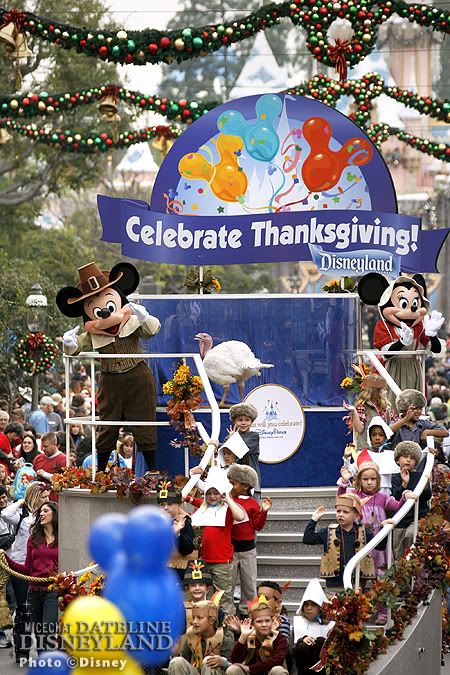
The venue changed in 2005, however, when Disneyland was celebrating its fiftieth anniversary. That year, a lucky turkey named "Marshmallow," and his alternate, "Yam," were taken by police escort to the airport and then flown first class to California. According to the Associated Press:

Marshmallow became the Grand Marshal of Disneyland's Thanksgiving parade, and the sign above his float read "The Happiest Turkey on Earth." The turkeys then retired to a coop at the park's Big Thunder Ranch, where three of the pardoned birds...still live. Florida's Disney World got the birds from 2007, when they arrived on a United Airlines flight that was renamed "Turkey One."

In 2010, the venue changed yet again. Instead of being sent to Disneyland, the 21-week-old turkey that President Obama pardoned was sent to live out the rest of his life at George Washington's Mount Vernon Estate in Virginia. Upon its arrival at Mount Vernon, it was reportedly "be driven to his pen in a horse-drawn carriage and be greeted with a trumpet fanfare."


A spokeswoman for Mount Vernon said that it was appropriate that the turkey go to Washington's home since he was the first president to issue a Thanksgiving Proclamation, and he raised wild turkeys at Mount Vernon.

Although she didn't say how the Washington's preferred to serve their Thanksgiving birds, the Mount Vernon Inn offers a daily lunch menu that includes a "Colonial Turkey Pye" which is described as "a turkey stew served with mixed vegetables and topped with a homemade buttermilk biscuit."

While it might be difficult to obtain a copy of that particular recipe, you can try this quick and simple recipe for Turkey Pot Pie if you need something to do with your leftover turkey this Thanksgiving or this one from Pillsubry.com:


1 sheet frozen puff pastry
1 egg, beaten
1/2 cup milk
2 (11-ounce) cans condensed Cheddar cheese soup
2 (10 3/4-ounce) cans cream of celery soup
1 large turkey skinned, cooked, boned and cubed
2 medium onions, diced
2 cup cooked butternut squash, diced
2 cup cranberries
Salt and pepper

Preheat to 350 degrees F. To make the crust, dust surface with flour. Cut 1 sheet of frozen puff pastry into 1-inch strips, 8 inches long.
On a large cookie sheet, weave strips into a lattice large enough to cover each pot pie. Mix egg and milk together and brush onto each lattice square. Bake for 5 minutes.

Dough will rise and turn light golden brown. Set aside. In a large saucepan heat the soups. Stir in turkey, onion, squash, cranberries, salt and pepper. Bring mixture to a boil. In an oven-proof dish, fill with mixture and top with the pre-cooked lattice square. Bake for 5 minutes until bubbly and puff pastry is deep golden brown.

Monday, September 28, 2020

John Quincy Adams, the Corrupt Bargain, and the Election of 1824


When John Quincy Adams took the oath of office in 1825, it was under a cloud of controversy. The election of 1824 had been a bitterly contested four-man race between Andrew Jackson, Henry Clay, William Crawford, and Adams. Since no candidate won a majority of electoral votes, the election was thrown into the House of Representatives where Clay, as Speaker of the House, threw his support to Adams, even though Jackson won the most popular and electoral votes.

Adams then quickly appointed Clay as Secretary of State. Outraged and feeling cheated out of the White House, Jackson and his supporters called the deal a “Corrupt Bargain to "cheat the will of the people."”

With these accusations hanging over his head, Adams faced problems from the start. Aware of the fact that “two-thirds of the whole people” did not want him to be president, Adams promised in his Inaugural Address to make up for his lack of support with “a heart devoted to the welfare of our country.”

But his four years in office weren't easy ones. Although his intelligence, family background and experience should have made him a great president, John lacked the charisma needed to create a base of loyal supporters.


Nevertheless, he and his wife Louisa hosted many dinner parties at the White House, as required. But his cold personality had a chilling effect on others and guests seated near the president at dinner often said that he had a hard time engaging in casual conversation. Aware of his inability to make small talk, John wrote this in his diary:

I went out this evening in search of conversation, an art of which I never had an adequate idea. Long as I have lived in the world, I never have thought of conversation as a school in which something was to be learned. I never knew how to make, control, or to change it.

I am by nature a silent animal, and my dear mother’s constant lesson in childhood, that children should be seen and not heard, confirmed me irrevocably in what I now deem a bad habit. Conversation is an art of the highest importance, a school in which, for the business of life, more may perhaps be learnt than from books. It…consists more in making others talk than in talking. Therein has been, and ever will be, my deficiency – the talent of starting the game.


Like his dad, John Quincy was a very intelligent man, but he lacked personal warmth and his critics called him “a chip off the old iceberg!”

FAST FACT: Adams’ policies favoring a strong federal government angered many southern slave holders who feared that that any expansion of federal power might interfere with slavery. His Indian policies also cost him supporters. Like Jefferson and Monroe, Adams wanted to remove Native Americans west of the Mississippi River, but believed that the government should honor and uphold Indian treaties and purchase (rather than forcibly or fraudulently take) Indian lands.

Wednesday, September 2, 2020

George Bush, Barack Obama, and the Politics of Peanut Butter and Jelly Sandwiches

George Bush's memoir Decision Points has been described by the New York Times as "an autobiography focused around 'the most consequential decisions' of his presidency and his personal life from his decision to give up drinking in 1986 to his decision to invade Iraq in 2003 to his decisions regarding the financial crisis of 2008." According to the Product Description of the book:

President Bush brings readers inside the Texas Governor’s Mansion on the night of the hotly contested 2000 election; aboard Air Force One on 9/11, in the hours after America’s most devastating attack since Pearl Harbor; at the head of the table in the Situation Room in the moments before launching the war in Iraq; and behind the Oval Office desk for his historic and controversial decisions on the financial crisis, Hurricane Katrina, Afghanistan, Iran, and other issues that have shaped the first decade of the 21st century...

With so many momentous issues to review, it's not surprising that Mr. Bush didn't bother to mention his favorite foods, but...in an interview with Oprah Winfrey during the 2000 presidential campaign, he did say that his favorite sandwich is peanut butter and jelly on white bread.
.

Eight years later, during the 2008 presidential campaign, peanut butter and jelly sandwiches once again made national headlines. Responding to charges that his economic policies were socialistic in nature, Barack Obama ridiculed his opponent John McCain for constantly resorting to trivialities and distractions:

Now, because he knows that his economic theories don't work, he's been spending these last few days calling me every name in the book. Lately he's called me a socialist for wanting to roll-back the Bush tax cuts for the wealthiest Americans so we can finally give tax relief to the middle class. I don't know what's next. By the end of the week he'll be accusing me of being a secret communist because I shared my toys in kindergarten. I shared my peanut butter and jelly sandwich.
.

Although neither Bush nor Obama mentioned how they prefer their PB&Js to be made, we do know that John Harvey Kellogg, the cereal pioneer, was the first person to receive a patent for the process of making peanut butter in 1895. According to Andrew Smith's Peanuts: The Illustrious History of the Goober Pea, early peanut butters had several problems:

The first was that peanut oil has a melting point below room temperature. Gravity separated the oil, which then oxidized and turned rancid. Likewise, salt added to the peanut butter separated and crystallized. Grocers received peanut butter in tubs or pails and were advised to use a wooden paddle to stir it frequently...

During the early years of the twentieth century, William Norman, an English chemist, invented a method of saturating unsaturated and polyunsaturated fatty acids, thus preventing them from turning rancid. In 1922, Joseph L. Rosefield...applied these principles to peanut butter [and] developed a process to prevent oil separation and spoilage in peanut butter...The result was a semisolid peanut butter [that]...was thick and creamy and did not stick to the roof of the mouth as much as previous products.


Selecting the name "Skippy" for his product, Rosefield introduced creamy and chunky-style peanut butter in 1932. Three years later, the company inaugurated its first wide-mouth peanut-butter jar, which quickly became the industry standard. And in less than twenty five years, peanut butter had "evolved from a hand ground delicacy to a mass-produced commercial commodity sold in almost every grocery store in America."


FOOD FACT: Florence Cowles' 1928 cookbook Seven Hundred Sandwiches includes dozens of creative recipes for peanut butter sandwiches, including: Peanut Butter and Egg Sandwich, Peanut Butter and Cabbage Sandwich, Peanut Butter and Marshmallow Sandwich, Peanut Butter and Prune Sandwich, Peanut Butter and Cherry Sandwich, Peanut Butter and Cheese Sandwich, and Peanut Butter and Olive Sandwich made with Mayonnaise on Rye. Oh my!

Thursday, May 28, 2020

James Garfield, the Pythagorean Theorem, and the Founding Father of Vegetarianism

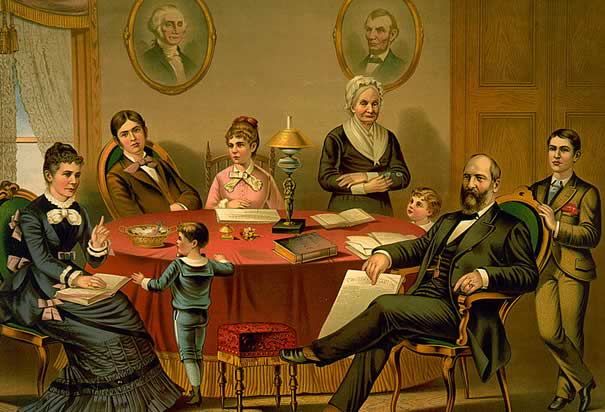
As a lawyer, professor, and duly ordained minister, James Garfield is the only president to have discovered a novel proof of the Pythagorean Theorem. The Theorem, of course, is named after Pythagoras, an ancient Greek philosopher and mathematician.

As you might recall from grade school, the theorem says that in a right triangle, the sum of the squares of the two right angle sides will always be the same as the square of the hypotenuse (the longest side).

Translated mathematically, the equation would read: A2 + B2 = C2. Let’s try it quickly here: If Side A is 4 inches long and Side B is 3 inches long, the equation would be: 4 x 4 = 16 and 3 x 3 = 9. Added together, 16 + 9 = 25. Now we simply find the square root of 25 and - voila! - we know that side C is 5 inches long!


So what does the Pythagorean Theorem have to do with food? A lot, if you consider the fact that Pythagoras has been called the Founding Father of Vegetarianism. Until the 19th century, when the term "vegetarian" came into use, people who didn't eat meat were often called “Pythagoreans.”

As a young man, Garfield was a farmer in Ohio and wouldn't have called himself a Pythagorean, but he might have enjoyed this healthy recipe for Ultimate Veggie Burgers from 101 Cookbooks if he tried it!


2 1/2 cups garbanzo beans or canned garbanzos, rinsed
4 large eggs
1/2 teaspoon fine-grain sea salt
1/3 cup chopped fresh cilantro
1 onion, chopped
Grated zest of one lemon
1 cup toasted (whole-grain) bread crumbs
1 tablespoon extra-virgin olive oil

Combine garbanzos, eggs, and salt in a food processor. Puree until the mixture is the consistency of a thick, slightly chunky hummus. Pour into a mixing bowl and stir in the cilantro, onion, and zest.

Add breadcrumbs, stir, and let sit for a couple of minutes. Heat oil in a heavy skillet over medium low, add 4 patties, cover and cook for 7-10 minutes. Flip the patties and cook the second side for 7 minutes, or until golden. Remove from the skillet and cool on a wire rack while you cook the remaining patties.

FAST FACT: Garfield was one of our most intellectual presidents. Before going into politics, he was a professor of ancient languages. He was also ambidextrous and would often show off his knowledge by writing Greek with one hand and Latin with the other. Now THAT'S impressive!

Thursday, April 30, 2020

Teddy Roosevelt Teddy Bear Cupcakes


So did you know that the Teddy Bear was created and named in honor of Theodore Roosevelt? It all began when he went on a four-day hunting trip in the Mississippi wilderness in November, 1902. Although Roosevelt was known as an experienced big game hunter, he had not come across a single bear on that particular trip.

According to historians at the National Park Service:

Roosevelt’s assistants, led by Holt Collier, a former slave, cornered and tied an old black bear to a willow tree, then they summoned Roosevelt and suggested that he shoot it. Viewing this as very unsportsmanlike, Roosevelt refused to shoot the bear. News of the president's refusal to shoot a tired old bear spread quickly throughout the United States, but it wasn't just any president - it was Theodore Roosevelt, the big game hunter!

So, that's how Theodore Roosevelt's name became associated with a bear. But the story doesn't end there because when a political cartoonist named Clifford Berryman read reports about the incident, he decided to lightheartedly lampoon it.


Then, when a Brooklyn candy shop owner by the name of Morris Michton saw Berryman’s cartoon in the Washington Post on November 16, 1902, he came up with an idea - and his idea was quite brilliant, indeed.

You see, Morris's wife Rose was a seamstress and made stuffed toys at their shop, so he asked her to make two stuffed toy bears that looked just like the cute little bear in Mr. Berryman's cartoon. So Rose began sewing and as soon as she finished the last stitch on her cute cuddly creations, Morris proudly showcased them in the front window of their shop, along with a sign that read "Teddy's Bears."

After receiving Roosevelt’s permission to use his nickname, Morris began mass producing the toy bears, which became so popular that he launched the Ideal Novelty and Toy Company, and, by 1907, more than a million "Teddy Bears" had been sold in the United States.

And so NOW you know how Teddy Roosevelt, a political cartoonist, a Brooklyn candy shop owner, and a seamstress led to the creation and naming of the first American Teddy Bear!

Now...I'm guessing that you probably don't want to feast on a juicy bear steak like those that Roosevelt and his fellow hunters enjoyed, but you might like these cute Teddy Bear Cupcakes that are fun to make and great to serve at children's birthday parties and play dates.


1 box Betty Crocker® SuperMoist® yellow cake mix
1 cup water
1/2 cup creamy peanut butter
3 eggs
1 container Betty Crocker® Whipped chocolate frosting
1/3 cup miniature semisweet chocolate chips
48 teddy bear-shaped graham snacks

In large bowl, beat cake mix, water, peanut butter and eggs with electric mixer on low speed 30 seconds. Beat on medium speed 2 minutes, scraping bowl occasionally. Divide batter among muffin cups. Bake 13 to 18 minutes or until toothpick inserted in center comes out clean. Cool 10 minutes. Remove from pan to cooling rack. Cool for 30 minutes.

Reserve 1/4 cup of the frosting. Spread remaining frosting over tops of cupcakes. Sprinkle each cupcake with chocolate chips; press gently into frosting. Spread about 1/2 teaspoon reserved frosting on flat sides of 2 graham snacks. Place on cupcakes, pressing candles in place.

Monday, April 13, 2020

The Last First Class Dinner on the Titanic

On April 10, 1912, the RMS Titanic set sail from Southampton England on her maiden voyage to New York City. Known as the largest, most luxurious ocean liner ever built, its passengers were a mix of the world's wealthiest basking in opulent, first-class accommodations and poor hungry immigrants packed into steerage.

Four days into her journey, at 11:40 p.m. on April 14th, the Titanic struck an iceberg in the icy waters of the North Atlantic. One crew member later compared the sound of the collision to "the tearing of calico, nothing more." But the force of the impact tore apart faulty rivets along the hull, filling the ship's interior with some 39,000 tons of seawater before its sinking.

As the bow plunged deeper into the water, passengers frantically scrambled to the stern. Seventeen-year-old Jack Thayer witnessed the sinking from an overturned lifeboat. "We could see groups of the almost fifteen hundred people still aboard," he recalled, "clinging in clusters or bunches, like swarming bees; only to fall in masses, pairs or singly, as the great after part of the ship, two hundred and fifty feet of it, rose into the sky, till it reached a sixty-five or seventy degree angle."

Two hours and forty minutes after striking the iceberg, the last of the Titanic slid slowly beneath the dark surface of the water.


Of course, the sinking of the Titanic is the most famous maritime disaster in modern history and has been chronicled in countless books, novels, plays, TV shows, and movies. What isn't so well-known, however, is that the Titanic carried some of the most advanced culinary facilities afloat, with elegant dining saloons, outdoor cafes, and luxurious first-class dining rooms that rivaled the ritziest restaurants in Paris, London,and New York.

Although a huge staff worked round the clock to serve more than 6,000 meals each day, only two menus were recovered from the Titanic for the final night of its doomed voyage. One of them - the first-class menu - tells us that the meal began as it did every night, with hors d’ouevers and oysters, followed by Consommé Olga, Cream of Barley Soup and Poached Salmon garnished with cucumbers and Mousseline Sauce.

After this came Filet Mignons Lili, Saute of Chicken Lyonnaise, Lamb with Mint Sauce, Roast Duckling, and Sirloin of Beef with Chateau Potatoes, Creamed Carrots, Boiled Rice and Parmentier Potatoes. Then came Punch Romaine with Roast Squab and Cress followed by Cold Asparagus Vinaigrette, Pate de Foie Gras and Celery. If passengers had any room left for dessert, they could choose from such items as Waldorf Pudding, Peaches in Chartreuse Jelly, Chocolate and Vanilla Eclairs, and French Ice Cream.


Although it might be a bit macabre, some Titanic enthusiasts enjoy recreating the last meals on the ship, and Rick Archbold's The Last Dinner on the Titanic presents 50 recipes based on the dishes that appeared on its menus. One of the most delicious items from a first-class dinner menu is Chicken Lyonnaise. If you'd like to get a taste of what some first-class passengers ate on that fateful night, here's the recipe to try:

1/3 cup all-purpose flour
2 tbsp chopped fresh thyme (or 1 tbsp dried)
1/2 tsp each salt and pepper
6 boneless chicken breasts
1 egg, beaten
3 tbsp vegetable oil
2 onions, thinly sliced
1 clove garlic, minced
1/3 cup white wine
1 cup chicken stock
2 tsp tomato paste
Pinch granulated sugar

In sturdy plastic bag, shake together flour, 1 tbsp of the thyme (or 1 1/2
tsp if using dried), salt, and pepper. One at a time, dip chicken breasts
into egg, and then shake in flour mixture. In large deep skillet, heat 2 tbsp of the vegetable oil over medium-high heat. Place chicken in pan, skin side down. Cook, turning once, for 10 minutes or until golden brown. Remove from skillet and place in 225-degree F oven.

Reduce heat to medium; add remaining oil. Stir in onions, garlic and remaining thyme; cook, stirring often, for 5 minutes or until onions are translucent. Increase heat to medium-high and continue to cook onions, stirring often, for 5 minutes or until golden brown. Add wine to pan; cook, stirring to scrape up any brown bits, for about 1 minute of until reduced by half. Stir in stock, tomato paste, and sugar. Boil for 2 minutes or until beginning to thicken. Return chicken to pan, turning to coat, and cook for 5 minutes or until juices from chicken run clear.

FAST FACT: In the wake of the disaster, King George sent a cablegram to President William Howard Taft, which read: "The Queen and I are anxious to assure you and the American nation of the great sorrow which we experienced at the terrible loss of life that has occurred among the American citizens, as well as among my own subjects, by the foundering of the Titanic. Our two countries are so intimately allied by ties of friendship and brotherhood that any mis fortunes which affect the one must necessarily affect the other, and on the present terrible occasion they are both equally sufferers."

In response, Taft sadly wrote, "In the presence of the appalling disaster to the Titanic the people of the two countries are brought into community of grief through their common bereavement. The American people share in the sorrow of their kinsmen beyond the sea. On behalf of my countrymen I thank you for your sympathetic message. "WILLIAM H. TAFT."