Monday, February 25, 2013

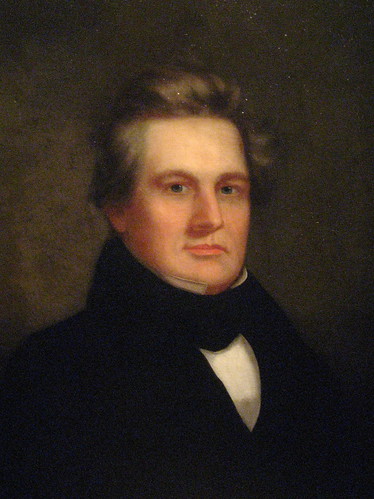
William McKinley, the Spanish American War, and the Embalmed Beef Scandal

Okay, so this story is kind of repulsive and certainly won't make you hungry, but it's a part of food history so here goes:

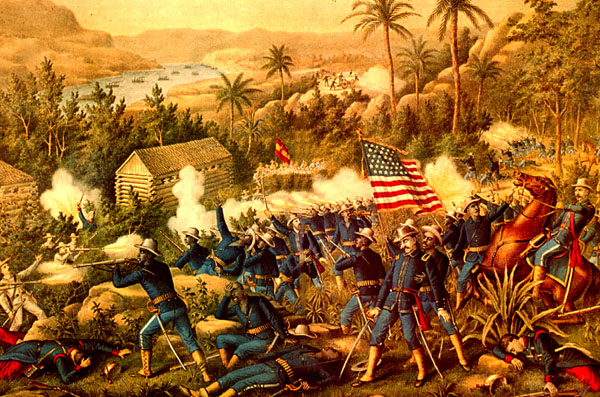
In the weeks immediately following the Spanish-American War, stories began to surface about serious problems in the United States Army's food supply. In the ensuing federal investigation, General Nelson Miles testified that he had recommended to Secretary of War Russell Alger that cattle be purchased in Cuba and Puerto Rico so that American troops stationed overseas would have fresh beef to eat.

But for some reason this was not done. Instead, thousands of tons of canned beef were shipped from the mainland for our troops to eat. Soldiers later gave sickening descriptions of the beef, describing it as “putrefied,” “extremely nauseating” and totally “unfit for human use.”

Newspaper and magazine articles about the scandal stirred up so much public outrage that the Secretary of War resigned at President McKinley’s request. Although no other disciplinary actions were taken, some historians say that the “Embalmed Beef Scandal” contributed in part to the passage of the Pure Food and Drug Act of 1906 which prohibits the manufacture, sale, and distribution of adulterated food products.

The United States, of course, emerged from the Spanish-American War as a world power with an overseas empire that included not only Cuba and Puerto Rico but the Philippine Islands, as well. The rampant patriotism unleashed by the war was on ample display at a gala celebration held in McKinley’s honor during a tour of the South at the end of 1898 and on an extended trip to Boston two months later.

The highlight of the Boston trip was a "mammoth banquet" held at the Home Market Club in Mechanic’s Hall, where nearly 2,000 guests dined on salmon, capon, and fillet of beef after McKinley delivered an important speech in which he attempted to reconcile the United States’ anticolonial origins with the fighting then raging between Filipinos demanding independence and American forces determined to thwart them.

Near the end of his remarks, McKinley asked Americans to look beyond the "blood-stained trenches around Manila" into the future, when prosperity would have returned to the Philippines. At that time, the president declared, "Filipino children and their descendants "shall for ages hence bless the American republic because it emancipated and redeemed their fatherland, and set them in the pathway of the world’s best civilization."

Thursday, February 21, 2013

Hasty Pudding and the French and Indian War

So did you know that Hasty Pudding is mentioned in a verse in the patriotic song YANKEE DOODLE DANDY? A popular British song, its origins can be traced to the French and Indian War. It was later adopted in the United States and is the state anthem of Connecticut today. Maybe you remember the lyrics:

Yankee Doodle went to town
A-riding on a pony
Stuck a feather in his cap
And called it macaroni'

Yankee Doodle keep it up
Yankee Doodle dandy
Mind the music and the step
And with the girls be handy

Fath'r and I went down to camp
Along with Captain Gooding
And there we saw the men and boys
As thick as hasty puddin'


Part of the Seven Years War between France and England, the French and Indian War was fought in North America between 1754 and 1763. The name of the war refers to the two main enemies of the British: the Royal French forces and the various American Indian tribes allied with them.

Heavily outnumbered and outgunned by the British, the French and Indian forces “collapsed in a massive defeat” in Quebec in 1759, and, in less than a year, the British controlled most of the North American frontier.

Although victorious, the war plunged Britain deeply into debt, which King George III sought to pay off by imposing taxes on sugar, coffee, wine, rum, tea, and other imports to the colonies. These taxes, along with other increasingly oppressive measures, united the colonists in opposition and set them down the path toward the Revolutionary War.

Now...Hasty Pudding most certainly wasn't a standard wartime ration, but, by the early eighteenth century, it was a common dish in England and the colonies, with its origins reaching back to the various pottages of the Middle Ages. According to the Oxford Companion to Food and Drink:

Hasty pudding, the simplest of all puddings, if it can be called a pudding at all, for it is no more than a porridge of flour and milk. Such a pudding should be made in little more time than it took to boil the milk, and it has no doubt been a popular emergency dish since the Middle Ages, if not earlier.

Sweetened, flavoured with spice or rosewater, and dotted with butter, hasty pudding can be quite palatable; and in fact in the 18th and 19th centuries in England it was esteemed as a delicacy...In the far north of England, and in Scotland, at least as early as the 18th century, the name came to be applied to a plain porridge of oats and barley, made with water as often as milk. In Victorian England...Hasty pudding was sometimes made with oatmeal, or with sago or tapioca. Milk was always used.


While recipes vary considerably, most early American versions were known as Indian Pudding because it was typically prepared with ground Indian maize and sweetened with maple sugar or molasses. If you'd like to whip up a batch of this classic British and American dish this holiday season, here's a simple recipe to try from simplyrecipes.com:

6 cups of milk
1/2 cup (1 stick) butter
1/2 cup yellow cornmeal
1/4 cup flour
1 teaspoon salt
1/2 cup molasses
3 eggs, beaten
1/3 cup of granulated sugar
1 teaspoon of cinnamon
1 teaspoon of nutmeg

Scald the milk and butter in a large double boiler. Or heat the milk and butter for 5 or 6 minutes on high heat in the microwave, until it is boiling, then transfer it to a pot on the stove. Keep hot on medium heat. Preheat oven to 250°F. In a separate bowl, mix cornmeal, flour, and salt; stir in molasses. Thin the mixture with about 1/2 cup of scalded milk, then gradually add the mixture back to the large pot of scalded milk. Cook, stirring until thickened.

Temper the eggs by slowly adding a half cup of the hot milk cornmeal mixture to the beaten eggs, whisking constantly. Add the egg mixture back in with the hot milk cornmeal mixture, stir to combine. Stir in sugar and spices, until smooth.

At this point, if the mixture is clumpy, you can run it through a blender to smooth it out. Pour into a 2 1/2 quart casserole dish. Bake for 2 hours at 250°F. Allow the pudding to cool about an hour. It should be reheated to warm temperature if it has been chilled. Serve with whipped cream or vanilla ice cream.

Monday, February 18, 2013

Sarah Polk and "Hail to the Chief"

So did you know that the song “Hail to the Chief" did not originate as a salute to the president? The phrase dates back to a poem by Sir Walter Scott called “The Lady of the Lake.” Published in 1812, the poem was so popular in England that it was adapted into a musical play which later made its way to the United States.

The first time the song was played to honor an American president was at a ceremony in Boston in 1815 to commemorate George Washington's birthday. Andrew Jackson was the first living president to be honored by "Hail to the Chief" on January 9, 1829. The song was also played at Martin Van Buren's inauguration ceremonies on March 4, 1837 and at other social occasions during his administration.

According to historians at the Library of Congress, Julia Tyler, the wife of John Tyler, was the first to specifcially request that the song be played to announce the president’s arrival at an official function. But it was Sarah Polk who requested that the song be routinely played for presidential entrances.

According to White House historian William Seale, Mrs. Polk was concerned that her husband James "was not an impressive figure, so some announcement was necessary to avoid the embarrassment of his entering a crowded room unnoticed. At large affairs the band...rolled the drums as they played the march...and a way was cleared for the President."

Maybe you've heard the lyrics:

Hail to the Chief we have chosen for the nation,
Hail to the Chief! We salute him, one and all.
Hail to the Chief, as we pledge co-operation
In proud fulfillment of a great, noble call.

Yours is the aim to make this grand country grander,
This you will do, that's our strong, firm belief.
Hail to the one we selected as commander,
Hail to the President! Hail to the Chief!


In 1954, the Department of Defense recognized "Hail to the Chief" as the official musical tribute for presidential events. Today, the song, along with its preceding fanfare known as "Ruffles and Flourishes," is played by the U.S. Marine Band to announce the arrival of the President at State Dinners and other formal events.

Friday, February 1, 2013

Theodore Roosevelt, Muckrakers, and the Pure Food and Drug Act of 1906

So this story is kind of repulsive and certainly won't make you hungry for a juicy hamburger or steak, but it's a part of food history so here goes:

On June 30, 1906, President Theodore Roosevelt signed into law the Meat Inspection Act and Pure Food and Drug Act which provided for federal inspection of meat products and prohibited the manufacture, sale, or transportation of adulterated food products.

The Acts arose in part due to articles and exposés written by muckrakers, like Upton Sinclair, whose popular 1906 novel The Jungle contains hair-raising descriptions of the ways in which meat was produced in Chicago slaughterhouses and stockyards.

Sinclair described how dead rats, putrid meat, and poisoned rat bait were routinely shoveled into sausage-grinding machines, how bribed inspectors turned a blind eye when diseased cows were slaughtered for beef, and how filth and guts were swept off the floor and then packaged as “potted ham.”

Muckraker, of course, is a term that is applied to those novelists and journalists who sought to expose the corruption of American business and politics in the early twentieth century. The term was first coined by President Roosevelt in a 1906 speech in which he compared writers like Sinclair to the “Man with the Muck-rake” (a character in John Bunyan's Pilgrim's Progress) who was so focused on "raking the filth at his feet” that he failed to look up and “behold the celestial crown.”

Similarly, Roosevelt argued that Sinclair and other muckrakers were so focused on the evils of American society that they failed to behold “the vision of America's promise.”

Friday, January 25, 2013

Franklin Roosevelt's Royal Hot Dog Fiasco

When Franklin D. Roosevelt invited England’s King George VI for a visit to the United States in June of 1939, the significance of the invitation reportedly did not go unnoticed. Ever since America declared its independence from England in 1776, "the United States and Great Britain had oftentimes experienced tense relations, but Roosevelt's invitation carried great significance in the history of Anglo-American relations, not only because of their colonial past, but more importantly, because it signified the dawn of a new era in American and British cooperation.”

With Europe on the brink of war, Roosevelt realized the need to forge closer ties between the two democracies and he reportedly “planned every minute detail of the visit to ensure the King’s success in winning over the sympathy and support of the American people." His efforts paid off. According to historians at the Franklin D. Roosevelt Presidential Library and Museum:

Americans heartily welcomed England's royalty with thunderous applause and adulation when the King and Queen arrived in Washington on June 8, 1939. Crowds lined the streets for a chance to glimpse the King and Queen as they traveled throughout the city. In Washington, the couple was treated to all the formalities one would expect from a State Visit. There was an afternoon reception at the British Embassy, followed by a formal evening of dining and musical entertainment at the White House.

On their second day, the King and Queen took in the sights of DC as they boarded the presidential yacht and sailed up the Potomac River to George Washington's Mount Vernon and to Arlington Cemetery to lay a wreath at the Tomb of the Unknown Soldier. After two days in Washington, the...royal couple accompanied the Roosevelts to their home in Hyde Park, New York [where]...they enjoyed the simpler things in life. In contrast to the formal State Dinner at the White House, dinner at the Roosevelt's home...was described to the press as a casual dinner between the two families.


Even more informal was the following day's event - an old-fashioned American-style picnic which included the following menu items: Virginia Ham, Smoked Turkey, Cranberry Jelly, Green Salad, Sodas, Beer and...Hot Dogs!

The next day, news of the picnic made the front page of the New York Times, under the headline, “KING TRIES HOT DOG AND ASKS FOR MORE.” While the King reportedly ate his hot dog by hand like an American, the Queen daintily cut hers with a knife and fork.

Although the royal visit was surely the high point of the Roosevelt's 1939 social season, the president and the king also discussed the dire political and military situation developing in Europe. Equally important to Roosevelt, however, was that the visit "changed the perceptions of the American people, which in turn allowed him to do more for Britain. When England declared war on Germany three months later, Americans, due in no small part to the King and Queen's visit, sympathized with England's plight. Britons were no longer strangers or the evil colonial rulers from the past but familiar friends and relatives with whom Americans could identify."

For their part, the Royal Couple was deeply appreciative of the Roosevelt’s efforts and of the outpouring of support from the American people. In a letter to Mrs. Roosevelt, the Queen later wrote:

I must tell you how moved I have been by the many charming, sympathetic, and understanding letters which I have received from kind people in the United States. Quite poor people have enclosed little sums of money to be used for our wounded, our sailors, or mine sweepers. It really has helped us, to feel such warmth of human kindness and goodness, for we still believe truly that humanity is overall.

Sometimes, during the last terrible months, we have felt rather lonely in our fight against evil things, but I can honestly say that our hearts have been lightened by the knowledge that friends in America understand what we are fighting for. We look back with such great pleasure to those lovely days we spent with you last June. We often talk of them, and of your & the President's welcome & hospitality. The picnic was great fun, and our children were so thrilled with the descriptions of the Indian singing & marvelous clothes - not to mention the hot dogs!


Although the picnic appeared to be a casual affair, much fuss had been made in advance of it. Almost a month before the event, Eleanor Roosevelt expressed concern about it in her newspaper column called "My Day." In an entry dated May 25, 1939, she wrote: Oh dear, oh dear, so many people are worried that the dignity of our country will be imperiled by inviting Royalty to a picnic, particularly a hot dog picnic! My mother-in-law has sent me a letter which begs that she control me in some way...Let me assure you, dear readers, that if it is hot there will be no hot dogs, and even if it is cool there will be plenty of other food, and the elder members of the family and the more important guests will be served with due formality.

Enter to Win Book Giveaway by clicking here

Thursday, January 17, 2013

George Washington's Thursday Dinners

When George Washington was inaugurated in 1789, some of the most pressing questions facing the new nation involved social manners and etiquette. This may seem trivial today, but back then, George and his fellow patriots had just fought a long war against the British Crown and they wanted to be sure that the American people would never mistake their president for a king.

How much pageantry should surround the office of the presidency? How elaborate should presidential dinners and receptions be? And how should the new president be addressed? As “His Excellency” or “His Mightiness”? These were questions of great importance when George Washington took the Oath of Office on the balcony of Federal Hall in New York City on April 30, 1789.

Within weeks, Washington distributed questionnaires to his cabinet members, soliciting their opinions regarding the basis of “a tenable system of etiquette.” Vice President John Adams returned a strong response, as did Alexander Hamilton and James Madison. After much discussion, it was decided that George would be addressed as President Washington or simply Mr. President.

It was also decided that “levees” (receptions) would be held each Tuesday afternoon for "foreign ambassadors and other strangers of distinction” and that congressional dinners would be held each Thursday. Friday nights were chosen for Martha Washington’s “Drawing Rooms” and the remaining days were reserved for state banquets and personal entertaining.

Despite his desire to avoid the trappings of monarchy, George's Thursday dinners were truly fit for a king. "Dinners would begin promptly at four o’clock," according to culinary historian Poppy Cannon, and would often consist of three "bountiful" courses, the first two of which typically consisted of fifteen or twenty different dishes – all brought to the table at once!

A menu from Martha Washington’s cookbook reveals just how elaborate these dinners could be. For a first course, she suggested serving Boiled Turkey, Baked Salmon, Shoulder of Mutton, Chicken Patties, Baked Ham, Stewed Cabbage, Scotch Collops, Pork Cutlets and Sauce Robert with Mashed Potatoes, Maids of Honors, Dressed Greens, French Beans, Oyster Loaves and Celery Sauce.

This course would be followed by Asparagus a la Petit Poi, Crayfish in Sauce, Fruit in Jelly, Lamb Tails, Partridges, Poached Salmon, Wild Duck, Roasted Hare, Sweetbreads, Plovers, Prawns, and Chardoons with Fricassed Birds, Rhenish Cream and custard.

After this course, the table cloth was removed and fresh glasses and decanters of wine were placed on the table with all kinds of fruits and nuts. If Martha and other ladies were present, they would excuse themselves at this point and the men would settle down (with very full bellies!) to talk about politics and other important affairs of the day.

Although Martha's recipes might be difficult to duplicate today, you can try this more recent one for Poached Salmon with Dill from simplyrecipes.com.

1 to 1½ pounds salmon fillets
½ cup dry white wine (a good Sauvignon Blanc)
½ cup water
A few thin slices of yellow onion and/or 1 shallot, peeled and sliced thin
Several sprigs of fresh dill or sprinkle of dried dill
A sprig of fresh parsley

Put wine, water, dill, parsley and onions in a saute pan, and bring to a simmer on medium heat. Place salmon fillets, skin-side down on the pan. Cover and cook for 5 minutes. Season with freshly ground black pepper and enjoy.

FOOD FACT: If you live near Mount Vernon or plan on visiting someday, be sure to stop by the Mount Vernon Inn Restaurant which serves such authentic colonial appetizers as Peanut and Chestnut Soup, Colonial Hoe Cakes, and Fried Brie with Strawberry Sauce. Dinner menu items include Filet Mignon wrapped in Virginia Pepper Bacon;  Roast Duckling with “George Washington’s favorite Apricot Sauce,” and Stuffed Pork Loin with Opium Sauce!

For my new book, click here!

Monday, January 14, 2013

Richard Nixon Grapefruit Avocado Salad

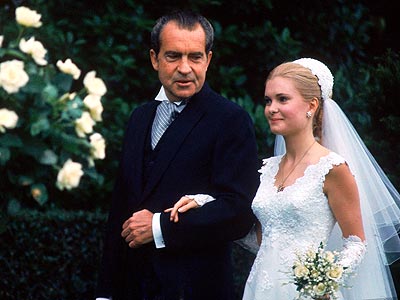
As devout Quakers, Richard Nixon’s parents taught their four sons patience, courage, and determination, traits that Nixon would draw strength from during trying times in his life. He later recalled that he "gained his first taste for politics during debates around the family dinner table" and described “friendly pillow fights with his three brothers in the small upstairs bedroom they shared.”

Growing up on a small citrus farm in Yorba Linda, California, Nixon may have eaten graperuit often and Grapefruit-Avocado Salad was among the menu items served at his second Inaugural Luncheon on January 20, 1973. If you'd like to make a refreshingly colorful, slightly tangy Grapefruit Avocado Salad today, here's a simple recipe to try from Ina Garten at the Food Network:      

1 tablespoon Dijon mustard
1/4 cup freshly squeezed lemon juice
1 1/2 teaspoons kosher salt
3/4 teaspoon freshly ground black pepper
1/2 cup olive oil
3 or 4 ripe Hass avocados
2 large red grapefruits

Place the mustard, lemon juice, salt, and pepper in a small bowl. Slowly whisk in the olive oil until the vinaigrette is emulsified.

Before serving, cut the avocados in 1/2, remove the seeds, and carefully peel off the skin. Cut each half into 4 thick slices. Toss the avocado slices in the vinaigrette to prevent them from turning brown. Use a large, sharp knife to slice the peel off the grapefruits (be sure to remove all the white pith), then cut between the membranes to release the grapefruit segments.

Arrange the avocado slices around the edge of a large platter. Arrange the grapefruit...and enjoy! 


Thanks for stopping by THE HISTORY CHEF! For a free excerpt of my new book from Simon and Schuster click here!

Saturday, January 12, 2013

Andrew Jackson's First Inaugural Orange Punch


When Andrew Jackson was inaugurated on March 4, 1829, it was like "the homecoming of a hero" as twenty thousand of his loyal supporters, who believed he had been cheated out of the White House four years earlier, converged upon Washington, eager to celebrate the long-delayed victory of their champion.

According to food historian Poppy Cannon, Jackson's inauguration "sparked a celebration that did everything but set fire to the White House." Thousands of rowdy fans poured into the building and "little thought was given to the delicate French furniture, elegant draperies, and fine china" as ice cream, punch, cakes and ices were gobbled up as fast they appeared on long serving tables."

In a letter to her sister, Margaret Bayard Smith, a prominent Washington socialite, described the chaos of Jackson's inaugural festivities this way:

But what a scene did we witness! The Majesty of the People had disappeared, and a rabble, a mob, of boys, negros, women, children, scrambling fighting, romping. What a pity, what a pity! No arrangements had been made, no police officers placed on duty, and the whole house had been inundated by the rabble mob...

Cut glass and china to the amount of several thousand dollars had been broken in the struggle to get the refreshments, punch and other articles had been carried out in tubs and buckets, but had it been in hogsheads it would have been insufficient...

Ladies fainted, men were seen with bloody noses, and such a scene of confusion took place as is impossible to describe…This concourse had not been anticipated...Ladies and gentlemen only had been expected at this Levee, not the people en masse. But it was the People's day, and the People's President, and the People would rule!


Another observer described the day's events this way:

Orange-punch by barrels full was inside, but as the waiters opened the door to bring it out, a rush would be made, the glasses broken, the pails of liquor upset, and the most painful confusion prevailed. To such a degree was this carried, that tubs of punch were taken from the lower story into the garden to lead off the crowds from the rooms.

Although no one knows exactly how those quick-thinking waiters prepared the punch that day, a writer for The Wall Street Journal scoured some ninteeenth century cookbooks and provided this adapted recipe for Inaugural Orange Punch that's "easy to make by the bucketful" if you've got a mob to entertain!

3 parts fresh orange juice
1 part fresh lemon juice
1 part Mulled Orange Syrup*
1 part dark rum
1 part cognac
2 parts soda water

Mulled Orange Syrup: Combine 1 cup sugar with 1 cup water and heat to a boil, stirring to dissolve the sugar. Reduce heat to a low simmer. Add the peel from an orange and mulling spices (a couple of cinnamon sticks, some whole cloves and allspice berries). After 15 minutes, remove from heat and let it sit for several hours. Strain.

Combine Mulled Orange Syrup and all other ingredients in a punch bowl with a large block of ice. Serve in punch cups with a little crushed ice. Add a dash of Angostura bitters to each glass and enjoy!

Thursday, January 10, 2013

John F. Kennedy's Inaugural Luncheon

In November of 1960, John F. Kennedy defeated Richard Nixon in one of the closest and most dramatic presidential elections in American history. Two and a half months later, on January 20, 1961, Kennedy was sworn in as the first Roman Catholic president of the United States and delivered his Inaugural Address on the terrace of the East Portico of the U.S. Capital. In it, he said:

...Fellow citizens, we observe today not a victory of party, but a celebration of freedom – symbolizing an end, as well as a beginning – signifying renewal, as well as change. For I have sworn before you and Almighty God the same solemn oath our forebears prescribed nearly a century and three quarters ago...

We dare not forget today that we are the heirs of that first revolution. Let the word go forth from this time and place, to friend and foe alike, that the torch has been passed to a new generation of Americans – born in this century, tempered by war, disciplined by a hard and bitter peace, proud of our ancient heritage – and unwilling to witness or permit the slow undoing of those human rights to which this Nation has always been committed, and to which we are committed today at home and around the world.

Let every nation know, whether it wishes us well or ill, that we shall pay any price, bear any burden, meet any hardship, support any friend, oppose any foe, to assure the survival and the success of liberty.

This much we pledge – and more.

And so, my fellow Americans: ask not what your country can do for you - ask what you can do for your country. My fellow citizens of the world: ask not what America will do for you, but what together we can do for the freedom of man...


After delivering his address, Kennedy and his wife Jacqueline were escorted to the Old Supreme Court Chamber in the U.S. Capitol for the traditional inaugural luncheon. According to Senate historians, menu items included cream of tomato soup with crushed popcorn; deviled crab meat imperial; New England boiled stuffed lobster with drawn butter; prime Texas ribs of beef au jus; string beans amandine and broiled tomatoes with grapefruit and avocado sections with poppyseed dressing.

Although the traditional inaugural luncheon at the Capital dates back to 1897 when the Senate Committee on Arrangements hosted a luncheon for President McKinley and several other guests, it didn't begin in its current form until 1953 when President Eisenhower, his wife Mamie, and fifty other guests dined on creamed chicken, baked ham, and potato puffs in the Old Senate Chamber.

Since then, the Joint Congressional Committee on Inaugural Ceremonies has organized a luncheon celebration at fourteen Presidential Inaugurations. Often featuring cuisine reflecting the home states of the new president and vice president, as well as the theme of the Inauguration, the luncheon program includes speeches, gift presentations, and toasts to the new administration.

FOOD FACT: According to historians, President Kennedy preferred orange juice, poached eggs on toast, crisp broiled bacon, milk and coffee at breakfast. For lunch, he enjoyed all kinds of soup, especially New England Fish Chowder. As for dinner, there were no particular favorites, although it has been said that he liked lamb chops, steak, turkey, baked beans and mashed potatoes. He also enjoyed corn muffins, and, for dessert, if he had any, it would "likely be something prepared with chocolate." Biographers say that Kennedy was a light eater and often had to be reminded that it was dinner time because "politics always took preference over food."

Tuesday, January 8, 2013

Warren Harding, the Roaring Twenties, and the Development of Finger Foods

Although kind and well-liked, Warren Harding is often ranked as the worst president in American history, and even he admitted to close friends that "the job was beyond him." Aware of his limitations, Harding appointed some very capable and intelligent men to his cabinet, including Charles Evans Hughes as Secretary of State and Herbert Hoover as Secretary of Commerce.

Unfortunatley, Harding also surrounded himself with an "unpleasant group of dishonest cheats," who came to be known as "The Ohio Gang." According to historians at the Miller Center:

Warren’s close friend and political manager, Harry Daugherty, whom he named attorney general, was one of the worst - and one of the slickest. He survived impeachment attempts by Congress and two indictments for defrauding the government in the disposal of alien property confiscated by his office from German nationals. Another schemer, Albert Fall, secretary of the interior, secretly allowed private oil companies to tap the Teapot Dome oil reserve in Wyoming and the Elk Hills oil reserve in California in return for least $300,000 paid to him in bribes.


Whether Harding was aware of his advisors' crimes beforehand is uncertain. What is certain, however, is that he loved to play card games and drink whiskey with them upstairs at the White House in private defiance of Prohibition.

Describing the scene at one of Harding's card games that she encountered, Alice Roosevelt, daughter of Teddy Roosevelt, wrote: "the air heavy with tobacco smoke, trays with bottles containing every imaginable brand of whiskey, cards and poker chips ready at hand – a general atmosphere of waistcoat unbuttoned, feet on the desk, and spittoons alongside."

Meanwhile, as President Harding was downing whiskey with his advisors at the White House, millions of ordinary Americans were drinking at secret taverns and bars called speakeasies, a popular term during Prohibition used to describe an establishment that sold illegal alcoholic beverages. According to The Encyclopedia of American Food and Drink:

In order to gain entrance to [a speakeasy], you had to speak in a low voice through a small opening in the back door and tell the attendant inside who it was who sent you to the place. The term itself...may derive from the English "Speak-softly-shop," an underworld term for a smuggler's house where one might get liquor cheaply, its usage in this sense having been traced back to 1823.

But with the onset of Prohibition in America, speakeasies sprang up overnight, sometimes in shabby sections of town, but often in the best neighborhoods, and many of these establishments were actually fine restaurants in their own right. New York's "21" club was a speakeasy during this period and had two bars, a dance floor, an orchestra, and dining rooms on two floors...French diplomat Paul Morande, visiting New York for the first time in 1925, reported his experience at a speakeasy: "the food is almost always poor, the service deplorable."


It was during this period (often referred to today as the Roaring Twenties) that the custom of throwing cocktail parties at home also became popular. The rise of cocktail parties, in turn, inspired the development of finger foods, which worked well for tipsy partygoers who jiggled Gin Fizzes, Whiskey Smashes, and other cocktails while mingling with others in loud, crowded rooms.

Some popular finger foods of the Roaring Twenties include Lobster Canapés, Shrimp and Crabmeat Cocktails, Stuffed Deviled Eggs, Caviar Rolls, Oyster Toast, and Savory Cheese Balls. And food historian Poppy Cannon indicates that President Harding often served his favorite dish, Bratwurst with Saurkraut, at his many poker parties at the White House.

If you’d like to serve up some Bratwurst Rolls at your next party, here is a simple and simply delicious recipe to try from epicurious.com

1/4 cup butter
2 medium onions, sliced into thin rings
4 garlic cloves, finely chopped (optional)
3 to 4 (12-ounce) cans cheap beer
8 bratwurst links
8 small, crusty hoagie rolls
whole-grain mustard
dill pickle spears

Prepare the grill for a medium-hot fire. Place the butter in a medium disposable foil roasting pan. Place the pan on the grill rack and cook until the butter melts. Add the onions and garlic (if using). Cook until softened, three to five minutes. Add the beer and bring to a simmer. Place the pan on the low heat zone and keep the onion mixture warm.

Place the bratwurst on the grill rack. Grill, turning occasionally, until evenly charred, four to five minutes. Transfer the bratwurst to the onion mixture and let stand until ready to serve. With tongs, place the bratwurst in the rolls. Serve with the onions, mustard, and pickle spears.

FOOD FACT: Some of the mass-manufactured foods introduced during the Roaring Twenties include the Baby Ruth Candy Bar, Wonder Bread, Yoo-Hoo Chocolate Drinks, Reese's Peanut Butter Cups, Welch's Grape Jelly, Popsicles, Hostess Snack Cakes, Kool-Aid, Peter Pan Peanut Butter, and Velveeta Cheese!

Thanks for stopping by THE HISTORY CHEF! To learn about my new book click here!

Monday, December 31, 2012

Andrew Johnson Hoppin' John

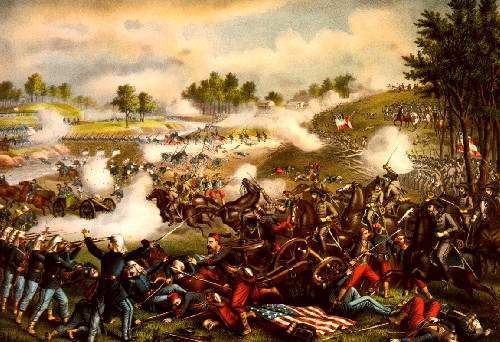
At the end of the Civil War, the South lay in ruins. Southern plantations and entire cities had been destroyed during the war. Without food, many southerners starved to death, and some of those who survived lost everything they owned.

As a result, the government had to figure out how to rebuild the South. As president, Johnson took charge of the first phase of Reconstruction. But his attempt to quickly readmit the former Confederate states into the union and his vetoes of important civil rights bills outraged Radical Republicans in Congress.

The House of Representatives impeached Johnson in 1868, but he was acquitted by a single vote in the Senate. Historians say that Johnson’s victory “marked the beginning of an ambitious series of receptions, dinners and children’s parties that would turn the last nine months of his term into an ongoing celebration.”

After leaving office, Johnson returned to his native state of Tennessee where he probably consumed such traditional southern foods as Benne Wafers, Hoppin’ John and Pine Bark Stew. Still popular in the south, Hoppin' John is often the high point of New Year's Day festivities and is thought to bring good luck throughout the coming year. If you'd like to whip up some Hoppin' John, you can't go wrong with this quick and delicious recipe from Emeril Lagasse.

1 tablespoon olive oil
1 large ham hock
1 cup onion, chopped
1/2 cup celery, chopped
1/2 cup green pepper, chopped
1 tablespoon chopped garlic
1 pound black-eyed peas, soaked overnight and rinsed
1 quart chicken stock
1 Bay leaf
1 teaspoon dry thyme leaves
Salt, black pepper, and cayenne
3 tablespoons finely chopped green onion
3 cups steamed white rice

Heat oil in a large soup pot, add the ham hock and sear on all sides for 4 minutes. Add the onion, celery, green pepper, and garlic, and cook for 4 minutes. Add the black-eyed peas, stock, bay leaves, thyme, and seasonings.

Bring to a boil, reduce the heat and simmer for 40 minutes, or until the peas are creamy and tender, stir occasionally. If the liquid evaporates, add more water or stock. Adjust seasonings, and garnish with green onions. Serve over rice and enjoy!

Tuesday, December 11, 2012

Benjamin Harrison, a Holiday Dinner, and the First Decorated Christmas Tree at the White House

Benjamin Harrison’s presidency began with a dramatic, three-day centennial commemoration of George Washington’s inauguration as the first president of the United States. The festivities began on April 28, 1889 with a reception in the White House, followed by a reenactment of George Washington’s crossing of New York Harbor by barge under a fuselage of gun salutes and fireworks. The evening was capped with a lavish banquet, featuring thirteen wines and thirteen toasts in honor of the original thirteen colonies.

Despite the initial fanfare, Harrison and his family dined rather modestly during their four years in the White House, and it has been said that their Christmas dinner was about as unpretentious as the family itself. According to culinary historian Poppy Cannon:

The dinner began with Blue Point oysters on the half shell, followed by consomme a la Royale, chicken in patty shells, and then the piece de resistance, stuffed roast turkey, cranberry jelly, Duchess potatoes and braised celery. Then came terrapin a la Maryland, lettuce salad with French drssing, and assorted desserts: minced pie, American plum pudding, tutti fruitti ice cream. For those still hungry, ladyfingers, Carlsbad wafers, and macaroons were passed, followed by fruit and coffee...

But of all White House holiday traditions, the Harrison's are perhaps most well-known for setting up the first decorated Christmas tree in the White House. According to White House historians, it was on the morning of December 25, 1889 that President Harrison "gathered his family around the first indoor White House Christmas tree. It stood in the upstairs oval room, branches adorned with lit candles. First Lady Caroline Harrison, an artist, helped decorate the tree."

As our nation's First Lady, Mrs. Harrison set the stage for what would eventually become a White House holiday tradition. But not all First Families after the Harrisons set up Christmas trees in the White House. First Lady Grace Coolidge did in the 1920s; however, it was First Lady "Lou" Henry Hoover who started the custom in 1929 when she oversaw the decoration of the first "official" tree. Since then, the honor of trimming the main White House Christmas tree has belonged to the First Ladies. According to the White House Historical Association:

In 1961, First Lady Jacqueline Kennedy began the tradition of selecting a theme for the official White House Christmas tree. She decorated a tree placed in the oval Blue Room with ornamental toys, birds and angels modeled after Petr Tchaikovsky's "Nutcracker Suite" ballet. Mrs. Kennedy reused these ornaments in 1962 for her children's theme tree. Set up in the North Entrance, this festive tree also featured brightly wrapped packages, candy canes, gingerbread cookies and straw ornaments made by disabled or senior citizen craftspeople throughout the United States.

The Lyndon B. Johnson Administration began during a time of great uncertainty. In November 1963, the assassination of President Kennedy had stunned America. New First Lady Claudia "Lady Bird" Johnson certainly felt a desire to help the nation heal. She chose comforting and nostalgic holiday decor during her White House years. Her 1965 and 1966 Blue Room Christmas trees were decorated in an early American theme. They featured thousands of small traditional ornaments, including nuts, fruit, popcorn, dried seedpods, gingerbread cookies and wood roses from Hawaii...

Handmade crafts set the theme for First Lady Betty Ford's 1974 Blue Room tree. Emphasizing thrift and recycling, Mrs. Ford used ornaments made by Appalachian women and senior citizen groups. Swags lined with patchwork encircled the tree. She kept this quaint feel in 1975 for her "old-fashioned children's Christmas" theme. Experts from Colonial Williamsburg adapted paper snowflakes, acorns, dried fruits, pinecones, vegetables, straw, cookies and yarn into ornaments...


Last year, the White House theme for the holiday season was "Shine, Give, Share," which offered "an opportunity to pay tribute to our troops, veterans, and their families throughout the White House." The official tour featured 37 Christmas trees (30 are natural trees and 7 are made from paper, felt or aluminum) and a gingerbread model of the White House made of 400 pounds of gingerbread, white chocolate, and marzipan. But the centerpiece was the official Christmas tree which honored our men and women in uniform and featured holiday cards created by military children.

According to whitehouse.gov, the cards were collected from United States military installations around the world...Medals, badges, and patches from all of the military branches are displayed on ornaments, historic military images are displayed with volunteer-made pinecone frames, and ribbons inspired by the Armed Forces colors represent the brave women and men who protect our Nation and defend our freedom."

FOOD FACT: The White House holiday décor also included "a bounty of Bos!" With a playful nod to the First Dog, the tour route featured five "Bo topiaries made from various materials like felt (35 yards of wool felt used), buttons (318 buttons in total), pom poms (750 pom poms used), and candy (12 marshmallows and 1,911 pieces of licorice!).

Thursday, December 6, 2012

Dolley Madison Fresh Raspberry Flummery

So did you know that Dolley Madison had an insatiable sweet tooth and was particularly fond of such treats as Macaroons, Cinnamon Cakes, Gingerbread, Cranberry Sherbet and ice cream?

Flummery was another popular ninteeenth century dish that Dolley reportedly served at her many festive social gatherings at the White House. According to an article in the New York Times, dictionary writers are not kind to flummery and this “innocent pudding” is often described by lexicographers as a “bland custard” or “a sort of pap,” while Webster’s asserts that an alternative meaning of flummery is “something insipid or not worth having.”

Food historians say that the modern origins of flummery can be traced to a seventeenth century Welsh specialty prepared with oatmeal and boiled until dense. As this "goopy dish" lost popularity over the years, cooks gave the name flummery to those puddings that were “firmed up with almonds and gelatin.”

By the time flummery made its way to the United States, it had been transformed into a "pure, delicately-set fruit stew." If you’d like to whip up some flummery this holiday season, here is a simple recipe to try from the New York Times Magazine:

1 quart fresh raspberries
1 cup sugar
2 tablespoons cornstarch
3 tablespoons cold water or milk
Juice of half a lemon
Heavy cream, for serving

Combine the berries, sugar and ½ cup hot water in a saucepan. Cook over low heat, stirring, until the mixture is liquid. Strain the pulp through a fine sieve. Return the strained liquid to a saucepan. Bring to a boil. Meanwhile, blend the cornstarch with the cold water or milk. Stir this into the boiling berry liquid. Add the lemon juice. Simmer for 1 minute. Serve with heavy cream and enjoy!

FOOD FACT: Famous for hosting elegant dinner parties and receptions, Dolley Madison’s name became associated with fine dining and entertaining. In the early nineteenth century, food companies and advertisers began using her name to suggest that any woman could entertain as well as she did. Some of the companies named after her were The Dolly Madison Bakery and Dolly Madison Ice Cream. There was even a Dolly Madison Popcorn. And Dolly Madison snacking cakes are still widely available today!

Wednesday, November 28, 2012

Millard Fillmore, the Great Irish Famine, and Garlic Mashed Potato Pancakes

So did you know that in the election of 1856, Millard Fillmore ran as the presidential candidate of the Know-Nothing party? One of the nation’s first major third parties, the Know-Nothing party was formed partly in response to large numbers of Irish and German immigrants arriving in the United States.

Facing starvation during the Great Potato Famine, hundreds of thousands of Irish immigrants moved to New York and other large northeastern cities in the late 1840s and 1850s. Willing to work for low wages in unskilled jobs, Irish immigrants seemed to be taking jobs away from native-born Americans.

Around the same time, large numbers of Germans were immigrating to the United States. Like the Irish, most Germans were Catholic and "didn't keep the Sabbath" the way American Protestants did. They also seemed to drink lots of beer, which offended many Americans who still "clung to traditional Puritan values."

Although the Know-Nothing party quickly faded away, the Irish and German remained and introduced many traditional ethnic foods to the United States, including spätzle, saurkraut, pretzels, pumpernickel bread, Irish Stew, corned beef, coddle, and goodey.

Mashed Potato Pancakes are another popular Irish and German dish. And while no one knows today if President Fillmore ever ate them, he surely would have enjoyed these Garlic Mashed Potato Pancakes from Cat Cora at Oprah.com:

5 large baking potatoes
8 Tbsp. (1 stick) unsalted butter
2 cloves peeled and minced garlic
2 cups low-fat milk
3 tsp. salt
Freshly ground black pepper

Bring a large pot of water to a boil and add 2 teaspoons of salt. Peel the potatoes and cut them into 1-inch cubes. When the water is boiling, add the potatoes and cook until tender, about 10 to 12 minutes.

While the potatoes are cooking, heat the butter in a medium skillet. When the butter is melted, add the garlic. Cook over low heat just until the garlic starts to color. Take care not to burn the butter. Take pan off heat and set aside to cool.

When the potatoes are easily pierced with a fork, drain them and return them to the pot. The residual heat will help the excess water evaporate. Mash the potatoes with a potato masher or a ricer. Gradually add the milk until the potatoes are the desired consistency.

Stir in the butter and garlic mixture, add the remaining 1 teaspoon salt and pepper to taste. Form the mixture into pancake patties and cook on each side for about 1 to 2 minutes over medium-high heat in skillet on stove top until a bit crisped on both sides. Serve warm and enjoy!

FAST FACT: According to the Oxford Advanced Learners Dictionary, the Know-Nothing Party "is the popular name for the American Republican Party, later called the American Party, which was established in 1843 with the aim of restricting immigration and preventing Roman Catholics from holding public office. They were called Know-Nothings because members of the party were told to say ‘I know nothing’ when asked about it. They were also called ‘nativists’ because they believed that foreign-born Americans should not be allowed to hold government posts." Know-Nothings scored some victories in the 1850s, but were divided over the issue of slavery, and the party soon faded away.

To read an excerpt of my new book click here

Sunday, November 11, 2012

Abraham Lincoln Gingerbread Men Cookies

In The Prairie Years, the great American poet and biographer Carl Sandburg told a story about Abraham Lincoln and gingerbread, a story that Abe had told in his famed debates with Stephen A. Douglas in 1858. According to Sandburg, this is how Lincoln’s “Gingerbread Story” unfolded:

“When we lived in Indiana,” Lincoln said, “once in a while my mother used to get some sorghum and ginger and make some gingerbread. It wasn’t often and it was our biggest treat. One day I smelled the gingerbread and came into the house to get my share while it was still hot. My mother had baked me three gingerbread men. I took them out under a hickory tree to eat them.

There was a family near us poorer than we were and their boy came along as I sat down. ‘Abe,’ he said, ‘gimme a man.’ I gave him one. He crammed it into his mouth in two bites and looked at me while I was biting the legs off my first one. ‘Abe, gimme that other’n.’ I wanted it myself, but I gave it to him and as it followed the first, I said to him, ‘You seem to like gingerbread.’ ‘Abe,’ he said, ‘I don’t s’pose anybody on earth likes gingerbread better’n I do — and gets less’n I do...’”


Lincoln’s childhood recollection charmed the audience – and readers of widely published newspaper accounts. Years later, Lincoln reportedly repeated the story in the White House, mentioning details of the recipe his mother had used. Although her recipe has been lost to posterity, this one from the Food Network is relatively easy to prepare and fun to share with family and friends during the holidays.

4 1/2 cups all-purpose flour
1 tablespoon ground cinnamon
2 teaspoons ground ginger
1/2 teaspoon cloves
1/4 teaspoon baking soda
1/2 cup butter, softened
1/2 cup packed brown sugar
2 large eggs
3/4 cup molasses
Directions
Sift the flour, cinnamon, ginger, cloves, and baking soda in a bowl.

In a large mixing bowl, blend the butter and brown sugar until combined. Add the eggs, 1 at a time, and then the molasses. Slowly add the flour mixture. Mix well after each addition of flour. The dough will be stiff.

Divide dough in half, flatten into 2 thick circles and wrap in plastic wrap. Refrigerate for 2 hours or until firm enough to roll out. Preheat oven to 350 degrees F. Roll out, cut into desired shapes and bake until golden brown.

Thanks for stopping by THE HISTORY CHEF! To order my new book click here!

Thursday, October 11, 2012

James Madison, the Potomac Oyster Wars, and the Constitutional Convention

So you probably know that James Madison was one of the drafters of the Constitution and later helped spearhead the drive for the Bill of Rights, but what you might not know is that he also played a major role in negotiating an end to the Potomac Oysters Wars which indirectly helped pave the way to the Constitutional Convention. This is how the story briefly goes:

In the seventeenth century, watermen in Maryland and Virginia battled over ownership rights to the Potomac River. Maryland traced its rights to a 1632 charter from King Charles I which included the river. At the same time, Virginia laid its claims to the river to an earlier charter from King James I and a 1688 patent from King James II, both of which also included the river.

In 1776, after more than a century of conflict, Virginia ceded ownership of the river but reserved the right to “the free navigation and use of the rivers Potowmack and Pocomoke." Maryland rejected this reservation and quickly passed a resolution asserting total control over the Potomac. After the Revolution, battles over the river intensified between watermen from both states.

To resolve this problem, leaders from Maryland and Virginia appointed two groups of commissioners which, at the invitation of George Washington, met at Mount Vernon in May of 1785. James Madison led the Virginia contingent and Samuel Chase led the Maryland delegation. Their discussions led to the Compact of 1785, which allowed oystermen from both states free use the river.

Peace prevailed until the supply of oysters began to dwindle, at which point Maryland re-imposed harvesting restrictions. Virginia retaliated by closing the mouth of the Chesapeake and watermen from both states engaged in bloody gun battles which lasted, with periodic breaks, for more than a century.

Today, these battles are known as the Potomac Oyster Wars. They are important in their own right, but they have a larger historical significance because they revealed one of the main weaknesses of the Articles of Confederation, which was that the federal government didn't have the power to control commerce among the states, a setup that was creating constant chaos and conflict.

With this problem in mind, Madison and the others who convened at Mt. Vernon in May of 1785 agreed to meet the following year at Annapolis to discuss the need for a stronger federal government. Not many delegates showed up and so they agreed to convene the following May in Philadelphia, which is, of course, where the Constitution was drafted.

And so NOW you know how James Madison and a little bivalve from the Potomac helped pave the way to the Constitutional Convention!

FACT: Under the Articles of Confederation, the federal government didn't have the power to raise its own army, regulate commerce between the states, or coin money for the country. To pass a law, Congress needed the approval of nine out of the 13 states, and in order to amend the Articles it needed the approval of all 13 states, which made it nearly impossible to get anything done! The Articles also didn't provide for an Executive or Federal branch so there was no separation of powers.

Wednesday, October 3, 2012

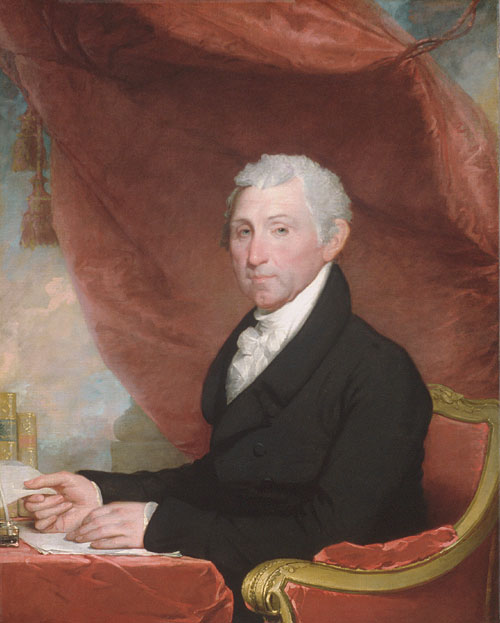
James Monroe, Mississippi Steamboatin' and "Food Piled High on a Long Linen Cloth"

So did you know that James Monroe was the first president to ride and possibly dine on a steamboat? By the 1820s, steamboats were in use on most of the major rivers, canals, and waterways in the United States.

Historians say that the steamboat completely revolutionized shipping. For the first time in history, people "didn't have to rely on unpredictable currents and winds and could travel to any port at any time." Plantation owners in the southern states of Mississippi, Missouri, and Louisiana, for example, could cheaply and easily ship cargoes of sugar, cotton, and other goods upriver on the Mississippi rather than send it around the tip of Florida and up the Eastern seaboard as they had previously done.

Steamboats also provided a luxurious way for wealthy passengers to travel. In Mississippi Steamboatin’, Herbert Quick described the palatial setting and abundance of food served on later steamboats:

The palatial setting of later steamboats attracted pleasure-seekers and wealthy travelers...More comfortable than their 'settin' rooms,' more ornate than their prim and uncomfortable parlors...they saw the steamboat's cabin as a bewilderingly beautiful palace. The...glistening cut-glass chandeliers; the soft oil paintings on every stateroom door; the thick carpets that transformed walking into a royal march; the steaming foods piled high on the long linen cloth in the dining room, with attentive waiters standing at the traveler's elbow, waiting with more food, and gaily colored desserts in the offing - neither homes nor hotels...were ever like this.

Between 1814 (three years before Monroe took office) and 1834, steamboat arrivals in New Orleans increased from 20 to 1,200 each year. For the next half century, steamboats were the main transporter of American goods, and tiny river towns grew into thriving cities “when steamboats began to make regular stops at their docks.”

FAST FACT: If you've ever watched steam rise from a cup of hot chocolate or coffee, you might think that a steamboat is propelled by steam. That makes sense, but that isn't exactly how a steamboat works. In a steamboat's engine, wood or other fuel is burned to heat water in a boiler, and the steam that rises from the water is forced through small spaces (piston cylinders) to increase the speed at which it escapes, similar to the release of a valve on a pressure-cooker. The concentrated steam then hits and moves a paddlewheel which, in turn, propels the steamboat through water!

Credit: James Monroe, oil on canvas by Gilbert Stuart (Metropolitan Museum of Art, New York)

Wednesday, September 5, 2012

Bill Clinton's Favorite Chicken Enchiladas

According to an article in the Dining & Wine section of the New York Times, Bill Clinton has somehow become "an arbiter of international fine dining, conferring a sort of informal Michelin star just by showing up." And, if you travel enough, according to the article, "you will eventually hear a tip that goes something like: 'When you’re in Madrid, try Casa Lucio. Bill Clinton ate there with the King of Spain.' Or “Check out Le Pont de la Tour in London. Bill Clinton loves it.'"

So how, exactly, did Mr. Clinton, whose name still conjures up silly memories of Saturday Night Live skits involving greasy cheeseburgers and fries become known as “earth's No. 1 restaurant maven” overseas? Well...New York Times reporter David Segal explains it this way:

It’s widely (and correctly) assumed that he has good connections everywhere he visits, so he’s unlikely to wind up at a dud. More than most celebrities, he seems like a person who appreciates good food, and before he had heart surgery, he was known for his wide-ranging appetite.

And when Mr. Clinton visits a restaurant, everybody in the room knows it. Douglas Band, an aide who frequently travels with Mr. Clinton...says his boss introduces himself to every diner, as well as every waiter and every kitchen staff member. He will always pose for photographs and sign guest books [and someone] from his staff will send a thank-you note a few days later...

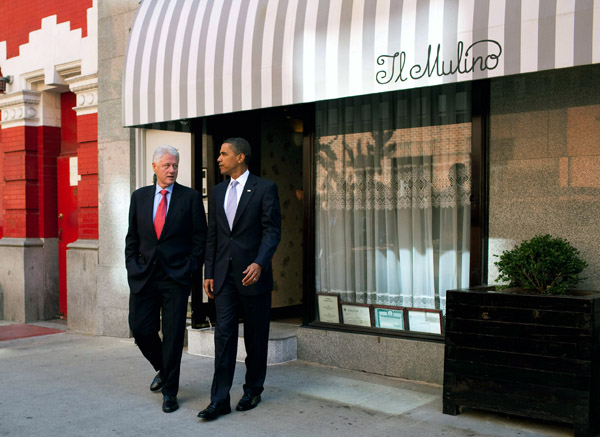
It’s also true that Mr. Clinton’s patronage in the United States has provided P.R. boosts for places like Il Mulino in Manhattan and Georgia Brown’s in Washington...But when it comes to Bill Clinton and overseas restaurants, the upside is on a far greater scale. Managers and owners from Beijing to Iceland and points between say an appearance by Mr. Clinton can be transformational, launching an obscure restaurant to fame...


Although Mr. Clinton might still enjoy an occcasional filet mignon while on the road, he follows a mostly vegetarian diet these days, and during his travels on behalf of Democratic candidates in recent years, he reportedly dined on such healthy menu items as Miso Barley Soup, Black Bean Burritos, and Cauliflower Potato Curry.

Of course, it has also been reported that he is particularly fond of chicken enchiladas and so it's perhaps not surprising that a healthful recipe for this dish appears in The Clinton Presidential Center Cookbook. If you'd like to serve up some Bill Clinton's Favorite Chicken Enchiladas for dinner tonight while watching his address at the Democratic National Convention, here is the simple and sinfully delicious recipe to try:

2 (4 oz) cans chopped green chillies, drained
1 garlic clove, minced
cooking oil
1 (28 oz) can tomatoes
2 cups chopped onion
2 tsps salt, divided
tsp oregano
3 cups shredded, cooked chicken
2 cups sour cream
2 cups shredded cheddar cheese
cup cooking oil
15 corn or flour tortillas

In a large skillet over a medium-high heat, sauté the chillies and garlic in a small amount of oil. Drain the tomatoes, reserving cup of liquid. Break up tomatoes and add to skillet. Add the onion, 1 tsp salt, oregano, and reserved liquid. Simmer, uncovered, until thickened (about 30 minutes).

Remove from heat, transfer to a bowl and set aside. In a large bowl, combine the chicken, sour cream, cheese, and remaining salt. In the same skillet over a medium-high heat, heat cup oil. Dip the tortillas in the oil until they become limp and drain well on paper towels. Fill tortillas with the chicken mixture; roll up and arrange side by side, seam side down, in a 9x13x2-inch baking dish. Pour tomato mixture over the enchiladas. Bake at 350°F for 20 minutes.

FOOD FACT: The Clinton Presidential Center Cookbook contains 250 recipes from the former president's lifelong friends, family members, celebrities, and White House staff and cabinet members. Some of the tasty and homey regional recipes include Muhammad Ali's Favorite Bread Pudding, Al and Tipper Gore's Tennessee Tarts, Bono's Black Velvet, Sophia Loren's Penne Alla Puttanesca, James Carville’s Jambalaya, Mary Steenburgen’s Garlic Cheese Grits, and Barbra Streisand’s Southern Lemon Icebox Pie!

FAST FACT: According to the William J. Clinton Foundation, "nearly one in three children and teens in the United States is already overweight or obese. In the past 20 years, childhood obesity rates have doubled and are now at epidemic rates." To combat this growing epidemic, the American Heart Association and the Clinton Foundation partnered in May 2005 to create the Alliance for a Healthier Generation. The goal of the Alliance is to reduce the nationwide prevalence of childhood obesity by 2015, and to inspire young people in the United States to develop lifelong healthy habits." For more information, click here.

Wednesday, July 25, 2012

George Washington and the Cherry Tree Myth

An early nineteenth century American book peddler, itinerant preacher and author, "Parson" Mason Locke Weems is best known today as the source of some of the most beloved if apocryphal stories about George Washington. The famous story of George and the Cherry Tree is included in Weems' masterpiece, The Life and Memorable Actions of Washington, which was originally published in 1800 (the year after Washington's death) and was an immediate best-seller.

Reprinted in ever more inventive editions over the next twenty-five years, it contained, according to historian Edward Lengel, "some of the most beloved lies of American history, including the famous cherry tree myth" and other exaggerated or invented anecdotes that extolled Washington’s virtues and provided an entertaining and morally instructive tale for the young republic.

In telling his cherry tree story, Weems attributed it to "an aged lady,” who was reportedly a distant relative of George, and who, as a young girl, supposedly spent much time with him. This is how the fable unfolded:

"When George," said she, "was about six years old, he was made the wealthy master of a hatchet of which, like most little boys, he was immoderately fond, and was constantly going about chopping everything that came in his way. One day, in the garden, where he often amused himself hacking his mother's pea-sticks, he unluckily tried the edge of his hatchet on the body of a beautiful young English cherry-tree, which he barked so terribly, that I don't believe the tree ever got the better of it.

The next morning, [George’s father], finding out what had befallen his tree, which, by the by, was a great favorite, came into the house, and with much warmth asked for the mischievous author, declaring at the same time, that he would not have taken five guineas for his tree.

Nobody could tell him anything about it. Presently George and his hatchet made their appearance. "George," said his father, "do you know who killed that beautiful little cherry-tree yonder in the garden?" This was a tough question; and George staggered under it for a moment; but quickly recovered himself: and looking at his father, with the sweet face of youth brightened with the inexpressible charm of all-conquering truth, he bravely cried out, "I can't tell a lie, Pa; you know I can't tell a lie. I did cut it with my hatchet."

“Run to my arms, you dearest boy,” cried his father in transports, “run to my arms; glad am I, George, that you killed my tree; for you have paid me for it a thousand fold. Such an act of heroism in my son, is more worth than a thousand trees, though blossomed with silver, and their fruits of purest gold.”


Although plausible enough, historians generally agree that this quaint story is almost certainly not true. What is true, however, is that George was particularly fond of cherries, and Martha Washington's Booke of Cookery contains several family “receipts” for preserving this sweet and tangy highly versatile fruit.

Of course, then, as today, sweet and sour cherries can be used in all kinds of pies, tarts, jellies, jams, breads, muffins, and soups, as well as in a fabulously wide array of cobblers, like this modernized dessert, which George surely would have loved had he had time to try it during his extraordinarily illustrious life:

Crust

1 1/4 cups flour
2 tablespoons sugar
2 tablespoons yellow cornmeal
1/2 teaspoon salt
6 tablespoons butter, cut into 1/2-inch pieces and chilled
1 large egg yolk
3 tablespoons cold milk, cream or water

Filling

2 cups cherry preserves
1/3 cup sliced almonds
Confectioners' sugar, for dusting

In the workbowl of a food processor, combine the flour, sugar, cornmeal and salt. Pulse to combine. Add the butter, toss carefully with your hands to coat the butter cubes in flour. Pulse in the food processor several times until the mixture resembles coarse oatmeal. Add the egg and 2 tablespoons of milk, cream or water, and pulse until the dough begins to come together in a ball. Add the additional tablespoon of liquid if needed until the dough comes together.

Transfer the dough to a lightly floured work surface and knead it briefly to shape it into a disk about 5 inches across. Wrap in plastic and refrigerate at least 1 hour or overnight. Using a lightly floured rolling pin, roll the dough into a shape a ½ inch wider than the tart pan you are using. Loosely fold the dough in half and transfer it to the tart pan.

Line the pan with the dough, being careful not to stretch the dough. Trim any excess dough from the rim of the pan, leaving a blunt neat edge. Gather the trimmings into a ball (it should be about the size of a pingpong ball). Wrap the tart and the ball of dough in plastic and refrigerate for 1 hour and up to 2 days.

Heat to 375 degrees. Remove the tart pan from the refrigerator, and spread the marmalade evenly over the crust. Grate the chilled ball of pastry onto the filling, and sprinkle the almonds over the top. Bake on a rack in the center of the oven until the pastry is golden, the filling is bubbly and the almonds are toasted, 40 to 50 minutes. Transfer to a wire rack to cool. When the tart is completely cool, dust with confectioners' sugar. Serve at room temperature

FOOD FACT: According to fruit experts at the University of Georgia, the sweet cherry “originated in the area between the Black and Caspian seas of Asia Minor. Birds may have carried it to Europe prior to human civilization. Cultivation probably began with Greeks, and was perpetuated by Romans. Sweet cherries came to the United States with English colonists in 1629 and were introduced to California by Spanish Missionaries." In the early 1800s, sweet cherries were moved west by pioneers and fur traders to their major sites of production in Washington, Oregon, and California. And, today, more than 4.2 billion pounds of sweet cherries are produced commercially each year!

Thanks for stopping by THE HISTORY CHEF! To check out my new book click here!

Monday, July 2, 2012

John Adams Gooseberry Fool

As a delegate to the Second Continental Congress, John Adams was one of the fiercest advocates of the Declaration of Independence. Contrary to popular belief, the declaration wasn't signed by all of the delegates on July 4, 1776. Instead, it was initially approved on July 2, 1776. The delegates then continued debating and slightly revised it the following day and formally adopted it on the fourth of July. Most historians agree that the Declaration wasn’t signed by all the delegates (with a few holdouts) until nearly a month later, on August 2, 1776.

Nevertheless, on July 3, 1776, John Adams wrote a letter to his wife Abigail in which he described these momentous events. This is what he wrote:

The second day of July, 1776, will be the most memorable epoch in the history of America. I am apt to believe that it will be celebrated by succeeding generations as the great anniversary festival...It ought to be solemnized with pomp and parade, with shows, games, sports, guns, bells, bonfires, and illuminations, from one end of this continent to the other, from this time forward forever more.

You will think me transported with Enthusiasm but I am not. -- I am well aware of the Toil and Blood and Treasure, that it will cost Us to maintain this Declaration, and support and defend these States. -- Yet through all the Gloom I can see the Rays of ravishing Light and Glory. I can see that the End is more than worth all the Means. And that Posterity will tryumph in that Days Transaction, even altho We should rue it, which I trust in God We shall not.

Although no one knows exactly what the delegates ate on those momentous days, it has been said that Adams was fond of Green Sea Turtle Soup, Indian Pudding and other foods of his New England youth. Gooseberry Fool, a traditional eighteenth century dish, was another Adam's family favorite. As an example of how national food preferences change over time, gooseberries were abundant in John's day but aren't widely available in the United States today.

So...if you can't find any gooseberries and don't have your own little patch, you can substitute blueberries or raspberries, whichever you prefer. Either way, this delicious and refreshingly sweet little treat would make a great addition to your Fourth of July festivities this week!

If you'd like to whip up a batch, here's a recipe to try from epicurious.com

3 cups pink or green gooseberries (or blueberries)
1/2 cup granulated sugar
1/2 cup well-chilled heavy cream
1/4 cup crème fraîche
1/4 cup superfine granulated sugar

Pull off tops and tails of gooseberries and halve berries lengthwise. In a heavy skillet cook berries and granulated sugar over moderate heat, stirring occasionally until liquid is thickened, about 5 minutes. Simmer mixture, mashing with a fork to a coarse puree, 2 minutes more. Chill puree, covered, until cold, about 1 hour, and up to 1 day.

In a bowl with an electric mixer beat heavy cream with crème fraîche until it holds soft peaks. Add superfine sugar and beat until mixture just holds stiff peaks. Fold chilled puree into cream mixture until combined well. Fool may be made 3 hours ahead and chilled, covered.

Credit: Declaration of Independence, painting by John Trumball

Thursday, June 28, 2012

Zachary Taylor, a Large Basket of Cherries, and a Pitcher of Iced Milk

After participating in Fourth of July festivities at the Washington Monument on a blistering hot day, Zachary Taylor consumed a large basket of cherries and two pitchers of iced milk and suddenly fell ill with a terrible stomach ache. Within five days, he was dead.

At the time, the United States was embroiled in the bitter conflict over slavery and many people believed that  Taylor had been poisoned. Today, most historians agree that he died from cholera or acute gastroenteritis, an inflammation of the stomach and gastrointestinal tract.

Whatever the case, if Taylor were here with us today, he'd no doubt steer away from anything prepared with cherries. That's totally understandable, but it's no reason for us to do the same, especially when there are so many fabulous recipes for preparing fresh summer cherries, like this one for Cherry Cobbler from Emeril Lagasse:

Filling:

6 cups tart red cherries, pitted
1 1/4 cups sugar
1/4 cup water
4 teaspoons cornstarch

Topping:

1 cup flour
1/4 cup sugar
2 tablespoons brown sugar
1 teaspoon baking powder
1/2 teaspoon cinnamon
3 tablespoons butter
1 egg, beaten
3 tablespoons milk

Preheat oven to 400 degrees F. In a saucepan combine filling ingredients and cook, stirring until bubbling and thickened. Pour into an 8-inch square baking dish. Meanwhile, stir together flour, sugars, baking powder, and cinnamon. Cut in butter until it is crumbly. Mix together egg and milk. Add to flour mixture and stir with a fork just until combined. Drop topping by tablespoonfuls onto filling. Bake for 25 minutes until browned and bubbly.

A LITTLE HISTORY: Before he became president, Zachary Taylor fought in the War of 1812, the Black Hawk War, and the second Seminole War before achieving fame in the Mexican-American War. On February 23, 1847, General Taylor led his troops against General Santa Anna at the Battle of Buena Vista. When "the smoke finally cleared," Taylor's force of 6,000 had defeated a Mexican army of 20,000 and "Old Rough and Ready" was a national hero!

Credit: Oil Portrait of Zachary Taylor by Joseph H. Bush, 1849 (White House Historical Assocation)

Wednesday, June 13, 2012

LBJ's Barbecue Diplomacy and a Brief History of Father's Day

Some historians say that the origins of Father’s Day in the United States can be traced to a young woman by the name of Sonora Smart Dodd, who reportedly came up with the idea while listening to a Mother’s Day sermon in Spokane, Washington in 1909. Raised by her widowed father, a Civil War veteran who had lost his wife after the birth of their sixth child, Sonora felt that her father should be honored in the same way that mothers were on Mother’s Day.   

Toward that end, a special Father’s Day observance was held on June 19, 1910. Although that celebration was a local affair, the idea of a national Father’s Day picked up steam when it was endorsed by President Calvin Coolidge in 1924, but it would take another thirty years before Father’s Day was recognized by a Joint Resolution of Congress. Then, in 1966, the first proclamation honoring fathers was issued by President Lyndon Johnson, who designated the third Sunday in June as Father's Day.

Today, of course, Americans celebrate Father's Day in a wide variety of ways, with perhaps the most traditional festivity being an old-fashioned, American-style barbecue. So...it seems only fitting this week to honor LBJ, who was well-known for his love of down-home, country barbecues at his beloved family ranch in Gillespie County, Texas.

Barbecuing, of course, has been used as a tool in American political campaigns and elections for more than a century, but no politician ever used “the conviviality and informality of cooking and eating outdoors” more than Johnson.” In fact, Johnson's first state dinner was a barbecue for 300 catered by Walter Jetton on December 29, 1963. According to historians:

When his staff realized it would be chilly that day, the sit-down part was moved indoors to Stonewall High School gymnasium, about two miles away. Workers did an admirable job of creating an outdoorsy feel with bales of hay, red lanterns, red-checkered table cloths, saddles, lassos, and mariachis. According to Lady Bird's diary, "there were pinto beans, delicious barbecued spareribs, cole slaw, followed by fried apricot pies with lots of hot coffee. And plenty of beer."

Although those particular recipes may have been lost to posterity, biographers say that some Johnson family favorites included Chipped Beef covered with Cream, Pedernales River Chili, and Beef Stroganoff. And Lady Bird reportedly enjoyed handing out the recipe for her famous homemade Barbecue Sauce.

If you’d like to add a little zip to your Father's Day celebration this weekend, here's her original recipe to try:

¼ cup butter
¼ cup vinegar
¼ cup ketchup
¼ cup fresh lemon juice
¼ cup Worcestershire sauce
Salt, pepper, red pepper flakes, and Tabasco to taste.

Melt butter in a medium sauce pan over medium-high heat. Add other ingredients and bring to a boil. Yields 1 ½ cups.

To learn about my new book click here

Sunday, April 15, 2012

Richard Nixon, Elvis Presley, and Deep Fried Peanut Butter, Bacon and Banana Sandwiches

Of all the requests made each year to the National Archives for reproductions of photographs and documents, one item has been requested more than any other. That item, more requested than the Bill of Rights or even the Constitution of the United States, is the photograph of Elvis Presley and Richard M. Nixon shaking hands on the occasion of Presley's visit to the White House on December 21, 1970.

That most unlikley of meetings was initiated by Presley, who, according to historians at the the National Archives, sent Nixon a hand-written letter requesting a visit with the president and suggesting that he be secretly appointed a "Federal-Agent-at-Large" in the Bureau of Narcotics and Dangerous Drugs. This is what Elvis wrote:

Dear Mr. President

First, I would like to introduce myself. I am Elvis Presley and admire you and have great respect for your office. I talked to Vice President Agnew in Palm Springs three weeks ago and expressed my concern for our country. The drug culture, the hippie elements, the SDS, Black Panthers, etc. do NOT consider me as their enemy or as they call it The Establishment. I call it America and I love it. Sir, I can and will be of any service that I can to help The Country out. I have no concern or Motives other than helping the country out.

So I wish not to be given a title or an appointed position. I can and will do more good if I were made a Federal Agent at Large and I will help out by doing it my way through my communications with people of all ages. First and foremost, I am an entertainer, but all I need is the Federal credentials...

I am Glad to help just so long as it is kept very Private. You can have your staff or whomever call me anytime today, tonight, or tomorrow. I was nominated this coming year one of America's Ten Most Outstanding Young Men. That will be in January 18 in my home town of Memphis, Tennessee. I am sending you the short autobiography about myself so you can better understand this approach. I would love to meet you just to say hello if you're not too busy.

Respectfully,
Elvis Presley


Other than their brief meeting at the White House, Nixon and Elvis seemed to have little in common, with the exception of a deep love of their country and some rather unusual cravings and tastes. Nixon, for example, reportedly liked to slather ketchup on cottage cheese, and Elvis liked to eat such things as Fried Dill Pickles, Gelatin made with a Shasta Drink, and Peanut Butter and Banana Sandwiches Fried in Bacon Grease.

According to an article in the New York Times magazine, the King also had strange late-night cravings for Coconut Flakes with Mini Marshmallows; Peanut Butter and Cheese on Wonder Bread; Fool's Gold Loaf, which was a hollowed-out loaf of bread stuffed with a jar of peanut butter, a jar of grape jelly, and a pound of fried bacon; and "a version of the Fluffer Nutter, with peanut butter, bananas, Marshmallow Fluff and Wonder Bread rolled in crushed peanuts!"

While most of these gastronomic concoctions are enough to make even the most seasoned junk-food junkies reach for their TUMS, this recipe for Elvis Presley's Fried Peanut Butter Sandwich from Nigella Lawson is a slightly healthier alternative and might be worth trying "If You're Hungry Tonight."

2 slices white bread
2 tablespoons butter
1 small ripe banana
2 tablespoons creamy peanut butter

Place 2 pieces of white bread in the toaster on a light setting. Heat skillet over medium heat with 2 tablespoons butter. While the bread is toasting, in a small bowl, using a fork mash the ripe banana until it reaches a smooth consistency.

Using a knife, take both pieces of the toasted bread and spread 2 tablespoons of creamy peanut butter, topping 1 side with the mashed banana. Place 1 slice of bread on top of the other forming a sandwich. Place sandwich in hot skillet browning each side, flipping with a spatula, about 2 minutes per side. Take out of skillet, slice on a diagonal and serve on a plate.

To check out my book from Simon & Schuster click here!