Showing posts with label World War II. Show all posts
Monday, November 18, 2024
Woodrow Wilson, the Sinking of the Lusitania and Food Blockades During World War I
On May 7, 1915, a German submarine torpedoed the British ocean liner RMS Lusitania en route from New York to England. Attacked without warning off the coast of Ireland, the ship sank in fifteen minutes, killing nearly 2,000 civilians, including 128 Americans.
Woodrow Wilson immediately denounced the sinking of the Lusitania in harsh, threatening terms, demanding that Germany pledge to never launch another attack on citizens of neutral countries, even when traveling on French or British ships. Germany acknowledged Wilson's demand, but only temporarily. In March, 1916, a German U-boat torpedoed the French passenger liner Sussex, causing a heavy loss of life and injuring several Americans.
Two months later, in what's known as the Sussex pledge, Germany announced that they would no longer sink Allied merchant ships without warning but made it clear that it would resume submarine attacks if the Allies refused to respect International Law which meant that the Allies had to lift their blockades of food and other materials bound for the Central Powers.
Despite further provocations, President Wilson still hoped for a negotiated settlement until February 1, 1917, when Germany resumed submarine warfare against merchant ships, including those of the United States and other neutral countries. In response, Wilson broke off diplomatic relations with Germany.
Then, on Feb. 25, the British intercepted and decoded a telegram from Germany's Foreign Secretary Arthur Zimmermann to the German Ambassador in Mexico. The "Zimmermann Telegram" proposed that in the event of war with the United States, Germany and Mexico would form an alliance. In return, Germany promised to regain for Mexico its "lost provinces" of Texas, Arizona, and New Mexico.
The release of the Zimmermann Telegram ignited a public furor that was further enflamed by the loss of three U.S. merchant ships to German submarines. After much thought and introspection, President Wilson appeared before a Joint Session of Congress on the evening of April 2, 1917 and asked for a Declaration of War against Germany.
This is a partial excerpt of what he said:
It is a fearful thing to lead this great peaceful people into war, into the most terrible and disastrous of all wars, civilization itself seeming to be in the balance. But the right is more precious than peace, and we shall fight for the things which we have always carried nearest our hearts - for democracy, for the right of those who submit to authority to have a voice in their own governments, for the rights and liberties of small nations, for a universal dominion of right by such a concert of free peoples as shall bring peace and safety to all nations and make the world itself at last free. To such a task we dedicate our lives and our fortunes...
Wilson was having lunch in the State Dining Room when word came that the Declaration of War had arrived for his signature. Although no one knows what Wilson ate for lunch on that momentous day, we do know that by the time the United States entered the war, German submarines were taking a catastrophic toll on the supplies of food and other provisions being shipped to Britain from abroad.
In response, the British Admiralty established a system of convoys. Under the plan, merchant ships were grouped together in convoy and provided with warship escorts through the most dangerous stretches of the North Atlantic.
The convoys had a dramatic effect. By the end of 1917, the tonnage of Allied shipping lost each month to German U-boat attacks plummeted from one million tons in April to 350,000 tons in December. And while many other factors were at play, the increase in food and other necessary provisions helped stiffen the resolve of French and British troops and thwarted Germany’s attempt to force Britain’s surrender.
Tuesday, January 7, 2020
Woodrow Wilson, the Sinking of the Lusitania, and Food Blockades During World War I
On May 7, 1915, a German submarine torpedoed the British passenger liner RMS Lusitania en route from New York City to Liverpool. Attacked without warning off the coast of Ireland, the ship sank in fifteen minutes, killing 1,198 civilians, including 128 Americans.
Woodrow Wilson immediately denounced the sinking of the Lusitania in harsh, threatening terms, demanding that Germany pledge to never launch another attack on citizens of neutral countries, even when traveling on French or British ships. Germany initially acquiesced to Wilson's demand, but only temporarily. In March, 1916, a German U-boat torpedoed the French passenger liner Sussex, causing a heavy loss of life and injuring several Americans.
Two months later, in what's known as the Sussex pledge, Germany announced that they would no longer sink Allied merchant ships without warning but made it clear that it would resume submarine attacks if the Allies refused to respect international law, which, in effect, meant that the Allies had to lift their blockades of food and other raw materials bound for the Central Powers.
Despite further provocations, President Wilson still hoped for a negotiated settlement until February 1, 1917, when Germany resumed submarine warfare against merchant ships, including those of the United States and other neutral countries. In response, Wilson broke off diplomatic relations with Germany.
Then, on Feb. 25, the British intercepted and decoded a telegram from Germany's foreign secretary Arthur Zimmermann to the German ambassador in Mexico. The so-called "Zimmermann telegram" proposed that in the event of war with the United States, Germany and Mexico would form an alliance. In return, Germany promised to regain for Mexico its "lost provinces" of Texas, Arizona, and New Mexico.
The release of the Zimmermann Telegram ignited a public furor that was further enflamed by the loss of three U.S. merchant ships to German submarines. After much thought and introspection, President Wilson appeared before a joint session of Congress on the evening of April 2, 1917 and asked for a declaration of war against Germany.
This is a partial excerpt of what he said:
It is a fearful thing to lead this great peaceful people into war, into the most terrible and disastrous of all wars, civilization itself seeming to be in the balance. But the right is more precious than peace, and we shall fight for the things which we have always carried nearest our hearts - for democracy, for the right of those who submit to authority to have a voice in their own governments, for the rights and liberties of small nations, for a universal dominion of right by such a concert of free peoples as shall bring peace and safety to all nations and make the world itself at last free. To such a task we dedicate our lives and our fortunes...
Wilson was having lunch in the State Dining Room when word came that the Declaration of War had arrived for his signature. Although no one knows what Wilson ate for lunch on that momentous day, we do know that by the time the United States entered the war, German submarines were taking a catastrophic toll on the supplies of food and other provisions being shipped to Britain from abroad.
In response, the British Admiralty established a system of convoys. Under the plan, merchant ships were grouped together in "convoys" and provided with warship escorts through the most dangerous stretches of the North Atlantic.
The convoys had a dramatic effect. By the end of 1917, the tonnage of Allied shipping lost each month to German U-boat attacks plummeted from one million tons in April to 350,000 tons in December. And while many other factors were at play, the increase in food and other necessary provisions helped stiffen the resolve of French and British troops and thwarted Germany’s attempt to force Britain’s surrender.
Wednesday, June 5, 2019
Franklin Delano Roosevelt, World War II, and "There's Not Enough Milk for the Babies"
The daily conditions of camp life are especially vivid in descriptions of the mass feeding of thousands of Japanese men, women and children. On May 11, 1942, Joseph Conrad of the American Friends Service Committee submitted a Progress Report to the federal government which read:
There's not enough milk for the babies in camp because the Army's contract for milk is with farmers in Oregon and even though there is plenty of milk in the neighboring towns begging to be used, red tape makes it impossible.
There hasn't been enough food to go around because there were [more] arrivals than were expected. Some have gone without meals several times. There has been no fresh vegetables; no fruit (and a large part of the population are children), no fresh meat, but plenty of canned food for those who were early in line to get it...
Meanwhile, as thousands of interned children were suffering from malnutrition, millions of homeless and unemployed Americans were starving during the Great Depression. To address this national crisis, Soup Kitchens began opening in large cities and small towns throughout the United States.
When soup kitchens first appeared, they were generally run by churches or private charities. But by the mid-1930s, when Roosevelt was in office, state and federal governments were also operating them. Why soup? Throughout history, soup has been one of the primary foods consumed by poor and homeless people. If you think about it, this makes sense because soup is economical (it can be prepared with whatever scraps of food are available and can be stretched to feed more people by adding water). It is also quick and simple to make (only a pot is needed) and easy to serve (it requires only a bowl and spoon, or, in a pinch, can be sipped).
There was never such a family for soups as the Roosevelts. All the years they occupied the White House we kept the big steel soup kettles singing in the White House - clear soup for dinner and cream soup for lunch. Pretty nearly every usable variety of fish, fowl, beast, mineral, vegetable, and contiment was used in our White House soups...
Give Mrs. Roosevelt a bowl of soup and a dish of fruit for lunch and she'd be off with recharged vitality on one of her trips...Cream of almond - L'Amande soup - was one of her special favorites. The President was partial to fish soups... Among the recipes his mother gave me was the one for clam chowder...Another of his favorites was the green turtle soup, and there was always a great fuss when it was made.
Today, green turtle soup is prohibited in the United States because most species of sea turtles are considered threatened or endangered. But you can try this simple and economical recipe for Chicken Rice Soup from the Food Network courtesy of Ree Drummond or this one for Creamy Chicken Soup:
.
3 tablespoons unsalted butter
2 tablespoons all-purpose flour
4 cups chicken stock
2 cups heavy cream
2 egg yolks, beaten
coarse Salt, to taste
fresh ground black pepper, to taste
2 cups diced cooked boneless, skinless, chicken breast
chopped fresh parsley
Add butter to stockpot. Melt over low heat. Stir in flour, and stir for 2 minutes. Gradually stir in chicken stock. Heat over medium heat, almost but not boil. Add heavy cream and egg yolks to medium bowl. Whisk to combine. Ladle in ½ cup hot soup. Blend with whisk. Stir cream mixture into stockpot. Season with coarse salt and ground black pepper. Add chicken meat and Simmer until heated through but not boiling. Serve hot in individual soup bowls. Garnish with chopped parsley.
FOOD FACT: In a 1942 New Republic article, Ted Nakashima described the daily conditions of camp life this way: The food and sanitation problems are the worst. We have had absolutely no fresh meat, vegetables or butter since we came here. Mealtime queues extend for blocks; standing in a rainswept line, feet in the mud, waiting for the scant portions of canned wieners and boiled potatoes, hash for breakfast or canned wieners and beans for dinner. Milk only for the kids. Coffee or tea dosed with saltpeter and stale bread are the adults' staples.
Sunday, March 8, 2015
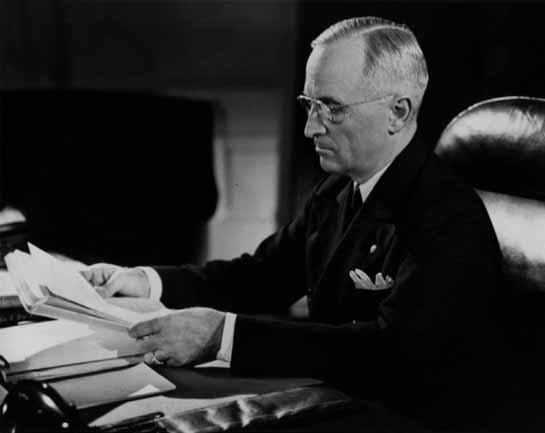
Harry Truman's Food Conservation Speech and Meatless Monday Tuna Noodle Casserole
At the time of his “Food Conservation Speech,” Europe was still recovering from the devastation of World War II and suffering from widespread famine. Truman asked farmers to reduce their use of grain and asked the public to avoid meat on Mondays, eggs and poultry on Thursdays, and to "save a slice of bread each day."
Within days, restaurants all over the nation had pledged their support while the New York Times invited readers to write in for a free pamphlet of meatless recipes, including a “canned salmon bake topped with crushed potato chips.” For his part, Truman lunched on a “symbolic cheese soufflĂ©.”
Tuna Casserole was another popular "Meatless Monday" dish. If you'd like to whip one up for dinner tonight, here's a quick and simple, no-nonsense recipe adapted from Bess Truman’s handwritten recipe for Tuna Noodle Casserole:
12 ounces elbow macaroni
1 can white albacore tuna, drained
1 can cream of mushroom soup
1/3 cup milk
1/2 cup cheddar cheese
1/3 cup bread crumbs
3 tablespoons butter
Salt and pepper to taste
Preheat oven to 375°F. Grease a 3-quart casserole dish. In a medium saucepan, cook the noodles until tender, about 8-10 minutes. Remove and drain well. In a medium bowl, combine the noodles, tuna, soup, and milk. Pour mixture into the prepared baking dish.
In a small saucepan, melt butter over low heat. Mix together bread crumbs and butter in a small bowl, then sprinkle bread crumb mixture and cheese over the top. Bake for 20 minutes, or until the bread crumbs are slightly browned and golden on top. Serve warm and enjoy!
Monday, February 16, 2015
Franklin Roosevelt, World War II, and "There's Not Enough Milk for the Babies"
The daily conditions of camp life are especially vivid in pictures and descriptions of the mass feeding of thousands of Japanese men, women and children. On May 11, 1942, Joseph Conrad of the American Friends Service Committee submitted a Progress Report to the federal government which read:
There's not enough milk for the babies in camp because the Army's contract for milk is with farmers in Oregon and even though there is plenty of milk in the neighboring towns begging to be used, red tape makes it impossible.
There hasn't been enough food to go around because there were [more] arrivals than were expected. Some have gone without meals several times. There has been no fresh vegetables; no fruit (and a large part of the population are children), no fresh meat, but plenty of canned food for those who were early in line to get it...
Meanwhile, as thousands of interned children were suffering from malnutrition, millions of homeless and unemployed Americans were starving during the Great Depression. To address this national crisis, Soup Kitchens began opening in large cities and small towns throughout the United States.
When soup kitchens first appeared, they were generally run by churches or private charities. But by the mid-1930s, when Roosevelt was in office, state and federal governments were also operating them.
Why soup? Throughout history, soup has been one of the primary foods consumed by poor and homeless people. If you think about it, this makes sense because soup is economical (it can be prepared with whatever scraps of food are available and can be stretched to feed more people by adding water). It is also quick and simple to make (only a pot is needed) and easy to serve (it requires only a bowl and spoon, or, in a pinch, can be sipped).
There was never such a family for soups as the Roosevelts. All the years they occupied the White House we kept the big steel soup kettles singing in the White House - clear soup for dinner and cream soup for lunch. Pretty nearly every usable variety of fish, fowl, beast, mineral, vegetable, and contiment was used in our White House soups...
Give Mrs. Roosevelt a bowl of soup and a dish of fruit for lunch and she'd be off with recharged vitality on one of her trips...Cream of almond - L'Amande soup - was one of her special favorites. The President was partial to fish soups... Among the recipes his mother gave me was the one for clam chowder...Another of his favorites was the green turtle soup, and there was always a great fuss when it was made.
Today, green turtle soup is prohibited in the United States because most species of sea turtles are considered threatened or endangered. But you can try this simple and economical recipe for Chicken Rice Soup from the Food Network courtesy of Ree Drummond or this one for Creamy Chicken Soup:
.
3 tablespoons unsalted butter
2 tablespoons all-purpose flour
4 cups chicken stock
2 cups heavy cream
2 egg yolks, beaten
coarse Salt, to taste
fresh ground black pepper, to taste
2 cups diced cooked boneless, skinless, chicken breast
chopped fresh parsley
Add unsalted butter to stockpot. Melt over low heat. Stir in flour, and stir constantly for 2 minutes. Gradually stir in chicken stock. Heat over medium heat, almost but not boil. Add heavy cream and egg yolks to medium bowl. Whisk to combine. Ladle in ½ cup hot soup. Blend with whisk. Stir cream mixture into stockpot.Season with coarse salt and fresh ground black pepper. Add chicken meat and Simmer until heated through but not boiling. Serve hot in individual soup bowls. Garnish with chopped parsley.
FOOD FACT: In a 1942 New Republic article, Ted Nakashima described the daily conditions of camp life this way: The food and sanitation problems are the worst. We have had absolutely no fresh meat, vegetables or butter since we came here. Mealtime queues extend for blocks; standing in a rainswept line, feet in the mud, waiting for the scant portions of canned wieners and boiled potatoes, hash for breakfast or canned wieners and beans for dinner. Milk only for the kids. Coffee or tea dosed with saltpeter and stale bread are the adults' staples.
Tuesday, September 30, 2014
Franklin Roosevelt's "Royal Hot Dog" Diplomacy
When Franklin D. Roosevelt invited Queen Elizabeth and Prince Philip for a visit to the United States in June of 1939, the significance of the invitation reportedly did not go unnoticed. Ever since America declared its independence from England in 1776, "the United States and Great Britain had oftentimes experienced tense relations, but Roosevelt's invitation carried great significance in the history of Anglo-American relations, not only because of their colonial past, but more importantly, because it signified the dawn of a new era in American and British cooperation.”
With Europe on the brink of war, Roosevelt realized the need to forge closer ties between the two democracies and he reportedly “planned every minute detail of the visit to ensure the King’s success in winning over the sympathy and support of the American people." His efforts apparently paid off. According to historians at the Franklin D. Roosevelt Presidential Library and Museum:
Americans heartily welcomed England's royalty with thunderous applause and adulation when the King and Queen arrived in Washington on June 8, 1939. Crowds lined the streets for a chance to glimpse the King and Queen as they traveled throughout the city. In Washington, the couple was treated to all the formalities one would expect from a State Visit. There was an afternoon reception at the British Embassy, followed by a formal evening of dining and musical entertainment at the White House.
On their second day, the King and Queen took in the sights of DC as they boarded the presidential yacht and sailed up the Potomac River to George Washington's Mount Vernon and to Arlington Cemetery to lay a wreath at the Tomb of the Unknown Soldier. After two days in Washington, the...royal couple accompanied the Roosevelts to their home in Hyde Park, New York [where]...they enjoyed the simpler things in life. In contrast to the formal State Dinner at the White House, dinner at the Roosevelt's home...was described to the press as a casual dinner between the two families.
Even more informal was the following day's event - an old-fashioned, American-style picnic which included the following menu items: Virginia Ham, Smoked Turkey, Cranberry Jelly, Green Salad, Sodas, Beer and...Hot Dogs! The next day, news of the picnic made the front page of the New York Times, under the headline, “KING TRIES HOT DOG AND ASKS FOR MORE.” While the King reportedly ate his hot dog by hand like an American, the Queen daintily cut hers with a knife and fork.
Although the royal visit was surely the high point of the Roosevelt's 1939 social season, the president and the king also discussed the dire political and military situation developing in Europe.
Equally important to Roosevelt, however, was that the visit "changed the perceptions of the American people, which in turn allowed him to do more for Britain. When England declared war on Germany three months later, Americans, due in no small part to the King and Queen's visit, sympathized with England's plight. Britons were no longer strangers or the evil colonial rulers from the past but familiar friends and relatives with whom Americans could identify."
For their part, the Royal Couple was deeply appreciative of the Roosevelt’s efforts and of the outpouring of support from the American people. In a letter to Mrs. Roosevelt, the Queen later wrote:
I must tell you how moved I have been by the many charming, sympathetic, and understanding letters which I have received from kind people in the United States. Quite poor people have enclosed little sums of money to be used for our wounded, our sailors, or mine sweepers. It really has helped us, to feel such warmth of human kindness and goodness, for we still believe truly that humanity is overall.
Sometimes, during the last terrible months, we have felt rather lonely in our fight against evil things, but I can honestly say that our hearts have been lightened by the knowledge that friends in America understand what we are fighting for. We look back with such great pleasure to those lovely days we spent with you last June. We often talk of them, and of your & the President's welcome & hospitality. The picnic was great fun, and our children were so thrilled with the descriptions of the Indian singing & marvelous clothes - not to mention the hot dogs!
Wednesday, August 18, 2010
John Adams, the President's House, and "May None But Honest and Wise Men Ever Rule Under This Roof"
I Pray Heaven To Bestow
The Best of Blessings On
THIS HOUSE
And All That shall hereafter Inhabit it.
May none but Honest and Wise Men ever rule
under This Roof
More than a century later, in the final year of World War II, President Franklin Delano Roosevelt had these words carved in the stone mantle of the fireplace in the State Dining Room. These words are still there today
FAST FACT: The State Dining Room served as a drawing room, office, and Cabinet room. It wasn't until Andrew Jackson's administration that it was called the "State Dining Room," although "it had been used for formal dinners by previous presidents."
Wednesday, August 4, 2010
Mamie Eisenhower's Million Dollar Fudge
As Supreme Commander of the Allied Forces in Europe during World War II, General Dwight D. Eisenhower’s favorite cold weather military dish was ox-tail soup. Ike was also fond of Vegetable Beef Stew, Corn Pudding and String Beans Almondine, and, for dessert, he loved Prune Whip, Frosted Mint Delight, and his wife Mamie’s Deep Dish Apple Pie!
Mamie's Million Dollar Fudge was another Eisenhower family favorite, so much so that her recipe for it was printed in newspapers and magazines throughout the 1950s. If you'd like to whip a batch, here's a simple and simply delicious recipe to try from The Food Network and Mamie's original recipe from the Dwight D. Eisenhower Presidential Library and Museum in Abilene, Kansas.
4 1/2 cups sugar
Pinch salt
2 tablespoons butter
1 (12-ounce) can evaporated milk
2 cups coarsely chopped pecans
1 pint (1 jar) marshmallow cream
12 ounces semisweet chocolate
12 ounces German's sweet chocolate
In a heavy saucepan over medium heat, bring the sugar, salt, butter and evaporated milk to a boil. Boil for 6 minutes.
Meanwhile, place the pecans, marshmallow fluff and chocolate in a large bowl. Pour the boiled syrup over the chocolate mixture. Beat until chocolate is all melted.
Spray a 15 1/2 by 10 1/2 by 1-inch jelly-roll pan with a nonstick cooking spray and pour fudge into pan. Let harden at room temperature before cutting into 1-inch squares (can be placed in the refrigerator or freezer to speed hardening process).
FOOD FACT: Published in 1929, Alice Bradley's The Candy Cook Book devotes an entire chapter to fudges and includes recipes for chocolate fudge, caramel fudge, coconut cream fudge, coffee fudge, ginger fudge, maple marshmallow fudge, pecan fudge, peanut butter fudge, raisin fudge, raspberry fudge, rainbow fudge, maraschino fudge, pistachio fudge, walnut maple fudge and orange flower opera fudge!
Credit: Oil Portrait of Mamie Eisenhower by Thomas Edgar Stephens (1959) White House Historical Association (White House Collection)
Mamie's Million Dollar Fudge was another Eisenhower family favorite, so much so that her recipe for it was printed in newspapers and magazines throughout the 1950s. If you'd like to whip a batch, here's a simple and simply delicious recipe to try from The Food Network and Mamie's original recipe from the Dwight D. Eisenhower Presidential Library and Museum in Abilene, Kansas.
4 1/2 cups sugar
Pinch salt
2 tablespoons butter
1 (12-ounce) can evaporated milk
2 cups coarsely chopped pecans
1 pint (1 jar) marshmallow cream
12 ounces semisweet chocolate
12 ounces German's sweet chocolate
In a heavy saucepan over medium heat, bring the sugar, salt, butter and evaporated milk to a boil. Boil for 6 minutes.
Meanwhile, place the pecans, marshmallow fluff and chocolate in a large bowl. Pour the boiled syrup over the chocolate mixture. Beat until chocolate is all melted.
Spray a 15 1/2 by 10 1/2 by 1-inch jelly-roll pan with a nonstick cooking spray and pour fudge into pan. Let harden at room temperature before cutting into 1-inch squares (can be placed in the refrigerator or freezer to speed hardening process).
FOOD FACT: Published in 1929, Alice Bradley's The Candy Cook Book devotes an entire chapter to fudges and includes recipes for chocolate fudge, caramel fudge, coconut cream fudge, coffee fudge, ginger fudge, maple marshmallow fudge, pecan fudge, peanut butter fudge, raisin fudge, raspberry fudge, rainbow fudge, maraschino fudge, pistachio fudge, walnut maple fudge and orange flower opera fudge!
Credit: Oil Portrait of Mamie Eisenhower by Thomas Edgar Stephens (1959) White House Historical Association (White House Collection)
Sunday, May 23, 2010
Harry Truman's Food Conservation Speech and "Meatless Monday" Tuna Noodle Casserole
At the time of his “Food Conservation Speech,” Europe was still recovering from the devastation of World War II and suffering from widespread famine. Truman asked farmers to reduce their use of grain and asked the public to avoid meat on Mondays, eggs and poultry on Thursdays, and to "save a slice of bread each day."
Within days, restaurants all over the country had pledged their support while the New York Times invited readers to write in for a free pamphlet of meatless recipes, including a “canned salmon bake topped with crushed potato chips.” Truman, for his part, lunched on a “symbolic cheese soufflĂ©.”
Tuna Noodle Casserole was another popular "Meatless Monday" dish. If you'd like to whip up a batch, here is a quick and easy, no-nonsense recipe that has been adapted from Bess Truman’s handwritten recipe which is on file at the Harry S. Truman Presidential Library in Independence, Missouri.
12 ounces elbow macaroni
1 can white albacore tuna, drained
1 can cream of celery soup
1/3 cup milk
¾ cup cheddar cheese
½ cup bread crumbs
2 tablespoons butter
Salt and pepper to taste
Preheat oven to 350°F. Grease a 2 ½ to 3-quart casserole dish.
In a medium saucepan, cook the noodles until tender, about 10-12 minutes. Remove and drain well. In a medium bowl, combine the noodles, tuna, soup, and milk. Pour mixture into the prepared baking dish.
Melt butter in a small saucepan over medium heat. Mix together bread crumbs and butter in a small bowl, then sprinkle bread crumb mixture and cheese over the top. Bake for about 25 minutes, or until the bread crumbs are slightly browned. Serve warm and enjoy!
Thanks for stopping by THE HISTORY CHEF! And for a flash sale today for my book click here!
Subscribe to:
Posts (Atom)