Showing posts with label Ice Cream. Show all posts
Wednesday, November 30, 2016
Dolley Madison's Wednesday Squeezes
When James Madison and his wife Dolley moved into the President's House, she decided that the place could use some sprucing up and the room that Thomas Jefferson had used as an office soon became the State Dining Room. The adjacent parlor (today’s Red Room) was "redecorated in sunflower yellow, with sofas and chairs to match" and, one room over, the smaller but more formal elliptical salon was "decorated in the Grecian style with elegant cream-colored walls."
Together, these three rooms with their interconnecting doors became the venue for Dolley Madison’s legendary “Drawing Rooms,” or "Wednesday Squeezes," which often attracted as many as three hundreds guests and were the most popular social event in town!
Dressed in brightly colored satins or silks and often donning a feathered headpiece or bejeweled turban, Dolley cheerfully greeted and mingled with guests as they enjoyed a festive evening of refreshments, music, and lively conversation. Mrs. Madison also presided over elaborate dinner parties where she delighted guests with such unusual dessert items as pink pepperment ice cream baked in warm pastries.
The Madisons continued to entertain this way until "their brilliant social whirlwind" went up in flames during the War of 1812. On August 24, 1814, while James was away getting a report on the war, Dolley was supposedly awaiting forty dinner guests. Around three o’clock, word was received that British troops had defeated American forces at nearby Blandensburg and were marching toward the capital.
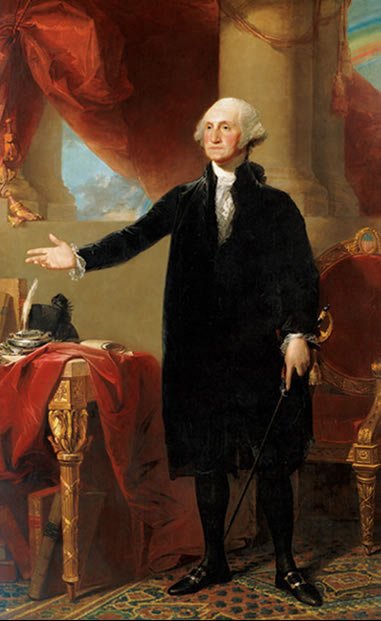
Before fleeing to safety, Dolley quickly gathered what she could, including important documents of her husband’s and Gilbert Stuart’s famous portrait of George Washington. When British soldiers entered the Executive Mansion later that day, they supposedly devoured the lavish dinner that had been left behind. They then piled up furniture, scattered oil-soaked rags in all of the rooms, and lit the President’s House afire!
Although the British quickly evacuated the capital, the months that followed weren't happy ones for the Madisons as many Americans criticized them for abandoning the President’s House and “allowing the destruction of the most visible symbol of the young republic.”
At their temporary residence, Dolley eventually hosted her Wednesday Squeezes again, but “the spirit was gone.” Then came word of General Andrew Jackson’s brilliant victory over the British in the Battle of New Orleans and the mood of the country was again jubilant. Although a peace treaty had been signed weeks earlier, the Battle of New Orleans transformed “Mr. Madison’s War” (which had been condemned as an unnecessary folly) into “a glorious reaffirmation of American independence."
Tuesday, December 1, 2015
George Washington's Ice House at Mount Vernon
Historians say that Washington’s icehouse was located on a riverbank about 75 yards from the Potomac. To store ice, Washington’s slaves had to use chisels and axes to pull large chunks of ice from the frozen river during the wintertime and then haul them to the icehouse where they were stacked in layers and stored for use throughout the spring and summer.
Before constructing his ice house, Washington sought advice from his friend and fellow patriot Robert Morris, who had an ice house at his home at 6th & Market Streets in Philadelphia. In a letter to Washington, Morris provided a detailed account of how his ice house had been constructed:
My Ice House is about 18 feet deep and 16 square, the bottom is a Coarse Gravell & the water which drains from the ice soaks into it as fast as the Ice melts, this prevents the necessity of a Drain...the Walls of my Ice House are built of stone without Mortar...On these [walls] the Roof is fixed...I nailed a Ceiling of Boards under the Roof flat from Wall to Wall, and filled the Space between the Ceiling and the Shingling of the Roof with Straw so that the heat of the Sun Cannot possibly have any Effect...
The Door for entering this Ice house faces the north, a Trap Door is made in the middle of the Floor through which the Ice is put in and taken out. I find it best to fill with Ice which as it is put in should be broke into small pieces and pounded down with heavy Clubs or Battons such as Pavers use, if well beat it will after a while consolidate into one solid mass and require to be cut out with a Chizell or Axe. I tried Snow one year and lost it in June. The Ice keeps until October or November and I believe if the Hole was larger so as to hold more it would keep untill Christmas...
Although Morris didn't mention what he stored in his icehouse, we do know that the Washingtons used theirs to preserve meat and butter, chill wine, and make ice cream and other frozen delicacies for their many guests at Mount Vernon.
Of course, George Washington wasn’t the only president who enjoyed ice cream. Accounts of it often appear in letters describing the many elegant dinner parties hosted by James and Dolley Madison, and the dish frequently appears in visitors' accounts of meals with Thomas Jefferson.
One particular guest wrote: "Among other things, ice-creams were produced in the form of balls of the frozen material inclosed in covers of warm pastry, exhibiting a curious contrast, as if the ice had just been taken from the oven." If you'd like to whip up some ice cream contained in warm pastry for your next dinner party, here is a simple and delicious recipe to try from puffpastry.com
1/2 of a 17.3-ounce package pastry sheets, 1 sheet, thawed
1 pint chocolate ice cream, softened
1 pint strawberry ice cream, soft
Chocolate fudge topping
Heat the oven to 400°F. Unfold the pastry sheet on a lightly floured surface. Cut the pastry sheet into 3 strips along the fold marks. Place the pastries onto a baking sheet. Bake for 15 minutes or until the pastries are golden brown. Remove the pastries from the baking sheet and let cool on a wire rack for 10 minutes. Split each pastry into 2 layers, making 6 in all.
Reserve 2 top pastry layers. Spread the chocolate ice cream on 2 bottom pastry layers. Freeze for 30 minutes. Top with another pastry layer and spread with the strawberry ice cream. Top with the reserved top pastry layers. Freeze for 30 minutes or until the ice cream is firm. Drizzle with the chocolate topping.
FAST FACT: In 1790, Robert Morris's house at 6th & Market Streets became the Executive Mansion of the United States while Philadelphia served as the temporary capital of the nation. Morris' icehouse was used by President Washington and his household until 1797, and by President John Adams and his family from 1797 to 1800.
For my new literary agent profile and submission guidelines, click here
Wednesday, April 22, 2015
Andrew Jackson Inaugural Orange Whiskey Punch
When John Quincy Adams took the oath of office in March, 1825, it was under a cloud of controversy. The election of 1824 had been a bitterly contested four-man race between Andrew Jackson, Henry Clay, William Crawford, and Adams.
Since no candidate had won a majority of electoral votes, the election was thrown into the House of Representatives where Clay, as Speaker of the House, threw his support to Adams, even though Jackson had won the most popular and electoral votes. Adams then appointed Clay as Secretary of State. Outraged and feeling cheated out of the White House, Jackson called the deal a “Corrupt Bargain to "cheat the will of the people."”
With these accusations hanging over his head, Adams faced problems from the start and his four years in office weren't easy ones. Although his intelligence,family background, and experience could have made him a great president, he lacked the charisma needed to create a base of loyal supporters.
Not surprisingly, he lost the election of 1828 in a landslide, and when Andrew Jackson was inaugurated in 1829, 20,000 of his loyal supporters who believed he had been cheated out of the White House four years earlier, descended upon Washington, eager to celebrate the long-delayed victory of their champion.
According to food historian Poppy Cannon, Jackson's inauguration "sparked a celebration that did everything but set fire to the White House." Thousands of rowdy fans poured into the building and "little thought was given to the delicate French furniture, elegant draperies, and fine china" as ice cream, punch, ices and cakes "were gobbled up as fast they appeared on long serving tables."
In a letter to her sister, Margaret Bayard Smith, a prominent Washington socialite, described the chaos of Jackson's inaugural festivities this way:
But what a scene did we witness! The Majesty of the People had disappeared, and a rabble, a mob, of boys, negros, women, children, scrambling fighting, romping. What a pity, what a pity! No arrangements had been made, no police officers placed on duty, and the whole house had been inundated by the rabble mob...
Cut glass and china to the amount of several thousand dollars had been broken in the struggle to get the refreshments, punch and other articles had been carried out in tubs and buckets, but had it been in hogsheads it would have been insufficient...
Ladies fainted, men were seen with bloody noses, and such a scene of confusion took place as is impossible to describe…This concourse had not been anticipated...Ladies and gentlemen only had been expected at this Levee, not the people en masse. But it was the People's day, and the People's President, and the People would rule!
Another observer described the day's events this way:
Orange-punch by barrels full was inside, but as the waiters opened the door to bring it out, a rush would be made, the glasses broken, the pails of liquor upset, and the most painful confusion prevailed. To such a degree was this carried, that tubs of punch were taken from the lower story into the garden to lead off the crowds from the rooms.
Although no one knows how those waiters prepared the punch that day, you can get some great whiskey tips from eatdrinkfrolic.com and The Wall Street Journal scoured some ninteeenth century cookbooks and provided this adapted recipe for Inaugural Orange Punch that's "easy to make by the bucketful" if you've got a mob to entertain today!
3 parts fresh orange juice
1 part fresh lemon juice
1 part Mulled Orange Syrup*
1 part dark rum
1 part cognac
2 parts soda water
Mulled Orange Syrup: Combine 1 cup sugar with 1 cup water and heat to a boil, stirring to dissolve the sugar. Reduce heat to a low simmer. Add the peel from an orange and mulling spices (a couple of cinnamon sticks, some whole cloves and allspice berries). After 15 minutes, remove from heat and let it sit for several hours. Strain.
Combine Mulled Orange Syrup and all other ingredients in a punch bowl with a large block of ice. Serve in punch cups with a little crushed ice. Add a dash of Angostura bitters to each glass and enjoy!
For 5 Wild & Crazy Presidential Elections and Inaugurations, click here!
Since no candidate had won a majority of electoral votes, the election was thrown into the House of Representatives where Clay, as Speaker of the House, threw his support to Adams, even though Jackson had won the most popular and electoral votes. Adams then appointed Clay as Secretary of State. Outraged and feeling cheated out of the White House, Jackson called the deal a “Corrupt Bargain to "cheat the will of the people."”
With these accusations hanging over his head, Adams faced problems from the start and his four years in office weren't easy ones. Although his intelligence,family background, and experience could have made him a great president, he lacked the charisma needed to create a base of loyal supporters.
Not surprisingly, he lost the election of 1828 in a landslide, and when Andrew Jackson was inaugurated in 1829, 20,000 of his loyal supporters who believed he had been cheated out of the White House four years earlier, descended upon Washington, eager to celebrate the long-delayed victory of their champion.
According to food historian Poppy Cannon, Jackson's inauguration "sparked a celebration that did everything but set fire to the White House." Thousands of rowdy fans poured into the building and "little thought was given to the delicate French furniture, elegant draperies, and fine china" as ice cream, punch, ices and cakes "were gobbled up as fast they appeared on long serving tables."
In a letter to her sister, Margaret Bayard Smith, a prominent Washington socialite, described the chaos of Jackson's inaugural festivities this way:
But what a scene did we witness! The Majesty of the People had disappeared, and a rabble, a mob, of boys, negros, women, children, scrambling fighting, romping. What a pity, what a pity! No arrangements had been made, no police officers placed on duty, and the whole house had been inundated by the rabble mob...
Cut glass and china to the amount of several thousand dollars had been broken in the struggle to get the refreshments, punch and other articles had been carried out in tubs and buckets, but had it been in hogsheads it would have been insufficient...
Ladies fainted, men were seen with bloody noses, and such a scene of confusion took place as is impossible to describe…This concourse had not been anticipated...Ladies and gentlemen only had been expected at this Levee, not the people en masse. But it was the People's day, and the People's President, and the People would rule!
Another observer described the day's events this way:
Orange-punch by barrels full was inside, but as the waiters opened the door to bring it out, a rush would be made, the glasses broken, the pails of liquor upset, and the most painful confusion prevailed. To such a degree was this carried, that tubs of punch were taken from the lower story into the garden to lead off the crowds from the rooms.
Although no one knows how those waiters prepared the punch that day, you can get some great whiskey tips from eatdrinkfrolic.com and The Wall Street Journal scoured some ninteeenth century cookbooks and provided this adapted recipe for Inaugural Orange Punch that's "easy to make by the bucketful" if you've got a mob to entertain today!
3 parts fresh orange juice
1 part fresh lemon juice
1 part Mulled Orange Syrup*
1 part dark rum
1 part cognac
2 parts soda water
Mulled Orange Syrup: Combine 1 cup sugar with 1 cup water and heat to a boil, stirring to dissolve the sugar. Reduce heat to a low simmer. Add the peel from an orange and mulling spices (a couple of cinnamon sticks, some whole cloves and allspice berries). After 15 minutes, remove from heat and let it sit for several hours. Strain.
Combine Mulled Orange Syrup and all other ingredients in a punch bowl with a large block of ice. Serve in punch cups with a little crushed ice. Add a dash of Angostura bitters to each glass and enjoy!
For 5 Wild & Crazy Presidential Elections and Inaugurations, click here!
Monday, December 8, 2014
George Washington's Ice House at Mount Vernon
Historians say that Washington’s icehouse was located on a riverbank about 75 yards from the Potomac. To store ice, Washington’s slaves had to use chisels and axes to pull large chunks of ice from the frozen river during the wintertime and then haul them to the icehouse where they were stacked in layers and stored for use throughout the spring and summer.
Before constructing his ice house, Washington sought advice from his friend and fellow patriot Robert Morris, who had an ice house at his home at 6th & Market Streets in Philadelphia. In a letter to Washington, Morris provided a detailed account of how his ice house had been constructed:
My Ice House is about 18 feet deep and 16 square, the bottom is a Coarse Gravell & the water which drains from the ice soaks into it as fast as the Ice melts, this prevents the necessity of a Drain...the Walls of my Ice House are built of stone without Mortar...On these [walls] the Roof is fixed...I nailed a Ceiling of Boards under the Roof flat from Wall to Wall, and filled the Space between the Ceiling and the Shingling of the Roof with Straw so that the heat of the Sun Cannot possibly have any Effect...
The Door for entering this Ice house faces the north, a Trap Door is made in the middle of the Floor through which the Ice is put in and taken out. I find it best to fill with Ice which as it is put in should be broke into small pieces and pounded down with heavy Clubs or Battons such as Pavers use, if well beat it will after a while consolidate into one solid mass and require to be cut out with a Chizell or Axe. I tried Snow one year and lost it in June. The Ice keeps until October or November and I believe if the Hole was larger so as to hold more it would keep untill Christmas...
Although Morris didn't mention what he stored in his icehouse, we do know that the Washingtons used theirs to preserve meat and butter, chill wine, and make ice cream and other frozen delicacies for their many guests at Mount Vernon.
Of course, George Washington wasn’t the only president who enjoyed ice cream. Accounts of it often appear in letters describing the many elegant dinner parties hosted by James and Dolley Madison, and the dish frequently appears in visitors' accounts of meals with Thomas Jefferson.
One particular guest wrote: "Among other things, ice-creams were produced in the form of balls of the frozen material inclosed in covers of warm pastry, exhibiting a curious contrast, as if the ice had just been taken from the oven." If you'd like to whip up some ice cream contained in warm pastry for your next dinner party, here's a simple recipe to try from puffpastry.com
1/2 of a 17.3-ounce package pastry sheets, 1 sheet, thawed
1 pint chocolate ice cream, softened
1 pint strawberry ice cream, soft
Chocolate fudge topping
Heat the oven to 400°F. Unfold the pastry sheet on a lightly floured surface. Cut the pastry sheet into 3 strips along the fold marks. Place the pastries onto a baking sheet. Bake for 15 minutes or until the pastries are golden brown. Remove the pastries from the baking sheet and let cool on a wire rack for 10 minutes. Split each pastry into 2 layers, making 6 in all.
Reserve 2 top pastry layers. Spread the chocolate ice cream on 2 bottom pastry layers. Freeze for 30 minutes. Top with another pastry layer and spread with the strawberry ice cream. Top with the reserved top pastry layers. Freeze for 30 minutes or until the ice cream is firm. Drizzle with the chocolate topping.
FAST FACT: In 1790, Robert Morris's house at 6th & Market Streets became the Executive Mansion of the United States while Philadelphia served as the temporary capital of the nation. Morris' icehouse was used by President Washington and his household until 1797, and by President John Adams and his family from 1797 to 1800.
Saturday, October 26, 2013
Dolley Madison's Wednesday Squeezes
When James Madison and his wife Dolley moved into the President's House, the room that Thomas Jefferson had used as an office became the State Dining Room. The adjacent parlor (today’s Red Room) was "redecorated in sunflower yellow, with sofas and chairs to match" and "outfitted with a piano, a guitar, and a portrait of Dolley.” One room over, the smaller but more formal elliptical salon was "decorated in the Grecian style" with cream-colored walls.
Together, these three rooms with their interconnecting doors became the venue for Dolley Madison’s legendary “Drawing Rooms,” or "Wednesday Squeezes," which often attracted as many as three hundreds guests and were the most popular social event in town!
Dressed in brightly colored satins or silks and often donning a feathered headpiece or bejeweled turban, Dolley cheerfully greeted and mingled with guests as they enjoyed a festive evening of refreshments, music, and lively conversation. Mrs. Madison also presided over elaborate dinner parties where she delighted guests with such unusual dessert items as pink pepperment ice cream baked in warm pastries.
The Madisons continued to entertain this way until "their brilliant social whirlwind" went up in flames during the War of 1812. On August 24, 1814, while James was away getting a report on the war, Dolley was supposedly awaiting forty dinner guests. Around three o’clock, word was received that British troops had defeated American forces at nearby Blandensburg and were marching toward the capital.
Before fleeing to safety, Dolley quickly gathered what she could, including important documents of her husband’s and Gilbert Stuart’s famous portrait of George Washington. When British soldiers entered the Executive Mansion later that day, they supposedly devoured the lavish dinner that had been left behind. They then piled up furniture, scattered oil-soaked rags in all of the rooms, and lit the President’s House afire!
Although the British quickly evacuated the capital, the months that followed were not happy ones for the Madisons. Many Americans criticized them for abandoning the President’s House and for “allowing the destruction of the most visible symbol of the young republic.”
At their temporary residence, Dolley started up her Wednesday Squeezes again, but “the spirit was gone.” Then came word of General Andrew Jackson’s victory over the British in the Battle of New Orleans and the mood of the country was again jubilant. Although a peace treaty had been signed weeks earlier, the Battle of New Orleans transformed “Mr. Madison’s War” (which had been condemned until then as an unnecessary folly) into “a glorious reaffirmation of American independence.”
Source: The President's Table: Two Hundred Years of Dining and Diplomacy (NY, Harper Collins: 2007)
Credit: Dolley Madison, oil on canvas, by Gilbert Stuart
Saturday, January 12, 2013
Andrew Jackson's First Inaugural Orange Punch
When Andrew Jackson was inaugurated on March 4, 1829, it was like "the homecoming of a hero" as twenty thousand of his loyal supporters, who believed he had been cheated out of the White House four years earlier, converged upon Washington, eager to celebrate the long-delayed victory of their champion.
According to food historian Poppy Cannon, Jackson's inauguration "sparked a celebration that did everything but set fire to the White House." Thousands of rowdy fans poured into the building and "little thought was given to the delicate French furniture, elegant draperies, and fine china" as ice cream, punch, cakes and ices were gobbled up as fast they appeared on long serving tables."
In a letter to her sister, Margaret Bayard Smith, a prominent Washington socialite, described the chaos of Jackson's inaugural festivities this way:
But what a scene did we witness! The Majesty of the People had disappeared, and a rabble, a mob, of boys, negros, women, children, scrambling fighting, romping. What a pity, what a pity! No arrangements had been made, no police officers placed on duty, and the whole house had been inundated by the rabble mob...
Cut glass and china to the amount of several thousand dollars had been broken in the struggle to get the refreshments, punch and other articles had been carried out in tubs and buckets, but had it been in hogsheads it would have been insufficient...
Ladies fainted, men were seen with bloody noses, and such a scene of confusion took place as is impossible to describe…This concourse had not been anticipated...Ladies and gentlemen only had been expected at this Levee, not the people en masse. But it was the People's day, and the People's President, and the People would rule!
Another observer described the day's events this way:
Orange-punch by barrels full was inside, but as the waiters opened the door to bring it out, a rush would be made, the glasses broken, the pails of liquor upset, and the most painful confusion prevailed. To such a degree was this carried, that tubs of punch were taken from the lower story into the garden to lead off the crowds from the rooms.
Although no one knows exactly how those quick-thinking waiters prepared the punch that day, a writer for The Wall Street Journal scoured some ninteeenth century cookbooks and provided this adapted recipe for Inaugural Orange Punch that's "easy to make by the bucketful" if you've got a mob to entertain!
3 parts fresh orange juice
1 part fresh lemon juice
1 part Mulled Orange Syrup*
1 part dark rum
1 part cognac
2 parts soda water
Mulled Orange Syrup: Combine 1 cup sugar with 1 cup water and heat to a boil, stirring to dissolve the sugar. Reduce heat to a low simmer. Add the peel from an orange and mulling spices (a couple of cinnamon sticks, some whole cloves and allspice berries). After 15 minutes, remove from heat and let it sit for several hours. Strain.
Combine Mulled Orange Syrup and all other ingredients in a punch bowl with a large block of ice. Serve in punch cups with a little crushed ice. Add a dash of Angostura bitters to each glass and enjoy!
Thursday, December 22, 2011
James Buchanan Snickerdoodles
Snickerdoodles are another traditional Dutch-German cookie that are covered with cinnamon and sugar and baked in the shape of a snail. Some historians say that their fanciful name comes from the German term schnecke knödel which can be translated as “snail dumpling.” Others say that “snicker” comes from the Dutch word snekrad or the German word schnecke, both of which refer to a small, snail-like shape.
Although no one knows who came up with their name, we do know that these sweet little sugar cookies have been popular in Buchanan's native state of Pennsylvania for centuries. If you'd like to whip up a batch of snickerdoodles this holiday season, here is a recipe to try from Emeril Lagasse:
For the topping:
3 tablespoons sugar
1/2 teaspoon cinnamon
For the cookie dough:
3 1/2 cups flour
1 tablespoon baking powder
2 teaspoons baking soda
1/4 teaspoon salt
1/4 teaspoon cinnamon
1 cup butter
2 cups sugar
2 eggs
1 tablespoon light corn syrup
2 1/2 teaspoons vanilla extract
In a small bowl, stir together the sugar and cinnamon and set aside. To make the cookie dough, stir together the dry ingredients. In a bowl with a paddle attachment, cream the butter. Add the sugar and continue to mix, then add the eggs, corn syrup, and vanilla, and mix thoroughly. Add the dry ingredients and mix until blended. Chill dough 1 hour if it's sticky or difficult to handle.
Preheat oven to 375 degrees F. Roll balls of dough about the size of a walnut then roll in the cinnamon sugar to coat. Place on an ungreased sheet pan 2 1/2 inches apart. Bake for 10 to 12 minutes until puffed up and the surface is slightly cracked. Let cool on the sheet a few minutes then remove to a wire rack to cool.
FOOD FACT: At Buchanan’s inaugural reception in 1857, more than 5,000 guests reportedly dined on "eight rounds of beef, seventy-five hams, sixty saddles of mutton, four saddles of venison, four hundred gallons of oysters, five quarts of jellies," twelve hundred quarts of ice cream, and more than $3,000 was spent on the wines - an astronimical figure at the time. But this was just a hint of the culinary excesses to come, and, during his four years in office, Buchanan’s annual $25,000 presidential salary wasn’t always enough to cover his tabs and he often had to pay for his extravagant "bachelor" parties at the White House out of his own pocket!
Thursday, December 15, 2011
Dolley Madison Fresh Raspberry Flummery
Flummery was another popular ninteeenth century dish that Dolley reportedly served at her many festive social gatherings at the White House. According to an article in the New York Times, dictionary writers are not kind to flummery and this “innocent pudding” is often described by lexicographers as a “bland custard” or “a sort of pap,” while Webster’s asserts that an alternative meaning of flummery is “something insipid or not worth having.”
Food historians say that the modern origins of flummery can be traced to a seventeenth century Welsh specialty prepared with oatmeal and boiled until dense. As this "goopy dish" lost popularity over the years, cooks gave the name flummery to those puddings that were “firmed up with almonds and gelatin.”
By the time flummery made its way to the United States, it had been transformed into a "pure, delicately-set fruit stew." If you’d like to whip up some flummery for your next dinner party or large social gathering, here is a simple recipe to try from the New York Times Magazine:
1 quart fresh raspberries
1 cup sugar
2 tablespoons cornstarch
3 tablespoons cold water or milk
Juice of half a lemon
Heavy cream, for serving
Combine the berries, sugar and ½ cup hot water in a saucepan. Cook over low heat, stirring, until the mixture is liquid. Strain the pulp through a fine sieve. Return the strained liquid to a saucepan. Bring to a boil. Meanwhile, blend the cornstarch with the cold water or milk. Stir this into the boiling berry liquid. Add the lemon juice. Simmer for 1 minute. Serve with heavy cream and enjoy!
FOOD FACT: Famous for hosting elegant dinner parties and receptions, Dolley Madison’s name became associated with fine dining and entertaining. In the early nineteenth century, food companies and advertisers began using her name to suggest that any woman could entertain as well as she did. Some of the food companies named after her were The Dolly Madison Bakery and Dolly Madison Ice Cream. There was even a Dolly Madison Popcorn. And Dolly Madison snacking cakes are still widely available today!
Monday, December 12, 2011
George Washington's Ice House at Mount Vernon and Strawberry Ice Cream Baked in Warm Pastry
Historians say that Washington’s icehouse was located on a riverbank about 75 yards from the Potomac. To store ice, Washington’s slaves had to use chisels and axes to pull large chunks of ice from the frozen river during the wintertime and then haul them to the icehouse where they were stacked in layers and stored for use throughout the spring and summer.
Before constructing his ice house, Washington sought advice from his friend and fellow patriot Robert Morris, who had an ice house at his home at 6th & Market Streets in Philadelphia. In a letter to Washington, Morris provided a
Monday, August 2, 2010
Ice Cream for the Obamas
During a fun-filled summer vacation in August of 2009, the Obama family toured Yellowstone National Park. After watching an eruption of the Old Faithful geyser, the Obamas stopped for ice cream at a nearby general store. Before placing their orders, President Obama reportedly asked about the ingredients of such flavors as Moose Tracks, Stuck in a Rut and Buffalo Chip.
When a server began “carving an enormous scoop" of Stuck in a Rut for Sasha, the president reportedly urged restraint. “You don't have to make it that big," he said. “She's not going to be able to eat all that.” After finishing their treats, President Obama departed for a town hall meeting on health care in Colorado while Sasha and Malia headed to a nearby orchard with their mother to pick peaches.
Although news reports didn't mention what flavor the president ordered that day, he was photographed in Maine enjoying a single scoop of coconut ice cream. So in honor of the president's birthday this week, here is a recipe for Quick Coconut Ice Cream adapted from Delicious Days by David Lebovitz:
2/3 cup heavy cream
1 cup coconut milk
2 ounces palm sugar, or 1/4 cup white or unrefined cane sugar
scant 1/2 teaspoon saffron threads
In a medium-sized saucepan, bring all the ingredients to a boil. Reduce the heat and simmer gently for ten minutes, stirring occasionally. Remove from heat, and chill the mixture thoroughly. Once chilled, freeze in your ice cream maker according to the manufacturer's directions. Once churned, be sure to scrape any saffron threads clinging to the dasher back in to the ice cream.
FOOD FACT: Historians say that the origins of ice cream can be traced as far back as ancient China, where fruit-flavored ices were created, possibly as early as 3000 BCE. The ice creams we are familiar with today, however, are said to have been invented in Italy in the early seventeenth century. As time and technology progressed, ice cream flavors, complicated confections, and novelty concoctions, like ice cream sandwiches, sundaes, popsicles, and banana splits, became popular.
Friday, July 9, 2010
Dolley Madison Fresh Strawberry Ice Cream
When Dolley Madison heard about this new dessert, she supposedly travelled to Wilmington to try it. The First Lady must have loved it because a "magnificent dome of pink ice cream" was served at President Madison’s second Inaugural Ball in 1813, and ice cream often appeared as the official dessert on the White House menu during her husband's two terms of office.
This recipe for strawberry ice cream, which may be similar to the one used by the Madison’s chef, is adapted from The White House Cookbook by Hugo Ziemann, a nineteenth century steward of the White House, and Mrs. F. L. Gillette, a celebrated 19th century cookbook author.
1 1/2 cups sugar
4 cups fresh strawberries, sliced
1 quart heavy fresh cream
In a medium bowl, mix 1 cup sugar with strawberries, let stand for three hours, then mash and strain through a coarse towel.
Add 1/2 cup sugar and combine until dissolved. Beat in cream and freeze for at least three hours.
Thanks for stopping by THE HISTORY CHEF! For a free excerpt of my new book from Simon and Schuster click here
Tuesday, March 23, 2010
George Washington Garlic Mashed Potatoes
Contrary to popular belief, George did not wear a set of wooden dentures. Instead, a talented New York dentist named John Greenwood handcrafted his dentures from elephant ivory, hippopotamus tusks and parts of horse and donkey teeth. This recipe for roasted garlic mashed potatoes, taken from Martha Washington's Booke of Cookery, has been adapted for modern cooks.
4 large russet potatoes, peeled and quartered
2 garlic cloves, peeled
2 teaspoons coarse salt
1 stick unsalted butter
¾ cup heavy cream
In a large pot of cold water, bring the potatoes and garlic to a boil. Salt the water and cook until the potatoes are tender, about 20 minutes. Drain and return the potatoes to the pot. Mash over low heat with the butter, cream and 2 teaspoons salt. Serve warm and enjoy!
Subscribe to:
Posts (Atom)