Showing posts with label Theodore Roosevelt. Show all posts

Thursday, April 7, 2016

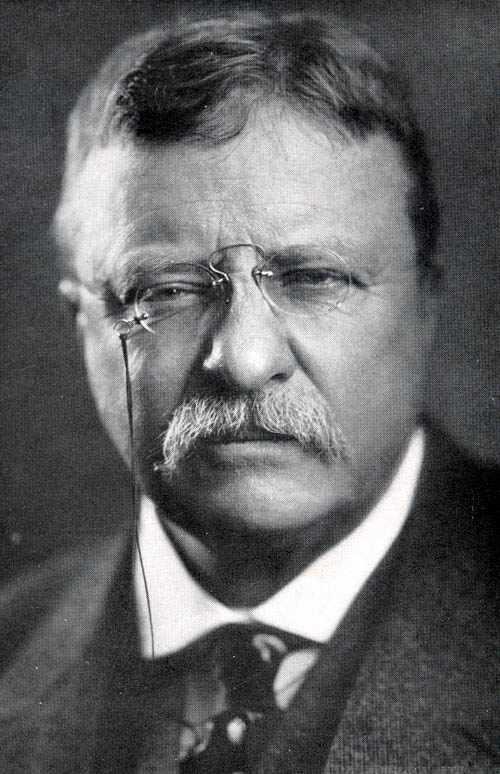
Teddy Roosevelt, a Brooklyn Candy Shop Owner, and the Creation and Naming of the Teddy Bear


So did you know that the Teddy Bear was invented in honor of President Theodore Roosevelt? It all began when he went on a four-day bear hunting trip in Mississippi in November of 1902. Although Roosevelt was known as an experienced big game hunter, he had not come across a single bear on that particular trip.

According to historians at the National Park Service:

Roosevelt’s assistants, led by Holt Collier, a born slave and former Confederate cavalryman, cornered and tied a black bear to a willow tree. They summoned Roosevelt and suggested that he shoot it. Viewing this as extremely unsportsmanlike, Roosevelt refused to shoot the bear.

The news of this event spread quickly through newspaper articles across the country. The articles recounted the story of the president who refused to shoot a bear. However, it was not just any president, it was Theodore Roosevelt the big game hunter!


So that's how Roosevelt's name became associated with a bear. But the story doesn't end there because when a political cartoonist named Clifford Berryman read reports about the incident, he decided to lightheartedly lampoon it. Then, when a Brooklyn candy shop owner by the name of Morris Michton saw Berryman’s cartoon in the Washington Post on November 16, 1902, he came up with a brilliant marketing idea.


You see, Michtom's wife Rose was a seamstress and made stuffed animals at their shop, and so he asked her to make a stuffed toy bear that resembled Berryman's drawing. He then showcased his wife's cute cuddly creation in the front window of their shop along with a sign that read "Teddy's Bear."

After receiving Roosevelt’s permission to use his name, Michtom began mass producing the toy bears which became so popular that he launched the Ideal Novelty and Toy Company, and, by 1907, more than a million of the cuddly bears had been sold in the United States. And so NOW you know how Theodore Roosevelt, a political cartoonist and a Brooklyn candy shop owner led to the creation and naming of the Teddy Bear!

Now...I'm guessing that you probably don't want to feast on a juicy bear steak like those that Roosevelt and his fellow hunters enjoyed, but you might like these cute Teddy Bear Cupcakes that are fun to make and great to serve at children's birthday parties and play dates.


1 box Betty Crocker® SuperMoist® yellow cake mix
1 cup water
1/2 cup creamy peanut butter
3 eggs
1 container Betty Crocker® Whipped chocolate frosting
1/3 cup miniature semisweet chocolate chips
48 teddy bear-shaped graham snacks

In large bowl, beat cake mix, water, peanut butter and eggs with electric mixer on low speed 30 seconds. Beat on medium speed 2 minutes, scraping bowl occasionally. Divide batter evenly among muffin cups. Bake 13 to 18 minutes or until toothpick inserted in center comes out clean and tops spring back when touched lightly in center. Cool 10 minutes. Remove from pan to cooling rack. Cool completely, about 30 minutes.

Reserve 1/4 cup of the frosting. Spread remaining frosting over tops of cupcakes. Sprinkle each cupcake with 1/2 teaspoon of chocolate chips; press gently into frosting. Spread about 1/2 teaspoon reserved frosting on flat sides of 2 graham snacks. Place on cupcakes, pressing candles slightly into cupcakes to hold in place.

For a free sample of The Presidents' Favorite Foods and Drinks, click here

Thursday, December 11, 2014

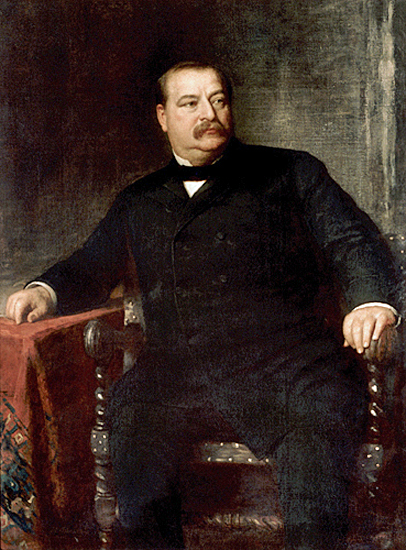
Grover Cleveland, Babe Ruth and the Debate over the Name of the Baby Ruth Bar

So did you know that Grover Cleveland's name is associated with a long-standing debate over the name of the Baby Ruth bar? Some people say that this popular candy bar was named after Cleveland's infant daughter Ruth, who was endearingly referred to as "Baby Ruth." Others claim that it was named after the great baseball player Babe Ruth, who hit the peak of his fame shortly after the candy bar was introduced in 1920.

According to Babe Ruth Central, this is how the story goes:

Back in 1916, the Curtiss Candy Company was founded in Chicago. The company's first candy bar was called the "Kandy Kake". The product was not overwhelmingly successful, so Curtiss went about refashioning it. And, in 1920, the "Baby Ruth" candy bar was introduced to candy-craving consumers.

That would be a pretty simple story, if it ended there. But, of course, it didn't. Adults and kids back then, just like today, were confused by the name and thought it was a candy bar related to Babe Ruth. After all, even in 1921, Babe already had gained a lot of fame in the baseball world. He had hit 54 home runs in 1920 and 59 during the 1921 season. These were incredible records at the time and he was in newspapers all over the country. So, for many, Baby Ruth was Babe Ruth's candy, whether truth or not.


Despite widespread popular opinion that the candy bar was named after the Babe, the Curtiss Candy Company never swayed from its position that it was named in honor of Cleveland's daughter Ruth.

But...as many commentators have observed, Ruth died of diptheria in 1904, seventeen years "before Curtiss combined nougat, chocolate, caramel and peanuts into its chewy Baby Ruth." Moreover, Grover Cleveland left office in 1897, and, by the time the Baby Ruth bar hit the market in 1920, William McKinley, Theodore Roosevelt, and William Howard Taft had all served as president, and Woodrow Wilson was just finishing his second term.

So why would the Curtiss Company name its candy bar after a long-deceased daughter of a former president? Well, many people believed that the company conveniently concocted the story to avoid having to pay royalties to Babe Ruth.

Whatever the case may be, the story doesn't end there. In 1926, Babe agreed to lend his name to a new candy bar called "Ruth's Home Run Candy Bar" that was manufactured by the fledgling George H. Ruth Candy Company. In response, the Curtiss Company filed a lawsuit to prevent the rival candy bar from being made, claiming that it infringed on their trademark established in 1919.

In 1931, the Court of Customs and Patent Appeals ruled in favor of the Curtiss Company and George Ruth's Home Run Bar was forced off the market. To support its ruling, the court explained that it was evident that George Ruth was trying to capitalize on his nickname at a time when sales of Baby Ruths were reportedly as high as $1 million a month.

Regardless of the legal outcome of the case, the debate over the name of the Baby Ruth bar continues to this day! And so NOW you know how Grover Cleveland's name became associated with the debate over the name of the Baby Ruth bar!

FAST FACT: So did you know that Grover Cleveland is the only American president to serve two non-consecutive terms. His first term was 1885-1889 and his second term was 1893-1897 which means he was the 22nd and 24th president of the United States. So that's why President Obama is the 44th president even though there have only been 43 different presidents to date!

Tuesday, July 9, 2013

Theodore Roosevelt, Upton Sinclair, and the Pure Food and Drug Act of 1906

So this story is kind of repulsive and certainly won't make you crave a juicy hamburger or steak, but it's a part of food history so here goes:

On June 30, 1906, President Theodore Roosevelt signed into law the Meat Inspection Act and Pure Food and Drug Act which provided for federal inspection of meat products and prohibited the manufacture, sale, or transportation of adulterated food products. The Acts arose in part due to articles and exposés written by muckrakers, like Upton Sinclair, whose popular 1906 novel The Jungle contains hair-raising descriptions of the ways in which meat was produced in Chicago slaughterhouses and stockyards.

Sinclair described how dead rats, putrid meat, and poisoned rat bait were routinely shoveled into sausage-grinding machines, how bribed inspectors turned a blind eye when diseased cows were slaughtered for beef, and how filth and guts were swept off the floor and then packaged and sold as “potted ham.”

Muckraker, of course, is a term that is applied to those novelists and journalists who sought to expose the corruption of American business and politics in the early twentieth century. It was President Roosevelt who first coined the term in a 1906 speech in which he compared writers like Sinclair to the “Man with the Muck-rake” (a character in John Bunyan's Pilgrim's Progress) who was so focused on "raking the filth at his feet” that he failed to look up and “behold the celestial crown.”

Similarly, Roosevelt argued that Sinclair and other muckrakers were so focused on the evils of American society that they failed to "behold the vision of America's promise.”

Wednesday, October 5, 2011

Theodore Roosevelt, Muckrakers, and the "Monarchical Manners" of the White House

In keeping with the progressive, muckraking nature of the times, a journalist for Harper's Weekly complained about "the monarchical manners" of the White House during Theodore Roosevelt's administration.

In particular, the journalist alleged that "since Mr. Roosevelt became President there have been witnessed behind the White House doors an exclusiveness, a rigor of etiquette, and a display of swords and gold braid such as no one of his predecessors ever dreamed of...The atmosphere of the White House, once democratic and free, has become tainted with the manners of monarchy."

Similar criticisms were expressed in a June 1906 Washington Post column in which Roosevelt was condemned for indulging in extravagant dining practices at the White House. Responding to the allegations, a spokesman for the president sent a letter to the Post which appeared the next day:

When anyone endeavors to create a widespread impression that the President and his family sit down to a four or five course breakfast, a six or seven course luncheon, and a ten-course dinner, the President feels that a denial is not inappropriate. Instead of a breakfast consisting of oranges, cantaloupes, cereals, eggs, bacon, lamb chops, hot cakes, and waffles, President Roosevelt insists that the regular White House breakfast consists of hard boiled eggs, rolls, and coffee.

Instead of a luncheon of such delicious viands as Little Neck clams, stuffed olives, celery, consommé of chicken, fish sauté, eggs a la turque, Spring lamb, new string beans, asparagus, mashed potatoes, lettuce, tomatoes, strawberries and ice cream, President Roosevelt declares that when alone he always contents himself with a bowl of bread and milk.

When Mrs. Roosevelt or the children are present, the luncheon consists of cold meat, tea, cantaloupe in season, and bread. Instead of a ten-course dinner, the President declares that nine times out of ten a three-course dinner is served, and the other time a two-course dinner.


Despite the muckrakers' monarchical allegations, Roosevelt's reputation inside the White House was that of a simple family man. Ike Hoover served in the White House for forty-two years, eventually serving as Chief Usher in charge of day-to-day operations. In his memoirs, published in 1934, Hoover provided insight into the Roosevelt family’s daily dining habits:

The entire family [sat] down [for] breakfast at eight o'clock. After breakfast the President spent an hour or so in his study, perhaps reading, while Mrs. Roosevelt arranged the details of the day's program. The President went to his office at nine-thirty or ten o'clock, and Mrs. Roosevelt for a walk or shopping...All returned just about in time for lunch. Those famous lunches!

Something indeed was wrong when there were not two or more guests for this meal. To prepare properly for a certain number was almost a physical impossibility, for notice was continually coming from the office that someone had been invited at the last minute, and many times the family and guests had to wait until the table was made larger before they could be seated. The place was really a transient boardinghouse, and how every one got enough to eat was the wonder of the household...


Although Hoover didn't mention what particular dishes were served at those famous Roosevelt luncheons, researchers tell us that TR's diet consisted of "quite a bit of game from hunting expeditions" and that he was also fond of Southern Fried Chicken with White Gravy and Grits. If you'd like to whip up some Southern Fried Chicken for your next family luncheon or dinner this week, here's a simple and simply delicious recipe to try from Paula Dean:

3 eggs
1/3 cup water
About 1 cup hot red pepper sauce
2 cups self-rising flour
1 teaspoon pepper
House seasoning, recipe follows
1 (1 to 2 pound) chicken, cut into pieces
Oil, for frying, preferably peanut oil

In a medium size bowl, beat the eggs with the water. Add enough hot sauce so the egg mixture is bright orange. In another bowl, combine the flour and pepper. Season the chicken with the house seasoning. Dip the seasoned chicken in the egg, and then coat well in the flour mixture. Heat the oil to 350 degrees F in a deep pot. Do not fill the pot more than 1/2 full with oil. Fry the chicken in the oil until brown and crisp. Dark meat takes longer then white meat. It should take dark meat about 13 to 14 minutes, white meat around 8 to 10 minutes.

FAST FACT: As for the Roosevelt's evenings, Hoover noted that "it was more to the liking of the family to spend a quiet evening in the library, either playing cards or reading the current magazines. The whole family were fiends when it came to reading. No newspapers. Never a moment was allowed to go to waste; from the oldest to the youngest they always had a book or a magazine before them. The President...would just devour a book and it was no uncommon thing for him to go entirely through three or four volumes in the course of an evening. Likewise we frequently saw one of the children stretched out on the floor flat on his stomach eating a piece of candy and with his face buried deep in a book."

Friday, September 23, 2011

Theodore Roosevelt, a Brooklyn Candy Shop Owner, and the Invention of the Teddy Bear


According to historians, it all began when Roosevelt went on a four-day bear hunting trip in Mississippi in November of 1902. Although Roosevelt was known as an experienced big game hunter, he had not come across a single bear on that particular trip.

According to historians at the National Park Service:

Roosevelt’s assistants, led by Holt Collier, a born slave and former Confederate cavalryman, cornered and tied a black bear to a willow tree. They summoned Roosevelt and suggested that he shoot it. Viewing this as extremely unsportsmanlike, Roosevelt refused to shoot the bear.

The news of this event spread quickly through newspaper articles across the country. The articles recounted the story of the president who refused to shoot a bear. However, it was not just any president, it was Theodore Roosevelt the big game hunter!


So that's how Roosevelt's name became associated with a bear. But the story doesn't end there because when a political cartoonist named Clifford Berryman read reports about the incident, he decided to lightheartedly lampoon it. Then, when a Brooklyn candy shop owner by the name of Morris Michton saw Berryman’s cartoon in the Washington Post on November 16, 1902, he came up with a brilliant marketing idea.


You see, Michtom's wife Rose was a seamstress and made stuffed animals at their shop, and so he asked her to make a stuffed toy bear that resembled Berryman's drawing. He then showcased his wife's cute cuddly creation in the front window of their shop along with a sign that read "Teddy's Bear."

After receiving Roosevelt’s permission to use his name, Michtom began mass producing the toy bears which became so popular that he launched the Ideal Novelty and Toy Company, and, by 1907, more than a million of the cuddly bears had been sold in the United States. And so NOW you know how Theodore Roosevelt, a political cartoonist and a Brooklyn candy shop owner led to the invention of the Teddy Bear!

Now...I'm guessing that you probably don't want to feast on juicy bear steaks like those that Roosevelt and his fellow hunters surely enjoyed, but you might like to try these cute Teddy Bear Cupcakes that are a snap to make and great to serve at children's birthday parties and play dates.


1 box Betty Crocker® SuperMoist® yellow cake mix
1 cup water
1/2 cup creamy peanut butter
3 eggs
1 container Betty Crocker® Whipped chocolate frosting
1/3 cup miniature semisweet chocolate chips
48 teddy bear-shaped graham snacks

In large bowl, beat cake mix, water, peanut butter and eggs with electric mixer on low speed 30 seconds. Beat on medium speed 2 minutes, scraping bowl occasionally. Divide batter evenly among muffin cups. Bake 13 to 18 minutes or until toothpick inserted in center comes out clean and tops spring back when touched lightly in center. Cool 10 minutes. Remove from pan to cooling rack. Cool completely, about 30 minutes.

Reserve 1/4 cup of the frosting. Spread remaining frosting over tops of cupcakes. Sprinkle each cupcake with 1/2 teaspoon of chocolate chips; press gently into frosting. Spread about 1/2 teaspoon reserved frosting on flat sides of 2 graham snacks. Place on cupcakes, pressing candles slightly into cupcakes to hold in place.

Thursday, December 2, 2010

Theodore Roosevelt, a Brooklyn Candy Shop Owner, and the Invention of the Teddy Bear

So did you know that the Teddy Bear was invented in honor of President Theodore Roosevelt? According to historians, it all began when Roosevelt went on a four-day bear hunting trip in Mississippi in November of 1902. Although Roosevelt was known as an experienced big game hunter, he had not come across a single bear on that particular trip.

According to historians at the National Park Service:

Roosevelt’s assistants, led by Holt Collier, a born slave and former Confederate cavalryman, cornered and tied a black bear to a willow tree. They summoned Roosevelt and suggested that he shoot it. Viewing this as extremely unsportsmanlike, Roosevelt refused to shoot the bear. The news of this event spread quickly through newspaper articles across the country. The articles recounted the story of the president who refused to shoot a bear. However, it was not just any president, it was Theodore Roosevelt the big game hunter!

When a political cartoonist named Clifford Berryman read the reports he decided to “lightheartedly lampoon” the incident. Then, when a Brooklyn candy shop owner by the name of Morris Michton saw Berryman’s cartoon in the Washington Post on November 16, 1902, he came up with a brilliant marketing idea. You see, Michtom's wife Rose was a seamstress and made stuffed animals at their shop, and so he asked her to make a stuffed toy bear that resembled Berryman's drawing. He then showcased his wife's creation in the front window of their shop along with a sign that read "Teddy's Bear."

After receiving Roosevelt’s permission to use his name, Michtom began mass producing the toy bears which became so popular that he launched the Ideal Novelty and Toy Company, and, by 1907, more than a million of the cuddly bears had been sold in the United States. And so NOW you know how one of Theodore Roosevelt’s hunting trips led to the "invention" of the Teddy Bear!

Now...I'm guessing that most of you probably don't want to feast on a juicy bear steak like those that Roosevelt and his fellow hunters surely enjoyed, but you might like to make these cute Teddy Bear Cupcakes which are great to serve at children's birthday parties and play dates.

1 box Betty Crocker® SuperMoist® yellow cake mix
1 cup water
1/2 cup creamy peanut butter
3 eggs
1 container Betty Crocker® Whipped chocolate frosting
1/3 cup miniature semisweet chocolate chips
48 teddy bear-shaped graham snacks

In large bowl, beat cake mix, water, peanut butter and eggs with electric mixer on low speed 30 seconds. Beat on medium speed 2 minutes, scraping bowl occasionally. Divide batter evenly among muffin cups. Bake 13 to 18 minutes or until toothpick inserted in center comes out clean and tops spring back when touched lightly in center. Cool 10 minutes. Remove from pan to cooling rack. Cool completely, about 30 minutes.

Reserve 1/4 cup of the frosting. Spread remaining frosting over tops of cupcakes. Sprinkle each cupcake with 1/2 teaspoon of chocolate chips; press gently into frosting. Spread about 1/2 teaspoon reserved frosting on flat sides of 2 graham snacks. Place on cupcakes, pressing candles slightly into cupcakes to hold in place.

For more on my manuscript wish list and submission info click here!

Wednesday, September 1, 2010

Teddy Roosevelt Sand Tart Cookies

At home in the White House from 1901 until 1909, Theodore Roosevelt’s six young kids had the complete run of the place. They took their favorite pony for a ride in the White House elevator and frightened visiting officials with a four foot king snake. No doubt famished after such action-packed days, “TR’s Brood” favored hearty country foods, like Southern Fried Chicken with White Gravy and Grits or Chicken Fried Steak with Mashed Potatoes and Dutch Apple Cake.

Historians say that the Roosevelt family also loved eating cookies and other sweet, sugary treats. According to Poppy Cannon, a "particularly cherished family recipe" for Sand Tarts was found written on the inside cover of one of Edith Roosevelt's many cookbooks. Although that particular recipe might be difficult to duplicate today, you can try this sweet and simple recipe for Sand Tart Cookies from Good Housekeeping and Paula Deen:

1 cup butter (2 sticks), softened
1 tsp. vanilla extract
1 cup confectioners' sugar
1 3/4 cup all-purpose flour
1 cup pecans, finely chopped

Preheat oven to 275°F. In large bowl, with mixer on medium speed, beat butter, vanilla, and 1/2 cup sugar until smooth, occasionally scraping bowl with rubber spatula. Reduce speed to low; gradually beat in flour just until blended, occasionally scraping bowl. With spoon, stir in pecans.

With floured hands, shape dough by level measuring tablespoons into about 2" by 1/2" crescents. Place crescents, 2 inches apart, on 2 ungreased large cookie sheets. Place cookie sheets on 2 oven racks. Bake about 45 minutes or until edges are lightly browned. With metal spatula, transfer cookies to wire racks set over waxed paper. Immediately sprinkle remaining confectioners' sugar through sieve over cookies to coat well. Cool completely and enjoy!

FAST FACT: Teddy and his second wife Edith were married in 1886. His daughter Alice (from his first marriage) was 17 when the family moved into the White House. The other children were Ted, Kermit, Ethel, Archie, and Quentin. When the Roosevelts moved into the White House, they brought along a whole menagerie of exotic pets with them. Kermit had a Kangaroo Rat that reportedly ate lumps of sugar off the breakfast table and four-year-old Quentin had a pet green snake named Emily Spinach!

Thanks for stopping by THE HISTORY CHEF! For a free excerpt of my new book from Simon and Schuster click here!

Monday, July 26, 2010

Theodore Roosevelt, Muckrakers, and the Pure Food and Drug Act of 1906

So this story is kind of repulsive and certainly won't make you crave a juicy hamburger or steak, but it's a part of food history so here goes:

On June 30, 1906, President Theodore Roosevelt signed into law the Meat Inspection Act and Pure Food and Drug Act which provided for federal inspection of meat products and prohibited the manufacture, sale, or transportation of adulterated food products.

The Acts arose in part due to articles and exposés written by muckrakers, like Upton Sinclair, whose popular 1906 novel The Jungle contains hair-raising descriptions of the ways in which meat was produced in Chicago slaughterhouses and stockyards.

Sinclair described how dead rats, putrid meat, and poisoned rat bait were routinely shoveled into sausage-grinding machines, how bribed inspectors turned a blind eye when diseased cows were slaughtered for beef, and how filth and guts were swept off the floor and then packaged as “potted ham.”

Muckraker, of course, is a term that is applied to those novelists and journalists who sought to expose the corruption of American business and politics in the early twentieth century. It was President Roosevelt who first coined the term in a 1906 speech in which he compared writers like Sinclair to the “Man with the Muck-rake” (a character in John Bunyan's Pilgrim's Progress) who was so focused on "raking the filth at his feet” that he failed to look up and “behold the celestial crown.”

Similarly, Roosevelt argued that Sinclair and other muckrakers were so focused on the evils of American society that they failed to behold “the vision of America's promise.”

Thanks for stopping by THE HISTORY CHEF! To pre-order my new book click here!