Showing posts with label Coffee. Show all posts

Wednesday, April 6, 2016

James Polk, the Treaty of Guadalupe Hidalgo, and Food on the Range

So did you know that in 1848 James Polk signed the Treaty of Guadalupe Hidalgo which ended the Mexican-American War and gave most of present-day Texas, New Mexico, Arizona, Colorado, California, Wyoming, and Utah to the United States?

With the addition of these vast tracts of land, more and more cowboys headed to the southwest, where they herded cattle north to market and sold them for beef. As they galloped along, cowboys would sing songs about food like "Trouble for the Range Cook" and "Starving to Death on My Government Claim."

"Git Along Little Dogies" is another classic cowboy tune. In it, a cowboy tells the dogies (the calves in the herd) that it’s their misfortune (and none of his own) that they will soon be sold at market. Maybe you’ve heard it!

As I walked out this morning for pleasure,
I met a cowpuncher a jogging along;
his hat was throwed back and his spurs was a jingling,
and as he advanced he was singing this song.

Yippee ti yi yo, get along little dogies
It's your misfortune and none of my own
Yippee ti yi yo get along little dogies
For you know that Wyoming will soon be your home...


It's early in spring that we round up the dogies,
And mark 'em and brand 'em and bob off their tails;
We round up our horses and load the chuckwagon,
And then throw them dogies out onto the trail.

Whoopee ti yi yo, git along, little dogies,
It's your misfortune And none of my own;
Whoopee ti yi yo, Git along, little dogies,
You know that Wyoming will be your new home.


As cowboys drove cattle north, cooks drove Chuck Wagons (which carried all of the food and supplies for meals) ahead of the herds to set up camp for the night. Meals on the range typically consisted of beef, hash, beans, chili peppers, coffee, biscuits, sugar, and dried fruit.


Like cowboys, cooks would sing snappy tunes about food while working hard on the range. In “Punchin’ Dough” am exhausted, overworked cook tells some bothersome and ungrateful cowboys that cooking is just as demanding as herding cattle (you can listen to it here ):

Come, all you young waddies, I'II sing you a song
Stand back from the wagon, stay where you belong
I've heard you complaining' I'm fussy and slow,
While you're punchin' the cattle and I'm punchin' dough.

Now I reckon your stomach would grow to your back
If it was'n't for the cook that keeps fillin' the slack
With the beans in the box and the pork in the tub
I'm a-wonderin' now, who would fill you with grub?

When you're cuttin' stock, then I'm cuttin' a steak,
When you're wranglin' hosses, I'm wranglin' a cake.
When you're hazin' the dogies and battin' your eyes,
I'm hazin' dried apples that aim to be pies…


Meanwhile, as cowboys were devouring biscuits and beans on the range, President Polk was dining on fancy French cuisine at the White House. But Polk was no stranger to grub. As a boy growing up on the frontier, he reportedly ate Black Bear Steak and Barbecued Deer. Like other frontier folk, basic country fare, like Tenesseee Ham and Corn Pone, was what pleased Polk the most!

If you'd like to wrangle up some corn pone, here's a simple recipe to try:

1 tablespoon of shortening
3/4 cup of boiling water
1 cup yellow corn meal
1 teaspoon of salt

Melt shortening in heavy 8 or 9-inch skillet. Heat water to boiling point and pour immediately over corn meal and salt. Add melted shortening; stir to blend well. As soon as mixture has cooled enough to handle, divide into four equal portions. Shape each portion into a pone about 3/4 inch thick by patting between the hands. Place in pan and bake at 450°F for about 50 minutes or until golden brown. Serve warm and enjoy!

For more on my manuscript wish list and submission info click here!

Monday, September 15, 2014

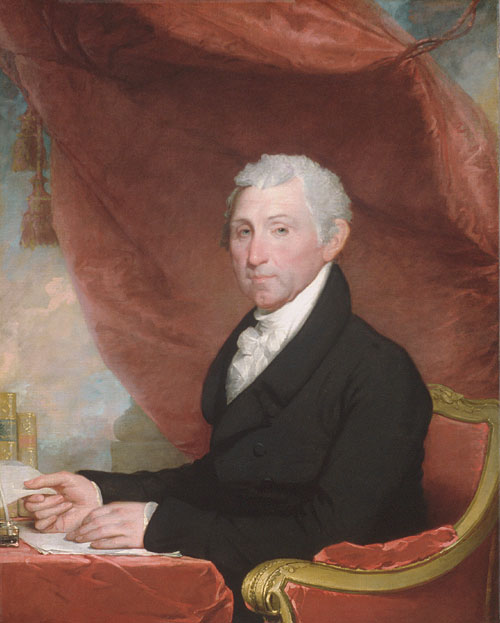
James Monroe, Mississippi Steamboatin' and "Food Piled High on a Long Linen Cloth"

So did you know that James Monroe was the first president to ride and possibly dine on a steamboat? By the 1820s, steamboats were in use on most of the major rivers, canals, and waterways in the United States.

The steamboat completely revolutionized shipping. For the first time in history, people didn't have to rely on unpredictable currents and winds and could travel to just about any port at any time. Plantation owners in Mississippi, Missouri, and Louisiana, for example, could cheaply and easily ship cargoes of sugar, cotton and other goods upriver on the Mississippi rather than send them around the tip of Florida and up the Eastern seaboard as they had previously done.

Steamboats also provided a luxurious way for wealthy passengers to travel. In Mississippi Steamboatin’, Herbert Quick described the palatial setting and abundance of food served on later steamboats:

The palatial setting of later steamboats attracted pleasure-seekers and wealthy travelers...More comfortable than their 'settin' rooms,' more ornate than their prim and uncomfortable parlors...they saw the steamboat's cabin as a bewilderingly beautiful palace.

The...glistening cut-glass chandeliers; the soft oil paintings on every stateroom door; the thick carpets that transformed walking into a royal march; the steaming foods piled high on the long linen cloth in the dining room, with attentive waiters standing at the traveler's elbow, waiting with more food, and gaily colored desserts in the offing - neither homes nor hotels...were ever like this.


Between 1814 (three years before Monroe took office) and 1834, steamboat arrivals in New Orleans increased from 20 to 1,200 each year. For the next half century, steamboats were the main transporter of American goods, and tiny river towns grew into thriving cities “when steamboats began to make regular stops at their docks.”

FAST FACT: If you've ever watched steam rise from a cup of hot chocolate or coffee, you might think that a steamboat is propelled by steam. That makes sense, but that isn't exactly how a steamboat works. In a steamboat's engine, wood or other fuel is burned to heat water in a boiler, and the steam that rises from the water is forced through small spaces (piston cylinders) to increase the speed at which it escapes, similar to the release of a valve on a pressure-cooker. The concentrated steam then hits and moves a paddlewheel which, in turn, propels the steamboat through water!

Credit: James Monroe, oil on canvas by Gilbert Stuart (Metropolitan Museum of Art, New York)

Monday, June 30, 2014

The Road to Independence: From the Sugar Act to the Boston Tea Party


So did you know that sugar, coffee, tea and other basic foods played a role in some of the key events that led to the American Revolutionary War? Because volumes could be written about each of these events, I decided to compile a timeline to make this fascinating part of food history a bit easier to digest:

1760 - King George III ascends to the British throne.

1763 - The Treaty of Paris is signed ending the French and Indian War. Part of the Seven Years War between France and England, the French and Indian War was fought in North America between 1754 and 1763. Although victorious, the war plunged Britain deeply into debt, which King George III decided to pay off by imposing taxes on the colonies.

1764 - On April 5, the British Parliament passed the Sugar Act which lowered the rate of tax placed on molasses but increased taxes placed on sugar, coffee, and certain kinds of wines. At the time, most colonists agreed that Parliament had the right to regulate trade, as it had done with the Molasses Act of 1733. But the Sugar Act was specifically aimed at raising revenue which was to be used to pay for the maintenance of British troops stationed in the colonies. Although most colonists were accustomed to being taxed by their own assemblies, they strongly objected to being taxed by Parliament, where they were not represented. It was during protests over the Sugar Act that the famous cry, "No taxation without representation" was often heard.

1765 - In May, the Quartering Act was passed which required colonists to house British troops and supply them with food.

1765 - On March 22, Parliament passed the Stamp Act which placed a tax on newspapers, pamphlets, contracts, playing cards, and other products that were printed on paper. Unlike the Sugar Act which was an external tax (e.g., it taxed only goods imported into the colonies), the Stamp Act was an internal tax levied directly upon the property and goods of the colonists. The Stamp Act forced the colonists to further consider the issue of Parliamentary taxation without representation. United in opposition, colonists convened in October at the Stamp Act Congress in New York and called for a boycott on British imports.

1766 - Bowing to the pressure, Parliament repealed the Stamp Act, but, on the same day, passed the Declaratory Act which asserted Parliament's authority to make laws binding on the colonists “in all cases whatsoever.”

1767 - A series of laws known as the Townshend Acts are passed which impose taxes on glass, paint, tea, and other imports into the colonies. One of the most influential responses to the Acts was a series of essays by John Dickinson entitled, "Letters from a Farmer in Pennsylvania." Articulating ideas already widely accepted in the colonies, Dickinson argued that there was no difference between "external" and "internal" taxes, and that any taxes imposed on the colonies by Parliament for the sake of raising a revenue were unconstitutional.

1768 - British troops arrive in Boston to enforce custom laws.

1770 - On March 5, four colonists are shot and killed by British troops stationed in Boston. Patriots label the event “The Boston Massacre.”

1773 - In an effort to save the struggling British East India Company, Parliament passed the Tea Act. This act did not place any new taxes on tea. Instead, it eliminated tariffs placed on tea entering England and allowed the company to sell tea directly to colonists rather than merchants. These changes lowered the price of British tea to below that of smuggled tea, which the British hoped would help end the boycott.

1773 - On December 16, a group of colonists led by Samuel Adams disguised themselves as Mohawk Indians and boarded three British ships that were docked in Boston Harbor. Armed with axes and tomahawks, the men chopped open the crates they found onboard and dumped almost 10,000 pounds of British tea into the harbor. As news of the "Boston Tea Party" spread, patriots in other colonies staged similar acts of resistance.

1774 - In retaliation, Parliament passed the Coercive Acts which closed Boston Harbor to commerce until the colonists had paid for the lost tea, drastically reduced the powers of self-government in the colonies, and provided for the quartering of British troops in the colonists' houses and barns. On September 5, the First Continental Congress convenes in Philadelphia.

1775 - Shots are fired at Lexington and Concord. George Washington takes command of the Continental Army.

1776 - On July 4, the Declaration of Independence is approved. British forces arrive in New York harbor bent on crushing the American rebellion.

Monday, December 2, 2013

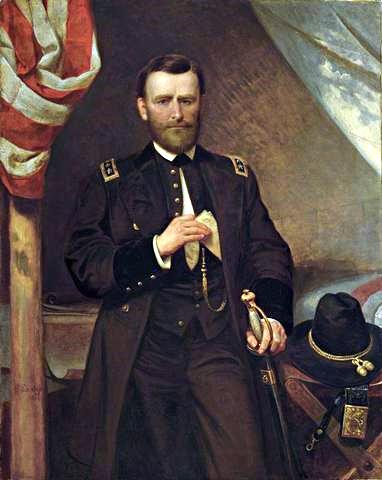
Ulysses S. Grant's Second Inaugural Ball

The menu for Ulysses S. Grant’s second Inaugural Ball reflects the opulence of the Gilded Age. A New York Times article dated March 5, 1873 contains a mind-boggling list of dishes and provisions served, including:

10,000 fried oysters; 8,000 scalloped oysters; 8,000 pickled oysters; 63 boned turkeys; 75 roast turkeys; 150 roast capons stuffed with truffles; 15 saddles of mutton; 200 dozen quails; 300 tongues ornamented with jelly; 200 hams; 30 baked salmon; 100 roasted chickens; 400 partridges; 25 stuufed boar’s heads; 2,000 head-cheese sandwiches; 3,000 ham sandwiches; 3,000 beef-tongue sandwiches; 1,600 bunches celery; 30 barrels of salad; 350 boiled chickens; 6,000 boiled eggs; 2,000 pounds of lobster; 2,500 loaves of bread; 8,000 rolls and 1,000 pounds of butter.

Dessert items inclued 300 charlotte russes; 200 moulds of wine jelly; 200 moulds of blanc mange; 300 gallons of assorted ice-cream; 400 pounds of mixed cakes; 25 barrels of Malaga grapes; 400 pounds of mixed candies; 200 pounds of shelled almonds; 200 gallons coffee; 200 gallons of tea and 100 gallons of hot chocolate.

But the best laid plans can go awry, even for a president. The weather that evening was freezing and the temporary ballroom had no heat. Guests danced in their hats and overcoats, they ran out of hot chocolate and coffee, and perhaps most tragically, most of the decorative caged canaries (which were supposed to be happily chirping) froze!

Credit: Portrait of Ulysses S. Grant by Emanuel Gottlieb Leutze

Thanks for stopping by THE HISTORY CHEF! And for a flash sale today for my book click here!

Friday, January 20, 2012

James Polk, the Treaty of Guadalupe Hidalgo, and Food on the Range

So did you know that in 1848 James Polk signed the Treaty of Guadalupe Hidalgo which ended the Mexican-American War and gave most of present-day Texas, New Mexico, Arizona, Colorado, California, Wyoming, and Utah to the United States?

With the addition of these vast tracts of land, more and more cowboys headed to the southwest, where they herded cattle north to market and sold them for beef. As they galloped along, cowboys would sing songs about food like "Trouble for the Range Cook" and "Starving to Death on My Government Claim."

"Git Along Little Dogies" is another classic cowboy tune. In it, a cowboy tells the dogies (the calves in the herd) that it’s their misfortune (and none of his own) that they will soon be sold at market. Maybe you’ve heard the lyrics:

As I walked out this morning for pleasure,
I met a cowpuncher a jogging along;
his hat was throwed back and his spurs was a jingling,
and as he advanced he was singing this song.

Yippee ti yi yo, get along little dogies
It's your misfortune and none of my own
Yippee ti yi yo get along little dogies
For you know that Wyoming will soon be your home...


It's early in spring that we round up the dogies,
And mark 'em and brand 'em and bob off their tails;
We round up our horses and load the chuckwagon,
And then throw them dogies out onto the trail.

Whoopee ti yi yo, git along, little dogies,
It's your misfortune And none of my own;
Whoopee ti yi yo, Git along, little dogies,
You know that Wyoming will be your new home.


As cowboys drove cattle north, cooks drove Chuck Wagons (which carried all of the food and supplies for meals) ahead of the herds to set up camp for the night. Meals on the range typically consisted of beef, hash, beans, chili peppers, coffee, biscuits, sugar, and dried fruit.

Like cowboys, cooks would sing snappy tunes about food while working hard on the range. In “Punchin’ Dough” a cook tells some bothersome and ungrateful cowboys that cooking is just as demanding as herding cattle:

Come, all you young waddies, I'II sing you a song
Stand back from the wagon, stay where you belong
I've heard you complaining' I'm fussy and slow,
While you're punchin' the cattle and I'm punchin' dough.

Now I reckon your stomach would grow to your back
If it was'n't for the cook that keeps fillin' the slack
With the beans in the box and the pork in the tub
I'm a-wonderin' now, who would fill you with grub?

When you're cuttin' stock, then I'm cuttin' a steak,
When you're wranglin' hosses, I'm wranglin' a cake.
When you're hazin' the dogies and battin' your eyes,
I'm hazin' dried apples that aim to be pies…


Meanwhile, as cowboys were devouring biscuits and beans on the range, President Polk was dining on rich French cuisine at the White House. But Polk was no stranger to grub. As a boy growing up on the North Carolina frontier, he reportedly ate Black Bear Steak and Barbecued Deer. Like other frontier folk, basic country fare, like Tenesseee Ham and Corn Pone, was what pleased Polk the most!

If you'd like to wrangle up some corn pone one of these days, here's a simple recipe to try from The Smokey Mountain Cookbook

1 tablespoon of shortening
3/4 cup of boiling water
1 cup yellow corn meal
1 teaspoon of salt

Melt shortening in heavy 8 or 9-inch skillet. Heat water to boiling point and pour immediately over corn meal and salt. Add melted shortening; stir to blend well. As soon as mixture has cooled enough to handle, divide into four equal portions. Shape each portion into a pone about 3/4 inch thick by patting between the hands. Place in pan and bake at 450°F for about 50 minutes or until golden brown. Serve warm and enjoy!

Monday, August 23, 2010

Lucy Hayes Famous Homemade Angel Cake

Historians say that “Everything in Moderation” was the motto of Rutherford B. Hayes. He reportedly drank “one cup of coffee at breakfast” and “one cup of tea at lunch.” Dinner was often chicken or steak followed by a slice of his wife Lucy’s famous homemade Angel Cake.

It has been said that Angel Food Cake got its name because "it is so white, light, and fluffy it must be the food of angels.” Although no one knows who created or named this cake, we do know that recipes with the name "Angel Food" began appearing in American cookbooks in the late nineteenth century – around the same time that mass-produced cake pans hit the market!

If you'd like to bake one of these delightfully light and fluffy cakes, here is a simple recipe to try from the Food Network's ever-energetic Alton Brown

1 3/4 cups sugar
1/4 teaspoon salt
1 cup cake flour, sifted
12 egg whites (the closer to room temperature the better)
1/3 cup warm water
1 teaspoon orange extract, or extract of your choice
1 1/2 teaspoons cream of tartar

Preheat oven to 350 degrees F. In a food processor spin sugar about 2 minutes until it is superfine. Sift half of the sugar with the salt the cake flour, setting the remaining sugar aside.

In a large bowl, use a balloon whisk to thoroughly combine egg whites, water, orange extract, and cream of tartar. After 2 minutes, switch to a hand mixer. Slowly sift the reserved sugar, beating continuously at medium speed. Once you have achieved medium peaks, sift enough of the flour mixture in to dust the top of the foam. Using a spatula fold in gently. Continue until all of the flour mixture is incorporated.

Carefully spoon mixture into an ungreased tube pan. Bake for 35 minutes before checking for doneness with a wooden skewer. (When inserted halfway between the inner and outer wall, the skewer should come out dry). Cool upside down on cooling rack for at least an hour before removing from pan.

FOOD FACT: According to Food Timeline compiler Lynne Olver, recipes for cakes similar to Angel Food (calling only for egg whites) were known by other equally descriptive names, such as Silver Cake and Snow Drift Cake. The latter recipe was included in an 1881 cookbook entitled What Mrs. Fisher Knows about Old Southern Cooking. According to Olver, Mrs. Fisher was the first freed American slave to author a cookbook in the United States.

Credit: Portrait of Lucy Hayes by Daniel Huntington, White House Historical Association (White House Collection)