Showing posts with label Cookies. Show all posts
Friday, January 13, 2023
Lou Henry Hoover and the First Organized Girl Scout Cookie Drive in 1935!
So did you know that Herbert Hoover’s wife "Lou" served as president of the Girl Scouts and helped coordinate one of the first Girl Scout Cookie Drives in 1935? Sixty five years later, in April of 2000, the Herbert Hoover Presidential Library and Museum held an exhibit entitled, American Women! A Celebration of Our History. One exhibit depicted Lou Hoover’s lifelong commitment to the Girl Scouts. This is how the placard read:
A woman nicknamed "Daisy" started the Girl Scouts of the U.S.A. with 18 girls. And a tomboy called "Lou" helped the organization grow into its current membership of over 3.5 million! Lou Henry grew up enjoying the outdoor life, and was the first women to receive a degree in geology from Stanford. She traveled the world with her husband Herbert Hoover, and assisted him with his mining ventures and famine relief activities.
During World War I she met up with Juliette Low [Daisy], and was a Girl Scout for the next 25 years. As First Lady and national leader of the Girl Scouts, Hoover quietly aided people in need during the Depression, and was also the first to desegregate White House social functions.
Lou remained a Scout the rest of her life and led the first Girl Scout cookie drive in 1935. Juliette Low and Lou Henry Hoover brought together girls from the North and South, wealthy and poor, black and white, athletic and handicapped – instilling confidence that all women can develop their potential to be whatever they wish to be.
In the 1920s and 1930s, Girl Scouts all across the country baked their own simple sugar cookies with their mothers. They then packaged their coookies in wax paper bags sealed with a sticker and sold them door-to-door for 25 to 35 cents a dozen.
Today, of course, there is a wide array of commercially baked Girl Scouts cookies to choose from, including such traditional favorites as Samoas, Tagalongs, Trefoils, and Thin Mints! If you'd like to whip up a batch of cookies with your kids today, here's the original recipe for Early Girl Scout Cookies® from The Girl Scouts of the United States of America.
1 cup butter
1 cup sugar plus additional amount for topping (optional)
2 eggs
2 tablespoons milk
1 teaspoon vanilla
2 cups flour
1 teaspoon salt
2 teaspoons baking powder
Cream butter and the cup of sugar; add well-beaten eggs, then milk, vanilla, flour, salt, and baking powder. Refrigerate for at least 1 hour. Roll dough, cut into trefoil shapes, and sprinkle sugar on top, if desired. Bake in a quick oven (375°) for approximately 8 to 10 minutes or until the edges begin to brown. Makes six- to seven-dozen cookies.
For more on my manuscript wish list click here!
Tuesday, May 14, 2019
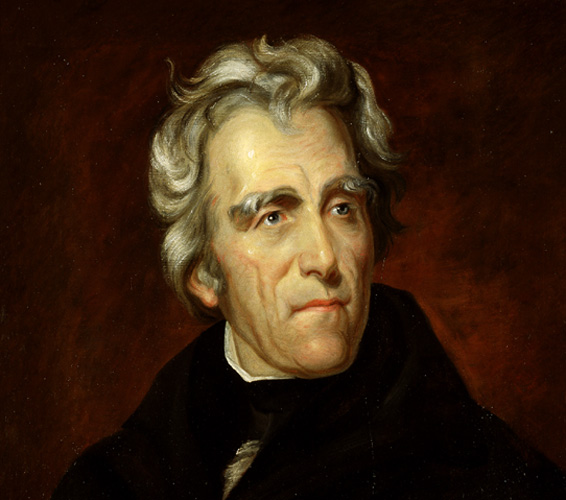
Andrew Jackson Benne Wafers
During his two terms of office, Jackson vetoed the recharter of the Second Bank of the United States, signed the “Tariff of Abominations” which led to the Nullification Crisis and ignored an important Supreme Court decision protecting Native American rights.
Jackson was also no stranger to slavery. More than 150 slaves worked day and night at his stately Tennessee mansion "The Hermitage" where cooks prepared his favorite southern foods, including Braised Duck, Chicken Hash, Old Hickory Soup and Wild Barbecued Goose.
Popular in the south throughout the nineteenth century, Benne Wafers were another Jackson family favorite. Today, these delightfully light, crisp, paper-thin cookies can still be found in bakeries and candy shops throughout the south.
If you'd like to whip up a batch of Benne Wafers today, here's a a recipe to try from CookinCanuck.com and here's another one that's simple to make and tastes simply delicious!
¾ cup sesame seeds, toasted
1 cup firmly packed brown sugar
4 tablespoons (½ stick) butter, softened
1 egg, lightly beaten
½ cup all purpose flour
¼ teaspoon salt
¼ teaspoon baking powder
1 teaspoon vanilla extract
Preheat oven to 325ยบ F. Cover cookie sheet with parchment paper or lightly grease it. In a heavy skillet over medium heat, toast the sesame seeds until they are golden brown, about 4 minutes.
In a medium bowl, beat the brown sugar and butter together until fluffy, about 3 minutes. Beat in the egg. In a separate bowl, whisk together the flour, salt, and baking powder, then add to the butter, sugar and egg mixture and mix until well-combined. Stir in the sesame seeds and vanilla.
Drop by teaspoonful onto prepared cookie sheet about 3 inches apart. Bake for 10 minutes, or until the edges are lightly browned. Let cool for a few minutes and then transfer to a rack to continue cooling.
Credit: Jackson in 1824, painting by Thomas Sully.
Wednesday, April 22, 2015
Andrew Jackson Inaugural Orange Whiskey Punch
When John Quincy Adams took the oath of office in March, 1825, it was under a cloud of controversy. The election of 1824 had been a bitterly contested four-man race between Andrew Jackson, Henry Clay, William Crawford, and Adams.
Since no candidate had won a majority of electoral votes, the election was thrown into the House of Representatives where Clay, as Speaker of the House, threw his support to Adams, even though Jackson had won the most popular and electoral votes. Adams then appointed Clay as Secretary of State. Outraged and feeling cheated out of the White House, Jackson called the deal a “Corrupt Bargain to "cheat the will of the people."”
With these accusations hanging over his head, Adams faced problems from the start and his four years in office weren't easy ones. Although his intelligence,family background, and experience could have made him a great president, he lacked the charisma needed to create a base of loyal supporters.
Not surprisingly, he lost the election of 1828 in a landslide, and when Andrew Jackson was inaugurated in 1829, 20,000 of his loyal supporters who believed he had been cheated out of the White House four years earlier, descended upon Washington, eager to celebrate the long-delayed victory of their champion.
According to food historian Poppy Cannon, Jackson's inauguration "sparked a celebration that did everything but set fire to the White House." Thousands of rowdy fans poured into the building and "little thought was given to the delicate French furniture, elegant draperies, and fine china" as ice cream, punch, ices and cakes "were gobbled up as fast they appeared on long serving tables."
In a letter to her sister, Margaret Bayard Smith, a prominent Washington socialite, described the chaos of Jackson's inaugural festivities this way:
But what a scene did we witness! The Majesty of the People had disappeared, and a rabble, a mob, of boys, negros, women, children, scrambling fighting, romping. What a pity, what a pity! No arrangements had been made, no police officers placed on duty, and the whole house had been inundated by the rabble mob...
Cut glass and china to the amount of several thousand dollars had been broken in the struggle to get the refreshments, punch and other articles had been carried out in tubs and buckets, but had it been in hogsheads it would have been insufficient...
Ladies fainted, men were seen with bloody noses, and such a scene of confusion took place as is impossible to describe…This concourse had not been anticipated...Ladies and gentlemen only had been expected at this Levee, not the people en masse. But it was the People's day, and the People's President, and the People would rule!
Another observer described the day's events this way:
Orange-punch by barrels full was inside, but as the waiters opened the door to bring it out, a rush would be made, the glasses broken, the pails of liquor upset, and the most painful confusion prevailed. To such a degree was this carried, that tubs of punch were taken from the lower story into the garden to lead off the crowds from the rooms.
Although no one knows how those waiters prepared the punch that day, you can get some great whiskey tips from eatdrinkfrolic.com and The Wall Street Journal scoured some ninteeenth century cookbooks and provided this adapted recipe for Inaugural Orange Punch that's "easy to make by the bucketful" if you've got a mob to entertain today!
3 parts fresh orange juice
1 part fresh lemon juice
1 part Mulled Orange Syrup*
1 part dark rum
1 part cognac
2 parts soda water
Mulled Orange Syrup: Combine 1 cup sugar with 1 cup water and heat to a boil, stirring to dissolve the sugar. Reduce heat to a low simmer. Add the peel from an orange and mulling spices (a couple of cinnamon sticks, some whole cloves and allspice berries). After 15 minutes, remove from heat and let it sit for several hours. Strain.
Combine Mulled Orange Syrup and all other ingredients in a punch bowl with a large block of ice. Serve in punch cups with a little crushed ice. Add a dash of Angostura bitters to each glass and enjoy!
For 5 Wild & Crazy Presidential Elections and Inaugurations, click here!
Saturday, January 12, 2013
Andrew Jackson's First Inaugural Orange Punch
When Andrew Jackson was inaugurated on March 4, 1829, it was like "the homecoming of a hero" as twenty thousand of his loyal supporters, who believed he had been cheated out of the White House four years earlier, converged upon Washington, eager to celebrate the long-delayed victory of their champion.
According to food historian Poppy Cannon, Jackson's inauguration "sparked a celebration that did everything but set fire to the White House." Thousands of rowdy fans poured into the building and "little thought was given to the delicate French furniture, elegant draperies, and fine china" as ice cream, punch, cakes and ices were gobbled up as fast they appeared on long serving tables."
In a letter to her sister, Margaret Bayard Smith, a prominent Washington socialite, described the chaos of Jackson's inaugural festivities this way:
But what a scene did we witness! The Majesty of the People had disappeared, and a rabble, a mob, of boys, negros, women, children, scrambling fighting, romping. What a pity, what a pity! No arrangements had been made, no police officers placed on duty, and the whole house had been inundated by the rabble mob...
Cut glass and china to the amount of several thousand dollars had been broken in the struggle to get the refreshments, punch and other articles had been carried out in tubs and buckets, but had it been in hogsheads it would have been insufficient...
Ladies fainted, men were seen with bloody noses, and such a scene of confusion took place as is impossible to describe…This concourse had not been anticipated...Ladies and gentlemen only had been expected at this Levee, not the people en masse. But it was the People's day, and the People's President, and the People would rule!
Another observer described the day's events this way:
Orange-punch by barrels full was inside, but as the waiters opened the door to bring it out, a rush would be made, the glasses broken, the pails of liquor upset, and the most painful confusion prevailed. To such a degree was this carried, that tubs of punch were taken from the lower story into the garden to lead off the crowds from the rooms.
Although no one knows exactly how those quick-thinking waiters prepared the punch that day, a writer for The Wall Street Journal scoured some ninteeenth century cookbooks and provided this adapted recipe for Inaugural Orange Punch that's "easy to make by the bucketful" if you've got a mob to entertain!
3 parts fresh orange juice
1 part fresh lemon juice
1 part Mulled Orange Syrup*
1 part dark rum
1 part cognac
2 parts soda water
Mulled Orange Syrup: Combine 1 cup sugar with 1 cup water and heat to a boil, stirring to dissolve the sugar. Reduce heat to a low simmer. Add the peel from an orange and mulling spices (a couple of cinnamon sticks, some whole cloves and allspice berries). After 15 minutes, remove from heat and let it sit for several hours. Strain.
Combine Mulled Orange Syrup and all other ingredients in a punch bowl with a large block of ice. Serve in punch cups with a little crushed ice. Add a dash of Angostura bitters to each glass and enjoy!
Wednesday, September 1, 2010
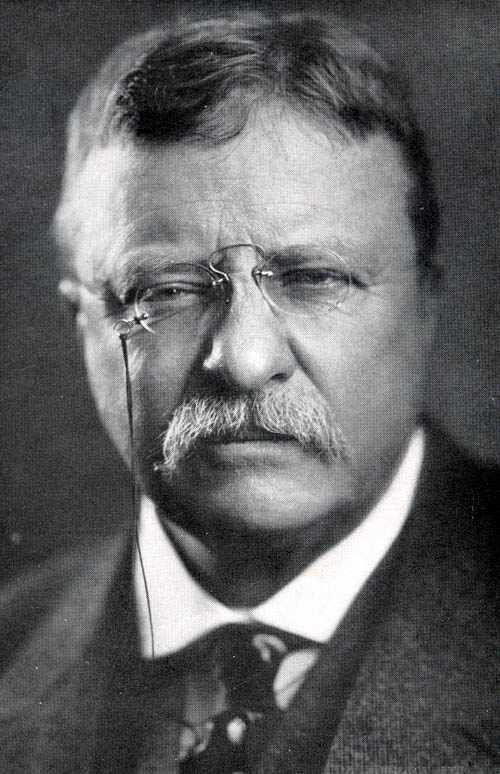
Teddy Roosevelt Sand Tart Cookies
Historians say that the Roosevelt family also loved eating cookies and other sweet, sugary treats. According to Poppy Cannon, a "particularly cherished family recipe" for Sand Tarts was found written on the inside cover of one of Edith Roosevelt's many cookbooks. Although that particular recipe might be difficult to duplicate today, you can try this sweet and simple recipe for Sand Tart Cookies from Good Housekeeping and Paula Deen:
1 cup butter (2 sticks), softened
1 tsp. vanilla extract
1 cup confectioners' sugar
1 3/4 cup all-purpose flour
1 cup pecans, finely chopped
Preheat oven to 275°F. In large bowl, with mixer on medium speed, beat butter, vanilla, and 1/2 cup sugar until smooth, occasionally scraping bowl with rubber spatula. Reduce speed to low; gradually beat in flour just until blended, occasionally scraping bowl. With spoon, stir in pecans.
With floured hands, shape dough by level measuring tablespoons into about 2" by 1/2" crescents. Place crescents, 2 inches apart, on 2 ungreased large cookie sheets. Place cookie sheets on 2 oven racks. Bake about 45 minutes or until edges are lightly browned. With metal spatula, transfer cookies to wire racks set over waxed paper. Immediately sprinkle remaining confectioners' sugar through sieve over cookies to coat well. Cool completely and enjoy!
FAST FACT: Teddy and his second wife Edith were married in 1886. His daughter Alice (from his first marriage) was 17 when the family moved into the White House. The other children were Ted, Kermit, Ethel, Archie, and Quentin. When the Roosevelts moved into the White House, they brought along a whole menagerie of exotic pets with them. Kermit had a Kangaroo Rat that reportedly ate lumps of sugar off the breakfast table and four-year-old Quentin had a pet green snake named Emily Spinach!
Thanks for stopping by THE HISTORY CHEF! For a free excerpt of my new book from Simon and Schuster click here!
Subscribe to:
Posts (Atom)