On the evening of January 11, 1989, President Ronald Reagan delivered his Farewell Address from the Oval Office at the White House. In it, he spoke reverently of the past, of his accomplishments during his eight years in office, and of his vision of America’s promise.
Near the end of his address, Reagan turned his attention toward patriotism, freedom, and the future, and said that “All great change in America begins at the dinner table” in the daily conversations between parent and child. This is what he said:
My fellow Americans...we're about to enter the '90s, and some things have changed. Younger parents aren't sure that an unambivalent appreciation of America is the right thing to teach modern children. And as for those who create the popular culture, well-grounded patriotism is no longer the style. Our spirit is back, but we haven't reinstitutionalized it. We've got to do a better job of getting across that America is freedom - freedom of speech, freedom of religion, freedom of enterprise. And freedom is special and rare. It's fragile; it needs protection.
So, we've got to teach history based not on what's in fashion but what's important: Why the Pilgrims came here, who Jimmy Doolittle was, and what those 30 seconds over Tokyo meant...Let's start with some basics: more attention to American history and a greater emphasis on civic ritual. And let me offer lesson No. 1 about America: All great change in America begins at the dinner table. So, tomorrow night in the kitchen I hope the talking begins. And children, if your parents haven't been teaching you what it means to be an American, let 'em know and nail 'em on it. That would be a very American thing to do...
After leaving office, Reagan and his wife Nancy quietly retired to a mansion on a private, tree-lined street in the exclusive community of Bel Air, California. Despite the many elegant State Dinners that he surely must have become accustomed to during his two terms of office, those who were close to the president say that he retained a childhood taste for Meatloaf, Hamburger Soup, and other simple foods of his youth.
One his "all-time favorites," however, according to White House Chef Henry Haller, was Macaroni and Cheese, so much so that Reagan requested that a dish of it be delivered to him while he was recuperating at a hospital after being seriously wounded in an assassination attempt that took place on March 30, 1981, less than 100 days into his presidency.
“The dish was served in the manner the President prefer[ed],” Haller explained, “with the noodles well cooked and covered with a light cheese spiked with mustard.” If you’d like to serve up some of President Reagan’s Favorite Macaroni and Cheese for dinner tonight while talking to your kids about what it means to be an American, here is the original recipe from The White House Cookbook by Henry Haller:
½ pound macaroni
1 tablespoon butter
1 egg, beaten
3 cups grated sharp cheddar cheese
1 cup warm milk
1 teaspoon salt
1 teaspoon dry mustard
½ teaspoon Worcestershire sauce
A pinch of paprika
Preheat oven to 350°F. Butter a 2-quart casserole dish. Add macaroni to 2 quarts of boiling salted water and cook for 10 minutes. Drain well in a colander. Transfer to a mixing bowl. Stir in butter and beaten egg. Add 2-1/2 cups of the grated cheese.
In a small bowl, combine milk with salt, mustard and Worcestershire sauce. Spoon macaroni and cheese into the prepared casserole. Pour milk mixture over and sprinkle top with the remaining cheese. Sprinkle with paprika.
Bake on middle shelf of preheated oven for 35 to 40 minutes, or until macaroni is firm to the touch and the top is crusty and browned. Serve at once, either as a light entree accompanied by a hot green vegetable and a crisp salad, or as a side dish with Hamburgers or Meat Loaf.
FAST FACT: Also injured in the assassination attempt was White House Press Secretary James Brady who suffered a gunshot wound to the head, while a Secret Service Agent was shot in the chest and a Washington, D.C. police officer was hit near the spine. Historians at the Miller Center say that "as Reagan was rushed to George Washington University Hospital for emergency surgery, administration aides downplayed the severity of the injuries. According to Political Affairs Director Lyn Nofziger, Reagan was in good spirits, at one point teasing the medical staff, 'Please tell me you're Republicans.'"
Credit: Ronald Reagan wearing cowboy hat at Rancho Del Cielo, Ronald Reagan Presidential Library and Museum (1976)
For a free excerpt of my new book from Simon and Schuster click here!
Wednesday, February 22, 2012
Friday, January 20, 2012
James Polk, the Treaty of Guadalupe Hidalgo, and Food on the Range
So did you know that in 1848 James Polk signed the Treaty of Guadalupe Hidalgo which ended the Mexican-American War and gave most of present-day Texas, New Mexico, Arizona, Colorado, California, Wyoming, and Utah to the United States?With the addition of these vast tracts of land, more and more cowboys headed to the southwest, where they herded cattle north to market and sold them for beef. As they galloped along, cowboys would sing songs about food like "Trouble for the Range Cook" and "Starving to Death on My Government Claim."
"Git Along Little Dogies" is another classic cowboy tune. In it, a cowboy tells the dogies (the calves in the herd) that it’s their misfortune (and none of his own) that they will soon be sold at market. Maybe you’ve heard the lyrics:
As I walked out this morning for pleasure,
I met a cowpuncher a jogging along;
his hat was throwed back and his spurs was a jingling,
and as he advanced he was singing this song.
Yippee ti yi yo, get along little dogies
It's your misfortune and none of my own
Yippee ti yi yo get along little dogies
For you know that Wyoming will soon be your home...
It's early in spring that we round up the dogies,
And mark 'em and brand 'em and bob off their tails;
We round up our horses and load the chuckwagon,
And then throw them dogies out onto the trail.
Whoopee ti yi yo, git along, little dogies,
It's your misfortune And none of my own;
Whoopee ti yi yo, Git along, little dogies,
You know that Wyoming will be your new home.
As cowboys drove cattle north, cooks drove Chuck Wagons (which carried all of the food and supplies for meals) ahead of the herds to set up camp for the night. Meals on the range typically consisted of beef, hash, beans, chili peppers, coffee, biscuits, sugar, and dried fruit.
Like cowboys, cooks would sing snappy tunes about food while working hard on the range. In “Punchin’ Dough” a cook tells some bothersome and ungrateful cowboys that cooking is just as demanding as herding cattle:
Come, all you young waddies, I'II sing you a song
Stand back from the wagon, stay where you belong
I've heard you complaining' I'm fussy and slow,
While you're punchin' the cattle and I'm punchin' dough.
Now I reckon your stomach would grow to your back
If it was'n't for the cook that keeps fillin' the slack
With the beans in the box and the pork in the tub
I'm a-wonderin' now, who would fill you with grub?
When you're cuttin' stock, then I'm cuttin' a steak,
When you're wranglin' hosses, I'm wranglin' a cake.
When you're hazin' the dogies and battin' your eyes,
I'm hazin' dried apples that aim to be pies…
Meanwhile, as cowboys were devouring biscuits and beans on the range, President Polk was dining on rich French cuisine at the White House. But Polk was no stranger to grub. As a boy growing up on the North Carolina frontier, he reportedly ate Black Bear Steak and Barbecued Deer. Like other frontier folk, basic country fare, like Tenesseee Ham and Corn Pone, was what pleased Polk the most!
If you'd like to wrangle up some corn pone one of these days, here's a simple recipe to try from The Smokey Mountain Cookbook
1 tablespoon of shortening
3/4 cup of boiling water
1 cup yellow corn meal
1 teaspoon of salt
Melt shortening in heavy 8 or 9-inch skillet. Heat water to boiling point and pour immediately over corn meal and salt. Add melted shortening; stir to blend well. As soon as mixture has cooled enough to handle, divide into four equal portions. Shape each portion into a pone about 3/4 inch thick by patting between the hands. Place in pan and bake at 450°F for about 50 minutes or until golden brown. Serve warm and enjoy!
Monday, January 9, 2012
Lou Henry Hoover and the First Organized Girl Scout Cookie Drive in 1935
A woman nicknamed "Daisy" started the Girl Scouts of the U.S.A. with 18 girls. And a tomboy called "Lou" helped the organization grow into its current membership of over 3.5 million! Lou Henry grew up enjoying the outdoor life, and was the first women to receive a degree in geology from Stanford. She traveled the world with her husband Herbert Hoover, and assisted him with his mining ventures and famine relief activities.
During World War I she met up with Juliette Low [Daisy], and was a Girl Scout for the next 25 years. As First Lady and national leader of the Girl Scouts, Hoover quietly aided people in need during the Depression, and was also the first to desegregate White House social functions.
Lou remained a Scout the rest of her life and led the first Girl Scout cookie drive in 1935. Juliette Low and Lou Henry Hoover brought together girls from the North and South, wealthy and poor, black and white, athletic and handicapped – instilling confidence that all women can develop their potential to be whatever they wish to be.
In the 1920s and 1930s, Girl Scouts all across the country baked their own simple sugar cookies with their mothers. They then packaged their coookies in wax paper bags sealed with a sticker and sold them door-to-door for 25 to 35 cents a dozen.
Today, of course, there is a wide array of commercially-baked Girl Scouts cookies to choose from, including such traditional favorites as Samoas, Tagalongs, Trefoils, and Thin Mints! If you'd like to whip up a batch of cookies with your kids today, here's the original recipe for Early Girl Scout Cookies® from The Girl Scouts of the United States of America.
1 cup butter
1 cup sugar plus additional amount for topping (optional)
2 eggs
2 tablespoons milk
1 teaspoon vanilla
2 cups flour
1 teaspoon salt
2 teaspoons baking powder
Cream butter and the cup of sugar; add well-beaten eggs, then milk, vanilla, flour, salt, and baking powder. Refrigerate for at least 1 hour. Roll dough, cut into trefoil shapes, and sprinkle sugar on top, if desired. Bake in a quick oven (375°) for approximately 8 to 10 minutes or until the edges begin to brown. Makes six- to seven-dozen cookies.
Monday, January 2, 2012
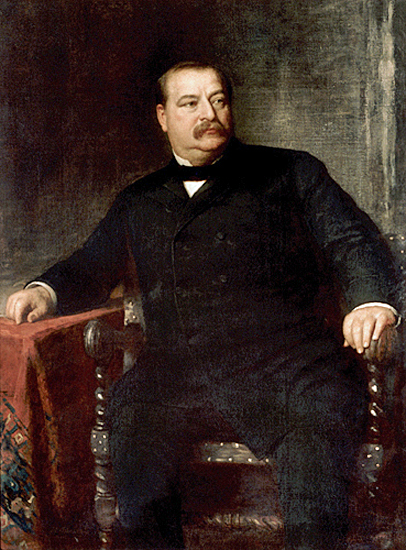
Grover Cleveland, Babe Ruth, and the Debate over the Name of the Baby Ruth Bar
According to Babe Ruth Central, this is how the story goes:
Back in 1916, the Curtiss Candy Company was founded in Chicago. The company's first candy bar was called the "Kandy Kake". The product was not overwhelmingly successful, so Curtiss went about refashioning it. And, in 1920, the "Baby Ruth" candy bar was introduced to candy-craving consumers.
That would be a pretty simple story, if it ended there. But, of course, it didn't. Adults and kids back then, just like today, were confused by the name and thought it was a candy bar related to Babe Ruth. After all, even in 1921, Babe already had gained a lot of fame in the baseball world. He had hit 54 home runs in 1920 and 59 during the 1921 season. These were incredible records at the time and he was in newspapers all over the country.
So, for many, Baby Ruth was Babe Ruth's candy, whether truth or not. Kids around the country purportedly sent the Babe their Baby Ruth candy bar wrappers in hopes of getting his signature.
Despite widespread popular opinion that the candy bar was named after the Babe, the Curtiss Candy Company never swayed from its position that it was named in honor of Cleveland's daughter Ruth.
But...as many commentators have observed, Ruth died of diptheria in 1904, seventeen years "before Curtiss combined nougat, chocolate, caramel and peanuts into its chewy Baby Ruth." Moreover, Grover Cleveland left office in 1897, and, by the time the Baby Ruth bar hit the market in 1920, William McKinley, Theodore Roosevelt, and William Howard Taft had all served as president, and Woodrow Wilson was just finishing his second term.
So why would the Curtiss Company name its candy bar after a long-deceased daughter of a former president? Well, many people believed that the company conveniently concocted the story to avoid having to pay royalties to Babe Ruth, which, if true, would have been very unfair and illegal.
Whatever the case may be, the story doesn't end there. In 1926, Babe agreed to lend his name to a new candy bar called "Ruth's Home Run Candy Bar" that was manufactured by the fledgling George H. Ruth Candy Company. In response, the Curtiss Company filed a lawsuit to prevent the rival candy bar from being made, claiming that it infringed on their trademark established in 1919.
In 1931, the Court of Customs and Patent Appeals ruled in favor of the Curtiss Company and George Ruth's Home Run Bar was forced off the market. To support its ruling, the court explained that it was evident that George Ruth was trying to capitalize on his nickname at a time when sales of Baby Ruths were reportedly as high as $1 million a month.
Regardless of the legal outcome of the case, the debate over the name of the Baby Ruth bar continues to this day! And so NOW you know how Grover Cleveland's name became associated with the debate over the name of the Baby Ruth bar!
FAST FACT: So did you know that Grover Cleveland is the only American president to serve two non-consecutive terms. His first term was 1885-1889 and his second term was 1893-1897 which means he was the 22nd and 24th president of the United States. So that's why President Obama is the 44th president even though there have only been 43 different presidents to date!
Thursday, December 22, 2011
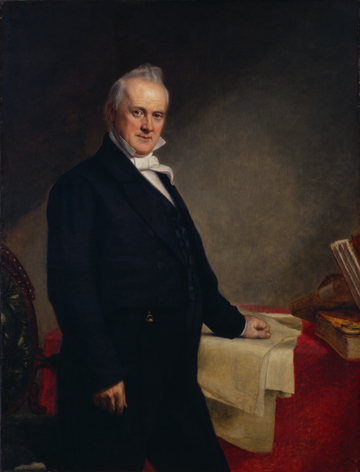
James Buchanan Snickerdoodles
Snickerdoodles are another traditional Dutch-German cookie that are covered with cinnamon and sugar and baked in the shape of a snail. Some historians say that their fanciful name comes from the German term schnecke knödel which can be translated as “snail dumpling.” Others say that “snicker” comes from the Dutch word snekrad or the German word schnecke, both of which refer to a small, snail-like shape.
Although no one knows who came up with their name, we do know that these sweet little sugar cookies have been popular in Buchanan's native state of Pennsylvania for centuries. If you'd like to whip up a batch of snickerdoodles this holiday season, here is a recipe to try from Emeril Lagasse:
For the topping:
3 tablespoons sugar
1/2 teaspoon cinnamon
For the cookie dough:
3 1/2 cups flour
1 tablespoon baking powder
2 teaspoons baking soda
1/4 teaspoon salt
1/4 teaspoon cinnamon
1 cup butter
2 cups sugar
2 eggs
1 tablespoon light corn syrup
2 1/2 teaspoons vanilla extract
In a small bowl, stir together the sugar and cinnamon and set aside. To make the cookie dough, stir together the dry ingredients. In a bowl with a paddle attachment, cream the butter. Add the sugar and continue to mix, then add the eggs, corn syrup, and vanilla, and mix thoroughly. Add the dry ingredients and mix until blended. Chill dough 1 hour if it's sticky or difficult to handle.
Preheat oven to 375 degrees F. Roll balls of dough about the size of a walnut then roll in the cinnamon sugar to coat. Place on an ungreased sheet pan 2 1/2 inches apart. Bake for 10 to 12 minutes until puffed up and the surface is slightly cracked. Let cool on the sheet a few minutes then remove to a wire rack to cool.
FOOD FACT: At Buchanan’s inaugural reception in 1857, more than 5,000 guests reportedly dined on "eight rounds of beef, seventy-five hams, sixty saddles of mutton, four saddles of venison, four hundred gallons of oysters, five quarts of jellies," twelve hundred quarts of ice cream, and more than $3,000 was spent on the wines - an astronimical figure at the time. But this was just a hint of the culinary excesses to come, and, during his four years in office, Buchanan’s annual $25,000 presidential salary wasn’t always enough to cover his tabs and he often had to pay for his extravagant "bachelor" parties at the White House out of his own pocket!
Monday, December 19, 2011
Benjamin Harrison, a Holiday Dinner, and the First Decorated Christmas Tree at the White House
Despite the initial fanfare, Harrison and his family dined rather modestly during their four years in the White House, and it has been said that their Christmas dinner was about as unpretentious as the family itself. According to culinary historian Poppy Cannon:
The dinner began with Blue Point oysters on the half shell, followed by consomme a la Royale, chicken in patty shells, and then the piece de resistance, stuffed roast turkey, cranberry jelly, Duchess potatoes and braised celery. Then came terrapin a la Maryland, lettuce salad with French drssing, and assorted desserts: minced pie, American plum pudding, tutti fruitti ice cream. For those still hungry, ladyfingers, Carlsbad wafers, and macaroons were passed, followed by fruit and coffee...
But of all White House holiday traditions, the Harrison's are perhaps most well-known for setting up the first decorated Christmas tree in the White House. According to White House historians, it was on the morning of December 25, 1889 that President Harrison "gathered his family around the first indoor White House Christmas tree. It stood in the upstairs oval room, branches adorned with lit candles. First Lady Caroline Harrison, an artist, helped decorate the tree."
As our nation's First Lady, Mrs. Harrison set the stage for what would eventually become a White House holiday tradition. But not all First Families after the Harrisons set up Christmas trees in the White House. First Lady Grace Coolidge did in the 1920s; however, it was First Lady "Lou" Henry Hoover who started the custom in 1929 when she oversaw the decoration of the first "official" tree. Since then, the honor of trimming the main White House Christmas tree has belonged to the First Ladies. According to the White House Historical Association:
In 1961, First Lady Jacqueline Kennedy began the tradition of selecting a theme for the official White House Christmas tree. She decorated a tree placed in the oval Blue Room with ornamental toys, birds and angels modeled after Petr Tchaikovsky's "Nutcracker Suite" ballet. Mrs. Kennedy reused these ornaments in 1962 for her children's theme tree. Set up in the North Entrance, this festive tree also featured brightly wrapped packages, candy canes, gingerbread cookies and straw ornaments made by disabled or senior citizen craftspeople throughout the United States.
The Lyndon B. Johnson Administration began during a time of great uncertainty. In November 1963, the assassination of President Kennedy had stunned America. New First Lady Claudia "Lady Bird" Johnson certainly felt a desire to help the nation heal. She chose comforting and nostalgic holiday decor during her White House years. Her 1965 and 1966 Blue Room Christmas trees were decorated in an early American theme. They featured thousands of small traditional ornaments, including nuts, fruit, popcorn, dried seedpods, gingerbread cookies and wood roses from Hawaii...
Handmade crafts set the theme for First Lady Betty Ford's 1974 Blue Room tree. Emphasizing thrift and recycling, Mrs. Ford used ornaments made by Appalachian women and senior citizen groups. Swags lined with patchwork encircled the tree. She kept this quaint feel in 1975 for her "old-fashioned children's Christmas" theme. Experts from Colonial Williamsburg adapted paper snowflakes, acorns, dried fruits, pinecones, vegetables, straw, cookies and yarn into ornaments...
This year, the White House theme for the 2011 holiday season is "Shine, Give, Share," which offers "an opportunity to pay tribute to our troops, veterans, and their families throughout the White House." The official tour features 37 Christmas trees (30 are natural trees and 7 are made from paper, felt or aluminum) and a gingerbread model of the White House made of 400 pounds of gingerbread, white chocolate, and marzipan. But the centerpiece is the official Christmas tree which honors our men and women in uniform and "features holiday cards created by military children."
According to whitehouse.gov, the cards were collected from United States military installations around the world...Medals, badges, and patches from all of the military branches are displayed on ornaments, historic military images are displayed with volunteer-made pinecone frames, and ribbons inspired by the Armed Forces colors represent the brave women and men who protect our Nation and defend our freedom."
FOOD FACT: The White House holiday décor this year also includes "a bounty of Bos!" With a playful nod to the First Dog, the tour route features five "Bo topiaries made from various materials like felt (35 yards of wool felt used), buttons (318 buttons in total), pom poms (750 pom poms used), and candy (12 marshmallows and 1,911 pieces of licorice).
Thursday, December 15, 2011
Dolley Madison Fresh Raspberry Flummery
Flummery was another popular ninteeenth century dish that Dolley reportedly served at her many festive social gatherings at the White House. According to an article in the New York Times, dictionary writers are not kind to flummery and this “innocent pudding” is often described by lexicographers as a “bland custard” or “a sort of pap,” while Webster’s asserts that an alternative meaning of flummery is “something insipid or not worth having.”
Food historians say that the modern origins of flummery can be traced to a seventeenth century Welsh specialty prepared with oatmeal and boiled until dense. As this "goopy dish" lost popularity over the years, cooks gave the name flummery to those puddings that were “firmed up with almonds and gelatin.”
By the time flummery made its way to the United States, it had been transformed into a "pure, delicately-set fruit stew." If you’d like to whip up some flummery for your next dinner party or large social gathering, here is a simple recipe to try from the New York Times Magazine:
1 quart fresh raspberries
1 cup sugar
2 tablespoons cornstarch
3 tablespoons cold water or milk
Juice of half a lemon
Heavy cream, for serving
Combine the berries, sugar and ½ cup hot water in a saucepan. Cook over low heat, stirring, until the mixture is liquid. Strain the pulp through a fine sieve. Return the strained liquid to a saucepan. Bring to a boil. Meanwhile, blend the cornstarch with the cold water or milk. Stir this into the boiling berry liquid. Add the lemon juice. Simmer for 1 minute. Serve with heavy cream and enjoy!
FOOD FACT: Famous for hosting elegant dinner parties and receptions, Dolley Madison’s name became associated with fine dining and entertaining. In the early nineteenth century, food companies and advertisers began using her name to suggest that any woman could entertain as well as she did. Some of the food companies named after her were The Dolly Madison Bakery and Dolly Madison Ice Cream. There was even a Dolly Madison Popcorn. And Dolly Madison snacking cakes are still widely available today!
Wednesday, December 14, 2011
George Bush, Barack Obama, and the Politics of Peanut Butter and Jelly Sandwiches
Published late last year, George W. Bush's memoir Decision Points has been described by the New York Times as "an autobiography focused around 'the most consequential decisions' of his presidency and his personal life from his decision to give up drinking in 1986 to his decision to invade Iraq in 2003 to his decisions regarding the financial crisis of 2008."According to the Product Description of the book:
President Bush brings readers inside the Texas Governor’s Mansion on the night of the hotly contested 2000 election; aboard Air Force One on 9/11, in the hours after America’s most devastating attack since Pearl Harbor; at the head of the table in the Situation Room in the moments before launching the war in Iraq; and behind the Oval Office desk for his historic and controversial decisions on the financial crisis, Hurricane Katrina, Afghanistan, Iran, and other issues that have shaped the first decade of the 21st century...
With so many momentous political issues to review, it's not surprising that Mr. Bush didn't spend much time discussing his favorite foods, but...in an interview with Oprah Winfrey during the 2000 presidential campaign, he did say that his favorite sandwich is peanut butter and jelly on white bread.
Eight years later, during the 2008 presidential campaign, peanut butter and jelly sandwiches once again made national headlines. Responding to charges "that his economic policies were socialistic in nature," Barack Obama ridiculed his opponent John McCain for constantly resorting to trivialities and distractions. Here is a video of Obama's remarks:
Now, because he knows that his economic theories don't work, he's been spending these last few days calling me every name in the book. Lately he's called me a socialist for wanting to roll-back the Bush tax cuts for the wealthiest Americans so we can finally give tax relief to the middle class. I don't know what's next. By the end of the week he'll be accusing me of being a secret communist because I shared my toys in kindergarten. I shared my peanut butter and jelly sandwich."
Although neither Bush nor Obama mentioned how they prefer their PB&Js to be made, we do know that John Harvey Kellogg, the cereal pioneer, was the first person to receive a patent for the process of making peanut butter butter in 1895. According to Andrew Smith's Peanuts: The Illustrious History of the Goober Pea, early peanut butters had several problems:
The first was that peanut oil has a melting point below room temperature. Gravity separated the oil, which then oxidized and turned rancid. Likewise, salt added to the peanut butter separated and crystallized. Grocers received peanut butter in tubs or pails and were advised to use a wooden paddle to stir it frequently...
During the early years of the twentieth century, William Norman, an English chemist, invented a method of saturating unsaturated and polyunsaturated fatty acids, thus preventing them from turning rancid. In 1922, Joseph L. Rosefield...applied these principles to peanut butter [and] developed a process to prevent oil separation and spoilage in peanut butter...The result was a semisolid peanut butter [that]...was thick and creamy and did not stick to the roof of the mouth as much as previous products.
Selecting the name "Skippy" for his product, Rosefield introduced creamy and chunky-style peanut butter in 1932. Three years later, the company inaugurated its first wide-mouth peanut-butter jar, which quickly became the industry standard. And in less than twenty five years, peanut butter had "evolved from a hand ground delicacy to a mass-produced commercial commodity sold in almost every grocery store in America."
FOOD FACT: Florence Cowles' 1928 cookbook Seven Hundred Sandwiches includes dozens of creative recipes for peanut butter sandwiches, including: Peanut Butter and Egg Sandwich, Peanut Butter and Cabbage Sandwich, Peanut Butter and Marshmallow Sandwich, Peanut Butter and Prune Sandwich, Peanut Butter and Cherry Sandwich, Peanut Butter and Cheese Sandwich, and Peanut Butter and Olive Sandwich made with Mayonnaise on Rye. Oh my!
Monday, December 12, 2011
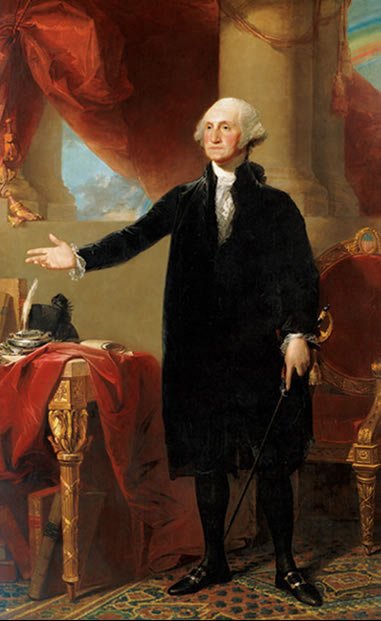
George Washington's Ice House at Mount Vernon and Strawberry Ice Cream Baked in Warm Pastry
Historians say that Washington’s icehouse was located on a riverbank about 75 yards from the Potomac. To store ice, Washington’s slaves had to use chisels and axes to pull large chunks of ice from the frozen river during the wintertime and then haul them to the icehouse where they were stacked in layers and stored for use throughout the spring and summer.
Before constructing his ice house, Washington sought advice from his friend and fellow patriot Robert Morris, who had an ice house at his home at 6th & Market Streets in Philadelphia. In a letter to Washington, Morris provided a
Friday, December 9, 2011
James Monroe, the Long Winter at Valley Forge, and Virginia Spoon Bread
So did you know that while serving in the Continental Army, James Monroe crossed the Delaware with George Washington, fought at the Battle of Trenton, and endured the long winter at Valley Forge? Among the patriots encamped there were Benedict Arnold, Alexander Hamilton, the Marquis de Lafayette, and the future Supreme Court Chief Justice John Marshall. Another soldier there was Dr. Albigence Waldo, a surgeon from Connecticut,
Friday, December 2, 2011
Martin Van Buren, the Election of 1840, and the "Regal Splendor" of the Presidential Palace
Having witnessed the chaos of Andrew Jackson’s "levees" first hand, Martin Van Buren prohibited all food or drink from public receptions. Privately, however, he hosted many extravagant dinner parties at the White House.
Using gold plated spoons that James Monroe had purchased years earlier in France, Van Buren added the finest quality cut wine glasses, water bottles and goblets. He also purchased expensive European finger bowls in which he rinsed his fingers after a night of fine dining.
Shortly before the election of 1840, Charles Ogle, a Whig Congressman from Pennsylvania, rose to speak in the House of Representatives and launched into a
Using gold plated spoons that James Monroe had purchased years earlier in France, Van Buren added the finest quality cut wine glasses, water bottles and goblets. He also purchased expensive European finger bowls in which he rinsed his fingers after a night of fine dining.
Shortly before the election of 1840, Charles Ogle, a Whig Congressman from Pennsylvania, rose to speak in the House of Representatives and launched into a
Thursday, December 1, 2011
Abraham Lincoln Gingerbread Men Cookies
“When we lived in Indiana,” Lincoln said, “once in a while my mother used to get some sorghum and ginger and make some gingerbread. It wasn’t often and it was our biggest treat. One day I smelled the gingerbread and came into the house to get my share while it was still hot. My mother had baked me three gingerbread men. I took them out under a hickory tree to eat them.
There was a family near us poorer than we were and their boy came along as I sat down. ‘Abe,’ he said, ‘gimme a man.’ I gave him one. He crammed it into his mouth in two bites and looked at me while I was biting the legs off my first one. ‘Abe, gimme that other’n.’ I wanted it myself, but I gave it to him and as it followed the first, I said to him, ‘You seem to like gingerbread.’ ‘Abe,’ he said, ‘I don’t s’pose anybody on earth likes gingerbread better’n I do — and gets less’n I do...’”
Lincoln’s childhood recollection charmed the audience – and readers of widely published newspaper accounts. Years later, Lincoln reportedly repeated the story in the White House, mentioning details of the recipe his mother may have used. Although her recipe has been lost to posterity, this one from the Food Network is simple to prepare and great to share with family and friends during the holidays.
4 1/2 cups all-purpose flour
1 tablespoon ground cinnamon
2 teaspoons ground ginger
1/2 teaspoon cloves
1/4 teaspoon baking soda
1/2 cup butter, softened
1/2 cup packed brown sugar
2 large eggs
3/4 cup molasses
Directions
Sift the flour, cinnamon, ginger, cloves, and baking soda in a bowl.
In a large mixing bowl, blend the butter and brown sugar until combined. Add the eggs, 1 at a time, and then the molasses. Slowly add the flour mixture. Mix well after each addition of flour. The dough will be stiff.
Divide dough in half, flatten into 2 thick circles and wrap in plastic wrap. Refrigerate for 2 hours or until firm enough to roll out. Preheat oven to 350 degrees F. Roll out, cut into desired shapes and bake until golden brown.
Tuesday, November 29, 2011
Elizabeth Monroe Baked Apple Charlotte
From all accounts, the dinner parties hosted by James and Elizabeth Monroe were very formal affairs. Large dinners had an especially “cold air,” according to novelist James Fenimore Cooper, who was frequently invited to dine at the Monroe White House. Describing a particular dinner, Cooper wrote:
Wednesday, November 23, 2011
Thursday, November 17, 2011
Franklin Delano Roosevelt, the Great Depression, and the Thanksiving Day Date-Change Fiasco
So did you know that in 1939 President Franklin Delano Roosevelt decided to move the Thanksgiving Day holiday forward by a week? Rather than allow it to fall on its traditional date, the last Thursday of November, Roosevelt issued a proclamation declaring that the holiday would instead be celebrated one week earlier. Why did he make such a seemingly random decision in the midst of the Great Depression? Well, his reasons were rooted in economic concerns and he hoped that by moving Thanksgiving forward it would bolster the struggling economy by extending the Christmas shopping season by a week. According to the Wall Street Journal:
There were five Thursdays in November that year, which meant that Thanksgiving would fall on the 30th. That left just 20 shopping days till Christmas. By moving the holiday up a week to Nov. 23, Roosevelt hoped to give the economy a lift by allowing shoppers more time to make their holiday purchases and —so his theory went—spend more money.
In an informal news conference in August announcing his decision, FDR offered a little tutorial on the history of the holiday. Thanksgiving was not a national holiday, he noted, meaning that it was not set by federal law. According to custom, it was up to the president to pick the date every year. It was not until 1863, when Abraham Lincoln ordered Thanksgiving to be celebrated on the last Thursday in November, that that date became generally accepted, Roosevelt explained. To make sure that reporters got his point, he added that there was nothing sacred about the date...
Just as he had done with his controversial "Court Packing" plan of 1937, Roosevelt had badly misjudged public opinion. Outraged protests began in Plymouth, Massachussetts, the place of the "first Thanksgiving" in 1621, but quickly spread to other circles, including, most notably, the competitive and highly lucrative world of collegiate sports.
PRESIDENT SHOCKS FOOTBALL COACHES: Many Games are Upset by Thanksgiving Plan, read a banner headline in the New York Times. And even in the staunchly Democratic state of Arkansas, the football coach of Little Ouachita College threatened: 'We'll vote the Republican ticket if he interferes with our football.'"
Of course, some college coaches and athletic directors were more diplomatic when it came to questioning the president. In a letter to the president's secretary, Philip Badger, Chairman of the University Board of Athletic Control at New York University wrote:
My dear Mr. Secretary:
I am wondering if you are at liberty at this time to supply me with any information over and above what has appeared in the public press to date regarding the plan of the President to proclaim November 23 as Thanksgiving Day this year instead of November 30.
Over a period of years it has been customary for my institution to play its annual football game with Fordham University at the Yankee Stadium here at New York University on Thanksgiving Day...As you probably know, it has become necessary to frame football schedules three to five years in advance, and for both 1939 and 1940 we had arranged to play our annual football game with Fordham on Thanksgiving Day, with the belief that such day would fall upon the fourth Thursday in November.
Please understand that all of us interested in the administration of intercollegiate athletics realize that there are considerations and problems before the country for solution which are far more important than the schedule problems of intercollegiate athletics. However, some of us are confronted with the problem of readjusting the date of any football contest affected by the President's proposal.
Outside of the world of collegiate sports, public opinion also ran heavily against Roosevelt's Thanksgiving Day plan, as evidenced by a national Gallup poll which found that 62% of Americans surveyed disapproved of the date change. And, as public opposition grew, some state governors reportedly "took matters into their own hands and defied the Presidential Proclamation."
According to the Franklin D. Roosevelt Presidential Library and Museum:
Some governors declared November 30th as Thanksgiving. And so, depending upon where one lived, Thanksgiving was celebrated on the 23rd and the 30th. This was worse than changing the date in the first place because families that lived in states such as New York did not have the same day off as family members in states such as Connecticut! [And so] family and friends were unable to celebrate the holiday together.
By 1941, most retailers also disapproved of Roosevelt's plan, and even the federal government conceded that the date change had not resulted in any boost in sales. And so, on December 26, 1941, President Roosevelt signed Joint Resolution 41 making Thanksgiving a national holiday and mandating that it be observed on the fourth Thursday in November of each year.
FAST FACT: According to the Library of Congress, when "Abraham Lincoln was president in 1863, he proclaimed the last Thursday of November to be our national Thanksgiving Day. In 1865, Thanksgiving was celebrated the first Thursday of November, because of a proclamation by President Andrew Johnson, and, in 1869, President Ulysses S. Grant chose the third Thursday for Thanksgiving Day. In all other years, until 1939, Thanksgiving was celebrated as Lincoln had designated, the last Thursday in November."
Monday, November 7, 2011
James Monroe, Mississippi Steamboatin' and "Food Piled High on a Long Linen Cloth"
Historians say that the steamboat completely revolutionized shipping. For the first time in history, people "didn't have to rely on unpredictable currents and winds and could travel to any port at any time." Plantation owners in the southern states of Mississippi, Missouri, and Louisiana, for example, could cheaply and easily ship cargoes of sugar, cotton, and other goods upriver on the Mississippi rather than send it around the tip of Florida and up the Eastern seaboard as they had previously done.
Steamboats also provided a luxurious way for wealthy passengers to travel. In Mississippi Steamboatin’, Herbert Quick described the palatial setting and abundance of food served on later steamboats:
The palatial setting of later steamboats attracted pleasure-seekers and wealthy travelers...More comfortable than their 'settin' rooms,' more ornate than their prim and uncomfortable parlors...they saw the steamboat's cabin as a bewilderingly beautiful palace. The...glistening cut-glass chandeliers; the soft oil paintings on every stateroom door; the thick carpets that transformed walking into a royal march; the steaming foods piled high on the long linen cloth in the dining room, with attentive waiters standing at the traveler's elbow, waiting with more food, and gaily colored desserts in the offing - neither homes nor hotels...were ever like this.
Between 1814 (three years before Monroe took office) and 1834, steamboat arrivals in New Orleans increased from 20 to 1,200 each year. For the next half century, steamboats were the main transporter of American goods, and tiny river towns grew into thriving cities “when steamboats began to make regular stops at their docks.”
FAST FACT: If you've ever watched steam rise from a cup of hot chocolate or coffee, you might think that a steamboat is propelled by steam. That makes sense, but that isn't exactly how a steamboat works. In a steamboat's engine, wood or other fuel is burned to heat water in a boiler, and the steam that rises from the water is forced through small spaces (piston cylinders) to increase the speed at which it escapes, similar to the release of a valve on a pressure-cooker. The concentrated steam then hits and moves a paddlewheel which, in turn, propels the steamboat through water!
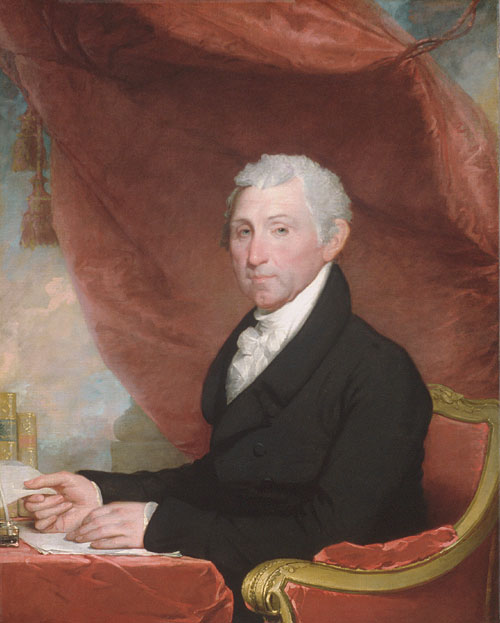
Credit: James Monroe, oil on canvas by Gilbert Stuart (Metropolitan Museum of Art, New York)
Wednesday, November 2, 2011
James Madison, the Potomac Oyster Wars, and the Constitutional Convention
In the seventeenth century, watermen in Maryland and Virginia battled over ownership rights to the Potomac River. Maryland traced its rights to a 1632 charter from King Charles I which included the river. At the same time, Virginia laid its claims to the river to an earlier charter from King James I and a 1688 patent from King James II, both of which also included the river.
In 1776, after more than a century of conflict, Virginia ceded ownership of the river but reserved the right to “the free navigation and use of the rivers Potowmack and Pocomoke." Maryland rejected this reservation and quickly passed a resolution asserting total control over the Potomac. After the Revolution, battles over the river intensified between watermen from both states.
To resolve this problem, leaders from Maryland and Virginia appointed two groups of commissioners which, at the invitation of George Washington, met at Mount Vernon in May of 1785. James Madison led the Virginia contingent and Samuel Chase led the Maryland delegation. Their discussions led to the Compact of 1785, which allowed oystermen from both states free use the river.
Peace prevailed until the supply of oysters began to dwindle, at which point Maryland re-imposed harvesting restrictions. Virginia retaliated by closing the mouth of the Chesapeake and watermen from both states engaged in bloody gun battles which lasted, with periodic breaks, for more than a century.
Today, these battles are known as the Potomac Oyster Wars. They are important in their own right, but they have a larger historical significance because they revealed one of the main weaknesses of the Articles of Confederation, which was that the federal government didn't have the power to control commerce among the states, a setup that was creating constant chaos and conflict.
With this problem in mind, Madison and the others who convened at Mt. Vernon in May of 1785 agreed to meet the following year at Annapolis to discuss the need for a stronger federal government. Not many delegates showed up and so they agreed to convene the following May in Philadelphia, which is, of course, where the Constitution was drafted.
And so NOW you know how James Madison and a little bivalve from the Potomac helped pave the way to the Constitutional Convention!
FACT: Under the Articles of Confederation, the federal government didn't have the power to raise its own army, regulate commerce between the states, or coin money for the country. To pass a law, Congress needed the approval of nine out of the 13 states, and in order to amend the Articles it needed the approval of all 13 states, which made it nearly impossible to get anything done! The Articles also didn't provide for an Executive or Judicial branch so there was no separation of powers.
Thursday, October 27, 2011
Halloween Parties at the Obama White House
According to the Washington Post, about 2,600 trick-or-treaters from local schools swooped, skulked and pitter-pattered their way through the front drive of 1600 Pennsylvania Avenue, stopping at the North Portico to get their treat: a plastic baggy containing White House M&Ms, an orange sugar cookie in the shape of the residence, and clumps of [dried] apricots, apples and papayas.
Meanwhile, wandering around in front of the eerily, orange-lit White House was a motley crew of odd creatures, including musicians dressed as skeletons, walking trees, Star Wars characters, and dancers dressed as red and gold butterflies inside giant bubbles.
After casually chatting with the trick-or-treaters, the Obamas hosted a reception for military families in the East Room of the White House. In his welcoming remarks, the president acknowledged the many sacrifices made by our military families and said, “We are so grateful to you. Especially now, a lot of the times, you guys are separated. It's tough. The spouses who are at home are serving just as much as folks who are deployed. So we are just so thrilled that you guys could be here.”
Of course, this wasn't the first Halloween celebration held at the White House. Known for her playful personality, Mamie Eisenhower hosted a Halloween party for the wives White House staff members. Described as “the most interesting party ever given in the dignified setting of the White House,” it included “skeletons hanging from the State Dining Room chandeliers and witches on broomsticks riding over the white tablecloth.”
In the 1970s, Richard Nixon’s daughter Tricia hosted a Halloween carnival for underprivileged school children in the D.C. area while the Fords and Carters welcomed trick-or-treaters from charitable organizations like UNICEF. And to mark their first Halloween in the White House, George H.W. Bush and First Lady Barbara staged an Anti-Drug Youth Rally for 500 local school children on the South Lawn of the White House, where they loaded youngsters up with treats and spoke to them about the dangers of illegal drugs.
Monday, October 17, 2011
Franklin Delano Roosevelt, the Election of 1944, and "Feeding Fala"
On November 10, 1940, a cute black Scottish terrier puppy arrived at the White House as a gift for President Franklin Delano Roosevelt and his family. At first, the dog’s name was "Big Boy," but the president soon renamed him “Murray the Outlaw of Falahill” after a distant Scottish ancestor. One of the most famous presidential pets, Fala, as he was nicknamed, went just about everywhere with the President and quickly became part of his public image. In her Pulitzer-Prize-winning biography, No Ordinary Time, presidential historian Doris Kearns Goodwin wrote:
Fala accompanied the president everywhere, eating his meals in Roosevelt's study, sleeping in a chair at the foot of his bed. Within a few weeks of his arrival, the puppy was sent to the hospital with a serious intestinal disturbance. He had discovered the White House kitchen, and everyone was feeding him. When he came home, Roosevelt issued a stern order to the entire White House staff: "Not even one crumb will be fed to Fala except by the President." From then on, Fala was in perfect health.
While being pampered at the White House and traveling with Roosevelt, Fala had the good fortune to meet many famous political leaders, including British Prime Minister Winston Churchill and Mexican President Manuel Camacho.
Thrust as he was into the national spotlight, it’s perhaps not surprising that Fala became embroiled in a political controversy during the presidential campaign of 1944. You see, earlier that year, Fala had faithfully accompanied his master on a diplomatic trip to the Aleutian Islands. Shortly after the president returned home, a rumor began circulating that Fala was accidentally left on one of the islands and that the Navy had to send a destroyer back to retrieve him.
Capitalizing on this rumor, Republicans accused Roosevelt of spending millions of taxpayers' dollars in the effort to get his dog back. Responding sharply but light-heartedly to these and other accusations, FDR delivered his famous “Fala Speech” at a campaign dinner in Washington D.C., before the International Brotherhood of Teamsters, Chauffeurs, Warehousemen and Helpers of America. These are some of the humorous remarks that President Roosevelt made that evening:
These Republican leaders have not been content with attacks on me, or my wife, or on my sons. No, not content with that, they now include my little dog, Fala. Well, of course, I don't resent attacks, and my family doesn't resent attacks — but Fala does resent them.
You know, Fala is Scotch, and being a Scottie, as soon as he learned that the Republican fiction writers in Congress and out had concocted a story that I'd left him behind on an Aleutian island and had sent a destroyer back to find him — at a cost to the taxpayers of two or three, or eight or 20 million dollars — his Scotch soul was furious.
He has not been the same dog since. I am accustomed to hearing malicious falsehoods about myself — such as that old, worm-eaten chestnut that I have represented myself as indispensable. But I think I have a right to resent, to object, to libelous statements about my dog.
Sadly, less than a year after he delivered that speech, President Roosevelt died. In her autobiography, Roosevelt's wife Eleanor described her recollections of Fala's reaction to his master's untimley death:
his legs straightened out, his ears pricked up and I knew that he expected to see his master coming down the drive as he had come so many times. Later, when we were living in the cottage, Fala always lay near the dining-room door where he could watch both entrances just as he did when his master was there...Fala accepted me after my husband's death, but I was just someone to put up with until the master should return.
FAST FACT: Fred D. Fair was Roosevelt’s porter on the Ferdinand Magellan, the presidential Pullman rail car. In a Washington Post article, Mr. Fair recalled his memories of the president's beloved dog in a letter titled "Feeding Fala": I served him his meals, made his bed. We would serve the president highballs before dinner. Before the meal, I would fix Fala's food. He would never go into the dining room until you called him. We'd serve him in there. But you couldn't serve Fala yourself, oh no. You had to hand it to the president, and he'd feed Fala out of his hand. Many times, I remember dignitaries and other important folks waiting for their supper until Mr. Roosevelt finished feeding Fala."
Monday, October 10, 2011
Gerald Ford, the Watergate Scandal, and Golden Brown Waffles with Strawberries
At approximately12:05 p.m. on August 9, 1974, only moments after Richard Nixon officially resigned from the Office of the Presidency, Gerald Ford took the Oath of Office and delivered his first presidential remarks in the East Room of the White House.
After pledging to be "the President of all the people" and reaffirming his belief that honesty is always the best policy in the end, Ford turned his attention to the Watergate scandal and said:
My fellow Americans, our long national nightmare is over. Our Constitution works; our great Republic is a government of laws and not of men. Here the people rule. But there is a higher Power, by whatever name we honor Him, who ordains not only righteousness but love, not only justice but mercy. As we bind up the internal wounds of Watergate, more painful and more poisonous than those of foreign wars, let us restore the golden rule to our political process, and let brotherly love purge our hearts of suspicion and of hate.
In the beginning, I asked you to pray for me. Before closing, I ask again your prayers, for Richard Nixon and for his family. May our former President, who brought peace to millions, find it for himself. May God bless and comfort his wonderful wife and daughters, whose love and loyalty will forever be a shining legacy to all who bear the lonely burdens of the White House.
For the next four weeks, the new president enjoyed a high approval rating, partly because the Fords appeared to be a normal, middle-class American family. Upon moving into the White House, Ford’s teenage daughter Susan vowed to never throw away her blue jeans. His wife Betty seemed to be down-to-earth and had a good sense of humor. And President Ford was even photographed "showing off his English-muffin-making skills" in the Family Kitchen at the White House.
Recalling Ford's fondness for English muffins and his other favorite breakfast foods, White House Chef Henry Haller wrote:
President Ford had a healthy appetite and simple tastes. For breakfast, the President usually consumed an energy rich, high carbohydrate meal that included freshly squeezed orange juice, a piece of fresh fruit such as melon, one or two toasted English muffins with margarine and jam, and hot tea. Sunday breakfast was always a special meal in the Ford's home, however, with the President's favorite: Golden Brown Waffles served with "the works" - strawberries and sour cream.
If you'd like to whip up some of President Ford's favorite Golden Brown Waffles with Strawberries and Sour Cream for your next Sunday breakfast, here is the original recipe from The White House Family Cookbook by Henry Haller:
1 1/4 cups cake flour
3 teaspoons baking powder
1/2 teaspoon salt
2 tablespoons confectioners sugar
1 1/2 cups milk, room temperature
1/2 teaspooon vaniall extract
3 egg yolks
5 tabllespoons melted butter
3 egg whites room tempertaure
1 pint fresh strawberrries, lightly dusted with sugar
1 pint sour cream
Into a large mixing bowl, sift together flour, baking powder, salt and sugar. Using the back of a wooden spoon, make a deep well in the center of the dry ingredients. In a separate bowl, combine milk, vanialla, egg yolks, and melted butter. Pour rapidly into the center of the dry ingredients and combine quickly, using a whisk.
In a clean, dry bowl, beat the egg whites until stiff but not dry. Fold into batter.
Transfer batter to a pitcher for easy pouring. Heat a waffle iron to medium temperature. Pour in batter until grid is two-thirds full. Close the lid of the waffle iron and bake for 4 minutes or until steam stops emerging and waffle is golden brown. Remove gently. Repeat baking process to make five more waffles. Serve hot, accompanied by bowls of sweetened strawberries and sour cream.
FAST FACT: Although Ford initially enjoyed high approval ratings, the mood of the nation changed dramatically on September 8, 1974, when he granted Richard Nixon a full pardon for all federal crimes he had "committed or may have committed" in the White House. The response was a tidal wave of criticism which all but assured Ford’s defeat to Jimmy Carter in the 1976 election. But as time passed, critics began to see that Ford’s pardon was both "noble and necessary" to help the nation heal. In 1999, Bill Clinton conferred on Ford the Presidential Medal of Freedom. Ford also received the Congressional Gold Medal and was awarded the John F. Kennedy Profiles in Courage Award in 2001.
Friday, October 7, 2011
George Bush and the Politics of Broccoli
Needless to say, broccoli growers got a little “steamed” by the president’s comment. Within a week, broccoli growers in California had shipped ten thousand pounds of the flowery, green vegetable to the White House where it was donated to a local food bank to help feed the needy.
Ten years later, in February of 2001, President George W. Bush proved that "blood is thicker than diplomacy" at a news conference during a visit with Mexico's newly elected president Vicente Fox, whose family owns a large broccoli farm in Mexico. According to a news report, President Bush was asked by a reporter for his opinion of broccoli. After briefly hesitatating, he reportedly flashed a "thumb's down" sign and said, "Make it cauliflower."
So 41 and 43 are clearly not fond of broccoli, but if they try this simple and simply delicious recipe for Parmesan Roasted Broccoli from Ina Garten they might just change their minds!
4 to 5 pounds broccoli
4 garlic cloves, peeled and thinly sliced
Good olive oil
1 1/2 teaspoons kosher salt
1/2 teaspoon freshly ground black pepper
2 teaspoons grated lemon zest
2 tablespoons freshly squeezed lemon juice
3 tablespoons pine nuts, toasted
1/3 cup freshly grated Parmesan cheese
2 tablespoons julienned fresh basil leaves (about 12 leaves)
Preheat the oven to 425 degrees F. Cut the broccoli florets from the thick stalks, leaving an inch or two of stalk attached to the florets, discarding the rest of the stalks. Cut the larger pieces through the base of the head with a small knife, pulling the florets apart. You should have about 8 cups of florets.
Place the broccoli florets on a sheet pan large enough to hold them in a single layer. Toss the garlic on the broccoli and drizzle with 5 tablespoons olive oil. Sprinkle with the salt and pepper. Roast for 20 to 25 minutes, until crisp-tender and the tips of some of the florets are browned. Remove broccoli from the oven and immediately toss with 1 1/2 tablespoons olive oil, the lemon zest, lemon juice, pine nuts, Parmesan, and basil. Serve hot and enjoy!
Credit: Oil Portrait of George Herbert Walker Bush by Herbert Abrams, White House Historical Assocation (White House Collection)
Wednesday, October 5, 2011
Theodore Roosevelt, Muckrakers, and the "Monarchical Manners" of the White House
In keeping with the progressive, muckraking nature of the times, a journalist for Harper's Weekly complained about "the monarchical manners" of the White House during Theodore Roosevelt's administration. In particular, the journalist alleged that "since Mr. Roosevelt became President there have been witnessed behind the White House doors an exclusiveness, a rigor of etiquette, and a display of swords and gold braid such as no one of his predecessors ever dreamed of...The atmosphere of the White House, once democratic and free, has become tainted with the manners of monarchy."
Similar criticisms were expressed in a June 1906 Washington Post column in which Roosevelt was condemned for indulging in extravagant dining practices at the White House. Responding to the allegations, a spokesman for the president sent a letter to the Post which appeared the next day:
When anyone endeavors to create a widespread impression that the President and his family sit down to a four or five course breakfast, a six or seven course luncheon, and a ten-course dinner, the President feels that a denial is not inappropriate. Instead of a breakfast consisting of oranges, cantaloupes, cereals, eggs, bacon, lamb chops, hot cakes, and waffles, President Roosevelt insists that the regular White House breakfast consists of hard boiled eggs, rolls, and coffee.
Instead of a luncheon of such delicious viands as Little Neck clams, stuffed olives, celery, consommé of chicken, fish sauté, eggs a la turque, Spring lamb, new string beans, asparagus, mashed potatoes, lettuce, tomatoes, strawberries and ice cream, President Roosevelt declares that when alone he always contents himself with a bowl of bread and milk.
When Mrs. Roosevelt or the children are present, the luncheon consists of cold meat, tea, cantaloupe in season, and bread. Instead of a ten-course dinner, the President declares that nine times out of ten a three-course dinner is served, and the other time a two-course dinner.
Despite the muckrakers' monarchical allegations, Roosevelt's reputation inside the White House was that of a simple family man. Ike Hoover served in the White House for forty-two years, eventually serving as Chief Usher in charge of day-to-day operations. In his memoirs, published in 1934, Hoover provided insight into the Roosevelt family’s daily dining habits:
The entire family [sat] down [for] breakfast at eight o'clock. After breakfast the President spent an hour or so in his study, perhaps reading, while Mrs. Roosevelt arranged the details of the day's program. The President went to his office at nine-thirty or ten o'clock, and Mrs. Roosevelt for a walk or shopping...All returned just about in time for lunch. Those famous lunches!
Something indeed was wrong when there were not two or more guests for this meal. To prepare properly for a certain number was almost a physical impossibility, for notice was continually coming from the office that someone had been invited at the last minute, and many times the family and guests had to wait until the table was made larger before they could be seated. The place was really a transient boardinghouse, and how every one got enough to eat was the wonder of the household...
Although Hoover didn't mention what particular dishes were served at those famous Roosevelt luncheons, researchers tell us that TR's diet consisted of "quite a bit of game from hunting expeditions" and that he was also fond of Southern Fried Chicken with White Gravy and Grits. If you'd like to whip up some Southern Fried Chicken for your next family luncheon or dinner this week, here's a simple and simply delicious recipe to try from Paula Dean:
3 eggs
1/3 cup water
About 1 cup hot red pepper sauce
2 cups self-rising flour
1 teaspoon pepper
House seasoning, recipe follows
1 (1 to 2 pound) chicken, cut into pieces
Oil, for frying, preferably peanut oil
In a medium size bowl, beat the eggs with the water. Add enough hot sauce so the egg mixture is bright orange. In another bowl, combine the flour and pepper. Season the chicken with the house seasoning. Dip the seasoned chicken in the egg, and then coat well in the flour mixture. Heat the oil to 350 degrees F in a deep pot. Do not fill the pot more than 1/2 full with oil. Fry the chicken in the oil until brown and crisp. Dark meat takes longer then white meat. It should take dark meat about 13 to 14 minutes, white meat around 8 to 10 minutes.
FAST FACT: As for the Roosevelt's evenings, Hoover noted that "it was more to the liking of the family to spend a quiet evening in the library, either playing cards or reading the current magazines. The whole family were fiends when it came to reading. No newspapers. Never a moment was allowed to go to waste; from the oldest to the youngest they always had a book or a magazine before them. The President...would just devour a book and it was no uncommon thing for him to go entirely through three or four volumes in the course of an evening. Likewise we frequently saw one of the children stretched out on the floor flat on his stomach eating a piece of candy and with his face buried deep in a book."
Monday, October 3, 2011
"Ike Runs the Country, I Turn the Pork Chops"
During the 1952 presidential campaign, Dwight Eisenhower's wife Mamie was by his side every step of the way, delighting crowds with her quick wit and natural charm. Campaign songs were written about her and colorful buttons and posters proclaimed, “I LIKE IKE, BUT I LOVE MAMIE.” Biographers say that one reason Mamie was so popular as First Lady was that she shared the country’s interests and middle-class values. She watched soap operas, played board games, and reportedly encouraged White House cooks to use boxed cake mixes and Jell-O.
Even her personal tastes reflected those of the nation. She was a fan of such hit shows as “I Love Lucy” and "The Milton Berle Show" and let it be known that she and Ike liked to take their dinner on trays while watching TV in the private family quarters at the White House.
As First Lady, Mamie was proud of her role as a traditional housewife, and was famously quoted as saying, “Ike runs the country, I turn the pork chops.” But Mamie did occasionally break with tradition in her entertaining as First Lady. According to White House historians, she regularly decorated the State Dining Room each holiday season with Halloween skeletons, witches, jack-o-lanterns, St. Patrick's Day leprechauns and green ribbons.
The Eisenhowers also entertained more royalty and heads-of-state than most previous administrations. Among their guests were the emperor of Ethiopia; the presidents of Panama, Haiti, Turkey, Italy, and Ireland; the rulers of Greece, Nepal, and Denmark, as well as Nikita Khrushchev and Winston Churchill.
The highlight of the 1957 social season, however, was undoubtedly the round of festivities celebrating Queen Elizabeth II’s first trip to Washington, D.C., after she became Queen of England. In addition to hosting reciprocal state dinners and exchanging diplomatic gifts, the president and the queen also shared recipes through the mail.
Yet for all its glamour and excitement, the Queen’s visit came at a difficult time for Eisenhower. In September of 1957, racial tensions over desegregation had exploded in violence in Little Rock, Arkansas. Then came news in early October that the Soviet Union had orbited the first space satellite (Sputnick), causing many Americans to fear that the United States was losing both the "space race" and the Cold War.
Nevertheless, the Eisenhowers’ charismatic personalities and traditional middle-class values allowed them to maintain the affection and approval of an overwhelming majority of Americans throughout the 1950s and into their retirement.
Saturday, September 24, 2011
John Quincy Adams Johnny Cake
Although John Quincy Adams spent much of his youth traveling with his father overseas, he never expressed much interest in any of Europe’s many fine cuisines, but family members said that he was "excessively fond” of fruit and could often be seen plucking fresh pears, plums and cherries from local orchard trees when they blossomed each spring. Like his mother and father, John also retained a childhood taste for the simple foods his New England youth, like Boston Baked Beans, Seafood Chowder and Indian Pudding. He may have also enjoyed Baptist Cakes. Back in those days, these little bits of deep-fried bread dough were popular throughout New England, but their name changed from state to state. Connecticut residents reportedly called them "Holy Pokes" but they were known as "Huff Puffs" along Maine’s rocky coast!
Johnny Cake was another popular nineteenth century treat. Some historians say that the name derives from Journey Cake, a "small, hard biscuit that was easily carried in a pocket on a long trip." Johnny Cake was often served at clambakes. Even more popular at breakfast or as a dessert, they were usually served with butter and molasses or maple syrup.
If you'd like to whip up a batch of Johnny Cake today, here's a simple and simply delicious recipe to try from whatsoookingamerica.com
1 cup white cornmeal
3/4 teaspoon salt
1 cup water
1/2 cup milk
Bacon drippings
In a medium bowl, place cornmeal and salt. In a medium saucepan over high heat, bring water to a rapid boil; remove from heat. With the saucepan in one hand, let the boiling water dribble onto the cornmeal while stirring constantly with the other hand. Then stir the milk into the mixture (it will be fairly thick, but not runny).
Generously grease a large, heavy frying pan (I like to use my cast-iron frying pan) with the bacon drippings and heat. When pan is hot, drop the batter by spoonfuls. Flatten the batter with a spatula to a thickness of approximately 1/4 inch. Fry until golden brown, turn, and brown on the other side (adding more bacon drippings as needed). Serve hot with butter, maple syrup, or applesauce.
FAST FACT: At the age of ten, John Quincy embarked on "an incredible European adventure" that prepared him for his later political career. In 1777, John Adams was sent as a convoy to Europe and John Quincy went with him. Sailing from Boston, father and son spent the next seven years living in Paris, the Netherlands, St. Petersburg, and England. After returning to the United States, John Quincy enrolled at Harvard and completed his studies in two years!
Friday, September 23, 2011
Theodore Roosevelt, a Brooklyn Candy Shop Owner, and the Invention of the Teddy Bear
According to historians, it all began when Roosevelt went on a four-day bear hunting trip in Mississippi in November of 1902. Although Roosevelt was known as an experienced big game hunter, he had not come across a single bear on that particular trip.
According to historians at the National Park Service:
Roosevelt’s assistants, led by Holt Collier, a born slave and former Confederate cavalryman, cornered and tied a black bear to a willow tree. They summoned Roosevelt and suggested that he shoot it. Viewing this as extremely unsportsmanlike, Roosevelt refused to shoot the bear.
The news of this event spread quickly through newspaper articles across the country. The articles recounted the story of the president who refused to shoot a bear. However, it was not just any president, it was Theodore Roosevelt the big game hunter!
So that's how Roosevelt's name became associated with a bear. But the story doesn't end there because when a political cartoonist named Clifford Berryman read reports about the incident, he decided to lightheartedly lampoon it. Then, when a Brooklyn candy shop owner by the name of Morris Michton saw Berryman’s cartoon in the Washington Post on November 16, 1902, he came up with a brilliant marketing idea.
You see, Michtom's wife Rose was a seamstress and made stuffed animals at their shop, and so he asked her to make a stuffed toy bear that resembled Berryman's drawing. He then showcased his wife's cute cuddly creation in the front window of their shop along with a sign that read "Teddy's Bear."
After receiving Roosevelt’s permission to use his name, Michtom began mass producing the toy bears which became so popular that he launched the Ideal Novelty and Toy Company, and, by 1907, more than a million of the cuddly bears had been sold in the United States. And so NOW you know how Theodore Roosevelt, a political cartoonist and a Brooklyn candy shop owner led to the invention of the Teddy Bear!
Now...I'm guessing that you probably don't want to feast on juicy bear steaks like those that Roosevelt and his fellow hunters surely enjoyed, but you might like to try these cute Teddy Bear Cupcakes that are a snap to make and great to serve at children's birthday parties and play dates.
1 box Betty Crocker® SuperMoist® yellow cake mix
1 cup water
1/2 cup creamy peanut butter
3 eggs
1 container Betty Crocker® Whipped chocolate frosting
1/3 cup miniature semisweet chocolate chips
48 teddy bear-shaped graham snacks
In large bowl, beat cake mix, water, peanut butter and eggs with electric mixer on low speed 30 seconds. Beat on medium speed 2 minutes, scraping bowl occasionally. Divide batter evenly among muffin cups. Bake 13 to 18 minutes or until toothpick inserted in center comes out clean and tops spring back when touched lightly in center. Cool 10 minutes. Remove from pan to cooling rack. Cool completely, about 30 minutes.
Reserve 1/4 cup of the frosting. Spread remaining frosting over tops of cupcakes. Sprinkle each cupcake with 1/2 teaspoon of chocolate chips; press gently into frosting. Spread about 1/2 teaspoon reserved frosting on flat sides of 2 graham snacks. Place on cupcakes, pressing candles slightly into cupcakes to hold in place.
Tuesday, September 20, 2011
Bill Clinton, Matt Lauer, and Dunkin' Donuts
In September, 2011, The Today Show's Matt Lauer sat down for an interview with Bill Clinton about the 2011 meeting of the Clinton Global Initiative that was about to get underway in New York.
Near the end of the segment, Lauer got more personal and asked the former president about his healthy new vegan lifestyle. "Thirty seconds to end on a lighter note," Lauer said. "When you were president, you were known for your appetite. Man, you loved the doughnuts, the junk food, anything southern fried. Now we sit here and you've just turned 65, you've had a quadruple bypass and you're a vegan. Does that suck?"
Although Lauer's comments no doubt steamed some vegans and senior citizens, Clinton took it in characteristic stride. “Who’d of thought it?” he laughed. “No, no, you know, when you get older your appetites change and abate and you're more interested in having another good day so I'd like to have as many good days as possible and this seems to be the best way to get it."
Of course, the former president was once famous for his love of McDonalds and Dunkin Donuts, but what's not so well-known is that Hillary Clinton reportedly spent $1,200 of campaign funds to splurge on Dunkin' Donuts during her 2008 presidential campaign. But, according to this article in the New York Times, that expense was just icing on the cake:
An hourlong investigation by the New York Times has found, in the ten months ending in January, that the Clinton campaign reported expenditures of $1,884.83 at Dunkin’ Donuts in New Hampshire and Florida (which she won) and in Virginia (which she didn’t), and $504.02 at Krispy Kreme stores in South Carolina (which she also lost)...
Her bakery bills totaled $5,950.53 (at Dunkin’ prices, about 12,000 doughnuts). Andrea Rowell, assistant manager at the Dunkin’ Donuts in Concord, N.H., where the campaign spent $273 one day last month, said the workers ordered coffee, too. “It wasn’t just doughnuts,” she said.
Now, that's a lot of dough to spend on doughnuts, but it's nothing compared to the amount of stock-market dough that Dunkin' Donuts made that year with its initial public offering. According to this Reuters news report:
Investors eagerly bought the shares of Dunkin' Donuts parent Dunkin' Brands Group Inc sending them up as much as 56 percent on their first day of trading on Wednesday. The stock gained almost 47 percent to close at $27.85 after hitting an session high of $29.62 during its first day of Nasdaq trading.
Although it's not known if the Clintons bought any shares, Hillary could probably save a lot of dough during her 2016 campaign by baking some donuts at home with this recipe for Homemade Glazed Doughnuts from The Pioneer Woman.
Subscribe to:
Posts (Atom)