Thursday, September 30, 2010

Woodrow Wilson, Prohibition, and the Boston Molasses Disaster of 1919

At 12:40 p.m. on January 15, 1919, in Boston’s Industrial North End, a fifty-five foot high steel storage tank containing more than two million gallons of molasses exploded, unleashing an immense wave of thick, viscous goo that swept through the city streets as fast as 35 miles per hour.

The wave – initially thirty feet high, according to some bystanders – exerted enough force “to break the girders of the adjacent Boston Elevated Railway's Atlantic Avenue structure and lift a train off its tracks.” The force of the blast and the ensuing tsunami also overturned dozens of cars and trucks in its path and "demolished several nearby buildings, including a fire station which was crushed by a huge chunk of the steel tank."

Witnesses later stated that, as the tank collapsed, there was a loud rumbling sound, like a machine gun, and that “the ground shook as if a train were passing by.” In his book, Black Tide, Stephen Puleo described the disaster this way:

Molasses, waist deep, covered the street and swirled and bubbled about the wreckage. Here and there struggled a form — whether it was animal or human being was impossible to tell. Only an upheaval, a thrashing about in the sticky mass, showed where any life was…Horses died like so many flies on sticky fly-paper. The more they struggled, the deeper in the mess they were ensnared. Human beings — men and women — suffered likewise.

The next morning, the Boston Evening Globe ran a front-page story based on eyewitness accounts taken on that terrible day:

Fragments of the great tank were thrown into the air, buildings in the neighborhood began to crumple up as though the underpinnings had been pulled away from under them, and scores of people in the various buildings were buried in the ruins, some dead and others badly injured.

In all, more than 150 people were injured and 21 children and adults were killed, mostly by crushing or asphyxiation. Fueled by the intense anti-immigrant sentiments that swept through the United States during the post-World War I Red Scare, owners of the distillery tried to pin the disaster on Italian anarchists, claiming that they had bombed the tank because they knew that the molasses was intended to be fermented to produce ethyl alcohol, a key component in the manufacturing of munitions at the time.

Although the exact cause of the disaster was never determined, no evidence of sabotage was ever found and experts generally attributed it to unseasonably warm temperatures combined with structural defects and poor maintenance of the tank.

So what does this have to do with President Woodrow Wilson and food? Well, by coincidence, the day after the disaster, Congress ratified the 18th Amendment of the United States Constitution, which prohibited the manufacture, sale, and distribution of intoxicating liquors. With Prohibition looming on the horizon, rumors began to circulate which held that the tank had been overfilled to enable the owners of the distillery to produce as much rum as quickly as possible before the law took effect.

This claim was later proven untrue due to the fact that the distillery didn't make rum and specialized instead in the production of industrial alcohol, which was exempt from the state prohibition laws in effect at the time, and would later be exempted from the Volstead Act, which was passed by Congress on October 27, 1919 over President Wilson's veto.

Regardless of the cause, more than one hundred lawsuits were filed against the owners of the tank, and litigation dragged on for six years, during which 3,000 witnesses testified. In the end, the court ruled for the plaintiffs and ordered the company to pay nearly a million dollars in damages - a "bittersweet victory for survivors of one of the strangest disasters in American history."

FOOD FACT: Molasses was once used in the United States as the primary sweetener in cooking and baking. According to the Oxford Encyclopedia of Food and Drink, New England colonists also used molasses "as an ingredient in brewing birch beer and molasses beer and in distilling rum." In the early 1700s, "rum made in New England became an essential element in a highly profitable Triangular Trade across the Atlantic. The colonists exported rum to West Africa in trade for slaves; the ships brought the slaves from Africa to the French West Indies, trading them for more molasses and sugar; these products were then shipped to New England to make more rum....When the cost of refined sugar dropped at the end of the nineteenth century...molasses lost its role as an important sweetener in the American diet."

Wednesday, September 22, 2010

Barack Obama and the "Controversy" over Chicken Fingers in the White House Bowling Alley

So did you know that there is a one-lane bowling alley at the White House? According to the White House Museum website, bowling lanes were first built on the ground floor of the West Wing in 1947 as a birthday gift for President Harry Truman in "the location of what is the present-day Situation Room."

During the Eisenhower administration, the bowling lanes were moved to the Old Executive Office Building "to make way for a mimeograph room." Ten years later, friends of Richard Nixon , an avid bowler, paid for a new one-lane alley to be built in the White House in an underground area below the driveway leading to the North Portico.

Since then, many presidents and politicians have surely thrown a strike or two in the bowling alley, but perhaps no one has enjoyed this perk of living in the White House more than the presidents' children and grandchildren.

According to an article in the Los Angeles Times, President George Bush and his wife Barbara were enjoying a big family dinner shortly after moving into the White House when the First Lady realized that her twin granddaughters, Jenna and Barbara, were not at the table. Turning to the butler, Mrs. Bush asked if he happened to know where they were, to which he replied, "In the bowling alley, waiting to be served."

Not fully amused, the First Lady ordered the girls back to the family quarters by "sending word that Bush grandchildren do not eat in the bowling alley, they eat with the family in the dining room." She also light-heartedly warned the White House staff to "beware of young charm artists."

But much bigger and more sinister "scandals" involving the White House bowling alley arose late last year. According to new reports, things got a little tense during a White House Press Briefing in October of 2009 when CBS correspondent Chip Reid questioned White House Press Secretary Robert Gibbs about a Washington Times story "that accused the White House of selling access to the bowling alley," among other things.

Following up on a question posed by a CNN reporter, Reid asked Gibbs if the Obama administration would release the names of donors who were given special access to White House advisors and "perks like the bowling alley.” Gibbs caustically responded by noting that the administration would indeed be releasing "the names of everyone who visited the White House, with whom they met, and for what time period."

Still not satisfied, Reid pressed the bowling alley issue further, at which point Gibbs finally defused the spat with humor, and flatly shot back, "I can report to you that [my son] Ethan Gibbs, with the bumpers down, bowled a couple of games while eating some chicken fingers.”

Now, most of you probably haven't had the chance to bowl a couple of games at the White House while eating chicken fingers, but you can make this healthy recipe for Crispy Chicken Fingers before knocking down a few pins at your local bowling alley.

1 1/4 pound boneless, skinless chicken breasts, cut across into 1-inch pieces
1/2 cup lowfat buttermilk
Cooking spray
4 cups whole-grain corn cereal
1/4 teaspoon salt
Freshly ground pepper

Preheat oven to 400 degrees F. Combine the chicken and buttermilk in a shallow dish. Cover and chill for 15 minutes. Spray a baking sheet with cooking spray. Put the cereal in a sealed plastic bag and crush with a rolling pin. Transfer the crumbs to a shallow dish.

Season the chicken with the salt and a few grinds of pepper. Dip each piece of chicken in the cereal to fully coat and arrange on the baking sheet. Bake until cooked through, about 8 minutes. Leave the chicken on the baking sheet to cool slightly. Serve warm with ketchup or honey mustard sauce.

Credit: The White House Basement Bowling Alley in the 1980s, White House Museum .

To read an excerpt from my new book click here

Monday, September 20, 2010

Barack Obama, the White House Family Theatre, and Healthy Oatmeal Raisin Cookies

The private Family Theater at the White House is occasionally used by the president to rehearse major speeches, like the State of the Union address each January, but much more often it is where the First Family can watch just about any movie they please, "often sent direct from Hollywood before its release."

According to an adapted article from the Guardian Unlimited posted on the White House Museum website, many presidents have enjoyed private screenings of their favorite films in this luxurious theatre that features four large arm chairs and forty red upholstered seats. This is what the article reveals about some of the presidents' favorite flicks:

Dwight Eisenhower was obsessed with westerns...One of his particular favorites was the Gary Cooper film High Noon, but he would watch almost anything about cowboys...Because of his chronic back pain, John Kennedy's aides installed his favorite rocking chair in the middle of the front row. Later on, he had an orthopedic bed set up in the cinema, so he could watch propped up on pillows...

Richard Nixon saw most of his movies with the same person, his golfing and drinking buddy, Charles "Bebe" Rebozo, who came to the White House theatre 150 times...Their favorites, alongside Patton, were old-fashioned escapist musicals such as the ultra-patriotic Yankee Doodle Dandy, with James Cagney.

Starting with All the President's Men - about the Watergate scandal that ultimately brought him to office — Jimmy Carter held 480 screenings at the White House over four years...The devout Baptist started off insisting that only family films be shown, but eventually relented and became the first president to watch an X-rated film at the family theatre: Midnight Cowboy...

Ronald Reagan watched very few films at the White House. He and Nancy watched most of their movies on their weekends at Camp David, preferring Jimmy Stewart movies, High Noon (the president's favorite), and, on special occasions such as the president's birthday, his own films.

Bill Clinton also loved High Noon, but his taste in movies mirrored the style of his presidency. It ranged from the earnest and complex — Schindler's List and American Beauty were among his favorites — to simple and earthy, like the Naked Gun movies.

George Bush is a fan of the Austin Powers series and has been known to raise his little finger to his lips in imitation of the characters Dr Evil and Mini-Me. [After] the September 11 attacks, however, his viewing [became] more somber. In early 2002, after the worst of the fighting was over in Afghanistan and plans were being hatched to invade Iraq, President Bush watched more war movies, like We Were Soldiers, about Vietnam, and Ridley Scott's soldier's-eye view of Mogadishu in 1993, Black Hawk Down.


Like his predecessors, President Obama occasionally rehearses speeches in the Family Theatre and has enjoyed star-studded, pre-release screenings of such Hollywood blockbusters as Julie & Julia (with stars Meryl Streep and Stanley Tucci in attendance) and Slumdog Millionaire, as well as the recent HBO miniseries "The Pacific," with executive producers Steven Spielberg and Tom Hanks in attendance.

An avid sports fan, the president also hosted a Super Bowl party last year in the Family Theatre, where he and his guests tried out special 3D effects as they watched the Pittsburgh Steelers narrowly defeat the Arizona Cardinals by a score of 27-23. And when it came time for Super Bowl snacks, the president rolled up his sleeves and personally served Oatmeal Raisin cookies to his invited friends and guests.

Although that particular White House recipe is difficult to obtain, you can try this one from Martha Stewart if you'd like to serve some Healthy Oatmeal Raisin Cookies at your next Family Movie Night or other fun social gathering:

1/2 cup whole-wheat flour
1/2 cup all-purpose flour
1 teaspoon baking powder
1/3 cup vegetable oil
2/3 cup packed dark-brown sugar
1 large egg
1 teaspoon pure vanilla extract
1/2 cup rolled oats (not quick-cooking)
1/2 cup dried currants or raisins

Preheat oven to 350 degrees. In a medium bowl, whisk together flours and baking powder; set aside. In a large bowl, whisk together oil, sugar, egg, and vanilla. Add flour mixture, and stir to combine; mix in oats and currants.

Using two tablespoons of dough per cookie, roll into balls; place on two baking sheets lined with parchment paper, 1 1/2 inches apart. Bake until lightly browned, 15to 17 minutes, rotating sheets halfway through. Cool 5 minutes on sheets, then transfer cookies to a wire rack to cool completely. Store in an airtight container at room temperature, up to 5 days.

FAST FACT: According to the White House Museum website, the Family Theatre "was converted in 1942 from a long cloakroom when the current East Wing building was constructed." Since then, some presidents have considered it to be the greatest perk of living in the White House, including Bill Clinton, who remarked, "The best perk out in the White House is not Air Force One or Camp David or anything else. It’s the wonderful movie theater I get here, because people send me these movies all the time.”

Sunday, September 19, 2010

Michelle Obama, Taylor Swift, and the President's Active Lifestyle Award

On September 8, 2010, Michelle Obama and NFL Commissioner Roger Goodell announced that the First Lady’s Let’s Move! Campaign and NFL PLAY 60 are teaming up to fight childhood obesity and help kids lead healthier, more active lives.

The announcement was made at Woldenberg Park in New Orleans during the NFL PLAY 60 Youth Football Festival, part of the NFL’s celebration to kick off the 2010 season. After her remarks, the First Lady took part in football drills, along with students from a local elementary school and former NFL players. Lending support on the sidelines was pop star Taylor Swift decked out in a patriotic blue and white polka dotted sundress.


Earlier in the day, Mrs. Obama gave a speech in which she encouraged kids to “Play 60” and join her in competing for the President’s Active Lifestyle Award. To earn an award, children need to "engage in physical activity for 60 minutes every day, five days a week, for six weeks." And to show everyone just how much fun it can be, Mrs. Obama sportingly pledged to work toward earning her own award. This is what she said:

I’m going to do it. And I want kids across the country to join me. Actually, I want all you all to join me. Don't just leave it on the kids. I want you all to join me. So in a couple weeks -- I'm not sure when it’s going to start -- starting soon, I'm going to be recording my progress online, so if I start falling behind, I want everyone to be checking on me and make sure that I'm not slacking. Send me emails to shame me into staying on track. So I’m excited about it, and I think it’s something that’s very doable. And the thing is, is that if your kids see you doing it -- your grandparents, uncles, teachers -- they’re going to be engaged.

At the launch of the Let's Move! campaign, President Barack Obama signed a Presidential Memorandum creating "the first ever Task Force on Childhood Obesity to conduct a review of every single program and policy relating to child nutrition and physical activity."

According to the Let's Move! website, the Task Force’s recommendation focuses on the four pillars of the First Lady's campaign: empowering parents and caregivers; providing healthy food in schools; improving access to healthy, affordable foods; and increasing physical activity. Of course, the First Lady also emphasizes healthy, organic foods at the White House, as most visibly demonstrated by the Obama's kitchen garden, the first at the White House since the Roosevelt's Victory Garden during World War II.

And now for my submission guidelines, click here!

Saturday, September 11, 2010

Elegant Arthur's Many Late Night Feasts at the White House

As president, Chester Arthur hosted many elegant state dinners and often stayed up socializing with his guests as late as two or three o’clock in the morning. Biographers say that he also liked to take his friends on midnight tours of the White House. Because of his nocturnal ways, Arthur was often late to his morning meetings and his habitual tardiness led one critic to say, “President Arthur never did today what he could put off until tomorrow.”

Sadly, President Arthur died a year and a half after leaving office. Most historians agree that he died from kidney disease, although, at the time, many people believed that his decadent lifestyle contributed to his illness. Describing his culinary habits, one commentator observed:

Arthur’s illness is largely due to his life in the White House. He lived too high, exercised too little, and kept too late hours. He did not breakfast much before ten o’clock and his dinners did not begin until nine or ten in the evening. He often sat at the table until after midnight, where, though he was not a glutton, he consumed fine wines and terrapin and other rich food...President Arthur rode horseback for a time, but in spite of his doctor’s advice, he discontinued this, and grew heavier and heavier from lack of exercise...

Although no one knows exactly what caused President Arthur's illness, we do know that he was a true gourmet and relished such delicacies as mutton chops with a glass of claret or expensive champagne. An avid fisherman, he was also particularly fond of Terrapin Steak, which he preferred to serve with rich side dishes like fried Macaroni Pie with Oysters.

If President Arthur were here with us today, he surely would have also liked this rich and delicious recipe for Seafood Linguine with Mussels and Oysters from the Food Network's ever-energetic Emeril Lagasse:

2 tablespoons, plus 1 1/4 teaspoons salt, divided
1 pound linguine
6 tablespoons extra-virgin olive oil, divided
2 sliced red jalapenos
3/4 pound medium shrimp, peeled and deveined
1 tablespoon Essence, divided, recipe follows
1 cup small diced onion
2 tablespoons minced garlic
2 1/2 teaspoons crushed red pepper flakes, or to taste
2 cups canned tomato sauce
2 tablespoons tomato paste
12 littleneck clams, scrubbed
1/2 pound mussels, scrubbed and de-bearded
1/2 pound calamari, bodies diced into rings, with the tentacles
2 tablespoons chopped fresh parsley leaves
1/2 cup grated Parmesan, optional

Bring a large 1-gallon pot of water to a boil, add 2 tablespoons of the salt to the pot and place the pasta in it. Cook, stirring occasionally, until al dente, about 10 minutes. Drain and then transfer pasta to a large bowl and drizzle with 1 tablespoon of the olive oil. Toss to coat the pasta well, then set aside.

As the pasta cooks, set a 14-inch saute pan over medium-high heat and add the remaining olive oil. Once hot add the red jalapenos. Season the shrimp with 2 teaspoons of the Essence, add the shrimp to the pan and cook for 1 minute. Turn the shrimp over and cook another minute. Remove the shrimp from the pan and set aside as you prepare the sauce.

Place the onions in the pan and cook until wilted, about 3 to 4 minutes. Add the garlic and saute until fragrant, about 30 seconds. Add the red pepper flakes and saute briefly before adding the tomato sauce and tomato paste. Cook the sauce briefly, then add the clams to the pan. Cover the pan and cook the clams for 1 minute, remove the lid, add the mussels to the pan and replace the cover.

Cook the mussels for 2 minutes, remove the lid and season the calamari with the remaining 1 teaspoon of Essence before adding them to the pan along with the seared shrimp and the pasta. Continue to cook the pasta, tossing to blend the pasta with the sauce, and season with the remaining 1 1/4 teaspoons of the salt, about 2 minutes. Garnish the pasta with the chopped parsley and cheese and serve.

FAST FACT: Nicknamed "Elegant Arthur" for his fastidious ways, President Arthur reportedly owned more than eighty suits and often changed his pants several times each day!

Thursday, September 9, 2010

William Howard Taft and Pauline Wayne, the Last White House Dairy Cow

So did you know that President William Howard Taft kept a Holstein dairy cow named Pauline Wayne on the White House lawn? For two years, Pauline dutifully supplied President Taft and his family with fresh milk every day.

Shortly before Taft left office in 1913, Pauline was shipped back to her former owner in Wisconsin. After that, pasteurized milk replaced raw milk at the White House. A New York Times article dated February 2, 1913 announced the departure of Taft's beloved cow:

Pauline Wayne, President Taft’s famous Holstein cow, will follow him into retirement March 4. The president today called in Senator Walter Stephenson of Wisconsin, who two years ago took Pauline to the White House, and gave her back to her former owner. Pauline has not been in the best of health in several months.

President Taft believes that if she is taken back to Wisconsin and put on Senator Stephenson’s farm again, her youthful vigor will revive. The Senator was glad to recover Pauline, as she had supplied milk to the family of the President for two years, and he thought she would add dignity to his herd.


After leaving office, Taft served as a professor at Yale Law School until President Warren Harding appointed him Chief Justice of the United States Supreme Court. To Taft, the appointment was his greatest honor. So much so that, years later, he wrote, “I don't remember that I ever was President.”

FOOD FACT: A French scientist named Louis Pasteur discovered pasteurization in the 1860s. During his many experiments, Pasteur discovered that when you heat a food to a high enough temperature, the heat will kill certain (but not all) bacteria. Raw milk can be pasteurized by heating it to 145 degrees F for about thirty minutes. In the years prior to pasteurization, many lethal diseases were transmitted through raw or contaminated milk. One particularly sad example is that of Abraham Lincoln, whose mother died when he was "in his tenth year" after she drank milk from a dairy cow that had grazed on White Snakeroot, a very poisonous plant.

Saturday, September 4, 2010

"I Always Give My Occupation as a Farmer"

According to historians, Harry Truman was a farm boy at heart. For much of his childhood, Harry lived with his brother and sister on their grandmother's 600 acre farm near Grandview, Missouri. When the Truman children were old enough to begin school, the family moved to nearby Independence. After high school, Harry applied to West Point but was rejected because of poor eyesight. Instead of attending college, he worked as a newspaper wrapper and as a teller at a bank.

In 1914, Harry returned to Grandview and assumed supervision of his grandmother’s farm, plowing, sowing, harvesting, and repairing farm equipment himself. For the rest of his life, Truman always enjoyed returning to the family farm, so much so that, even after he became president, he was quoted as saying, "I always give my occupation as farmer. I spent the best years of my life trying to run a 600-acre farm successfully, and I know what the problems are."

It's not surprising, then, that even in the White House, Truman and his wife Bess favored hearty, farm-style foods like Meatloaf and Pot Roasted Beef. Tuna Noodle Casserole was another Truman family favorite. If you'd like to get a sense of the dish that often appeared on the Truman's dinner table, here is a simple recipe that has been adapted from Bess Truman’s handwritten recipe which is on file at the Harry Truman Presidential Library and Museum in Independence, Missouri.

12 ounces elbow macaroni
1 can white albacore tuna, drained
1 can cream of celery soup
1/3 cup milk
¾ cup cheddar cheese
½ cup bread crumbs
2 tablespoons butter
Salt and pepper to taste

Preheat oven to 350°F. Grease a 2 ½ to 3-quart casserole dish. In a medium saucepan, cook the noodles until tender, about 10-12 minutes. Remove and drain well. In a medium bowl, combine the noodles, tuna, soup, and milk. Pour mixture into the prepared baking dish. Melt butter in a small saucepan over medium heat. Mix together bread crumbs and butter in a small bowl, then sprinkle bread crumb mixture and cheese over the top. Bake for 20 minutes, or until bread crumbs are browned.

FAST FACT: As a boy, Harry and his father attended the Democratic National Convention in Kansas City in 1900 and watched as William Jennings Bryan was nominated a second time as the Democratic presidential candidate. Truman's father was passionate about politics, and, in a letter to his wife Bess, Harry later wrote, “Politics is all [my father] ever advises me to neglect the farm for.”

Wednesday, September 1, 2010

Teddy Roosevelt Sand Tart Cookies

At home in the White House from 1901 until 1909, Theodore Roosevelt’s six young kids had the complete run of the place. They took their favorite pony for a ride in the White House elevator and frightened visiting officials with a four foot king snake. No doubt famished after such action-packed days, “TR’s Brood” favored hearty country foods, like Southern Fried Chicken with White Gravy and Grits or Chicken Fried Steak with Mashed Potatoes and Dutch Apple Cake.

Historians say that the Roosevelt family also loved eating cookies and other sweet, sugary treats. According to Poppy Cannon, a "particularly cherished family recipe" for Sand Tarts was found written on the inside cover of one of Edith Roosevelt's many cookbooks. Although that particular recipe might be difficult to duplicate today, you can try this sweet and simple recipe for Sand Tart Cookies from Good Housekeeping and Paula Deen:

1 cup butter (2 sticks), softened
1 tsp. vanilla extract
1 cup confectioners' sugar
1 3/4 cup all-purpose flour
1 cup pecans, finely chopped

Preheat oven to 275°F. In large bowl, with mixer on medium speed, beat butter, vanilla, and 1/2 cup sugar until smooth, occasionally scraping bowl with rubber spatula. Reduce speed to low; gradually beat in flour just until blended, occasionally scraping bowl. With spoon, stir in pecans.

With floured hands, shape dough by level measuring tablespoons into about 2" by 1/2" crescents. Place crescents, 2 inches apart, on 2 ungreased large cookie sheets. Place cookie sheets on 2 oven racks. Bake about 45 minutes or until edges are lightly browned. With metal spatula, transfer cookies to wire racks set over waxed paper. Immediately sprinkle remaining confectioners' sugar through sieve over cookies to coat well. Cool completely and enjoy!

FAST FACT: Teddy and his second wife Edith were married in 1886. His daughter Alice (from his first marriage) was 17 when the family moved into the White House. The other children were Ted, Kermit, Ethel, Archie, and Quentin. When the Roosevelts moved into the White House, they brought along a whole menagerie of exotic pets with them. Kermit had a Kangaroo Rat that reportedly ate lumps of sugar off the breakfast table and four-year-old Quentin had a pet green snake named Emily Spinach!

Thanks for stopping by THE HISTORY CHEF! For a free excerpt of my new book from Simon and Schuster click here!

Monday, August 23, 2010

Lucy Hayes Famous Homemade Angel Cake

Historians say that “Everything in Moderation” was the motto of Rutherford B. Hayes. He reportedly drank “one cup of coffee at breakfast” and “one cup of tea at lunch.” Dinner was often chicken or steak followed by a slice of his wife Lucy’s famous homemade Angel Cake.

It has been said that Angel Food Cake got its name because "it is so white, light, and fluffy it must be the food of angels.” Although no one knows who created or named this cake, we do know that recipes with the name "Angel Food" began appearing in American cookbooks in the late nineteenth century – around the same time that mass-produced cake pans hit the market!

If you'd like to bake one of these delightfully light and fluffy cakes, here is a simple recipe to try from the Food Network's ever-energetic Alton Brown

1 3/4 cups sugar
1/4 teaspoon salt
1 cup cake flour, sifted
12 egg whites (the closer to room temperature the better)
1/3 cup warm water
1 teaspoon orange extract, or extract of your choice
1 1/2 teaspoons cream of tartar

Preheat oven to 350 degrees F. In a food processor spin sugar about 2 minutes until it is superfine. Sift half of the sugar with the salt the cake flour, setting the remaining sugar aside.

In a large bowl, use a balloon whisk to thoroughly combine egg whites, water, orange extract, and cream of tartar. After 2 minutes, switch to a hand mixer. Slowly sift the reserved sugar, beating continuously at medium speed. Once you have achieved medium peaks, sift enough of the flour mixture in to dust the top of the foam. Using a spatula fold in gently. Continue until all of the flour mixture is incorporated.

Carefully spoon mixture into an ungreased tube pan. Bake for 35 minutes before checking for doneness with a wooden skewer. (When inserted halfway between the inner and outer wall, the skewer should come out dry). Cool upside down on cooling rack for at least an hour before removing from pan.

FOOD FACT: According to Food Timeline compiler Lynne Olver, recipes for cakes similar to Angel Food (calling only for egg whites) were known by other equally descriptive names, such as Silver Cake and Snow Drift Cake. The latter recipe was included in an 1881 cookbook entitled What Mrs. Fisher Knows about Old Southern Cooking. According to Olver, Mrs. Fisher was the first freed American slave to author a cookbook in the United States.

Credit: Portrait of Lucy Hayes by Daniel Huntington, White House Historical Association (White House Collection)

Thursday, August 19, 2010

Martin Van Buren's Charming "Lady of the House"

When Martin Van Buren became president in 1837, he was a widower of nineteen years with four young bachelor sons. Dolley Madison was living nearby at the time, and historians say that when her "young relative-by-marriage Angelica Singleton came from South Carolina for a visit," the two went to the White House to "pay a call."

Angelica's "aristocratic manners, excellent education, and handsome face" quickly won the heart of the president's oldest son, Abraham. The two were married in 1838, and, after an extended honeymoon abroad, Abraham served as the president's private secretary and Angelica presided as "Lady of the House".

According to historian Poppy Cannon, Angelica did her best to lessen the formal atmosphere of the White House, though as a young mother, "she did not always find the assignment an easy one." In a letter home, Angelica candidly wrote:

My first state dinner is over; oh, such a long one, our first in the state dining room. I was the only lady at the table...I tried to be cheerful as possible, though I felt miserable all the time, as my baby was crying, and I received message after message to come to the nursery.


In addition to the rigors of hosting frequent state banquets and caring for a baby, Angelica graciously contributed many of her favorite Southern recipes to the White House kitchen. Although the president surely appreciated the assistance of his charming daughter-in-law, his tastes were deeply ingrained, and ran toward a somewhat strange combination of simple hearty Dutch fare and rich French and English dishes that he had grown accustomed to during his years serving as U.S. Minister to Britain.

With his friend Washington Irving, who was living in London at the time, Van Buren reportedly "explored old castles and abbeys, drank wassail before the Yule log in charming old taverns...and ate heartily" of the Olde English favorite, Boar's Head crowned with Holly and Rosemary.

While some of you might not be inclined to dine on a festive Boar's Head tonight, you can try this recipe for Rosemary Pork Tenderloin from the Food Network:

1/3 cup Dijon mustard
2 tablespoons freshly ground black pepper
1 tablespoon freshly chopped rosemary leaves
4 sprigs rosemary, with hard woody stems
5 large garlic cloves, 2 cloves minced, 3 cloves smashed
2 pork tenderloins, about 1-pound each
4 slices maple bacon

In a small bowl, whisk together the Dijon mustard, fresh ground black pepper, chopped rosemary, and minced garlic and mix well. Rub the mustard mixture over the surface of the tenderloins and wrap in plastic wrap. Marinate in the refrigerator for 1 hour.

Preheat oven to 375 degrees F. Place rosemary sprigs and smashed garlic in the center of a roasting pan. Remove the plastic wrap from the tenderloins and top each with 2 slices of maple bacon. Tie with kitchen twine to secure bacon strips.

Place the roasting pan in the oven and bake for 25 to 30 minutes or until an instant-read thermometer, inserted in the tenderloins, registers 160 degrees F. Remove from oven when desired doneness is reached and let sit for 5 to 10 minutes on a cutting board. Remove kitchen twine, slice and serve with your favorite sides. Garnish with the rosemary sprigs and garlic and enjoy!

Wednesday, August 18, 2010

John Adams, the President's House, and "May None But Honest and Wise Men Ever Rule Under This Roof"

Late in the morning of November 1, 1800, John Adams arrived in the new capital city of Washington D.C. and moved into the President’s House. The next day, while sitting in a damp, unfinished room, John wrote a letter to his wife Abigail which included a blessing for the new house and its future inhabitants. This is what he wrote:

I Pray Heaven To Bestow
The Best of Blessings On
THIS HOUSE
And
All That shall hereafter Inhabit it.
May none but Honest and Wise Men ever rule
under This Roof


More than a century later, in the final year of World War II, President Franklin Delano Roosevelt had these words carved in the stone mantle of the fireplace in the State Dining Room. These words are still there today

FAST FACT: The State Dining Room served as a drawing room, office, and Cabinet room. It wasn't until Andrew Jackson's administration that it was called the "State Dining Room," although "it had been used for formal dinners by previous presidents."

Wednesday, August 11, 2010

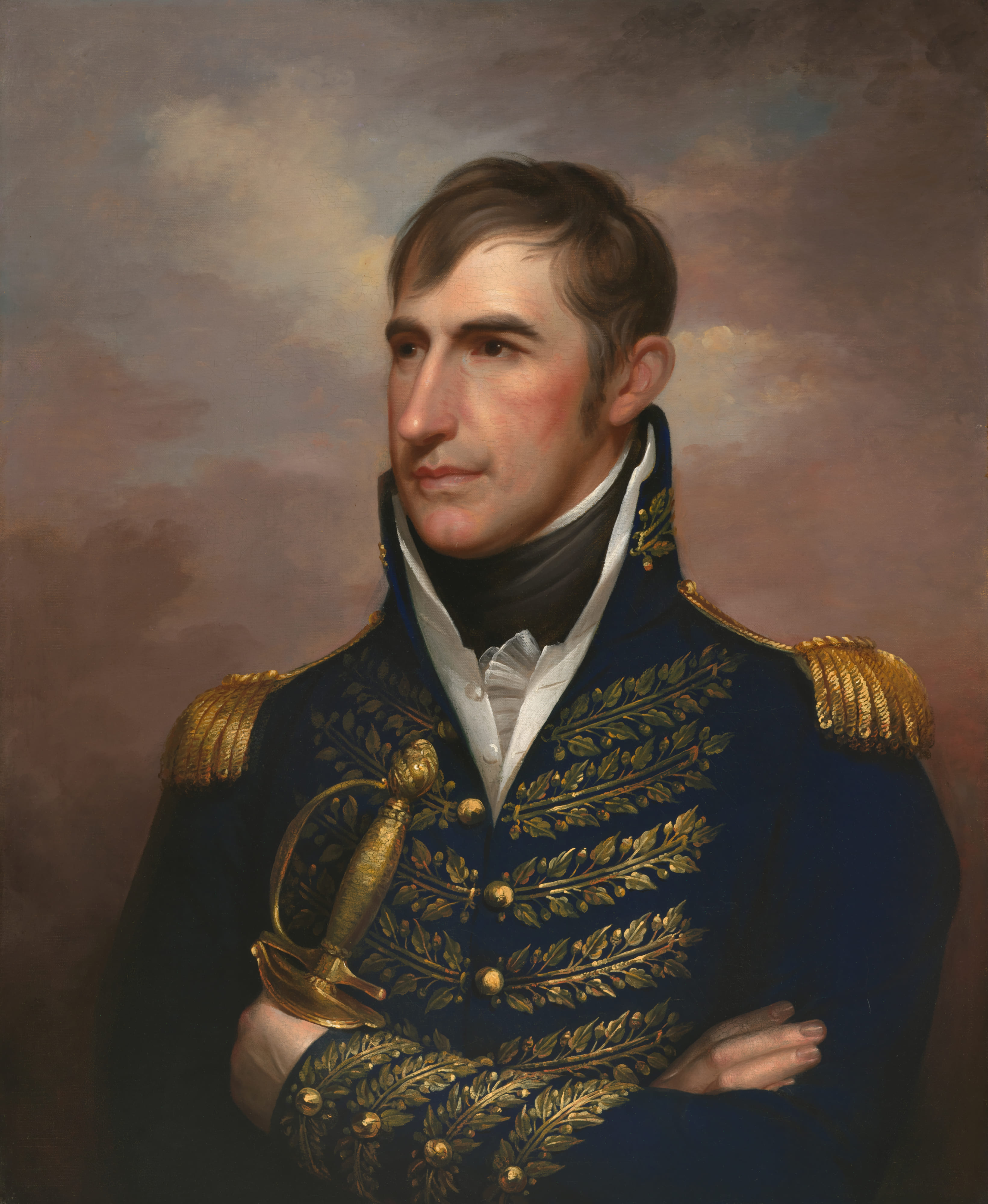
William Henry Harrison, The Election of 1840 and "Tippicanoe and Burgoo, Too!"

During William Henry Harrison's presidential campaign, hard cider flowed so fast that he became known as the “Hard Cider Candidate.” To feed his many rowdy supporters, Harrison's cooks served an election dish called Burgoo which was made by dropping chopped vegetables into warm squirrel stew.

Hailing his victory over Tecumseh thirty years earlier, Harrison’s supporters came up with the slogan, TIPPICANOE AND TYLER, TOO!” With its shrewd and heavy use of slogans, poems, ditties, and songs, and organized picnics, rallies, bonfires, and parades, the Election of 1840 is considered to be the first modern American presidential campaign!

Of course, the custom of plying potential voters with food and drink has been practiced by politicians since George Washington's day. But it reached its zenith in the campaign of 1840, when Harrison and his lieutenants "wined and dined the populace throughout the West."

The first step, according to historian Poppy Cannon, was to erect a log cabin, then "invite all eligible males to a feast of cornbread, cheese, and hard cider." Little by little, the feasts became more elaborate, "culminating in a spread in Wheeling, West Virginia, in which 30,000 hungry voters were served 360 hams, 20 calves, 1,500 pounds of beef, 1,000 pounds of cheese, 8,000 pounds of bread and 4,500 pounds of Burgoo."

Perfected in Kentucky and popular throughout the western territories, Burgoo was the perfect election dish since it could be easily expanded to feed large crowds simply by adding more water, vegetables and squirrel meat to it. Although squirrel was once deemed essential to this classic American dish, most modern recipes, like this one for Kentucky Burgoo from Emeril Lagasse, call for beef, lamb and chicken.

2 tablespoons vegetable oil
2 pounds boneless beef shank, trimmed of excess fat
2 pound boneless lamb shoulder, trimmed of excess fat
Salt and freshly ground black pepper
2 medium onions, quartered
4 cloves peeled garlic
1 medium fresh hot red pepper, quartered
Water, to cover
1 (3 to 4 pound) whole chicken or hen, cut into 8 pieces
2 cups chopped onions
2 cups medium diced carrots
1 cup medium diced green bell peppers
1 pound baking potatoes, like russets, peeled and medium diced
2 cups peeled, seeded and chopped tomatoes
1/2 pound fresh green beans, strings removed and cut into 2-inch pieces
2 cups fresh corn kernels
2 tablespoons light brown sugar
1 tablespoon finely chopped fresh parsley leaves
Serving suggestions:
8 fresh cornbread muffins, hot
8 fresh biscuits, hot

In a large, heavy pot, over medium heat, add the oil. Season the beef and lamb with salt and pepper. When the oil is hot, sear the meat, in batches, for a couple of minutes on all sides. Add the onions, garlic, cloves, and pepper. Cover with water. (about 3 to 4 quarts). Bring to boil, reduce the heat to medium low, and simmer until tender, about 3 hours.

Season the chicken with salt and pepper. During the last 1 1/2 hours of cooking, add the chicken. Remove the meat, chicken and vegetables from the pan, set aside and cool. Discard the vegetables. Add the remaining vegetables and brown sugar to the pot of hot liquid. Continue to cook for 1 hour.

After the meat has cooled, cube the beef and lamb into 1-inch pieces. Remove the skin and bones from the chicken and discard. Dice the chicken into 1-inch pieces. Add the cubed meat and chicken to the vegetables and continue to cook for 30 minutes. Re-season if necessary. Ladle the stew into serving bowls. Serve with hot cornbread or biscuits. Garnish with parsley.

A LITTLE BACKGROUND: “Tippecanoe and Tyler, Too!” was originally a song written for Harrison and his running mate, John Tyler. Harrison was known as “Old Tippecanoe” for his military victory over the Shawnee chieftan Tecumseh at the Battle of Tippecanoe in 1811. Thirty years later, Whigs used Harrison’s nickname in a campaign song that portrayed Harrison as a “simple, homespun hero” in contrast to the Democratic candidate, Martin Van Buren, who was depicted as a wealthy elitist. Here are some of the lyrics:

Sure, let 'em talk about hard cider
and log cabins too
't'will only help to speed the ball
for Tippecanoe and Tyler too
and with him we'll beat Little Van, Van
Van is a used up man
and with him we'll beat Little Van…


Although Harrison wasn't born in a log cabin, he was the first to use one as a symbol to suggest that he was a man of humble origins. Other candidates followed his example, making the idea of a log cabin (and a non-wealthy background) a recurring theme in presidential elections for the next half century.

Credit: William Henry Harrison, oil on canvas by Rembrandt Peale (National Portrait Gallery, Smithsonian Institution, Washington D.C.)

Tuesday, August 10, 2010

Jimmy Carter and "The Grits Factor"

Even before Jimmy Carter and his family moved into the White House, reports in the press "began to highlight the Carters' Southern style of life and the public was forewarned that the White House would soon serve grits to guests."

According to White House chef Henry Haller, grits were included on the menu for the Carters' first breakfast at the White House. A staple dish for the Carters and their Southern visitors, grits, as Haller tells us, "soon became standard fare for White House guests from all over the world. The White House kitchen quickly realized that many of the Carters' distinguished visitors really expected to be served grits, and most were pleasantly surprised to discover they actually liked the taste of the ground hominy dish."

The key to preparing palatable grits, according to Chef Haller, is to avoid a watery product by cooking completely and stirring often. Grits, as many southerners would surely agree, taste great served hot with lots of melted butter or baked with a flavorful cheese.

Because President Carter was fond of Grits Baked with Cheese, this dish was often included on the Carter family's weekend breakfast menu. If you would like to whip up a batch, here is simple recipe to try from The White House Family Cookbook by Henry Haller:

4 cups chicken bouillon
1 cup enriched white hominy
1 teaspoon Worcestershire sauce
1 stick (1/2 cup) butter
2 cups grated sharp cheddar
4 eggs yolk
1/4 to 1/2 cup cold milk
4 egg whites, at room temperature

Preheat oven to 350 F. Grease inside of a 2-quart casserole dish. Bring buillon to a boil in a 2-quart saucepan; add grits gradually, stirring with a wire whisk. Reduce heat and continue cooking, stirring vigorously, until mixture thickens. Cover and cook for 15 minutes, sirring often. Remove from heat and add Worcestershire sauce, butter, and 1 1/2 cups of the cheese, stirring until well-balanced.

In a small bowl, blend egg yolks with 1/2 cup of milk. Pour into grits and mix thoroughly; add more milk if necessary, thinning to the consistency of cream of wheat. In a clean, dry bowl, beat egg whites until stiff. Fold into grits. Pour into prepared baking dish. Sprinkle with the remaining 1/2 cup of cheese. Bake on middle of shelf of preheated oven for 30 minutes or until fluffy and brown. Serve at once and enjoy!

FOOD FACT: According to an article in the New York Times, grits is "the first truly American food." When a sea-weary group of English settlers came ashore at Jamestown, Virginia in the spring of 1607, they were reportedly greeted by a band of friendly Indians offering "bowls of a steaming hot substance consisting of softened maize seasoned with salt" and bear grease.

The settlers liked it so much they quickly adopted it as a part of their own diet and "set about devising a milling process by which the large corn grains could be ground into smaller particles without losing any nutriments." Today, of the 150 million pounds of grits milled each year in the United States, more than two-thirds (or one hundred million pounds!) is consumed in the South.

Source: Henry Haller, The White House Family Cookbook, Henry Haller [New York: Random House, 1987)

Credit: Oil Portrait of Jimmy Carter by Herbert E. Abrams (1982) White House Historical Association (White House Collection)

Monday, August 9, 2010

Franklin Delano Roosevelt and the Mysterious Origins of Country Captain Chicken

Although they may have become accustomed to elegant State Dinners, many American presidents enjoyed a wide variety of homey dishes prepared with chicken while living in the White House. James Madison was reportedly fond of Chicken and Okra Soup, James Monroe retained a childhood taste for Chicken Pudding with Fried Rice, and it has been said that Woodrow Wilson frequently requested that Chicken Salad be put on the White House luncheon menu during his two terms of office.

But that's not all. John F. Kennedy and his wife Jackie were fond of Poulet a l'Estragon (Chicken Tarragon); Richard Nixon reportedly enjoyed his daughter Tricia's homemade Chicken Divan; Bill Clinton was, and perhaps still is, partial to chicken enchildas made with a cheese similar in texture and taste to Velveeta; and one of Franklin Delano Roosevelt's favorite dishes was reportedly Country Captain Chicken, a curried-chicken dish with mysterious origins.

In her nineteenth-century cookbook, Eliza Leslie claimed that the dish got its name from a British officer who brought the recipe back from his station in India. Others maintain that the dish originated in Savannah, Georgia, which was a major shipping port for the spice trade. In Rare Bits: Unusual Origins of Popular Recipes, Paterica Bunning Steven puts forth another other theory about the origins of this slightly spicy chicken dish:

According to an oft-repeated story, a sea-captain sailed into Charleston harbor with a shipload of spices from India. Entertained by the hostesses of a city noted for its graciousness, he repaid their kindness by teaching their capable cooks to make a delicious dish of chicken and curry. Alas for legend! A virtually identical dish is known in England, where it goes by the very same name. The captain, if there ever was one, must have been a British officer stationed in the back country of India. An English writer has noted that "country captain" is also an Anglo-Indian term from the captian of a...ship...from a foreign country. Just how or if that fits into the puzzle would be difficult to say. Another suggestion is that Country Captain may be only a corruption of "country capon."

Although no one knows exactly who created and named this dish, we do know that it has been popular throughout the south for centuries. If you'd like to try it someday, here is a simple and delicious "30-minute Recipe" from the Food Network's ever-peppy Rachel Ray:

2 3/4 cups water
1 tablespoon butter
1 1/2 cups white and wild rice or long grain rice
2/3 cup flour, eyeball it
1 rounded tablespoon sweet paprika
4 pieces, 6 ounces each, boneless, skinless chicken breast
3 boneless, skinless chicken thighs
Salt and freshly ground black pepper
2 tablespoons extra-virgin olive oil, 2 turns of the pan
2 tablespoons butter
1 green bell pepper, seeded and chopped
1 red bell pepper, seeded and chopped
1 medium onion, chopped
2 or 3 large cloves garlic, smashed
1 tablespoon curry powder or mild curry paste
1 cup chicken stock
1 can diced tomatoes in puree or chunky style crushed tomatoes
1/4 cup golden raisins or currants, a couple of handfuls
2 ounces, 1 small pouch, sliced almonds, lightly toasted
3 scallions, chopped, for garnish

Bring water to a boil in a medium saucepan. Add butter and rice and return water to a boil. Reduce heat to low and cover the pot. Cook rice 20 minutes or until tender. Turn off heat and fluff rice with a fork.

Combine flour and paprika in a shallow dish. Season chicken with salt and pepper. Cut each chicken breast and thigh in 1/2 on an angle. Coat chicken pieces in paprika seasoned flour. Wash your hands and chicken work surfaces thoroughly.

Heat a large skillet over medium high heat. Add oil to the pan. Brown chicken pieces, 3 minutes on each side, and remove from the skillet. Add butter to the pan, then stir in peppers, onions and garlic. Season the veggies with salt and pepper and saute them 5 to 7 minutes to soften.

Add curry, stock, tomatoes and raisins. Slide chicken back into the skillet and simmer over moderate heat for 5 minutes to combine flavors and finish cooking the chicken through. Place skillet on a trivet and serve the chicken from the pan. Garnish the Country Captain's chicken with sliced almonds. Transfer rice to a serving dish and garnish with chopped scallions.

FOOD FACT: So now that we know which presidents liked to eat dishes prepared with chicken, it seems only fair that we consider what chickens like and need to eat for their well-being. According to experts, chickens need grains; greens (like grass, green vegetables and weeds); protein (from bugs, worms, milk and meat); calcium (from Oyster shells); as well as Vitamins A and D, and salt. And because a chicken's weight is made up of more than fifty percent water, they need a constant supply of fresh water to "drink."

Credit: Chicks Feeding, oil on canvas by Lucy Ann Leavers

Wednesday, August 4, 2010

Mamie Eisenhower's Million Dollar Fudge

As Supreme Commander of the Allied Forces in Europe during World War II, General Dwight D. Eisenhower’s favorite cold weather military dish was ox-tail soup. Ike was also fond of Vegetable Beef Stew, Corn Pudding and String Beans Almondine, and, for dessert, he loved Prune Whip, Frosted Mint Delight, and his wife Mamie’s Deep Dish Apple Pie!

Mamie's Million Dollar Fudge was another Eisenhower family favorite, so much so that her recipe for it was printed in newspapers and magazines throughout the 1950s. If you'd like to whip a batch, here's a simple and simply delicious recipe to try from The Food Network and Mamie's original recipe from the Dwight D. Eisenhower Presidential Library and Museum in Abilene, Kansas.

4 1/2 cups sugar
Pinch salt
2 tablespoons butter
1 (12-ounce) can evaporated milk
2 cups coarsely chopped pecans
1 pint (1 jar) marshmallow cream
12 ounces semisweet chocolate
12 ounces German's sweet chocolate

In a heavy saucepan over medium heat, bring the sugar, salt, butter and evaporated milk to a boil. Boil for 6 minutes.

Meanwhile, place the pecans, marshmallow fluff and chocolate in a large bowl. Pour the boiled syrup over the chocolate mixture. Beat until chocolate is all melted.

Spray a 15 1/2 by 10 1/2 by 1-inch jelly-roll pan with a nonstick cooking spray and pour fudge into pan. Let harden at room temperature before cutting into 1-inch squares (can be placed in the refrigerator or freezer to speed hardening process).

FOOD FACT: Published in 1929, Alice Bradley's The Candy Cook Book devotes an entire chapter to fudges and includes recipes for chocolate fudge, caramel fudge, coconut cream fudge, coffee fudge, ginger fudge, maple marshmallow fudge, pecan fudge, peanut butter fudge, raisin fudge, raspberry fudge, rainbow fudge, maraschino fudge, pistachio fudge, walnut maple fudge and orange flower opera fudge!

Credit: Oil Portrait of Mamie Eisenhower by Thomas Edgar Stephens (1959) White House Historical Association (White House Collection)

Monday, August 2, 2010

Ice Cream for the Obamas


During a fun-filled summer vacation in August of 2009, the Obama family toured Yellowstone National Park. After watching an eruption of the Old Faithful geyser, the Obamas stopped for ice cream at a nearby general store. Before placing their orders, President Obama reportedly asked about the ingredients of such flavors as Moose Tracks, Stuck in a Rut and Buffalo Chip.

When a server began “carving an enormous scoop" of Stuck in a Rut for Sasha, the president reportedly urged restraint. “You don't have to make it that big," he said. “She's not going to be able to eat all that.” After finishing their treats, President Obama departed for a town hall meeting on health care in Colorado while Sasha and Malia headed to a nearby orchard with their mother to pick peaches.

Although news reports didn't mention what flavor the president ordered that day, he was photographed in Maine enjoying a single scoop of coconut ice cream. So in honor of the president's birthday this week, here is a recipe for Quick Coconut Ice Cream adapted from Delicious Days by David Lebovitz:


2/3 cup heavy cream
1 cup coconut milk
2 ounces palm sugar, or 1/4 cup white or unrefined cane sugar
scant 1/2 teaspoon saffron threads

In a medium-sized saucepan, bring all the ingredients to a boil. Reduce the heat and simmer gently for ten minutes, stirring occasionally. Remove from heat, and chill the mixture thoroughly. Once chilled, freeze in your ice cream maker according to the manufacturer's directions. Once churned, be sure to scrape any saffron threads clinging to the dasher back in to the ice cream.

FOOD FACT: Historians say that the origins of ice cream can be traced as far back as ancient China, where fruit-flavored ices were created, possibly as early as 3000 BCE. The ice creams we are familiar with today, however, are said to have been invented in Italy in the early seventeenth century. As time and technology progressed, ice cream flavors, complicated confections, and novelty concoctions, like ice cream sandwiches, sundaes, popsicles, and banana splits, became popular.

Saturday, July 31, 2010

Thomas Jefferson's Democratic Dining Style

One of Thomas Jefferson’s first official acts as president was to abolish the formal levee, which had been the center of Washington social life during the previous two administrations, and replace it with a series of small, informal dinners.

He also abolished preferential treatment at dinners in favor of random seating arrangements (called the “pell-mell system”) which offended many visiting dignitaries who expected to be seated by rank. Other changes were small but significant. So that “all might be equal,” Jefferson replaced a long recantagular table with a large circular table in the State Dining Room. He also passed the so-called "Health Law" which banned formal toasting and limited political conversation (and thus partisan bickering) at the dinner table.

Even dinner invitations became less formal. Instead of invitations which read: THE PRESIDENT OF THE UNITED STATES INVITES_________, Jefferson hand wrote: T.W. Jefferson requests the favor of ___________’s company to dinner the day after tomorrow at half past three o’clock.

Hillary Clinton Chocolate Chips Cookies

Chelsea Clinton's wedding in July, 2010 stirred up quite a bit of media attention. The Mother-of-the-Bride, of course, is no stranger to media frenzies. Referring to her career as an attorney during the 1992 presidential campaign, Hillary told reporters, “I suppose I could have stayed home and baked cookies and had teas, but what I decided to do was pursue my profession, which I entered before my husband was in public office.”

At the time, many people interpreted her comments as a criticism of women who had chosen to stay home to raise their children. To lighten things up, Hillary had thousands of chocolate chip cookies distributed at the 1992 Democratic National Convention after Bill Clinton won the nomination, and she later offered cookies to the press corps during an interview in the Roosevelt Room at the White House.


As a presidential candidate herself, Hillary is surely too busy to "stay home and bake cookies." BUT, if you'd like to whip up a batch of Hillary Clinton's homemade chocolate chip cookies this week, here's the original recipe to try, and here's another one for Soft and Chewy Chocolate Chip Cookies from Martha Stewart:

2 1/4 cups all-purpose flour
1/2 teaspoon baking soda
1 cup (2 sticks) unsalted butter, room temperature
1/2 cup granulated sugar
1 cup packed light-brown sugar
1 teaspoon salt
2 teaspoons pure vanilla extract
2 large eggs
2 cups (about 12 ounces) semisweet and/or milk chocolate chips

Preheat oven to 350 degrees. In a small bowl, whisk together the flour and baking soda; set aside. In the bowl of an electric mixer fitted with the paddle attachment, combine the butter with both sugars; beat on medium speed until light and fluffy. Reduce speed to low; add the salt, vanilla, and eggs. Beat until well mixed, about 1 minute.

Add flour mixture; mix until just combined. Stir in the chocolate chips.
Drop heaping tablespoon-size balls of dough about 2 inches apart on baking sheets lined with parchment paper. Bake until cookies are golden around the edges, but still soft in the center, 8 to 10minutes. Remove from oven, and let cool on baking sheet 1 to 2 minutes. Transfer to a wire rack, and let cool completely.

For submission information at Writer's Digest, click here.

Tuesday, July 27, 2010

Zachary Taylor, a Large Bowl of Cherries, and a Pitcher of Iced Milk

After participating in Fourth of July festivities at the Washington Monument on a blistering hot day, Zachary Taylor ate a large bowl of cherries and drank a pitcher of iced milk and suddenly fell ill with a terrible stomach ache. Within five days he was dead.

At the time, the United States was embroiled in the bitter conflict over slavery and many people believed that President Taylor had been poisoned. Today, most historians agree that Taylor died from cholera or acute gastroenteritis, an inflammation of the stomach and gastrointestinal tract.

If Taylor were here with us today, he'd no doubt steer away from anything prepared with cherries. That's totally understandable, but it's no reason for us to do the same, especially when there are so many fabulous recipes for preparing fresh summer cherries, like this one for Cherry Cobbler from Emeril Lagasse:

Filling:

6 cups tart red cherries, pitted
1 1/4 cups sugar
1/4 cup water
4 teaspoons cornstarch

Topping:

1 cup flour
1/4 cup sugar
2 tablespoons brown sugar
1 teaspoon baking powder
1/2 teaspoon cinnamon
3 tablespoons butter
1 egg, beaten
3 tablespoons milk

Preheat oven to 400 degrees F. In a saucepan combine filling ingredients and cook, stirring until bubbling and thickened. Pour into an 8-inch square baking dish. Meanwhile, stir together flour, sugars, baking powder, and cinnamon. Cut in butter until it is crumbly. Mix together egg and milk. Add to flour mixture and stir with a fork just until combined. Drop topping by tablespoonfuls onto filling. Bake for 25 minutes until browned and bubbly.

A LITTLE HISTORY: Before he became president, Zachary Taylor fought in the War of 1812, the Black Hawk War, and the second Seminole War before achieving fame in the Mexican-American War. On February 23, 1847, General Taylor led his troops against General Santa Anna at the Battle of Buena Vista. When "the smoke finally cleared," Taylor's force of 6,000 had defeated a Mexican army of 20,000 and "Old Rough and Ready" was a national hero!

Credit: Oil Portrait of Zachary Taylor by Joseph H. Bush, 1849 (White House Historical Assocation)

Monday, July 26, 2010

Theodore Roosevelt, Muckrakers, and the Pure Food and Drug Act of 1906

So this story is kind of repulsive and certainly won't make you crave a juicy hamburger or steak, but it's a part of food history so here goes:

On June 30, 1906, President Theodore Roosevelt signed into law the Meat Inspection Act and Pure Food and Drug Act which provided for federal inspection of meat products and prohibited the manufacture, sale, or transportation of adulterated food products.

The Acts arose in part due to articles and exposés written by muckrakers, like Upton Sinclair, whose popular 1906 novel The Jungle contains hair-raising descriptions of the ways in which meat was produced in Chicago slaughterhouses and stockyards.

Sinclair described how dead rats, putrid meat, and poisoned rat bait were routinely shoveled into sausage-grinding machines, how bribed inspectors turned a blind eye when diseased cows were slaughtered for beef, and how filth and guts were swept off the floor and then packaged as “potted ham.”

Muckraker, of course, is a term that is applied to those novelists and journalists who sought to expose the corruption of American business and politics in the early twentieth century. It was President Roosevelt who first coined the term in a 1906 speech in which he compared writers like Sinclair to the “Man with the Muck-rake” (a character in John Bunyan's Pilgrim's Progress) who was so focused on "raking the filth at his feet” that he failed to look up and “behold the celestial crown.”

Similarly, Roosevelt argued that Sinclair and other muckrakers were so focused on the evils of American society that they failed to behold “the vision of America's promise.”

Thanks for stopping by THE HISTORY CHEF! To pre-order my new book click here!

Saturday, July 24, 2010

Franklin Pierce, the Kansas-Nebraska Act, and a Hard-Boiled Egg

In 1854, President Franklin Pierce signed the Kansas-Nebraska Act, which outraged many northerners who believed he was supporting slavery in the new southwestern territories and old southern states. Politically disgraced, Pierce became the first president to hire a bodyguard after having been attacked by a detractor with a hard-boiled egg!

Although no one knows who threw an egg at Pierce (or if that, in fact, actually happened), we do know that human beings have been eating eggs for thousands of years. In addition to eggs from chickens, people eat eggs from turkeys, ducks, pelicans, quails, partridges, ostriches, geese, and pigeons. Turtle eggs have been delicacies in some cultures for centuries, and, in some places, people eat alligator eggs at breakfast!

Why eggs at breakfast? Food historians say that this practice dates back to those days when many people raised their own chickens and had a constant supply of fresh eggs. Eggs are usually collected early in the morning and “the fresher the egg, the better it tastes.” Eating eggs in the morning also made sense in the days before refrigeration because fewer eggs had to be stored and so fewer eggs would break or spoil. Of course, eating eggs is a great way to start your day because they are a rich source of protein and energy!

So without further ado, let me leave you with this quick and delicious recipe for Sunny Side Up Grilled Egg Sandwiches from Mr. Breakfast

8 slices of whole wheat bread
4 eggs
4-8 slices of cheese (to taste)
4 slices of ham
dehydrated onions
butter
salt and pepper

Melt butter on the grill. Fry eggs sunny side up and then flip and break the yolk, frying until yolk is completely dry. Fry ham on the grill. Layer egg, ham, onion, salt, pepper and cheese on slice of wheat bread and put another slice on top to make a sandwich. Melt more butter on the grill and fry the sandwich on both side until the bread is lightly browned and the cheese is melted. Serve warm.

FAST FACT: The Kansas-Nebraska Act repealed the Missouri Compromise of 1820, created the territories of Kansas and Nebraska, and allowed settlers in those territories to determine (vis-a-vis the concept of popular sovereignty) whether they would allow slavery within their boundaries. The Act triggered many violent conflicts between abolitionists and slaveholders and moved the nation ever closer to civil war.

To learn about my new book click here

Tuesday, July 20, 2010

Dolley Madison's Wednesday Squeezes

When James Madison and his wife Dolley moved into the President's House, the room that Thomas Jefferson had used as an office became the State Dining Room. The adjacent parlor (today’s Red Room) was "redecorated in sunflower yellow, with sofas and chairs to match" and "outfitted with a piano, a guitar, and a portrait of Dolley.” One room over, the smaller but more formal elliptical salon was "decorated in the Grecian style" with cream-colored walls.

Together, these three rooms with their interconnecting doors became the venue for Dolley Madison’s legendary “Drawing Rooms,” or "Wednesday Squeezes," which often attracted as many as three hundreds guests and were the most popular social event in town!

Dressed in brightly colored satins or silks and often donning a feathered headpiece or bejeweled turban, Dolley cheerfully greeted and mingled with guests as they enjoyed a festive evening of refreshments, music, and lively conversation. Mrs. Madison also presided over elaborate dinner parties where she delighted guests with such unusual dessert items as pink pepperment ice cream baked in warm pastries.

The Madisons continued to entertain this way until "their brilliant social whirlwind" went up in flames during the War of 1812. On August 24, 1814, while James was away getting a report on the war, Dolley was supposedly awaiting forty dinner guests. Around three o’clock, word was received that British troops had defeated American forces at nearby Blandensburg and were marching toward the capital.

Before fleeing to safety, Dolley quickly gathered what she could, including important documents of her husband’s and Gilbert Stuart’s famous portrait of George Washington. When British soldiers entered the Executive Mansion later that day, they supposedly devoured the lavish dinner that had been left behind. They then piled up furniture, scattered oil-soaked rags in all of the rooms, and lit the President’s House afire!

Although the British quickly evacuated the capital, the months that followed were not happy ones for the Madisons. Many Americans criticized them for abandoning the President’s House and for “allowing the destruction of the most visible symbol of the young republic.”

At their temporary residence, Dolley started up her Wednesday Squeezes again, but “the spirit was gone.” Then came word of General Andrew Jackson’s victory over the British in the Battle of New Orleans and the mood of the country was again jubilant. Although a peace treaty had been signed weeks earlier, the Battle of New Orleans transformed “Mr. Madison’s War” (which had been condemned until then as an unnecessary folly) into “a glorious reaffirmation of American independence.”

Source: Barry Landau, The President's Table: Two Hundred Years of Dining and Diplomacy (NY, Harper Collins: 2007)

Credit: Dolley Madison, oil on canvas, by Gilbert Stuart

Sunday, July 18, 2010

Sarah Polk and "Hail to the Chief!"

So did you know that the song “Hail to the Chief" didn't originate as a salute to the president? The phrase dates back to a poem by Sir Walter Scott called “The Lady of the Lake.” Published in 1812, the poem was so popular in England that it was adapted into a musical play which later made its way to the United States.

The first time the song was played to honor an American president was at a ceremony in Boston in 1815 to commemorate George Washington's birthday. Andrew Jackson was the first living president to be honored by "Hail to the Chief" on January 9, 1829. The song was also played at Martin Van Buren's inauguration ceremonies on March 4, 1837 and at other social occasions during his administration.

According to historians at the Library of Congress, Julia Tyler, the wife of John Tyler, was the first to specifcially request that the song be played to announce the president’s arrival at an official function. But it was Sarah Polk who requested that the song be routinely played for presidential entrances.

According to White House historian William Seale, Mrs. Polk was concerned that her husband James "was not an impressive figure, so some announcement was necessary to avoid the embarrassment of his entering a crowded room unnoticed. At large affairs the band...rolled the drums as they played the march...and a way was cleared for the President."

If you've never heard them, here are the original lyrics for the American version of the tune:

Hail to the Chief we have chosen for the nation,
Hail to the Chief! We salute him, one and all.
Hail to the Chief, as we pledge co-operation
In proud fulfillment of a great, noble call.

Yours is the aim to make this grand country grander,
This you will do, that's our strong, firm belief.
Hail to the one we selected as commander,
Hail to the President! Hail to the Chief!


In 1954, the Department of Defense recognized "Hail to the Chief" as the official musical tribute for presidential events. Today, the song, along with its preceding fanfare known as "Ruffles and Flourishes," is played by the U.S. Marine Band to announce the arrival of the President at State Dinners and other formal events.

Saturday, July 17, 2010

Leonardo da Vinci Saffron Risotto

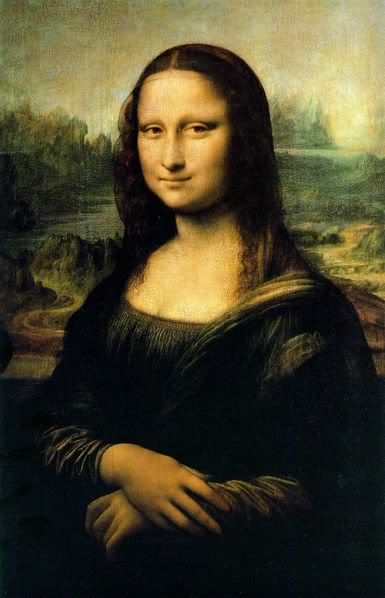
How Leonardo da Vinci used rudimentary pigments in 1503 to create such subtle shadows and light on the Mona Lisa has long baffled art historians. Now French researchers are "using X-ray fluorescence spectroscopy to isolate and study each ultra-thin layer of paint and glaze da Vinci used" to create the effect he was seeking, according to recent new stories.

By beaming x-rays on the Mona Lisa without removing it from the wall on which it is mounted in Paris' Louvre Museum, scientists found that da Vinci used a Renaissance painting technique known as sfumato, intricately mixing thin layers of pigment, glaze and oil to create the appearance of lifelike shadows and light. Scientists now believe that da Vinci used up to 30 layers of paint on his works.

While this research may solve one mystery about the Mona Lisa, others remain, like: "who is this enigmatic woman" and why does she hold her subtle half-smile? To these mysteries we can add another: what did this mysterious woman and da Vinci like to eat?

According to one researcher who studied the culinary habits of fifteenth and sixteenth century Italy, some Renaissance favorites were Risi e Bisi, Saffron Risotto with Duck and Mushrooms, and Spinach Soup with Hazelnuts. Although those recipes would be impossible to duplicate today, this one for Saffron Risotto with Mushrooms from the New York Times might just give you a sense of how and what Leonardo da Vinci ate.

4 cups beef or chicken stock
1/8 teaspoon ground saffron
3 tablespoons unsalted butter
2 tablespoons olive oil
1/4 cup finely minced scallions
1/4 cup finely minced onions
1 pound fresh wild mushrooms, trimmed, cleaned and sliced (see note)
1 1/2 cups Italian Arborio rice
Salt and freshly ground black pepper to taste
3/4 cup freshly grated Parmigiano-Reggiano cheese

Place stock in a heavy saucepan, and over medium heat bring to a simmer. Add saffron, stir, and leave to simmer very slightly.

Meanwhile, in a larger saucepan over medium heat, melt 1 tablespoon butter in olive oil. When foam subsides, add scallions and onions, and cook, stirring frequently, until softened and yellow but not browned. Add mushrooms and saute, stirring occasionally, until liquid has evaporated.

Add rice to mushrooms, and cook, stirring to coat well, with butter and oil. Add approximately 3/4 cup of simmering stock to rice and mushrooms. Stir well and continue to cook, stirring occasionally, until rice has absorbed most of stock. Continue adding stock to rice by the half-cupful, adding only after rice has absorbed previous addition. As cooking continues, you will have to stir more frequently. After 25 to 30 minutes, all the stock should be absorbed, and rice should be tender but still chewy.

Remove from heat. Add salt and pepper to taste. Stir in remaining butter and 1/4 cup of Parmigiano-Reggiano. Serve immediately, passing the rest of the cheese.

Thanks for stopping by THE HISTORY CHEF! For a free excerpt of my new book from Simon and Schuster click here

"When Thomas Jefferson Dined Alone"

A scholar, author, architect, scientist and statesman, Thomas Jefferson applied his brilliant mind to many activities. He was elected to the Virginia House of Burgesses when he was only 25, served in the Continental Congress, was governor of Virginia, and a diplomat in France where he helped negotiate the treaties that ended the Revolutionary War.

He also founded the University of Virginia, was fluent in six languages, including Latin, French, Spanish, Italian and Greek, and wrote the Declaration of Independence at the age of 33! He then served as Secretary of State under George Washington, as Vice President under John Adams, and, along with his good pal James Madison, wrote the Virginia and Kentucky Resolutions in defense of states’ rights and the freedom of speech.

During his presidency, Jefferson did many more important things: he repealed the Alien and Sedition Acts, eliminated an unpopular whiskey tax, and sent our navy to fight Barbary pirates who were harassing American ships on the Mediterranean Sea. He also doubled the size of the country by purchasing the Louisiana Territory from Napoleon in 1803 and then commissioned Lewis and Clark to explore western lands which, back then, to most Americans, were totally unknown.

It’s no wonder then that at a Nobel Prize dinner held at the White House in 1962, President John F. Kennedy joked that so many brilliant minds had never been gathered together at the White House "with the possible exception of when Thomas Jefferson dined alone."

Friday, July 16, 2010

James Madison, the Potomac Oyster Wars and the Constitutional Convention

So you probably know that James Madison was one of the drafters of the Constitution and later helped spearhead the drive for the Bill of Rights, but what you might not know is that he also played a major role in negotiating an end to the Potomac Oysters Wars which indirectly helped pave the way to the Constitutional Convention. This is how the story briefly goes:

In the seventeenth century, watermen in Maryland and Virginia battled over ownership rights to the Potomac River. Maryland traced its rights to a 1632 charter from King Charles I which included the river. At the same time, Virginia laid its claims to the river to an earlier charter from King James I and a 1688 patent from King James II, both of which also included the river.

In 1776, after more than a century of conflict, Virginia ceded ownership of the river but reserved the right to “the free navigation and use of the rivers Potowmack and Pocomoke." Maryland rejected this reservation and quickly passed a resolution asserting total control over the Potomac. After the Revolution, battles over the river intensified between watermen from both states.

To resolve this problem, leaders from Maryland and Virginia appointed two groups of commissioners which, at the invitation of George Washington, met at Mount Vernon in May of 1785. James Madison led the Virginia contingent and Samuel Chase led the Maryland delegation. Their discussions led to the Compact of 1785, which allowed oystermen from both states free use the river.

Peace prevailed until the supply of oysters began to dwindle, at which point Maryland re-imposed harvesting restrictions. Virginia retaliated by closing the mouth of the Chesapeake and watermen from both states engaged in bloody gun battles which lasted, with periodic breaks, for more than a century.

Today, these battles are known as the Potomac Oyster Wars. They are important in their own right, but they have a larger historical significance because they revealed one of the main weaknesses of the Articles of Confederation, which was that the federal government didn't have the power to control commerce among the states, a setup that was creating constant chaos and conflict.

With this problem in mind, Madison and the others who convened at Mt. Vernon in May of 1785 agreed to meet the following year at Annapolis to discuss the need for a stronger federal government. Not many delegates showed up and so they agreed to convene the following May in Philadelphia, which is, of course, where the Constitution was drafted.

And so NOW you know how James Madison and a little bivalve from the Potomac helped pave the way to the Constitutional Convention!

FACT: Under the Articles of Confederation, the federal government didn't have the power to raise its own army, regulate commerce or coin money for the country. To pass a law, Congress needed the approval of nine out of the 13 states, and in order to amend the Articles it needed the approval of all 13 states, which made it nearly impossible to get anything done. The Articles also didn't provide for an Executive or Federal branch so there was no separation of powers.

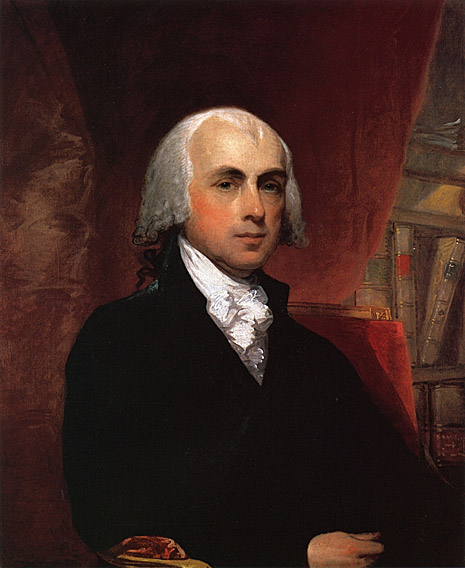
Credit: Portrait of James Madison by Gilbert Stuart