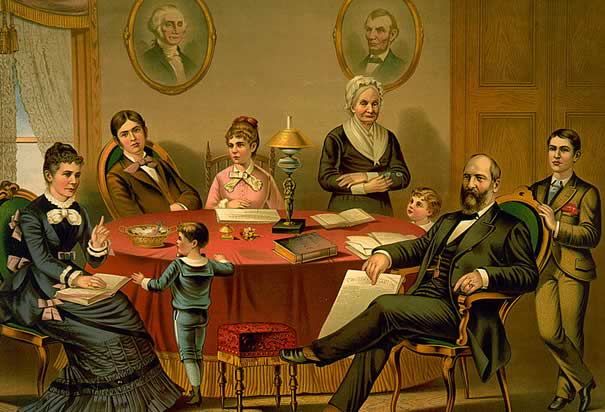
Saturday, January 21, 2017

George Bush, Barack Obama, and the Politics of Peanut Butter and Jelly Sandwiches

George Bush's memoir Decision Points has been described by the New York Times as "an autobiography focused around 'the most consequential decisions' of his presidency and his personal life from his decision to give up drinking in 1986 to his decision to invade Iraq in 2003 to his decisions regarding the financial crisis of 2008." According to the Product Description of the book:

President Bush brings readers inside the Texas Governor’s Mansion on the night of the hotly contested 2000 election; aboard Air Force One on 9/11, in the hours after America’s most devastating attack since Pearl Harbor; at the head of the table in the Situation Room in the moments before launching the war in Iraq; and behind the Oval Office desk for his historic and controversial decisions on the financial crisis, Hurricane Katrina, Afghanistan, Iran, and other issues that have shaped the first decade of the 21st century...

With so many momentous issues to review, it's not surprising that Mr. Bush didn't bother to mention his favorite foods, but...in an interview with Oprah Winfrey during the 2000 presidential campaign, he did say that his favorite sandwich is peanut butter and jelly on white bread.
.

Eight years later, during the 2008 presidential campaign, peanut butter and jelly sandwiches once again made national headlines. Responding to charges that his economic policies were socialistic in nature, Barack Obama ridiculed his opponent John McCain for constantly resorting to trivialities and distractions:

Now, because he knows that his economic theories don't work, he's been spending these last few days calling me every name in the book. Lately he's called me a socialist for wanting to roll-back the Bush tax cuts for the wealthiest Americans so we can finally give tax relief to the middle class. I don't know what's next. By the end of the week he'll be accusing me of being a secret communist because I shared my toys in kindergarten. I shared my peanut butter and jelly sandwich.
.

Although neither Bush nor Obama mentioned how they prefer their PB&Js to be made, we do know that John Harvey Kellogg, the cereal pioneer, was the first person to receive a patent for the process of making peanut butter in 1895. According to Andrew Smith's Peanuts: The Illustrious History of the Goober Pea, early peanut butters had several problems:

The first was that peanut oil has a melting point below room temperature. Gravity separated the oil, which then oxidized and turned rancid. Likewise, salt added to the peanut butter separated and crystallized. Grocers received peanut butter in tubs or pails and were advised to use a wooden paddle to stir it frequently...

During the early years of the twentieth century, William Norman, an English chemist, invented a method of saturating unsaturated and polyunsaturated fatty acids, thus preventing them from turning rancid. In 1922, Joseph L. Rosefield...applied these principles to peanut butter [and] developed a process to prevent oil separation and spoilage in peanut butter...The result was a semisolid peanut butter [that]...was thick and creamy and did not stick to the roof of the mouth as much as previous products.


Selecting the name "Skippy" for his product, Rosefield introduced creamy and chunky-style peanut butter in 1932. Three years later, the company inaugurated its first wide-mouth peanut-butter jar, which quickly became the industry standard. And in less than twenty five years, peanut butter had "evolved from a hand ground delicacy to a mass-produced commercial commodity sold in almost every grocery store in America."


FOOD FACT: Florence Cowles' 1928 cookbook Seven Hundred Sandwiches includes dozens of creative recipes for peanut butter sandwiches, including: Peanut Butter and Egg Sandwich, Peanut Butter and Cabbage Sandwich, Peanut Butter and Marshmallow Sandwich, Peanut Butter and Prune Sandwich, Peanut Butter and Cherry Sandwich, Peanut Butter and Cheese Sandwich, and Peanut Butter and Olive Sandwich made with Mayonnaise on Rye. Oh my!

Wednesday, January 18, 2017

John F. Kennedy's Inaugural Luncheon

In November, 1960, John F. Kennedy defeated Richard Nixon in one of the closest and most dramatic presidential elections in American history. Two and a half months later, on January 20, 1961, Kennedy was sworn in as the first Roman Catholic president of the United States and delivered his Inaugural Address on the terrace of the East Portico of the U.S. Capital.

Near the end of his address, he famously said

Let every nation know, whether it wishes us well or ill, that we shall pay any price, bear any burden, meet any hardship, support any friend, oppose any foe, to assure the survival and the success of liberty.

This much we pledge – and more.

And so, my fellow Americans: ask not what your country can do for you - ask what you can do for your country. My fellow citizens of the world: ask not what America will do for you, but what together we can do for the freedom of man...


After delivering his address, Kennedy and his wife Jacqueline were escorted to the Old Supreme Court Chamber in the U.S. Capitol for the traditional inaugural luncheon. According to Senate historians, Menu Items included Cream of Tomato Soup with Crushed Popcorn; Deviled Crab Meat Imperial; New England Boiled Stuffed Lobster with Drawn Butter; Prime Texas Ribs of Beef au jus; String Beans Amandine and Broiled Tomatoes with Grapefruit and Avocado sections with Poppyseed Dressing.


Although the traditional Inaugural Luncheon at the Capital dates back to 1897, when the Senate Committee on Arrangements hosted an official luncheon for President William McKinley and other guests, it didn't begin in its current form until 1953, when President Eisenhower, his wife Mamie, and fifty other guests dined on Creamed Chicken, Baked Ham, and Potato Puffs in the Old Senate Chamber.

Since then, the Joint Congressional Committee on Inaugural Ceremonies has organized a luncheon celebration at many presidential inaugurations. Often featuring cuisine reflecting the home states of the new president and vice president, as well as the theme of the Inauguration, the luncheon program includes speeches, gift presentations, and toasts to the new administration.


FOOD FACT: According to the John F. Kennedy Library and Museum,  Kennedy preferred orange juice, poached eggs on toast, crisp broiled bacon, milk and coffee at breakfast. For lunch, he enjoyed all kinds of soup, especially New England Fish Chowder. At dinner, there were no particular favorites, although he did like lamb chops, steak, turkey, baked beans and mashed potatoes. He also enjoyed corn muffins, and, for dessert, if he had any, it would "likely be something prepared with chocolate." Kennedy was a "food-as-fuel" kind of guy and often had to be reminded to eat because "politics always took preference over food."

For more on presidential inaugurations, click here!

Tuesday, January 10, 2017

George Washington's Thursday Dinners


When George Washington was inaugurated in March, 1789, some of the most pressing questions facing the new nation involved social manners and etiquette. This may seem trivial today, but back then, George and his fellow patriots had just fought a long war against the British Crown and they wanted to be sure that the American people would never mistake their president for a king.

How much pageantry should surround the office of the presidency? How elaborate should presidential dinners be? And how should the new president be addressed? As “His Excellency” or “His Mightiness”? These were questions of great importance when George Washington took the Oath of Office on the balcony of Federal Hall in New York City on April 30, 1789.


Immediately after taking office, Washington distributed questionnaires to his advisors, soliciting their opinions regarding the basis of “a tenable system of etiquette.” After much discussion, it was decided that George would be addressed as President Washington or simply Mr. President.

It was also decided that “levees” (receptions) would be held each Tuesday afternoon for "foreign ambassadors and other strangers of distinction” and that congressional dinners would be held each Thursday. Friday nights were chosen for Martha Washington’s “Drawing Rooms” and the remaining days were reserved for state banquets and personal entertaining.

Despite his desire to avoid the trappings of monarchy, George's Thursday dinners were truly fit for a king. "Dinners would begin promptly at four o’clock," according to culinary historian Poppy Cannon, and would often consist of three "bountiful" courses, the first two of which typically consisted of fifteen or twenty different dishes – all brought to the table at once!

A menu from Martha Washington’s family cookbook reveals just how elaborate these dinners could be. For a first course, she suggested serving Boiled Turkey, Baked Salmon, Shoulder of Mutton, Chicken Patties, Baked Ham, Stewed Cabbage, Scotch Collops, Pork Cutlets and Sauce Robert with Mashed Potatoes, Maids of Honors, Dressed Greens, French Beans, Oyster Loaves and Celery Sauce.


This course would be followed by Asparagus a la Petit Poi, Crayfish in Sauce, Fruit in Jelly, Lamb Tails, Partridges, Poached Salmon, Wild Duck, Roasted Hare, Sweetbreads, Plovers, Prawns, and Chardoons with Fricassed Birds, Rhenish Cream and custard.

After this course, the table cloth was removed and fresh glasses and decanters of wine were placed on the table with all kinds of fruits and nuts. If Martha and other ladies were present, they would excuse themselves at this point and the men would settle down (with very full bellies!) to talk about politics and other important affairs of the day.

Although Martha's dishes might be difficult to duplicate today, you can try this fabulous recipe for Poached Salmon with Creamy Dill Sauce or this one for Poached Salmon with Dill from simplyrecipes.com.


1 to 1½ pounds salmon fillets
½ cup dry white wine (a good Sauvignon Blanc)
½ cup water
A few thin slices of yellow onion and/or 1 shallot, peeled and sliced thin
Several sprigs of fresh dill or sprinkle of dried dill
A sprig of fresh parsley

Put wine, water, dill, parsley and onions in a saute pan, and bring to a simmer on medium heat. Place salmon, skin-side down on the pan. Cover and cook for 5 minutes. Season with freshly ground black pepper and enjoy.

FOOD FACT: If you visit Mount Vernon someday, be sure to stop by the Mount Vernon Inn Restaurant which serves such authentic colonial appetizers as Peanut and Chestnut Soup, Colonial Hoe Cakes, and Fried Brie with Strawberry Sauce. Dinner menu items include Filet Mignon wrapped in Virginia Pepper Bacon;  Roast Duckling with “George Washington’s favorite Apricot Sauce,” and Stuffed Pork Loin with Opium Sauce!

Monday, January 9, 2017

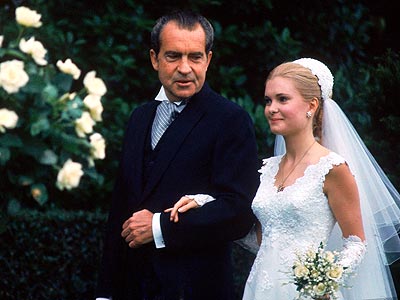
Richard Nixon Inaugural Grapefruit Avocado Salad

As devout Quakers, Richard Nixon’s parents taught their four sons patience, courage, and determination, traits that Nixon said he  drew strength from during trying times in his life. He later recalled that he "gained his first taste for politics during debates around the family dinner table" and described “friendly pillow fights with his three brothers in the small upstairs bedroom they shared.”

Growing up on a small citrus farm in Yorba Linda, California, Nixon might have enjoyed  grapefruit often, and Grapefruit-Avocado Salad was among the official menu items served at his second Inaugural Luncheon on January 20, 1973. If you'd like to whip up  a refreshingly colorful, slightly tangy Grapefruit Avocado Salad in honor of Richard Nixon's birthday today, here's a simple and simply delicious recipe to try from Ina Garten:      


1 tablespoon Dijon mustard
1/4 cup freshly squeezed lemon juice
1 1/2 teaspoons kosher salt
3/4 teaspoon freshly ground black pepper
1/2 cup olive oil
3 or 4 ripe Hass avocados
2 large red grapefruits

Place the mustard, lemon juice, salt, and pepper in a small bowl. Slowly whisk in the olive oil until the vinaigrette is emulsified.

Before serving, cut the avocados in 1/2, remove the seeds, and carefully peel off the skin. Cut each half into 4 thick slices. Toss the avocado slices in the vinaigrette to prevent them from turning brown. Use a large, sharp knife to slice the peel off the grapefruits (be sure to remove all the white pith), then cut between the membranes to release the grapefruit segments.

Arrange the avocado slices around the edge of a large platter. Arrange the grapefruit...and enjoy! 

Sunday, January 8, 2017

Andrew Jackson Inaugural Orange Whiskey Punch


When John Quincy Adams took the oath of office in 1825, it was under a cloud of controversy. The election of 1824 had been a bitterly contested four-man race between Andrew Jackson, Henry Clay, William Crawford, and Adams.

Since no candidate had won a majority of electoral votes, the election was thrown into the House of Representatives where Clay, as Speaker of the House, quickly threw his support to Adams, even though Jackson won the most popular and electoral votes. Adams then appointed Clay as Secretary of State. Outraged and feeling cheated out of the White House, Jackson called the deal a “Corrupt Bargain to "cheat the will of the people."”


With these accusations hanging over his head, Adams faced problems from the start and his four years in office weren't easy ones. Although his intelligence, family background, and experience could and should have made him a great president, he lacked the charisma needed to create a base of loyal supporters.

Not surprisingly, he lost the election of 1828 in a landslide, and when Andrew Jackson was inaugurated in March, 1829, twenty thousand of his loyal supporters, who believed he had been cheated out of the White House four years earlier, descended "like locusts" upon Washington, eager to celebrate the long-delayed victory of their champion.

According to culinary historian Poppy Cannon, Jackson's inauguration "sparked a celebration that did everything but set fire to the White House." Thousands of rowdy fans crammed into the building and "little thought was given to the delicate French furniture, elegant draperies, and fine china" as ice cream, punch, ices and cakes "were gobbled up as fast they appeared on long serving tables."


In a letter to her sister, Margaret Bayard Smith, a prominent Washington socialite, described the chaos of Jackson's inaugural festivities this way:

But what a scene did we witness! The Majesty of the People had disappeared, and a rabble, a mob, of boys, negros, women, children, scrambling fighting, romping. What a pity, what a pity! No arrangements had been made, no police officers placed on duty, and the whole house had been inundated by the rabble mob...

Cut glass and china to the amount of several thousand dollars had been broken in the struggle to get the refreshments, punch and other articles had been carried out in tubs and buckets, but had it been in hogsheads it would have been insufficient...

Ladies fainted, men were seen with bloody noses, and such a scene of confusion took place as is impossible to describe…This concourse had not been anticipated...Ladies and gentlemen only had been expected at this Levee, not the people en masse. But it was the People's day, and the People's President, and the People would rule!


Another observer described the day's events this way:

Orange-punch by barrels full was inside, but as the waiters opened the door to bring it out, a rush would be made, the glasses broken, the pails of liquor upset, and the most painful confusion prevailed. To such a degree was this carried, that tubs of punch were taken from the lower story into the garden to lead off the crowds from the rooms.

Although no one knows how those waiters prepared the punch that day, you can get some great whiskey tips from eatdrinkfrolic.com and The Wall Street Journal scoured some ninteeenth century cookbooks and provided this adapted recipe for Inaugural Orange Punch that's "easy to make by the bucketful" if you've got a mob to entertain today!


3 parts fresh orange juice
1 part fresh lemon juice
1 part Mulled Orange Syrup*
1 part dark rum
1 part cognac
2 parts soda water

Mulled Orange Syrup: Combine 1 cup sugar with 1 cup water and heat to a boil, stirring to dissolve the sugar. Reduce heat to a low simmer. Add the peel from an orange and mulling spices (a couple of cinnamon sticks, some whole cloves and allspice berries). After 15 minutes, remove from heat and let it sit for several hours. Strain.

Combine Mulled Orange Syrup and all other ingredients in a punch bowl with a large block of ice. Serve in punch cups with a little crushed ice. Add a dash of Angostura bitters to each glass and enjoy!

For 5 Wild & Crazy Presidential Elections and Inaugurations, click here!

Tuesday, December 27, 2016

Andrew Johnson Hoppin' John

At the end of the Civil War, the South lay in ruins. Southern plantations and entire cities had been destroyed during the war. Without food, many southerners starved to death, and some of those who survived lost everything they owned.

As a result, the government had to figure out how to rebuild the South. As president, Johnson took charge of the first phase of Reconstruction. But his attempt to quickly readmit the former Confederate states into the union and his vetoes of important civil rights bills outraged Radical Republicans in Congress.

The House of Representatives impeached Johnson in 1868, but he was acquitted by a single vote in the Senate, and historians say that his victory “marked the beginning of an ambitious series of receptions, dinners and children’s parties that would turn the last nine months of his term into an ongoing celebration.”


After leaving office, Johnson returned to his native state of Tennessee where he probably consumed such traditional southern foods as Hush Puppies, Benne Wafers, Hoppin’ John and Pine Bark Stew. Still popular in the south, Hoppin' John is often the high point of New Year's Day festivities and is thought to bring good luck and prosperity throughout the coming year.

If you'd like to whip up some Hoppin' John for your New Year's festivities this week, you can't go wrong with this quick and delicious recipe from Emeril Lagasse.


1 tablespoon olive oil
1 large ham hock
1 cup onion, chopped
1/2 cup celery, chopped
1/2 cup green pepper, chopped
1 tablespoon chopped garlic
1 pound black-eyed peas, soaked overnight and rinsed
1 quart chicken stock
1 Bay leaf
1 teaspoon dry thyme leaves
Salt, black pepper, and cayenne
3 tablespoons finely chopped green onion
3 cups steamed white rice

Heat oil in a large soup pot, add the ham hock and sear on all sides for 4 minutes. Add the onion, celery, green pepper, and garlic, and cook for 4 minutes. Add the black-eyed peas, stock, bay leaves, thyme, and seasonings.

Bring to a boil, reduce the heat and simmer for 40 minutes, or until the peas are creamy and tender, stir occasionally. If the liquid evaporates, add more water or stock. Adjust seasonings, and garnish with green onions. Serve over rice and enjoy!

Tuesday, December 20, 2016

James Madison, the Potomac Oyster Wars, and the Path to the Constitutional Convention

So you probably know that James Madison was one of the drafters of the Constitution and later helped spearhead the drive for the Bill of Rights. But what you might not know is that he also played a major role in negotiating an end to the Potomac Oysters Wars, which helped pave the way to the Constitutional Convention. This is how the story briefly goes:

In the seventeenth century, watermen in Maryland and Virginia battled over ownership rights to the Potomac River. Maryland traced its rights to a 1632 charter from King Charles I which included the river. At the same time, Virginia laid its claims to the river to an earlier charter from King James I and a 1688 patent from King James II, both of which also included the river.

In 1776, after more than a century of conflict, Virginia ceded ownership of the river but reserved the right to “the free navigation and use of the rivers Potowmack and Pocomoke." Maryland rejected this reservation and quickly passed a resolution asserting total control over the Potomac. After the Revolution, battles over the river intensified between watermen from both states.


To resolve this problem, leaders from Maryland and Virginia appointed two groups of commissioners which, at the invitation of George Washington, met at Mount Vernon in May of 1785. James Madison led the Virginia contingent and Samuel Chase led the Maryland delegation. Their discussions led to the Compact of 1785, which allowed oystermen from both states free use the river.

Peace prevailed until the supply of oysters began to dwindle, at which point Maryland re-imposed harvesting restrictions. Virginia retaliated by closing the mouth of the Chesapeake and watermen from both states engaged in bloody gun battles which lasted, with periodic breaks, for more than a century.

Today, these battles are known as the Potomac Oyster Wars. They're important in their own right but they have a larger historical significance because they revealed one of the main weaknesses of the Articles of Confederation, which was that the federal government didn't have the power to control commerce among the states, a setup that was creating constant chaos and conflict.

With this problem in mind, Madison and the others who convened at Mt. Vernon in May of 1785 agreed to meet the following year at Annapolis to discuss the need for a stronger federal government. Not many delegates showed up and so they agreed to convene the following May in Philadelphia, which is, of course, where the Constitution was drafted.


And so NOW you know how James Madison and a little bivalve from the Potomac helped pave the way to the Constitutional Convention!

FAST FACT: Under the Articles of Confederation, the federal government didn't have the power to raise an army, regulate interstate commerce, or coin money for the country. To pass a law, Congress needed the approval of nine out of the 13 states, and in order to amend the Articles it needed the approval of all 13 states, which made it nearly impossible to get anything done! The Articles also didn't provide for an Executive or Federal branch so there was no separation of powers.

Saturday, December 17, 2016

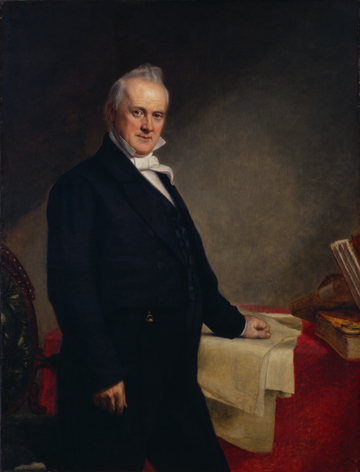
James Buchanan Snickerdoodles

Presiding over the nation during a time of great strife, James Buchanan is the only president who never had a wife. And while he dined mighty fine at his many White House parties, biographers say that James retained a childhood taste for Scrapple, Confederate Pudding, and sweet Pennsylvania Dutch-German cookies called Apees.

Snickerdoodles are another traditional Dutch-German cookie that are usually covered with cinnamon and sugar and baked in the shape of a snail. Some historians say that their fanciful name comes from the German term schnecke knödel which can be translated as “snail dumpling.” Others say that “snicker” comes from the Dutch word snekrad or the German word schnecke, both of which refer to a small, snail-like shape.

Although no one knows who came up with their fanciful name, we do know that these sweet little cookies have been popular in Buchanan's native state of Pennsylvania for centuries. If you'd like to whip up a batch of snickerdoodles this holiday season, here is a recipe to try from Emeril Lagasse:

For the topping:

3 tablespoons sugar
1/2 teaspoon cinnamon

For the cookie dough:

3 1/2 cups flour
1 tablespoon baking powder
2 teaspoons baking soda
1/4 teaspoon salt
1/4 teaspoon cinnamon
1 cup butter
2 cups sugar
2 eggs
1 tablespoon light corn syrup
2 1/2 teaspoons vanilla extract

In a small bowl, stir together the sugar and cinnamon and set aside. To make the cookie dough, stir together the dry ingredients. In a bowl with a paddle attachment, cream the butter. Add the sugar and continue to mix, then add the eggs, corn syrup, and vanilla, and mix thoroughly. Add the dry ingredients and mix until blended. Chill dough 1 hour if it's sticky or difficult to handle.

Preheat oven to 375 degrees F. Roll balls of dough about the size of a walnut then roll in the cinnamon sugar to coat. Place on an ungreased sheet pan 2 1/2 inches apart. Bake for 10 to 12 minutes until puffed up and the surface is slightly cracked. Let cool on the sheet a few minutes then remove to a wire rack to cool.

FOOD FACT: At Buchanan’s inaugural festivities in 1857, more than 5,000 guests reportedly dined on "eight rounds of beef, seventy-five hams, sixty saddles of mutton, four saddles of venison, four hundred gallons of oysters, five quarts of jellies, twelve hundred quarts of ice cream in assorted flavors, and pates of infinate variety" and it has been said that $3,000 had been spent on the wines - an astronimical figure for the time. But the high point of the night was a Pyramid Cake that stood four feet high and was decorated with a flag bearing the insignia of each state. But this was just a hint of the culinary excesses to come, and, as president, Buchanan’s annual $25,000 salary wasn’t enough to cover his tabs and he often had to pay the bills for his extravagant White House parties out of his own pocket!

Tuesday, December 13, 2016

From Writer's Digest: Manuscript Wish List!

From Writer's Digest:

About Suzy: Suzy is an attorney, author, and agent who holds a Ph.D. in history from UC Berkeley. Her most recent books include Machiavelli for Moms (Simon & Schuster) and Forgotten Crimes: The Holocaust and People with Disabilities. She's also a ghostwriter for a #1 New York Times best-selling author with more than 25 million copies in print and her first children’s book will be published by HarperCollins in 2018.

She is Seeking: In the adult market, Suzy is particularly on the hunt for great serious nonfiction, especially by historians who are looking to make a transition from an academic to trade readership and journalists who have something unique and significant to say.

She’s also on the lookout for smart parenting books with truly useful, original hooks that fill a gap in the market; food, cooking, health and diet-related titles, especially culinary histories of all flavors and tastes; sports books with strong crossover appeal in other genres, especially history and philosophy (she’d love to find the next Golf in the Kingdom or Zen and the Art of Archery!); self-help of every stripe by authors with well-estbalished, national platforms and riveting, elegantly-written memoir (recent favorites include William Finnegan's Pulitzer-Prize-winning Barbarian Days and Paul Kalanithi's deeply-rendered When Breath Becomes Air), as well as popular culture, humor, especially as it relates to marriage and parenting, and small quirky books that make her smile and think about the world in entirely new and unexpected ways.


On the children’s front, Suzy is looking for lively, engaging, original nonfiction that really *pops* off the page and makes kids excited about reading and learning; wacky/hilarious MG commercial fiction with series potential; and YA graphic novels that bring history, literature and fascinating historical figures (think Socrates! Machiavelli! Hamilton!) to life.

She also has a soft spot for heartwarming MG works that explore the coming-of-age theme in a warm, honest voice that makes readers feel safe and at home; contemporary YA fiction that tackles difficult issues in bold, daring ways and with inventive formats that can be brought into the classroom to stimulate meaningful discussion and debate; and sweet, lyrical picture books that capture the imagination and call for multiple readings (favorite classics include Stellaluna and The Cat Who Walked Across France.) She’d also love to find an exciting, high-concept thriller that has “MOVIE!” written all over it.


How to Submit: For fiction, please send a synopsis and the first ten pages of your manuscript pasted below your query (quick, friendly tip: resist the temptation to hit “send” too quickly. Revise, revise, and revise and THEN hit send). For nonfiction, please send your query with a concise author bio to suzy@dijkstraagency.com. Thanks so much for sharing your work with me and I look forward to hearing from you!

Tuesday, December 6, 2016

A Charles Dickens Christmas Dinner

One of the most famous guests to visit the White House during John Tyler’s presidency was the great English writer, Charles Dickens. Upon his arrival in the United States, Dickens was honored at a lavish ball in New York City, where he was greeted by such famous American writers as Washington Irving, Henry Wadsworth Longfellow, Harriet Beecher Stowe and Edgar Allan Poe. Some days later, Dickens met Tyler in the White House and later penned this about the president:

He looked somewhat worn and anxious, -- and well he might: being at war with everybody, -- but the expression of his face was mild and pleasant, and his manner was remarkably unaffected, gentlemanly, and agreeable. I thought that, in his whole carriage and demeanour, he became his station singularly well.

After returning to England, Dickens wrote his first travel book American Notes. But of all of his books, perhaps none are more well-known than A Christmas Carol, which was published in 1843, one year after Dickens visited the White House. Among all of its famous food oriented scenes, none are more memorable than the one depicting the Cratchit family Christmas dinner. Maybe you remember it:


Mrs. Cratchit made the gravy (ready beforehand in a little saucepan) hissing hot; Master Peter mashed the potatoes with incredible vigour; Miss Belinda sweetened up the apple-sauce; Martha dusted the hot plates; Bob took Tiny Tim beside him in a tiny corner at the table; the two young Cratchits set chairs for everybody, not forgetting themselves, and mounting guard upon their posts, crammed spoons into their mouths, lest they should shriek for goose before their turn came to be helped.

At last the dishes were set on, and grace was said. It was succeeded by a breathless pause, as Mrs. Cratchit, looking slowly all along the carving-knife, prepared to plunge it in the breast; but when she did, and when the long expected gush of stuffing issued forth, one murmur of delight arose all round the board, and even Tiny Tim, excited by the two young Cratchits, beat on the table with the handle of his knife, and feebly cried Hurrah!


No recipes are included in the book, of course, but The Food Channel recently recreated the Cratchit's Christmas dinner and "the more bountiful feast at the merry gathering" at the home of Mr. Scrooge’s nephew. If you'd like to bring some of Dickens' Christmas spirit to your family dinner this holiday season, here's a fabulous recipe for Duchess Potatoes:


3 pounds russet potatoes, peeled and cut into 1-inch pieces
1 cup heavy cream
6 tablespoons unsalted butter, cut into 1/4-inch cubes and softened
1 large egg plus 1 egg yolk, light beaten
1 1/4 teaspoons salt
1/2 teaspoon pepper
Pinch of nutmeg
1/2 teaspoon baking powder

Fill a large pot with cold water, add salt and bring to a boil over high heat. Add the potatoes and boil until tender. While the potatoes are still hot add cream, 3 tablespoons butter, eggs, salt, pepper, nutmeg, and baking powder. Mash the potatoes until smooth. Let cool to room temperature. Gently fold in the remaining butter until pieces are evenly distributed.

Preheat oven to 350°F. Transfer potato mixture to piping bag fitted with 1/2-inch star tip (you can use a gallon size baggie with snipped off corner) and pipe eight 4-inch wide mounds of potatoes on baking sheet. Spray the tops of the potatoes lightly with butter flavored cooking spray and bake until golden brown, about 15 to 20 minutes.

FAST FACT: Oliver Twist is another classic Dickens novel that's filled with many memorable food-related scenes. Set in England, the main character is a nine-year old orphan in a London workhouse where the boys are given only three meals of thin gruel a day. When Oliver asks for more, he is dubbed a trouble maker and treated even more cruelly. Oliver Twist called attention to the problem of poor and starving children in England and, to a lesser extent, the United States.

Wednesday, November 30, 2016

Dolley Madison's Wednesday Squeezes


When James Madison and his wife Dolley moved into the President's House, she decided that the place could use some sprucing up and the room that Thomas Jefferson had used as an office soon became the State Dining Room. The adjacent parlor (today’s Red Room) was "redecorated in sunflower yellow, with sofas and chairs to match" and, one room over, the smaller but more formal elliptical salon was "decorated in the Grecian style with elegant cream-colored walls."

Together, these three rooms with their interconnecting doors became the venue for Dolley Madison’s legendary “Drawing Rooms,” or "Wednesday Squeezes," which often attracted as many as three hundreds guests and were the most popular social event in town!

Dressed in brightly colored satins or silks and often donning a feathered headpiece or bejeweled turban, Dolley cheerfully greeted and mingled with guests as they enjoyed a festive evening of refreshments, music, and lively conversation. Mrs. Madison also presided over elaborate dinner parties where she delighted guests with such unusual dessert items as pink pepperment ice cream baked in warm pastries.


The Madisons continued to entertain this way until "their brilliant social whirlwind" went up in flames during the War of 1812. On August 24, 1814, while James was away getting a report on the war, Dolley was supposedly awaiting forty dinner guests. Around three o’clock, word was received that British troops had defeated American forces at nearby Blandensburg and were marching toward the capital.

Before fleeing to safety, Dolley quickly gathered what she could, including important documents of her husband’s and Gilbert Stuart’s famous portrait of George Washington. When British soldiers entered the Executive Mansion later that day, they supposedly devoured the lavish dinner that had been left behind. They then piled up furniture, scattered oil-soaked rags in all of the rooms, and lit the President’s House afire!

Although the British quickly evacuated the capital, the months that followed weren't happy ones for the Madisons as many Americans criticized them for abandoning the President’s House and “allowing the destruction of the most visible symbol of the young republic.”

At their temporary residence, Dolley eventually hosted her Wednesday Squeezes again, but “the spirit was gone.” Then came word of General Andrew Jackson’s brilliant victory over the British in the Battle of New Orleans and the mood of the country was again jubilant. Although a peace treaty had been signed weeks earlier, the Battle of New Orleans transformed “Mr. Madison’s War” (which had been condemned as an unnecessary folly) into “a glorious reaffirmation of American independence."

Saturday, November 26, 2016

George Washington Cherry Cobbler

An early nineteenth century American book peddler, itinerant preacher and author, "Parson" Mason Locke Weems is best known today as the source of some of the most beloved if apocryphal stories about George Washington. The famous story of George and the Cherry Tree is included in Weems' masterpiece, The Life and Memorable Actions of Washington, which was originally published in 1800 (the year after Washington's death) and was an immediate best-seller.

Reprinted in ever more inventive editions over the next twenty-five years, it contains, according to historian Edward Lengel, "some of the most beloved lies of American history, including the famous cherry tree myth" and other exaggerated or invented anecdotes that extolled Washington’s virtues and provided an entertaining and morally instructive tale for the young republic.

In telling his cherry tree story, Weems attributed it to "an aged lady,” who was reportedly a distant relative of George, and who, as a young girl, supposedly spent much time with him. This is how the fable unfolded:

"When George," said she, "was about six years old, he was made the wealthy master of a hatchet of which, like most little boys, he was immoderately fond, and was constantly going about chopping everything that came in his way. One day, in the garden, where he often amused himself hacking his mother's pea-sticks, he unluckily tried the edge of his hatchet on the body of a beautiful young English cherry-tree, which he barked so terribly, that I don't believe the tree ever got the better of it.

The next morning, [George’s father], finding out what had befallen his tree, which, by the by, was a great favorite, came into the house, and with much warmth asked for the mischievous author, declaring at the same time, that he would not have taken five guineas for his tree.


Nobody could tell him anything about it. Presently George and his hatchet made their appearance. "George," said his father, "do you know who killed that beautiful little cherry-tree yonder in the garden?" This was a tough question; and George staggered under it for a moment; but quickly recovered himself: and looking at his father, with the sweet face of youth brightened with the inexpressible charm of all-conquering truth, he bravely cried out, "I can't tell a lie, Pa; you know I can't tell a lie. I did cut it with my hatchet."

“Run to my arms, you dearest boy,” cried his father in transports, “run to my arms; glad am I, George, that you killed my tree; for you have paid me for it a thousand fold. Such an act of heroism in my son, is more worth than a thousand trees, though blossomed with silver, and their fruits of purest gold.”


Although plausible enough, historians generally agree that this quaint story is almost certainly not true. What is true, however, is that George was particularly fond of cherries, and Martha Washington's Booke of Cookery contains several family “receipts” for preserving this sweet and tangy highly versatile fruit.

Of course, then, as today, sweet and sour cherries can be used in all kinds of pies, tarts, jellies, jams, breads, muffins, and soups, as well as in a fabulously wide array of cobblers, like this recipe for cherry cobbler, which George surely would have loved had he had time to try it during his extraordinarily illustrious life:


Crust

1 1/4 cups flour
2 tablespoons sugar
2 tablespoons yellow cornmeal
1/2 teaspoon salt
6 tablespoons butter, cut into 1/2-inch pieces and chilled
1 large egg yolk
3 tablespoons cold milk, cream or water

Filling

2 cups cherry preserves
1/3 cup sliced almonds
Confectioners' sugar, for dusting

In the workbowl of a food processor, combine the flour, sugar, cornmeal and salt. Pulse to combine. Add the butter, toss carefully with your hands to coat the butter cubes in flour. Pulse in the food processor several times until the mixture resembles coarse oatmeal. Add the egg and 2 tablespoons of milk, cream or water, and pulse until the dough begins to come together in a ball. Add the additional tablespoon of liquid if needed until the dough comes together.

Transfer the dough to a lightly floured work surface and knead it briefly to shape it into a disk about 5 inches across. Wrap in plastic and refrigerate at least 1 hour or overnight. Using a lightly floured rolling pin, roll the dough into a shape a ½ inch wider than the tart pan you are using. Loosely fold the dough in half and transfer it to the tart pan.

Line the pan with the dough, being careful not to stretch the dough. Trim any excess dough from the rim of the pan, leaving a blunt neat edge. Gather the trimmings into a ball (it should be about the size of a pingpong ball). Wrap the tart and the ball of dough in plastic and refrigerate for 1 hour.

Heat to 375 degrees. Remove tart pan from refrigerator and spread the marmalade evenly over the crust. Grate the chilled ball of pastry onto the filling, and sprinkle the almonds over the top. Bake on a rack in the center of oven until the pastry is golden, the filling is bubbly and the almonds are toasted, 40 minutes. Transfer to a wire rack to cool. When the tart is completely cool, dust with confectioners' sugar. Serve at room temperature.

Tuesday, September 27, 2016

The Battle of the Chesapeake and the Signifance of Food in Military History

The Battle of the Chesapeake, also known as the Battle of the Virginia Capes, was a critical naval battle in the Revolutionary War. It also provides a fabulous example of how world and military history has been partly shaped by food.

The battle took place near the mouth of the Chesapeake on September 5, 1781 between “a British fleet led by Rear Admiral Sir Thomas Graves and a French fleet led by Rear Admiral François Joseph Paul, Comte de Grasse.” Although it didn't immediately end the war, the victory by the French was a major strategic defeat for the British because it prevented the Royal Navy from resupplying food, troops, and other provisions to General Charles Cornwallis’ blockaded forces at Yorktown.

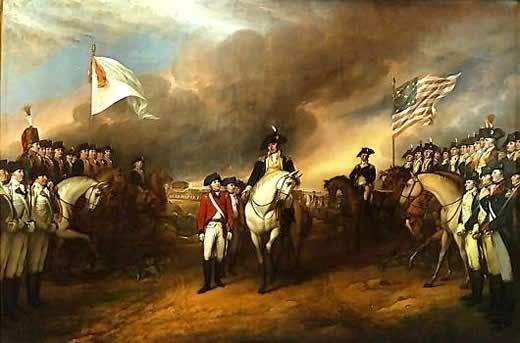
Equally important, it prevented interference with the delivery of troops and provisions that were en route to General George Washington's army through the Chesapeake. Six weeks later, with the British forces tired, hungry, trapped, and depleted, General Cornwallis surrendered his army to General Washington after the Seige at Yorktown, which effectively ended the war and forced Great Britain to later recognize the independence of the United States of America.

Of course, many other critical political, economic, and military forces contributed to the end of the Revolutionary War, but that doesn't in any way diminish the fact that food (or the lack of it) has played an important role in the course of world and military history.

FAST FACT: During the Civil War, General Winfield Scott observed that, "The movements of an army are necessarily subordinate...to considerations of the belly." And the famous French emperor Napoleon valued pickles as a food source for his armies so much that he offered the equivalent of $250,000 to the first person who discovered a way to safely preserve food. The man who won the prize in 1809 was a confectioner named Nicolas Appert, who discovered that food wouldn’t spoil if you removed the air from a bottle and boiled it long enough. This process, of course, is known as canning and Appert's discovery remains one of the most pivotal events in the modern history of food and human nutrition.

Image: Surrender of Cornwallis at Yorktown by John Trumbull (1787)

Monday, July 18, 2016

From Writer's Digest: Manuscript Wish List!

From Writer's Digest:

About Suzy: Suzy is an attorney, author, and agent who holds a Ph.D. in history from UC Berkeley. Her most recent books include Machiavelli for Moms (Simon & Schuster) and Forgotten Crimes: The Holocaust and People with Disabilities. She's also a ghostwriter for a #1 New York Times best-selling author with more than 25 million copies in print and her first children’s book will be published by HarperCollins in 2018.

She is Seeking: In the adult market, Suzy is particularly on the hunt for great serious nonfiction, especially by historians who are looking to make a transition from an academic to trade readership and journalists who have something unique and significant to say.

She’s also on the lookout for smart parenting books with truly useful, original hooks that fill a gap in the market; food, cooking, health and diet-related titles, especially culinary histories of all flavors and tastes; sports books with strong crossover appeal in other genres, especially history and philosophy (she’d love to find the next Golf in the Kingdom or Zen and the Art of Archery!); self-help of every stripe by authors with well-estbalished, national platforms and riveting, elegantly-written memoir (recent favorites include William Finnegan's Pulitzer-Prize-winning Barbarian Days and Paul Kalanithi's deeply-rendered When Breath Becomes Air), as well as popular culture, humor, especially as it relates to marriage and parenting, and small quirky books that make her smile and think about the world in entirely new and unexpected ways.


On the children’s front, Suzy is looking for lively, engaging, original nonfiction that really *pops* off the page and makes kids excited about reading and learning; wacky/hilarious MG commercial fiction with series potential; and YA graphic novels that bring history, literature and fascinating historical figures (think Socrates! Machiavelli! Hamilton!) to life.

She also has a soft spot for heartwarming MG works that explore the coming-of-age theme in a warm, honest voice that makes readers feel safe and at home; contemporary YA fiction that tackles difficult issues in bold, daring ways and with inventive formats that can be brought into the classroom to stimulate meaningful discussion and debate; and sweet, lyrical picture books that capture the imagination and call for multiple readings (favorite classics include Stellaluna and The Cat Who Walked Across France.) She’d also love to find an exciting, high-concept thriller that has “MOVIE!” written all over it.


How to Submit: For fiction, please send a synopsis and the first ten pages of your manuscript pasted below your query (quick, friendly tip: resist the temptation to hit “send” too quickly. Revise, revise, and revise and THEN hit send). For nonfiction, please send your query with a concise author bio to suzy@dijkstraagency.com. Thanks so much for sharing your work with me and I look forward to hearing from you!

Sunday, July 17, 2016

James Garfield, the Pythagorean Theorem, and the Founding Father of Vegetarianism

As a lawyer, professor, and duly ordained minister, James Garfield is the only president to have discovered a novel proof of the Pythagorean Theorem. The Theorem, of course, is named after Pythagoras, an ancient Greek philosopher and mathematician.

As you might recall from grade school, the theorem says that in a right triangle, the sum of the squares of the two right angle sides will always be the same as the square of the hypotenuse (the longest side).

Translated mathematically, the equation would read: A2 + B2 = C2. Let’s try it quickly here: If Side A is 4 inches long and Side B is 3 inches long, the equation would be: 4 x 4 = 16 and 3 x 3 = 9. Added together, 16 + 9 = 25. Now we simply find the square root of 25 and - voila! - we know that side C is 5 inches long!

So what does the Pythagorean Theorem have to do with food? A lot, if you consider the fact that Pythagoras has been called the Founding Father of Vegetarianism. Until the nineteenth century, when the term "vegetarian" came into use, people who didn't eat meat were often called “Pythagoreans.”

As a young man, Garfield was a farmer in Ohio and probably wouldn't have called himself a Pythagorean, but he surely would have enjoyed this healthy recipe for Ultimate Veggie Burgers from 101 Cookbooks if he tried it!


2 1/2 cups sprouted garbanzo beans or canned garbanzos, rinsed
4 large eggs
1/2 teaspoon fine-grain sea salt
1/3 cup chopped fresh cilantro
1 onion, chopped
Grated zest of one large lemon
1 cup toasted (whole-grain) bread crumbs
1 tablespoon extra-virgin olive oil

Combine garbanzos, eggs, and salt in a food processor. Puree until the mixture is the consistency of a thick, slightly chunky hummus. Pour into a mixing bowl and stir in the cilantro, onion, and zest.

Add breadcrumbs, stir, and let sit for a couple of minutes so crumbs can absorb some of the moisture. Heat oil in a heavy skillet over medium low, add 4 patties, cover and cook for 7-10 minutes. Flip the patties and cook the second side for 7 minutes, or until golden. Remove from the skillet and cool on a wire rack while you cook the remaining patties.

FAST FACT: Garfield was one of our most intellectual presidents. Before going into politics, he was a professor of ancient languages at Hiram College in Ohio. He was also ambidextrous and would often show off his knowledge by writing Greek with one hand and Latin with the other!

Wednesday, July 13, 2016

Thomas Jefferson's Vegetable Garden

So did you know that Thomas Jefferson's vegetable garden at Monticello was one thousand feet long and contained more than 250 varieties of more than 75 species of plants from around the world?

Carved into a terraced, slopping hilltop, and tended by elderly slaves, called “veteran aides,” Jefferson’s garden was divided into twenty-four rectangular squares, or growing plots, arranged according to which part of the plant was to be harvested, be it roots (carrots and beets), leaves (lettuce and cabbage) or fruits (tomatoes, peas, and beans).


Among the many exotic new plants grown there were beans and salsify collected by the Lewis and Clark expedition, figs from France, peppers from Mexico, and broccoli and squash imported from Italy. As methodical as a botanist, Jefferson recorded the results of his planting experiments in his Garden Book, noting such events as the dates that seeds were planted, when leaves appeared, and when his favorite vegetables were ready to eat.

Biographers say that Jefferson’s favorite vegetables included tomatoes, turnip greens, corn, and sweet potatoes. He was also particularly fond of the English pea, and, by staggering the time of their planting, he and his many dinner guests were able to enjoy them from mid-May through mid-July.

According to historians at Monticello:

Jefferson might have taken special note of the English pea because of an annual neighborhood contest to see which farmer could bring to table the first peas of spring. The winner would host the other contestants in a dinner that included the peas. Though Jefferson's mountaintop garden, with its southern exposure to warmth and light, should have provided an advantage for the contest, it seems that the contest was almost always won by a neighbor named George Divers.

As Jefferson's grandson recalled: "A wealthy neighbor [Divers], without children, and fond of horticulture, generally triumphed. Mr. Jefferson, on one occasion had them first, and when his family reminded him that it was his right to invite the company, he replied, 'No, say nothing about it, it will be more agreeable to our friend to think that he never fails.'"


If you'd like to whip up a dish of delicious and nutritious sweet English Peas this week, here's a simple recipe to try from recipe doodle.com and this one from epicurious.com

1 spring onion, sliced
2 tablespoons olive oil
2 cups English peas, shelled (about 12 ounces)
6 mint leaves, torn
Salt
Water

Sauté the spring onion in two tablespoons olive oil over medium-high heat. Add the shelled peas, a pinch of salt, and enough water to barely cover. Cook over high heat for 2 minutes, then add the torn mint leaves. Continue cooking until the peas are tender, a few more minutes.

FOOD FACT: When English colonists arrived in America, "pease" were one of the first crops to be planted. This makes sense because peas are nutritious and easy to preserve and ship. They also keep for long periods of time, as reflected in the old  children's rhyming song, "Pease Porridge Hot." Maybe you remember the lyrics: Pease porridge hot/Pease porridge cold/Pease porridge in the pot/Nine days old!

For my submission guidelines at Publishers Marketplace, click here!

Friday, July 8, 2016

Grover Cleveland, Babe Ruth, and the Debate over the Name of the Baby Ruth Bar

So did you know that Grover Cleveland's name is associated with a long-standing debate over the name of the Baby Ruth bar? Some people say that this popular candy bar was named after Cleveland's infant daughter Ruth, who was endearingly referred to as "Baby Ruth." Others claim that it was named after the great baseball player Babe Ruth, who hit the peak of his fame shortly after the candy bar was introduced in 1920.

According to Babe Ruth Central, this is how the story goes:

Back in 1916, the Curtiss Candy Company was founded in Chicago. The company's first candy bar was called the "Kandy Kake". The product was not overwhelmingly successful, so Curtiss went about refashioning it. And, in 1920, the "Baby Ruth" candy bar was introduced to candy-craving consumers.

That would be a pretty simple story, if it ended there. But, of course, it didn't. Adults and kids back then, just like today, were confused by the name and thought it was a candy bar related to Babe Ruth. After all, even in 1921, Babe already had gained a lot of fame in the baseball world. He had hit 54 home runs in 1920 and 59 during the 1921 season. These were incredible records at the time and he was in newspapers all over the country. So, for many, Baby Ruth was Babe Ruth's candy.


Despite widespread popular opinion that the candy bar was named after the Babe, the Curtiss Candy Company never swayed from its position that it was named in honor of Cleveland's daughter Ruth.

But...as many commentators have observed, Ruth died of diptheria in 1904, seventeen years "before Curtiss combined nougat, chocolate, caramel and peanuts into its chewy Baby Ruth." Moreover, Grover Cleveland left office in 1897, and, by the time the Baby Ruth bar hit the market in 1920, William McKinley, Theodore Roosevelt, and William Howard Taft had all served as president, and Woodrow Wilson was just finishing his second term.

So why would the Curtiss Company name its candy bar after a long-deceased daughter of a former president? Well, some claimed that the company conveniently concocted the story to avoid having to pay royalties to Babe Ruth, which, if true, would have been illegal and unfair.

Whatever the case may be, the story doesn't end there. In 1926, Babe agreed to lend his name to a new candy bar called "Ruth's Home Run Candy Bar" that was manufactured by the fledgling George H. Ruth Candy Company. In response, the Curtiss Company filed a lawsuit to prevent the rival candy bar from being made, claiming that it infringed on their trademark that had been established in 1919.


In 1931, the Court of Customs and Patent Appeals ruled in favor of the Curtiss Company and George Ruth's Home Run Bar was forced off the market. To support its ruling, the court explained that it was evident that George Ruth was trying to capitalize on his nickname at a time when sales of Baby Ruths were reportedly as high as $1 million a month.

Regardless of the legal outcome of the case, the debate over the name of the Baby Ruth bar continues to this day! And so NOW you know how Grover Cleveland's name became associated with the debate over the name of the Baby Ruth bar!

FAST FACT: So did you know that Grover Cleveland is the only American president to serve two non-consecutive terms. His first term was 1885-1889 and his second term was 1893-1897 which means he was the 22nd and 24th president of the United States. So that's why President Obama is the 44th president even though there have only been 43 different presidents to date!

Sunday, July 3, 2016

John Adams Gooseberry Fool

As a delegate to the Second Continental Congress, John Adams was one of the fiercest advocates of the Declaration of Independence. Contrary to popular belief, the declaration wasn't signed by all of the delegates on July 4, 1776. Instead, it was initially approved on July 2, 1776. The delegates then continued debating and slightly revised it the following day and formally adopted it on the Fourth of July. Most historians agree that the Declaration wasn’t signed by all the delegates (with a few holdouts) until nearly a month later, on August 2, 1776.

Nevertheless, on July 3, 1776, John Adams wrote a letter to his wife Abigail, describing these momentous events. This, in part, is what he wrote:

The second day of July, 1776, will be the most memorable epoch in the history of America. I am apt to believe that it will be celebrated by succeeding generations as the great anniversary festival...It ought to be solemnized with pomp and parade, with shows, games, sports, guns, bells, bonfires, and illuminations, from one end of this continent to the other, from this time forward forever more.


Although no one knows what the delegates ate on those momentous days, biographers say that Adams was fond of Green Sea Turtle Soup, Indian Pudding and other simple foods of his New England youth. Gooseberry Fool, a traditional eighteenth century British and early American dish, was another Adams family favorite.

As an example of how national foodways change over time, gooseberries were abundant in John's day, but aren't widely available in the United States today. So, if you can't find gooseberries in your local grocery store, you can use blueberries or raspberries. Either way, this delicious, nutritious, and refreshingly sweet little treat would make a great addition to your Fourth of July festivities this week!


If you'd like to whip up some Gooseberry Fool today, here's a simple and simply delicious recipe to try from epicurious.com

3 cups pink or green gooseberries (or blueberries)
1/2 cup granulated sugar
1/2 cup well-chilled heavy cream
1/4 cup crème fraîche
1/4 cup superfine granulated sugar

Pull off tops and tails of gooseberries and halve berries lengthwise. In a heavy skillet cook berries and granulated sugar over moderate heat, stirring occasionally until liquid is thickened, about 5 minutes. Simmer mixture, mashing with a fork to a coarse puree, 2 minutes more. Chill puree, covered, until cold, about 1 hour, and up to 1 day.

In a bowl with an electric mixer beat heavy cream with crème fraîche until it holds soft peaks. Add superfine sugar and beat until mixture just holds stiff peaks. Fold chilled puree into cream mixture until combined well. Fool may be made 3 hours ahead and chilled, covered.

Credit: Declaration of Independence, painting by John Trumball