Monday, June 22, 2015

John F. Kennedy's Inaugural Luncheon

In November of 1960, John F. Kennedy defeated Richard Nixon in one of the closest and most dramatic presidential elections in American history. Two and a half months later, on January 20, 1961, Kennedy was sworn in as the first Roman Catholic president of the United States and delivered his Inaugural Address on the terrace of the East Portico of the U.S. Capital. Near the end of his address, he famously said

Let every nation know, whether it wishes us well or ill, that we shall pay any price, bear any burden, meet any hardship, support any friend, oppose any foe, to assure the survival and the success of liberty.

This much we pledge – and more.

And so, my fellow Americans: ask not what your country can do for you - ask what you can do for your country. My fellow citizens of the world: ask not what America will do for you, but what together we can do for the freedom of man...


After delivering his address, Kennedy and his wife Jacqueline were escorted to the Old Supreme Court Chamber in the U.S. Capitol for the traditional inaugural luncheon. According to Senate historians, menu items included cream of tomato soup with crushed popcorn; deviled crab meat imperial; New England boiled stuffed lobster with drawn butter; prime Texas ribs of beef au jus; string beans amandine and broiled tomatoes with grapefruit and avocado sections with poppyseed dressing.

Although the traditional inaugural luncheon at the Capital dates back to 1897 when the Senate Committee on Arrangements hosted a luncheon for President McKinley and several other guests, it didn't begin in its current form until 1953 when President Eisenhower, his wife Mamie, and fifty other guests dined on creamed chicken, baked ham, and potato puffs in the Old Senate Chamber.

Since then, the Joint Congressional Committee on Inaugural Ceremonies has organized a luncheon celebration at fifteen Presidential Inaugurations. Often featuring cuisine reflecting the home states of the new president and vice president, as well as the theme of the Inauguration, the luncheon program includes speeches, gift presentations, and toasts to the new administration.

FOOD FACT: According to the John F. Kennedy Library and Museum,  Kennedy preferred orange juice, poached eggs on toast, crisp broiled bacon, milk and coffee at breakfast. For lunch, he enjoyed all kinds of soup, especially New England Fish Chowder. As for dinner, there were no particular favorites, although it's been said that he liked lamb chops, steak, turkey, baked beans and mashed potatoes. He also enjoyed corn muffins, and, for dessert, if he had any, it would "likely be something prepared with chocolate." Biographers say that Kennedy was a light eater and often had to be reminded that it was dinnertime because "politics always took preference over food."

Wednesday, June 10, 2015

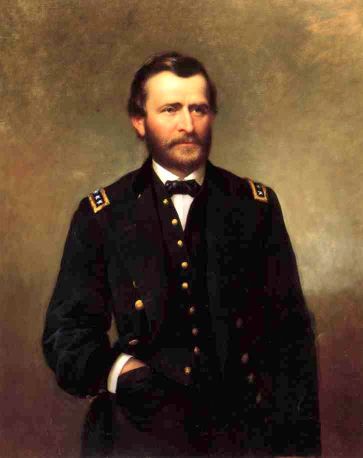
Ulysses S. Grant's Twenty-Nine Course Banquets and the Culinary Excesses of the Gilded Age

"The inauguration of Ulysses S. Grant in 1869 did more than usher into the Presidency an honored war hero," according to historian Poppy Cannon, it launched an era of opulence in the White House "the United States had not seen before and has seldom seen since."

Culinarily speaking, however, Grant’s first few months in office could hardly be described as extravagant. When the 46-year-old military hero moved into the White House, he brought with him a quartermaster from his army days to serve as cook. To her credit, Grant’s wife Julia refrained from complaining at first, but when it became clear that the "chef" viewed the White House dining room as little more than “an enlarged mess hall,” she replaced him with an Italian steward named Valentino Melah, who had catered for some of the finest hotels in the United States and "specialized in opulent banquents."

Describing a particular twenty-nine course State Banquet at the Grant White House, Emily Edson Briggs, a Washington newspaper columnist, wrote:

In the beginning of the feast, fruit, flowers, and sweetmeats grace the tables, while bread and butter only give a Spartan simplicity to the "first course," which is composed of a French vegetables oul, and according to the description by those who have tasted it, no soup, foreign or domestic, has ever been known to equal it.

The ambrosial soup is followed by a French croquet of meat...The third "course" of the dinner is composed of a fillet of beef, flanked on each side by potatoes the size of a walnut, with plenty of mushrooms to keep them company. The next course is...made up entirely of luscious leg of partridges, and baptized by a French name entirely beyond my comprehension.

It will readily be seen that a full description of the twenty-nine courses would be altogether too much for the healthy columns of a newspaper to bear, so we pass to the dessert...[which] is inaugurated by...a rice pudding [that] would make our grandmothers clap their hands with joy. After the rice pudding, canned peaches, pears, and quinces are served. Then follow confectionery, nuts, ice-cream, coffee, and chocolate...


Although President Grant enjoyed partaking in such opulent banquets, he retained a taste for more basic fare, no doubt shaped by his old soldier's days. One of his favorite breakfasts reportedly consisted of "broiled Spanish mackerel and steak, fried apples with bacon, buckwheat cakes, and a cup of strong black coffee." At lunch and dinner, he enjoyed such simple meals as roast beef with wheat bread and boiled hominy. And for dessert, historians tell us that "nothing ever pleased President Grant as much as simple rice pudding."


Although Grant's favorite recipe for Rice Pudding may have been lost to posterity, you can try this delicious recipe from simplyrecipes.com which is great to serve at breakfast or as a light dessert:

2 1/2 cups of whole milk
1/3 cup of uncooked short grain white rice
Pinch of salt
1 egg
1/4 cup dark brown sugar
1 teaspoon of vanilla extract
1/4 teaspoon of cinnamon
1/3 cup raisins

In a medium-sized saucepan, bring the milk, rice and salt to a boil over high heat. Reduce heat to low and simmer until the rice is tender, about 20-25 minutes. Stir frequently to prevent the rice from sticking to the bottom of the pan.

In a small mixing bowl, whisk together egg and brown sugar until well mixed. Add a half cup of the hot rice mixture to the egg mixture, a tablespoon at a time, vigorously whisking to incorporate.

Add egg mixture back into the saucepan of rice and milk and stir, on low heat, for 10minutes or so, until thickened. Be careful not to have the mixture come to a boil at this point. Stir in the vanilla. Remove from heat and stir in the raisins and cinnamon. Serve warm or cold and enjoy!

Thursday, June 4, 2015

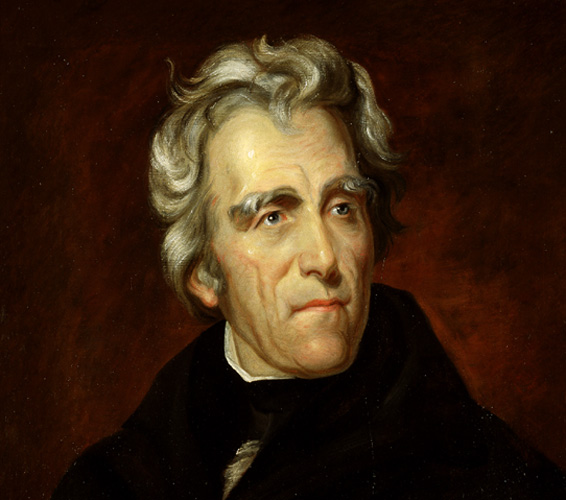
Andrew Jackson's "Great Cheese" Levee of 1837

In 1835, a New York farmer presented Andrew Jackson with a gigantic wheel of cheddar cheese. Weighing more than 1,400 pounds, it was four feet in diameter and stood nearly three feet high. Jackson let the gift sit, aging, for two years in the vestibule (lobby) of the White House.

A few weeks before leaving office, he invited the public to a reception in honor of George Washington’s birthday. According to newspaper accounts, more than 10,000 well-wishers swarmed to the White House, hoping to get a glimpse of the departing president – and a piece of the cheese!

When the last guests finally left, all that remained of the cheese were the pieces that had been ground into the carpet, smudged across the walls, and smeared on the satin couches and curtains.


If you're in the mood for something EXTRA cheesy for National Cheese Day today, this recipe for Extra Cheesy Cheddar Cheesy Bread is a great addition for large social gatherings and a cinch to make at the last minute!!

1 pound shredded sharp cheddar cheese
1 pound shredded Mozzarella cheese
1/4 cup sour cream
4 cloves garlic, minced
3/4 stick butter, softened
1 large loaf of French bread

In a bowl, mix together the cheeses. Stir in mayonnaise and sour cream. In a separate bowl, blend butter and garlic. Add butter mixture to the cheese mixture.

Preheat broiler. Slice bread in half horizontally and lay crust side down on an ungreased cookie sheet. Spread cheese mixture evenly over the bread. Place under the broiler until golden brown and slightly bubbly on top, about 5 minutes.

Remove from broiler and let sit for 4-5 minutes. Serve warm and enjoy!

Wednesday, May 13, 2015

Thomas Jefferson's Favorite Pet

So did you know that in the fall of 1772, when Thomas Jefferson was newly married and had a one-month old child, he purchased a family pet? "For five shillings he bought a mockingbird...the first in a procession of singing birds that would always be part of Jefferson's household."

Of all the feathered friends that Jefferson purchased, his favorite was a little mockingbird named Dick. In The First Forty Years of Washington Society, Margaret Bayard Smith, a prominent Washington socialite who was frequently invited to dine at the President's House, noted that Jefferson "cherished this bird with peculiar fondness, not only for its melodious powers, but for its uncommon intelligence and affectionate disposition, of which qualities he gave surprising instances."

According to Mrs. Smith, this unsually intelligent little bird

was the constant companion of [Jefferson's] solitary and studious hours. Whenever he was alone he opened the cage and let the bird fly about the room. After flitting for a while from one object to another, it would alight on his table and regale him with its sweetest notes...Often when he retired to his chamber, it would hop up the stairs after him, and while he took his siesta, would sit on his couch and pour forth its melodious strains.

So what in the world does this have to do with presidential history and food? Well, not a whole lot, except that Jefferson was so fond of Dick that he would often let him "perch on his shoulder and take its food from his lips!"

Although Jefferson didn't record the types of food he fed to his little feathered friend, experts say that mockingbirds generally feed on insects, wild fruit, weeds, and seeds. During the spring and summer, caterpillars, grasshoppers, ants, bees, and other insects make up most of their diet, and, during winter, they primarily eat vegetable matter. Because of their insect-eating habits, most people consider mockingbirds more helpful than harmful, and no one can dispute the fact that these birds "truly sing for their supper," something that Jefferson took great delight in throughout most of his extraordinary life!

Tuesday, May 5, 2015

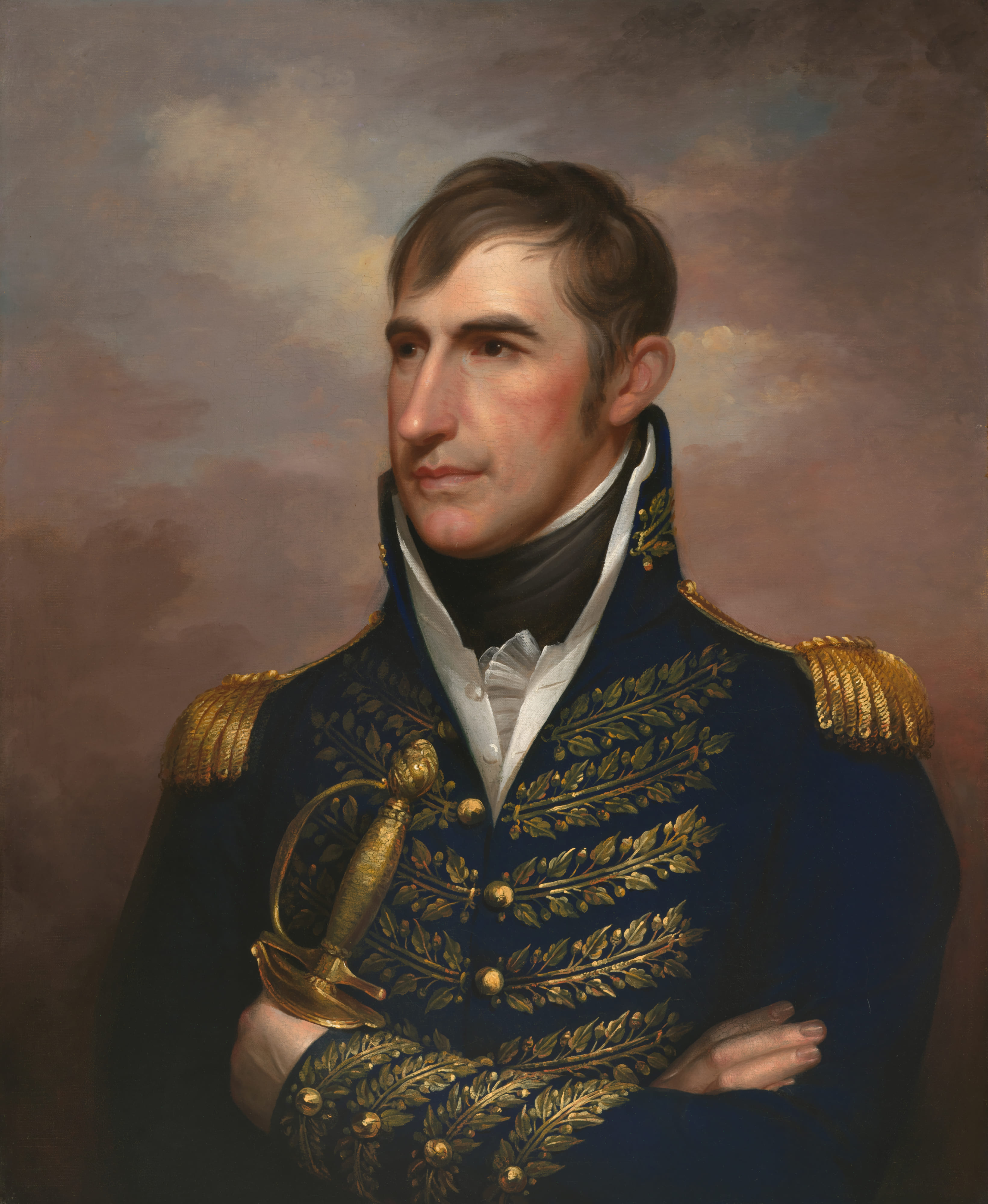
William Henry Harrison, the Election of 1840, and "Tippecanoe and Burgoo, Too!"

During William Henry Harrison's presidential campaign, hard cider flowed so fast that he became known as the “Hard Cider Candidate.” To feed his many rowdy supporters, Harrison's cooks served an election dish called Burgoo which was made by dropping chopped vegetables into warm squirrel stew.

Hailing his victory over Tecumseh thirty years earlier, Harrison’s supporters came up with the slogan, TIPPICANOE AND TYLER, TOO!” With its shrewd and heavy use of slogans, poems, ditties, and songs, and organized picnics, rallies, bonfires, and parades, the Election of 1840 is considered to be the first modern American presidential campaign!

Of course, the custom of plying potential voters with food and drink has been practiced by politicians since George Washington's day. But it reached its zenith in the campaign of 1840, when Harrison and his lieutenants "wined and dined the populace throughout the West."

The first step, according to historian Poppy Cannon, was to erect a log cabin, then "invite all eligible males to a feast of cornbread, cheese, and hard cider." Little by little, the feasts became more elaborate, "culminating in a spread in Wheeling, West Virginia, in which 30,000 hungry voters were served 360 hams, 20 calves, 1,500 pounds of beef, 1,000 pounds of cheese, 8,000 pounds of bread and 4,500 pounds of Burgoo."

Perfected in Kentucky and popular throughout the western territories, Burgoo was the perfect election dish since it could be easily expanded to feed large crowds simply by adding more water, vegetables and squirrel meat to it. Although squirrel was once deemed essential to this classic American dish, most modern recipes, like this one for Kentucky Burgoo from Emeril Lagasse, call for beef, lamb and chicken.

2 tablespoons vegetable oil
2 pounds boneless beef shank, trimmed of excess fat
2 pound boneless lamb shoulder, trimmed of excess fat
Salt and freshly ground black pepper
2 medium onions, quartered
4 cloves peeled garlic
1 medium fresh hot red pepper, quartered
Water, to cover
1 (3 to 4 pound) whole chicken or hen, cut into 8 pieces
2 cups chopped onions
2 cups medium diced carrots
1 cup medium diced green bell peppers
1 pound baking potatoes, like russets, peeled and medium diced
2 cups peeled, seeded and chopped tomatoes
1/2 pound fresh green beans, strings removed and cut into 2-inch pieces
2 cups fresh corn kernels
2 tablespoons light brown sugar
1 tablespoon finely chopped fresh parsley leaves
Serving suggestions:
8 fresh cornbread muffins, hot
8 fresh biscuits, hot

In a large, heavy pot, over medium heat, add the oil. Season the beef and lamb with salt and pepper. When the oil is hot, sear the meat, in batches, for a couple of minutes on all sides. Add the onions, garlic, cloves, and pepper. Cover with water. (about 3 to 4 quarts). Bring to boil, reduce the heat to medium low, and simmer until tender, about 3 hours.

Season the chicken with salt and pepper. During the last 1 1/2 hours of cooking, add the chicken. Remove the meat, chicken and vegetables from the pan, set aside and cool. Discard the vegetables. Add the remaining vegetables and brown sugar to the pot of hot liquid. Continue to cook for 1 hour.

After the meat has cooled, cube the beef and lamb into 1-inch pieces. Remove the skin and bones from the chicken and discard. Dice the chicken into 1-inch pieces. Add the cubed meat and chicken to the vegetables and continue to cook for 30 minutes. Re-season if necessary. Ladle the stew into serving bowls. Serve with hot cornbread or biscuits. Garnish with parsley.

A LITTLE BACKGROUND: “Tippecanoe and Tyler, Too!” was originally a song written for Harrison and his running mate, John Tyler. Harrison was known as “Old Tippecanoe” for his military victory over the Shawnee chieftan Tecumseh at the Battle of Tippecanoe in 1811. Thirty years later, Whigs used Harrison’s nickname in a campaign song that portrayed Harrison as a “simple, homespun hero” in contrast to the Democratic candidate, Martin Van Buren, who was depicted as a wealthy elitist. Here are some of the lyrics:

Sure, let 'em talk about hard cider
and log cabins too
't'will only help to speed the ball
for Tippecanoe and Tyler too
and with him we'll beat Little Van, Van
Van is a used up man
and with him we'll beat Little Van…


Although Harrison wasn't born in a log cabin, he was the first to use one as a symbol to suggest that he was a man of humble origins. Other candidates followed his example, making the idea of a log cabin (and a non-wealthy background) a recurring theme in presidential elections for the next half century.

Credit: William Henry Harrison, oil on canvas by Rembrandt Peale (National Portrait Gallery, Smithsonian Institution, Washington D.C.)

Thursday, April 23, 2015

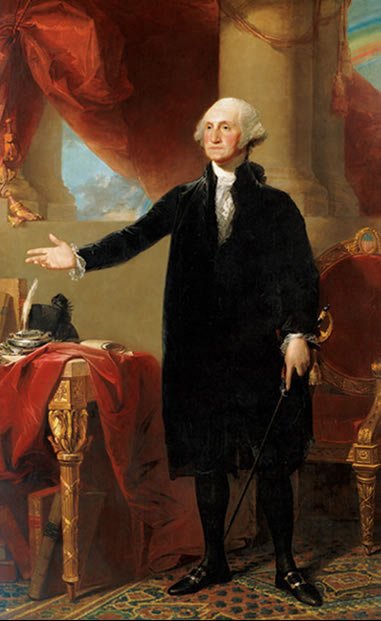
George Washington's Fishery at Mount Vernon

So did you know that before he became president, George Washington ran a successful fishery in the Potomac River near his Mount Vernon home? During the annual spring run, Washington's slaves would catch and harvest more than a million herring, shad, striped bass, oysters, crabs, and clams.

The Potomac River, of course, flows into the Chesapeake Bay, the largest estuary in the United States. Back in George’s day, it was known for its great abundance of shellfish and fish. Today, it's not nearly as productive due to overharvesting, pollution, runoff, and disease, but it still yields more fish and shellfish (about 500 million pounds each year) than any other estuary in the United States.

What are estuaries? Estuaries are typically defined as partially enclosed coastal bodies of water that are formed where freshwater from rivers and streams mix with salt water from an ocean. Some estuaries, like the Chesapeake Bay and the lower part of the Hudson River, were formed thousands of years ago when melting glaciers caused sea levels to rise and flood low lying valleys and lands.

Others, like those found in Northern Europe, Alaska and Canada, were formed during periods of glaciation. Still others, like the San Francisco Bay, are known as tectonic estuaries that were formed by the buckling or folding of land surfaces along major fault lines. Regardless of how they were formed, estuaries are critical for marine life and have provided an important source of food for human beings since the beginning of recorded time.

So what do estuaries have to do with George Washington and food? A lot, if you consider the fact that by the time he became president, George had lost almost all of his teeth and had to eat soft foods, like hoe cakes, mashed potatoes, and seafood, throughout most of his adult life.

Although no recipes for preparing shad are contained in Martha Washington's Booke of Cookery, historians say that cooks at Mount Vernon were "undoubtedly so familiar with it that directions for preparation were unnecessary. Like boiling eggs, cooking shad was something everyone could do!"

If you'd like to whip up some fresh shad this spring, here's a simple and simply delicious recipe for Broiled Shad with Thyme to try from Food and Wine magazine:

2 pounds shad fillets, cut to make 4 pieces
1 tablespoon olive oil
3/4 teaspoon chopped fresh thyme
1/2 teaspoon salt
1/8 teaspoon fresh-ground black pepper
1 tablespoon butter
4 lemon wedges, for serving

Heat the broiler. Lightly oil a broiler pan or baking sheet. Put the fish in the pan and rub the surface with the oil. Sprinkle with the chopped or dried thyme, the salt, and pepper. Dot with the butter. Broil the fish until golden brown and just done, about 4 minutes for 3/4-inch-thick fillets. Decorate with the thyme sprigs, if using. Serve with the lemon wedges.

FAST FACT: By the time he became president, George had lost all but one of his natural teeth. Because of constant pain from ill-fitting dentures, he had to eat soft foods throughout most of his adult life. Contrary to popular belief, George didn't wear wooden dentures. Instead, a talented dentist named John Greenwood hand-crafted his dentures from elephant ivory, hippopotamus tusks, and parts of horse and donkey teeth!!

And now for my submission guidelines at Publisher's Marketplace!

Wednesday, April 22, 2015

Andrew Jackson Inaugural Orange Whiskey Punch

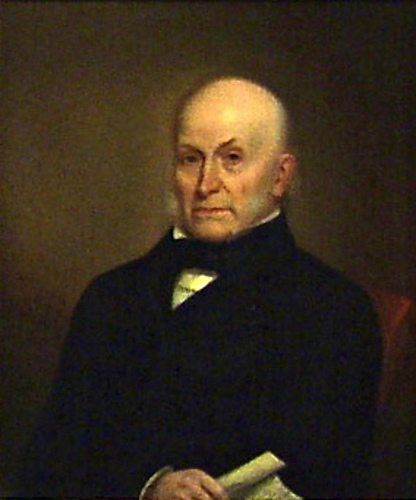
When John Quincy Adams took the oath of office in March, 1825, it was under a cloud of controversy. The election of 1824 had been a bitterly contested four-man race between Andrew Jackson, Henry Clay, William Crawford, and Adams.

Since no candidate had won a majority of electoral votes, the election was thrown into the House of Representatives where Clay, as Speaker of the House, threw his support to Adams, even though Jackson had won the most popular and electoral votes. Adams then appointed Clay as Secretary of State. Outraged and feeling cheated out of the White House, Jackson called the deal a “Corrupt Bargain to "cheat the will of the people."”


With these accusations hanging over his head, Adams faced problems from the start and his four years in office weren't easy ones. Although his intelligence,family background, and experience could have made him a great president, he lacked the charisma needed to create a base of loyal supporters.

Not surprisingly, he lost the election of 1828 in a landslide, and when Andrew Jackson was inaugurated in 1829, 20,000 of his loyal supporters who believed he had been cheated out of the White House four years earlier, descended upon Washington, eager to celebrate the long-delayed victory of their champion.

According to food historian Poppy Cannon, Jackson's inauguration "sparked a celebration that did everything but set fire to the White House." Thousands of rowdy fans poured into the building and "little thought was given to the delicate French furniture, elegant draperies, and fine china" as ice cream, punch, ices and cakes "were gobbled up as fast they appeared on long serving tables."

In a letter to her sister, Margaret Bayard Smith, a prominent Washington socialite, described the chaos of Jackson's inaugural festivities this way:

But what a scene did we witness! The Majesty of the People had disappeared, and a rabble, a mob, of boys, negros, women, children, scrambling fighting, romping. What a pity, what a pity! No arrangements had been made, no police officers placed on duty, and the whole house had been inundated by the rabble mob...

Cut glass and china to the amount of several thousand dollars had been broken in the struggle to get the refreshments, punch and other articles had been carried out in tubs and buckets, but had it been in hogsheads it would have been insufficient...

Ladies fainted, men were seen with bloody noses, and such a scene of confusion took place as is impossible to describe…This concourse had not been anticipated...Ladies and gentlemen only had been expected at this Levee, not the people en masse. But it was the People's day, and the People's President, and the People would rule!


Another observer described the day's events this way:

Orange-punch by barrels full was inside, but as the waiters opened the door to bring it out, a rush would be made, the glasses broken, the pails of liquor upset, and the most painful confusion prevailed. To such a degree was this carried, that tubs of punch were taken from the lower story into the garden to lead off the crowds from the rooms.

Although no one knows how those waiters prepared the punch that day, you can get some great whiskey tips from eatdrinkfrolic.com and The Wall Street Journal scoured some ninteeenth century cookbooks and provided this adapted recipe for Inaugural Orange Punch that's "easy to make by the bucketful" if you've got a mob to entertain today!


3 parts fresh orange juice
1 part fresh lemon juice
1 part Mulled Orange Syrup*
1 part dark rum
1 part cognac
2 parts soda water

Mulled Orange Syrup: Combine 1 cup sugar with 1 cup water and heat to a boil, stirring to dissolve the sugar. Reduce heat to a low simmer. Add the peel from an orange and mulling spices (a couple of cinnamon sticks, some whole cloves and allspice berries). After 15 minutes, remove from heat and let it sit for several hours. Strain.

Combine Mulled Orange Syrup and all other ingredients in a punch bowl with a large block of ice. Serve in punch cups with a little crushed ice. Add a dash of Angostura bitters to each glass and enjoy!

For 5 Wild & Crazy Presidential Elections and Inaugurations, click here!

Tuesday, April 21, 2015

John Quincy Adams, the Corrupt Bargain, and the Art of Dinner Conversation

When John Quincy Adams took the oath of office in 1825, it was under a cloud of controversy. The election of 1824 had been a bitterly contested four-man race between Andrew Jackson, Henry Clay, William Crawford, and Adams.

Since no candidate had won a majority of electoral votes, the election was thrown into the House of Representatives where Clay, as Speaker of the House, threw his support to Adams, even though Jackson had won the most popular and electoral votes. Adams then quickly appointed Clay as Secretary of State. Outraged and feeling cheated out of the White House, Jackson and his supporters called the deal a “Corrupt Bargain to "cheat the will of the people."”

With these accusations hanging over his head, Adams faced problems from the start. Aware of the fact that “two-thirds of the whole people” did not want him to be president, Adams promised in his Inaugural Address to make up for his lack of support with “a heart devoted to the welfare of our country.”

But his four years in office weren't easy ones. Although his intelligence, family background and experience should have made him a great president, John lacked the charisma needed to create a base of loyal supporters.

Nevertheless, he and his wife Louisa hosted many dinner parties at the White House, as required. But his cold personality had a chilling effect on others and guests seated near the president at dinner often said that he had a hard time engaging in casual conversation. Aware of his inability to make small talk, John wrote this in his diary:

I went out this evening in search of conversation, an art of which I never had an adequate idea. Long as I have lived in the world, I never have thought of conversation as a school in which something was to be learned. I never knew how to make, control, or to change it.

I am by nature a silent animal, and my dear mother’s constant lesson in childhood, that children should be seen and not heard, confirmed me irrevocably in what I now deem a bad habit. Conversation is an art of the highest importance, a school in which, for the business of life, more may perhaps be learnt than from books. It…consists more in making others talk than in talking. Therein has been, and ever will be, my deficiency – the talent of starting the game.


Like his father, John Quincy Adams was a very intelligent man, but he lacked personal warmth and his critics called him “a chip off the old iceberg!”

FAST FACT: Adams’ policies favoring a strong federal government angered many southern slave holders who feared that that any expansion of federal power might interfere with slavery. His Indian policies also cost him supporters. Like Jefferson and Monroe, Adams wanted to remove Native Americans west of the Mississippi River, but believed that the government should honor and uphold Indian treaties and purchase (rather than forcibly or fraudulently take) Indian lands.

Here's a brief excerpt from my Publishers Marketplace agent profile - and for more on my manuscript wish list and "How to Submit" click here!

Thursday, April 9, 2015

The Last Dinner on the Titanic

On April 10, 1912, the RMS Titanic set sail from Southampton England on her maiden voyage to New York. Known as the largest, most luxurious ocean liner ever built, its passengers were a mix of the world's wealthiest basking in opulent, first-class accommodations and poor immigrants packed into steerage.

Four days into her journey, at 11:40 p.m. on April 14th, the Titanic struck an iceberg in the icy waters of the North Atlantic. One crew member later compared the sound of the collision to "the tearing of calico, nothing more." But the force of the impact tore apart faulty rivets along the hull, filling the ship's interior with some 39,000 tons of seawater before its sinking.

As the bow plunged deeper into the water, passengers frantically scrambled to the stern. Seventeen-year-old Jack Thayer witnessed the sinking from an overturned lifeboat. "We could see groups of the almost fifteen hundred people still aboard," he recalled, "clinging in clusters or bunches, like swarming bees; only to fall in masses, pairs or singly, as the great after part of the ship, two hundred and fifty feet of it, rose into the sky, till it reached a sixty-five or seventy degree angle." Two hours and forty minutes after striking the iceberg, the last of the Titanic slid slowly beneath the dark surface of the water.

Of course, the sinking of the Titanic is the most famous maritime disaster in modern history and has been chronicled in countless books, novels, plays, TV shows, and movies. What isn't so well-known, however, is that the Titanic carried some of the most advanced culinary facilities afloat, with elegant dining saloons, outdoor cafes, and luxurious first-class dining rooms that rivaled the ritziest restaurants in Paris, London,and New York.

Although a huge staff worked round the clock to serve more than 6,000 meals each day, only two menus were recovered from the Titanic for the final night of its doomed voyage. One of them - the first-class menu - tells us that the meal began as it did every night, with hors d’ouevers and oysters, followed by Consommé Olga, Cream of Barley Soup and Poached Salmon garnished with cucumbers and Mousseline Sauce.

After this came Filet Mignons Lili, Saute of Chicken Lyonnaise, Lamb with Mint Sauce, Roast Duckling, and Sirloin of Beef with Chateau Potatoes, Creamed Carrots, Boiled Rice and Parmentier Potatoes. Then came Punch Romaine with Roast Squab and Cress followed by Cold Asparagus Vinaigrette, Pate de Foie Gras and Celery. If passengers had any room left for dessert, they could choose from such items as Waldorf Pudding, Peaches in Chartreuse Jelly, Chocolate and Vanilla Eclairs, and French Ice Cream.

Although it might be a bit macabre, some Titanic enthusiasts enjoy recreating the last meals on the ship, and Rick Archbold's The Last Dinner on the Titanic presents 50 recipes based on the dishes that appeared on its menus. One of the most delicious items from a first-class dinner menu is Chicken Lyonnaise. If you'd like to get a taste of what some first-class passengers ate on that fateful night, here's the recipe to try:

1/3 cup all-purpose flour
2 tbsp chopped fresh thyme (or 1 tbsp dried)
1/2 tsp each salt and pepper
6 boneless chicken breasts
1 egg, beaten
3 tbsp vegetable oil
2 onions, thinly sliced
1 clove garlic, minced
1/3 cup white wine
1 cup chicken stock
2 tsp tomato paste
Pinch granulated sugar

In sturdy plastic bag, shake together flour, 1 tbsp of the thyme (or 1 1/2
tsp if using dried), salt, and pepper. One at a time, dip chicken breasts
into egg, and then shake in flour mixture. In large deep skillet, heat 2 tbsp of the vegetable oil over medium-high heat. Place chicken in pan, skin side down. Cook, turning once, for 10 minutes or until golden brown. Remove from skillet and place in 225-degree F oven.

Reduce heat to medium; add remaining oil to skillet. Stir in onions, garlic,
and remaining thyme; cook, stirring often, for 5 minutes or until onions are translucent. Increase heat to medium-high and continue to cook onions, stirring often, for 5 minutes or until golden brown. Add wine to pan; cook, stirring to scrape up any brown bits, for about 1 minute of until reduced by half. Stir in stock, tomato paste, and sugar. Boil for 2 minutes or until beginning to thicken. Return chicken to pan, turning to coat, and cook for 5 minutes or until juices from chicken run clear.

FAST FACT: In the wake of the disaster, King George sent a cablegram to President William Howard Taft, which read: "The Queen and I are anxious to assure you and the American nation of the great sorrow which we experienced at the terrible loss of life that has occurred among the American citizens, as well as among my own subjects, by the foundering of the Titanic. Our two countries are so intimately allied by ties of friendship and brotherhood that any mis fortunes which affect the one must necessarily affect the other, and on the present terrible occasion they are both equally sufferers."

In response, Taft sadly wrote, "In the presence of the appalling disaster to the Titanic the people of the two countries are brought into community of grief through their common bereavement. The American people share in the sorrow of their kinsmen beyond the sea. On behalf of my countrymen I thank you for your sympathetic message. "WILLIAM H. TAFT."

Tuesday, March 31, 2015

A Brief History of the White House Easter Egg Roll


Some historians claim that Dolley Madison originally suggested the idea of a public egg roll on White House grounds while others tell stories of egg-rolling parties dating back to Abraham Lincoln's administration. What is clear, however, is that, beginning in the 1870s, Washingtonians from all social levels celebrated Easter Monday on the west grounds of the U.S. Capitol where children rolled brilliantly dyed hard-boiled eggs down the terraced lawn.

This practice ended in 1876, however, when lawmakers complained that eggs shells were destroying the grass. To resolve this problem, a group of party-poopers in Congress passed the Turf Protection Act which banned egg rolls from Capital grounds, and President Ulysses S. Grant signed the bill into law later that year. Fortunately, the tradition was revived in 1878 when First Lady Lucy Hayes invited children of all ages to roll Easter eggs on the White House lawn, a tradition that has continued ever since.

According to this article in Time Magazine:

Some 53,000 people attended the egg roll in 1941...though in modern times the number is generally under 20,000. Calvin Coolidge's wife mingled through crowds while holding a pet raccoon named Rebecca, while Mrs. Warren G. Harding put on the uniform of her beloved Girl Scouts for the event.

Showcasing modern technology, Eleanor Roosevelt welcomed crowds and addressed listeners across the country via radio in 1933, while the Clinton administration proudly announced that 1998's egg roll would be the first broadcast on the Internet.


In 2016, the Obamas hosted the 138th annual White House Easter Egg Roll on Monday, March 28, when more than 35,000 people joined them on the South Lawn for games, stories, and, of course, the traditional egg roll.


And while the menu for this year's traditional White House Easter Brunch (if there is one!) hasn't been released, the Chicago Sun-Times reported that menu items in 2008 included Honey Baked Ham with Maple Mustard Sauce, Eggs Benedict, spinach salad, waffles, sauteed asparagus, biscuits and cheese grits.

If you'd like whip up some Eggs Benedict for your Easter brunch this Sunday, here's a simple and simply delicious recipe to try from the Food Network:


1 teaspoon vinegar
4 eggs
4 thin slices Canadian bacon
2 English muffins

Hollandaise sauce:

3 egg yolks
1 tablespoon hot water
1 tablespoon lemon juice
1 stick unsalted butter, melted and hot
Salt and pepper
Paprika and chopped parsley

In large skillet, bring 2 inches of water and vinegar to a boil. Crack one egg into a glass. Reduce water to a simmer and pour egg into water. Add remaining eggs and cook for 4 minutes. Remove eggs with a slotted spoon and drain. In a non-stick skillet heat the bacon until warm. Toast the English muffins until golden.

For sauce: Place yolks, water and lemon juice into blender. Blend for 1 minute. With blender running, pour butter through open hole of lid. Season with salt and pepper. To assemble: Top each muffin with bacon and a poached egg. Pour the warm sauce over and garnish with paprika and the chopped parsley.

FAST FACT: The Easter Egg Roll was held at the White House every year in the 20th century except during World War I, World War II, and the Truman Renovation of the White House, when it was moved to nearby locations or cancelled. Ronald Reagan was the first president to hide autographed eggs for children to find and Richard Nixon and First Lady Pat Nixon were the first to include the Easter Bunny in the festivities. Years earlier, First Lady Grace Coolidge made an appearance at the Easter Egg Roll in the 1920s with her pet racooon Rebecca!

Monday, March 23, 2015

Thomas Jefferson's Vegetable Garden and English Peas with Fresh Mint

So did you know that Thomas Jefferson's vegetable garden at Monticello was one thousand feet long and contained more than 250 varieties of more than 75 species of plants from around the world?

Tended by elderly slaves, Jefferson’s garden was divided into twenty-four squares, or growing plots, arranged according to which part of the plant was to be harvested, be it roots (carrots and beets), leaves (lettuce and cabbage) or fruits (tomatoes, peas, and beans). Among the many exotic "new" plants grown there were beans and salsify collected by the Lewis and Clark expedition, figs from France, peppers from Mexico, and broccoli and squash imported from Italy.

As methodical as a botanist, Jefferson recorded the results of his planting experiments in his Garden Book, noting such events as the dates that seeds were planted, when leaves appeared, and when his favorite vegetables were ready to eat! Biographers say that Jefferson’s favorite vegetables included Spanish tomatoes, turnip greens, and French Beans.

He was also fond of the English pea, and, by staggering the time of their planting, he and his many dinner guests were able to enjoy them from mid-May through mid-July. According to historians at Monticello:

Jefferson might have taken special note of the English pea because of an annual neighborhood contest to see which farmer could bring to table the first peas of spring. The winner would host the other contestants in a dinner that included the peas.

Though Jefferson's mountaintop garden, with its southern exposure to warmth and light, should have provided an advantage for the contest, it seems that the contest was almost always won by a neighbor named George Divers.

As Jefferson's grandson recalled: "A wealthy neighbor [Divers], without children, and fond of horticulture, generally triumphed. Mr. Jefferson, on one occasion had them first, and when his family reminded him that it was his right to invite the company, he replied, 'No, say nothing about it, it will be more agreeable to our friend to think that he never fails.'"


Given his fondness for peas, it's not surprising that these tiny green vegetables often appeared on Jefferson's table, both at Monticello and at the newly built President's House in Washington D.C. In her popular 1824 cookbook, The Virginia Housewife, Mary Randolph (a relative of Jefferon's) included a recipe for preparing this simple, slightly-minty side dish:

To have them in perfection, they must be quite young, gathered early in the morning, kept in a cool place, and not shelled until they are to be dressed; put salt in the water, and when it boils, put in the peas; boil them quick twenty or thirty minutes, according to their age; just before they are taken up, add a little mint chopped very fine, drain all the water from the peas, put in a bit of butter, and serve them up quite hot.

If you'd like to whip up some English Peas with today, here's a simple and simply delicious recipe from epicurious.com

1 spring onion, sliced
2 tablespoons olive oil
2 cups English peas, shelled (about 12 ounces)
6 mint leaves, torn
Salt

Sauté the spring onion in two tablespoons olive oil over medium-high heat. Add the shelled peas, a pinch of salt, and enough water to barely cover. Cook over high heat for 2 minutes, then add the torn mint leaves. Continue cooking until the peas are tender, a few more minutes. Add more salt if needed.

FAST FACT: When English colonists arrived in America, "pease" were one of the first crops to be planted. This makes sense as peas are nutritious and required little storage space on ships. They would also keep for long periods of time, as reflected in the children's rhyming song "Pease Porridge Hot." Maybe you remember the lyrics: Pease porridge hot/Pease porridge cold/Pease porridge in the pot/Nine days old.

Monday, March 16, 2015

Mamie Eisenhower, the Election of 1952, and St. Patrick's Day Leprechauns in the State Dining Room

During the 1952 presidential campaign, Dwight Eisenhower's wife Mamie was by his side every step of the way, delighting crowds with her quick wit and natural charm. Campaign songs were written about her and colorful buttons and posters proclaimed, “I LIKE IKE, BUT I LOVE MAMIE.”

One reason Mamie was so popular as First Lady was that she shared the country’s interests and middle-class values. She watched soap operas, played board games, and encouraged White House cooks to use boxed cake mixes and Jell-O.

Even her personal tastes reflected those of the nation. She was a fan of such hit TV shows as “I Love Lucy” and "The Milton Berle Show" and let it be known that she and Ike liked to take their dinner on trays while watching TV in the private family quarters at the White House. As First Lady, Mamie was proud of her role as a traditional housewife, and was famously quoted as saying, "Ike runs the country, I turn the pork chops."

But Mamie did occasionally break with tradition in her entertaining as First Lady. According to White House historians, she regularly decorated the State Dining Room each holiday season with Halloween skeletons, witches and jack-o-lanterns, and, on St. Patrick's Day, with tiny leprechauns and green ribbons.

The Eisenhowers also entertained more royalty and heads-of-state than most previous administrations. Among their guests were the emperor of Ethiopia; the presidents of Panama, Haiti, Turkey, Italy, and Ireland; the rulers of Greece, Nepal, and Denmark, as well as Nikita Khrushchev and Winston Churchill.

The highlight of the 1957 social season, however, was the round of festivities celebrating Elizabeth II’s first trip to Washington, D.C., shortly after she became Queen of England. In addition to hosting reciprocal state dinners and exchanging diplomatic gifts, the president later received a personal recipe from the queen for English Drop Scones.

Yet for all its glamour and excitement, the Queen’s visit came at a challenging time for Eisenhower. In September of 1957, racial tensions over desegregation had exploded in violence in Little Rock, Arkansas. Then came news in early October that the Soviet Union had orbited the first space satellite (Sputnick), causing many Americans to fear that the United States was losing both the "space race" and the Cold War.

Nevertheless, the Eisenhowers’ "charismatic personalities and traditional middle-class values allowed them to maintain the affection of an overwhelming majority of Americans" throughout the 1950s and well into their retirement.

Sunday, March 8, 2015

Harry Truman's Food Conservation Speech and Meatless Monday Tuna Noodle Casserole

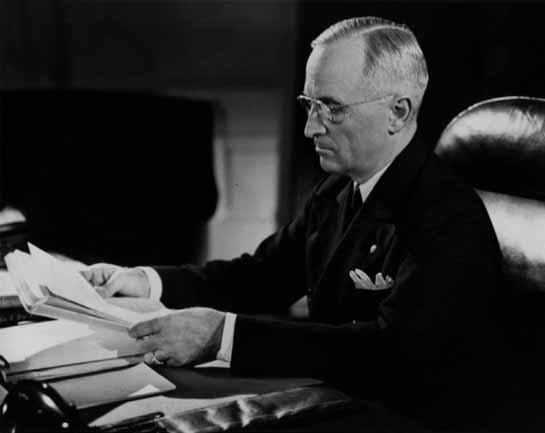
On October 5, 1947, Harry Truman made the first televised presidential address from the White House. In it, he asked Americans to reduce their use of grain in order to help feed starving people overseas.

At the time of his “Food Conservation Speech,” Europe was still recovering from the devastation of World War II and suffering from widespread famine. Truman asked farmers to reduce their use of grain and asked the public to avoid meat on Mondays, eggs and poultry on Thursdays, and to "save a slice of bread each day."

Within days, restaurants all over the nation had pledged their support while the New York Times invited readers to write in for a free pamphlet of meatless recipes, including a “canned salmon bake topped with crushed potato chips.” For his part, Truman lunched on a “symbolic cheese soufflé.”

Tuna Casserole was another popular "Meatless Monday" dish. If you'd like to whip one up for dinner tonight, here's a quick and simple, no-nonsense recipe adapted from Bess Truman’s handwritten recipe for Tuna Noodle Casserole:

12 ounces elbow macaroni
1 can white albacore tuna, drained
1 can cream of mushroom soup
1/3 cup milk
1/2 cup cheddar cheese
1/3 cup bread crumbs
3 tablespoons butter
Salt and pepper to taste

Preheat oven to 375°F. Grease a 3-quart casserole dish. In a medium saucepan, cook the noodles until tender, about 8-10 minutes. Remove and drain well. In a medium bowl, combine the noodles, tuna, soup, and milk. Pour mixture into the prepared baking dish.

In a small saucepan, melt butter over low heat. Mix together bread crumbs and butter in a small bowl, then sprinkle bread crumb mixture and cheese over the top. Bake for 20 minutes, or until the bread crumbs are slightly browned and golden on top. Serve warm and enjoy!

Wednesday, March 4, 2015

Dolley Madison Fresh Strawberry Ice Cream!

Legend has it that in the early nineteenth century, a freed slave named Sallie Shadd went into her family’s catering business in Wilmington, Delaware. Sallie supposedly achieved fame there for a fabulous new dessert sensation she created with sugar, fruit and frozen cream.

When Dolley Madison heard about this new dessert, she supposedly travelled to Delaware to try it -- and she must have loved it because a magnificent dome of pink ice cream was served at President Madison’s second Inaugural Ball in 1813, and ice cream often appeared as the official dessert on the White House menus during her husband's two terms of office.

If you'd like to whip up some Fresh Strawberry Ice Cream this week, here's a tasty recipe to try from epicurious.com

1 3/4 cups heavy cream
3 (3- by 1-inch) strips fresh lemon zest
1/8 teaspoon salt
2 large eggs
3/4 cup sugar
1 lb strawberries (3 cups), trimmed and quartered
1 tablespoon fresh lemon juice

Special equipment: an ice-cream maker and an instant-read thermometer

Combine cream, zest, and salt in a heavy saucepan and bring just to a boil. Remove from heat and discard zest. Whisk eggs with 1/2 cup sugar in a bowl, then add hot cream in a slow stream, whisking. Pour back into saucepan and cook over moderately low heat, stirring constantly, until slightly thickened and an instant-read thermometer registers 170°F (do not let boil).

Immediately pour custard through a fine sieve into a metal bowl, then cool to room temperature, stirring occasionally. Chill, overed, at least until cold, about 2 hours, and up to 1 day.

While custard is chilling, purée strawberries with remaining 1/4 cup sugar and lemon juice in a blender until smooth, then force through fine sieve (to remove seeds) into chilled custard. Stir purée into custard. Freeze in ice-cream maker, then transfer to an airtight container and put in freezer to harden.

Tuesday, March 3, 2015

FDR, the Election of 1944, and Feeding Fala

On November 10, 1940, a cute black Scottish terrier puppy arrived at the White House as a gift for President Franklin Delano Roosevelt and his family. At first, the dog’s name was "Big Boy" but the president soon renamed him “Murray the Outlaw of Falahill” after a distant Scottish ancestor.

One of the most famous presidential pets, Fala, as he was nicknamed, went just about everywhere with Roosevelt and quickly became part of his public image. In her Pulitzer-Prize-winning biography, No Ordinary Time, presidential historian Doris Kearns Goodwin writes:

Fala accompanied the president everywhere, eating his meals in Roosevelt's study, sleeping in a chair at the foot of his bed. Within a few weeks of his arrival, the puppy was sent to the hospital with a serious intestinal disturbance. He had discovered the White House kitchen, and everyone was feeding him. When he came home, Roosevelt issued a stern order to the entire White House staff: "Not even one crumb will be fed to Fala except by the President." From then on, Fala was in perfect health.

While being pampered at the White House and traveling with Roosevelt, Fala had the good fortune to meet many famous political leaders, including British Prime Minister Winston Churchill and Mexican President Manuel Camacho.

Thrust as he was into the national spotlight, it’s perhaps not surprising that Fala became embroiled in a political controversy during the Election of 1944. You see, earlier that year, Fala had faithfully accompanied his master on a diplomatic trip to the Aleutian Islands. Shortly after Roosevelt returned home, a rumor began circulating that Fala had been accidentally left behind on one of the islands and that the Navy had to send a destroyer back to retrieve him.

Capitalizing on the rumor, Republicans accused Roosevelt of spending millions of taxpayers' dollars in the effort to get his beloved dog back. Responding sharply but light-heartedly to the accusation, FDR delivered his famous “Fala Speech” at a campaign dinner in Washington D.C. before the International Brotherhood of Teamsters, Chauffeurs, Warehousemen and Helpers of America. These are some of the remarks that Roosevelt made that evening:

These Republican leaders have not been content with attacks on me, or my wife, or on my sons. No, not content with that, they now include my little dog, Fala. Well, of course, I don't resent attacks, and my family doesn't resent attacks — but Fala does resent them.

You know, Fala is Scotch, and being a Scottie, as soon as he learned that the Republican fiction writers in Congress and out had concocted a story that I'd left him behind on an Aleutian island and had sent a destroyer back to find him — at a cost to the taxpayers of two or three, or eight or 20 million dollars — his Scotch soul was furious.

He has not been the same dog since. I am accustomed to hearing malicious falsehoods about myself — such as that old, worm-eaten chestnut that I have represented myself as indispensable. But I think I have a right to resent, to object, to libelous statements about my dog.


Sadly, less than a year after he delivered that speech, Roosevelt died. In her autobiography, Roosevelt's wife Eleanor described her recollections of Fala's reaction to his best friend's death:

his legs straightened out, his ears pricked up and I knew that he expected to see his master coming down the drive as he had come so many times. Later, when we were living in the cottage, Fala always lay near the dining-room door where he could watch both entrances just as he did when his master was there...Fala accepted me after my husband's death, but I was just someone to put up with until the master should return.

FAST FACT: Fred D. Fair was Roosevelt’s porter on the Ferdinand Magellan, the presidential Pullman rail car. In a Washington Post article, Mr. Fair recalled his memories of the president's beloved dog in a letter titled "Feeding Fala": I served him his meals, made his bed. We would serve the president highballs before dinner. Before the meal, I would fix Fala's food. He would never go into the dining room until you called him. We'd serve him in there. But you couldn't serve Fala yourself, oh no. You had to hand it to the president, and he'd feed Fala out of his hand. Many times, I remember dignitaries and other important folks waiting for their supper until Mr. Roosevelt finished feeding Fala."

Sunday, February 22, 2015

Herbert Hoover, a "Chicken in Every Pot" and the Great Depression

During the Great Depression, many Americans couldn't afford to pay their mortgages and lost everything they owned. Suddenly homeless, millions of American families had no choice but to find shelter in shanty towns, or Hoovervilles, which sprang up throughout the United States in the early 1930s.

In the popular musical Annie, which takes place in a Hooverville beneath the 59th Street Bridge in New York City, there's a song called “We'd Like to Thank You, Herbert Hoover." In it, the chorus blames President Hoover for all the hardships they've endured as a result of the Great Depression. Maybe you've heard the lyrics:

[ALL]
Today we're living in a shanty
Today we're scrounging for a meal

[SOPHIE]
Today I'm stealing coal for fires
Who knew I could steal?...

[ALL]
We'd like to thank you: Herber Hoover
For really showing us the way
We'd like to thank you: Herbert Hoover
You made us what we are today...

In ev'ry pt he said "a chicken"
But Herbert Hoover he forgot
Not only don't we have the chicken
We ain't got the pot!


In the Election of 1932, Hoover never actually uttered the phrase “a chicken in every pot and two automobiles in every back yard,” but the Republican Party did run ads suggesting that this was what Americans could expect if he was elected.

As far as modern campaign slogans go, "A Chicken in Every Pot" sounds rather modest. But "the words rang hollow during the Great Depression that blighted Hoover's presidency and shook the economic foundations" of the nation to the core. As one observer remarked, daily bread and shoes without holes were hard enough to come by, let alone stewing chickens and automobiles.

Nevertheless, while millions of Americans were scrounging for food in the streets, Hoover and his wife "Lou" were entertaining on a scale not seen at the White House in years. According to historian Poppy Cannon, "The watchword had been economy while the Coolidges lived at the White House. Now it was elegance. Mrs. Hoover never questioned the amount of food consumed or its cost. Her only requirement was that it be of the best quality, well cooked and well served.”

Needless to say, this infuriated many Americans, and, in the Election of 1932, Franklin Delano Roosevelt won in a massive landslide, ushering in decades of Democratic dominance in presidential elections. Meanwhile, Hoover left the White House in disgrace, "having incurred the public's wrath for failing to lift the nation out of the Great Depression."

Wednesday, February 18, 2015

Civil War Rations and Hardtack Crackers

During the Civil War, rations generally consisted of twelve ounces of bacon or pork or one pound of fresh or salted beef; beans or peas; rice or hominy; sugar, coffee or tea and hard biscuits or crackers known as Hardtack. Hardtack was usually square or rectangular in shape with tiny holes baked into it, similar to the soda crackers we're familiar with today.

According to historians, factories in the north “baked thousands of hardtack crackers every day, packed them in crates, and shipped them out by wagon or rail.” Sometimes the hardtack didn't get to the soldiers until weeks, or even months, after they had been made. By then, the crackers were so hard that soldiers called them "tooth dullers" or "sheet iron crackers."

Older crackers were often infested with maggots or weevils so soldiers referred to them as "worm castles" because of the many holes bored through them by these tiny pests. Civil War soldiers dreaded these crackers so much that they sang a wartime tune about them called “Hard Tack, Come Again No More!” These are some of the lyrics:

Let us close our game of poker, take our tin cups in our hand
As we all stand by the cook's tent door
As dried monies of hard crackers are handed to each man.
O, hard tack, come again no more!

CHORUS: 'Tis the song, the sigh of the hungry:
"Hard tack, hard tack, come again no more."
Many days you have lingered upon our stomachs sore.
O, hard tack, come again no more!

'Tis a hungry, thirsty soldier who wears his life away
In torn clothes - his better days are o'er.
And he's sighing now for whiskey in a voice as dry as hay,
"O, hard tack, come again no more!" - CHORUS

'Tis the wail that is heard in camp both night and day,
'Tis the murmur that's mingled with each snore.
'Tis the sighing of the soul for spring chickens far away,
"O, hard tack, come again no more!" - CHORUS


But to all these cries and murmurs, there comes a sudden hush
As frail forms are fainting by the door,
For they feed us now on horse feed that the cooks call mush!
O, hard tack, come again once more!

'Tis the dying wail of the starving:
"O, hard tack, hard tack, come again once more!"
You were old and very wormy, but we pass your failings o'er.
O, hard tack, come again once more!


Despite the bad rap hardtack got, soldiers prepared it in a number of ways. Some would crumble it into coffee or tea or soften it in water and fry it in bacon grease. Others made a popular dish called "skillygallee" by crumbling the crackers into salted fried pork. If you’d like to whip up some Hardtack today, here's a simple recipe to try from americancivilwar.com:

2 cups of flour
1/2 to 3/4 cup water
1 tablespoon of Crisco or vegetable fat
6 pinches of salt

Mix the ingredients together into a stiff batter, knead several times, and spread the dough out flat to a thickness of 1/2 inch on a non-greased cookie sheet. Bake for one-half an hour at 400 degrees. Remove from oven, cut dough into 3-inch squares, and punch four rows of holes, four holes per row into the dough. Turn dough over, return to the oven and bake another half hour. Turn oven off and leave the door closed. Leave the hardtack in the oven until cool. Remove, eat with coffee or tea and sing "Hardtack, Come Again No More!"

FOOD FACT: According to visitgettysburg.com, rations also consisted of fresh vegetables (sometimes fresh carrots, onions, turnips and potatoes), dried fruit, and dried vegetables when available. Men also "foraged and scavenged the countryside for fresh food at times." Many also received supplements mailed from their family, or they could buy foods from sulters who followed the troops selling pickles, cheese, sardines, cakes, candies, beer and whisky, even though the troops were forbidden to drink alcohol.

Tuesday, February 17, 2015

Woodrow Wilson, the Sinking of the Lusitania, and Food Blockades During World War I

On May 7, 1915, a German submarine torpedoed the British passenger liner Lusitania that was en route from New York City to London. Attacked without warning, the ship sank in fifteen minutes, killing 1,198 civilians, including 128 American men, women and children.

Woodrow Wilson immediately denounced the sinking of the Lusitania in harsh, threatening terms and demanded that Germany pledge to never launch another attack on citizens of neutral countries, even when traveling on French or British ships. Germany initially acquiesced to Wilson's demand but only temporarily. In March of 1916, a German U-boat torpedoed the French passenger liner Sussex, causing a heavy loss of life and injuring several Americans.

Two months later, in what is known as the Sussex pledge, German officials announced that they would no longer sink Allied merchant ships without warning. At the same time, however, they made it clear that it would resume submarine attacks if the Allies refused to respect international law, which in effect meant that the Allies had to lift their blockades of food and other raw materials bound for the Central powers.

Despite further provocations, President Wilson still hoped for a negotiated settlement until February 1, 1917, when Germany resumed submarine warfare against merchant ships, including those of the United States and other neutral countries. In response, Wilson immediately broke off diplomatic relations with Germany.

Then, on February 25, the British intercepted and decoded a telegram from Germany's foreign secretary Arthur Zimmermann to the German ambassador in Mexico. The so-called "Zimmermann telegram" proposed that in the event of war with the United States, Germany and Mexico would form an alliance. In return, Germany promised to regain for Mexico its "lost provinces" of Texas, Arizona, and New Mexico.

The release of the Zimmermann Telegram ignited a public furor that was further enflamed by the loss of at least three U.S. merchant ships to German submarines. All hope for neutrality was now lost, and, on April 2, 1917, Wilson appeared before a joint session of Congress and asked for a Declaration of War against Germany.

This is a partial excerpt of what he said:

It is a fearful thing to lead this great peaceful people into war, into the most terrible and disastrous of all wars, civilization itself seeming to be in the balance. But the right is more precious than peace, and we shall fight for the things which we have always carried nearest our hearts - for democracy, for the right of those who submit to authority to have a voice in their own governments, for the rights and liberties of small nations, for a universal dominion of right by such a concert of free peoples as shall bring peace and safety to all nations and make the world itself at last free. To such a task we dedicate our lives and our fortunes...

Wilson was having lunch in the State Dining Room of the White House when he received word that the Declaration of War had arrived for his signature. Although no one knows what Wilson ate for lunch on that momentous day, we do know that by the time the United States entered the war, German submarines were taking a devastating toll on the supplies of food and other provisions being shipped to Britain from abroad.

In response, the British admiralty decided to establish a system of convoys. Under the plan, merchant ships were grouped together in "convoys" and provided with warship escorts through the most dangerous stretches of the North Atlantic. The convoys had a dramatic effect. By the end of 1917, the tonnage of Allied shipping lost each month to German U-boat attacks plummeted from one million tons in April to about 350,000 tons in December.

And although many other critical factors were at play, the increase in food and other necessary wartime provisions helped to stiffen the resolve of French and British troops and thwarted Germany’s attempt to force Britain’s surrender.

Monday, February 16, 2015

Franklin Roosevelt, World War II, and "There's Not Enough Milk for the Babies"

On February 19, 1942, just two and a half months after the Japanese attack on Pearl Harbor, President Franklin Delano Roosevelt signed Executive Order 9066 which led to the internment of more than 125,000 Japanese-American citizens who were forcibly removed from their homes and detained in internment camps on the West Coast until the end of World War II.

The daily conditions of camp life are especially vivid in pictures and descriptions of the mass feeding of thousands of Japanese men, women and children. On May 11, 1942, Joseph Conrad of the American Friends Service Committee submitted a Progress Report to the federal government which read:

There's not enough milk for the babies in camp because the Army's contract for milk is with farmers in Oregon and even though there is plenty of milk in the neighboring towns begging to be used, red tape makes it impossible.

There hasn't been enough food to go around because there were [more] arrivals than were expected. Some have gone without meals several times. There has been no fresh vegetables; no fruit (and a large part of the population are children), no fresh meat, but plenty of canned food for those who were early in line to get it...


Meanwhile, as thousands of interned children were suffering from malnutrition, millions of homeless and unemployed Americans were starving during the Great Depression. To address this national crisis, Soup Kitchens began opening in large cities and small towns throughout the United States.

When soup kitchens first appeared, they were generally run by churches or private charities. But by the mid-1930s, when Roosevelt was in office, state and federal governments were also operating them.

Why soup? Throughout history, soup has been one of the primary foods consumed by poor and homeless people. If you think about it, this makes sense because soup is economical (it can be prepared with whatever scraps of food are available and can be stretched to feed more people by adding water). It is also quick and simple to make (only a pot is needed) and easy to serve (it requires only a bowl and spoon, or, in a pinch, can be sipped).

Like many Americans during the Great Depression, President Roosevelt and his wife Eleanor consumed economical foods like fried cornmeal mush with dry crackers and stew. According to White House chef Henrietta Nesbitt, soup was another Roosevelt family favorite:

There was never such a family for soups as the Roosevelts. All the years they occupied the White House we kept the big steel soup kettles singing in the White House - clear soup for dinner and cream soup for lunch. Pretty nearly every usable variety of fish, fowl, beast, mineral, vegetable, and contiment was used in our White House soups...

Give Mrs. Roosevelt a bowl of soup and a dish of fruit for lunch and she'd be off with recharged vitality on one of her trips...Cream of almond - L'Amande soup - was one of her special favorites. The President was partial to fish soups... Among the recipes his mother gave me was the one for clam chowder...Another of his favorites was the green turtle soup, and there was always a great fuss when it was made.


Today, green turtle soup is prohibited in the United States because most species of sea turtles are considered threatened or endangered. But you can try this simple and economical recipe for Chicken Rice Soup from the Food Network courtesy of Ree Drummond or this one for Creamy Chicken Soup:

.

3 tablespoons unsalted butter
2 tablespoons all-purpose flour
4 cups chicken stock
2 cups heavy cream
2 egg yolks, beaten
coarse Salt, to taste
fresh ground black pepper, to taste
2 cups diced cooked boneless, skinless, chicken breast
chopped fresh parsley

Add unsalted butter to stockpot. Melt over low heat. Stir in flour, and stir constantly for 2 minutes. Gradually stir in chicken stock. Heat over medium heat, almost but not boil. Add heavy cream and egg yolks to medium bowl. Whisk to combine. Ladle in ½ cup hot soup. Blend with whisk. Stir cream mixture into stockpot.Season with coarse salt and fresh ground black pepper. Add chicken meat and Simmer until heated through but not boiling. Serve hot in individual soup bowls. Garnish with chopped parsley.

FOOD FACT: In a 1942 New Republic article, Ted Nakashima described the daily conditions of camp life this way: The food and sanitation problems are the worst. We have had absolutely no fresh meat, vegetables or butter since we came here. Mealtime queues extend for blocks; standing in a rainswept line, feet in the mud, waiting for the scant portions of canned wieners and boiled potatoes, hash for breakfast or canned wieners and beans for dinner. Milk only for the kids. Coffee or tea dosed with saltpeter and stale bread are the adults' staples.

Thursday, February 12, 2015

Abraham Lincoln Chicken Fricassee


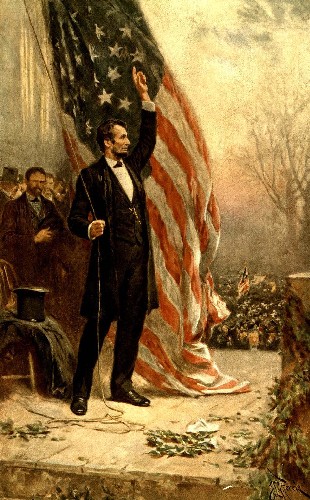
Despite the exigencies of the Civil War, Abraham Lincoln took his social duties at the White House seriously, and if the only culinary records of his administration were the menus of his lavish state banquets and balls, one could justifiably conclude that he was "a gourmet to end gourmets, a connoisseur of exquisite sensitivity [and] a bon vivant supreme."

But nothing could be further from the truth. Not prone to eating breakfast every day, it has been said that Abe had an egg and biscuit only occasionally. Lunch was often only an apple with a glass of milk, and "dinner could be entirely forgotten" unless a tray of food was forced on him. “Abe can sit and think longer without food than any other person I have ever met,” Lincoln’s former law partner in Chicago wrote. And Lincoln’s sister-in-law recalled, “He loved nothing and ate mechanically. I have seen him sit down at the table and never unless recalled to his senses, would he think of food.”


But when Lincoln did turn his attention to food, he ate heartily and never lost a boyhood taste for Kentucky Corn Cakes, Gooseberry Cobbler, Rail Splitters, Gingerbread Cookies, and Corn Dodgers. And it has been said that one of the few entrees that would tempt Lincoln was Chicken Fricassee.

According to A Treasury of White House Cooking by Francois Rysavy, Lincoln "liked the chicken cut up in small pieces, fried with seasonings of nutmeg and mace and served with a gravy made of the chicken drippings."Although Abe's favorite recipe for Chicken Fricassee has surely been lost to posterity, you can try this more recent one for Tarragon Chicken Fricassee from epicurious.com and this one Gourmet Magazine:


3 1/2 to 4 pounds chicken pieces with skin and bone
3/4 teaspoon salt
1/2 teaspoon black pepper
2 tablespoons vegetable oil
1/2 cup finely chopped shallots
1 garlic clove, finely chopped
1 Turkish or 1/2 California bay leaf
1/2 cup dry white wine
1 cup heavy cream
1/2 cup reduced-sodium chicken broth
1 1/2 tablespoons finely chopped fresh tarragon
1/4 teaspoon fresh lemon juice

Pat chicken dry and sprinkle all over with salt and pepper. Heat oil in heavy skillet over moderately high heat until hot, then sauté chicken in 2 batches, skin side down first, turning over once, until browned, 10 to 12 minutes total per batch. Transfer to a plate.

Pour off all but 2 tablespoons oil from skillet, then cook shallots, garlic, and bay leaf over moderate heat, stirring occasionally, until shallots are softened, about 2 minutes. Add wine and bring to a boil. Stir in cream, broth, and 1 tablespoon tarragon, then add chicken, skin side up, and simmer, covered, until just cooked through, 20 to 25 minutes. Transfer chicken with tongs to a platter and keep warm, loosely covered. If necessary, boil sauce until thickened slightly. Stir in lemon juice, remaining 1/2 tablespoon tarragon, and salt and pepper to taste. Discard bay leaf; pour sauce over chicken.

Wednesday, February 11, 2015

George Washington, the Battle of the Chesapeake, and the Significance of Food in Military History

The Battle of the Chesapeake, also known as the Battle of the Virginia Capes, was a critical naval battle in the Revolutionary War. It also provides a fabulous example of how world and military history have been shaped in part by food.

The battle took place near the mouth of the Chesapeake on September 5, 1781 between a British fleet led by Rear Admiral Sir Thomas Graves and a French fleet led by Rear Admiral François Joseph Paul, Comte de Grasse. Although it didn't end the war, the victory by the French was a major strategic defeat for the British because it prevented the Royal Navy from resupplying food, troops, and other provisions to General Charles Cornwallis’ blockaded forces at Yorktown.

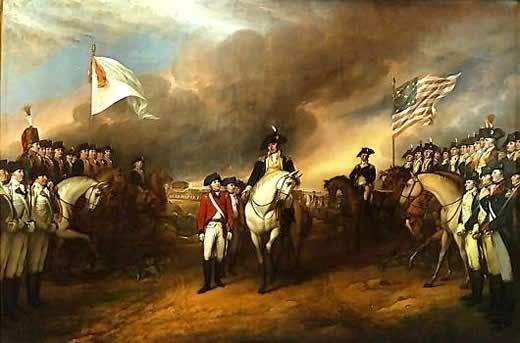
Equally important, it prevented interference with the delivery of provisions that were en route to General George Washington's army through the Chesapeake. Six weeks later, with the British forces trapped, hungry and depleted, Cornwallis surrendered his army to George Washington after the Seige at Yorktown, which effectively ended the war and forced Great Britain to later recognize the independence of the United States.

Of course, many other critical factors contributed to the end of the war, but that doesn't diminish the fact that food (or the lack of it) has played an enormously important role in the course of world and military history.

FAST FACT: General Winfield Scott observed that, "The movements of an army are necessarily subordinate...to considerations of the belly." And Napoleon valued pickles as a food source for his armies so much that he offered the equivalent of $250,000 to the first person who discovered a way to safely preserve food. The man who won the prize in 1809 was a French chef and confectioner named Nicolas Appert who discovered that food wouldn’t spoil if you removed the air from a bottle and boiled it long enough. This process, of course, is known as canning and Appert's discovery was one of the most pivotal events in the modern history of food and human nutrition!

Monday, February 9, 2015

James Madison, the Potomac Oyster Wars, and the Path to the Constitutional Convention

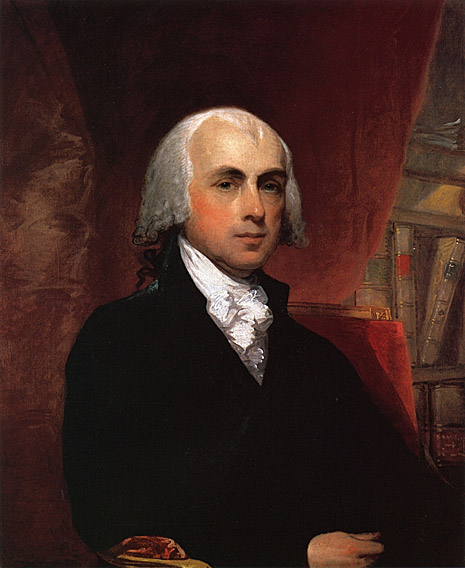
So you probably know that James Madison was one of the drafters of the Constitution and later helped spearhead the drive for the Bill of Rights. But what you might not know is that he also played a major role in negotiating an end to the Potomac Oysters Wars, which helped pave the way to the Constitutional Convention. This is how the story briefly goes:

In the seventeenth century, watermen in Maryland and Virginia battled over ownership rights to the Potomac River. Maryland traced its rights to a 1632 charter from King Charles I which included the river. At the same time, Virginia laid its claims to the river to an earlier charter from King James I and a 1688 patent from King James II, both of which also included the river.

In 1776, after more than a century of conflict, Virginia ceded ownership of the river but reserved the right to “the free navigation and use of the rivers Potowmack and Pocomoke." Maryland rejected this reservation and quickly passed a resolution asserting total control over the Potomac. After the Revolution, battles over the river intensified between watermen from both states.

To resolve this problem, leaders from Maryland and Virginia appointed two groups of commissioners which, at the invitation of George Washington, met at Mount Vernon in May of 1785. James Madison led the Virginia contingent and Samuel Chase led the Maryland delegation. Their discussions led to the Compact of 1785, which allowed oystermen from both states free use the river.

Peace prevailed until the supply of oysters began to dwindle, at which point Maryland re-imposed harvesting restrictions. Virginia retaliated by closing the mouth of the Chesapeake and watermen from both states engaged in bloody gun battles which lasted, with periodic breaks, for more than a century.

Today, these battles are known as the Potomac Oyster Wars. They're important in their own right but they have a larger historical significance because they revealed one of the main weaknesses of the Articles of Confederation, which was that the federal government didn't have the power to control commerce among the states, a setup that was creating constant chaos and conflict.

With this problem in mind, Madison and the others who convened at Mt. Vernon in May of 1785 agreed to meet the following year at Annapolis to discuss the need for a stronger federal government. Not many delegates showed up and so they agreed to convene the following May in Philadelphia, which is, of course, where the Constitution was drafted.

And so NOW you know how James Madison and a little bivalve from the Potomac helped pave the way to the Constitutional Convention!

FAST FACT: Under the Articles of Confederation, the federal government didn't have the power to raise an army, regulate interstate commerce, or coin money for the country. To pass a law, Congress needed the approval of nine out of the 13 states, and in order to amend the Articles it needed the approval of all 13 states, which made it nearly impossible to get anything done! The Articles also didn't provide for an Executive or Federal branch so there was no separation of powers.