Saturday, December 6, 2014

Warren Harding, the Roaring Twenties, and the Development of Finger Foods

Although kind and well-liked, Warren Harding is often ranked as the worst president in American history, and even he admitted to close friends that "the job was beyond him." Aware of his limitations, Harding appointed some very capable and intelligent men to his cabinet, including Charles Evans Hughes as secretary of state and Herbert Hoover as secretary of commerce.

Unfortunatley, Harding also surrounded himself with an "unpleasant group of dishonest cheats," who came to be known as "the Ohio Gang." According to historians at the Miller Center:

Warren’s close friend and political manager, Harry Daugherty, whom he named attorney general, was one of the worst - and one of the slickest. He survived impeachment attempts by Congress and two indictments for defrauding the government in the disposal of alien property confiscated by his office from German nationals. Another schemer, Albert Fall, secretary of the interior, secretly allowed private oil companies to tap the Teapot Dome oil reserve in Wyoming and the Elk Hills oil reserve in California in return for least $300,000 paid to him in bribes.


Whether Harding was aware of his advisors' crimes beforehand is uncertain. What is certain, however, is that he loved to play card games and drink whiskey with them at the White House in private defiance of Prohibition.

Describing the scene at one of Harding's card games that she encountered, Alice Roosevelt, daughter of Teddy Roosevelt, wrote: "the air heavy with tobacco smoke, trays with bottles containing every imaginable brand of whiskey, cards and poker chips ready at hand – a general atmosphere of waistcoat unbuttoned, feet on the desk, and spittoons alongside."

Meanwhile, as President Harding was downing whiskey with his advisors at the White House, millions of ordinary Americans were drinking at secret taverns and bars called speakeasies, a popular term during Prohibition used to describe an establishment that sold illegal alcoholic beverages. According to The Encyclopedia of American Food and Drink:

In order to gain entrance to [a speakeasy], you had to speak in a low voice through a small opening in the back door and tell the attendant inside who it was who sent you to the place. The term itself...may derive from the English "Speak-softly-shop," an underworld term for a smuggler's house where one might get liquor cheaply, its usage in this sense having been traced back to 1823.

But with the onset of Prohibition in America, speakeasies sprang up overnight, sometimes in shabby sections of town, but often in the best neighborhoods, and many of these establishments were actually fine restaurants in their own right. New York's "21" club was a speakeasy during this period and had two bars, a dance floor, an orchestra, and dining rooms on two floors...French diplomat Paul Morande, visiting New York for the first time in 1925, reported his experience at a speakeasy: "the food is almost always poor, the service deplorable."


It was during this period (referred to today as the Roaring Twenties) that the custom of throwing cocktail parties at home also became popular. The rise of cocktail parties, in turn, inspired the development of finger foods, which worked well for tipsy guests who jiggled Gin Fizzes, Whiskey Smashes, and other popular cocktails while mingling with others in loud, crowded rooms.

Some popular finger foods of the Roaring Twenties included Lobster Canapés, Crabmeat Cocktails, Stuffed Deviled Eggs, Caviar Rolls, Oyster Toast, and Savory Cheese Balls. For his part, Harding often served Bratwurst Rolls and Mini Frankfurts with Saurkrauet at his raging cocktail parties at the White House.

If you’d like to serve up some Bratwurst Rolls at your next cocktail party, here is a simple and simply delicious recipe to try from epicurious.com

1/4 cup butter
2 medium onions, sliced into thin rings
4 garlic cloves, finely chopped (optional)
3 to 4 (12-ounce) cans cheap beer
8 bratwurst links
8 small, crusty hoagie rolls
whole-grain mustard
dill pickle spears

Prepare the grill for a medium-hot fire. Place the butter in a medium disposable foil roasting pan. Place the pan on the grill rack and cook until the butter melts. Add the onions and garlic (if using). Cook until softened, three to five minutes. Add the beer and bring to a simmer. Place the pan on the low heat zone and keep the onion mixture warm.

Place the bratwurst on the grill rack. Grill, turning occasionally, until evenly charred, four to five minutes. Transfer the bratwurst to the onion mixture and let stand until ready to serve. With tongs, place the bratwurst in the rolls. Serve with the onions, mustard, and pickle spears.

FOOD FACT: Some of the mass-manufactured foods introduced during the Roaring Twenties include the Baby Ruth Candy Bar, Wonder Bread, Yoo-Hoo Chocolate Drinks, Reese's Peanut Butter Cups, Welch's Grape Jelly, Popsicles, Hostess Snack Cakes, Kool-Aid, Peter Pan Peanut Butter, and Velveeta Cheese!

Thursday, December 4, 2014

James Monroe, Virginia Spoon Bread, and the Long Winter at Valley Forge

While serving in the Continental Army, James Monroe crossed the Delaware with George Washington, fought at the Battle of Trenton, and endured the long winter at Valley Forge.

Among the soldiers at Valley Forge were Benedict Arnold, Alexander Hamilton, the Marquis de Lafayette, and the future Supreme Court Chief Justice John Marshall. Another soldier encamped there was Dr. Albigence Waldo, a surgeon from Connecticut, whose diary provides perhaps the best account we have of conditions that winter at Valley Forge:

Dec. 21st., Preparations made for hutts. Provision Scarce...sent a Letter to my Wife. Heartily wish myself at home, my Skin & eyes are almost spoiled with continual smoke. A general cry thro' the Camp this Evening among the Soldiers, "No Meat !, No Meat !", the Distant vales Echo'd back the melancholly sound, "No Meat ! No Meat !"…What have you for our Dinners Boys?" Nothing but Fire Cake & Water, Sir." At night, "Gentlemen the Supper is ready." What is your Supper, Lads? " Fire Cake & Water, Sir..."

Dec. 22nd., Lay excessive Cold & uncomfortable last Night, my eyes are started out from their Orbits like a Rabbit's eyes, occation'd by a great Cold, and Smoke. What have you got for Breakfast, Lads ? " Fire Cake & Water, Sir." I am ashamed to say it, but I am tempted to steal Fowls if I could find them, or even a whole Hog, for I feel as if I could eat one…But why do I talk of hunger & hard usage, when so many in the World have not even fire Cake & Water to eat..
.

After the war, Monroe returned to Virginia and studied law under Thomas Jefferson, then served as governor of Virginia and was later appointed as U.S. Minister to France. Like Jefferson, Monroe developed a fondness for fancy French cuisine, but historians say that he retained a boyhood taste for Spoon Bread and other simple foods of his Virginia youth.

Because it has a consistency similar to pudding, Spoon Bread is usually served straight from the baking pan with a large spoon. If you'd like to whip up a batch today, here's a quick and simple recipe to try:

¾ cup cornmeal
1 teaspoon salt
1 cup water
3 tablespoons melted butter
2 eggs
1 cup milk
2 teaspoons baking powder

Combine cornmeal and salt in a mixing bowl. Gradually add boiling water. Stir in melted butter.

In a small mixing bowl, beat eggs and milk. Add egg and milk mixture to the cornmeal mixture. Add baking powder and mix.

Pour into a greased baking dish. Bake at 350° for about 30 minutes, until set and lightly browned. Serve straight from the baking dish with a spoon and enjoy!

FAST FACT: In Emmanuel Luetz’s famous painting “Washington Crossing the Delaware,” James Monroe is depicted directly behind Washington, holding an American flag up against the storm. Measuring 12 feet high and 21 feet long, it's on display at the Metropolitan Museum of Art in New York City.

Wednesday, December 3, 2014

Abraham Lincoln Gingerbread Men Cookies

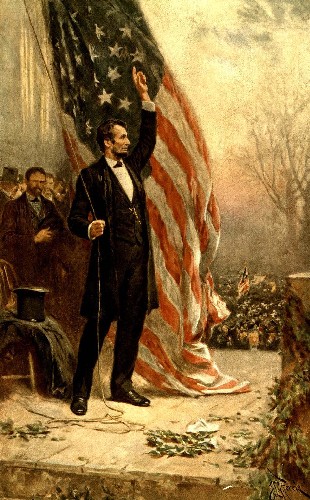
In The Prairie Years, the great American poet and biographer Carl Sandburg told a story about Abraham Lincoln and gingerbread, a story that Abe had told in his famed debates with Stephen A. Douglas in 1858. According to Sandburg, this is how Lincoln’s “Gingerbread Story” unfolded:

“When we lived in Indiana,” Lincoln said, “once in a while my mother used to get some sorghum and ginger and make some gingerbread. It wasn’t often and it was our biggest treat. One day I smelled the gingerbread and came into the house to get my share while it was still hot. My mother had baked me three gingerbread men. I took them out under a hickory tree to eat them.

There was a family near us poorer than we were and their boy came along as I sat down. ‘Abe,’ he said, ‘gimme a man.’ I gave him one. He crammed it into his mouth in two bites and looked at me while I was biting the legs off my first one. ‘Abe, gimme that other’n.’ I wanted it myself, but I gave it to him and as it followed the first, I said to him, ‘You seem to like gingerbread.’ ‘Abe,’ he said, ‘I don’t s’pose anybody on earth likes gingerbread better’n I do — and gets less’n I do...’”


Lincoln’s childhood recollection charmed the audience – and readers of widely published newspaper accounts. Years later, Lincoln reportedly repeated the story in the White House, mentioning details of the recipe his mother may have used. Although her recipe has been lost to posterity, this one from the Food Network is simple to prepare and great to share with family and friends during the holidays.

4 1/2 cups all-purpose flour
1 tablespoon ground cinnamon
2 teaspoons ground ginger
1/2 teaspoon cloves
1/4 teaspoon baking soda
1/2 cup butter, softened
1/2 cup packed brown sugar
2 large eggs
3/4 cup molasses

Directions

Sift the flour, cinnamon, ginger, cloves, and baking soda in a bowl.

In a large mixing bowl, blend the butter and brown sugar until combined. Add the eggs, 1 at a time, and then the molasses. Slowly add the flour mixture. Mix well after each addition of flour. The dough will be stiff.

Divide dough in half, flatten into 2 thick circles and wrap in plastic wrap. Refrigerate for 2 hours or until firm enough to roll out. Preheat oven to 350 degrees F. Roll out, cut into desired shapes and bake until golden brown.

Wednesday, November 26, 2014

A Brief History of the Thanksgiving Turkey Pardon, from Abraham Lincoln to Barack Obama

As it often is with political history, there are competing claims as to when the presidential tradition of "pardoning" a Thanksgiving Day holiday turkey began. Some say it dates back to the 1860s, when Abraham Lincoln's young son Tad begged his dad to spare the life of a wild turkey named "Jack" that had been sent to the Lincolns to be part of their Christmas dinner.

Others claim that the tradition began during Harry Truman's administration. Although it's true that the National Turkey Federation has been providing holiday turkeys to the White House since 1947, when Truman was in office, there's no evidence to prove that this story is true. This is what the Truman Library offered on the issue:

The Truman Library has received many requests over the years for information confirming the story that President Truman "pardoned" a Thanksgiving turkey in 1947, thus initiating a Presidential tradition that continues to this day.

The Library's staff has found no documents, speeches, newspaper clippings, photographs, or other contemporary records in our holdings which refer to Truman pardoning a turkey that he received as a gift in 1947, or at any other time during his Presidency. Truman sometimes indicated to reporters that the turkeys he received were destined for the family dinner table. In any event, the Library has been unable to determine when the tradition of pardoning the turkey actually began.


While President John F. Kennedy spared a turkey's life on November 19, 1963, just days before his assassination, he didn't use the word "pardon." Instead, the bird had a sign hanging around its neck that read, "GOOD EATING, MR. PRESIDENT!", which prompted Kennedy to quip, "Let's just keep him."

The first president to actually use the word "pardon" in reference to a holiday turkey was reportedly Ronald Reagan, who deflected questions in 1987 about pardoning Oliver North in the Iran-Contra affair by joking that he would also pardon a turkey named "Charlie," who was already heading to a local petting zoo.


Which brings us to President George H.W. Bush, who was apparently the first president to intentionally "pardon" a turkey. At the National Turkey Presentation Ceremony in 1989, Bush light-heartedly remarked to those assembled: "Let me assure you, and this fine tom turkey, that he will not end up on anyone's dinner table, not this guy - he's granted a Presidential pardon as of right now - and allow him to live out his days on a children's farm not far from here."

Although it's difficult to confirm exactly when this White House tradition began, we do know where some of the more recently pardoned turkeys have been sent after receiving their presidential reprieves. From 1989 until 2004, the fortunate fowls were sent to live out their natural lives at Frying Pan Farm in Virginia.

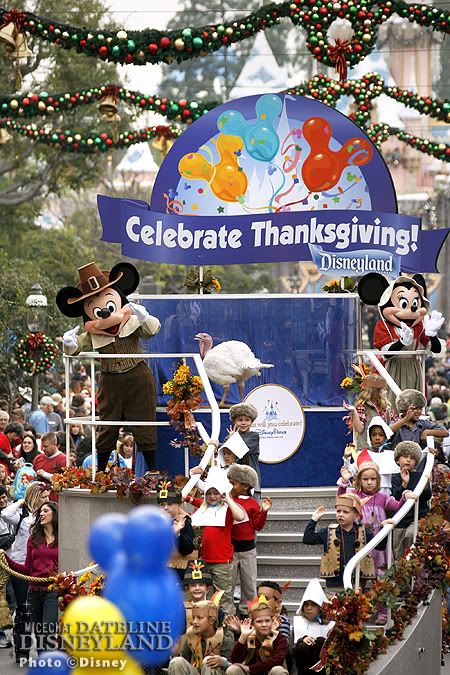
The venue changed in 2005, however, when Disneyland was celebrating its fiftieth anniversary. That year, a lucky turkey named "Marshmallow," and his alternate, "Yam," were taken by police escort to the airport and then flown first class to California. According to the Associated Press:

Marshmallow became the Grand Marshal of Disneyland's Thanksgiving parade, and the sign above his float read "The Happiest Turkey on Earth." The turkeys then retired to a coop at the park's Big Thunder Ranch, where three of the pardoned birds...still live. Florida's Disney World got the birds from 2007, when they arrived on a United Airlines flight that was renamed "Turkey One."

In 2010, the venue changed yet again. Instead of being sent to Disneyland, the 21-week-old turkey that President Obama pardoned was sent to live out the rest of his life at George Washington's Mount Vernon Estate in Virginia. Upon its arrival at Mount Vernon, it was reportedly "be driven to his pen in a horse-drawn carriage and be greeted with a trumpet fanfare."


A spokeswoman for Mount Vernon said that it was appropriate that the turkey go to Washington's home since he was the first president to issue a Thanksgiving Proclamation, and he raised wild turkeys at Mount Vernon.

Although the spokeswoman didn't say how the Washington's preferred to serve their Thanksgiving birds, the Mount Vernon Inn does offer a daily lunch menu that includes a "Colonial Turkey Pye" which is described as "a turkey stew served with mixed vegetables and topped with a homemade buttermilk biscuit."

While it might be difficult to obtain a copy of that particular recipe, you can try this quick and simple recipe for Turkey Pot Pie if you need something to do with your leftover turkey this Thanksgiving or this one from Pillsubry.com:


1 sheet frozen puff pastry
1 egg, beaten
1/2 cup milk
2 (11-ounce) cans condensed Cheddar cheese soup
2 (10 3/4-ounce) cans cream of celery soup
1 large turkey skinned, cooked, boned and cubed
2 medium onions, diced
2 cup cooked butternut squash, diced
2 cup cranberries
Salt and pepper

Preheat oven to 350 degrees F. To make the crust, dust surface with flour. Cut 1 sheet of frozen puff pastry into 1-inch strips, 8 inches long.
On a large cookie sheet, weave strips into a lattice large enough to cover each pot pie. Mix egg and milk together and brush onto each lattice square. Bake for 5 minutes. Dough will rise and turn light golden brown. Set aside until ready to assemble pies. In a large saucepan heat the soups. Stir in turkey, onion, squash, cranberries, salt and pepper. Bring mixture to a boil. In an oven-proof dish, fill with mixture and top with the pre-cooked lattice square. Bake for 5 minutes until bubbly and puff pastry is deep golden brown.

Friday, November 21, 2014

Franklin D. Roosevelt, the Great Depression, and the Thanksgiving Day Date-Change Fiasco

So did you know that in 1939 President Franklin D. Roosevelt decided to move Thanksgiving Day forward by a week? Rather than allow the holiday to fall on its traditional date, the last Thursday of November, Roosevelt issued a proclamation declaring that the holiday would instead be celebrated a week earlier.

Why did he make such a seemingly random decision in the midst of the Great Depression? Well, his reason was economic and intended to extend the Christmas shopping season. According to the Wall Street Journal:

There were five Thursdays in November that year, which meant that Thanksgiving would fall on the 30th. That left just 20 shopping days till Christmas. By moving the holiday up a week to Nov. 23, the president hoped to give the economy a lift by allowing shoppers more time to make their purchases and—so his theory went—spend more money...

In an informal news conference in August announcing his decision, FDR offered a little tutorial on the history of the holiday. Thanksgiving was not a national holiday, he noted, meaning that it was not set by federal law. According to custom, it was up to the president to pick the date every year.

It was not until 1863, when Abraham Lincoln ordered Thanksgiving to be celebrated on the last Thursday in November, that that date became generally accepted, Roosevelt explained. To make sure that reporters got his point, he added that there was nothing sacred about the date...


Just as he had done with his controversial "Court Packing" plan of 1937, Roosevelt had badly misjudged public opinion. Outraged protests of his plan began in Plymouth, Massachussetts, the place of the "first Thanksgiving" in 1621, but quickly spread to other circles.

PRESIDENT SHOCKS FOOTBALL COACHES: Many Games are Upset by Thanksgiving Plan, read a banner headline in the New York Times. And even in the staunchly Democratic state of Arkansas, the football coach of Little Ouachita College threatened: 'We'll vote the Republican ticket if he interferes with our football.'"

Of course, some collegiate coaches and athletic directors were more diplomatic. In a letter to the president's secretary, Philip Badger, Chairman of the University Board of Athletic Control at New York University wrote:

My dear Mr. Secretary:

I am wondering if you are at liberty at this time to supply me with any information over and above what has appeared in the public press to date regarding the plan of the President to proclaim November 23 as Thanksgiving Day this year instead of November 30.

Over a period of years it has been customary for my institution to play its annual football game with Fordham University at the Yankee Stadium here at New York University on Thanksgiving Day...As you probably know, it has become necessary to frame football schedules three to five years in advance, and for both 1939 and 1940 we had arranged to play our annual football game with Fordham on Thanksgiving Day, with the belief that such day would fall upon the fourth Thursday in November.

Please understand that all of us interested in the administration of intercollegiate athletics realize that there are considerations and problems before the country for solution which are far more important than the schedule problems of intercollegiate athletics. However, some of us are confronted with the problem of readjusting the date of any football contest affected by the President's proposal.


Outside of the college football arena, public sentiments ran heavily against Roosevelt's plan, as evidenced by a National Gallup Poll which found that 62% of Americans surveyed disapproved of the date change. And, as opposition grew, some state governors "took matters into their own hands and defied the Presidential Proclamation."

According to the Franklin D. Roosevelt Presidential Library and Museum:

Some governors declared November 30th as Thanksgiving. And so, depending upon where one lived, Thanksgiving was celebrated on the 23rd and the 30th. This was worse than changing the date in the first place because families that lived in states such as New York did not have the same day off as family members in states such as Connecticut! [And so] family and friends were unable to celebrate the holiday together.

By 1941, most retailers also disapproved of Roosevelt's plan, and even the federal government conceded that the date change had not resulted in any boost in sales. And so, on December 26, 1941, President Roosevelt signed Joint Resolution 41 making Thanksgiving a national holiday and mandating that it be observed on the fourth Thursday in November of each year.

Tuesday, November 18, 2014

A Royal State Dinner at the Reagan White House

The wedding of Prince Charles and Lady Diana Spencer on July 29, 1981 has been aptly described as one of the most celebrated spectacles of the Reagan era. But because of the assassination attempt on President Reagan four months earlier, he couldn't attend, but he encouraged his wife Nancy to “serve as the United States representative at the event.”

Rising to the occasion, Mrs. Reagan traveled to England and spent one week in London, which was the longest amount of time she had been away from her husband in their then-twenty-nine years of marriage. During her stay, the First Lady reportedly attended eighteen events on behalf of the nation, including "a ball at Buckingham Palace, a dinner at the American Embassy, tea with the Queen Mother, and lunch with Prime Minister Margaret Thatcher.”

According to the Ronald Reagan Foundation,

Mrs. Reagan was an especially appropriate delegate for the United States to send to the Royal Wedding. The Reagans had met Prince Charles many years earlier, when Ronald Reagan was Governor of California. Also, in March of 1975 Ronald and Nancy had met Margaret Thatcher, and the future president and future prime minister found they shared a special connection even then...

Over the years, the President and Mrs. Reagan expressed their immense respect for their British friends in many ways, saving the first and last state dinners to honor Margaret Thatcher. Her Royal Majesty Queen Elizabeth II attended the first dinner in February 1981, and the Queen returned the honor when she hosted a state dinner for the Reagans’ visit to London when the president addressed Parliament in 1982.


The following year, Queen Elizabeth II and her husband Prince Philip visited Rancho del Cielo, the Reagans’ Santa Barbara ranch, and invited the Reagans aboard the royal yacht Brittania to celebrate an anniversary dinner. But of all the Royal visits to the Reagan White House, none were more memorable than the star-studded State Dinner held in honor of the Prince and Princess of Wales on November 9, 1985. As the BBC reported at the time:

Prince Charles and Princess Diana have ended the first day of their much-vaunted trip to the USA at a gala dinner in Washington, hosted by President Reagan and his wife Nancy. They mixed with movie stars, such as Clint Eastwood, John Travolta, Tom Selleck and the singer Neil Diamond as well as politicians and businessmen.

A small group of anti-British IRA supporters protested outside and there were a few slip-ups during the glamorous event. For a moment President Reagan forgot the Princess of Wales' name during an after-dinner speech to guests. "Permit me to add our congratulations to Prince Charles on his birthday just five days away," he said, "and express also our great happiness that...er...Princess David...Princess Diane (sic) is here on her first trip to the United States."


According to the report, the Princess herself, still suffering from jetlag, momentarily forgot to return the toast. But all that was forgotten when she famously took to the dance floor with John Travolta in her midnight blue velvet dress and sapphire and diamond choker.

Earlier in the evening, an elegant dinner was held in the State Dining room, where ballet great Mikhail Baryshnikov was seated next to Princess Diana, while Prince Charles sat between actress Beverly Sills and the First Lady. In addition to Neal Diamond, Clint Eastwood, Tom Selleck, and Travolta, other well-known personalities who attended the affair included fasion icons Gloria Vanderbilt and Estee Lauder, Olympic figure skater Dorothy Hamill, and architect I.M. Pei.

According to White House chef Henry Haller, the dinner menu that evening "was carefully designed to suit the noble tastes of the Prince and Princess, and to appeal to the varied tastes of their table mates. Since the Prince favors fish and fowl, the meal featured fennel-flavored lobster mousse as the first course and lightly glazed chicken for the entree."

If you'd like to whip up some Lobster Mousse for your next formal gathering, here is a delicious recipe to try from the New York Times:

1/2 pound cooked lobster meat
3/4 cup clam broth
1 tablespoon unflavored gelatin
2 ribs celery, chopped fine
2 tablespoons finely chopped onion
1 1/2 teaspoons Dijon mustard
1/2 cup minced parsley
1/2 cup heavy cream, whipped
3/4 cup mayonnaise
Salt, white pepper to taste
Juice of one lemon
Curly kale

Cut lobster into 1/2-inch pieces. Sprinkle gelatin over broth. Place over low heat; stir until thoroughly dissolved. Cool. Whip cream. Combine celery, onion, mustard, parsley, whipped cream, 1/4 cup mayonnaise, salt and pepper, lobster and cooled broth and mix thoroughly.

Spoon into 1-quart mold and seal tightly with plastic wrap. Refrigerate until firm, at least four hours or overnight. To serve, mix remaining mayonnaise with lemon juice. Unmold mousse and serve on curly kale, with lemon mayonnaise poured over the top. Serve with homemade Melba toast.

Friday, November 14, 2014

George Bush's Top-Secret Thanksgiving Dinner

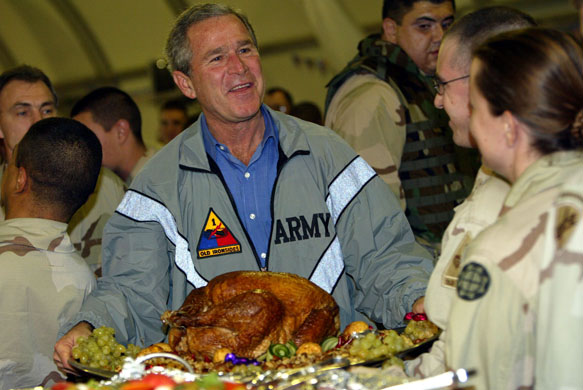
Traveling under extraordinary secrecy to ensure his safety, President George W. Bush made a surprise Thanksgiving visit to American troops in Baghdad in November of 2003. According to a USA Today news report, Bush “shared a holiday dinner with U.S. troops in a military mess hall at Baghdad International Airport."

Wearing a grey army jacket and with his eyes reportedly wet with tears, Bush strode out as about six hundred American soldiers leapt to their feet and cheered. In his remarks, the president said:

Thank you for inviting me to dinner...I can't think of a finer group of folks to have Thanksgiving dinner with than you all. We're proud of you. Today, Americans are gathering with their loved ones to give thanks for the many blessings in our lives. And this year we are especially thankful for the courage and the sacrifice of those who defend us, the men and women of the United States military...

You're engaged in a difficult mission. Those who attack our coalition forces and kill innocent Iraqis are testing our will. They hope we will run. We did not charge hundreds of miles into the heart of Iraq, pay a bitter cost in casualties, defeat a brutal dictator and liberate 25 million people only to retreat before a band of thugs and assassins...

On this Thanksgiving, our nation remembers the men and women of our military, your friends and comrades who paid the ultimate price for our security and freedom. We ask for God's blessings on their families, their loved ones and their friends, and we pray for your safety and your strength, as you continue to defend America and to spread freedom.

Each one of you has answered a great call...You live by a code of honor, of service to your nation, with the safety and the security of your fellow citizens. Our military is full of the finest people on the face of the earth. I'm proud to be your commander in chief. I bring greetings from America. May God bless you all.


To the troops great surprise, President Bush then stood in a chow line and dished out sweet potatoes and corn for Thanksgiving dinner and posed with a huge platter of turkey.

Because of security concerns, Air Force One had landed in Baghdad with its lights dimmed and window shades closed to minimize chances of it being made a target. And news of the top-secret trip wasn’t made public until after Air Force One was back in the air, heading back to the United States.

Of course, earlier that week, President Bush had pardoned the national Thanksgiving turkey at the White House, marking the 56th anniversary of the annual event. Apart from some gobbling while the president spoke, the lucky turkey, according to CNN, “was generally well behaved during the Rose Garden ceremony."

Once again referring to the courage of American troops, President Bush, standing next to the relieved turkey, said:

It speaks well for America that one of our most important holidays is set aside for sharing and appreciating our blessings...This year, as in other times in our history, we can be especially grateful for the courage and faithfulness of those who defend us.

FAST FACT: George W. Bush wasn't the first American president to visit troops on the front-line on Thanksgiving Day. His father, George H.W. Bush, visited U.S. troops at a desert outpost in Saudi Arabia on Thanksgiving Day in 1990.

To read an excerpt from my new book from Simon and Schuster click here

Thursday, November 6, 2014

Abraham Lincoln Chicken Fricassee

Despite the Civil War, Abraham Lincoln reportedly took his entertaining duties at the White House seriously, and if the only culinary records of his administration were the menus of his gala state banquets and balls, one could justifiably conclude , according to food historian Poppy Cannon, that he was "a gourmet to end gourmets, a connoisseur of exquisite sensitivity [and] a bon vivant supreme."

But nothing could be further from the truth. Not prone to eating breakfast every day, it has been said that he had an egg and biscuit only occasionally. Lunch was often only an apple with a glass of milk, and dinner could be entirely forgotten unless a tray of food was forced on him. “Abe can sit and think longer without food than any other person I have ever met,” Lincoln’s former law partner in Chicago wrote. And, shortly after his death, Lincoln’s sister-in-law recalled, “He loved nothing and ate mechanically. I have seen him sit down at the table and never unless recalled to his senses, would he think of food.”

But when Lincoln did turn his attention to food, he ate heartily and never lost a boyhood taste for Kentucky Corn Cakes, Gooseberry Cobbler, Rail Splitters, Gingerbread Cookies, and Corn Dodgers. And it has been said that one of the few entrees that would tempt Lincoln was Chicken Fricassee. According to A Treasury of White House Cooking by Francois Rysavy, Lincoln "liked the chicken cut up in small pieces, fried with seasonings of nutmeg and mace and served with a gravy made of the chicken drippings."

Although Abe's favorite recipe for Chicken Fricassee has surely been lost to posterity, you can try this more recent one for Tarragon Chicken Fricassee from Gourmet Magazine:

3 1/2 to 4 pounds chicken pieces with skin and bone
3/4 teaspoon salt
1/2 teaspoon black pepper
2 tablespoons vegetable oil
1/2 cup finely chopped shallots
1 garlic clove, finely chopped
1 Turkish or 1/2 California bay leaf
1/2 cup dry white wine
1 cup heavy cream
1/2 cup reduced-sodium chicken broth
1 1/2 tablespoons finely chopped fresh tarragon
1/4 teaspoon fresh lemon juice

Pat chicken dry and sprinkle all over with salt and pepper. Heat oil in a 12-inch heavy skillet over moderately high heat until hot but not smoking, then sauté chicken in 2 batches, skin side down first, turning over once, until browned, 10 to 12 minutes total per batch. Transfer to a plate.

Pour off all but 2 tablespoons oil from skillet, then cook shallots, garlic, and bay leaf over moderate heat, stirring occasionally, until shallots are softened, about 2 minutes. Add wine and bring to a boil. Stir in cream, broth, and 1 tablespoon tarragon, then add chicken, skin side up, and simmer, covered, until just cooked through, 20 to 25 minutes. Transfer chicken with tongs to a platter and keep warm, loosely covered. If necessary, boil sauce until thickened slightly. Stir in lemon juice, remaining 1/2 tablespoon tarragon, and salt and pepper to taste. Discard bay leaf; pour sauce over chicken.

Thursday, October 30, 2014

Halloween Celebrations at the White House, from the Eisenhowers to the Obamas

To celebrate their first Halloween in the White House in 2009, First Lady Michelle Obama got in the spirit by dressing as a leopard, replete with furry ears, dramatic cat-like eyes and a spotted orange-and-black animal print top while President Obama played it safe, dressing as, well, “a middle-aged dad, with a black cardigan, checkered shirt and sensible brown slacks.”

According to the Washington Post, about 2,600 trick-or-treaters from local schools swooped, skulked and pitter-pattered their way through the front drive of 1600 Pennsylvania Avenue, stopping at the North Portico to get their treat: a plastic baggy containing White House M&Ms, an orange sugar cookie in the shape of the residence, and clumps of [dried] apricots, apples and papayas. Meanwhile, wandering around in front of the eerily, orange-lit White House was a motley crew of odd creatures, including musicians dressed as skeletons, walking trees, Star Wars characters, and dancers dressed as red and gold butterflies inside giant bubbles.

After casually chatting with the trick-or-treaters, the President and the First Lady hosted a reception for military families in the East Room of the White House. In his brief welcoming remarks, the president acknowledged the many sacrifices made by military families and said, “'We are so grateful to you. Especially now, a lot of the times, you guys are separated. It's tough. The spouses who are at home are serving just as much as folks who are deployed. So we are just so thrilled that you guys could be here.”

Of course, this wasn't the first Halloween celebration held at the White House. Known for her playful personality, Mamie Eisenhower hosted a Halloween party for the wives White House staff members. Described as “the most interesting party ever given in the dignified setting of the White House,” it reportedly included “skeletons hanging from the State Dining Room chandeliers and witches on broomsticks riding over the white tablecloth.”

In more recent years, Richard Nixon’s daughter Tricia hosted a Halloween carnival for underprivileged school children while the Fords and Carters welcomed trick-or-treaters from charitable organizations like UNICEF. And to mark their first Halloween in the White House, George Bush and his wife Barbara staged an Anti-Drug Youth Rally for 500 local school children on the South Lawn of the White House, where they loaded the youngsters up with treats and spoke to them about the dangers of illegal drugs.

FAST FACT: the origins of Halloween likely lie in the ancient pagan Celtic festival of Samhain. According to historians at the Library of Congress, “the wearing of costumes and roaming from door-to-door demanding treats can be traced to the Celtic period and the first few centuries of the Christian era, when it was thought that the souls of the dead were out and around, along with fairies, witches, and demons. Offerings of food and drink were left out to placate them. As the centuries wore on, people began dressing like these dreadful creatures, performing antics in exchange for food and drink."

Tuesday, October 28, 2014

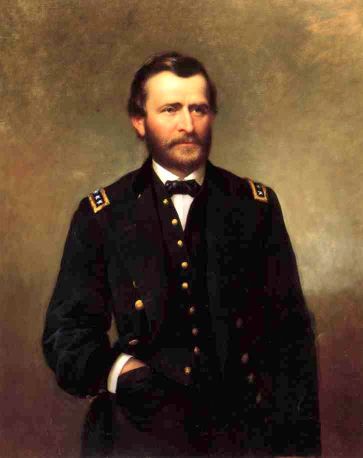
Ulysses S. Grant's Twenty-Nine Course Banquets

"The inauguration of Ulysses S. Grant in 1869 did more than usher into the Presidency an honored war hero," according to historian Poppy Cannon, it launched an era of opulence in the White House "the United States had not seen before and has seldom seen since."

Culinarily speaking, however, Grant’s first few months in office could hardly be described as extravagant. When the 46-year-old military hero moved into the White House, he brought with him a quartermaster from his army days to serve as cook. To her credit, Grant’s wife Julia refrained from complaining at first, but when it became clear that the "chef" viewed the White House dining room as little more than “an enlarged mess hall,” she replaced him with an Italian steward named Valentino Melah, who had catered for some of the finest hotels in the United States and "specialized in opulent banquents."

Describing a particular twenty-nine course State Banquet at the Grant White House, Emily Edson Briggs, a Washington newspaper columnist, wrote:

In the beginning of the feast, fruit, flowers, and sweetmeats grace the tables, while bread and butter only give a Spartan simplicity to the "first course," which is composed of a French vegetables oul, and according to the description by those who have tasted it, no soup, foreign or domestic, has ever been known to equal it.

The ambrosial soup is followed by a French croquet of meat...The third "course" of the dinner is composed of a fillet of beef, flanked on each side by potatoes the size of a walnut, with plenty of mushrooms to keep them company. The next course is...made up entirely of luscious leg of partridges, and baptized by a French name entirely beyond my comprehension.

It will readily be seen that a full description of the twenty-nine courses would be altogether too much for the healthy columns of a newspaper to bear, so we pass to the dessert...[which] is inaugurated by...a rice pudding [that] would make our grandmothers clap their hands with joy. After the rice pudding, canned peaches, pears, and quinces are served. Then follow confectionery, nuts, ice-cream, coffee, and chocolate...


Although President Grant enjoyed partaking in such opulent banquets, he retained a taste for more basic fare, no doubt shaped by his old soldier's days. One of his favorite breakfasts reportedly consisted of "broiled Spanish mackerel and steak, fried apples with bacon, buckwheat cakes, and a cup of strong black coffee."

At lunch and dinner, he enjoyed such simple meals as roast beef with wheat bread and boiled hominy. And for dessert, historians tell us that "nothing ever pleased President Grant as much as simple rice pudding."

Although Grant's favorite recipe for Rice Pudding may have been lost to posterity, you can try this delicious recipe from simplyrecipes.com which is great to serve at breakfast or as a light dessert:

2 1/2 cups of whole milk
1/3 cup of uncooked short grain white rice
Pinch of salt
1 egg
1/4 cup dark brown sugar
1 teaspoon of vanilla extract
1/4 teaspoon of cinnamon
1/3 cup raisins

In a medium-sized saucepan, bring the milk, rice and salt to a boil over high heat. Reduce heat to low and simmer until the rice is tender, about 20-25 minutes. Stir frequently to prevent the rice from sticking to the bottom of the pan.

In a small mixing bowl, whisk together egg and brown sugar until well mixed. Add a half cup of the hot rice mixture to the egg mixture, a tablespoon at a time, vigorously whisking to incorporate.

Add egg mixture back into the saucepan of rice and milk and stir, on low heat, for 10minutes or so, until thickened. Be careful not to have the mixture come to a boil at this point. Stir in the vanilla. Remove from heat and stir in the raisins and cinnamon. Serve warm or cold and enjoy!

Friday, October 10, 2014

Abraham Lincoln Kentucky Corncakes

Abraham Lincoln and his wife Mary were great animal lovers and allowed their four young sons to keep all sorts of pets on White House grounds. Among other animals, Abe and his family had three cats, a dog named Fido, rabbits, horses, and two rambunctious billygoats named Nanny and Nunko.

Another was a wild turkey named Jack with whom Lincoln’s youngest son Tad played with daily. When it came time for Jack to be sacrificed for a holiday dinner, Tad supposedly begged his dad to spare the turkey’s life, and, to this day, the White House maintains the tradition of pardoning a wild turkey each holiday season!

Although it’s a "tad" early to be thinking about preparing your next holiday dinner, you can whip up a batch of Kentucky Corncakes, which are a great side dish at just about any meal and were a Lincoln family favorite. If you’d like to make some Kentucky Corncakes today, here is a simple and simply delicious recipe to try from the Food Network:

1 cup roasted cornmeal (fine ground yellow cornmeal)
1 cup self-rising flour
4 tablespoons sugar
2 eggs
2 cups buttermilk
3 ounces corn oil
2 cups fresh corn kernels

Place cornmeal, flour, and sugar in a bowl and mix together. In a separate bowl, combine eggs, buttermilk, corn oil, and fresh corn and mix together. Fold mixtures together. Place 4 ounces of pancake mix onto a hot griddle. Cook on medium high heat for 4 minutes on each side, until cooked through. Serve warm with lots of butter and honey enjoy!

FAST FACT: According to historians at the Miller Center, the Lincoln family's routine in the White House reflected "the presence of their sons, the demands of war, and the highly complex and many-sided character of Abraham and Mary. [T]he day went from breakfast together as a family at 8:00 in the morning, reunion again for dinner at 8:00 in the evening, and then bedtime. Until little Willie's death in 1862, the two younger sons demanded a good deal of attention, and both parents gave them ample attention, although Lincoln grew more distant as the war progressed and occupied much of his day."

Tuesday, September 30, 2014

Franklin Roosevelt's "Royal Hot Dog" Diplomacy


When Franklin D. Roosevelt invited Queen Elizabeth and Prince Philip for a visit to the United States in June of 1939, the significance of the invitation reportedly did not go unnoticed. Ever since America declared its independence from England in 1776, "the United States and Great Britain had oftentimes experienced tense relations, but Roosevelt's invitation carried great significance in the history of Anglo-American relations, not only because of their colonial past, but more importantly, because it signified the dawn of a new era in American and British cooperation.”

With Europe on the brink of war, Roosevelt realized the need to forge closer ties between the two democracies and he reportedly “planned every minute detail of the visit to ensure the King’s success in winning over the sympathy and support of the American people." His efforts apparently paid off. According to historians at the Franklin D. Roosevelt Presidential Library and Museum:

Americans heartily welcomed England's royalty with thunderous applause and adulation when the King and Queen arrived in Washington on June 8, 1939. Crowds lined the streets for a chance to glimpse the King and Queen as they traveled throughout the city. In Washington, the couple was treated to all the formalities one would expect from a State Visit. There was an afternoon reception at the British Embassy, followed by a formal evening of dining and musical entertainment at the White House.

On their second day, the King and Queen took in the sights of DC as they boarded the presidential yacht and sailed up the Potomac River to George Washington's Mount Vernon and to Arlington Cemetery to lay a wreath at the Tomb of the Unknown Soldier. After two days in Washington, the...royal couple accompanied the Roosevelts to their home in Hyde Park, New York [where]...they enjoyed the simpler things in life. In contrast to the formal State Dinner at the White House, dinner at the Roosevelt's home...was described to the press as a casual dinner between the two families.


Even more informal was the following day's event - an old-fashioned, American-style picnic which included the following menu items: Virginia Ham, Smoked Turkey, Cranberry Jelly, Green Salad, Sodas, Beer and...Hot Dogs! The next day, news of the picnic made the front page of the New York Times, under the headline, “KING TRIES HOT DOG AND ASKS FOR MORE.” While the King reportedly ate his hot dog by hand like an American, the Queen daintily cut hers with a knife and fork.


Although the royal visit was surely the high point of the Roosevelt's 1939 social season, the president and the king also discussed the dire political and military situation developing in Europe.

Equally important to Roosevelt, however, was that the visit "changed the perceptions of the American people, which in turn allowed him to do more for Britain. When England declared war on Germany three months later, Americans, due in no small part to the King and Queen's visit, sympathized with England's plight. Britons were no longer strangers or the evil colonial rulers from the past but familiar friends and relatives with whom Americans could identify."

For their part, the Royal Couple was deeply appreciative of the Roosevelt’s efforts and of the outpouring of support from the American people. In a letter to Mrs. Roosevelt, the Queen later wrote:

I must tell you how moved I have been by the many charming, sympathetic, and understanding letters which I have received from kind people in the United States. Quite poor people have enclosed little sums of money to be used for our wounded, our sailors, or mine sweepers. It really has helped us, to feel such warmth of human kindness and goodness, for we still believe truly that humanity is overall.

Sometimes, during the last terrible months, we have felt rather lonely in our fight against evil things, but I can honestly say that our hearts have been lightened by the knowledge that friends in America understand what we are fighting for. We look back with such great pleasure to those lovely days we spent with you last June. We often talk of them, and of your & the President's welcome & hospitality. The picnic was great fun, and our children were so thrilled with the descriptions of the Indian singing & marvelous clothes - not to mention the hot dogs!


Monday, September 15, 2014

James Monroe, Mississippi Steamboatin' and "Food Piled High on a Long Linen Cloth"

So did you know that James Monroe was the first president to ride and possibly dine on a steamboat? By the 1820s, steamboats were in use on most of the major rivers, canals, and waterways in the United States.

The steamboat completely revolutionized shipping. For the first time in history, people didn't have to rely on unpredictable currents and winds and could travel to just about any port at any time. Plantation owners in Mississippi, Missouri, and Louisiana, for example, could cheaply and easily ship cargoes of sugar, cotton and other goods upriver on the Mississippi rather than send them around the tip of Florida and up the Eastern seaboard as they had previously done.

Steamboats also provided a luxurious way for wealthy passengers to travel. In Mississippi Steamboatin’, Herbert Quick described the palatial setting and abundance of food served on later steamboats:

The palatial setting of later steamboats attracted pleasure-seekers and wealthy travelers...More comfortable than their 'settin' rooms,' more ornate than their prim and uncomfortable parlors...they saw the steamboat's cabin as a bewilderingly beautiful palace.

The...glistening cut-glass chandeliers; the soft oil paintings on every stateroom door; the thick carpets that transformed walking into a royal march; the steaming foods piled high on the long linen cloth in the dining room, with attentive waiters standing at the traveler's elbow, waiting with more food, and gaily colored desserts in the offing - neither homes nor hotels...were ever like this.


Between 1814 (three years before Monroe took office) and 1834, steamboat arrivals in New Orleans increased from 20 to 1,200 each year. For the next half century, steamboats were the main transporter of American goods, and tiny river towns grew into thriving cities “when steamboats began to make regular stops at their docks.”

FAST FACT: If you've ever watched steam rise from a cup of hot chocolate or coffee, you might think that a steamboat is propelled by steam. That makes sense, but that isn't exactly how a steamboat works. In a steamboat's engine, wood or other fuel is burned to heat water in a boiler, and the steam that rises from the water is forced through small spaces (piston cylinders) to increase the speed at which it escapes, similar to the release of a valve on a pressure-cooker. The concentrated steam then hits and moves a paddlewheel which, in turn, propels the steamboat through water!

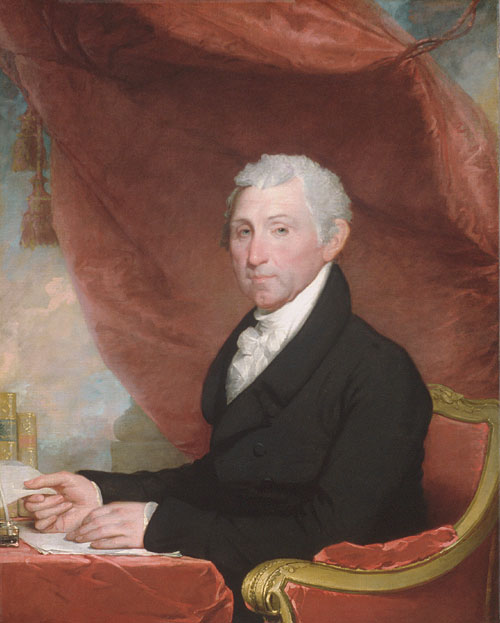
Credit: James Monroe, oil on canvas by Gilbert Stuart (Metropolitan Museum of Art, New York)

Thursday, August 21, 2014

Air Force One Tuna Melt on Croissant

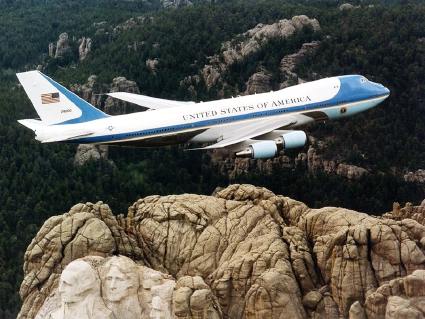
Regardless of where in the world the President travels, "if he flies in an Air Force jet, the plane is called Air Force One." According to White House officials, Air Force One is technically the "call sign" of any Air Force aircraft carrying the President. In practice, however, the name "Air Force One" is used "to refer to one of two highly customized Boeing 747-200B series aircraft, which carry the tail codes 28000 and 29000."

Emblazoned with the words "United States of America" and an image of the American flag and the Seal of the President of the United States, Air Force One is "an undeniable presence wherever it flies." This is how the interior of this amazing, high-tech jet is described on the White House website:

Capable of refueling midair, Air Force One has unlimited range and can carry the President wherever he needs to travel. The onboard electronics are hardened to protect against an electromagnetic pulse, and Air Force One is equipped with advanced secure communications equipment, allowing the aircraft to function as a mobile command center in the event of an attack on the United States.

Inside, the President and his travel companions enjoy 4,000 square feet of floor space on three levels, including an extensive suite for the President that features a large office, lavatory, and conference room. Air Force One includes a medical suite that can function as an operating room, and a doctor is permanently on board. The plane’s two food preparation galleys can feed 100 people at a time.


Although it's proven mighty difficult to find copies of specific Air Force One menus, The Old Foodie tells us that the following luncheon items were served aboard Air Force One on February 6, 1994.

Assorted Relishes
Vegetable Soup
Tuna Melt on Croissant
Chips
Choice of Beverage
Cookies

Now, this is a surprisingly sparse and ordinary menu to present to a sitting president, don't you think? BUT...that was back in 1994, when Bill Clinton was in office, which leads me to believe that perhaps this particular menu was inspired by his wife's or advisors' well-meaning desire to steer the president away from the greasy cheeseburgers and french fries that he once seemed to so much like and nudge him toward more healthy, low-calorie choices to help trim his then-less-than-slender waistline.

Although that specific recipe for "Tuna Melt on Croissant" isn't easily obtainable today, Barack Obama did kindly provide his favorite recipe for Tuna Salad during an interview with "60 Minutes" correspondent Steve Kroft early on in the 2008 presidential campaign. If you're in the mood for tuna salad today, here is President Obama's take on Toasted Tuna Salad Sandwiches:

Tuna
Grey Poupon mustard
Mayonnaise
Chopped gherkins
Toasted Bread

Whatever items might appear on its many in-flight menus, be they simple Tuna Melts on Croissants or crystal-filled dishes of Russian caviar, Air Force One truly is an "undeniable presence" wherever in the world it flies!

FAST FACT: According to the White House website: Air Force One is maintained and operated by the Presidential Airlift Group, part of the White House Military Office. The Airlift Group was founded in 1944 as the Presidential Pilot Office at the direction of President Franklin D. Roosevelt. For the next 20 years, various propeller driven aircraft served the President. In 1962, President John F. Kennedy became the first President to fly in his own jet aircraft, a modified Boeing 707. Over the years, several other jet aircraft have been used, with the first of the current aircraft being delivered in 1990 during the administration of President George H. W. Bush.

Thursday, July 31, 2014

Leonardo da Vinci Saffron Risotto

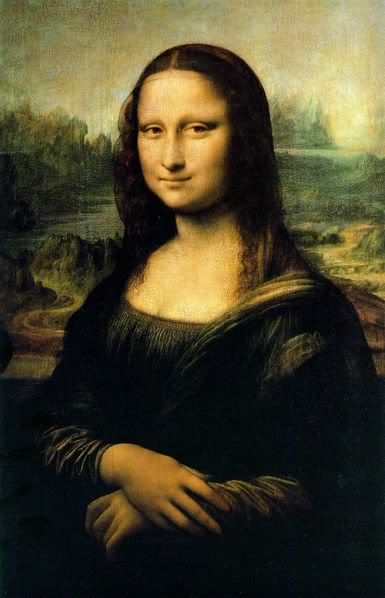
How Leonardo da Vinci used rudimentary pigments in 1503 to create such subtle shadows and light on the Mona Lisa has long baffled art historians. Now French researchers are "using X-ray fluorescence spectroscopy to isolate and study each ultra-thin layer of paint and glaze da Vinci used" to create the effect he was seeking, according to recent new stories.

By beaming x-rays on the Mona Lisa without removing it from the wall on which it is mounted in Paris' Louvre Museum, scientists found that da Vinci used a Renaissance painting technique known as sfumato, intricately mixing thin layers of pigment, glaze and oil to create the appearance of lifelike shadows and light. Scientists now believe that da Vinci used up to 30 layers of paint on his works.

While this research may solve one mystery about the Mona Lisa, others remain, like: "who is this enigmatic woman" and why does she hold her subtle half-smile? To these mysteries we can add another: what did this mysterious woman and da Vinci like to eat?

According to one researcher who studied the culinary habits of fifteenth and sixteenth century Italy, some Renaissance favorites were Risi e Bisi, Saffron Risotto with Mushrooms, and Spinach Soup with Hazelnuts. Although those recipes might be difficult to duplicate today, this one for Saffron Risotto with Mushrooms from the New York Times might just give you a sense of what Leonardo da Vinci liked to eat!

4 cups beef or chicken stock
1/8 teaspoon ground saffron
3 tablespoons unsalted butter
2 tablespoons olive oil
1/4 cup finely minced scallions
1/4 cup finely minced onions
1 pound fresh wild mushrooms, trimmed, cleaned and sliced (see note)
1 1/2 cups Italian Arborio rice
Salt and freshly ground black pepper to taste
3/4 cup freshly grated Parmigiano-Reggiano cheese

Place stock in a heavy saucepan, and over medium heat bring to a simmer. Add saffron, stir, and leave to simmer very slightly.

Meanwhile, in a larger saucepan over medium heat, melt 1 tablespoon butter in olive oil. When foam subsides, add scallions and onions, and cook, stirring frequently, until softened and yellow but not browned. Add mushrooms and saute, stirring occasionally, until liquid has evaporated.

Add rice to mushrooms, and cook, stirring to coat well, with butter and oil. Add approximately 3/4 cup of simmering stock to rice and mushrooms. Stir well and continue to cook, stirring occasionally, until rice has absorbed most of stock. Continue adding stock to rice by the half-cupful, adding only after rice has absorbed previous addition. As cooking continues, you will have to stir more frequently. After 25 to 30 minutes, all the stock should be absorbed, and rice should be tender but still chewy.

Remove from heat. Add salt and pepper to taste. Stir in remaining butter and 1/4 cup of Parmigiano-Reggiano. Serve immediately, passing the rest of the cheese.

Monday, June 30, 2014

The Road to Independence: From the Sugar Act to the Boston Tea Party


So did you know that sugar, coffee, tea and other basic foods played a role in some of the key events that led to the American Revolutionary War? Because volumes could be written about each of these events, I decided to compile a timeline to make this fascinating part of food history a bit easier to digest:

1760 - King George III ascends to the British throne.

1763 - The Treaty of Paris is signed ending the French and Indian War. Part of the Seven Years War between France and England, the French and Indian War was fought in North America between 1754 and 1763. Although victorious, the war plunged Britain deeply into debt, which King George III decided to pay off by imposing taxes on the colonies.

1764 - On April 5, the British Parliament passed the Sugar Act which lowered the rate of tax placed on molasses but increased taxes placed on sugar, coffee, and certain kinds of wines. At the time, most colonists agreed that Parliament had the right to regulate trade, as it had done with the Molasses Act of 1733. But the Sugar Act was specifically aimed at raising revenue which was to be used to pay for the maintenance of British troops stationed in the colonies. Although most colonists were accustomed to being taxed by their own assemblies, they strongly objected to being taxed by Parliament, where they were not represented. It was during protests over the Sugar Act that the famous cry, "No taxation without representation" was often heard.

1765 - In May, the Quartering Act was passed which required colonists to house British troops and supply them with food.

1765 - On March 22, Parliament passed the Stamp Act which placed a tax on newspapers, pamphlets, contracts, playing cards, and other products that were printed on paper. Unlike the Sugar Act which was an external tax (e.g., it taxed only goods imported into the colonies), the Stamp Act was an internal tax levied directly upon the property and goods of the colonists. The Stamp Act forced the colonists to further consider the issue of Parliamentary taxation without representation. United in opposition, colonists convened in October at the Stamp Act Congress in New York and called for a boycott on British imports.

1766 - Bowing to the pressure, Parliament repealed the Stamp Act, but, on the same day, passed the Declaratory Act which asserted Parliament's authority to make laws binding on the colonists “in all cases whatsoever.”

1767 - A series of laws known as the Townshend Acts are passed which impose taxes on glass, paint, tea, and other imports into the colonies. One of the most influential responses to the Acts was a series of essays by John Dickinson entitled, "Letters from a Farmer in Pennsylvania." Articulating ideas already widely accepted in the colonies, Dickinson argued that there was no difference between "external" and "internal" taxes, and that any taxes imposed on the colonies by Parliament for the sake of raising a revenue were unconstitutional.

1768 - British troops arrive in Boston to enforce custom laws.

1770 - On March 5, four colonists are shot and killed by British troops stationed in Boston. Patriots label the event “The Boston Massacre.”

1773 - In an effort to save the struggling British East India Company, Parliament passed the Tea Act. This act did not place any new taxes on tea. Instead, it eliminated tariffs placed on tea entering England and allowed the company to sell tea directly to colonists rather than merchants. These changes lowered the price of British tea to below that of smuggled tea, which the British hoped would help end the boycott.

1773 - On December 16, a group of colonists led by Samuel Adams disguised themselves as Mohawk Indians and boarded three British ships that were docked in Boston Harbor. Armed with axes and tomahawks, the men chopped open the crates they found onboard and dumped almost 10,000 pounds of British tea into the harbor. As news of the "Boston Tea Party" spread, patriots in other colonies staged similar acts of resistance.

1774 - In retaliation, Parliament passed the Coercive Acts which closed Boston Harbor to commerce until the colonists had paid for the lost tea, drastically reduced the powers of self-government in the colonies, and provided for the quartering of British troops in the colonists' houses and barns. On September 5, the First Continental Congress convenes in Philadelphia.

1775 - Shots are fired at Lexington and Concord. George Washington takes command of the Continental Army.

1776 - On July 4, the Declaration of Independence is approved. British forces arrive in New York harbor bent on crushing the American rebellion.

Tuesday, April 15, 2014

John Adams Boston Baked Beans

Long before John Adams was born in Braintree, Massachusetts, American Indians in the region were eating all kinds of beans. During severe New England winters, food stuffs were usually hard to locate, but beans were relatively easy to find, dry, store, and prepare.

Food historians say that New England Indians mixed beans with maple syrup and bear fat. They then placed the mixture in an earthenware pot, buried it in a pit, and covered it with hot rocks.

After the Pilgrims arrived in Massachusetts, they may have learned how to make baked beans from Indians in the region but probably prepared them with molasses and pork fat instead of maple syrup and bear fat.

This quick and easy recipe provides plenty of the flavorful baked bean goodness you expect and taste great with hamburgers and hot dogs.

3 15-ounce cans of white beans
1 medium white onion, peeled and chopped
2 garlic cloves, peeled and smashed
1 teaspoon salt
¼ cup ketchup
¼ cup molasses
3 tablespoons apple cider vinegar
1½ teaspoons dry mustard powder
¼ teaspoon freshly ground black pepper
1 slice raw thick-cut bacon
5 slices cooked thick-cut bacon, chopped

Pour beans into a large saucepan. In a separate bowl, mix together the ketchup, onions, molasses, vinegar, garlic, salt, onion, mustard powder, Tabasco sauce, and pepper. Add the mixture to the beans and stir to combine. Add one slice of raw bacon to the mix.

Bring the bean mixture to a simmer. Simmer over low heat until thick, about 20 minutes. Remove bacon slice, if desired. Add more salt to taste. Sprinkle chopped bacon over the top and serve hot.

Thanks for stopping by THE HISTORY CHEF! For a free excerpt of my new book from Simon and Schuster click here!

Monday, March 3, 2014

Millard Fillmore, the Great Irish Famine, and Garlic Mashed Potato Pancakes

So did you know that in the election of 1856, Millard Fillmore ran as the presidential candidate of the Know-Nothing party? One of the nation’s first major third parties, the Know-Nothing party was formed partly in response to large numbers of Irish and German immigrants arriving in the United States.

Facing starvation during the Great Potato Famine, hundreds of thousands of Irish immigrants moved to New York and other large northeastern cities in the late 1840s and 1850s. Willing to work for low wages in unskilled jobs, Irish immigrants seemed to be taking jobs away from native-born Americans.

Around the same time, large numbers of Germans were immigrating to the United States. Like the Irish, most Germans were Catholic and "didn't keep the Sabbath" the way American Protestants did. They also seemed to drink lots of beer, which offended many Americans who still "clung to traditional Puritan values."

Although the Know-Nothing party quickly faded away, the Irish and German remained and introduced many traditional ethnic foods to the United States, including spätzle, saurkraut, pretzels, pumpernickel bread, Irish Stew, corned beef, coddle, and goodey.

Mashed Potato Pancakes are another popular Irish and German dish. And while no one knows today if President Fillmore ever ate them, he surely would have enjoyed these Garlic Mashed Potato Pancakes from Cat Cora at Oprah.com:

5 large baking potatoes
8 Tbsp. (1 stick) unsalted butter
2 cloves peeled and minced garlic
2 cups low-fat milk
3 tsp. salt
Freshly ground black pepper

Bring a large pot of water to a boil and add 2 teaspoons of salt. Peel the potatoes and cut them into 1-inch cubes. When the water is boiling, add the potatoes and cook until tender, about 10 to 12 minutes.

While the potatoes are cooking, heat the butter in a medium skillet. When the butter is melted, add the garlic. Cook over low heat just until the garlic starts to color. Take care not to burn the butter. Take pan off heat and set aside to cool.

When the potatoes are easily pierced with a fork, drain them and return them to the pot. The residual heat will help the excess water evaporate. Mash the potatoes with a potato masher or a ricer. Gradually add the milk until the potatoes are the desired consistency.

Stir in the butter and garlic mixture, add the remaining 1 teaspoon salt and pepper to taste. Form the mixture into pancake patties and cook on each side for about 1 to 2 minutes over medium-high heat in skillet on stove top until a bit crisped on both sides. Serve warm and enjoy!

FAST FACT: According to the Oxford Advanced Learners Dictionary, the Know-Nothing Party "is the popular name for the American Republican Party, later called the American Party, which was established in 1843 with the aim of restricting immigration and preventing Roman Catholics from holding public office. They were called Know-Nothings because members of the party were told to say ‘I know nothing’ when asked about it. They were also called ‘nativists’ because they believed that foreign-born Americans should not be allowed to hold government posts." Know-Nothings scored some victories in the 1850s, but were divided over the issue of slavery, and the party soon faded away

Monday, February 24, 2014

Lou Henry Hoover and the First Organized Girl Scout Cookie Drive in 1935

So did you know that Herbert Hoover’s wife "Lou" served as president of the Girl Scouts and helped coordinate one of the first Girl Scout Cookie Drives in 1935? Sixty five years later, in April of 2000, the Herbert Hoover Presidential Library and Museum held an exhibit entiitled, American Women! A Celebration of Our History. One exhibit depicted Lou Hoover’s lifelong commitment to the Girl Scouts. This is how the placard read:

A woman nicknamed "Daisy" started the Girl Scouts of the U.S.A. with 18 girls. And a tomboy called "Lou" helped the organization grow into its current membership of over 3.5 million! Lou Henry grew up enjoying the outdoor life, and was the first women to receive a degree in geology from Stanford. She traveled the world with her husband Herbert Hoover, and assisted him with his mining ventures and famine relief activities.

During World War I she met up with Juliette Low [Daisy], and was a Girl Scout for the next 25 years. As First Lady and national leader of the Girl Scouts, Hoover quietly aided people in need during the Depression, and was also the first to desegregate White House social functions.

Lou remained a Scout the rest of her life and led the first Girl Scout cookie drive in 1935. Juliette Low and Lou Henry Hoover brought together girls from the North and South, wealthy and poor, black and white, athletic and handicapped – instilling confidence that all women can develop their potential to be whatever they wish to be.


In the 1920s and 1930s, Girl Scouts all across the country baked their own simple sugar cookies with their mothers. They then packaged their coookies in wax paper bags sealed with a sticker and sold them door-to-door for 25 to 35 cents a dozen.

Today, of course, there is a wide array of commercially baked Girl Scouts cookies to choose from, including such traditional favorites as Samoas, Tagalongs, Trefoils, and Thin Mints! If you'd like to whip up a batch of cookies with your kids today, here is the original recipe for Early Girl Scout Cookies® from The Girl Scouts of the United States of America.

1 cup butter
1 cup sugar plus additional amount for topping (optional)
2 eggs
2 tablespoons milk
1 teaspoon vanilla
2 cups flour
1 teaspoon salt
2 teaspoons baking powder

Cream butter and the cup of sugar; add well-beaten eggs, then milk, vanilla, flour, salt, and baking powder. Refrigerate for at least 1 hour. Roll dough, cut into trefoil shapes, and sprinkle sugar on top, if desired. Bake in a quick oven (375°) for approximately 8 to 10 minutes or until the edges begin to brown. Makes six- to seven-dozen cookies.

Thursday, January 23, 2014

Benjamin Harrison and the American Corn Belt

Now please don't tell People magazine or TMZ, but Benjamin Harrison and his wife Caroline were reportedlty "corn-addicts," which isn’t surprising since they were born in Ohio and lived for many years in Indiana, two of the states that make up the American Corn-Belt, which produces more than half of the corn grown each year in the United States.

The other states that make up the Corn-Belt include Iowa and Illinois and parts of Kansas, Nebraska, Minnesota, and Missouri. Experts say that the warm nights, hot days, and well-distributed rainfall of the region during the growing season are ideal conditions for raising this highly versatile vegetable.

And did you know that more than half of the corn grown in the United States is used to feed cattle, sheep, chickens, hogs and other livestock? The rest is used to produce an astonishingly wide array of consumer foods and products, including ketchup, crayons, soap, detergent, cough syrup, marshmallows, graham crackers, pancake mix, chewing gum, soft drinks, toothpaste, salad dressings, breakfast cereals, licorice, disposable diapers, shoe polish, paint, peanut butter, and, of course, popcorn.

Although the popcorn that Harrison ate was nothing like the microwavable kind we are familiar with today, biographers say that he was fond of such traditional midwestern dishes as Corn Muffins, Stewed Corn, and Green-Corn Fritters. And being the "corn-addict" that he was, he surely would have enjoyed this delicious recipe for Corn Chowder from the Food Network's Paula Dean:

1 cup (2 sticks) butter
1 small onion, diced
1 small carrot, finely diced
1 small celery stalk, diced
1 clove garlic, minced
1/2 cup all-purpose flour
3 cups white corn kernels, fresh or frozen
3 cups chicken stock
2 cups half-and-half
Pinch freshly grated nutmeg
Kosher salt and freshly ground black pepper

Melt 1 stick of butter in a large saucepan over medium heat. Add the onion, carrot, celery, and garlic, and saute for 2 minutes. Add the flour and stir to make a roux. Cook until the roux is lightly browned; set aside to cool to room temperature.

Meanwhile, combine the corn and chicken stock in another saucepan, and bring to a boil. Simmer for 10 minutes. Pour the boiling stock with the corn (a little at a time) into the saucepan with the roux, whisking briskly so it doesn't lump. Return the skillet to the heat and bring to a boil. The mixture should become very thick.

In a small saucepan, gently heat the half-and-half; stir it into the thick corn mixture. Add the nutmeg and salt and pepper, to taste. Just before serving, cut the remaining stick of butter into large chunks. Add it to enrich the soup, stirring until the butter melts.

FOOD FACT: Popcorn's ability to "pop" lies in the fact that corn kernels contain a tiny amount of water stored in a circle of soft starch inside a hard outer casing. When heated to a high enough temperature, the water expands which exerts an increasing amount of pressure until the outer casing eventually gives way and the kernels explode, or “pop,” allowing the water to escape as steam and turning the kernels inside out!

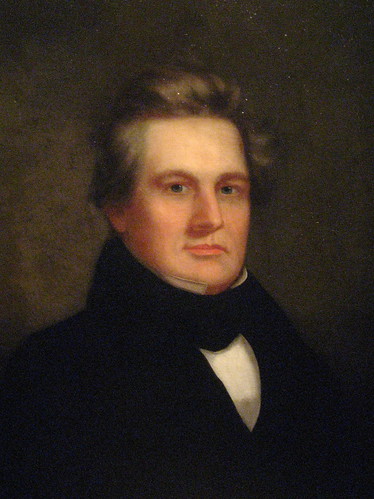
Credit: Oil Portrait of Benjamin Harrison (1895), Eastman Johnson, White House Historical Association (White House Collection)

Thursday, January 16, 2014

John F. Kennedy and the Rise of Space Food

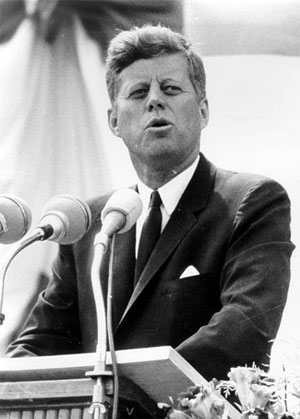
In a famous 1962 speech at Rice University in Houston, Texas, President John F. Kennedy reaffirmed America's commitment to landing a man on the moon by the end of the decade. In it, he said:

We choose to go to the moon. We choose to go to the moon in this decade and do the other things, not because they are easy, but because they are hard, because that goal will serve to organize and measure the best of our energies and skills, because that challenge is one that we are willing to accept, one we are unwilling to postpone, and one which we intend to win, and the others, too….It is for these reasons that I regard the decision last year to shift our efforts in space from low to high gear as among the most important decisions that will be made during my incumbency in the office of the Presidency…

Seven years later, on July 20, 1969, as part of the Apollo 11 space mission, astronaut Neil Armstrong opened the hatch of the lunar module (nicknamed “The Eagle”) and became the first man to walk on the surface of the moon. The crew spent a total of two and a half hours on the moon, performing experiments and collecting soil and rock samples to return to Earth.

So what does this have to do with food? A lot, if you’re talking about space food! According to sources at NASA, the first American astronauts had to eat bland, bite-sized cubes of food, freeze dried powders, and semi-liquids that were squeezed from aluminum tubes.

By the late 1960s, the quality of space food had greatly improved. The Apollo astronauts were the first to have hot water, which improved the food's texture and taste. Today, a wide variety of menu items are available for astronauts in space. They can choose from beef stroganoff, chicken teriyaki, macaroni and cheese, spaghetti and meatballs, peanut butter, seafood, quiche, candy, cereal, nuts, and fruit.

Sandwiches with bread, however, are strictly forbidden. That's because there is no gravitational pull in space and so bread crumbs could float away and get stuck in equipment, clog air vents, or contaminate experiments. Condiments like ketchup, mustard and mayonnaise come in their normal forms, but salt and pepper are only available in liquid form because, like bread crumbs, the powdered versions could float away and pose a danger to the mission.

If you'd like to get a taste for what astronauts ate in space, here's a recipe for NASA Mini Vegetable Quiche from NASA Space Food Systems Laboratory and Scientific American:

4 whole eggs

4 whole eggs

3/4 cup canned low-fat evaporated milk

½ lb. fresh zucchini

4 oz. cream cheese

1 cup fresh mushrooms, sliced

½ cup Swiss cheese, shredded

tops of 3 fresh green onions

1 cup corn flake crumbs

1 tbsp unsalted butter

1 tsp coarse grind black pepper

No-stick cooking spray

Preheat oven to 275°F. Spray petite loaf pans with the no-stick cooking spray. Coat each compartment of the loaf pans with corn flake crumbs. Wash green onions and zucchini thoroughly. Trim ends from zucchini. Grate zucchini. Chop sliced mushrooms and the green onions.

Place softened cream cheese into a bowl and beat until smooth. Add evaporated milk to the cream cheese, a little at a time, mixing well after each addition. Add eggs to the cream cheese mixture and mix until thoroughly combined. Heat sauté pan over medium heat. Melt butter and sauté chopped green onions and mushrooms just until soft, about 5 minutes. Add black pepper to sautéed vegetables. Mix well and set aside.

Combine sautéed vegetables with zucchini and Swiss cheese; mix well. Combine vegetable mixture with egg mixture and mix well. Add vegetable quiche to each compartment until the compartment is almost filled to the top. Bake pans of quiche for approximately 25-27 minutes at 275°F (until internal temperature is 170°F). The quiche will rise a bit during cooking then fall slightly. Allow quiche to cool before removing from pans.