Wednesday, June 22, 2011

George Bush Apple-Cranberry Brown Betty

According to New York Times columnist Maureen Dowd, George H.W. Bush has always had a "whopping appetite," but it isn't for vegetables like broccoli (as he made clear to reporters at a news conference in 1990) or other healthy, nutritious dishes. Instead, our 41st president loves to munch on pork rinds, beef jerky, nachos, tacos, gaucamole, chile, refried beans, hamburgers, hot dogs, barbecued ribs, and popcorn. And "even when he eats something healthy, like yogurt or oat bran," according to Dowd, "he tries to spice it up with Butterfingers or something else to give it a little zip."

Given his unpretentious tastes, it’s not surprising that George and Barbara Bush made no particular culinary demands on their Executive Chef and both often “exulted in the pleasures of White House dining.” In a burst of gustatory fervor, Mrs. Bush reportedly wrote, “Duck soup, smoked trout, delicate salad and peaches and passion fruit! Glorious. The food is so special that you cannot believe it.”

As for Mr. Bush's culinary preferences, the Washington Post reported that, shortly after taking office, the new president was making them known:

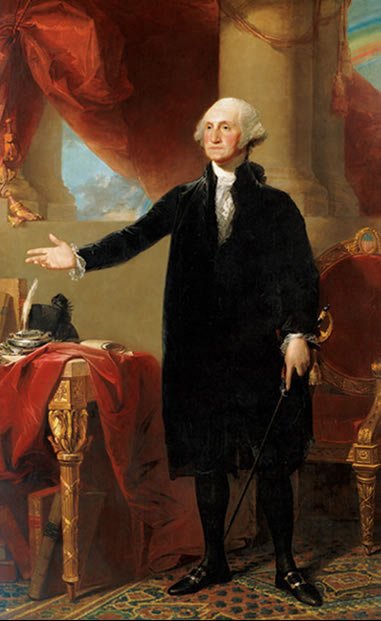
For a black-tie $1,500-a-plate inaugural dinner what did he choose? A baked bean and scrod dinner to commemorate the great state of his birth, Massachusetts? Oysters a la Connecticut to note the days of his youth? A messy Texas barbecue from his adopted home state? Or, from his Kennebunkport summer home, Maine lobsters? Instead George and Barbara Bush for the first of many presidential dinners designed a meal around the taste buds of George Washington and called it "From George to George."

If you'd like to whip up the delicious dessert that was served at that gala dinner, here is the recipe for Apple-Cranberry Brown Betty:

Butter and sugar for preparing the souffle dish
10 Granny Smith apples
1 teaspoon lemon juice
6 tablespoons butter, plus additional 1/2 cup melted
3 tablespoons sugar
2 cups fresh cranberries, washed and dried
1 cup golden raisins, soaked in warm water for 15 minutes then squeezed dry
Zest of 2 oranges
1 cup light brown sugar
1/4 teaspoon mace
1 teaspoon ground cinnamon
3 cups stale white-bread crumbs, crusts removed

Preheat the oven to 375 degrees. Butter a 2-quart straight-sided glass souffle dish and then sprinkle with sugar. Peel, core and quarter the apples, then cut each quarter into 3 chunks. Reserve in a bowl. Sprinkle the lemon juice over the apples and toss to combine.

In a large frying pan, heat 2 tablespoons of the butter until hot and add 1/3 of the apple pieces. Sprinkle with 1 tablespoon of the sugar and saute over high heat until the apples are lightly caramelized. Remove the apples from heat and reserve in a large bowl. Repeat process until all the apples are cooked. Combine the apples with the cranberries, raisins, orange zest, brown sugar, mace and cinnamon and mix well. Mix the bread crumbs with the remaining 1/2 cup melted butter.

Line bottom of souffle bowl with 1/3 of the bread-crumb mixture. Add 1/2 of the apple-cranberry mixture, then sprinkle with 1/3 more of the bread crumbs. Add rest of apple-cranberry mixture, then top with the remaining bread crumbs. Bake in the preheated oven for 1 1/4 to 1 1/2 hours.

Thanks for stopping by THE HISTORY CHEF! For a free excerpt of my new book from Simon and Schuster click here!

Tuesday, June 21, 2011

George Washington's Fishery

So did you know that before he became president, George Washington ran a successful fishery in the Potomac River near his Mount Vernon home. During the annual spring run, Washington's slaves would catch and harvest more than a million herring, shad, striped bass, oysters, crabs, and clams.

The Potomac River, of course, flows into the Chesapeake Bay, which is the largest estuary in the United States. Back in George’s day, it was known for its great abundance of shellfish and fish. Today, it is not nearly as productive due to overharvesting, pollution, runoff, and disease, but it still yields more fish and shellfish (about 500 million pounds each year) than any other estuary in the United States.

What are estuaries? Estuaries are typically defined as partially enclosed coastal bodies of water that are formed where freshwater from rivers and streams mix with salt water from an ocean. Some estuaries, like the Chesapeake Bay and the lower part of the Hudson River, were formed thousands of years ago when melting glaciers caused sea levels to rise and flood low lying valleys and lands.

Others, like those found in Northern Europe, Alaska and Canada, were formed during periods of glaciation. Still others, like the San Francisco Bay, are known as tectonic estuaries that were formed by the buckling or folding of land surfaces along major fault lines. Regardless of how they were formed, estuaries are critical for marine life and have provided an important source of food for human beings since the beginning of recorded time.

So what do estuaries have to do with George Washington and food? Alot, if you consider the fact that by the time he became president, George had lost almost all of his teeth and had to eat soft foods, like fresh fish from the Chesapeake and its many rivers, throughout most of his adult life.

Baked Shad was another Washington family favorite. Although no recipes for it are contained in Martha Washington's Booke of Cookery, historians explain that cooks at Mount Vernon were "undoubtedly so familiar with it that directions for preparation were unnecessary. Like boiling eggs, cooking shad was something everyone could do!"

Although it can be difficult to find, shad is now in season and so here is a simple and delicious recipe for Broiled Shad with Thyme to try from Food and Wine magazine:

2 pounds shad fillets, cut to make 4 pieces
1 tablespoon olive oil
3/4 teaspoon chopped fresh thyme
1/2 teaspoon salt
1/8 teaspoon fresh-ground black pepper
1 tablespoon butter
4 lemon wedges, for serving

Heat the broiler. Lightly oil a broiler pan or baking sheet. Put the fish in the pan and rub the surface with the oil. Sprinkle with the chopped or dried thyme, the salt, and pepper. Dot with the butter. Broil the fish until golden brown and just done, about 4 minutes for 3/4-inch-thick fillets. Decorate with the thyme sprigs, if using. Serve with the lemon wedges.

FAST FACT: Contrary to popular belief, George Washington did not wear wooden dentures. Instead, a talented dentist named John Greenwood hand-crafted his dentures from elephant ivory, hippopotamus tusks, and parts of horse and donkey teeth!

Monday, June 20, 2011

James Buchanan Snickerdoodles

Presiding over the nation during a time of great strife, James Buchanan is the only president who never had a wife. And while he dined very fine at many White House parties, historians say that James retained a childhood taste for Scrapple, Confederate Pudding, and sweet Dutch-German cookies called Apees.

Snickerdoodles are another traditional Dutch-German cookie that are usually covered with cinnamon and sugar and baked in the shape of a snail. Some food historians say that their fanciful name comes from the German term Schnecke Knödel which can be translated as “snail dumpling.” Others say that “snicker” comes from the Dutch word snekrad or the German word schnecke, both of which refer to a small, snail-like shape.

Although no one knows who came up with their name, we do know that these sweet little sugar cookies have been popular in Buchanan's native state of Pennsylvania for centuries. If you'd like to whip up a batch of Snickerdoodles today, here's a fabulous recipe to try from Emeril Lagasse:

For the topping:

3 tablespoons sugar
1/2 teaspoon cinnamon

For the cookie dough:

3 1/2 cups flour
1 tablespoon baking powder
2 teaspoons baking soda
1/4 teaspoon salt
1/4 teaspoon cinnamon
1 cup butter
2 cups sugar
2 eggs
1 tablespoon light corn syrup
2 1/2 teaspoons vanilla extract

In a small bowl, stir together the sugar and cinnamon and set aside. To make the cookie dough, stir together the dry ingredients. In a bowl with a paddle attachment, cream the butter. Add the sugar and continue to mix, then add the eggs, corn syrup, and vanilla, and mix thoroughly. Add the dry ingredients and mix until blended. Chill dough 1 hour if it's sticky or difficult to handle.

Preheat oven to 375 degrees F. Roll balls of dough about the size of a walnut then roll in the cinnamon sugar to coat. Place on an ungreased sheet pan 2 1/2 inches apart. Bake for 10 to 12 minutes until puffed up and the surface is slightly cracked. Let cool on the sheet a few minutes then remove to a wire rack to cool.

FOOD FACT: At Buchanan’s inaugural reception in 1857, five thousand guests dined on eight rounds of beef, seventy-five hams, sixty saddles of mutton, four saddles of venison, four hundred gallons of oysters, five quarts of jellies, twelve hundred quarts of ice cream, and "pates of infinite variety." The high point of the night was a Pyramid Cake that stood four feet high and was decorated with a flag bearing the insignia of each state. As president, Buchanan’s annual $25,000 salary wasn’t enough to cover his tabs and he often had to pay the bills for his extravagant White House parties out of his own pocket!

Friday, June 17, 2011

A Brief History of Father's Day and Lyndon Johnson's Barbecue Diplomacy

Some historians say that the origins of Father’s Day in the United States can be traced to a young woman by the name of Sonora Smart Dodd, who reportedly came up with the idea while listening to a Mother’s Day sermon in Spokane, Washington in 1909. Raised by her widowed father, a Civil War veteran who had lost his wife after the birth of their sixth child, Sonora felt that her father should be honored in the same way that mothers were on Mother’s Day.

Toward that end, a special Father’s Day observance was held on June 19, 1910. Although that celebration was a local affair, the idea of a national Father’s Day picked up steam when it was endorsed by President Calvin Coolidge in 1924, but it would take another thirty years before Father’s Day was recognized by a Joint Resolution of Congress. Then, in 1966, the first proclamation honoring fathers was issued by President Lyndon Johnson, who designated the third Sunday in June as Father's Day.

Today, of course, Americans celebrate Father's Day in a wide variety of ways, with perhaps the most traditional festivity being an old-fashioned, American-style barbecue, and so it seems only fitting this week to honor President Johnson, who was well-known for his love of down-home country barbecues at his beloved family ranch in Gillespie County, Texas.

Barbecuing, of course, has been used as a tool in American political campaigns and elections for more than a century, but no politician ever used “the conviviality and informality of cooking and eating outdoors” more than Johnson. As his political career progressed, LBJ's barbecues got bigger and more elaborate, and as more important guests visited the ranch, his wife Lady Bird “undertook the first of several remodeling plans to host them in style. Eventually the ranch would include several guest suites, a swimming pool, a radio tower, and an airstrip capable of handling small jets.”

But the most important barbecue ever planned for the LBJ Ranch never happened. It was scheduled, according to historians,

for November 23, 1963, when Vice President [Johnson], President Kennedy, and their entourages were planning to dine beneath the oaks on the Pedernales. But a few hours before they were to board the choppers from Dallas to Johnson City, on November 22, Kennedy was assassinated two cars in front of Johnson as they drove in a motorcade. Instead of taking his boss for a tour around his spread and feeding him barbecue, Johnson found himself back in Washington attending memorial services, and meeting with the cabinet, leaders of Congress, and former Presidents Eisenhower and Truman.

A month later, frazzled from, as Ladybird described it, the "tornado of activity that has surrounded us", the Johnson family retreated to the ranch on Christmas Eve. West German Chancellor Ludwig Erhard was scheduled to visit the President to discuss the Soviet threat, the Berlin Wall, and other important matters. Rather than return to Washington for a formal State Dinner, Lyndon invited Erhard and his entourage on down to what historians claim was the first official Presidential barbecue in history. Yes, Johnson's first state dinner was a barbecue for 300 catered by Walter Jetton on December 29, 1963.

When his staff realized it would be chilly that day, the sit-down part was moved indoors to Stonewall High School gymnasium, about two miles away. Workers did an admirable job of creating an outdoorsy feel with bales of hay, red lanterns, red-checkered table cloths, saddles, lassos, and mariachis. According to Lady Bird's diary, "there were beans (pinto beans, always), delicious barbecued spareribs, cole slaw, followed by fried apricot pies with lots of hot coffee. And plenty of beer."


Although those particular recipes may have been lost to posterity, biographers say that some Johnson family favorites included Chipped Beef covered with Cream, Pedernales River Chili, and Beef Stroganoff. And Lady Bird reportedly enjoyed handing out her own recipe for Barbecue Sauce.

If you’d like to add a little history and zip to your Father's Day celebation this weekend, here is the original recipe for Lady Bird's Barbecue Sauce:

¼ cup butter
¼ cup vinegar
¼ cup ketchup
¼ cup fresh lemon juice
¼ cup Worcestershire sauce
Salt, pepper, red pepper flakes, and Tabasco to taste

Melt butter in a medium sauce pan over medium-high heat. Add other ingredients and bring to a boil. Yields 1 ½ cups.

FAST FACT: With the Vietnam War raging overseas, the Johnson family cut back on the lavish White House entertaining that had been a Kennedy hallmark. There were occasional barbecues at the White House, according to historians, but most social occasions were used to elicit political support. Johnson's Texas ranch provided the real refuge from the pressures of office, and the family retreated there often, where Johnson could be seen driving the dusty ranch roads in a large Cadillac convertible or relaxing on long walks."

Thursday, June 16, 2011

Civil War Rations and Hard Tack Crackers

Civil War rations generally consisted of 12 ounces of pork or bacon or one pound of fresh or salt beef; beans or peas; rice or hominy; sugar; coffee or tea; and hard biscuits or crackers known as Hardtack. Hardtack was usually square or rectangular in shape with small holes baked into it, similar to the soda crackers we are familiar with today.

According to historians, factories in the north “baked thousands of hardtack crackers every day, packed them in crates, and shipped them out by wagon or rail.” Sometimes the hardtack didn't get to the soldiers until weeks, or even months, after they had been made. By then, the crackers were so hard that soldiers called them "tooth dullers" or "sheet iron crackers."

Older crackers were often infested with maggots or weevils and so soldiers referred to them as "worm castles" because of “the many holes bored through them by these tiny pests.” Civil War soldiers dreaded these crackers so much that they sang a wartime tune about them called “Hard Tack, Come Again No More!” Here are some of the lyrics:

Let us close our game of poker, take our tin cups in our hand
As we all stand by the cook's tent door
As dried monies of hard crackers are handed to each man.
O, hard tack, come again no more!

CHORUS: 'Tis the song, the sigh of the hungry:
"Hard tack, hard tack, come again no more."
Many days you have lingered upon our stomachs sore.
O, hard tack, come again no more!

'Tis a hungry, thirsty soldier who wears his life away
In torn clothes - his better days are o'er.
And he's sighing now for whiskey in a voice as dry as hay,
"O, hard tack, come again no more!" - CHORUS

'Tis the wail that is heard in camp both night and day,
'Tis the murmur that's mingled with each snore.
'Tis the sighing of the soul for spring chickens far away,
"O, hard tack, come again no more!" - CHORUS


But to all these cries and murmurs, there comes a sudden hush
As frail forms are fainting by the door,
For they feed us now on horse feed that the cooks call mush!
O, hard tack, come again once more!

'Tis the dying wail of the starving:
"O, hard tack, hard tack, come again once more!"
You were old and very wormy, but we pass your failings o'er.
O, hard tack, come again once more!


Despite the bad rap that Hardtack got, soldiers prepared it in a number of ways. Some would crumble it into coffee or tea or soften it in water and fry it in bacon grease. Others made a popular dish called "skillygallee" by crumbling the crackers into salted fried pork. If you’d like to get a sense of what Hardtack tastes like, here is a simple recipe to try from americancivilwar.com:

2 cups of flour
1/2 to 3/4 cup water
1 tablespoon of Crisco or vegetable fat
6 pinches of salt

Mix the ingredients together into a stiff batter, knead several times, and spread the dough out flat to a thickness of 1/2 inch on a non-greased cookie sheet. Bake for one-half an hour at 400 degrees. Remove from oven, cut dough into 3-inch squares, and punch four rows of holes, four holes per row into the dough. Turn dough over, return to the oven and bake another half hour. Turn oven off and leave the door closed. Leave the hardtack in the oven until cool. Remove, eat with coffee or tea and sing "Hardtack, Come Again No More!"

FOOD FACT: According to researchers at visitgettysburg.com, rations also consisted of fresh vegetables (sometimes fresh carrots, onions, turnips and potatoes), dried fruit, and dried vegetables when available. Men also "foraged and scavenged the countryside for fresh food at times." Many also "received supplements mailed from their family, or they could buy foods from sulters who followed the troops selling pickles, cheese, sardines, cakes, candies, beer, and whisky, even though the troops were forbidden to drink alcohol."

For the announcement for my new children's book, please click here!

Wednesday, June 15, 2011

A Royal State Dinner at the Reagan White House

The wedding of Prince Charles and Lady Diana Spencer on July 29, 1981 has been aptly described as one of the most celebrated spectacles of the Reagan era. But because of the assassination attempt on President Reagan four months earlier, he couldn't attend, but he encouraged his wife Nancy to “serve as the United States representative at the event.”

Rising to the occasion, Mrs. Reagan traveled to England and spent one week in London, which was the longest amount of time she had been away from her husband in their then-twenty-nine years of marriage. During her stay, the First Lady reportedly attended eighteen events on behalf of the nation, including "a ball at Buckingham Palace, a dinner at the American Embassy, tea with the Queen Mother, and lunch with Prime Minister Margaret Thatcher.”

According to the Ronald Reagan Foundation,

Mrs. Reagan was an especially appropriate delegate for the United States to send to the Royal Wedding. The Reagans had met Prince Charles many years earlier, when Ronald Reagan was Governor of California. Also, in March of 1975 Ronald and Nancy had met Margaret Thatcher, and the future president and future prime minister found they shared a special connection even then...

Over the years, the President and Mrs. Reagan expressed their immense respect for their British friends in many ways, saving the first and last state dinners to honor Margaret Thatcher. Her Royal Majesty Queen Elizabeth II attended the first dinner in February 1981, and the Queen returned the honor when she hosted a state dinner for the Reagans’ visit to London when the president addressed Parliament in 1982.


The following year, Queen Elizabeth II and her husband Prince Philip visited Rancho del Cielo, the Reagans’ Santa Barbara ranch, and invited the Reagans aboard the royal yacht Brittania to celebrate an anniversary dinner. But of all the Royal visits to the Reagan White House, none were more memorable than the star-studded State Dinner held in honor of the Prince and Princess of Wales on November 9, 1985.

As the BBC reported at the time:

Prince Charles and Princess Diana have ended the first day of their much-vaunted trip to the USA at a gala dinner in Washington, hosted by President Reagan and his wife Nancy. They mixed with movie stars, such as Clint Eastwood, John Travolta, Tom Selleck and the singer Neil Diamond as well as politicians and businessmen.

A small group of anti-British IRA supporters protested outside and there were a few slip-ups during the glamorous event. For a moment President Reagan forgot the Princess of Wales' name during an after-dinner speech to guests. "Permit me to add our congratulations to Prince Charles on his birthday just five days away," he said, "and express also our great happiness that...er...Princess David...Princess Diane (sic) is here on her first trip to the United States."


According to the report, the Princess herself, still suffering from jetlag, momentarily forgot to return the toast. But all that was forgotten when she famously took to the dance floor with John Travolta in her "midnight blue velvet dress and sapphire and diamond choker."

Earlier in the evening, an elegant dinner was held in the State Dining room, where ballet great Mikhail Baryshnikov was seated next to Princess Diana, while Prince Charles sat between actress Beverly Sills and the First Lady. In addition to Neal Diamond, Clint Eastwood, Tom Selleck, and Travolta, other well-known personalities who attended the affair included fasion icons Gloria Vanderbilt and Estee Lauder, Olympic figure skater Dorothy Hamill, and architect I.M. Pei.

According to White House chef Henry Haller, the dinner menu that evening "was carefully designed to suit the noble tastes of the Prince and Princess, and to appeal to the varied tastes of their table mates. Since the Prince favors fish and fowl, the meal featured fennel-flavored lobster mousse as the first course and lightly glazed chicken for the entree."

If you'd like to whip up some Lobster Mousse for your next formal gathering, here is a delicious recipe to try from the New York Times:

1/2 pound cooked lobster meat
3/4 cup clam broth
1 tablespoon unflavored gelatin
2 ribs celery, chopped fine
2 tablespoons finely chopped onion
1 1/2 teaspoons Dijon mustard
1/2 cup minced parsley
1/2 cup heavy cream, whipped
3/4 cup mayonnaise
Salt, white pepper to taste
Juice of one lemon
Curly kale

Cut lobster into 1/2-inch pieces. Sprinkle gelatin over broth. Place over low heat; stir until thoroughly dissolved. Cool. Whip cream. Combine celery, onion, mustard, parsley, whipped cream, 1/4 cup mayonnaise, salt and pepper, lobster and cooled broth and mix thoroughly.

Spoon into 1-quart mold and seal tightly with plastic wrap. Refrigerate until firm, at least four hours or overnight. To serve, mix remaining mayonnaise with lemon juice. Unmold mousse and serve on curly kale, with lemon mayonnaise poured over the top. Serve with homemade Melba toast.

FOOD FACT: In The White House Family Cookbook, Chef Haller recalls that, even in the White House, Ronald Reagan preferred Macaroni and Cheese, Meat Loaf and other simple foods of his youth. The President usually had lunch in the Oval Office, and preferred "a light meal such as soup, bread, and a fruit dessert." He also liked minestrone with a wedge of fresh Italian bread, lentil soup with sliced frankfurters, navy bean or black beans soup, and Scotch broth made with barley." His favorite soup, however, was reportedly "a home-style hamburger soup made with beef broth, lean ground beef, fresh tomatoes, and hominy."

Thanks for stopping by THE HISTORY CHEF! For a free excerpt of my new book from Simon and Schuster please click here!

Tuesday, June 14, 2011

Benjamin Harrison and the American Corn Belt

Now please don't tell People magazine or TMZ, but Benjamin Harrison and his wife Caroline were reportedlty "corn-addicts," which isn’t surprising since they were born in Ohio and lived for many years in Indiana, two of the states that make up the American Corn-Belt, which produces more than half of the corn grown each year in the United States.

The other states that make up the Corn-Belt include Iowa and Illinois and parts of Kansas, Nebraska, Minnesota, and Missouri. Experts say that the warm nights, hot days, and well-distributed rainfall of the region during the growing season are ideal conditions for raising this highly versatile vegetable.

And did you know that more than half of the corn grown in the United States is used to feed cattle, sheep, chickens, hogs and other livestock? The rest is used to produce an astonishingly wide array of consumer foods and products, including ketchup, crayons, soap, detergent, cough syrup, marshmallows, graham crackers, pancake mix, chewing gum, soft drinks, toothpaste, salad dressings, breakfast cereals, licorice, disposable diapers, shoe polish, paint, peanut butter, and, of course, popcorn.

Although the popcorn that Harrison ate was nothing like the microwavable kind we are familiar with today, biographers say that he was fond of such traditional midwestern dishes as Corn Muffins, Stewed Corn, and Green-Corn Fritters. And being the "corn-addict" that he was, he surely would have enjoyed this delicious recipe for Corn Chowder from the Food Network's Paula Dean:

1 cup (2 sticks) butter
1 small onion, diced
1 small carrot, finely diced
1 small celery stalk, diced
1 clove garlic, minced
1/2 cup all-purpose flour
3 cups white corn kernels, fresh or frozen
3 cups chicken stock
2 cups half-and-half
Pinch freshly grated nutmeg
Kosher salt and freshly ground black pepper

Melt 1 stick of butter in a large saucepan over medium heat. Add the onion, carrot, celery, and garlic, and saute for 2 minutes. Add the flour and stir to make a roux. Cook until the roux is lightly browned; set aside to cool to room temperature.

Meanwhile, combine the corn and chicken stock in another saucepan, and bring to a boil. Simmer for 10 minutes. Pour the boiling stock with the corn (a little at a time) into the saucepan with the roux, whisking briskly so it doesn't lump. Return the skillet to the heat and bring to a boil. The mixture should become very thick.

In a small saucepan, gently heat the half-and-half; stir it into the thick corn mixture. Add the nutmeg and salt and pepper, to taste. Just before serving, cut the remaining stick of butter into large chunks. Add it to enrich the soup, stirring until the butter melts.

FOOD FACT: Popcorn's ability to "pop" lies in the fact that corn kernels contain a tiny amount of water stored in a circle of soft starch inside a hard outer casing. When heated to a high enough temperature, the water expands which exerts an increasing amount of pressure until the outer casing eventually gives way and the kernels explode, or “pop,” allowing the water to escape as steam and turning the kernels inside out!

Credit: Oil Portrait of Benjamin Harrison (1895), Eastman Johnson, White House Historical Association (White House Collection)

Saturday, June 11, 2011

Thomas Jefferson's Favorite Vegetables

So did you know that Thomas Jefferson's vegetable garden at Monticello was one thousand feet long and contained more than 250 varieties of more than 75 species of plants from around the world?

Tended by elderly slaves, called “veteran aides,” Jefferson’s garden was divided into twenty-four squares, or growing plots, arranged according to which part of the plant was to be harvested, be it roots (carrots and beets), leaves (lettuce and cabbage) or fruits (tomatoes, peas, and beans). Among the many exotic new plants grown there were beans and salsify collected by the Lewis and Clark expedition, figs from France, peppers from Mexico, and broccoli and squash imported from Italy.

As methodical as a botanist, Jefferson recorded the results of his planting experiments in his Garden Book, noting such events as the dates that seeds were planted, when leaves appeared, and when his favorite vegetables were ready to eat. Biographers say that Jefferson’s favorite vegetables included tomatoes, turnip greens, corn, and sweet potatoes. He was also particularly fond of the English pea, and, by staggering the time of their planting, he and his many dinner guests were able to enjoy them from mid-May through mid-July.

According to scholars at Monticello:

Jefferson might have taken special note of the English pea because of an annual neighborhood contest to see which farmer could bring to table the first peas of spring. The winner would host the other contestants in a dinner that included the peas.

Though Jefferson's mountaintop garden, with its southern exposure to warmth and light, should have provided an advantage for the contest, it seems that the contest was almost always won by a neighbor named George Divers.

As Jefferson's grandson recalled: "A wealthy neighbor [Divers], without children, and fond of horticulture, generally triumphed. Mr. Jefferson, on one occasion had them first, and when his family reminded him that it was his right to invite the company, he replied, 'No, say nothing about it, it will be more agreeable to our friend to think that he never fails.'"


Given his great fondness for peas, it's not surprising that these tiny green vegetables often appeared on Jefferson's table, both at Monticello and at the newly built President's House in Washington D.C. In her popular 1824 cookbook, The Virginia Housewife, Mary Randolph (a relative of Jefferon's) included a recipe for preparing this simple, slightly-minty dish:

To have them in perfection, they must be quite young, gathered early in the morning, kept in a cool place, and not shelled until they are to be dressed; put salt in the water, and when it boils, put in the peas; boil them quick twenty or thirty minutes, according to their age; just before they are taken up, add a little mint chopped very fine, drain all the water from the peas, put in a bit of butter, and serve them up quite hot.

If you'd like to make some English Peas with Mint, you can't go wrong with this more modern recipe from epicurious.com

1 spring onion, sliced
2 tablespoons olive oil
2 cups English peas, shelled (about 12 ounces)
6 mint leaves, torn
Salt
Water

Sauté the spring onion in two tablespoons olive oil over medium-high heat. Add the shelled peas, a pinch of salt, and enough water to barely cover. Cook over high heat for 2 minutes, then add the torn mint leaves. Continue cooking until the peas are tender, a few more minutes. Add more salt if needed.

FAST FACT: When English colonists arrived in America, "pease" were one of the first crops to be planted. This makes sense as peas are nutritious and required little storage space on ships. They would also keep for long periods of time, as reflected in the children's rhyming song "Pease Porridge Hot." Maybe you remember the lyrics: Pease porridge hot/Pease porridge cold/Pease porridge in the pot/Nine days old.

Friday, June 10, 2011

Martha Washington's Booke of Cookery

Martha Washington’s Booke of Cookery and Booke of Sweetmeats is a family cookbook that Martha compiled and used for fifty years. It contains more than five hundred recipes, mostly dating back to Elizabethan and Jacobean times, the golden age of English cookery.

In her insightful introduction to the Booke of Cookery, food historian Karen Hesse explains some reasons why the art of home cooking has been neglected for so long by historians:

Few scholars are cooks – and ever fewer cooks scholars. Perhaps this accounts for the fact that no other aspect of human endeavor has been so neglected by historians as home cooking. I cannot help but feel that this neglect is also related to the ageless depreciation of the work of women. Yet since time immemorial – when not searching for food, making baskets and pottery, tilling the soil and tending livestock, spinning and weaving, and bearing and raising children, of course – women have been inventing and perfecting the art of cooking. The importance of agriculture and the significance of the spice routes were always well understood by the historians...but the homely art of the hearth has never been worthy of the same study as are other disciplines.

Hesse’s points are well-taken and will hopefully help stimulate serious public and scholarly discussion of the fertile and fascinating new field of culinary history. In the meantime, if you'd like to get a sense of the type of recipes that are contained in Martha's Booke of Cookery and Sweetmeats, here is a quaint if antiquated "receipt" titled, "To Season Apples for Puffs"

Take apples, pare & cut them in quarters, & core them, & put them into colde water; & set them on ye fire in a pan; let them boyle softly, then put them into a dish, & cover them over a chafing dish of coles, & put to it some slyced nutmegg, slyced giner, & 2 or three colves, some slyced orring & leamon pill candied, or citron pill & a little red wine. & sweeten them with sugar, & then put them into your puffs.

Now, you could try to make this recipe today, but, as Hesse rightly explains, "Most apples nowadays disintegrate when boiled, no matter how softly." That said, a better bet might be to try this more recent recipe for Apple Turnovers from the Food Network's Ina Garten. If Mrs. Washington were here with us today, she'd probably say that this delightfully light and slightly-sweet apple dish tastes simply delicious!

1 teaspoon grated orange zest
3 tablespoons freshly squeezed orange juice
1 1/4 pounds tart apples, such as Empire or Granny Smith (3 apples)
3 tablespoons dried cherries
3 tablespoons sugar, plus extra to sprinkle on top
1 tablespoon all-purpose flour
1/4 teaspoon ground cinnamon
1/8 teaspoon ground nutmeg
Pinch kosher salt
1 package frozen puff pastry, defrosted
1 egg beaten with 1 tablespoon water, for egg wash

Preheat the oven to 400 degrees F. Combine the orange zest and orange juice in a bowl. Peel, quarter, and core the apples and then cut them in 3/4-inch dice. Immediately toss the apples with the zest and juice to prevent them from turning brown. Add the cherries, sugar, flour, cinnamon, nutmeg, and salt.

Flour a board and lightly roll each sheet of puff pastry to a 12 by 12-inch square. Cut each sheet into 4 smaller squares and keep chilled until ready to use. Brush the edges of each square with the egg wash and neatly place about 1/3 cup of the apple mixture on half of the square.

Fold the pastry diagonally over the apple mixture and seal by pressing the edges with a fork. Transfer to a sheet pan lined with parchment paper. Brush the top with egg wash, sprinkle with sugar, make 2 small slits, and bake for 20 minutes, until browned and puffed. Serve warm or at room temperature.

FOOD FACT: Among many other interesting if somewhat curious entries in Martha's Booke of Cookery include, "How to souse a pig of 3 or 4 shillings," To roste a shoulder of muton with blood," "To make a caule's foot pie," "To pickle cowcumbers," "To Stew Sparrows," and "To Make a Pigeon Pie." Oh my!

Thursday, June 9, 2011

Richard Nixon, the Watergate Scandal, and a Bowl of Cottage Cheese with Pineapple

Around 2:30 a.m. on June 17, 1972, five men, one of whom said he was a former employee of the Central Intelligence Agency, were arrested in what authorities described as "an enormous plot to bug the offices of the Democratic National Committee" at the Watergate complex in Washington D.C.

It was an election year, and, as the investigation into the break-in unfolded, a pattern of unlawful activites within President Richard Nixon's administration was uncovered by the press. Together, these federal crimes and misdeeds would become known as "the Watergate scandal" and lead to Nixon's resignation from the Office of the Presidency on August 9, 1974.

On his final day in office, Nixon reportedly awoke at 7:00 a.m. after "a fitful night." After a light breakfast, Nixon signed a one-sentence Letter of Resignation and said an emotional goodbye to his staff. Shortly after 9:00 a.m. he entered the East Room and made a brief Farewell Address to an overflow crowd of White House staff and Cabinet members. He then joined Gerald Ford for a short walk across the South Lawn to a helicopter that would whisk him away into history.

The previous evening, Nixon had delivered a televised Resignation Address to the nation. After acknowledging that he had lost the support of Congress and saying, "I have never been a quitter," Nixon said:

To leave office before my term is completed is abhorent to every instinct in my body. But as President I must put the interests of America first. America needs a full-time President and a full-time Congress, particularly at this time with problems we face at home and abroad.

To continue to fight through the months ahead for my personal vindication would almost totally absorb the time and attention of both the President and the Congress in a period when our entire focus should be on the great issues of peace abroad and prosperity without inflation at home.

Therefore, I shall resign the Presidency effective at noon tomorrow. Vice President Ford will be sworn in as President at that hour in this office. As I recall the high hopes for America with which we began this second term, I feel a great sadness that I will not be here in this office working on your behalf to achieve those hopes in the next 2 1/2 years.


Although it would take some great investigative work to uncover records of what Nixon ate for breakfast on his final day in office, it has been said that it consisted of a small bowl of cottage cheese with pineapple.

Whether that is true is hard to confirm, but White House Chef Henry Haller later revealed that, at breakfast, Nixon "liked fresh fruit, wheat germ with nondairy creamer and coffee." As for favorite dinners, Nixon reportedly enjoyed Sirloin Steak, cooked medium-rare and lightly seasoned; Chicken Cordon Blue; and more simple dishes like Spaghetti and Meatballs. He was also particularly fond of his wife Patricia's Family-Style Meatloaf. According to Chef Haller:

Meat loaf appeared about once a month on the family dinner menus. As soon as the public became aware of this fact, the White House was inundated with inquires for the recipe that so pleased the presidential palate. To ease my burden, Mrs. Nixon's meat loaf recipe was printed on White House stationery to be sent in response to the thousands of requests for it.

If you'd like to get a taste of Pat Nixon's Meatloaf at your next family dinner, here is the original recipe from The White House Cookbook by Henry Haller:

2 tablespoons butter
1 cup finely chopped onions
2 garlic cloves, minced
3 slices white bead
1 cup milk
2 pounds lean ground beef
2 eggs, lightly beaten
1 teaspoon salt
ground black pepper, to taste
1 tablespoon chopped fresh parsley
1/2 teaspoon dried thyme
1/2 teaspoon dried marjoram
2 tablespoons tomato puree
2 tablespoons bread crumbs

Grease a 13-by-9-inch baking pan. Melt butter in a saute pan, add garlic and saute until just golden. Let cool. Dice bread and soak it in milk. In a large mixing bowl, mix ground beef by hand with sauteed onions and garlic and bread pieces. Add eggs, salt, pepper, parsley, thyme and marjoram and mix by hand in a circular motion.

Turn this mixture into the prepared baking pan and pat into a loaf shape, leaving at least one inch of space around the edges to allow fat to run off. Brush the top with the tomato puree and sprinkle with bread crumbs. Refrigerate for 1 hour to allow the flavors to penetrate and to firm up the loaf.

Preheat oven to 375 degrees. Bake meatloaf on lower shelf of oven for 1 hour, or until meat is cooked through. Pour off accumulated fat while baking and after meat is fully cooked. Let stand on wire rack for five minutes before slicing.

FAST FACT: A year and a half before Nixon resigned, an entirely different calamity unfolded in Washington. This time, it didn't involve illegal break-ins and phone taps but...pigeons! It all began the day before Nixon's second inaugural parade when attempts were made to clear pigeons from Pennsylvania Avenue. Upon Nixon's request, the inaugural committeee spent $13,000 to smear tree branches with a chemical repellent called “Roost No More” which was supposed to drive the bothersome birds away by making their feet itch. Sadly, many of the pigeons ate the stuff and keeled over, leaving the parade route littered with "dead and dying birds which had to be hurriedly swept away.”

Wednesday, June 8, 2011

Abraham Lincoln Kentucky Corncakes

Abraham Lincoln and his wife Mary were great animal lovers and allowed their four young sons to keep all sorts of pets on White House grounds. Among other animals, Abe and his family had three cats, a dog named Fido, rabbits, horses, and two rambunctious billygoats named Nanny and Nunko.

Another was a wild turkey named Jack with whom Lincoln’s youngest son Tad played with daily. When it came time for Jack to be sacrificed for a holiday dinner, Tad supposedly begged his dad to spare the turkey’s life, and, to this day, the White House maintains the tradition of “pardoning” a wild turkey each holiday season!

Although it’s a "tad" early to be thinking about preparing your next holiday dinner, you can whip up a batch of Kentucky Corncakes, which are a great side dish at just about any meal and were a Lincoln family favorite. If you’d like to make some Kentucky Corncakes today, here is a simple and simply delicious recipe to try from the Food Network:

1 cup roasted cornmeal (fine ground yellow cornmeal)
1 cup self-rising flour
4 tablespoons sugar
2 eggs
2 cups buttermilk
3 ounces corn oil
2 cups fresh corn kernels

Place cornmeal, flour, and sugar in a bowl and mix together. In a separate bowl, combine eggs, buttermilk, corn oil, and fresh corn and mix together. Fold mixtures together. Place 4 ounces of pancake mix onto a hot griddle. Cook on medium high heat for 4 minutes on each side, until cooked through. Serve warm with lots of butter and honey enjoy!

FAST FACT: According to historians at the Miller Center, the Lincoln family's routine in the White House reflected "the presence of their sons, the demands of war, and the highly complex and many-sided character of Abraham and Mary. [T]he day went from breakfast together as a family at 8:00 in the morning, reunion again for dinner at 8:00 in the evening, and then bedtime. Until little Willie's death in 1862, the two younger sons demanded a good deal of attention, and both parents gave them ample attention, although Lincoln grew more distant as the war progressed and occupied much of his day."

Thanks for stopping by THE HISTORY CHEF! And for a flash sale today for my book click here!

Tuesday, June 7, 2011

FDR's Beloved Dog Fala and the Election of 1944

On November 10, 1940, a cute black Scottish terrier puppy arrived at the White House as a gift for President Franklin Delano Roosevelt and his family. At first, the dog’s name was "Big Boy," but the president soon renamed him “Murray the Outlaw of Falahill” after a distant Scottish ancestor.

One of the most famous presidential pets, Fala, as he was nicknamed, went just about everywhere with the President and quickly became part of his public image. In her Pulitzer-Prize-winning biography, No Ordinary Time, presidential historian Doris Kearns Goodwin wrote:

Fala accompanied the president everywhere, eating his meals in Roosevelt's study, sleeping in a chair at the foot of his bed. Within a few weeks of his arrival, the puppy was sent to the hospital with a serious intestinal disturbance. He had discovered the White House kitchen, and everyone was feeding him. When he came home, Roosevelt issued a stern order to the entire White House staff: "Not even one crumb will be fed to Fala except by the President." From then on, Fala was in perfect health.

While being pampered at the White House and traveling with Roosevelt, Fala had the good fortune to meet many famous political leaders, including British Prime Minister Winston Churchill and Mexican President Manuel Camacho.

Thrust as he was into the national spotlight, it’s not surprising that Fala became embroiled in a political controversy during the presidential campaign of 1944. You see, earlier that year, Fala had faithfully accompanied his master on a diplomatic trip to the Aleutian Islands. Shortly after the president returned home, a rumor began circulating that Fala was accidentally left on one of the islands and that the Navy had to send a destroyer back to retrieve him.

Capitalizing on this rumor, Republicans accused Roosevelt of spending millions of taxpayers' dollars in the effort to get his dog back. Responding sharply but light-heartedly to these and other accusations, FDR delivered his famous “Fala Speech” at a campaign dinner in Washington D.C., before the International Brotherhood of Teamsters, Chauffeurs, Warehousemen and Helpers of America. These are some of the humorous remarks that President Roosevelt made that evening:

These Republican leaders have not been content with attacks on me, or my wife, or on my sons. No, not content with that, they now include my little dog, Fala. Well, of course, I don't resent attacks, and my family doesn't resent attacks — but Fala does resent them.

You know, Fala is Scotch, and being a Scottie, as soon as he learned that the Republican fiction writers in Congress and out had concocted a story that I'd left him behind on an Aleutian island and had sent a destroyer back to find him — at a cost to the taxpayers of two or three, or eight or 20 million dollars — his Scotch soul was furious.

He has not been the same dog since. I am accustomed to hearing malicious falsehoods about myself — such as that old, worm-eaten chestnut that I have represented myself as indispensable. But I think I have a right to resent, to object, to libelous statements about my dog.


Sadly, less than a year after he delivered that speech, President Roosevelt died. In her autobiography, Roosevelt's wife Eleanor described her recollections of Fala's reaction to his master's untimley death:

his legs straightened out, his ears pricked up and I knew that he expected to see his master coming down the drive as he had come so many times. Later, when we were living in the cottage, Fala always lay near the dining-room door where he could watch both entrances just as he did when his master was there...Fala accepted me after my husband's death, but I was just someone to put up with until the master should return.

FAST FACT: Fred D. Fair was Roosevelt’s porter on the Ferdinand Magellan, the presidential Pullman rail car. In a Washington Post article, Mr. Fair recalled his memories of the president's beloved dog in a letter titled "Feeding Fala": I served him his meals, made his bed. We would serve the president highballs before dinner. Before the meal, I would fix Fala's food. He would never go into the dining room until you called him. We'd serve him in there. But you couldn't serve Fala yourself, oh no. You had to hand it to the president, and he'd feed Fala out of his hand. Many times, I remember dignitaries and other important folks waiting for their supper until Mr. Roosevelt finished feeding Fala."

Monday, June 6, 2011

A Small Dinner Party in Paris and a Brief History of the Statue of Liberty

Although historians don’t typically play the game of what ifs, it's hard to know if the United States could have won its independence from the British without the aid of the French.

At critical times during the Revolutionary War, the French provided ships, munitions, money, and men to the American colonists, and some Frenchmen, including, most notably the Marquis de Lafayette, became high-ranking officers in the Continental Army. It was, as one historian proclaimed, “an alliance of respect and friendship that the French would not forget.”

According to historians at the American Park Network:

Almost one hundred years later, in 1865, after the end of the American Civil War, several French intellectuals, who were opposed to the oppressive regime of Napoleon III, were at a small dinner party. They discussed their admiration for America's success in establishing a democratic government and abolishing slavery at the end of the civil war.

The dinner was hosted by Edouard Rene Lefebvre de Laboulaye...scholar, jurist, abolitionist and a leader of the "liberals," the political group dedicated to establishing a French republican government. During the evening, talk turned to the close historic ties and love of liberty the two nations shared...

As he continued speaking, reflecting on the centennial of American independence only 11 years in the future, Laboulaye commented, "Wouldn't it be wonderful if people in France gave the United States a great monument as a lasting memorial to independence and thereby showed that the French government was also dedicated to the idea of human liberty?"


Laboulaye's proposal intrigued one of his guests, Frédéric-Auguste Bartholdi, a successful 31-year old French sculptor. Years later, "recalling the dinner, Bartholdi wrote that Laboulaye's idea 'interested me so deeply that it remained fixed in my memory.'”

And so was sown the seed of inspiration that would become the Statue of Liberty. Once conceived, Bartholdi set out to design and promote the statue.

Work began on the structure in Paris in the winter of 1875, and, in August of 1876, the right arm and torch, consisting of 21 separate copper pieces, were “completed, assembled, dismantled, packed and shipped to the Philadelphia International Centennial Exhibition, where it was assembled as a feature exhibit."

In 1880, work on the iron framework for the tower began in Paris, and, during the next three years, “the inner structure and outer skin were assembled, piece by piece, to the statute's full height of 151 feet." Finally, in June of 1884, the statue was completed and was then dismantled, packed into 214 crates, and shipped to the United States in early 1885.

The official unveiling of the statue on October 28, 1886 was declared a public holiday, with leaders from both France and the United States in attendance. President Grover Cleveland, formerly the governor of New York, presided over the event. After some introductory speeches, Cleveland addressed the cheering crowd, proclaiming that the statue's "stream of light shall pierce the darkness of ignorance and man's oppression until Liberty enlightens the world."

One hundred years later, on July 4, 1986, the United States "threw a special birthday party for the Statue of Liberty. With a golden sunset glowing in the background, President Ronald Reagan declared, 'We are the keepers of the flame of liberty; we hold it high for the world to see.’" Later, Reagan pressed a button that sent a laser beam across the water toward the statue. Slowly, dramatically, majestically, a light show unveiled Liberty and her new torch while spectacular fireworks exploded across the sky."

For my new book click here

Friday, June 3, 2011

Andrew Jackson's Great Cheese Levee of 1837

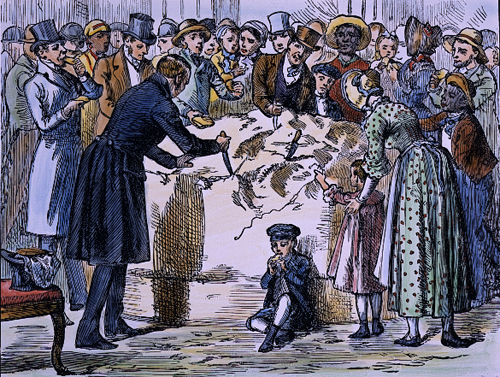
So did you know that in 1836 a New York farmer presented Andrew Jackson with a mammoth wheel of cheddar cheese as a gift? Weighing more than 1,400 pounds, it was four feet in diameter and stood nearly three feet high. Jackson let the gift sit, aging, for more than a year in the vestibule (lobby) of the White House.

A few weeks before leaving office, he invited the public to a reception in honor of George Washington’s birthday. According to eyetwitness accounts, thousands of well-wishers swarmed to the White House, hoping to get a glimpse of the departing president – and a piece of the cheese!

When the last guests finally left, all that remained of the cheese were the pieces that had been ground into the carpet, smudged across the damask walls, and smeared on the silk curtains. Although there wasn't much cheese left for Jackson to enjoy, you can make this tasty recipe for Cheddar Cheese Puffs if you've got a crowd to entertain this weekend!

1 stick butter (8 Tbsp or 4 ounces)
1 cup water
1/2 teaspoon salt
1 cup all purpose flour
4 large eggs
1 cup (4 ounces) grated sharp cheddar cheese
2 teaspoons chopped fresh thyme (or rosemary)
Freshly ground pepper

In a medium sized saucepan, add the water, butter, and salt, and bring to a boil over high heat. Reduce the heat to medium and add the flour all at once. Stir rapidly. The mixture will form a dough ball that will pull away from the sides of the pan. It helps to use a wooden spoon to stir as the dough will be rather thick. Continue to cook for a couple minutes.

Remove the pan from the heat and let cool for a couple of minutes. Stir so that the dough cools more evenly. You want the dough to be warm, just not so hot that when you start adding eggs they cook as they hit the dough. Add the eggs one at a time, stirring after each addition until the eggs are incorporated into the dough. (Do this part in a mixer if you want, or by hand with a wooden spoon.) The dough should become rather creamy. Stir in the grated cheese, thyme, and a few grinds of pepper.

Preheat oven to 425°F. Spoon out small balls (about a heaping tablespoon) of the dough onto a Silpat or parchment lined baking sheet, with at least an inch separating the spoonfuls. Place in oven and cook for 10 minutes at 425°F. Lower heat to 350°F and cook for another 15-20 minutes, until puffed up and lightly golden.
Makes about 2 dozen.

Credit: Jackson's Great Cheese Leeve, painting by Benjamin Poole, 1886

Tuesday, May 31, 2011

Dining with Silent Cal

Nicknamed Silent Cal, Calvin Coolidge’s quiet ways became legendary. His wife Grace often told a story about how a woman seated near the president at a dinner party claimed to have made a bet that she could get at least three words out of him. Without looking at her, Coolidge flatly replied, “You lose.”

Despite his reputation for prolonged silences and inhospitality, Coolidge and his wife welcomed more guests to the White House then any of their recent predecessors, and they regularly entertained many famous Americans, including John D. Rockefeller III, Will Rogers, Douglas Fairbanks, Mary Pickford, John Barrymore, Helen Keller, and Charles Lindbergh.

Plagued by asthma and lifelong digestive problems, Coolidge’s culinary habits were as quirky as his personality. At his regular White House breakfasts for congressmen and senators, Coolidge was as stoic as usual and carefully avoided the flavorful sausages, griddlecakes, bacon, and eggs in favor of a plain cereal made of “two parts whole wheat and one part rye.”

The Coolidges were also great animal lovers and allowed dozens of pets to roam freely around White House grounds. In addition to at least ten dogs, three cats, and dozens of exotic birds and wildlife, including thirteen Peking ducks, two African lion cubs (named Tax Reduction and Budget Deficit), a donkey, a goose, canaries, a wombat, and an Australian wallaby, the Collidges also had a rambunctious pet raccoon named Rebecca.

Rebecca was sent to the Coolidges to be part of their Thanksgiving dinner but the president was reportedly so delighted with her that he had a little house built for her on the White House lawn and could often be seen playing with her after his afternoon paperwork was done. Treated like a family member, Rebecca was occasionally allowed to dine upstairs in the private family quarters at the White House, where she was reportedly served such sumptuous dishes as baked chicken, persimmons, scrambled eggs and green shrimp. Not bad for a raccoon!

FOOD FACT: Published in 1931, the first edition of Irma Rombauer's The Joy of Cooking included sections on canning, pickling, and instructions on how to use meats such as squirrel, opossum and raccoon. Ew!

Thursday, May 26, 2011

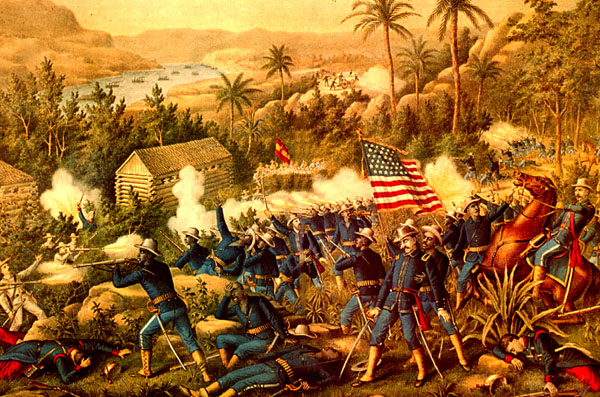
William McKinley, the Spanish-American War, and the Embalmed Beef Scandal

Okay, so this story is kind of repulsive and certainly will not make you hungry, but it's a part of food history so here goes:

In the weeks immediately following the Spanish-American War, stories began to surface about serious problems in the United States Army's food supply. In the ensuing federal investigation, General Nelson Miles testified that he had recommended to Secretary of War Russell Alger that cattle be purchased in Cuba and Puerto Rico so that American troops stationed overseas would have fresh beef to eat.

But for some reason this was not done. Instead, thousands of tons of canned beef were shipped from the mainland for our troops to eat. Soldiers later gave sickening descriptions of the beef, describing it as “putrefied,” “extremely nauseating” and totally “unfit for human use.”

Newspaper and magazine articles about the scandal stirred up so much public outrage that the Secretary of War resigned at President McKinley’s request. Although no other disciplinary actions were taken, some historians say that the “Embalmed Beef Scandal” contributed in part to the passage of the Pure Food and Drug Act of 1906 which prohibits the manufacture, sale, and distribution of adulterated food products.

The United States, of course, emerged from the Spanish-American War as a world power with an overseas empire that included not only Cuba and Puerto Rico but the Philippine Islands, as well. The rampant patriotism unleashed by the war was on ample display at a gala celebration held in McKinley’s honor during a tour of the South at the end of 1898 and on an extended trip to Boston two months later.

The highlight of the Boston trip was a "mammoth banquet" held at the Home Market Club in Mechanic’s Hall where nearly 2,000 guests dined on salmon, capon, and fillet of beef after McKinley delivered an important speech in which he attempted to reconcile the United States’ anticolonial origins with the fighting then raging between Filipinos demanding independence and American forces determined to thwart them.

Near the end of his remarks, McKinley asked Americans to look beyond the "blood-stained trenches around Manila" into the future, when prosperity would have returned to the Philippines. At that time, the president declared, "Filipino children and their descendants "shall for ages hence bless the American republic because it emancipated and redeemed their fatherland, and set them in the pathway of the world’s best civilization."http://www.goodreads.com/user/reset_password?key=Y2U3NDA1ODI4NjZlOThjOWYxOGQ3N2IwMmQ5MmViOTA2ZWFhYzkwNyAxMzYw%0AMzc2Mjk2IHNlZXVjYkBhb2wuY29t&utm_medium=email&utm_source=reset_password

Tuesday, May 24, 2011

Dolley Madison Fresh Strawberry Ice Cream


Legend has it that in the early nineteenth century, a freed slave named Sallie Shadd went into her family’s catering business in Wilmington, Delaware. Sallie supposedly achieved fame there for a fabulous new dessert sensation she created with frozen cream, sugar, and fruit.

When Dolley Madison heard about this new dessert, she supposedly travelled to Delaware to try it - and she must have loved it because a "magnificent pink dome of ice cream" was served at President Madison’s second Inaugural Ball in 1813, and ice cream often appeared as the official dessert on the White House menu during her husband's two terms of office.

If you'd like to whip up some Fresh Strawberry Ice Cream this week, here's a fabulous recipe to try from epicurious.com

1 3/4 cups heavy cream
3 (3- by 1-inch) strips fresh lemon zest
1/8 teaspoon salt
2 large eggs
3/4 cup sugar
1 lb strawberries (3 cups), trimmed and quartered
1 tablespoon fresh lemon juice

Special equipment: an ice-cream maker and an instant-read thermometer

Combine cream, zest, and salt in a heavy saucepan and bring just to a boil. Remove from heat and discard zest. Whisk eggs with 1/2 cup sugar in a bowl, then add hot cream in a slow stream, whisking. Pour back into saucepan and cook over moderately low heat, stirring constantly, until slightly thickened and an instant-read thermometer registers 170°F (do not let boil).

Immediately pour custard through a fine sieve into a metal bowl, then cool to room temperature, stirring occasionally. Chill, overed, at least until cold, about 2 hours, and up to 1 day.

While custard is chilling, purée strawberries with remaining 1/4 cup sugar and lemon juice in a blender until smooth, then force through fine sieve (to remove seeds) into chilled custard. Stir purée into custard. Freeze in ice-cream maker, then transfer to an airtight container and put in freezer to harden.

Friday, May 20, 2011

Woodrow Wilson, the Sinking of the Lusitania, and Food Blockades during World War I

On May 7, 1915, a German submarine torpedoed the British passenger liner Lusitania that was en route from New York City to London. Attacked without warning, the ship sank in fifteen minutes, killing 1,198 civilians, including 128 American men, women and children.

Woodrow Wilson immediately denounced the sinking of the Lusitania in harsh, threatening terms and demanded that Germany pledge to never launch another attack on citizens of neutral countries, even when traveling on French or British ships. Germany initially acquiesced to Wilson's demand but only temporarily. In March of 1916, a German U-boat torpedoed the French passenger liner Sussex, causing a heavy loss of life and injuring several Americans.

Two months later, in what is known as the Sussex pledge, German officials announced that they would no longer sink Allied merchant ships without warning. At the same time, however, they made it clear that it would resume submarine attacks if the Allies refused to respect international law, which in effect meant that the Allies had to lift their blockades of food and other raw materials bound for the Central powers.

Despite further provocations, President Wilson still hoped for a negotiated settlement until February 1, 1917, when Germany resumed submarine warfare against merchant ships, including those of the United States and other neutral countries. In response, Wilson immediately broke off diplomatic relations with Germany.

Then, on February 25, the British intercepted and decoded a telegram from Germany's foreign secretary Arthur Zimmermann to the German ambassador in Mexico. The so-called "Zimmermann telegram" proposed that in the event of war with the United States, Germany and Mexico would form an alliance. In return, Germany promised to regain for Mexico its "lost provinces" of Texas, Arizona, and New Mexico.

The release of the Zimmermann Telegram ignited a public furor that was further enflamed by the loss of at least three U.S. merchant ships to German submarines. After deep thought and introspection, President Wilson appeared before a joint session of Congress on the evening og April 2, 1917 and asked for a declaration of war against Germany.

This is a partial excerpt of what he said:

It is a fearful thing to lead this great peaceful people into war, into the most terrible and disastrous of all wars, civilization itself seeming to be in the balance. But the right is more precious than peace, and we shall fight for the things which we have always carried nearest our hearts - for democracy, for the right of those who submit to authority to have a voice in their own governments, for the rights and liberties of small nations, for a universal dominion of right by such a concert of free peoples as shall bring peace and safety to all nations and make the world itself at last free. To such a task we dedicate our lives and our fortunes...

Wilson was having lunch in the State Dining Room when he received word that the declaration of war had arrived for his signature. Although no one knows what Wilson ate for lunch on that momentous day, we do know that by the time the United States entered the war, German submarines were taking a catastrophic toll on the supplies of food and other provisions being shipped to Britain from abroad.

In response, the British admiralty decided to establish a system of convoys. Under the plan, merchant ships were grouped together in "convoys" and provided with warship escorts through the most dangerous stretches of the North Atlantic. The convoys had a dramatic effect. By the end of 1917, the tonnage of Allied shipping lost each month to German U-boat attacks plummeted from one million tons in April to about 350,000 tons in December.

And although many other critical factors were at play, the increase in food and other necessary wartime provisions helped to stiffen the resolve of French and British troops and thwarted Germany’s attempt to force Britain’s surrender.

Thanks for stopping by THE HISTORY CHEF! And for a flash sale today for my book click here!

Wednesday, May 18, 2011

Donald Trump, the 2012 Presidential Campaign, and Oprah's Favorite Turkey Burgers

You could almost hear the sighs of relief from Mitt Romney, Newt Gingrich, and other Republican presidential hopefuls when Donald Trump announced early this week that he will not be running as a candidate in the 2012 presidential campaign. Trump's official statement read in part:

After considerable deliberation and reflection, I have decided not to pursue the office of the Presidency. This decision does not come easily or without regret; especially when my potential candidacy continues to be validated by ranking at the top of the Republican contenders in polls across the country. I maintain the strong conviction that if I were to run, I would be able to win the primary and ultimately, the general election.

I have spent the past several months unofficially campaigning and recognize that running for public office cannot be done half-heartedly. Ultimately, however, business is my greatest passion and I am not ready to leave the private sector...

I look forward to supporting the candidate who is the most qualified to help us tackle our country's most important issues and am hopeful that, when this person emerges, he or she will have the courage to take on the challenges of the Office and be the agent of change that this country so desperately needs.


Not surprisingly, political pundits quickly began trying to decipher reasons for his decision. Some said that Trump’s business interests were at the center of it, noting that his popular reality show "Celebrity Apprentice" was renewed for next season on NBC and he “had to decide if he was going to be back as its host or run for president.”

Others claimed that they never thought Trump would run because of the requirement that candidates file a financial disclosure form. Whatever the reasons, one thing is clear: the 2012 presidential campaign will not be nearly as entertaining without Trump as a contender.

One of the more entertaining political events recently, of course, was last month’s White House Correspondents’ Association annual dinner, where President Obama “exercised his revenge" after weeks of attacks from Trump, "joking that the billionaire businessman could bring change to the White House, transforming it from a stately mansion into a tacky casino with a whirlpool in the garden.”

According to The Huffington Post:

With Trump in attendance, Obama used the White House Correspondents' Association annual dinner to mock the reality TV star's presidential ambitions. The president said Trump has shown the acumen of a future president, from firing Gary Busey on a recent episode of "Celebrity Apprentice" to focusing so much time on conspiracy theories about Obama's birthplace.

Focusing on Trump's decision to fire Busey instead of rock singer Meat Loaf on a recent episode of the TV show, President Obama quipped, “These are the types of decisions that would keep me up at night. Well handled, sir.”

While he took the president’s ribbing in good humor, Trump was clearly not amused by Saturday Night Live’s Seth Meyer, who was the emcee of the event and picked up where President Obama left off. “Donald Trump has been saying he will run for president as a Republican,” Meyers said, “which is surprising, because I just assumed that he was running as a joke.

Although Trump clearly didn't enjoy Meyer’s performance, later calling parts of it inappropriate, he may have enjoyed the elegant dinner itself. According to obamafoodoroma.com, menu items included Petite Filet Wild Mushroom and Onion Compote; Coco-Buttered Scallops; Cranberry and Tasso Risotto; Grilled Baby Zucchini, Spring Pepper, and Sun Burst Squash.

Of course, The Donald is no stranger to fine dining. His luxurious destination resort The Mar-a-Lago Club in Palm Beach, Florida offers “an extraordinary culinary experience for its members and their guests who can choose from Continental, New World, Classical and New Caribbean cuisine."

And every Wednesday evening, according to the resort's website, guests can enjoy a Six Star Seafood Night dinner buffet that features “a sumptuous array consisting of an appetizer table, two pound lobsters, freshly grilled fish and meat items, salads and a dessert bar accompanied by a saxophonist under the stars.”

Sounds tempting, but for those who prefer more casual fare, you can’t go wrong with Trump's delicious Mar-a-Lago Turkey Burgers, which got rave reviews from none other than Oprah Winfrey herself. “I believe [it] may be the best turkey burger in the entire world," Oprah is quoted on her wesbite as saying.

If you'd like to make some Mar-a-Lago Turkey Burgers this weekend (and who wouldn't with that kind of celebrity endorsement?) here is the original recipe from Oprah.com:

1/4 cup thinly sliced scallions
1/2 cup finely chopped celery
3 Granny Smith apples , peeled and diced
1/8 cup canola oil
4 pounds ground turkey breast
2 Tbsp. salt and 1 Tbsp. black pepper
2 tsp. Tabasco® chipotle pepper sauce
1 lemon, juiced and grated zest
1/2 bunch parsley , finely chopped
1/4 cup Major Grey's Chutney, pureed

Sauté the scallions, celery and apples in the canola oil until tender. Let cool. Place the ground turkey in a large mixing bowl. Add sautéed items and the remaining ingredients. Shape into eight 8-ounce burgers. Refrigerate for 2 hours. Season the turkey burgers with salt and pepper.

Place on a preheated, lightly oiled grill. Grill each side for 7 minutes until meat is thoroughly cooked. Let sit for 5 minutes. Serve with a side of Mar-a-Lago Pear Chutney and your favorite toasted bread, pita or hamburger roll.

Friday, May 13, 2011

George Washington's Ice House at Mount Vernon

So did you know that one of George Washington’s favorite desserts was ice cream? In fact, he liked this soft, creamy treat so much that he had an ice house constructed near his Mount Vernon home so that he and his family could eat ice cream often.

Historians say that Washington’s icehouse was located on a riverbank about 75 yards from the Potomac. To store ice, Washington’s slaves had to use chisels and axes to pull large chunks of ice from the frozen river during the wintertime and then haul them to the icehouse where they were stacked in layers and stored for use throughout the spring and summer.

Before constructing his ice house, Washington sought advice from his friend and fellow patriot Robert Morris, who had an ice house at his home at 6th & Market Streets in Philadelphia. In a letter to Washington, Morris provided a detailed account of how his ice house had been constructed:

My Ice House is about 18 feet deep and 16 square, the bottom is a Coarse Gravell & the water which drains from the ice soaks into it as fast as the Ice melts, this prevents the necessity of a Drain...the Walls of my Ice House are built of stone without Mortar...On these [walls] the Roof is fixed...I nailed a Ceiling of Boards under the Roof flat from Wall to Wall, and filled the Space between the Ceiling and the Shingling of the Roof with Straw so that the heat of the Sun Cannot possibly have any Effect...

The Door for entering this Ice house faces the north, a Trap Door is made in the middle of the Floor through which the Ice is put in and taken out. I find it best to fill with Ice which as it is put in should be broke into small pieces and pounded down with heavy Clubs or Battons such as Pavers use, if well beat it will after a while consolidate into one solid mass and require to be cut out with a Chizell or Axe. I tried Snow one year and lost it in June. The Ice keeps until October or November and I believe if the Hole was larger so as to hold more it would keep untill Christmas...


Although Morris didn't mention what he stored in his icehouse, we do know that the Washingtons used theirs to preserve meat and butter, chill wine, and make ice cream and other frozen delicacies for their many guests at Mount Vernon.

Of course, George Washington wasn’t the only president who enjoyed ice cream. Accounts of it often appear in letters describing the many elegant dinner parties hosted by James and Dolley Madison, and the dish frequently appears in visitors' accounts of meals with Thomas Jefferson.

One particular guest wrote: "Among other things, ice-creams were produced in the form of balls of the frozen material inclosed in covers of warm pastry, exhibiting a curious contrast, as if the ice had just been taken from the oven." If you'd like to whip up some ice cream contained in warm pastry for your next dinner party, here is a simple and delicious recipe to try from puffpastry.com

1/2 of a 17.3-ounce package pastry sheets, 1 sheet, thawed
1 pint chocolate ice cream, softened
1 pint strawberry ice cream, soft
Chocolate fudge topping

Heat the oven to 400°F. Unfold the pastry sheet on a lightly floured surface. Cut the pastry sheet into 3 strips along the fold marks. Place the pastries onto a baking sheet. Bake for 15 minutes or until the pastries are golden brown. Remove the pastries from the baking sheet and let cool on a wire rack for 10 minutes. Split each pastry into 2 layers, making 6 in all.

Reserve 2 top pastry layers. Spread the chocolate ice cream on 2 bottom pastry layers. Freeze for 30 minutes. Top with another pastry layer and spread with the strawberry ice cream. Top with the reserved top pastry layers. Freeze for 30 minutes or until the ice cream is firm. Drizzle with the chocolate topping.

FAST FACT: In 1790, Robert Morris's house at 6th & Market Streets became the Executive Mansion of the United States while Philadelphia served as the temporary capital of the nation. Morris' icehouse was used by President Washington and his household until 1797, and by President John Adams and his family from 1797 to 1800.

Wednesday, May 11, 2011

The Battle of the Chesapeake and the Significance of Food in Military History

The Battle of the Chesapeake, also known as the Battle of the Virginia Capes, was a critical naval battle in the Revolutionary War. It also provides a fabulous example of how world and military history has been partly shaped by food.

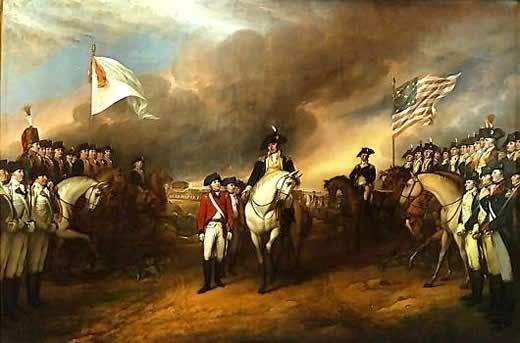
The battle took place near the mouth of the Chesapeake on September 5, 1781 between “a British fleet led by Rear Admiral Sir Thomas Graves and a French fleet led by Rear Admiral François Joseph Paul, Comte de Grasse.” Although it didn't immediately end the war, the victory by the French was a major strategic defeat for the British because it prevented the Royal Navy from resupplying food, troops, and other provisions to General Charles Cornwallis’ blockaded forces at Yorktown.

Equally important, it prevented interference with the delivery of troops and provisions that were en route to General George Washington's army through the Chesapeake. Six weeks later, with the British forces tired, hungry, trapped, and depleted, General Cornwallis surrendered his army to General Washington after the Seige at Yorktown, which effectively ended the war and forced Great Britain to later recognize the independence of the United States of America.

Of course, many other critical political, economic, and military forces contributed to the end of the Revolutionary War, but that doesn't in any way diminish the fact that food (or the lack of it) has played an important role in the course of world and military history.

FAST FACT: During the Civil War, General Winfield Scott observed that, "The movements of an army are necessarily subordinate...to considerations of the belly." And the famous French emperor Napoleon valued pickles as a food source for his armies so much that he offered the equivalent of $250,000 to the first person who discovered a way to safely preserve food. The man who won the prize in 1809 was a French chef and confectioner named Nicolas Appert who discovered that food wouldn’t spoil if you removed the air from a bottle and boiled it long enough. This process, of course, is known as canning and Appert's discovery was one of the most pivotal events in the modern history of food and human nutrition.

Image: Surrender of Cornwallis at Yorktown by John Trumbull (1787)

Friday, May 6, 2011

George Washington Glazed Baked Ham

In addition to overseeing the daily menus and many house slaves at Mount Vernon, Martha Washington carefully supervised the preparation of the hams that were served to their many dinner guests. But of all the food produced at Mount Vernon it is said that Martha was “especially proud of her hams.”

After slaughtering and butchering hogs in December and January, slaves smoked the meat over a fire pit in the smokehouse to preserve it for eating during the coming year. After smoking, the meat was aged and stored in the smokehouse. According to historians at Mount Vernon:

a thief would occasionally break into the smokehouse at night and steal a ham.
However, the most notable ham theft occured in broad daylight, right off the Washingtons' dining room table. The thief was a hound named Vulcan, who made a running pass at the table and dashed out the door with the savory prize clenched between his teeth. A chase ensued, and the ham was recovered; but, of course, nobody wanted to eat it after that!


Although Martha was furious, George reportedly thought the incident was very funny and "delighted in recounting it to guests. If you'd like to prepare a special Glazed Baked Ham, for your Mother's Day Brunch this weekend, here is a simple and delicious recipe to try from southernfood.com

1/3 cup light brown sugar, packed
1/2 cup honey
1/3 cup dry red wine
1/2 cup pineapple juice
1 fully cooked ham, about 6 pounds

In a large bowl, combine the brown sugar, honey, wine, and pineapple juice. Place the ham in the marinade, turn to coat well, and let marinate for 6 hours or overnight in refrigerator.

Preheat the oven to 350°. Place the ham on a rack in a roasting pan, reserving marinade for basting. Bake the ham, basting frequently with the reserved marinade, until a meat thermometer (not touching the bone) reads about 140°, or about 10 minutes per pound.

FAST FACT: Biographers say that "George Washington's attitude toward slavery changed as he grew older. During the Revolution, as he and fellow patriots strove for liberty, Washington became increasingly conscious of the contradiction between this struggle and the system of slavery. By the time of his presidency, he seems to have believed that slavery was wrong and against the principles of the new nation."

If you've enjoyed my blog over the years, please consider taking a look at my first children's book by clicking here...