Thursday, June 9, 2011

Richard Nixon, the Watergate Scandal, and a Bowl of Cottage Cheese with Pineapple

Around 2:30 a.m. on June 17, 1972, five men, one of whom said he was a former employee of the Central Intelligence Agency, were arrested in what authorities described as "an enormous plot to bug the offices of the Democratic National Committee" at the Watergate complex in Washington D.C.

It was an election year, and, as the investigation into the break-in unfolded, a pattern of unlawful activites within President Richard Nixon's administration was uncovered by the press. Together, these federal crimes and misdeeds would become known as "the Watergate scandal" and lead to Nixon's resignation from the Office of the Presidency on August 9, 1974.

On his final day in office, Nixon reportedly awoke at 7:00 a.m. after "a fitful night." After a light breakfast, Nixon signed a one-sentence Letter of Resignation and said an emotional goodbye to his staff. Shortly after 9:00 a.m. he entered the East Room and made a brief Farewell Address to an overflow crowd of White House staff and Cabinet members. He then joined Gerald Ford for a short walk across the South Lawn to a helicopter that would whisk him away into history.

The previous evening, Nixon had delivered a televised Resignation Address to the nation. After acknowledging that he had lost the support of Congress and saying, "I have never been a quitter," Nixon said:

To leave office before my term is completed is abhorent to every instinct in my body. But as President I must put the interests of America first. America needs a full-time President and a full-time Congress, particularly at this time with problems we face at home and abroad.

To continue to fight through the months ahead for my personal vindication would almost totally absorb the time and attention of both the President and the Congress in a period when our entire focus should be on the great issues of peace abroad and prosperity without inflation at home.

Therefore, I shall resign the Presidency effective at noon tomorrow. Vice President Ford will be sworn in as President at that hour in this office. As I recall the high hopes for America with which we began this second term, I feel a great sadness that I will not be here in this office working on your behalf to achieve those hopes in the next 2 1/2 years.


Although it would take some great investigative work to uncover records of what Nixon ate for breakfast on his final day in office, it has been said that it consisted of a small bowl of cottage cheese with pineapple.

Whether that is true is hard to confirm, but White House Chef Henry Haller later revealed that, at breakfast, Nixon "liked fresh fruit, wheat germ with nondairy creamer and coffee." As for favorite dinners, Nixon reportedly enjoyed Sirloin Steak, cooked medium-rare and lightly seasoned; Chicken Cordon Blue; and more simple dishes like Spaghetti and Meatballs. He was also particularly fond of his wife Patricia's Family-Style Meatloaf. According to Chef Haller:

Meat loaf appeared about once a month on the family dinner menus. As soon as the public became aware of this fact, the White House was inundated with inquires for the recipe that so pleased the presidential palate. To ease my burden, Mrs. Nixon's meat loaf recipe was printed on White House stationery to be sent in response to the thousands of requests for it.

If you'd like to get a taste of Pat Nixon's Meatloaf at your next family dinner, here is the original recipe from The White House Cookbook by Henry Haller:

2 tablespoons butter
1 cup finely chopped onions
2 garlic cloves, minced
3 slices white bead
1 cup milk
2 pounds lean ground beef
2 eggs, lightly beaten
1 teaspoon salt
ground black pepper, to taste
1 tablespoon chopped fresh parsley
1/2 teaspoon dried thyme
1/2 teaspoon dried marjoram
2 tablespoons tomato puree
2 tablespoons bread crumbs

Grease a 13-by-9-inch baking pan. Melt butter in a saute pan, add garlic and saute until just golden. Let cool. Dice bread and soak it in milk. In a large mixing bowl, mix ground beef by hand with sauteed onions and garlic and bread pieces. Add eggs, salt, pepper, parsley, thyme and marjoram and mix by hand in a circular motion.

Turn this mixture into the prepared baking pan and pat into a loaf shape, leaving at least one inch of space around the edges to allow fat to run off. Brush the top with the tomato puree and sprinkle with bread crumbs. Refrigerate for 1 hour to allow the flavors to penetrate and to firm up the loaf.

Preheat oven to 375 degrees. Bake meatloaf on lower shelf of oven for 1 hour, or until meat is cooked through. Pour off accumulated fat while baking and after meat is fully cooked. Let stand on wire rack for five minutes before slicing.

FAST FACT: A year and a half before Nixon resigned, an entirely different calamity unfolded in Washington. This time, it didn't involve illegal break-ins and phone taps but...pigeons! It all began the day before Nixon's second inaugural parade when attempts were made to clear pigeons from Pennsylvania Avenue. Upon Nixon's request, the inaugural committeee spent $13,000 to smear tree branches with a chemical repellent called “Roost No More” which was supposed to drive the bothersome birds away by making their feet itch. Sadly, many of the pigeons ate the stuff and keeled over, leaving the parade route littered with "dead and dying birds which had to be hurriedly swept away.”

Wednesday, June 8, 2011

Abraham Lincoln Kentucky Corncakes

Abraham Lincoln and his wife Mary were great animal lovers and allowed their four young sons to keep all sorts of pets on White House grounds. Among other animals, Abe and his family had three cats, a dog named Fido, rabbits, horses, and two rambunctious billygoats named Nanny and Nunko.

Another was a wild turkey named Jack with whom Lincoln’s youngest son Tad played with daily. When it came time for Jack to be sacrificed for a holiday dinner, Tad supposedly begged his dad to spare the turkey’s life, and, to this day, the White House maintains the tradition of “pardoning” a wild turkey each holiday season!

Although it’s a "tad" early to be thinking about preparing your next holiday dinner, you can whip up a batch of Kentucky Corncakes, which are a great side dish at just about any meal and were a Lincoln family favorite. If you’d like to make some Kentucky Corncakes today, here is a simple and simply delicious recipe to try from the Food Network:

1 cup roasted cornmeal (fine ground yellow cornmeal)
1 cup self-rising flour
4 tablespoons sugar
2 eggs
2 cups buttermilk
3 ounces corn oil
2 cups fresh corn kernels

Place cornmeal, flour, and sugar in a bowl and mix together. In a separate bowl, combine eggs, buttermilk, corn oil, and fresh corn and mix together. Fold mixtures together. Place 4 ounces of pancake mix onto a hot griddle. Cook on medium high heat for 4 minutes on each side, until cooked through. Serve warm with lots of butter and honey enjoy!

FAST FACT: According to historians at the Miller Center, the Lincoln family's routine in the White House reflected "the presence of their sons, the demands of war, and the highly complex and many-sided character of Abraham and Mary. [T]he day went from breakfast together as a family at 8:00 in the morning, reunion again for dinner at 8:00 in the evening, and then bedtime. Until little Willie's death in 1862, the two younger sons demanded a good deal of attention, and both parents gave them ample attention, although Lincoln grew more distant as the war progressed and occupied much of his day."

Thanks for stopping by THE HISTORY CHEF! And for a flash sale today for my book click here!

Tuesday, June 7, 2011

FDR's Beloved Dog Fala and the Election of 1944

On November 10, 1940, a cute black Scottish terrier puppy arrived at the White House as a gift for President Franklin Delano Roosevelt and his family. At first, the dog’s name was "Big Boy," but the president soon renamed him “Murray the Outlaw of Falahill” after a distant Scottish ancestor.

One of the most famous presidential pets, Fala, as he was nicknamed, went just about everywhere with the President and quickly became part of his public image. In her Pulitzer-Prize-winning biography, No Ordinary Time, presidential historian Doris Kearns Goodwin wrote:

Fala accompanied the president everywhere, eating his meals in Roosevelt's study, sleeping in a chair at the foot of his bed. Within a few weeks of his arrival, the puppy was sent to the hospital with a serious intestinal disturbance. He had discovered the White House kitchen, and everyone was feeding him. When he came home, Roosevelt issued a stern order to the entire White House staff: "Not even one crumb will be fed to Fala except by the President." From then on, Fala was in perfect health.

While being pampered at the White House and traveling with Roosevelt, Fala had the good fortune to meet many famous political leaders, including British Prime Minister Winston Churchill and Mexican President Manuel Camacho.

Thrust as he was into the national spotlight, it’s not surprising that Fala became embroiled in a political controversy during the presidential campaign of 1944. You see, earlier that year, Fala had faithfully accompanied his master on a diplomatic trip to the Aleutian Islands. Shortly after the president returned home, a rumor began circulating that Fala was accidentally left on one of the islands and that the Navy had to send a destroyer back to retrieve him.

Capitalizing on this rumor, Republicans accused Roosevelt of spending millions of taxpayers' dollars in the effort to get his dog back. Responding sharply but light-heartedly to these and other accusations, FDR delivered his famous “Fala Speech” at a campaign dinner in Washington D.C., before the International Brotherhood of Teamsters, Chauffeurs, Warehousemen and Helpers of America. These are some of the humorous remarks that President Roosevelt made that evening:

These Republican leaders have not been content with attacks on me, or my wife, or on my sons. No, not content with that, they now include my little dog, Fala. Well, of course, I don't resent attacks, and my family doesn't resent attacks — but Fala does resent them.

You know, Fala is Scotch, and being a Scottie, as soon as he learned that the Republican fiction writers in Congress and out had concocted a story that I'd left him behind on an Aleutian island and had sent a destroyer back to find him — at a cost to the taxpayers of two or three, or eight or 20 million dollars — his Scotch soul was furious.

He has not been the same dog since. I am accustomed to hearing malicious falsehoods about myself — such as that old, worm-eaten chestnut that I have represented myself as indispensable. But I think I have a right to resent, to object, to libelous statements about my dog.


Sadly, less than a year after he delivered that speech, President Roosevelt died. In her autobiography, Roosevelt's wife Eleanor described her recollections of Fala's reaction to his master's untimley death:

his legs straightened out, his ears pricked up and I knew that he expected to see his master coming down the drive as he had come so many times. Later, when we were living in the cottage, Fala always lay near the dining-room door where he could watch both entrances just as he did when his master was there...Fala accepted me after my husband's death, but I was just someone to put up with until the master should return.

FAST FACT: Fred D. Fair was Roosevelt’s porter on the Ferdinand Magellan, the presidential Pullman rail car. In a Washington Post article, Mr. Fair recalled his memories of the president's beloved dog in a letter titled "Feeding Fala": I served him his meals, made his bed. We would serve the president highballs before dinner. Before the meal, I would fix Fala's food. He would never go into the dining room until you called him. We'd serve him in there. But you couldn't serve Fala yourself, oh no. You had to hand it to the president, and he'd feed Fala out of his hand. Many times, I remember dignitaries and other important folks waiting for their supper until Mr. Roosevelt finished feeding Fala."

Monday, June 6, 2011

A Small Dinner Party in Paris and a Brief History of the Statue of Liberty

Although historians don’t typically play the game of what ifs, it's hard to know if the United States could have won its independence from the British without the aid of the French.

At critical times during the Revolutionary War, the French provided ships, munitions, money, and men to the American colonists, and some Frenchmen, including, most notably the Marquis de Lafayette, became high-ranking officers in the Continental Army. It was, as one historian proclaimed, “an alliance of respect and friendship that the French would not forget.”

According to historians at the American Park Network:

Almost one hundred years later, in 1865, after the end of the American Civil War, several French intellectuals, who were opposed to the oppressive regime of Napoleon III, were at a small dinner party. They discussed their admiration for America's success in establishing a democratic government and abolishing slavery at the end of the civil war.

The dinner was hosted by Edouard Rene Lefebvre de Laboulaye...scholar, jurist, abolitionist and a leader of the "liberals," the political group dedicated to establishing a French republican government. During the evening, talk turned to the close historic ties and love of liberty the two nations shared...

As he continued speaking, reflecting on the centennial of American independence only 11 years in the future, Laboulaye commented, "Wouldn't it be wonderful if people in France gave the United States a great monument as a lasting memorial to independence and thereby showed that the French government was also dedicated to the idea of human liberty?"


Laboulaye's proposal intrigued one of his guests, Frédéric-Auguste Bartholdi, a successful 31-year old French sculptor. Years later, "recalling the dinner, Bartholdi wrote that Laboulaye's idea 'interested me so deeply that it remained fixed in my memory.'”

And so was sown the seed of inspiration that would become the Statue of Liberty. Once conceived, Bartholdi set out to design and promote the statue.

Work began on the structure in Paris in the winter of 1875, and, in August of 1876, the right arm and torch, consisting of 21 separate copper pieces, were “completed, assembled, dismantled, packed and shipped to the Philadelphia International Centennial Exhibition, where it was assembled as a feature exhibit."

In 1880, work on the iron framework for the tower began in Paris, and, during the next three years, “the inner structure and outer skin were assembled, piece by piece, to the statute's full height of 151 feet." Finally, in June of 1884, the statue was completed and was then dismantled, packed into 214 crates, and shipped to the United States in early 1885.

The official unveiling of the statue on October 28, 1886 was declared a public holiday, with leaders from both France and the United States in attendance. President Grover Cleveland, formerly the governor of New York, presided over the event. After some introductory speeches, Cleveland addressed the cheering crowd, proclaiming that the statue's "stream of light shall pierce the darkness of ignorance and man's oppression until Liberty enlightens the world."

One hundred years later, on July 4, 1986, the United States "threw a special birthday party for the Statue of Liberty. With a golden sunset glowing in the background, President Ronald Reagan declared, 'We are the keepers of the flame of liberty; we hold it high for the world to see.’" Later, Reagan pressed a button that sent a laser beam across the water toward the statue. Slowly, dramatically, majestically, a light show unveiled Liberty and her new torch while spectacular fireworks exploded across the sky."

For my new book click here

Friday, June 3, 2011

Andrew Jackson's Great Cheese Levee of 1837

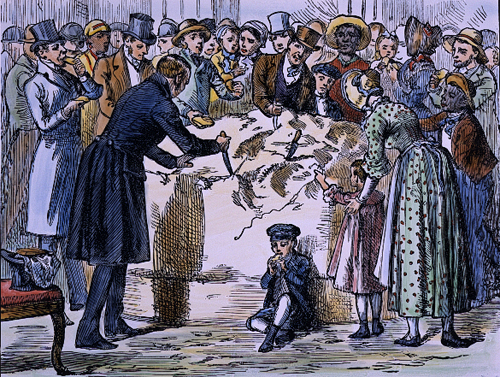
So did you know that in 1836 a New York farmer presented Andrew Jackson with a mammoth wheel of cheddar cheese as a gift? Weighing more than 1,400 pounds, it was four feet in diameter and stood nearly three feet high. Jackson let the gift sit, aging, for more than a year in the vestibule (lobby) of the White House.

A few weeks before leaving office, he invited the public to a reception in honor of George Washington’s birthday. According to eyetwitness accounts, thousands of well-wishers swarmed to the White House, hoping to get a glimpse of the departing president – and a piece of the cheese!

When the last guests finally left, all that remained of the cheese were the pieces that had been ground into the carpet, smudged across the damask walls, and smeared on the silk curtains. Although there wasn't much cheese left for Jackson to enjoy, you can make this tasty recipe for Cheddar Cheese Puffs if you've got a crowd to entertain this weekend!

1 stick butter (8 Tbsp or 4 ounces)
1 cup water
1/2 teaspoon salt
1 cup all purpose flour
4 large eggs
1 cup (4 ounces) grated sharp cheddar cheese
2 teaspoons chopped fresh thyme (or rosemary)
Freshly ground pepper

In a medium sized saucepan, add the water, butter, and salt, and bring to a boil over high heat. Reduce the heat to medium and add the flour all at once. Stir rapidly. The mixture will form a dough ball that will pull away from the sides of the pan. It helps to use a wooden spoon to stir as the dough will be rather thick. Continue to cook for a couple minutes.

Remove the pan from the heat and let cool for a couple of minutes. Stir so that the dough cools more evenly. You want the dough to be warm, just not so hot that when you start adding eggs they cook as they hit the dough. Add the eggs one at a time, stirring after each addition until the eggs are incorporated into the dough. (Do this part in a mixer if you want, or by hand with a wooden spoon.) The dough should become rather creamy. Stir in the grated cheese, thyme, and a few grinds of pepper.

Preheat oven to 425°F. Spoon out small balls (about a heaping tablespoon) of the dough onto a Silpat or parchment lined baking sheet, with at least an inch separating the spoonfuls. Place in oven and cook for 10 minutes at 425°F. Lower heat to 350°F and cook for another 15-20 minutes, until puffed up and lightly golden.
Makes about 2 dozen.

Credit: Jackson's Great Cheese Leeve, painting by Benjamin Poole, 1886

Tuesday, May 31, 2011

Dining with Silent Cal

Nicknamed Silent Cal, Calvin Coolidge’s quiet ways became legendary. His wife Grace often told a story about how a woman seated near the president at a dinner party claimed to have made a bet that she could get at least three words out of him. Without looking at her, Coolidge flatly replied, “You lose.”

Despite his reputation for prolonged silences and inhospitality, Coolidge and his wife welcomed more guests to the White House then any of their recent predecessors, and they regularly entertained many famous Americans, including John D. Rockefeller III, Will Rogers, Douglas Fairbanks, Mary Pickford, John Barrymore, Helen Keller, and Charles Lindbergh.

Plagued by asthma and lifelong digestive problems, Coolidge’s culinary habits were as quirky as his personality. At his regular White House breakfasts for congressmen and senators, Coolidge was as stoic as usual and carefully avoided the flavorful sausages, griddlecakes, bacon, and eggs in favor of a plain cereal made of “two parts whole wheat and one part rye.”

The Coolidges were also great animal lovers and allowed dozens of pets to roam freely around White House grounds. In addition to at least ten dogs, three cats, and dozens of exotic birds and wildlife, including thirteen Peking ducks, two African lion cubs (named Tax Reduction and Budget Deficit), a donkey, a goose, canaries, a wombat, and an Australian wallaby, the Collidges also had a rambunctious pet raccoon named Rebecca.

Rebecca was sent to the Coolidges to be part of their Thanksgiving dinner but the president was reportedly so delighted with her that he had a little house built for her on the White House lawn and could often be seen playing with her after his afternoon paperwork was done. Treated like a family member, Rebecca was occasionally allowed to dine upstairs in the private family quarters at the White House, where she was reportedly served such sumptuous dishes as baked chicken, persimmons, scrambled eggs and green shrimp. Not bad for a raccoon!

FOOD FACT: Published in 1931, the first edition of Irma Rombauer's The Joy of Cooking included sections on canning, pickling, and instructions on how to use meats such as squirrel, opossum and raccoon. Ew!

Thursday, May 26, 2011

William McKinley, the Spanish-American War, and the Embalmed Beef Scandal

Okay, so this story is kind of repulsive and certainly will not make you hungry, but it's a part of food history so here goes:

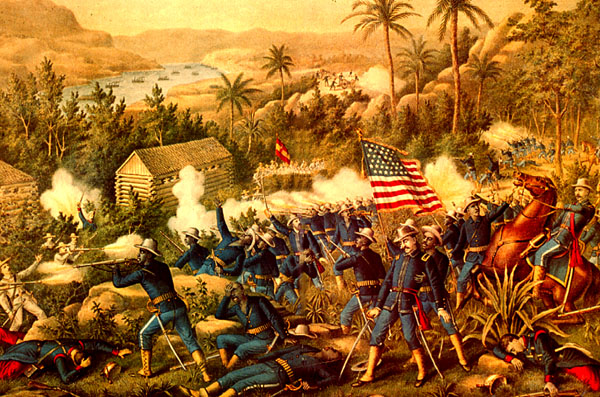
In the weeks immediately following the Spanish-American War, stories began to surface about serious problems in the United States Army's food supply. In the ensuing federal investigation, General Nelson Miles testified that he had recommended to Secretary of War Russell Alger that cattle be purchased in Cuba and Puerto Rico so that American troops stationed overseas would have fresh beef to eat.

But for some reason this was not done. Instead, thousands of tons of canned beef were shipped from the mainland for our troops to eat. Soldiers later gave sickening descriptions of the beef, describing it as “putrefied,” “extremely nauseating” and totally “unfit for human use.”

Newspaper and magazine articles about the scandal stirred up so much public outrage that the Secretary of War resigned at President McKinley’s request. Although no other disciplinary actions were taken, some historians say that the “Embalmed Beef Scandal” contributed in part to the passage of the Pure Food and Drug Act of 1906 which prohibits the manufacture, sale, and distribution of adulterated food products.

The United States, of course, emerged from the Spanish-American War as a world power with an overseas empire that included not only Cuba and Puerto Rico but the Philippine Islands, as well. The rampant patriotism unleashed by the war was on ample display at a gala celebration held in McKinley’s honor during a tour of the South at the end of 1898 and on an extended trip to Boston two months later.

The highlight of the Boston trip was a "mammoth banquet" held at the Home Market Club in Mechanic’s Hall where nearly 2,000 guests dined on salmon, capon, and fillet of beef after McKinley delivered an important speech in which he attempted to reconcile the United States’ anticolonial origins with the fighting then raging between Filipinos demanding independence and American forces determined to thwart them.

Near the end of his remarks, McKinley asked Americans to look beyond the "blood-stained trenches around Manila" into the future, when prosperity would have returned to the Philippines. At that time, the president declared, "Filipino children and their descendants "shall for ages hence bless the American republic because it emancipated and redeemed their fatherland, and set them in the pathway of the world’s best civilization."http://www.goodreads.com/user/reset_password?key=Y2U3NDA1ODI4NjZlOThjOWYxOGQ3N2IwMmQ5MmViOTA2ZWFhYzkwNyAxMzYw%0AMzc2Mjk2IHNlZXVjYkBhb2wuY29t&utm_medium=email&utm_source=reset_password

Tuesday, May 24, 2011

Dolley Madison Fresh Strawberry Ice Cream


Legend has it that in the early nineteenth century, a freed slave named Sallie Shadd went into her family’s catering business in Wilmington, Delaware. Sallie supposedly achieved fame there for a fabulous new dessert sensation she created with frozen cream, sugar, and fruit.

When Dolley Madison heard about this new dessert, she supposedly travelled to Delaware to try it - and she must have loved it because a "magnificent pink dome of ice cream" was served at President Madison’s second Inaugural Ball in 1813, and ice cream often appeared as the official dessert on the White House menu during her husband's two terms of office.

If you'd like to whip up some Fresh Strawberry Ice Cream this week, here's a fabulous recipe to try from epicurious.com

1 3/4 cups heavy cream
3 (3- by 1-inch) strips fresh lemon zest
1/8 teaspoon salt
2 large eggs
3/4 cup sugar
1 lb strawberries (3 cups), trimmed and quartered
1 tablespoon fresh lemon juice

Special equipment: an ice-cream maker and an instant-read thermometer

Combine cream, zest, and salt in a heavy saucepan and bring just to a boil. Remove from heat and discard zest. Whisk eggs with 1/2 cup sugar in a bowl, then add hot cream in a slow stream, whisking. Pour back into saucepan and cook over moderately low heat, stirring constantly, until slightly thickened and an instant-read thermometer registers 170°F (do not let boil).

Immediately pour custard through a fine sieve into a metal bowl, then cool to room temperature, stirring occasionally. Chill, overed, at least until cold, about 2 hours, and up to 1 day.

While custard is chilling, purée strawberries with remaining 1/4 cup sugar and lemon juice in a blender until smooth, then force through fine sieve (to remove seeds) into chilled custard. Stir purée into custard. Freeze in ice-cream maker, then transfer to an airtight container and put in freezer to harden.

Friday, May 20, 2011

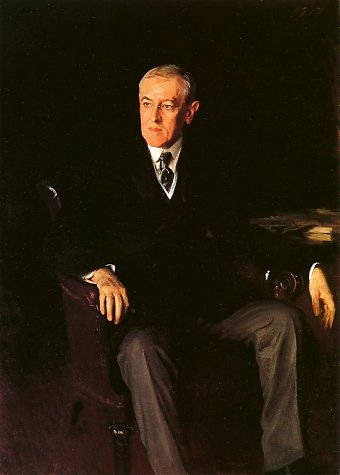
Woodrow Wilson, the Sinking of the Lusitania, and Food Blockades during World War I

On May 7, 1915, a German submarine torpedoed the British passenger liner Lusitania that was en route from New York City to London. Attacked without warning, the ship sank in fifteen minutes, killing 1,198 civilians, including 128 American men, women and children.

Woodrow Wilson immediately denounced the sinking of the Lusitania in harsh, threatening terms and demanded that Germany pledge to never launch another attack on citizens of neutral countries, even when traveling on French or British ships. Germany initially acquiesced to Wilson's demand but only temporarily. In March of 1916, a German U-boat torpedoed the French passenger liner Sussex, causing a heavy loss of life and injuring several Americans.

Two months later, in what is known as the Sussex pledge, German officials announced that they would no longer sink Allied merchant ships without warning. At the same time, however, they made it clear that it would resume submarine attacks if the Allies refused to respect international law, which in effect meant that the Allies had to lift their blockades of food and other raw materials bound for the Central powers.

Despite further provocations, President Wilson still hoped for a negotiated settlement until February 1, 1917, when Germany resumed submarine warfare against merchant ships, including those of the United States and other neutral countries. In response, Wilson immediately broke off diplomatic relations with Germany.

Then, on February 25, the British intercepted and decoded a telegram from Germany's foreign secretary Arthur Zimmermann to the German ambassador in Mexico. The so-called "Zimmermann telegram" proposed that in the event of war with the United States, Germany and Mexico would form an alliance. In return, Germany promised to regain for Mexico its "lost provinces" of Texas, Arizona, and New Mexico.

The release of the Zimmermann Telegram ignited a public furor that was further enflamed by the loss of at least three U.S. merchant ships to German submarines. After deep thought and introspection, President Wilson appeared before a joint session of Congress on the evening og April 2, 1917 and asked for a declaration of war against Germany.

This is a partial excerpt of what he said:

It is a fearful thing to lead this great peaceful people into war, into the most terrible and disastrous of all wars, civilization itself seeming to be in the balance. But the right is more precious than peace, and we shall fight for the things which we have always carried nearest our hearts - for democracy, for the right of those who submit to authority to have a voice in their own governments, for the rights and liberties of small nations, for a universal dominion of right by such a concert of free peoples as shall bring peace and safety to all nations and make the world itself at last free. To such a task we dedicate our lives and our fortunes...

Wilson was having lunch in the State Dining Room when he received word that the declaration of war had arrived for his signature. Although no one knows what Wilson ate for lunch on that momentous day, we do know that by the time the United States entered the war, German submarines were taking a catastrophic toll on the supplies of food and other provisions being shipped to Britain from abroad.

In response, the British admiralty decided to establish a system of convoys. Under the plan, merchant ships were grouped together in "convoys" and provided with warship escorts through the most dangerous stretches of the North Atlantic. The convoys had a dramatic effect. By the end of 1917, the tonnage of Allied shipping lost each month to German U-boat attacks plummeted from one million tons in April to about 350,000 tons in December.

And although many other critical factors were at play, the increase in food and other necessary wartime provisions helped to stiffen the resolve of French and British troops and thwarted Germany’s attempt to force Britain’s surrender.

Thanks for stopping by THE HISTORY CHEF! And for a flash sale today for my book click here!

Wednesday, May 18, 2011

Donald Trump, the 2012 Presidential Campaign, and Oprah's Favorite Turkey Burgers

You could almost hear the sighs of relief from Mitt Romney, Newt Gingrich, and other Republican presidential hopefuls when Donald Trump announced early this week that he will not be running as a candidate in the 2012 presidential campaign. Trump's official statement read in part:

After considerable deliberation and reflection, I have decided not to pursue the office of the Presidency. This decision does not come easily or without regret; especially when my potential candidacy continues to be validated by ranking at the top of the Republican contenders in polls across the country. I maintain the strong conviction that if I were to run, I would be able to win the primary and ultimately, the general election.

I have spent the past several months unofficially campaigning and recognize that running for public office cannot be done half-heartedly. Ultimately, however, business is my greatest passion and I am not ready to leave the private sector...

I look forward to supporting the candidate who is the most qualified to help us tackle our country's most important issues and am hopeful that, when this person emerges, he or she will have the courage to take on the challenges of the Office and be the agent of change that this country so desperately needs.


Not surprisingly, political pundits quickly began trying to decipher reasons for his decision. Some said that Trump’s business interests were at the center of it, noting that his popular reality show "Celebrity Apprentice" was renewed for next season on NBC and he “had to decide if he was going to be back as its host or run for president.”

Others claimed that they never thought Trump would run because of the requirement that candidates file a financial disclosure form. Whatever the reasons, one thing is clear: the 2012 presidential campaign will not be nearly as entertaining without Trump as a contender.

One of the more entertaining political events recently, of course, was last month’s White House Correspondents’ Association annual dinner, where President Obama “exercised his revenge" after weeks of attacks from Trump, "joking that the billionaire businessman could bring change to the White House, transforming it from a stately mansion into a tacky casino with a whirlpool in the garden.”

According to The Huffington Post:

With Trump in attendance, Obama used the White House Correspondents' Association annual dinner to mock the reality TV star's presidential ambitions. The president said Trump has shown the acumen of a future president, from firing Gary Busey on a recent episode of "Celebrity Apprentice" to focusing so much time on conspiracy theories about Obama's birthplace.

Focusing on Trump's decision to fire Busey instead of rock singer Meat Loaf on a recent episode of the TV show, President Obama quipped, “These are the types of decisions that would keep me up at night. Well handled, sir.”

While he took the president’s ribbing in good humor, Trump was clearly not amused by Saturday Night Live’s Seth Meyer, who was the emcee of the event and picked up where President Obama left off. “Donald Trump has been saying he will run for president as a Republican,” Meyers said, “which is surprising, because I just assumed that he was running as a joke.

Although Trump clearly didn't enjoy Meyer’s performance, later calling parts of it inappropriate, he may have enjoyed the elegant dinner itself. According to obamafoodoroma.com, menu items included Petite Filet Wild Mushroom and Onion Compote; Coco-Buttered Scallops; Cranberry and Tasso Risotto; Grilled Baby Zucchini, Spring Pepper, and Sun Burst Squash.

Of course, The Donald is no stranger to fine dining. His luxurious destination resort The Mar-a-Lago Club in Palm Beach, Florida offers “an extraordinary culinary experience for its members and their guests who can choose from Continental, New World, Classical and New Caribbean cuisine."

And every Wednesday evening, according to the resort's website, guests can enjoy a Six Star Seafood Night dinner buffet that features “a sumptuous array consisting of an appetizer table, two pound lobsters, freshly grilled fish and meat items, salads and a dessert bar accompanied by a saxophonist under the stars.”

Sounds tempting, but for those who prefer more casual fare, you can’t go wrong with Trump's delicious Mar-a-Lago Turkey Burgers, which got rave reviews from none other than Oprah Winfrey herself. “I believe [it] may be the best turkey burger in the entire world," Oprah is quoted on her wesbite as saying.

If you'd like to make some Mar-a-Lago Turkey Burgers this weekend (and who wouldn't with that kind of celebrity endorsement?) here is the original recipe from Oprah.com:

1/4 cup thinly sliced scallions
1/2 cup finely chopped celery
3 Granny Smith apples , peeled and diced
1/8 cup canola oil
4 pounds ground turkey breast
2 Tbsp. salt and 1 Tbsp. black pepper
2 tsp. Tabasco® chipotle pepper sauce
1 lemon, juiced and grated zest
1/2 bunch parsley , finely chopped
1/4 cup Major Grey's Chutney, pureed

Sauté the scallions, celery and apples in the canola oil until tender. Let cool. Place the ground turkey in a large mixing bowl. Add sautéed items and the remaining ingredients. Shape into eight 8-ounce burgers. Refrigerate for 2 hours. Season the turkey burgers with salt and pepper.

Place on a preheated, lightly oiled grill. Grill each side for 7 minutes until meat is thoroughly cooked. Let sit for 5 minutes. Serve with a side of Mar-a-Lago Pear Chutney and your favorite toasted bread, pita or hamburger roll.

Friday, May 13, 2011

George Washington's Ice House at Mount Vernon

So did you know that one of George Washington’s favorite desserts was ice cream? In fact, he liked this soft, creamy treat so much that he had an ice house constructed near his Mount Vernon home so that he and his family could eat ice cream often.

Historians say that Washington’s icehouse was located on a riverbank about 75 yards from the Potomac. To store ice, Washington’s slaves had to use chisels and axes to pull large chunks of ice from the frozen river during the wintertime and then haul them to the icehouse where they were stacked in layers and stored for use throughout the spring and summer.

Before constructing his ice house, Washington sought advice from his friend and fellow patriot Robert Morris, who had an ice house at his home at 6th & Market Streets in Philadelphia. In a letter to Washington, Morris provided a detailed account of how his ice house had been constructed:

My Ice House is about 18 feet deep and 16 square, the bottom is a Coarse Gravell & the water which drains from the ice soaks into it as fast as the Ice melts, this prevents the necessity of a Drain...the Walls of my Ice House are built of stone without Mortar...On these [walls] the Roof is fixed...I nailed a Ceiling of Boards under the Roof flat from Wall to Wall, and filled the Space between the Ceiling and the Shingling of the Roof with Straw so that the heat of the Sun Cannot possibly have any Effect...

The Door for entering this Ice house faces the north, a Trap Door is made in the middle of the Floor through which the Ice is put in and taken out. I find it best to fill with Ice which as it is put in should be broke into small pieces and pounded down with heavy Clubs or Battons such as Pavers use, if well beat it will after a while consolidate into one solid mass and require to be cut out with a Chizell or Axe. I tried Snow one year and lost it in June. The Ice keeps until October or November and I believe if the Hole was larger so as to hold more it would keep untill Christmas...


Although Morris didn't mention what he stored in his icehouse, we do know that the Washingtons used theirs to preserve meat and butter, chill wine, and make ice cream and other frozen delicacies for their many guests at Mount Vernon.

Of course, George Washington wasn’t the only president who enjoyed ice cream. Accounts of it often appear in letters describing the many elegant dinner parties hosted by James and Dolley Madison, and the dish frequently appears in visitors' accounts of meals with Thomas Jefferson.

One particular guest wrote: "Among other things, ice-creams were produced in the form of balls of the frozen material inclosed in covers of warm pastry, exhibiting a curious contrast, as if the ice had just been taken from the oven." If you'd like to whip up some ice cream contained in warm pastry for your next dinner party, here is a simple and delicious recipe to try from puffpastry.com

1/2 of a 17.3-ounce package pastry sheets, 1 sheet, thawed
1 pint chocolate ice cream, softened
1 pint strawberry ice cream, soft
Chocolate fudge topping

Heat the oven to 400°F. Unfold the pastry sheet on a lightly floured surface. Cut the pastry sheet into 3 strips along the fold marks. Place the pastries onto a baking sheet. Bake for 15 minutes or until the pastries are golden brown. Remove the pastries from the baking sheet and let cool on a wire rack for 10 minutes. Split each pastry into 2 layers, making 6 in all.

Reserve 2 top pastry layers. Spread the chocolate ice cream on 2 bottom pastry layers. Freeze for 30 minutes. Top with another pastry layer and spread with the strawberry ice cream. Top with the reserved top pastry layers. Freeze for 30 minutes or until the ice cream is firm. Drizzle with the chocolate topping.

FAST FACT: In 1790, Robert Morris's house at 6th & Market Streets became the Executive Mansion of the United States while Philadelphia served as the temporary capital of the nation. Morris' icehouse was used by President Washington and his household until 1797, and by President John Adams and his family from 1797 to 1800.

Wednesday, May 11, 2011

The Battle of the Chesapeake and the Significance of Food in Military History

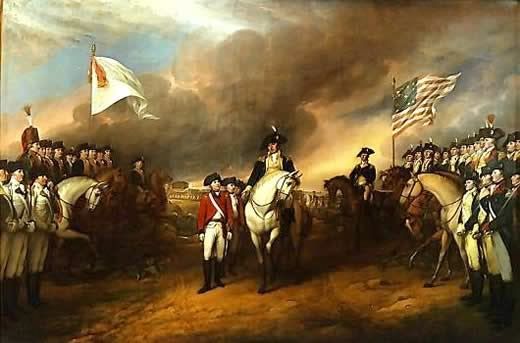
The Battle of the Chesapeake, also known as the Battle of the Virginia Capes, was a critical naval battle in the Revolutionary War. It also provides a fabulous example of how world and military history has been partly shaped by food.

The battle took place near the mouth of the Chesapeake on September 5, 1781 between “a British fleet led by Rear Admiral Sir Thomas Graves and a French fleet led by Rear Admiral François Joseph Paul, Comte de Grasse.” Although it didn't immediately end the war, the victory by the French was a major strategic defeat for the British because it prevented the Royal Navy from resupplying food, troops, and other provisions to General Charles Cornwallis’ blockaded forces at Yorktown.

Equally important, it prevented interference with the delivery of troops and provisions that were en route to General George Washington's army through the Chesapeake. Six weeks later, with the British forces tired, hungry, trapped, and depleted, General Cornwallis surrendered his army to General Washington after the Seige at Yorktown, which effectively ended the war and forced Great Britain to later recognize the independence of the United States of America.

Of course, many other critical political, economic, and military forces contributed to the end of the Revolutionary War, but that doesn't in any way diminish the fact that food (or the lack of it) has played an important role in the course of world and military history.

FAST FACT: During the Civil War, General Winfield Scott observed that, "The movements of an army are necessarily subordinate...to considerations of the belly." And the famous French emperor Napoleon valued pickles as a food source for his armies so much that he offered the equivalent of $250,000 to the first person who discovered a way to safely preserve food. The man who won the prize in 1809 was a French chef and confectioner named Nicolas Appert who discovered that food wouldn’t spoil if you removed the air from a bottle and boiled it long enough. This process, of course, is known as canning and Appert's discovery was one of the most pivotal events in the modern history of food and human nutrition.

Image: Surrender of Cornwallis at Yorktown by John Trumbull (1787)

Friday, May 6, 2011

George Washington Glazed Baked Ham

In addition to overseeing the daily menus and many house slaves at Mount Vernon, Martha Washington carefully supervised the preparation of the hams that were served to their many dinner guests. But of all the food produced at Mount Vernon it is said that Martha was “especially proud of her hams.”

After slaughtering and butchering hogs in December and January, slaves smoked the meat over a fire pit in the smokehouse to preserve it for eating during the coming year. After smoking, the meat was aged and stored in the smokehouse. According to historians at Mount Vernon:

a thief would occasionally break into the smokehouse at night and steal a ham.
However, the most notable ham theft occured in broad daylight, right off the Washingtons' dining room table. The thief was a hound named Vulcan, who made a running pass at the table and dashed out the door with the savory prize clenched between his teeth. A chase ensued, and the ham was recovered; but, of course, nobody wanted to eat it after that!


Although Martha was furious, George reportedly thought the incident was very funny and "delighted in recounting it to guests. If you'd like to prepare a special Glazed Baked Ham, for your Mother's Day Brunch this weekend, here is a simple and delicious recipe to try from southernfood.com

1/3 cup light brown sugar, packed
1/2 cup honey
1/3 cup dry red wine
1/2 cup pineapple juice
1 fully cooked ham, about 6 pounds

In a large bowl, combine the brown sugar, honey, wine, and pineapple juice. Place the ham in the marinade, turn to coat well, and let marinate for 6 hours or overnight in refrigerator.

Preheat the oven to 350°. Place the ham on a rack in a roasting pan, reserving marinade for basting. Bake the ham, basting frequently with the reserved marinade, until a meat thermometer (not touching the bone) reads about 140°, or about 10 minutes per pound.

FAST FACT: Biographers say that "George Washington's attitude toward slavery changed as he grew older. During the Revolution, as he and fellow patriots strove for liberty, Washington became increasingly conscious of the contradiction between this struggle and the system of slavery. By the time of his presidency, he seems to have believed that slavery was wrong and against the principles of the new nation."

If you've enjoyed my blog over the years, please consider taking a look at my first children's book by clicking here...

Wednesday, April 27, 2011

John Adams Quick and Easy Boston Baked Beans

Long before John Adams was born in Braintree, Massachusetts, American Indians in the region were eating all kinds of beans. During the harsh New England winters, food was often difficult to find, but beans were relatively easy to find, dry, store, and prepare.

Food historians say that New England Indians mixed beans with maple syrup and bear fat. They then placed the mixture in a clay pot, buried it in a pit and covered it with hot rocks. After the Pilgrims arrived in Massachusetts, they may have learned how to make baked beans from Indians in the region but probably prepared them with molasses and pork fat instead of maple syrup and bear fat.

If you'd like to whip up some Boston Baked Beans at your next barbecue or other large social gathering, here is a quick and easy recipe to try from epicurious.com

1 pound dried pinto beans (2 1/4 cups)
12 bacon slices, cut into 1/2-inch pieces
8 cups water
1 1/3 cups chopped onion
1 cup ketchup
1/3 cup pure maple syrup
1/4 cup apple cider vinegar
1/4 cup dry mustard
2 tablespoons mild-flavored (light) molasses
2 bay leaves
1 1/2 tablespoons finely chopped garlic
1 teaspoon salt
1 teaspoon ground pepper

Place beans in large bowl. Add enough water to cover by 3 inches. Let stand overnight. Drain beans; set aside. Preheat oven to 350°F. Cook bacon in heavy large pot until crisp, about 8 minutes. Add beans and all remaining ingredients to pot. Bring to boil.

Transfer pot to oven. Bake uncovered until beans are tender and liquid thickens, stirring occasionally, about 4 hours. (Can be made 1 day ahead. Cover and chill. Bring beans to simmer before serving.)

FAST FACT: On November 1, 1800, John arrived in the new capital city and moved into the President’s House. The next evening, while sitting in a damp, unfinished room, John wrote a letter to his wife Abigail, which included a blessing for the new house and its future inhabitants. This is what he wrote: I pray Heaven to Bestow the Best of Blessings on THIS HOUSE and All that shall hereafter Inhabit it. May none but Honest and Wise Men ever rule under This Roof! More than a century later, in the final year of World War II, President Franklin Delano Roosevelt had these words inscribed under the stone mantle of the fireplace in the State Dining Room. And these words are still there today!

Monday, April 25, 2011

Franklin Delano Roosevelt and the Mysterious Origins of Country Captain Chicken

Although they may have become accustomed to elegant State Dinners while living in the White House, many American presidents have enjoyed a wide variety of simple dishes prepared with chicken. James Madison was reportedly fond of Chicken and Okra Soup, James Monroe retained a childhood taste for Chicken Pudding with Fried Rice, and it has been said that Woodrow Wilson frequently requested that Chicken Salad be put on the White House luncheon menu during his two terms of office.

But that's not all. John F. Kennedy and his wife Jackie were reportedly fond of Poulet a l'Estragon (Chicken Tarragon); Richard Nixon enjoyed daughter Tricia's homemade Chicken Divan; Bill Clinton was, and perhaps still is, partial to chicken enchildas made with a cheese similar in texture and taste to Velveeta; and one of Franklin Delano Roosevelt's favorite dishes was reportedly Country Captain Chicken, a curried-chicken dish with mysterious origins.

In her nineteenth-century cookbook, Eliza Leslie claimed that the dish got its name from a British officer who brought the recipe back from his station in India. Others maintain that the dish originated in Savannah, Georgia, which was a major shipping port for the spice trade. In Rare Bits: Unusual Origins of Popular Recipes, Paterica Bunning Steven puts forth another other theory about the origins of this slightly spicy chicken dish:

According to an oft-repeated story, a sea-captain sailed into Charleston harbor with a shipload of spices from India. Entertained by the hostesses of a city noted for its graciousness, he repaid their kindness by teaching their capable cooks to make a delicious dish of chicken and curry. Alas for legend!

A virtually identical dish is known in England, where it goes by the very same name. The captain, if there ever was one, must have been a British officer stationed in the back country of India. An English writer has noted that "country captain" is also an Anglo-Indian term from the captian of a...ship...from a foreign country. Just how or if that fits into the puzzle would be difficult to say. Another suggestion is that Country Captain may be only a corruption of "country capon."


Although no one knows exactly who created and named this dish, we do know that it has been popular throughout the south for centuries. If you'd like to try it someday, here is a simple and delicious "30-minute Recipe" from the Food Network's ever-peppy Rachel Ray:

2 3/4 cups water
1 tablespoon butter
1 1/2 cups white and wild rice or long grain rice
2/3 cup flour, eyeball it
1 rounded tablespoon sweet paprika
4 pieces, 6 ounces each, boneless, skinless chicken breast
3 boneless, skinless chicken thighs
Salt and freshly ground black pepper
2 tablespoons extra-virgin olive oil, 2 turns of the pan
2 tablespoons butter
1 green bell pepper, seeded and chopped
1 red bell pepper, seeded and chopped
1 medium onion, chopped
2 or 3 large cloves garlic, smashed
1 tablespoon curry powder or mild curry paste
1 cup chicken stock
1 can diced tomatoes in puree or chunky style crushed tomatoes
1/4 cup golden raisins or currants, a couple of handfuls
2 ounces, 1 small pouch, sliced almonds, lightly toasted
3 scallions, chopped, for garnish

Bring water to a boil in a medium saucepan. Add butter and rice and return water to a boil. Reduce heat to low and cover the pot. Cook rice 20 minutes or until tender. Turn off heat and fluff rice with a fork.

Combine flour and paprika in a shallow dish. Season chicken with salt and pepper. Cut each chicken breast and thigh in 1/2 on an angle. Coat chicken pieces in paprika seasoned flour. Wash your hands and chicken work surfaces thoroughly.

Heat a large skillet over medium high heat. Add oil to the pan. Brown chicken pieces, 3 minutes on each side, and remove from the skillet. Add butter to the pan, then stir in peppers, onions and garlic. Season the veggies with salt and pepper and saute them 5 to 7 minutes to soften.

Add curry, stock, tomatoes and raisins. Slide chicken back into the skillet and simmer over moderate heat for 5 minutes to combine flavors and finish cooking the chicken through. Place skillet on a trivet and serve the chicken from the pan. Garnish the Country Captain's chicken with sliced almonds. Transfer rice to a serving dish and garnish with chopped scallions.

FOOD FACT: So now that we know which presidents liked to eat dishes prepared with chicken, it seems only fair that we consider what chickens like and need to eat for their well-being. According to experts, chickens need grains; greens (like grass, green vegetables and weeds); protein (from bugs, worms, milk and meat); calcium (from Oyster shells); as well as Vitamins A and D, and salt. And because a chicken's weight is made up of more than fifty percent water, they need a constant supply of fresh water to "drink."

Credit: Chicks Feeding, oil on canvas by Lucy Ann Leavers

Friday, April 22, 2011

Lucy Hayes and the First Easter Egg Roll at the White House

According to the White House website, "some historians note that Dolley Madison originally suggested the idea of a public egg roll, while others tell stories of informal egg-rolling parties at the White House dating back to President Lincoln's administration." Beginning in the 1870s, Washingtonians from all social levels celebrated Easter Monday on the west grounds of the U.S. Capitol where children rolled brilliantly dyed hard-boiled eggs down the terraced lawn.

This practice ended in 1876, however, when lawmakers complained that eggs shells were destroying the grass. To resolve this problem, Congress passed the Turf Protection Act which banned egg rolls from Capital grounds, and President Ulysses S. Grant signed the bill into law later that year. But First Lady Lucy Hayes revived the tradition in 1878 by inviting children to roll Easter eggs on the White House lawn, a tradition that has continued ever since.

According to an article in Time Magazine:

Some 53,000 people attended the egg roll in 1941...though in modern times the number is generally under 20,000. Calvin Coolidge's wife mingled through crowds while holding a pet raccoon named Rebecca, while Mrs. Warren G. Harding put on the uniform of her beloved Girl Scouts for the event.

Showcasing modern technology, Eleanor Roosevelt welcomed crowds and addressed listeners across the country via radio in 1933, while the Clinton administration proudly announced that 1998's egg roll would be the first broadcast on the Internet.


This year, the White House Easter Egg Roll will be held on Monday, April 25th, with the theme of “Get Up and Go!” promoting health and wellness. According to the White House website, the event will feature live music, sports courts, cooking stations, storytelling and, of course, an Easter egg roll!

Although the menu for this year's White House Easter Brunch hasn't been released, Lynn Sweet of the Chicago Sun-Times reported that menu items in 2008 included Honey Baked Ham with Maple Mustard Sauce as a main entree, along with Eggs Benedict, spinach salad, waffles, sauteed asparagus, biscuits and cheese grits.

If you'd like to serve Eggs Benedict at your Easter Brunch this year, here is a simple recipe to try from the Food Network:

1 teaspoon vinegar
4 eggs
4 thin slices Canadian bacon
2 English muffins

Hollandaise sauce:

3 egg yolks
1 tablespoon hot water
1 tablespoon lemon juice
1 stick unsalted butter, melted and hot
Salt and pepper
Paprika and chopped parsley

In large skillet, bring 2 inches of water and vinegar to a boil. Crack one egg into a glass. Reduce water to a simmer and pour egg into water. Add remaining eggs and cook for 4 minutes. Remove eggs with a slotted spoon and drain. In a non-stick skillet heat the bacon until warm. Toast the English muffins until golden.

For sauce: Place yolks, water and lemon juice into blender. Blend for 1 minute. With blender running, pour butter through open hole of lid. Season with salt and pepper. To assemble: Top each muffin with bacon and a poached egg. Pour the warm sauce over and garnish with paprika and the chopped parsley.

FAST FACTS: Historians tell us that the Easter Egg Roll has been held at the White House every year except during World War I, World War II and the Truman Renovation of the White House, when it was moved to nearby locations or cancelled. Ronald Reagan was the first president to hide autographed eggs for children to find in the Egg Hunt and President Nixon and First Lady Pat Nixon were the first to include the White House Easter Bunny in the festivities." Years earlier, First Lady Grace Coolidge made an appearance at the Easter Egg Roll in the 1920s with her famous pet racooon Rebecca!

Wednesday, April 20, 2011

Andrew Jackson and "Boil Them Cabbage Down"

For most of his adult life, Andrew Jackson lived near the hills of east Tennessee where mountaineers with fiddles and banjos sang foot-tapping tunes about common frontier foods. Today, you can still hear some of these old food-related tunes, like “Jimmy Crack Corn” and “When it’s Chitlin Time in Cheatham County.”

“Boil Them Cabbage Down” is another classic folk song played with a fiddle. Some music historians claim that its origins can be traced to those Africans who were brought to the southern states as slaves. According to this theory, some "Africans in Niger played primitive instruments that resembled the fiddle, guitar, and banjo, so when the Africans were brought to the United States, they found the fiddle to be a familiar instrument.”

Although the precise origins of this tune will likely always remain a mystery, what is certain is that it is deeply rooted in folk history and has been recorded by such popular folks singers as Pete Seeger. Maybe you've heard the lyrics:

Boil them cabbage down
Went up on the mountain
just to give my horn a blow
Thought I heard my true love say
Yonder comes my beau

Boil them cabbage down
Turn them hoecakes round
The only song that I can sing
is Boil them Cabbage Down...


The origins of “When it’s Chitlin Time in Cheatham County” are also rooted in uncertainty. If you're unfamiliar with the term dictionaries generally define chitlins as the intestines or guts of a pig. To maximize profits, slave owners during the Jacksonian era would try to feed their slaves in the cheapest manner possible. After slaughtering a hog, the best cuts of meat were typically reserved for the slave owner's use while the remains (snouts, ears, intestines, feet, etc.) were given to the slaves to eat.

Today, chitlins are still considered a delicacy in the south. Still, I’m guessing that some of you might not want to nibble on chitlins - or Boiled Cabbage, for that matter - but you might like to try this simple and delicious recipe for Sauteed Cabbage from Ina Garten

1 small head white cabbage, including outer green leaves (2 1/2 pounds)
2 tablespoons unsalted butter
1 1/2 teaspoons kosher salt
1/2 teaspoon freshly ground black pepper

Cut the cabbage in half and, with the cut-side down, slice it as thinly as possible around the core, as though you were making coleslaw. Discard the core.

Melt the butter in a large saute pan or heavy-bottomed pot over medium-high heat. Add the cabbage, salt, and pepper and saute for 10 to 15 minutes, stirring occasionally, until the cabbage is tender and begins to brown. Season to taste. Serve warm and enjoy!

To learn about my new book click here

Monday, April 4, 2011

Warren Harding, The Roaring Twenties, and the Development of Finger Foods

Although kind and well-liked, Warren Harding is often ranked as the worst president in American history, and even he admitted to close friends that "the job was beyond him." Aware of his limitations, Harding appointed some very capable and intelligent men to his cabinet, including Charles Evans Hughes as Secretary of State and Herbert Hoover as Secretary of Commerce.

Unfortunatley, Harding also surrounded himself with an "unpleasant group of dishonest cheats," who came to be known as "The Ohio Gang." According to historians at the Miller Center:

Warren’s close friend and political manager, Harry Daugherty, whom he named attorney general, was one of the worst - and one of the slickest. He survived impeachment attempts by Congress and two indictments for defrauding the government in the disposal of alien property confiscated by his office from German nationals. Another schemer, Albert Fall, secretary of the interior, secretly allowed private oil companies to tap the Teapot Dome oil reserve in Wyoming and the Elk Hills oil reserve in California in return for least $300,000 paid to him in bribes.


Whether Harding was aware of his advisors' crimes beforehand is uncertain. What is certain, however, is that he loved to play card games and drink whiskey with them upstairs at the White House in private defiance of Prohibition.

Describing the scene at one of Harding's card games that she encountered, Alice Roosevelt, daughter of Teddy Roosevelt, wrote: "the air heavy with tobacco smoke, trays with bottles containing every imaginable brand of whiskey, cards and poker chips ready at hand – a general atmosphere of waistcoat unbuttoned, feet on the desk, and spittoons alongside."

Meanwhile, as President Harding was downing whiskey with his advisors at the White House, millions of ordinary Americans were drinking at secret taverns and bars called speakeasies, a popular term during Prohibition used to describe an establishment that sold illegal alcoholic beverages. According to The Encyclopedia of American Food and Drink:

In order to gain entrance to [a speakeasy], you had to speak in a low voice through a small opening in the back door and tell the attendant inside who it was who sent you to the place. The term itself...may derive from the English "Speak-softly-shop," an underworld term for a smuggler's house where one might get liquor cheaply, its usage in this sense having been traced back to 1823.

But with the onset of Prohibition in America, speakeasies sprang up overnight, sometimes in shabby sections of town, but often in the best neighborhoods, and many of these establishments were actually fine restaurants in their own right. New York's "21" club was a speakeasy during this period and had two bars, a dance floor, an orchestra, and dining rooms on two floors...French diplomat Paul Morande, visiting New York for the first time in 1925, reported his experience at a speakeasy: "the food is almost always poor, the service deplorable."


It was during this period (often referred to today as the Roaring Twenties) that the custom of throwing cocktail parties at home also became popular. The rise of cocktail parties, in turn, inspired the development of finger foods, which worked well for tipsy partygoers who jiggled Gin Fizzes, Whiskey Smashes, and other cocktails while mingling with others in loud, crowded rooms.

Some popular finger foods of the Roaring Twenties include Lobster Canapés, Shrimp and Crabmeat Cocktails, Stuffed Deviled Eggs, Caviar Rolls, Oyster Toast, and Savory Cheese Balls. And food historian Poppy Cannon indicates that President Harding often served his favorite dish, Bratwurst with Saurkraut, at his many poker parties at the White House.

If you’d like to serve up some Bratwurst Rolls at your next party, here is a simple and simply delicious recipe to try from epicurious.com

1/4 cup butter
2 medium onions, sliced into thin rings
4 garlic cloves, finely chopped (optional)
3 to 4 (12-ounce) cans cheap beer
8 bratwurst links
8 small, crusty hoagie rolls
whole-grain mustard
dill pickle spears

Prepare the grill for a medium-hot fire. Place the butter in a medium disposable foil roasting pan. Place the pan on the grill rack and cook until the butter melts. Add the onions and garlic (if using). Cook until softened, three to five minutes. Add the beer and bring to a simmer. Place the pan on the low heat zone and keep the onion mixture warm.

Place the bratwurst on the grill rack. Grill, turning occasionally, until evenly charred, four to five minutes. Transfer the bratwurst to the onion mixture and let stand until ready to serve. With tongs, place the bratwurst in the rolls. Serve with the onions, mustard, and pickle spears.

FOOD FACT: Some of the mass-manufactured foods introduced during the Roaring Twenties include the Baby Ruth Candy Bar, Wonder Bread, Yoo-Hoo Chocolate Drinks, Reese's Peanut Butter Cups, Welch's Grape Jelly, Popsicles, Hostess Snack Cakes, Kool-Aid, Peter Pan Peanut Butter, and Velveeta Cheese!

To learn about my new book click here!

Sunday, March 27, 2011

Woodrow Wilson, "Foods That Will Win the War," and Liberty Cabbage

Following the outbreak of war in 1917, President Woodrow Wilson urged Americans to observe “Meatless Mondays” and “Wheatless Wednesdays” to help the war effort. He assured families that conserving food at home would help support our troops and allies overseas and feed starving people in Europe where food production and distribution had been disrupted by war.

In 1918, Houston Goudiss, a food expert, and his wife Alberta, Director of the School of Modern Cookery, published a book entitled, Foods That Will Win The War and How to Cook Them. In it, they explained the importance of food conservation and described how seemingly small sacrifices could have a huge impact in the aggregate:

Food will win the war, and the nation whose food resources are best conserved will be the victor...A little bit of saving in food means a tremendous aggregate total, when 100,000,000 people are doing the saving. One wheatless meal a day would not mean hardship; there are always corn and other products to be used.

Yet one wheatless meal a day in every family would mean a saving of 90,000,000 bushels of wheat, which totals 5,400,000,000 lbs. Two meatless days a week would mean a saving of 2,200,000 lbs. of meat per annum. One teaspoonful of sugar per person saved each day would insure a supply ample to take care of our soldiers and our Allies.

These quantities mean but a small individual sacrifice, but when multiplied by our vast population they will immeasurably aid and encourage the men who are giving their lives to the noble cause of humanity on which our nation has embarked.


Fueled by the anti-German sentiment that spread across the nation during the Great War, certain foods were renamed to remove their ethnic connotations. Patriotic Americans proudly called sauerkraut "Liberty Cabbage," for example, while frankfurters became known as Liberty Sausage! Although the Goudiss' didn’t provide a recipe for Liberty Cabbage in their book, you can whip up this delicious recipe for Sweet and Sour Cabbage from epicurious.com

5 tablespoons butter
2 onions, thinly sliced (about 4 cups)
2/3 cup red wine vinegar
1/2 cup applesauce
2 tablespoons sugar
2 teaspoons salt
1 teaspoon ground black pepper
1/8 teaspoon ground cloves
2 pounds red cabbage, cut into 1/2-inch-wide strips
1 large Golden Delicious apple, peeled, cored, cut into thin slices
1/2 cup apple juice

Melt butter in heavy large pot over medium-low heat. Add onions; sauté until translucent, about 10 minutes. Mix in next 7 ingredients. Add cabbage; cook until cabbage begins to wilt, stirring often, about 5 minutes. Cover; simmer until cabbage is crisp-tender, stirring often, about 17 minutes. Uncover; add apple and apple juice and cook until apple is crisp-tender, about 5 minutes.

FOOD FACT: In a chapter titled "WHEAT: Reasons Why Our Government Asks Us to Save Wheat," the Goudiss' wrote: A slice of bread seems an unimportant thing. Yet one good-sized slice of bread weighs an ounce. It contains almost three-fourths of an ounce of flour. If every one of the country's 20,000,000 homes wastes on the average only one such slice of bread a day, the country is throwing away daily over 14,000,000 ounces of flour — over 875,000 pounds, or enough flour for over a million one-pound loaves a day. For a full year at this rate there would be a waste of over 319,000,000 pounds of flour — 1,500,000 barrels — enough flour to make 365,000,000 loaves.

Monday, March 21, 2011

Ulysses S. Grant, the Transcontinental Railroad, and "Santa Fe Sage Broiled Hen"

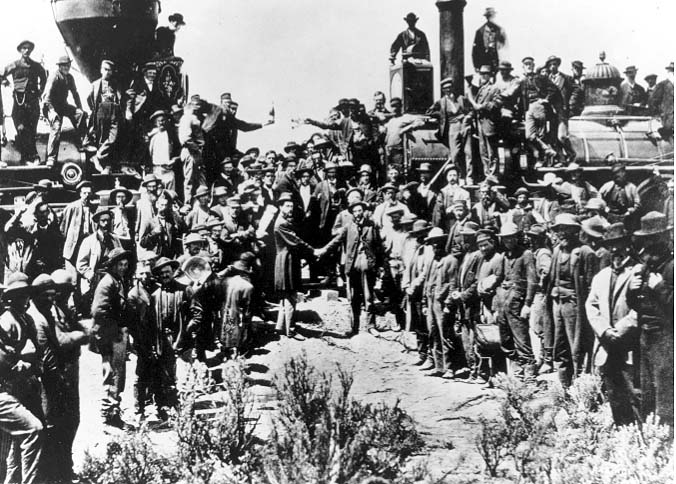
After the Civil War, peace between the North and South made it possible for the nation’s first Transcontinental Railroad to be completed. In 1863, the Union Pacific began laying track in Omaha, Nebraska, heading west. At the same time, the Central Pacific started laying track in Sacramento, California, heading east.

Work in the beginning was slow and difficult, as you can imagine. After less than 25 miles of track had been laid in California, the Central Pacific “faced the daunting task of laying tracks over terrain that rose 7,000 feet in less than a hundred miles.” To conquer the sheer embankments, workers, the vast majority of whom were Chinese immigrants, were lowered by rope from the top of cliffs. While dangling in mid-air, they chipped away at the granite with picks and axes and then planted explosives to blast tunnels through the cliffs.

On October 10, 1865, Leland Stanford, president of the Central Pacific, submitted a progress report to President Ulysses S. Grant:

A large majority of the white laboring class on the Pacific Coast find more
profitable and congenial employment in mining and agricultural pursuits, than in railroad work. The greater portion of the laborers employed by us are Chinese, who constitute a large element in the population of California. Without them it would be impossible to complete the western portion of this great national enterprise within the time required by the Acts of Congress...

Their wages, which are always paid in coin, at the end of each month, are divided among them by their agents…in proportion to the labor done by each person. These agents…furnish them their supplies of food, the value of which they deduct from their monthly pay. We have assurances from leading Chinese merchants that ...the [company] will be able to procure during the next year not less than 15,000 laborers. With this large force, the Company will be able to push on the work so as not only to complete it within the time required by the Acts of Congress, but so as to meet the public impatience.


Four and a half years later, the two tracks finally met and the final “Golden Spike” was driven in with great ceremony at Promontory, Utah on May 10, 1869. By the end of the century, four more railways crisscrossed the United States. By then, most trains had luxury dining cars where first class passengers like President Grant dined on superb regional fare. The Baltimore and Ohio, for example, was famous for fresh seafood from the Chesapeake Bay while the Santa Fe was known for its Broiled Sage Hen and Prairie Chicken.

Although those railway recipes would be difficult to duplicate today, you can try this simple recipe for Lemon Sage Roasted Chicken from Bon Appetit.

4 chicken breast halves with skin and bones
8 very thin lemon slices, seeded
12 fresh sage leaves
Olive oil
4 teaspoons fresh lemon juice
2 large garlic cloves, coarsely chopped
1 cup low-salt chicken broth

Preheat oven to 450°F. Slide fingertips under chicken skin to loosen. Arrange 2 lemon slices and 3 sage leaves under skin on each breast; smooth skin over to enclose. Place chicken on rimmed baking sheet; brush with oil. Drizzle 1 teaspoon lemon juice over each breast; sprinkle with garlic, salt, and pepper. Pour 1/2 cup broth onto sheet around chicken.

Roast chicken until brown and cooked through, basting once or twice with pan juices, about 25 minutes. Transfer chicken to platter. Place baking sheet directly atop 2 burners; add remaining 1/2 cup broth. Using back of fork, mash any garlic on baking sheet into broth and pan juices. Boil over high heat until broth reduces almost to glaze, scraping up browned bits, about 4 minutes. Spoon sauce over chicken and serve.

FAST FACT: For every track of mile laid, railroads were granted a certain sum of money and 20 square miles of free land. The transcontinental railroad brought rapid economic growth to the nation, as farming, cattle-ranching and other agricultural businesses rapidly developed along the main lines.

Friday, March 18, 2011

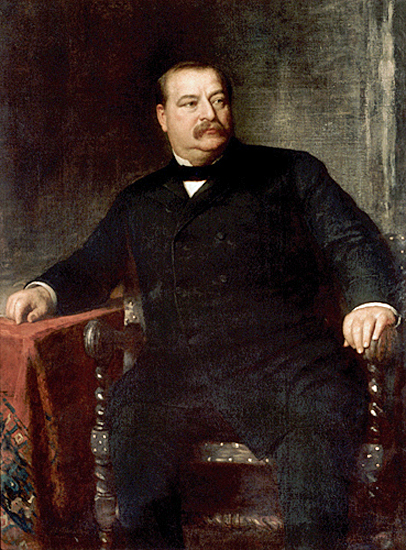
Grover Cleveland, Babe Ruth, and the Debate over the Baby Ruth Candy Bar

So did you know that Grover Cleveland was born 174 years ago today? And did you know that his name is associated with a long-standing debate over the name of the Baby Ruth bar? Some people say that this popular candy bar was named after Cleveland's infant daughter Ruth, who was endearingly referred to as "Baby Ruth." Others claim that it was named after the great baseball player Babe Ruth, who hit the peak of his fame shortly after the candy bar was introduced in 1920.

According to Babe Ruth Central, this is how the story goes:

Back in 1916, the Curtiss Candy Company was founded in Chicago. The company's first candy bar was called the "Kandy Kake". The product was not overwhelmingly successful, so Curtiss went about refashioning it. And, in 1920, the "Baby Ruth" candy bar was introduced to candy-craving consumers.

That would be a pretty simple story, if it ended there. But, of course, it didn't. Adults and kids back then, just like today, were confused by the name and thought it was a candy bar related to Babe Ruth. After all, even in 1921, Babe already had gained a lot of fame in the baseball world. He had hit 54 home runs in 1920 and 59 during the 1921 season. These were incredible records at the time and he was in newspapers all over the country.

So, for many, Baby Ruth was Babe Ruth's candy, whether truth or not. Kids around the country purportedly sent the Babe their Baby Ruth candy bar wrappers in hopes of getting his signature.


Despite widespread popular opinion that the candy bar was named after the Babe, the Curtiss Candy Company never swayed from its position that it was named in honor of Cleveland's daughter Ruth.

But...as many commentators have observed, Ruth died of diptheria in 1904, seventeen years "before Curtiss combined nougat, chocolate, caramel and peanuts into its chewy Baby Ruth." Moreover, Grover Cleveland left office in 1897, and, by the time the Baby Ruth bar hit the market in 1920, William McKinley, Theodore Roosevelt, and William Howard Taft had all served as president, and Woodrow Wilson was just finishing his second term.

So why would the Curtiss Company name its candy bar after a long-deceased daughter of a former president? Well, many people believed that the company conveniently concocted the story to avoid having to pay royalties to Babe Ruth, which, if true, would have been very unfair and illegal.

Whatever the case may be, the story doesn't end there. In 1926, Babe agreed to lend his name to a new candy bar called "Ruth's Home Run Candy Bar" that was manufactured by the fledgling George H. Ruth Candy Company. In response, the Curtiss Company filed a lawsuit to prevent the rival candy bar from being made, claiming that it infringed on their trademark established in 1919.

In 1931, the Court of Customs and Patent Appeals ruled in favor of the Curtiss Company and George Ruth's Home Run Bar was forced off the market. To support its ruling, the court explained that it was evident that George Ruth was trying to capitalize on his own nickname at a time when sales of Baby Ruths were reportedly as high as $1 million a month. Regardless of the legal outcome of the case, the debate over the name of the Baby Ruth candy bar continues to this day!

And so NOW you know how Grover Cleveland's name became associated with the debate over the name of the Baby Ruth candy bar!

FAST FACT: Did you know that Grover Cleveland is the only president to serve two non-consecutive terms. His first term was 1885-1889 and his second term was 1893-1897 so he was the 22nd and 24th president of the United States. This explains why President Obama is the 44th American president even though there have only been 43 different presidents to date!

Friday, March 11, 2011

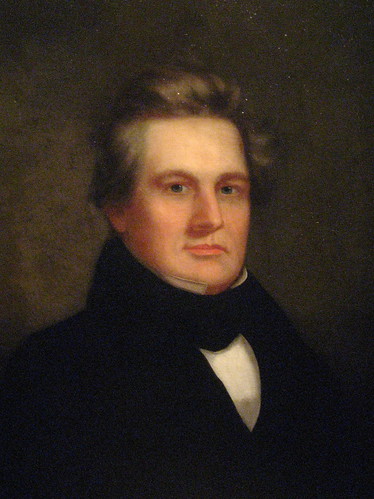
Millard Fillmore, the Great Irish Famine, and Garlic Mashed Potato Pancakes

So did you know that in the election of 1856, Millard Fillmore ran as the presidential candidate of the Know-Nothing party? One of the nation’s first major third parties, the Know-Nothing party was formed partly in response to large numbers of Irish and German immigrants arriving in the United States.

Facing starvation during the Great Potato Famine, hundreds of thousands of Irish immigrants moved to New York and other large northeastern cities in the late 1840s and 1850s. Willing to work for low wages in unskilled jobs, Irish immigrants seemed to be taking jobs away from native-born Americans.

Around the same time, large numbers of Germans were immigrating to the United States. Like the Irish, most Germans were Catholic and "didn't keep the Sabbath" the way American Protestants did. They also seemed to drink lots of beer, which offended many Americans who still "clung to traditional Puritan values."

Although the Know-Nothing party quickly faded away, the Irish and German remained and introduced many traditional ethnic foods to the United States, including spätzle, saurkraut, pretzels, pumpernickel bread, Irish Stew, corned beef, coddle, and goodey.

Mashed Potato Pancakes are another popular Irish and German dish. Although no one nows if President Fillmore ever ate them, he surely would have enjoyed them if he tried this simple and simply delicious recipe for Garlic Mashed Potato Pancakes from Cat Cora at Oprah.com:

5 large baking potatoes
8 Tbsp. (1 stick) unsalted butter
2 cloves peeled and minced garlic
2 cups low-fat milk
3 tsp. salt
Freshly ground black pepper

Bring a large pot of water to a boil and add 2 teaspoons of salt. Peel the potatoes and cut them into 1-inch cubes. When the water is boiling, add the potatoes and cook until tender, about 10 to 12 minutes.

While the potatoes are cooking, heat the butter in a medium skillet. When the butter is melted, add the garlic. Cook over low heat just until the garlic starts to color. Take care not to burn the butter. Take pan off heat and set aside to cool.

When the potatoes are easily pierced with a fork, drain them and return them to the pot. The residual heat will help the excess water evaporate. Mash the potatoes with a potato masher or a ricer. Gradually add the milk until the potatoes are the desired consistency.

Stir in the butter and garlic mixture, add the remaining 1 teaspoon salt and pepper to taste. Form the mixture into pancake patties and cook on each side for about 1 to 2 minutes over medium-high heat in skillet on stove top until a bit crisped on both sides. Serve warm and enjoy!

FAST FACT: According to the Oxford Advanced Learners Dictionary, the Know-Nothing Party "is the popular name for the American Republican Party, later called the American Party, which was established in 1843 with the aim of restricting immigration and preventing Roman Catholics from holding public office. They were called Know-Nothings because members of the party were told to say ‘I know nothing’ when asked about it. They were also called ‘nativists’ because they believed that foreign-born Americans should not be allowed to hold government posts." Know-Nothings scored some victories in the 1850s, but were divided over the issue of slavery, and the party soon faded away.

Tuesday, March 8, 2011

William Henry Harrison, the Election of 1840, and "Tippecanoe and Burgoo, Too!"

During William Henry Harrison's presidential campaign, hard cider flowed so fast that he became known as the “Hard Cider Candidate.” To feed his many rowdy supporters, Harrison's cooks served an election dish called Burgoo which was made by dropping chopped vegetables into warm squirrel stew.

Hailing his victory over an Indian confederacy thirty years earlier, Harrison’s supporters coined the slogan, "TIPPECANOE AND TYLER, TOO!” With its shrewd and clever use of catchy slogans, poems and songs, and organized picnics, rallies, bonfires, and parades, the Election of 1840 is considered by many historians to be the first modern American presidential campaign!

Of course, the custom of plying potential voters with food and drink has been practiced by politicians since George Washington's day. But it perhaps reached its zenith in the campaign of 1840, when Harrison and his lieutenants "wined and dined the populace throughout the West."

The first step, according to historian Poppy Cannon, was to erect a log cabin, then "invite all eligible males to a feast of cornbread, cheese, and hard cider." Little by little, the feasts became more elaborate, "culminating in a spread in Wheeling, West Virginia, in which 30,000 hungry voters were served 360 hams, 20 calves, 1,500 pounds of beef, 1,000 pounds of cheese, 8,000 pounds of bread and 4,500 pounds of Burgoo."

Perfected in Kentucky and popular throughout the western territories, Burgoo was the perfect election dish as it could be easily expanded to feed large crowds by simply adding more water, vegetables, and squirrel meat to it. Although squirrel was once deemed essential to this classic American dish, most modern recipes, like this one for Kentucky Burgoo from Emeril Lagasse, call for beef, lamb and chicken.

2 tablespoons vegetable oil
2 pounds boneless beef shank, trimmed of excess fat
2 pound boneless lamb shoulder, trimmed of excess fat
Salt and freshly ground black pepper
2 medium onions, quartered
4 cloves peeled garlic
1 medium fresh hot red pepper, quartered
1 (3 to 4 pound) whole chicken or hen, cut into 8 pieces
2 cups chopped onions
2 cups medium diced carrots
1 cup medium diced green bell peppers
1 pound baking potatoes, like russets, peeled and medium diced
2 cups peeled, seeded and chopped tomatoes
1/2 pound fresh green beans, strings removed and cut into 2-inch pieces
2 cups fresh corn kernels
2 tablespoons light brown sugar
1 tablespoon finely chopped fresh parsley leaves

In a large, heavy pot, over medium heat, add the oil. Season the beef and lamb with salt and pepper. When the oil is hot, sear the meat, in batches, for a couple of minutes on all sides. Add the onions, garlic, cloves, and pepper. Cover with water. (about 3 to 4 quarts). Bring to boil, reduce the heat to medium low, and simmer until tender, about 3 hours.

Season the chicken with salt and pepper. During the last 1 1/2 hours of cooking, add the chicken. Remove the meat, chicken and vegetables from the pan, set aside and cool. Discard the vegetables. Add the remaining vegetables and brown sugar to the pot of hot liquid. Continue to cook for 1 hour.

After the meat has cooled, cube the beef and lamb into 1-inch pieces. Remove the skin and bones from the chicken and discard. Dice the chicken into 1-inch pieces. Add the cubed meat and chicken to the vegetables and continue to cook for 30 minutes. Re-season if necessary. Ladle the stew into serving bowls. Serve with hot cornbread or biscuits. Garnish with parsley.

Credit: William Henry Harrison, oil on canvas by Rembrandt Peale (National Portrait Gallery, Smithsonian Institution, Washington D.C.)