Thursday, October 28, 2010
Franklin Roosevelt's Royal Hot Dog Diplomacy
When Franklin D. Roosevelt invited England’s King George VI for a visit to the United States in June of 1939, the significance of the invitation reportedly did not go unnoticed. Ever since America declared its independence from England in 1776, "the United States and Great Britain had oftentimes experienced tense relations, but Roosevelt's invitation carried great significance in the history of Anglo-American relations, not only because of their colonial past, but more importantly, because it signified the dawn of a new era in American and British cooperation.”
With Europe on the brink of war, Roosevelt realized the need to forge closer ties between the two democracies and he reportedly “planned every minute detail of the visit to ensure the King’s success in winning over the sympathy and support of the American people." His efforts apparently paid off. According to historians at the Franklin D. Roosevelt Presidential Library and Museum:
Americans heartily welcomed England's royalty with thunderous applause and adulation when the King and Queen arrived in Washington on June 8, 1939. Crowds lined the streets for a chance to glimpse the King and Queen as they traveled throughout the city. In Washington, the couple was treated to all the formalities one would expect from a State Visit. There was an afternoon reception at the British Embassy, followed by a formal evening of dining and musical entertainment at the White House.
On their second day, the King and Queen took in the sights of DC as they boarded the presidential yacht and sailed up the Potomac River to George Washington's Mount Vernon and to Arlington Cemetery to lay a wreath at the Tomb of the Unknown Soldier. After two days in Washington, the...royal couple accompanied the Roosevelts to their home in Hyde Park, New York [where]...they enjoyed the simpler things in life. In contrast to the formal State Dinner at the White House, dinner at the Roosevelt's home...was described to the press as a casual dinner between the two families.
Even more informal was the following day's event - an old-fashioned, American-style picnic which included the following menu items: Virginia Ham, Smoked Turkey, Cranberry Jelly, Green Salad, Sodas, Beer and...Hot Dogs! The next day, news of the picnic made the front page of the New York Times, under the headline, “KING TRIES HOT DOG AND ASKS FOR MORE.” While the King reportedly ate his hot dog by hand like an American, the Queen daintily cut hers with a knife and fork.
Although the royal visit was surely the high point of the Roosevelt's 1939 social season, the president and the king also discussed the dire political and military situation developing in Europe.
Equally important to Roosevelt, however, was that the visit "changed the perceptions of the American people, which in turn allowed him to do more for Britain. When England declared war on Germany three months later, Americans, due in no small part to the King and Queen's visit, sympathized with England's plight. Britons were no longer strangers or the evil colonial rulers from the past but familiar friends and relatives with whom Americans could identify."
For their part, the Royal Couple was deeply appreciative of the Roosevelt’s efforts and of the outpouring of support from the American people. In a letter to Mrs. Roosevelt, the Queen later wrote:
I must tell you how moved I have been by the many charming, sympathetic, and understanding letters which I have received from kind people in the United States. Quite poor people have enclosed little sums of money to be used for our wounded, our sailors, or mine sweepers. It really has helped us, to feel such warmth of human kindness and goodness, for we still believe truly that humanity is overall.
Sometimes, during the last terrible months, we have felt rather lonely in our fight against evil things, but I can honestly say that our hearts have been lightened by the knowledge that friends in America understand what we are fighting for. We look back with such great pleasure to those lovely days we spent with you last June. We often talk of them, and of your & the President's welcome & hospitality. The picnic was great fun, and our children were so thrilled with the descriptions of the Indian singing & marvelous clothes - not to mention the hot dogs!
Although the picnic appeared to be a casual affair, much fuss had been made in advance of it. Almost a month before the event, Eleanor Roosevelt expressed concern about it in her newspaper column called "My Day." In an entry dated May 25, 1939, she wrote: Oh dear, oh dear, so many people are worried that the dignity of our country will be imperiled by inviting Royalty to a picnic, particularly a hot dog picnic! My mother-in-law has sent me a letter which begs that she control me in some way...Let me assure you, dear readers, that if it is hot there will be no hot dogs, and even if it is cool there will be plenty of other food, and the elder members of the family and the more important guests will be served with due formality.
Tuesday, October 26, 2010
Halloween Parties at the White House
According to the Washington Post, about 2,600 trick-or-treaters from local schools “swooped, skulked and pitter-pattered their way through the front drive of 1600 Pennsylvania Avenue, stopping at the North Portico to get their treat: a plastic baggy containing White House M&Ms, an orange sugar cookie in the shape of the residence, and clumps of [dried] apricots, apples and papayas.”
Meanwhile, wandering around in front of the orange-lit White House were hundreds of odd creatures, including musicians dressed as skeletons, walking trees, Star Wars characters, and dancers dressed as red and gold butterflies inside giant bubbles.
Before casually chatting with the trick-or-treaters, President Obama and the First Lady hosted a Halloween reception for military families in the East Room of the White House. In his brief welcoming remarks, the president acknowledged the many sacrifices made by military families and said, “'We are so grateful to you. Especially now, a lot of the times, you guys are separated. It's tough. The spouses who are at home are serving just as much as folks who are deployed. So we are just so thrilled that you guys could be here.”
Of course, this wasn't the first Halloween event held at the White House. Known for her playful personality, Mamie Eisenhower hosted a Halloween party for the wives of White House staff members. Described as “the most interesting party ever given in the dignified setting of the White House,” it included “skeletons hanging from the State Dining Room chandeliers and witches on broomsticks riding over the white tablecloth.”
In more recent years, Richard Nixon’s daughter Tricia hosted a Halloween party for underprivileged children while the Fords and Carters welcomed trick-or-treaters from charitable organizations like UNICEF. And, in 1989, President George Bush and his wife Barbara treated 500 local school children to a Halloween party, where they loaded them up with treats and taught them about the dangers of drugs.
FAST FACT: Although know one knows exactly how the Obamas plan to celebrate Halloween this year, we do know that the holiday had its beginnings in an ancient, pre-Christian Celtic festival of the dead. According to historians at the Library of Congress, “the wearing of costumes and roaming from door-to-door demanding treats can be traced to the Celtic period and the first few centuries of the Christian era, when it was thought that the souls of the dead were out and around, along with fairies, witches, and demons. Offerings of food and drink were left out to placate them. As the centuries wore on, people began dressing like these dreadful creatures, performing antics in exchange for food and drink." This practice is called mumming, from which the modern-day practice of trick-or-treating evolved. To this day, witches, ghosts, and skeleton figures are among the favorite disguises worn by children each Halloween!
Thursday, October 14, 2010
Ulysses S. Grant's Twenty-Nine Course Banquets
Culinarily speaking, however, Grant’s first few months in office could hardly be described as extravagant. When the 46-year-old military hero moved into the White House, he brought with him a quartermaster from his army days to serve as cook. To her credit, Grant’s wife Julia refrained from complaining at first, but when it became clear that the "chef" viewed the White House dining room as little more than “an enlarged mess hall,” she replaced him with an Italian steward named Valentino Melah, who had catered for some of the finest hotels in the United States and "specialized in opulent banquents."
Describing a particular twenty-nine course State Banquet at the Grant White House, Emily Edson Briggs, a Washington newspaper columnist, wrote:
In the beginning of the feast, fruit, flowers, and sweetmeats grace the tables, while bread and butter only give a Spartan simplicity to the "first course," which is composed of a French vegetables oul, and according to the description by those who have tasted it, no soup, foreign or domestic, has ever been known to equal it.
The ambrosial soup is followed by a French croquet of meat...The third "course" of the dinner is composed of a fillet of beef, flanked on each side by potatoes the size of a walnut, with plenty of mushrooms to keep them company. The next course is...made up entirely of luscious leg of partridges, and baptized by a French name entirely beyond my comprehension.
It will readily be seen that a full description of the twenty-nine courses would be altogether too much for the healthy columns of a newspaper to bear, so we pass to the dessert...[which] is inaugurated by...a rice pudding [that] would make our grandmothers clap their hands with joy. After the rice pudding, canned peaches, pears, and quinces are served. Then follow confectionery, nuts, ice-cream, coffee, and chocolate...
Although President Grant enjoyed partaking in such opulent banquets, he retained a taste for more basic fare, no doubt shaped by his old soldier's days. One of his favorite breakfasts reportedly consisted of "broiled Spanish mackerel and steak, fried apples with bacon, buckwheat cakes, and a cup of strong black coffee."
At lunch and dinner, he enjoyed such simple meals as roast beef with wheat bread and boiled hominy. And for dessert, historians tell us that "nothing ever pleased President Grant as much as simple rice pudding."
Although Grant's favorite recipe for Rice Pudding may have been lost to posterity, you can try this delicious recipe from simplyrecipes.com which is great to serve at breakfast or as a light dessert:
2 1/2 cups of whole milk
1/3 cup of uncooked short grain white rice
Pinch of salt
1 egg
1/4 cup dark brown sugar
1 teaspoon of vanilla extract
1/4 teaspoon of cinnamon
1/3 cup raisins
In a medium-sized saucepan, bring the milk, rice and salt to a boil over high heat. Reduce heat to low and simmer until the rice is tender, about 20-25 minutes. Stir frequently to prevent the rice from sticking to the bottom of the pan.
In a small mixing bowl, whisk together egg and brown sugar until well mixed. Add a half cup of the hot rice mixture to the egg mixture, a tablespoon at a time, vigorously whisking to incorporate.
Add egg mixture back into the saucepan of rice and milk and stir, on low heat, for 10minutes or so, until thickened. Be careful not to have the mixture come to a boil at this point. Stir in the vanilla. Remove from heat and stir in the raisins and cinnamon. Serve warm or cold and enjoy!
To read an excerpt of my new book click here!
Thursday, October 7, 2010
Gerald Ford, the Watergate Scandal, and Golden Brown Waffles with Strawberries and Cream
After pledging to be "the President of all the people" and reaffirming his belief that "honesty is always the best policy in the end," Ford turned his attention to the Watergate scandal and said:
My fellow Americans, our long national nightmare is over. Our Constitution works; our great Republic is a government of laws and not of men. Here the people rule. But there is a higher Power, by whatever name we honor Him, who ordains not only righteousness but love, not only justice but mercy.
As we bind up the internal wounds of Watergate, more painful and more poisonous than those of foreign wars, let us restore the golden rule to our political process, and let brotherly love purge our hearts of suspicion and of hate.
In the beginning, I asked you to pray for me. Before closing, I ask again your prayers, for Richard Nixon and for his family. May our former President, who brought peace to millions, find it for himself. May God bless and comfort his wonderful wife and daughters, whose love and loyalty will forever be a shining legacy to all who bear the lonely burdens of the White House.
For the next four weeks, the new president enjoyed a high approval rating, partly because the Fords appeared to be such a normal, middle-class American family. Upon moving into the White House, Ford’s teenage daughter Susan vowed to never throw away her blue jeans. His wife Betty was down-to-earth and had a good sense of humor. And President Ford was even photographed "showing off his English-muffin-making skills" in the Family Kitchen at the White House.
Recalling Ford's fondness for English muffins and his other favorite breakfast foods, White House Chef Henry Haller wrote:
President Ford had a healthy appetite and simple tastes. For breakfast, the President usually consumed an energy rich, high carbohydrate meal that included freshly squeezed orange juice, a piece of fresh fruit such as melon, one or two toasted English muffins with margarine and jam, and hot tea.
Sunday breakfast was always a special meal in the Ford's home, however, with the President's favorite: Golden Brown Waffles served with "the works" - strawberries and sour cream.
If you'd like to make some of President Ford's favorite Golden Brown Waffles with Strawberries and Sour Cream for your next Sunday breakfast, here is the original recipe from The White House Family Cookbook by Henry Haller:
1 1/4 cups cake flour
3 teaspoons baking powder
1/2 teaspoon salt
2 tablespoons confectioners sugar
1 1/2 cups milk, room temperature
1/2 teaspooon vaniall extract
3 egg yolks
5 tabllespoons melted butter
3 egg whites room tempertaure
1 pint fresh strawberrries, lightly dusted with sugar
1 pint sour cream
Into a large mixing bowl, sift together flour, baking powder, salt and sugar. Using the back of a wooden spoon, make a deep well in the center of the dry ingredients. In a separate bowl, combine milk, vanialla, egg yolks, and melted butter. Pour rapidly into the center of the dry ingredients and combine quickly, using a whisk.
In a clean, dry bowl, beat the egg whites until stiff but not dry. Fold into batter.
Transfer batter to a pitcher for easy pouring. Heat a waffle iron to medium temperature. Pour in batter until grid is two-thirds full. Close the lid of the waffle iron and bake for 4 minutes or until steam stops emerging and waffle is golden brown. Remove gently. Repeat baking process to make five more waffles. Serve hot, accompanied by bowls of sweetened strawberries and sour cream.
FAST FACT: Although President Ford initially enjoyed high approval ratings, the mood of the nation changed dramatically on September 8, 1974, when he granted Richard Nixon a full pardon for all federal crimes he had "committed or may have committed" in the White House. The response was “a tidal wave of criticism” which all but assured Ford’s defeat to Jimmy Carter in the election of 1976. But, as time passed, critics began to see that Ford’s pardon was both noble and necessary to help the nation heal. In 1999, Bill Clinton conferred on Ford the Presidential Medal of Freedom, the nation's highest civilian honor. Ford also received the Congressional Gold Medal and was awarded the John F. Kennedy Profiles in Courage Award in 2001.
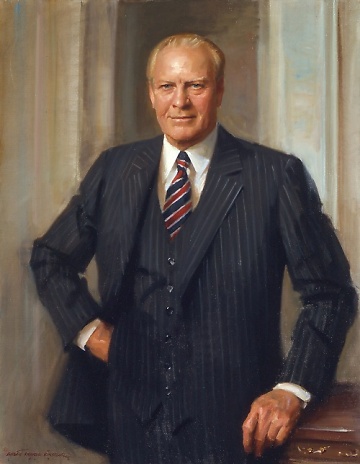
Credit: President Gerald R. Ford, Oil on Canvas by Everett Raymond Kinstler, National Portrait Gallery, Smithsonian Institution, Washington, D.C.
To learn about my new book click here
Sunday, October 3, 2010
Warren Harding, the Roaring Twenties, and the Development of Finger Foods
Unfortunatley, Harding also surrounded himself with an "unpleasant group of dishonest cheats," who came to be known as "the Ohio Gang." According to historians at the Miller Center:
Warren’s close friend and political manager, Harry Daugherty, whom he named attorney general, was one of the worst - and one of the slickest. He survived impeachment attempts by Congress and two indictments for defrauding the government in the disposal of alien property confiscated by his office from German nationals. Another schemer, Albert Fall, secretary of the interior, secretly allowed private oil companies to tap the Teapot Dome oil reserve in Wyoming and the Elk Hills oil reserve in California in return for least $300,000 paid to him in bribes.
Whether Harding was aware of his advisors' crimes beforehand is uncertain. What is certain, however, is that he loved to play card games and drink whiskey with them at the White House in private defiance of Prohibition.
Describing the scene at one of Harding's card games that she encountered, Alice Roosevelt, daughter of Teddy Roosevelt, wrote: "the air heavy with tobacco smoke, trays with bottles containing every imaginable brand of whiskey, cards and poker chips ready at hand – a general atmosphere of waistcoat unbuttoned, feet on the desk, and spittoons alongside."
Meanwhile, as President Harding was downing whiskey with his advisors at the White House, millions of ordinary Americans were drinking at secret taverns and bars called speakeasies, a popular term during Prohibition used to describe an establishment that sold illegal alcoholic beverages. According to The Encyclopedia of American Food and Drink:
In order to gain entrance to [a speakeasy], you had to speak in a low voice through a small opening in the back door and tell the attendant inside who it was who sent you to the place. The term itself...may derive from the English "Speak-softly-shop," an underworld term for a smuggler's house where one might get liquor cheaply, its usage in this sense having been traced back to 1823.
But with the onset of Prohibition in America, speakeasies sprang up overnight, sometimes in shabby sections of town, but often in the best neighborhoods, and many of these establishments were actually fine restaurants in their own right. New York's "21" club was a speakeasy during this period and had two bars, a dance floor, an orchestra, and dining rooms on two floors...French diplomat Paul Morande, visiting New York for the first time in 1925, reported his experience at a speakeasy: "the food is almost always poor, the service deplorable."
It was during this period (often referred to today as the Roaring Twenties) that the custom of throwing cocktail parties at home also became popular. The rise of cocktail parties, in turn, inspired the development of finger foods, which worked well for tipsy guests who jiggled Gin Fizzes, Whiskey Smashes, and other popular cocktails while mingling with others in loud, crowded rooms.
Some popular finger foods of the Roaring Twenties included Lobster Canapés, Shrimp and Crabmeat Cocktails, Stuffed Deviled Eggs, Caviar Rolls, Oyster Toast, and Savory Cheese Balls. For his part, President Harding reportedly liked to serve Bratwurst Rolls and Frankfurts with Saurkraut at his many cocktail parties at the White House.
If you’d like to serve up some Bratwurst Rolls at your next cocktail party, here is a simple and simply delicious recipe to try from epicurious.com
1/4 cup butter
2 medium onions, sliced into thin rings
4 garlic cloves, finely chopped (optional)
3 to 4 (12-ounce) cans cheap beer
8 bratwurst links
8 small, crusty hoagie rolls
whole-grain mustard
dill pickle spears
Prepare the grill for a medium-hot fire. Place the butter in a medium disposable foil roasting pan. Place the pan on the grill rack and cook until the butter melts. Add the onions and garlic (if using). Cook until softened, three to five minutes. Add the beer and bring to a simmer. Place the pan on the low heat zone and keep the onion mixture warm.
Place the bratwurst on the grill rack. Grill, turning occasionally, until evenly charred, four to five minutes. Transfer the bratwurst to the onion mixture and let stand until ready to serve. With tongs, place the bratwurst in the rolls. Serve with the onions, mustard, and pickle spears.
FOOD FACT: Some of the mass-manufactured foods introduced during the Roaring Twenties include the Baby Ruth Candy Bar, Wonder Bread, Yoo-Hoo Chocolate Drinks, Reese's Peanut Butter Cups, Welch's Grape Jelly, Popsicles, Hostess Snack Cakes, Kool-Aid, Peter Pan Peanut Butter, and Velveeta Cheese!
Thursday, September 30, 2010
Woodrow Wilson, Prohibition, and the Boston Molasses Disaster of 1919
The wave – initially thirty feet high, according to some bystanders – exerted enough force “to break the girders of the adjacent Boston Elevated Railway's Atlantic Avenue structure and lift a train off its tracks.” The force of the blast and the ensuing tsunami also overturned dozens of cars and trucks in its path and "demolished several nearby buildings, including a fire station which was crushed by a huge chunk of the steel tank."
Witnesses later stated that, as the tank collapsed, there was a loud rumbling sound, like a machine gun, and that “the ground shook as if a train were passing by.” In his book, Black Tide, Stephen Puleo described the disaster this way:
Molasses, waist deep, covered the street and swirled and bubbled about the wreckage. Here and there struggled a form — whether it was animal or human being was impossible to tell. Only an upheaval, a thrashing about in the sticky mass, showed where any life was…Horses died like so many flies on sticky fly-paper. The more they struggled, the deeper in the mess they were ensnared. Human beings — men and women — suffered likewise.
The next morning, the Boston Evening Globe ran a front-page story based on eyewitness accounts taken on that terrible day:
Fragments of the great tank were thrown into the air, buildings in the neighborhood began to crumple up as though the underpinnings had been pulled away from under them, and scores of people in the various buildings were buried in the ruins, some dead and others badly injured.
In all, more than 150 people were injured and 21 children and adults were killed, mostly by crushing or asphyxiation. Fueled by the intense anti-immigrant sentiments that swept through the United States during the post-World War I Red Scare, owners of the distillery tried to pin the disaster on Italian anarchists, claiming that they had bombed the tank because they knew that the molasses was intended to be fermented to produce ethyl alcohol, a key component in the manufacturing of munitions at the time.
Although the exact cause of the disaster was never determined, no evidence of sabotage was ever found and experts generally attributed it to unseasonably warm temperatures combined with structural defects and poor maintenance of the tank.
So what does this have to do with President Woodrow Wilson and food? Well, by coincidence, the day after the disaster, Congress ratified the 18th Amendment of the United States Constitution, which prohibited the manufacture, sale, and distribution of intoxicating liquors. With Prohibition looming on the horizon, rumors began to circulate which held that the tank had been overfilled to enable the owners of the distillery to produce as much rum as quickly as possible before the law took effect.
This claim was later proven untrue due to the fact that the distillery didn't make rum and specialized instead in the production of industrial alcohol, which was exempt from the state prohibition laws in effect at the time, and would later be exempted from the Volstead Act, which was passed by Congress on October 27, 1919 over President Wilson's veto.
Regardless of the cause, more than one hundred lawsuits were filed against the owners of the tank, and litigation dragged on for six years, during which 3,000 witnesses testified. In the end, the court ruled for the plaintiffs and ordered the company to pay nearly a million dollars in damages - a "bittersweet victory for survivors of one of the strangest disasters in American history."
FOOD FACT: Molasses was once used in the United States as the primary sweetener in cooking and baking. According to the Oxford Encyclopedia of Food and Drink, New England colonists also used molasses "as an ingredient in brewing birch beer and molasses beer and in distilling rum." In the early 1700s, "rum made in New England became an essential element in a highly profitable Triangular Trade across the Atlantic. The colonists exported rum to West Africa in trade for slaves; the ships brought the slaves from Africa to the French West Indies, trading them for more molasses and sugar; these products were then shipped to New England to make more rum....When the cost of refined sugar dropped at the end of the nineteenth century...molasses lost its role as an important sweetener in the American diet."
Wednesday, September 22, 2010
Barack Obama and the "Controversy" over Chicken Fingers in the White House Bowling Alley
During the Eisenhower administration, the bowling lanes were moved to the Old Executive Office Building "to make way for a mimeograph room." Ten years later, friends of Richard Nixon , an avid bowler, paid for a new one-lane alley to be built in the White House in an underground area below the driveway leading to the North Portico.
Since then, many presidents and politicians have surely thrown a strike or two in the bowling alley, but perhaps no one has enjoyed this perk of living in the White House more than the presidents' children and grandchildren.
According to an article in the Los Angeles Times, President George Bush and his wife Barbara were enjoying a big family dinner shortly after moving into the White House when the First Lady realized that her twin granddaughters, Jenna and Barbara, were not at the table. Turning to the butler, Mrs. Bush asked if he happened to know where they were, to which he replied, "In the bowling alley, waiting to be served."
Not fully amused, the First Lady ordered the girls back to the family quarters by "sending word that Bush grandchildren do not eat in the bowling alley, they eat with the family in the dining room." She also light-heartedly warned the White House staff to "beware of young charm artists."
But much bigger and more sinister "scandals" involving the White House bowling alley arose late last year. According to new reports, things got a little tense during a White House Press Briefing in October of 2009 when CBS correspondent Chip Reid questioned White House Press Secretary Robert Gibbs about a Washington Times story "that accused the White House of selling access to the bowling alley," among other things.
Following up on a question posed by a CNN reporter, Reid asked Gibbs if the Obama administration would release the names of donors who were given special access to White House advisors and "perks like the bowling alley.” Gibbs caustically responded by noting that the administration would indeed be releasing "the names of everyone who visited the White House, with whom they met, and for what time period."
Still not satisfied, Reid pressed the bowling alley issue further, at which point Gibbs finally defused the spat with humor, and flatly shot back, "I can report to you that [my son] Ethan Gibbs, with the bumpers down, bowled a couple of games while eating some chicken fingers.”
Now, most of you probably haven't had the chance to bowl a couple of games at the White House while eating chicken fingers, but you can make this healthy recipe for Crispy Chicken Fingers before knocking down a few pins at your local bowling alley.
1 1/4 pound boneless, skinless chicken breasts, cut across into 1-inch pieces
1/2 cup lowfat buttermilk
Cooking spray
4 cups whole-grain corn cereal
1/4 teaspoon salt
Freshly ground pepper
Preheat oven to 400 degrees F. Combine the chicken and buttermilk in a shallow dish. Cover and chill for 15 minutes. Spray a baking sheet with cooking spray. Put the cereal in a sealed plastic bag and crush with a rolling pin. Transfer the crumbs to a shallow dish.
Season the chicken with the salt and a few grinds of pepper. Dip each piece of chicken in the cereal to fully coat and arrange on the baking sheet. Bake until cooked through, about 8 minutes. Leave the chicken on the baking sheet to cool slightly. Serve warm with ketchup or honey mustard sauce.
Credit: The White House Basement Bowling Alley in the 1980s, White House Museum .
To read an excerpt from my new book click here
Monday, September 20, 2010
Barack Obama, the White House Family Theatre, and Healthy Oatmeal Raisin Cookies
According to an adapted article from the Guardian Unlimited posted on the White House Museum website, many presidents have enjoyed private screenings of their favorite films in this luxurious theatre that features four large arm chairs and forty red upholstered seats. This is what the article reveals about some of the presidents' favorite flicks:
Dwight Eisenhower was obsessed with westerns...One of his particular favorites was the Gary Cooper film High Noon, but he would watch almost anything about cowboys...Because of his chronic back pain, John Kennedy's aides installed his favorite rocking chair in the middle of the front row. Later on, he had an orthopedic bed set up in the cinema, so he could watch propped up on pillows...
Richard Nixon saw most of his movies with the same person, his golfing and drinking buddy, Charles "Bebe" Rebozo, who came to the White House theatre 150 times...Their favorites, alongside Patton, were old-fashioned escapist musicals such as the ultra-patriotic Yankee Doodle Dandy, with James Cagney.
Starting with All the President's Men - about the Watergate scandal that ultimately brought him to office — Jimmy Carter held 480 screenings at the White House over four years...The devout Baptist started off insisting that only family films be shown, but eventually relented and became the first president to watch an X-rated film at the family theatre: Midnight Cowboy...
Ronald Reagan watched very few films at the White House. He and Nancy watched most of their movies on their weekends at Camp David, preferring Jimmy Stewart movies, High Noon (the president's favorite), and, on special occasions such as the president's birthday, his own films.
Bill Clinton also loved High Noon, but his taste in movies mirrored the style of his presidency. It ranged from the earnest and complex — Schindler's List and American Beauty were among his favorites — to simple and earthy, like the Naked Gun movies.
George Bush is a fan of the Austin Powers series and has been known to raise his little finger to his lips in imitation of the characters Dr Evil and Mini-Me. [After] the September 11 attacks, however, his viewing [became] more somber. In early 2002, after the worst of the fighting was over in Afghanistan and plans were being hatched to invade Iraq, President Bush watched more war movies, like We Were Soldiers, about Vietnam, and Ridley Scott's soldier's-eye view of Mogadishu in 1993, Black Hawk Down.
Like his predecessors, President Obama occasionally rehearses speeches in the Family Theatre and has enjoyed star-studded, pre-release screenings of such Hollywood blockbusters as Julie & Julia (with stars Meryl Streep and Stanley Tucci in attendance) and Slumdog Millionaire, as well as the recent HBO miniseries "The Pacific," with executive producers Steven Spielberg and Tom Hanks in attendance.
An avid sports fan, the president also hosted a Super Bowl party last year in the Family Theatre, where he and his guests tried out special 3D effects as they watched the Pittsburgh Steelers narrowly defeat the Arizona Cardinals by a score of 27-23. And when it came time for Super Bowl snacks, the president rolled up his sleeves and personally served Oatmeal Raisin cookies to his invited friends and guests.
Although that particular White House recipe is difficult to obtain, you can try this one from Martha Stewart if you'd like to serve some Healthy Oatmeal Raisin Cookies at your next Family Movie Night or other fun social gathering:
1/2 cup whole-wheat flour
1/2 cup all-purpose flour
1 teaspoon baking powder
1/3 cup vegetable oil
2/3 cup packed dark-brown sugar
1 large egg
1 teaspoon pure vanilla extract
1/2 cup rolled oats (not quick-cooking)
1/2 cup dried currants or raisins
Preheat oven to 350 degrees. In a medium bowl, whisk together flours and baking powder; set aside. In a large bowl, whisk together oil, sugar, egg, and vanilla. Add flour mixture, and stir to combine; mix in oats and currants.
Using two tablespoons of dough per cookie, roll into balls; place on two baking sheets lined with parchment paper, 1 1/2 inches apart. Bake until lightly browned, 15to 17 minutes, rotating sheets halfway through. Cool 5 minutes on sheets, then transfer cookies to a wire rack to cool completely. Store in an airtight container at room temperature, up to 5 days.
FAST FACT: According to the White House Museum website, the Family Theatre "was converted in 1942 from a long cloakroom when the current East Wing building was constructed." Since then, some presidents have considered it to be the greatest perk of living in the White House, including Bill Clinton, who remarked, "The best perk out in the White House is not Air Force One or Camp David or anything else. It’s the wonderful movie theater I get here, because people send me these movies all the time.”
Sunday, September 19, 2010
Michelle Obama, Taylor Swift, and the President's Active Lifestyle Award
The announcement was made at Woldenberg Park in New Orleans during the NFL PLAY 60 Youth Football Festival, part of the NFL’s celebration to kick off the 2010 season. After her remarks, the First Lady took part in football drills, along with students from a local elementary school and former NFL players. Lending support on the sidelines was pop star Taylor Swift decked out in a patriotic blue and white polka dotted sundress.
Earlier in the day, Mrs. Obama gave a speech in which she encouraged kids to “Play 60” and join her in competing for the President’s Active Lifestyle Award. To earn an award, children need to "engage in physical activity for 60 minutes every day, five days a week, for six weeks." And to show everyone just how much fun it can be, Mrs. Obama sportingly pledged to work toward earning her own award. This is what she said:
I’m going to do it. And I want kids across the country to join me. Actually, I want all you all to join me. Don't just leave it on the kids. I want you all to join me. So in a couple weeks -- I'm not sure when it’s going to start -- starting soon, I'm going to be recording my progress online, so if I start falling behind, I want everyone to be checking on me and make sure that I'm not slacking. Send me emails to shame me into staying on track. So I’m excited about it, and I think it’s something that’s very doable. And the thing is, is that if your kids see you doing it -- your grandparents, uncles, teachers -- they’re going to be engaged.
At the launch of the Let's Move! campaign, President Barack Obama signed a Presidential Memorandum creating "the first ever Task Force on Childhood Obesity to conduct a review of every single program and policy relating to child nutrition and physical activity."
According to the Let's Move! website, the Task Force’s recommendation focuses on the four pillars of the First Lady's campaign: empowering parents and caregivers; providing healthy food in schools; improving access to healthy, affordable foods; and increasing physical activity. Of course, the First Lady also emphasizes healthy, organic foods at the White House, as most visibly demonstrated by the Obama's kitchen garden, the first at the White House since the Roosevelt's Victory Garden during World War II.
And now for my submission guidelines, click here!
Saturday, September 11, 2010
Elegant Arthur's Many Late Night Feasts at the White House
Sadly, President Arthur died a year and a half after leaving office. Most historians agree that he died from kidney disease, although, at the time, many people believed that his decadent lifestyle contributed to his illness. Describing his culinary habits, one commentator observed:
Arthur’s illness is largely due to his life in the White House. He lived too high, exercised too little, and kept too late hours. He did not breakfast much before ten o’clock and his dinners did not begin until nine or ten in the evening. He often sat at the table until after midnight, where, though he was not a glutton, he consumed fine wines and terrapin and other rich food...President Arthur rode horseback for a time, but in spite of his doctor’s advice, he discontinued this, and grew heavier and heavier from lack of exercise...
Although no one knows exactly what caused President Arthur's illness, we do know that he was a true gourmet and relished such delicacies as mutton chops with a glass of claret or expensive champagne. An avid fisherman, he was also particularly fond of Terrapin Steak, which he preferred to serve with rich side dishes like fried Macaroni Pie with Oysters.
If President Arthur were here with us today, he surely would have also liked this rich and delicious recipe for Seafood Linguine with Mussels and Oysters from the Food Network's ever-energetic Emeril Lagasse:
2 tablespoons, plus 1 1/4 teaspoons salt, divided
1 pound linguine
6 tablespoons extra-virgin olive oil, divided
2 sliced red jalapenos
3/4 pound medium shrimp, peeled and deveined
1 tablespoon Essence, divided, recipe follows
1 cup small diced onion
2 tablespoons minced garlic
2 1/2 teaspoons crushed red pepper flakes, or to taste
2 cups canned tomato sauce
2 tablespoons tomato paste
12 littleneck clams, scrubbed
1/2 pound mussels, scrubbed and de-bearded
1/2 pound calamari, bodies diced into rings, with the tentacles
2 tablespoons chopped fresh parsley leaves
1/2 cup grated Parmesan, optional
Bring a large 1-gallon pot of water to a boil, add 2 tablespoons of the salt to the pot and place the pasta in it. Cook, stirring occasionally, until al dente, about 10 minutes. Drain and then transfer pasta to a large bowl and drizzle with 1 tablespoon of the olive oil. Toss to coat the pasta well, then set aside.
As the pasta cooks, set a 14-inch saute pan over medium-high heat and add the remaining olive oil. Once hot add the red jalapenos. Season the shrimp with 2 teaspoons of the Essence, add the shrimp to the pan and cook for 1 minute. Turn the shrimp over and cook another minute. Remove the shrimp from the pan and set aside as you prepare the sauce.
Place the onions in the pan and cook until wilted, about 3 to 4 minutes. Add the garlic and saute until fragrant, about 30 seconds. Add the red pepper flakes and saute briefly before adding the tomato sauce and tomato paste. Cook the sauce briefly, then add the clams to the pan. Cover the pan and cook the clams for 1 minute, remove the lid, add the mussels to the pan and replace the cover.
Cook the mussels for 2 minutes, remove the lid and season the calamari with the remaining 1 teaspoon of Essence before adding them to the pan along with the seared shrimp and the pasta. Continue to cook the pasta, tossing to blend the pasta with the sauce, and season with the remaining 1 1/4 teaspoons of the salt, about 2 minutes. Garnish the pasta with the chopped parsley and cheese and serve.
FAST FACT: Nicknamed "Elegant Arthur" for his fastidious ways, President Arthur reportedly owned more than eighty suits and often changed his pants several times each day!
Thursday, September 9, 2010
William Howard Taft and Pauline Wayne, the Last White House Dairy Cow
Shortly before Taft left office in 1913, Pauline was shipped back to her former owner in Wisconsin. After that, pasteurized milk replaced raw milk at the White House. A New York Times article dated February 2, 1913 announced the departure of Taft's beloved cow:
Pauline Wayne, President Taft’s famous Holstein cow, will follow him into retirement March 4. The president today called in Senator Walter Stephenson of Wisconsin, who two years ago took Pauline to the White House, and gave her back to her former owner. Pauline has not been in the best of health in several months.
President Taft believes that if she is taken back to Wisconsin and put on Senator Stephenson’s farm again, her youthful vigor will revive. The Senator was glad to recover Pauline, as she had supplied milk to the family of the President for two years, and he thought she would add dignity to his herd.
After leaving office, Taft served as a professor at Yale Law School until President Warren Harding appointed him Chief Justice of the United States Supreme Court. To Taft, the appointment was his greatest honor. So much so that, years later, he wrote, “I don't remember that I ever was President.”
FOOD FACT: A French scientist named Louis Pasteur discovered pasteurization in the 1860s. During his many experiments, Pasteur discovered that when you heat a food to a high enough temperature, the heat will kill certain (but not all) bacteria. Raw milk can be pasteurized by heating it to 145 degrees F for about thirty minutes. In the years prior to pasteurization, many lethal diseases were transmitted through raw or contaminated milk. One particularly sad example is that of Abraham Lincoln, whose mother died when he was "in his tenth year" after she drank milk from a dairy cow that had grazed on White Snakeroot, a very poisonous plant.
Saturday, September 4, 2010
"I Always Give My Occupation as a Farmer"
In 1914, Harry returned to Grandview and assumed supervision of his grandmother’s farm, plowing, sowing, harvesting, and repairing farm equipment himself. For the rest of his life, Truman always enjoyed returning to the family farm, so much so that, even after he became president, he was quoted as saying, "I always give my occupation as farmer. I spent the best years of my life trying to run a 600-acre farm successfully, and I know what the problems are."
It's not surprising, then, that even in the White House, Truman and his wife Bess favored hearty, farm-style foods like Meatloaf and Pot Roasted Beef. Tuna Noodle Casserole was another Truman family favorite. If you'd like to get a sense of the dish that often appeared on the Truman's dinner table, here is a simple recipe that has been adapted from Bess Truman’s handwritten recipe which is on file at the Harry Truman Presidential Library and Museum in Independence, Missouri.
12 ounces elbow macaroni
1 can white albacore tuna, drained
1 can cream of celery soup
1/3 cup milk
¾ cup cheddar cheese
½ cup bread crumbs
2 tablespoons butter
Salt and pepper to taste
Preheat oven to 350°F. Grease a 2 ½ to 3-quart casserole dish. In a medium saucepan, cook the noodles until tender, about 10-12 minutes. Remove and drain well. In a medium bowl, combine the noodles, tuna, soup, and milk. Pour mixture into the prepared baking dish. Melt butter in a small saucepan over medium heat. Mix together bread crumbs and butter in a small bowl, then sprinkle bread crumb mixture and cheese over the top. Bake for 20 minutes, or until bread crumbs are browned.
FAST FACT: As a boy, Harry and his father attended the Democratic National Convention in Kansas City in 1900 and watched as William Jennings Bryan was nominated a second time as the Democratic presidential candidate. Truman's father was passionate about politics, and, in a letter to his wife Bess, Harry later wrote, “Politics is all [my father] ever advises me to neglect the farm for.”
Wednesday, September 1, 2010
Teddy Roosevelt Sand Tart Cookies
Historians say that the Roosevelt family also loved eating cookies and other sweet, sugary treats. According to Poppy Cannon, a "particularly cherished family recipe" for Sand Tarts was found written on the inside cover of one of Edith Roosevelt's many cookbooks. Although that particular recipe might be difficult to duplicate today, you can try this sweet and simple recipe for Sand Tart Cookies from Good Housekeeping and Paula Deen:
1 cup butter (2 sticks), softened
1 tsp. vanilla extract
1 cup confectioners' sugar
1 3/4 cup all-purpose flour
1 cup pecans, finely chopped
Preheat oven to 275°F. In large bowl, with mixer on medium speed, beat butter, vanilla, and 1/2 cup sugar until smooth, occasionally scraping bowl with rubber spatula. Reduce speed to low; gradually beat in flour just until blended, occasionally scraping bowl. With spoon, stir in pecans.
With floured hands, shape dough by level measuring tablespoons into about 2" by 1/2" crescents. Place crescents, 2 inches apart, on 2 ungreased large cookie sheets. Place cookie sheets on 2 oven racks. Bake about 45 minutes or until edges are lightly browned. With metal spatula, transfer cookies to wire racks set over waxed paper. Immediately sprinkle remaining confectioners' sugar through sieve over cookies to coat well. Cool completely and enjoy!
FAST FACT: Teddy and his second wife Edith were married in 1886. His daughter Alice (from his first marriage) was 17 when the family moved into the White House. The other children were Ted, Kermit, Ethel, Archie, and Quentin. When the Roosevelts moved into the White House, they brought along a whole menagerie of exotic pets with them. Kermit had a Kangaroo Rat that reportedly ate lumps of sugar off the breakfast table and four-year-old Quentin had a pet green snake named Emily Spinach!
Thanks for stopping by THE HISTORY CHEF! For a free excerpt of my new book from Simon and Schuster click here!
Monday, August 23, 2010
Lucy Hayes Famous Homemade Angel Cake
It has been said that Angel Food Cake got its name because "it is so white, light, and fluffy it must be the food of angels.” Although no one knows who created or named this cake, we do know that recipes with the name "Angel Food" began appearing in American cookbooks in the late nineteenth century – around the same time that mass-produced cake pans hit the market!
If you'd like to bake one of these delightfully light and fluffy cakes, here is a simple recipe to try from the Food Network's ever-energetic Alton Brown
1 3/4 cups sugar
1/4 teaspoon salt
1 cup cake flour, sifted
12 egg whites (the closer to room temperature the better)
1/3 cup warm water
1 teaspoon orange extract, or extract of your choice
1 1/2 teaspoons cream of tartar
Preheat oven to 350 degrees F. In a food processor spin sugar about 2 minutes until it is superfine. Sift half of the sugar with the salt the cake flour, setting the remaining sugar aside.
In a large bowl, use a balloon whisk to thoroughly combine egg whites, water, orange extract, and cream of tartar. After 2 minutes, switch to a hand mixer. Slowly sift the reserved sugar, beating continuously at medium speed. Once you have achieved medium peaks, sift enough of the flour mixture in to dust the top of the foam. Using a spatula fold in gently. Continue until all of the flour mixture is incorporated.
Carefully spoon mixture into an ungreased tube pan. Bake for 35 minutes before checking for doneness with a wooden skewer. (When inserted halfway between the inner and outer wall, the skewer should come out dry). Cool upside down on cooling rack for at least an hour before removing from pan.
FOOD FACT: According to Food Timeline compiler Lynne Olver, recipes for cakes similar to Angel Food (calling only for egg whites) were known by other equally descriptive names, such as Silver Cake and Snow Drift Cake. The latter recipe was included in an 1881 cookbook entitled What Mrs. Fisher Knows about Old Southern Cooking. According to Olver, Mrs. Fisher was the first freed American slave to author a cookbook in the United States.
Credit: Portrait of Lucy Hayes by Daniel Huntington, White House Historical Association (White House Collection)
Thursday, August 19, 2010
Martin Van Buren's Charming "Lady of the House"
Angelica's "aristocratic manners, excellent education, and handsome face" quickly won the heart of the president's oldest son, Abraham. The two were married in 1838, and, after an extended honeymoon abroad, Abraham served as the president's private secretary and Angelica presided as "Lady of the House".
According to historian Poppy Cannon, Angelica did her best to lessen the formal atmosphere of the White House, though as a young mother, "she did not always find the assignment an easy one." In a letter home, Angelica candidly wrote:
My first state dinner is over; oh, such a long one, our first in the state dining room. I was the only lady at the table...I tried to be cheerful as possible, though I felt miserable all the time, as my baby was crying, and I received message after message to come to the nursery.
In addition to the rigors of hosting frequent state banquets and caring for a baby, Angelica graciously contributed many of her favorite Southern recipes to the White House kitchen. Although the president surely appreciated the assistance of his charming daughter-in-law, his tastes were deeply ingrained, and ran toward a somewhat strange combination of simple hearty Dutch fare and rich French and English dishes that he had grown accustomed to during his years serving as U.S. Minister to Britain.
With his friend Washington Irving, who was living in London at the time, Van Buren reportedly "explored old castles and abbeys, drank wassail before the Yule log in charming old taverns...and ate heartily" of the Olde English favorite, Boar's Head crowned with Holly and Rosemary.
While some of you might not be inclined to dine on a festive Boar's Head tonight, you can try this recipe for Rosemary Pork Tenderloin from the Food Network:
1/3 cup Dijon mustard
2 tablespoons freshly ground black pepper
1 tablespoon freshly chopped rosemary leaves
4 sprigs rosemary, with hard woody stems
5 large garlic cloves, 2 cloves minced, 3 cloves smashed
2 pork tenderloins, about 1-pound each
4 slices maple bacon
In a small bowl, whisk together the Dijon mustard, fresh ground black pepper, chopped rosemary, and minced garlic and mix well. Rub the mustard mixture over the surface of the tenderloins and wrap in plastic wrap. Marinate in the refrigerator for 1 hour.
Preheat oven to 375 degrees F. Place rosemary sprigs and smashed garlic in the center of a roasting pan. Remove the plastic wrap from the tenderloins and top each with 2 slices of maple bacon. Tie with kitchen twine to secure bacon strips.
Place the roasting pan in the oven and bake for 25 to 30 minutes or until an instant-read thermometer, inserted in the tenderloins, registers 160 degrees F. Remove from oven when desired doneness is reached and let sit for 5 to 10 minutes on a cutting board. Remove kitchen twine, slice and serve with your favorite sides. Garnish with the rosemary sprigs and garlic and enjoy!
Wednesday, August 18, 2010
John Adams, the President's House, and "May None But Honest and Wise Men Ever Rule Under This Roof"
I Pray Heaven To Bestow
The Best of Blessings On
THIS HOUSE
And All That shall hereafter Inhabit it.
May none but Honest and Wise Men ever rule
under This Roof
More than a century later, in the final year of World War II, President Franklin Delano Roosevelt had these words carved in the stone mantle of the fireplace in the State Dining Room. These words are still there today
FAST FACT: The State Dining Room served as a drawing room, office, and Cabinet room. It wasn't until Andrew Jackson's administration that it was called the "State Dining Room," although "it had been used for formal dinners by previous presidents."
Wednesday, August 11, 2010
William Henry Harrison, The Election of 1840 and "Tippicanoe and Burgoo, Too!"
Hailing his victory over Tecumseh thirty years earlier, Harrison’s supporters came up with the slogan, TIPPICANOE AND TYLER, TOO!” With its shrewd and heavy use of slogans, poems, ditties, and songs, and organized picnics, rallies, bonfires, and parades, the Election of 1840 is considered to be the first modern American presidential campaign!
Of course, the custom of plying potential voters with food and drink has been practiced by politicians since George Washington's day. But it reached its zenith in the campaign of 1840, when Harrison and his lieutenants "wined and dined the populace throughout the West."
The first step, according to historian Poppy Cannon, was to erect a log cabin, then "invite all eligible males to a feast of cornbread, cheese, and hard cider." Little by little, the feasts became more elaborate, "culminating in a spread in Wheeling, West Virginia, in which 30,000 hungry voters were served 360 hams, 20 calves, 1,500 pounds of beef, 1,000 pounds of cheese, 8,000 pounds of bread and 4,500 pounds of Burgoo."
Perfected in Kentucky and popular throughout the western territories, Burgoo was the perfect election dish since it could be easily expanded to feed large crowds simply by adding more water, vegetables and squirrel meat to it. Although squirrel was once deemed essential to this classic American dish, most modern recipes, like this one for Kentucky Burgoo from Emeril Lagasse, call for beef, lamb and chicken.
2 tablespoons vegetable oil
2 pounds boneless beef shank, trimmed of excess fat
2 pound boneless lamb shoulder, trimmed of excess fat
Salt and freshly ground black pepper
2 medium onions, quartered
4 cloves peeled garlic
1 medium fresh hot red pepper, quartered
Water, to cover
1 (3 to 4 pound) whole chicken or hen, cut into 8 pieces
2 cups chopped onions
2 cups medium diced carrots
1 cup medium diced green bell peppers
1 pound baking potatoes, like russets, peeled and medium diced
2 cups peeled, seeded and chopped tomatoes
1/2 pound fresh green beans, strings removed and cut into 2-inch pieces
2 cups fresh corn kernels
2 tablespoons light brown sugar
1 tablespoon finely chopped fresh parsley leaves
Serving suggestions:
8 fresh cornbread muffins, hot
8 fresh biscuits, hot
In a large, heavy pot, over medium heat, add the oil. Season the beef and lamb with salt and pepper. When the oil is hot, sear the meat, in batches, for a couple of minutes on all sides. Add the onions, garlic, cloves, and pepper. Cover with water. (about 3 to 4 quarts). Bring to boil, reduce the heat to medium low, and simmer until tender, about 3 hours.
Season the chicken with salt and pepper. During the last 1 1/2 hours of cooking, add the chicken. Remove the meat, chicken and vegetables from the pan, set aside and cool. Discard the vegetables. Add the remaining vegetables and brown sugar to the pot of hot liquid. Continue to cook for 1 hour.
After the meat has cooled, cube the beef and lamb into 1-inch pieces. Remove the skin and bones from the chicken and discard. Dice the chicken into 1-inch pieces. Add the cubed meat and chicken to the vegetables and continue to cook for 30 minutes. Re-season if necessary. Ladle the stew into serving bowls. Serve with hot cornbread or biscuits. Garnish with parsley.
A LITTLE BACKGROUND: “Tippecanoe and Tyler, Too!” was originally a song written for Harrison and his running mate, John Tyler. Harrison was known as “Old Tippecanoe” for his military victory over the Shawnee chieftan Tecumseh at the Battle of Tippecanoe in 1811. Thirty years later, Whigs used Harrison’s nickname in a campaign song that portrayed Harrison as a “simple, homespun hero” in contrast to the Democratic candidate, Martin Van Buren, who was depicted as a wealthy elitist. Here are some of the lyrics:
Sure, let 'em talk about hard cider
and log cabins too
't'will only help to speed the ball
for Tippecanoe and Tyler too
and with him we'll beat Little Van, Van
Van is a used up man
and with him we'll beat Little Van…
Although Harrison wasn't born in a log cabin, he was the first to use one as a symbol to suggest that he was a man of humble origins. Other candidates followed his example, making the idea of a log cabin (and a non-wealthy background) a recurring theme in presidential elections for the next half century.
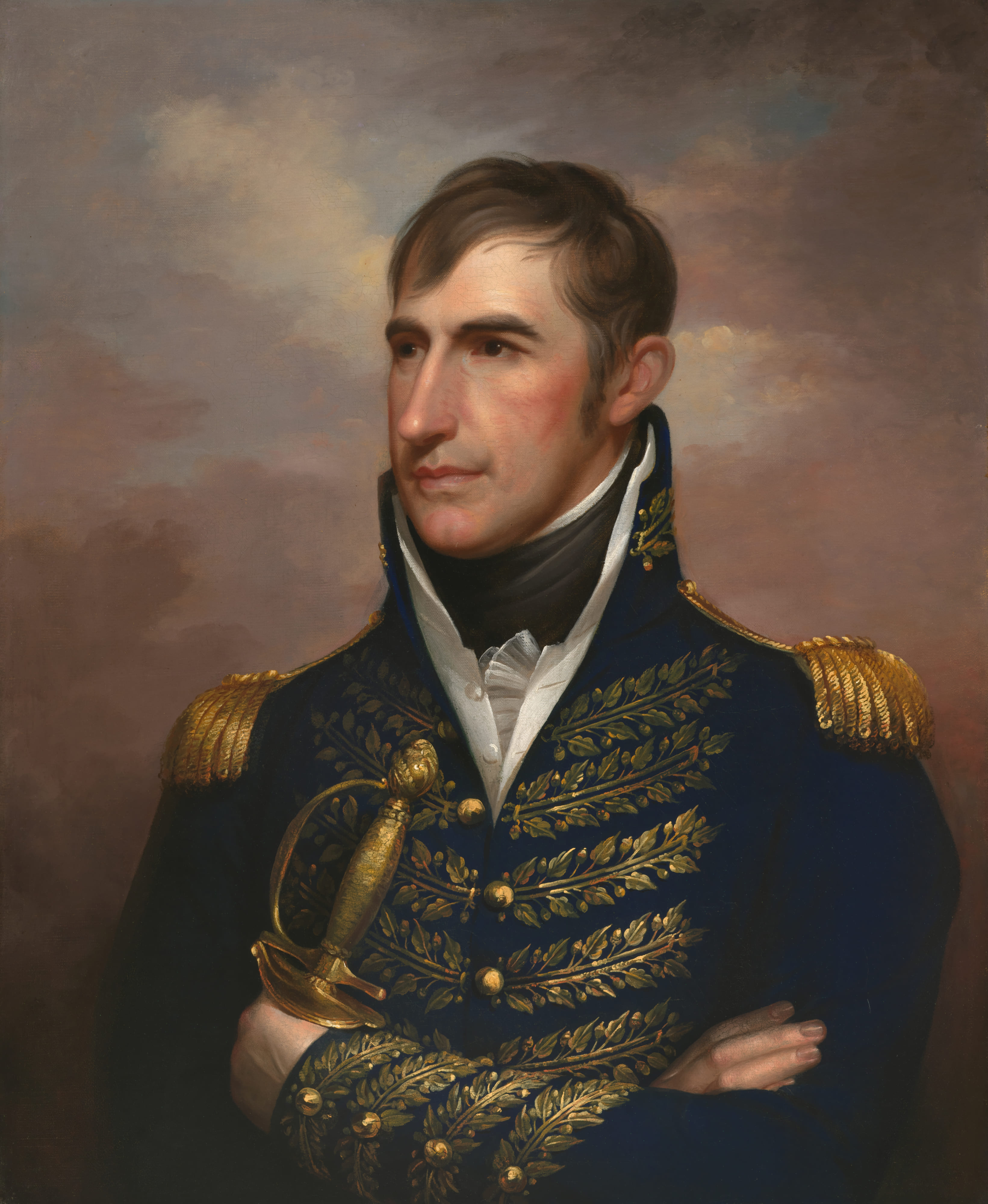
Credit: William Henry Harrison, oil on canvas by Rembrandt Peale (National Portrait Gallery, Smithsonian Institution, Washington D.C.)
Tuesday, August 10, 2010
Jimmy Carter and "The Grits Factor"
Even before Jimmy Carter and his family moved into the White House, reports in the press "began to highlight the Carters' Southern style of life and the public was forewarned that the White House would soon serve grits to guests."
According to White House chef Henry Haller, grits were included on the menu for the Carters' first breakfast at the White House. A staple dish for the Carters and their Southern visitors, grits, as Haller tells us, "soon became standard fare for White House guests from all over the world. The White House kitchen quickly realized that many of the Carters' distinguished visitors really expected to be served grits, and most were pleasantly surprised to discover they actually liked the taste of the ground hominy dish."
The key to preparing palatable grits, according to Chef Haller, is to avoid a watery product by cooking completely and stirring often. Grits, as many southerners would surely agree, taste great served hot with lots of melted butter or baked with a flavorful cheese.
Because President Carter was fond of Grits Baked with Cheese, this dish was often included on the Carter family's weekend breakfast menu. If you would like to whip up a batch, here is simple recipe to try from The White House Family Cookbook by Henry Haller:
4 cups chicken bouillon
1 cup enriched white hominy
1 teaspoon Worcestershire sauce
1 stick (1/2 cup) butter
2 cups grated sharp cheddar
4 eggs yolk
1/4 to 1/2 cup cold milk
4 egg whites, at room temperature
Preheat oven to 350 F. Grease inside of a 2-quart casserole dish. Bring buillon to a boil in a 2-quart saucepan; add grits gradually, stirring with a wire whisk. Reduce heat and continue cooking, stirring vigorously, until mixture thickens. Cover and cook for 15 minutes, sirring often. Remove from heat and add Worcestershire sauce, butter, and 1 1/2 cups of the cheese, stirring until well-balanced.
In a small bowl, blend egg yolks with 1/2 cup of milk. Pour into grits and mix thoroughly; add more milk if necessary, thinning to the consistency of cream of wheat. In a clean, dry bowl, beat egg whites until stiff. Fold into grits. Pour into prepared baking dish. Sprinkle with the remaining 1/2 cup of cheese. Bake on middle of shelf of preheated oven for 30 minutes or until fluffy and brown. Serve at once and enjoy!
FOOD FACT: According to an article in the New York Times, grits is "the first truly American food." When a sea-weary group of English settlers came ashore at Jamestown, Virginia in the spring of 1607, they were reportedly greeted by a band of friendly Indians offering "bowls of a steaming hot substance consisting of softened maize seasoned with salt" and bear grease.
The settlers liked it so much they quickly adopted it as a part of their own diet and "set about devising a milling process by which the large corn grains could be ground into smaller particles without losing any nutriments." Today, of the 150 million pounds of grits milled each year in the United States, more than two-thirds (or one hundred million pounds!) is consumed in the South.
Source: Henry Haller, The White House Family Cookbook, Henry Haller [New York: Random House, 1987)
Credit: Oil Portrait of Jimmy Carter by Herbert E. Abrams (1982) White House Historical Association (White House Collection)
Monday, August 9, 2010
Franklin Delano Roosevelt and the Mysterious Origins of Country Captain Chicken
Although they may have become accustomed to elegant State Dinners, many American presidents enjoyed a wide variety of homey dishes prepared with chicken while living in the White House. James Madison was reportedly fond of Chicken and Okra Soup, James Monroe retained a childhood taste for Chicken Pudding with Fried Rice, and it has been said that Woodrow Wilson frequently requested that Chicken Salad be put on the White House luncheon menu during his two terms of office. But that's not all. John F. Kennedy and his wife Jackie were fond of Poulet a l'Estragon (Chicken Tarragon); Richard Nixon reportedly enjoyed his daughter Tricia's homemade Chicken Divan; Bill Clinton was, and perhaps still is, partial to chicken enchildas made with a cheese similar in texture and taste to Velveeta; and one of Franklin Delano Roosevelt's favorite dishes was reportedly Country Captain Chicken, a curried-chicken dish with mysterious origins.
In her nineteenth-century cookbook, Eliza Leslie claimed that the dish got its name from a British officer who brought the recipe back from his station in India. Others maintain that the dish originated in Savannah, Georgia, which was a major shipping port for the spice trade. In Rare Bits: Unusual Origins of Popular Recipes, Paterica Bunning Steven puts forth another other theory about the origins of this slightly spicy chicken dish:
According to an oft-repeated story, a sea-captain sailed into Charleston harbor with a shipload of spices from India. Entertained by the hostesses of a city noted for its graciousness, he repaid their kindness by teaching their capable cooks to make a delicious dish of chicken and curry. Alas for legend! A virtually identical dish is known in England, where it goes by the very same name. The captain, if there ever was one, must have been a British officer stationed in the back country of India. An English writer has noted that "country captain" is also an Anglo-Indian term from the captian of a...ship...from a foreign country. Just how or if that fits into the puzzle would be difficult to say. Another suggestion is that Country Captain may be only a corruption of "country capon."
Although no one knows exactly who created and named this dish, we do know that it has been popular throughout the south for centuries. If you'd like to try it someday, here is a simple and delicious "30-minute Recipe" from the Food Network's ever-peppy Rachel Ray:
2 3/4 cups water
1 tablespoon butter
1 1/2 cups white and wild rice or long grain rice
2/3 cup flour, eyeball it
1 rounded tablespoon sweet paprika
4 pieces, 6 ounces each, boneless, skinless chicken breast
3 boneless, skinless chicken thighs
Salt and freshly ground black pepper
2 tablespoons extra-virgin olive oil, 2 turns of the pan
2 tablespoons butter
1 green bell pepper, seeded and chopped
1 red bell pepper, seeded and chopped
1 medium onion, chopped
2 or 3 large cloves garlic, smashed
1 tablespoon curry powder or mild curry paste
1 cup chicken stock
1 can diced tomatoes in puree or chunky style crushed tomatoes
1/4 cup golden raisins or currants, a couple of handfuls
2 ounces, 1 small pouch, sliced almonds, lightly toasted
3 scallions, chopped, for garnish
Bring water to a boil in a medium saucepan. Add butter and rice and return water to a boil. Reduce heat to low and cover the pot. Cook rice 20 minutes or until tender. Turn off heat and fluff rice with a fork.
Combine flour and paprika in a shallow dish. Season chicken with salt and pepper. Cut each chicken breast and thigh in 1/2 on an angle. Coat chicken pieces in paprika seasoned flour. Wash your hands and chicken work surfaces thoroughly.
Heat a large skillet over medium high heat. Add oil to the pan. Brown chicken pieces, 3 minutes on each side, and remove from the skillet. Add butter to the pan, then stir in peppers, onions and garlic. Season the veggies with salt and pepper and saute them 5 to 7 minutes to soften.
Add curry, stock, tomatoes and raisins. Slide chicken back into the skillet and simmer over moderate heat for 5 minutes to combine flavors and finish cooking the chicken through. Place skillet on a trivet and serve the chicken from the pan. Garnish the Country Captain's chicken with sliced almonds. Transfer rice to a serving dish and garnish with chopped scallions.
FOOD FACT: So now that we know which presidents liked to eat dishes prepared with chicken, it seems only fair that we consider what chickens like and need to eat for their well-being. According to experts, chickens need grains; greens (like grass, green vegetables and weeds); protein (from bugs, worms, milk and meat); calcium (from Oyster shells); as well as Vitamins A and D, and salt. And because a chicken's weight is made up of more than fifty percent water, they need a constant supply of fresh water to "drink."
Credit: Chicks Feeding, oil on canvas by Lucy Ann Leavers
Wednesday, August 4, 2010
Mamie Eisenhower's Million Dollar Fudge
As Supreme Commander of the Allied Forces in Europe during World War II, General Dwight D. Eisenhower’s favorite cold weather military dish was ox-tail soup. Ike was also fond of Vegetable Beef Stew, Corn Pudding and String Beans Almondine, and, for dessert, he loved Prune Whip, Frosted Mint Delight, and his wife Mamie’s Deep Dish Apple Pie!
Mamie's Million Dollar Fudge was another Eisenhower family favorite, so much so that her recipe for it was printed in newspapers and magazines throughout the 1950s. If you'd like to whip a batch, here's a simple and simply delicious recipe to try from The Food Network and Mamie's original recipe from the Dwight D. Eisenhower Presidential Library and Museum in Abilene, Kansas.
4 1/2 cups sugar
Pinch salt
2 tablespoons butter
1 (12-ounce) can evaporated milk
2 cups coarsely chopped pecans
1 pint (1 jar) marshmallow cream
12 ounces semisweet chocolate
12 ounces German's sweet chocolate
In a heavy saucepan over medium heat, bring the sugar, salt, butter and evaporated milk to a boil. Boil for 6 minutes.
Meanwhile, place the pecans, marshmallow fluff and chocolate in a large bowl. Pour the boiled syrup over the chocolate mixture. Beat until chocolate is all melted.
Spray a 15 1/2 by 10 1/2 by 1-inch jelly-roll pan with a nonstick cooking spray and pour fudge into pan. Let harden at room temperature before cutting into 1-inch squares (can be placed in the refrigerator or freezer to speed hardening process).
FOOD FACT: Published in 1929, Alice Bradley's The Candy Cook Book devotes an entire chapter to fudges and includes recipes for chocolate fudge, caramel fudge, coconut cream fudge, coffee fudge, ginger fudge, maple marshmallow fudge, pecan fudge, peanut butter fudge, raisin fudge, raspberry fudge, rainbow fudge, maraschino fudge, pistachio fudge, walnut maple fudge and orange flower opera fudge!
Credit: Oil Portrait of Mamie Eisenhower by Thomas Edgar Stephens (1959) White House Historical Association (White House Collection)
Monday, August 2, 2010
Ice Cream for the Obamas
During a fun-filled summer vacation in August of 2009, the Obama family toured Yellowstone National Park. After watching an eruption of the Old Faithful geyser, the Obamas stopped for ice cream at a nearby general store. Before placing their orders, President Obama reportedly asked about the ingredients of such flavors as Moose Tracks, Stuck in a Rut and Buffalo Chip.
When a server began “carving an enormous scoop" of Stuck in a Rut for Sasha, the president reportedly urged restraint. “You don't have to make it that big," he said. “She's not going to be able to eat all that.” After finishing their treats, President Obama departed for a town hall meeting on health care in Colorado while Sasha and Malia headed to a nearby orchard with their mother to pick peaches.
Although news reports didn't mention what flavor the president ordered that day, he was photographed in Maine enjoying a single scoop of coconut ice cream. So in honor of the president's birthday this week, here is a recipe for Quick Coconut Ice Cream adapted from Delicious Days by David Lebovitz:
2/3 cup heavy cream
1 cup coconut milk
2 ounces palm sugar, or 1/4 cup white or unrefined cane sugar
scant 1/2 teaspoon saffron threads
In a medium-sized saucepan, bring all the ingredients to a boil. Reduce the heat and simmer gently for ten minutes, stirring occasionally. Remove from heat, and chill the mixture thoroughly. Once chilled, freeze in your ice cream maker according to the manufacturer's directions. Once churned, be sure to scrape any saffron threads clinging to the dasher back in to the ice cream.
FOOD FACT: Historians say that the origins of ice cream can be traced as far back as ancient China, where fruit-flavored ices were created, possibly as early as 3000 BCE. The ice creams we are familiar with today, however, are said to have been invented in Italy in the early seventeenth century. As time and technology progressed, ice cream flavors, complicated confections, and novelty concoctions, like ice cream sandwiches, sundaes, popsicles, and banana splits, became popular.
Subscribe to:
Posts (Atom)