Monday, August 9, 2010

Franklin Delano Roosevelt and the Mysterious Origins of Country Captain Chicken

Although they may have become accustomed to elegant State Dinners, many American presidents enjoyed a wide variety of homey dishes prepared with chicken while living in the White House. James Madison was reportedly fond of Chicken and Okra Soup, James Monroe retained a childhood taste for Chicken Pudding with Fried Rice, and it has been said that Woodrow Wilson frequently requested that Chicken Salad be put on the White House luncheon menu during his two terms of office.

But that's not all. John F. Kennedy and his wife Jackie were fond of Poulet a l'Estragon (Chicken Tarragon); Richard Nixon reportedly enjoyed his daughter Tricia's homemade Chicken Divan; Bill Clinton was, and perhaps still is, partial to chicken enchildas made with a cheese similar in texture and taste to Velveeta; and one of Franklin Delano Roosevelt's favorite dishes was reportedly Country Captain Chicken, a curried-chicken dish with mysterious origins.

In her nineteenth-century cookbook, Eliza Leslie claimed that the dish got its name from a British officer who brought the recipe back from his station in India. Others maintain that the dish originated in Savannah, Georgia, which was a major shipping port for the spice trade. In Rare Bits: Unusual Origins of Popular Recipes, Paterica Bunning Steven puts forth another other theory about the origins of this slightly spicy chicken dish:

According to an oft-repeated story, a sea-captain sailed into Charleston harbor with a shipload of spices from India. Entertained by the hostesses of a city noted for its graciousness, he repaid their kindness by teaching their capable cooks to make a delicious dish of chicken and curry. Alas for legend! A virtually identical dish is known in England, where it goes by the very same name. The captain, if there ever was one, must have been a British officer stationed in the back country of India. An English writer has noted that "country captain" is also an Anglo-Indian term from the captian of a...ship...from a foreign country. Just how or if that fits into the puzzle would be difficult to say. Another suggestion is that Country Captain may be only a corruption of "country capon."

Although no one knows exactly who created and named this dish, we do know that it has been popular throughout the south for centuries. If you'd like to try it someday, here is a simple and delicious "30-minute Recipe" from the Food Network's ever-peppy Rachel Ray:

2 3/4 cups water
1 tablespoon butter
1 1/2 cups white and wild rice or long grain rice
2/3 cup flour, eyeball it
1 rounded tablespoon sweet paprika
4 pieces, 6 ounces each, boneless, skinless chicken breast
3 boneless, skinless chicken thighs
Salt and freshly ground black pepper
2 tablespoons extra-virgin olive oil, 2 turns of the pan
2 tablespoons butter
1 green bell pepper, seeded and chopped
1 red bell pepper, seeded and chopped
1 medium onion, chopped
2 or 3 large cloves garlic, smashed
1 tablespoon curry powder or mild curry paste
1 cup chicken stock
1 can diced tomatoes in puree or chunky style crushed tomatoes
1/4 cup golden raisins or currants, a couple of handfuls
2 ounces, 1 small pouch, sliced almonds, lightly toasted
3 scallions, chopped, for garnish

Bring water to a boil in a medium saucepan. Add butter and rice and return water to a boil. Reduce heat to low and cover the pot. Cook rice 20 minutes or until tender. Turn off heat and fluff rice with a fork.

Combine flour and paprika in a shallow dish. Season chicken with salt and pepper. Cut each chicken breast and thigh in 1/2 on an angle. Coat chicken pieces in paprika seasoned flour. Wash your hands and chicken work surfaces thoroughly.

Heat a large skillet over medium high heat. Add oil to the pan. Brown chicken pieces, 3 minutes on each side, and remove from the skillet. Add butter to the pan, then stir in peppers, onions and garlic. Season the veggies with salt and pepper and saute them 5 to 7 minutes to soften.

Add curry, stock, tomatoes and raisins. Slide chicken back into the skillet and simmer over moderate heat for 5 minutes to combine flavors and finish cooking the chicken through. Place skillet on a trivet and serve the chicken from the pan. Garnish the Country Captain's chicken with sliced almonds. Transfer rice to a serving dish and garnish with chopped scallions.

FOOD FACT: So now that we know which presidents liked to eat dishes prepared with chicken, it seems only fair that we consider what chickens like and need to eat for their well-being. According to experts, chickens need grains; greens (like grass, green vegetables and weeds); protein (from bugs, worms, milk and meat); calcium (from Oyster shells); as well as Vitamins A and D, and salt. And because a chicken's weight is made up of more than fifty percent water, they need a constant supply of fresh water to "drink."

Credit: Chicks Feeding, oil on canvas by Lucy Ann Leavers

Wednesday, August 4, 2010

Mamie Eisenhower's Million Dollar Fudge

As Supreme Commander of the Allied Forces in Europe during World War II, General Dwight D. Eisenhower’s favorite cold weather military dish was ox-tail soup. Ike was also fond of Vegetable Beef Stew, Corn Pudding and String Beans Almondine, and, for dessert, he loved Prune Whip, Frosted Mint Delight, and his wife Mamie’s Deep Dish Apple Pie!

Mamie's Million Dollar Fudge was another Eisenhower family favorite, so much so that her recipe for it was printed in newspapers and magazines throughout the 1950s. If you'd like to whip a batch, here's a simple and simply delicious recipe to try from The Food Network and Mamie's original recipe from the Dwight D. Eisenhower Presidential Library and Museum in Abilene, Kansas.

4 1/2 cups sugar
Pinch salt
2 tablespoons butter
1 (12-ounce) can evaporated milk
2 cups coarsely chopped pecans
1 pint (1 jar) marshmallow cream
12 ounces semisweet chocolate
12 ounces German's sweet chocolate

In a heavy saucepan over medium heat, bring the sugar, salt, butter and evaporated milk to a boil. Boil for 6 minutes.

Meanwhile, place the pecans, marshmallow fluff and chocolate in a large bowl. Pour the boiled syrup over the chocolate mixture. Beat until chocolate is all melted.

Spray a 15 1/2 by 10 1/2 by 1-inch jelly-roll pan with a nonstick cooking spray and pour fudge into pan. Let harden at room temperature before cutting into 1-inch squares (can be placed in the refrigerator or freezer to speed hardening process).

FOOD FACT: Published in 1929, Alice Bradley's The Candy Cook Book devotes an entire chapter to fudges and includes recipes for chocolate fudge, caramel fudge, coconut cream fudge, coffee fudge, ginger fudge, maple marshmallow fudge, pecan fudge, peanut butter fudge, raisin fudge, raspberry fudge, rainbow fudge, maraschino fudge, pistachio fudge, walnut maple fudge and orange flower opera fudge!

Credit: Oil Portrait of Mamie Eisenhower by Thomas Edgar Stephens (1959) White House Historical Association (White House Collection)

Monday, August 2, 2010

Ice Cream for the Obamas


During a fun-filled summer vacation in August of 2009, the Obama family toured Yellowstone National Park. After watching an eruption of the Old Faithful geyser, the Obamas stopped for ice cream at a nearby general store. Before placing their orders, President Obama reportedly asked about the ingredients of such flavors as Moose Tracks, Stuck in a Rut and Buffalo Chip.

When a server began “carving an enormous scoop" of Stuck in a Rut for Sasha, the president reportedly urged restraint. “You don't have to make it that big," he said. “She's not going to be able to eat all that.” After finishing their treats, President Obama departed for a town hall meeting on health care in Colorado while Sasha and Malia headed to a nearby orchard with their mother to pick peaches.

Although news reports didn't mention what flavor the president ordered that day, he was photographed in Maine enjoying a single scoop of coconut ice cream. So in honor of the president's birthday this week, here is a recipe for Quick Coconut Ice Cream adapted from Delicious Days by David Lebovitz:


2/3 cup heavy cream
1 cup coconut milk
2 ounces palm sugar, or 1/4 cup white or unrefined cane sugar
scant 1/2 teaspoon saffron threads

In a medium-sized saucepan, bring all the ingredients to a boil. Reduce the heat and simmer gently for ten minutes, stirring occasionally. Remove from heat, and chill the mixture thoroughly. Once chilled, freeze in your ice cream maker according to the manufacturer's directions. Once churned, be sure to scrape any saffron threads clinging to the dasher back in to the ice cream.

FOOD FACT: Historians say that the origins of ice cream can be traced as far back as ancient China, where fruit-flavored ices were created, possibly as early as 3000 BCE. The ice creams we are familiar with today, however, are said to have been invented in Italy in the early seventeenth century. As time and technology progressed, ice cream flavors, complicated confections, and novelty concoctions, like ice cream sandwiches, sundaes, popsicles, and banana splits, became popular.

Saturday, July 31, 2010

Thomas Jefferson's Democratic Dining Style

One of Thomas Jefferson’s first official acts as president was to abolish the formal levee, which had been the center of Washington social life during the previous two administrations, and replace it with a series of small, informal dinners.

He also abolished preferential treatment at dinners in favor of random seating arrangements (called the “pell-mell system”) which offended many visiting dignitaries who expected to be seated by rank. Other changes were small but significant. So that “all might be equal,” Jefferson replaced a long recantagular table with a large circular table in the State Dining Room. He also passed the so-called "Health Law" which banned formal toasting and limited political conversation (and thus partisan bickering) at the dinner table.

Even dinner invitations became less formal. Instead of invitations which read: THE PRESIDENT OF THE UNITED STATES INVITES_________, Jefferson hand wrote: T.W. Jefferson requests the favor of ___________’s company to dinner the day after tomorrow at half past three o’clock.

Hillary Clinton Chocolate Chips Cookies

Chelsea Clinton's wedding in July, 2010 stirred up quite a bit of media attention. The Mother-of-the-Bride, of course, is no stranger to media frenzies. Referring to her career as an attorney during the 1992 presidential campaign, Hillary told reporters, “I suppose I could have stayed home and baked cookies and had teas, but what I decided to do was pursue my profession, which I entered before my husband was in public office.”

At the time, many people interpreted her comments as a criticism of women who had chosen to stay home to raise their children. To lighten things up, Hillary had thousands of chocolate chip cookies distributed at the 1992 Democratic National Convention after Bill Clinton won the nomination, and she later offered cookies to the press corps during an interview in the Roosevelt Room at the White House.


As a presidential candidate herself, Hillary is surely too busy to "stay home and bake cookies." BUT, if you'd like to whip up a batch of Hillary Clinton's homemade chocolate chip cookies this week, here's the original recipe to try, and here's another one for Soft and Chewy Chocolate Chip Cookies from Martha Stewart:

2 1/4 cups all-purpose flour
1/2 teaspoon baking soda
1 cup (2 sticks) unsalted butter, room temperature
1/2 cup granulated sugar
1 cup packed light-brown sugar
1 teaspoon salt
2 teaspoons pure vanilla extract
2 large eggs
2 cups (about 12 ounces) semisweet and/or milk chocolate chips

Preheat oven to 350 degrees. In a small bowl, whisk together the flour and baking soda; set aside. In the bowl of an electric mixer fitted with the paddle attachment, combine the butter with both sugars; beat on medium speed until light and fluffy. Reduce speed to low; add the salt, vanilla, and eggs. Beat until well mixed, about 1 minute.

Add flour mixture; mix until just combined. Stir in the chocolate chips.
Drop heaping tablespoon-size balls of dough about 2 inches apart on baking sheets lined with parchment paper. Bake until cookies are golden around the edges, but still soft in the center, 8 to 10minutes. Remove from oven, and let cool on baking sheet 1 to 2 minutes. Transfer to a wire rack, and let cool completely.

For submission information at Writer's Digest, click here.

Tuesday, July 27, 2010

Zachary Taylor, a Large Bowl of Cherries, and a Pitcher of Iced Milk

After participating in Fourth of July festivities at the Washington Monument on a blistering hot day, Zachary Taylor ate a large bowl of cherries and drank a pitcher of iced milk and suddenly fell ill with a terrible stomach ache. Within five days he was dead.

At the time, the United States was embroiled in the bitter conflict over slavery and many people believed that President Taylor had been poisoned. Today, most historians agree that Taylor died from cholera or acute gastroenteritis, an inflammation of the stomach and gastrointestinal tract.

If Taylor were here with us today, he'd no doubt steer away from anything prepared with cherries. That's totally understandable, but it's no reason for us to do the same, especially when there are so many fabulous recipes for preparing fresh summer cherries, like this one for Cherry Cobbler from Emeril Lagasse:

Filling:

6 cups tart red cherries, pitted
1 1/4 cups sugar
1/4 cup water
4 teaspoons cornstarch

Topping:

1 cup flour
1/4 cup sugar
2 tablespoons brown sugar
1 teaspoon baking powder
1/2 teaspoon cinnamon
3 tablespoons butter
1 egg, beaten
3 tablespoons milk

Preheat oven to 400 degrees F. In a saucepan combine filling ingredients and cook, stirring until bubbling and thickened. Pour into an 8-inch square baking dish. Meanwhile, stir together flour, sugars, baking powder, and cinnamon. Cut in butter until it is crumbly. Mix together egg and milk. Add to flour mixture and stir with a fork just until combined. Drop topping by tablespoonfuls onto filling. Bake for 25 minutes until browned and bubbly.

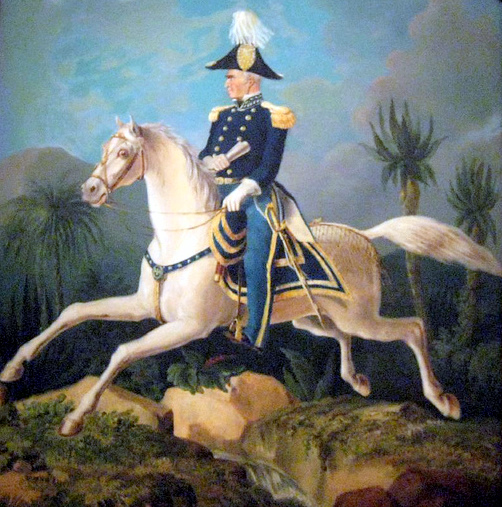
A LITTLE HISTORY: Before he became president, Zachary Taylor fought in the War of 1812, the Black Hawk War, and the second Seminole War before achieving fame in the Mexican-American War. On February 23, 1847, General Taylor led his troops against General Santa Anna at the Battle of Buena Vista. When "the smoke finally cleared," Taylor's force of 6,000 had defeated a Mexican army of 20,000 and "Old Rough and Ready" was a national hero!

Credit: Oil Portrait of Zachary Taylor by Joseph H. Bush, 1849 (White House Historical Assocation)

Monday, July 26, 2010

Theodore Roosevelt, Muckrakers, and the Pure Food and Drug Act of 1906

So this story is kind of repulsive and certainly won't make you crave a juicy hamburger or steak, but it's a part of food history so here goes:

On June 30, 1906, President Theodore Roosevelt signed into law the Meat Inspection Act and Pure Food and Drug Act which provided for federal inspection of meat products and prohibited the manufacture, sale, or transportation of adulterated food products.

The Acts arose in part due to articles and exposés written by muckrakers, like Upton Sinclair, whose popular 1906 novel The Jungle contains hair-raising descriptions of the ways in which meat was produced in Chicago slaughterhouses and stockyards.

Sinclair described how dead rats, putrid meat, and poisoned rat bait were routinely shoveled into sausage-grinding machines, how bribed inspectors turned a blind eye when diseased cows were slaughtered for beef, and how filth and guts were swept off the floor and then packaged as “potted ham.”

Muckraker, of course, is a term that is applied to those novelists and journalists who sought to expose the corruption of American business and politics in the early twentieth century. It was President Roosevelt who first coined the term in a 1906 speech in which he compared writers like Sinclair to the “Man with the Muck-rake” (a character in John Bunyan's Pilgrim's Progress) who was so focused on "raking the filth at his feet” that he failed to look up and “behold the celestial crown.”

Similarly, Roosevelt argued that Sinclair and other muckrakers were so focused on the evils of American society that they failed to behold “the vision of America's promise.”

Thanks for stopping by THE HISTORY CHEF! To pre-order my new book click here!

Saturday, July 24, 2010

Franklin Pierce, the Kansas-Nebraska Act, and a Hard-Boiled Egg

In 1854, President Franklin Pierce signed the Kansas-Nebraska Act, which outraged many northerners who believed he was supporting slavery in the new southwestern territories and old southern states. Politically disgraced, Pierce became the first president to hire a bodyguard after having been attacked by a detractor with a hard-boiled egg!

Although no one knows who threw an egg at Pierce (or if that, in fact, actually happened), we do know that human beings have been eating eggs for thousands of years. In addition to eggs from chickens, people eat eggs from turkeys, ducks, pelicans, quails, partridges, ostriches, geese, and pigeons. Turtle eggs have been delicacies in some cultures for centuries, and, in some places, people eat alligator eggs at breakfast!

Why eggs at breakfast? Food historians say that this practice dates back to those days when many people raised their own chickens and had a constant supply of fresh eggs. Eggs are usually collected early in the morning and “the fresher the egg, the better it tastes.” Eating eggs in the morning also made sense in the days before refrigeration because fewer eggs had to be stored and so fewer eggs would break or spoil. Of course, eating eggs is a great way to start your day because they are a rich source of protein and energy!

So without further ado, let me leave you with this quick and delicious recipe for Sunny Side Up Grilled Egg Sandwiches from Mr. Breakfast

8 slices of whole wheat bread
4 eggs
4-8 slices of cheese (to taste)
4 slices of ham
dehydrated onions
butter
salt and pepper

Melt butter on the grill. Fry eggs sunny side up and then flip and break the yolk, frying until yolk is completely dry. Fry ham on the grill. Layer egg, ham, onion, salt, pepper and cheese on slice of wheat bread and put another slice on top to make a sandwich. Melt more butter on the grill and fry the sandwich on both side until the bread is lightly browned and the cheese is melted. Serve warm.

FAST FACT: The Kansas-Nebraska Act repealed the Missouri Compromise of 1820, created the territories of Kansas and Nebraska, and allowed settlers in those territories to determine (vis-a-vis the concept of popular sovereignty) whether they would allow slavery within their boundaries. The Act triggered many violent conflicts between abolitionists and slaveholders and moved the nation ever closer to civil war.

To learn about my new book click here

Tuesday, July 20, 2010

Dolley Madison's Wednesday Squeezes

When James Madison and his wife Dolley moved into the President's House, the room that Thomas Jefferson had used as an office became the State Dining Room. The adjacent parlor (today’s Red Room) was "redecorated in sunflower yellow, with sofas and chairs to match" and "outfitted with a piano, a guitar, and a portrait of Dolley.” One room over, the smaller but more formal elliptical salon was "decorated in the Grecian style" with cream-colored walls.

Together, these three rooms with their interconnecting doors became the venue for Dolley Madison’s legendary “Drawing Rooms,” or "Wednesday Squeezes," which often attracted as many as three hundreds guests and were the most popular social event in town!

Dressed in brightly colored satins or silks and often donning a feathered headpiece or bejeweled turban, Dolley cheerfully greeted and mingled with guests as they enjoyed a festive evening of refreshments, music, and lively conversation. Mrs. Madison also presided over elaborate dinner parties where she delighted guests with such unusual dessert items as pink pepperment ice cream baked in warm pastries.

The Madisons continued to entertain this way until "their brilliant social whirlwind" went up in flames during the War of 1812. On August 24, 1814, while James was away getting a report on the war, Dolley was supposedly awaiting forty dinner guests. Around three o’clock, word was received that British troops had defeated American forces at nearby Blandensburg and were marching toward the capital.

Before fleeing to safety, Dolley quickly gathered what she could, including important documents of her husband’s and Gilbert Stuart’s famous portrait of George Washington. When British soldiers entered the Executive Mansion later that day, they supposedly devoured the lavish dinner that had been left behind. They then piled up furniture, scattered oil-soaked rags in all of the rooms, and lit the President’s House afire!

Although the British quickly evacuated the capital, the months that followed were not happy ones for the Madisons. Many Americans criticized them for abandoning the President’s House and for “allowing the destruction of the most visible symbol of the young republic.”

At their temporary residence, Dolley started up her Wednesday Squeezes again, but “the spirit was gone.” Then came word of General Andrew Jackson’s victory over the British in the Battle of New Orleans and the mood of the country was again jubilant. Although a peace treaty had been signed weeks earlier, the Battle of New Orleans transformed “Mr. Madison’s War” (which had been condemned until then as an unnecessary folly) into “a glorious reaffirmation of American independence.”

Source: Barry Landau, The President's Table: Two Hundred Years of Dining and Diplomacy (NY, Harper Collins: 2007)

Credit: Dolley Madison, oil on canvas, by Gilbert Stuart

Sunday, July 18, 2010

Sarah Polk and "Hail to the Chief!"

So did you know that the song “Hail to the Chief" didn't originate as a salute to the president? The phrase dates back to a poem by Sir Walter Scott called “The Lady of the Lake.” Published in 1812, the poem was so popular in England that it was adapted into a musical play which later made its way to the United States.

The first time the song was played to honor an American president was at a ceremony in Boston in 1815 to commemorate George Washington's birthday. Andrew Jackson was the first living president to be honored by "Hail to the Chief" on January 9, 1829. The song was also played at Martin Van Buren's inauguration ceremonies on March 4, 1837 and at other social occasions during his administration.

According to historians at the Library of Congress, Julia Tyler, the wife of John Tyler, was the first to specifcially request that the song be played to announce the president’s arrival at an official function. But it was Sarah Polk who requested that the song be routinely played for presidential entrances.

According to White House historian William Seale, Mrs. Polk was concerned that her husband James "was not an impressive figure, so some announcement was necessary to avoid the embarrassment of his entering a crowded room unnoticed. At large affairs the band...rolled the drums as they played the march...and a way was cleared for the President."

If you've never heard them, here are the original lyrics for the American version of the tune:

Hail to the Chief we have chosen for the nation,
Hail to the Chief! We salute him, one and all.
Hail to the Chief, as we pledge co-operation
In proud fulfillment of a great, noble call.

Yours is the aim to make this grand country grander,
This you will do, that's our strong, firm belief.
Hail to the one we selected as commander,
Hail to the President! Hail to the Chief!


In 1954, the Department of Defense recognized "Hail to the Chief" as the official musical tribute for presidential events. Today, the song, along with its preceding fanfare known as "Ruffles and Flourishes," is played by the U.S. Marine Band to announce the arrival of the President at State Dinners and other formal events.

Saturday, July 17, 2010

Leonardo da Vinci Saffron Risotto

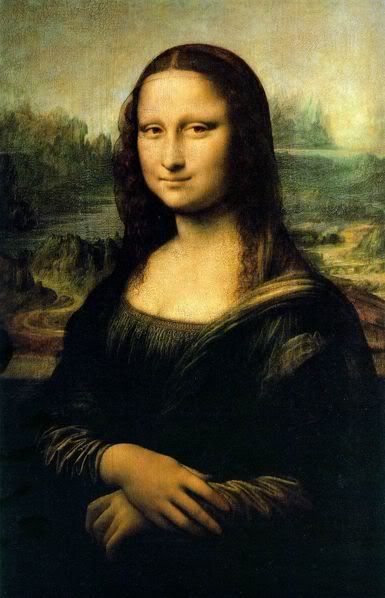
How Leonardo da Vinci used rudimentary pigments in 1503 to create such subtle shadows and light on the Mona Lisa has long baffled art historians. Now French researchers are "using X-ray fluorescence spectroscopy to isolate and study each ultra-thin layer of paint and glaze da Vinci used" to create the effect he was seeking, according to recent new stories.

By beaming x-rays on the Mona Lisa without removing it from the wall on which it is mounted in Paris' Louvre Museum, scientists found that da Vinci used a Renaissance painting technique known as sfumato, intricately mixing thin layers of pigment, glaze and oil to create the appearance of lifelike shadows and light. Scientists now believe that da Vinci used up to 30 layers of paint on his works.

While this research may solve one mystery about the Mona Lisa, others remain, like: "who is this enigmatic woman" and why does she hold her subtle half-smile? To these mysteries we can add another: what did this mysterious woman and da Vinci like to eat?

According to one researcher who studied the culinary habits of fifteenth and sixteenth century Italy, some Renaissance favorites were Risi e Bisi, Saffron Risotto with Duck and Mushrooms, and Spinach Soup with Hazelnuts. Although those recipes would be impossible to duplicate today, this one for Saffron Risotto with Mushrooms from the New York Times might just give you a sense of how and what Leonardo da Vinci ate.

4 cups beef or chicken stock
1/8 teaspoon ground saffron
3 tablespoons unsalted butter
2 tablespoons olive oil
1/4 cup finely minced scallions
1/4 cup finely minced onions
1 pound fresh wild mushrooms, trimmed, cleaned and sliced (see note)
1 1/2 cups Italian Arborio rice
Salt and freshly ground black pepper to taste
3/4 cup freshly grated Parmigiano-Reggiano cheese

Place stock in a heavy saucepan, and over medium heat bring to a simmer. Add saffron, stir, and leave to simmer very slightly.

Meanwhile, in a larger saucepan over medium heat, melt 1 tablespoon butter in olive oil. When foam subsides, add scallions and onions, and cook, stirring frequently, until softened and yellow but not browned. Add mushrooms and saute, stirring occasionally, until liquid has evaporated.

Add rice to mushrooms, and cook, stirring to coat well, with butter and oil. Add approximately 3/4 cup of simmering stock to rice and mushrooms. Stir well and continue to cook, stirring occasionally, until rice has absorbed most of stock. Continue adding stock to rice by the half-cupful, adding only after rice has absorbed previous addition. As cooking continues, you will have to stir more frequently. After 25 to 30 minutes, all the stock should be absorbed, and rice should be tender but still chewy.

Remove from heat. Add salt and pepper to taste. Stir in remaining butter and 1/4 cup of Parmigiano-Reggiano. Serve immediately, passing the rest of the cheese.

Thanks for stopping by THE HISTORY CHEF! For a free excerpt of my new book from Simon and Schuster click here

"When Thomas Jefferson Dined Alone"

A scholar, author, architect, scientist and statesman, Thomas Jefferson applied his brilliant mind to many activities. He was elected to the Virginia House of Burgesses when he was only 25, served in the Continental Congress, was governor of Virginia, and a diplomat in France where he helped negotiate the treaties that ended the Revolutionary War.

He also founded the University of Virginia, was fluent in six languages, including Latin, French, Spanish, Italian and Greek, and wrote the Declaration of Independence at the age of 33! He then served as Secretary of State under George Washington, as Vice President under John Adams, and, along with his good pal James Madison, wrote the Virginia and Kentucky Resolutions in defense of states’ rights and the freedom of speech.

During his presidency, Jefferson did many more important things: he repealed the Alien and Sedition Acts, eliminated an unpopular whiskey tax, and sent our navy to fight Barbary pirates who were harassing American ships on the Mediterranean Sea. He also doubled the size of the country by purchasing the Louisiana Territory from Napoleon in 1803 and then commissioned Lewis and Clark to explore western lands which, back then, to most Americans, were totally unknown.

It’s no wonder then that at a Nobel Prize dinner held at the White House in 1962, President John F. Kennedy joked that so many brilliant minds had never been gathered together at the White House "with the possible exception of when Thomas Jefferson dined alone."

Friday, July 16, 2010

James Madison, the Potomac Oyster Wars and the Constitutional Convention

So you probably know that James Madison was one of the drafters of the Constitution and later helped spearhead the drive for the Bill of Rights, but what you might not know is that he also played a major role in negotiating an end to the Potomac Oysters Wars which indirectly helped pave the way to the Constitutional Convention. This is how the story briefly goes:

In the seventeenth century, watermen in Maryland and Virginia battled over ownership rights to the Potomac River. Maryland traced its rights to a 1632 charter from King Charles I which included the river. At the same time, Virginia laid its claims to the river to an earlier charter from King James I and a 1688 patent from King James II, both of which also included the river.

In 1776, after more than a century of conflict, Virginia ceded ownership of the river but reserved the right to “the free navigation and use of the rivers Potowmack and Pocomoke." Maryland rejected this reservation and quickly passed a resolution asserting total control over the Potomac. After the Revolution, battles over the river intensified between watermen from both states.
To resolve this problem, leaders from Maryland and Virginia appointed two groups of commissioners which, at the invitation of George Washington, met at Mount Vernon in May of 1785. James Madison led the Virginia contingent and Samuel Chase led the Maryland delegation. Their discussions led to the Compact of 1785, which allowed oystermen from both states free use the river.
Peace prevailed until the supply of oysters began to dwindle, at which point Maryland re-imposed harvesting restrictions. Virginia retaliated by closing the mouth of the Chesapeake and watermen from both states engaged in bloody gun battles which lasted, with periodic breaks, for more than a century.

Today, these battles are known as the Potomac Oyster Wars. They are important in their own right, but they have a larger historical significance because they revealed one of the main weaknesses of the Articles of Confederation, which was that the federal government didn't have the power to control commerce among the states, a setup that was creating constant chaos and conflict.

With this problem in mind, Madison and the others who convened at Mt. Vernon in May of 1785 agreed to meet the following year at Annapolis to discuss the need for a stronger federal government. Not many delegates showed up and so they agreed to convene the following May in Philadelphia, which is, of course, where the Constitution was drafted.

And so NOW you know how James Madison and a little bivalve from the Potomac helped pave the way to the Constitutional Convention!

FACT: Under the Articles of Confederation, the federal government didn't have the power to raise its own army, regulate commerce or coin money for the country. To pass a law, Congress needed the approval of nine out of the 13 states, and in order to amend the Articles it needed the approval of all 13 states, which made it nearly impossible to get anything done. The Articles also didn't provide for an Executive or Federal branch so there was no separation of powers.

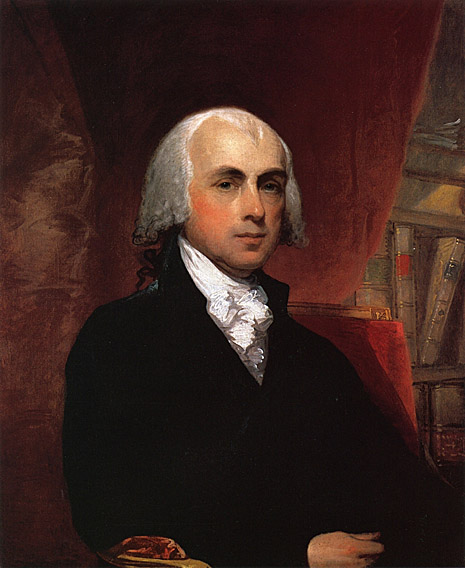
Credit: Portrait of James Madison by Gilbert Stuart

Thursday, July 15, 2010

Dining with the Coolidge's Pet Racoon!

Calvin Coolidge and his wife Grace were great animal lovers and allowed dozens of pets to roam freely on White House grounds. In addition to ten dogs, three cats, and dozens of exotic birds and wildlife, including thirteen Peking ducks, two African lion cubs (named Tax Reduction and Budget Deficit), a donkey, goose, canaries, a wombat and an Australian wallaby), the Collidges also had a rambunctious pet raccoon named Rebecca.

Rebecca was sent to the Coolidges to be part of their Thanksgiving dinner but the president was reportedly so delighted with her that he had a little house built for her near a large tree on the White House lawn and could often be seen playing with her after his afternoon paperwork was done.

Treated like a family member, Rebecca was occasionally allowed to dine in the White House, where she was served such sumptuous dishes as baked chicken with persimmon, scrambled eggs, cream, and shrimp. Not bad for a raccoon!

FOOD HISTORY FACT: Published in 1931, the first edition of Irma Rombauer's The Joy of Cooking contains instructions on preparing squirrel and raccoon.

Wednesday, July 14, 2010

Ulysses S. Grant's Second Inaugural Ball

The menu for Ulysses S. Grant’s second Inaugural Ball reflects the opulence of the Gilded Age. A New York Times article dated March 5, 1873 contains a mind-boggling list of dishes and provisions served, including:

10,000 fried oysters; 8,000 scalloped oysters; 8,000 pickled oysters; 63 boned turkeys; 75 roast turkeys; 150 roast capons stuffed with truffles; 15 saddles of mutton; 200 dozen quails; 300 tongues ornamented with jelly; 200 hams; 30 baked salmon; 100 roasted chickens; 400 partridges; 25 stuufed boar’s heads; 2,000 head-cheese sandwiches; 3,000 ham sandwiches; 3,000 beef-tongue sandwiches; 1,600 bunches celery; 30 barrels of salad; 350 boiled chickens; 6,000 boiled eggs; 2,000 pounds of lobster; 2,500 loaves of bread; 8,000 rolls and 1,000 pounds of butter.

Dessert items inclued 300 charlotte russes; 200 moulds of wine jelly; 200 moulds of blanc mange; 300 gallons of assorted ice-cream; 400 pounds of mixed cakes; 25 barrels of Malaga grapes; 400 pounds of mixed candies; 200 pounds of shelled almonds; 200 gallons coffee; 200 gallons of tea and 100 gallons of hot chocolate.

But the best laid plans can go awry, even for a president. The weather that evening was freezing and the temporary ballroom had no heat. Guests danced in their hats and overcoats, they ran out of hot chocolate and coffee, and perhaps most tragically, most of the decorative caged canaries (which were supposed to be happily chirping) froze!

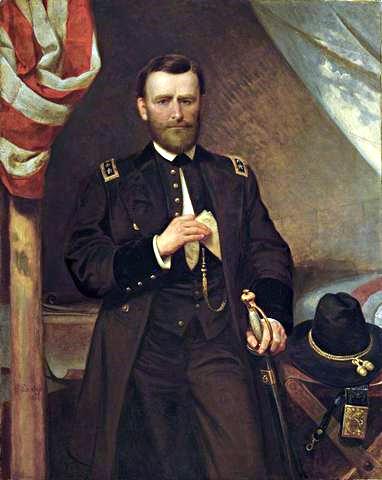
Credit: Portrait of Ulysses S. Grant by Emanuel Gottlieb Leutze

Tuesday, July 13, 2010

John and Abigail Adams Indian Pudding

When John Adams moved into the President's House in the new capital city of Washington D.C. it was in a state of disarray, much to his and his wife Abigail’s great frustration and dismay. Nevertheless, they immediately began making plans for the first presidential levee to be held on New Year’s Day.

As you can imagine, the celebration was grand! Cookies, custards, and cakes, all baked in the new hearths on either side of the enormous kitchen fireplace, were served, along with all kinds of puddings, pastries, trifles, and tarts. Borrowing court etiquette from European kings and queens she had seen while John was U.S. Ambassador to Britain, Abigail regally greeted guests from a throne-like chair. Standing proudly beside her was her husband, wearing velvet breeches and lace with fashionably powdered hair.

Although that reception was a lavish affair, John and Abigail preferred more basic fare, and a few of their favorite foods, which can be traced to their New England roots, included Green Turtle Soup, Indian Pudding, and Gooseberry Fool. If you would like to make Indian Pudding, this recipe, adapted from simplyrecipes.com is fairly simple to make and tastes simply delicious!

6 cups of milk
1/2 cup (1 stick) butter
1/2 cup yellow cornmeal
1/4 cup flour
1 teaspoon salt
1/2 cup molasses
3 eggs, beaten
1/2 cup of granulated sugar
1 teaspoon of cinnamon
1 teaspoon of nutmeg
Whipped cream or vanilla ice cream

Scald the milk and butter in a large double boiler or heat the milk and butter for about 5 minutes on high heat in the microwave until it is boiling, then carefully transfer it to a medium saucepan on the stove. Keep hot over medium heat.

Preheat oven to 250°F. In a medium bowl, mix cornmeal, flour, and salt, then stir in molasses. Thin the mixture with 1/2 cup of scalded milk, a few tablespoons at a time, then gradually add the mixture back to into the scalded milk. Cook, stirring occasionally, until thickened, about 3-4 minutes.

Slowly add a half cup of the hot milk cornmeal mixture to the 3 beaten eggs, whisking constantly. Then add the egg mixture back in with the cornmeal mixture and stir to combine. Stir in the sugar and spices until smooth. Pour into a 2 1/2 quart shallow casserole dish. Bake for 2 hours at 250°F. Let cool for about an hour, then serve with whipped cream or vanilla ice cream and enjoy!

Thanks for stopping by THE HISTORY CHEF! And for a flash sale today for my book click here!

Andrew Johnson, Presidential Reconstruction, and Southern Hoppin' John

At the end of the Civil War, the South lay in ruins. Southern plantations and entire cities had been destroyed during the war. Without food, many southerners starved to death, and some of those who survived lost everything they owned.

As a result, the government had to figure out how to rebuild the South. As president, Johnson took charge of the first phase of Reconstruction. But his attempt to quickly readmit the former Confederate states into the union and his vetoes of important civil rights bills outraged Radical Republicans in Congress.

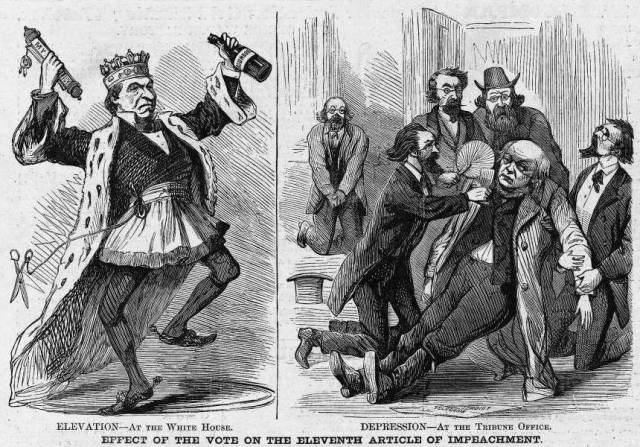
The House of Representatives impeached Johnson in 1868, but he was acquitted by a single vote in the Senate. Historians say that Johnson’s victory “marked the beginning of an ambitious series of receptions, dinners and children’s parties that would turn the last nine months of his term into an ongoing celebration.”

After leaving office, Johnson returned to his native state of Tennessee where he probably consumed such traditional southern foods as Hoppin’ John and Pine Bark Stew. Still popular in the south, Hoppin' John is often the high point of New Year's Day festivities and is thought to bring good luck throughout the coming year. If you'd like to whip up some Hoppin' John, you can't go wrong with this quick and simple recipe from Emeril Lagasse.

1 tablespoon olive oil
1 large ham hock
1 cup onion, chopped
1/2 cup celery, chopped
1/2 cup green pepper, chopped
1 tablespoon chopped garlic
1 pound black-eyed peas, soaked overnight and rinsed
1 quart chicken stock
1 Bay leaf
1 teaspoon dry thyme leaves
Salt, black pepper, and cayenne
3 tablespoons finely chopped green onion
3 cups steamed white rice

Heat oil in a large soup pot, add the ham hock and sear on all sides for 4 minutes. Add the onion, celery, green pepper, and garlic, and cook for 4 minutes. Add the black-eyed peas, stock, bay leaves, thyme, and seasonings.

Bring to a boil, reduce the heat and simmer for 40 minutes, or until the peas are creamy and tender, stir occasionally. If the liquid evaporates, add more water or stock. Adjust seasonings, and garnish with green onions. Serve over rice and enjoy!

Monday, July 12, 2010

Monticello Tomato Soup with Garlic and Herbs

Thomas Jefferson’s first written reference to "tomatas" is in his Notes on the State of Virginia: “The gardens yield muskmelons, watermelons, tomatas, okra, pomegranates, figs, and the esculent plants of Europe.”

Although there no references in his writings to the commonly held eigteenth century belief that tomatoes were poisonous, one story holds that during a visit to Lynchburg, Jefferson “terrified one of the locals when he paused to snack on a tomato on the steps of the Miller-Claytor house.”

Whether this incident actually happened is uncertain. What is certain, however, is that Jefferson’s daughter Martha Jefferson Randolph and her daughters recorded numerous recipes for preparing tomatoes in their family cookbooks, including recipes for Cayenne Tomato Soup, Green Tomato Pickles, Tomato Gumbo, Tomato Preserves and Tomato Omelette.

It has been said that tomato soup with fresh herbs was another Jefferson family favorite. If you try this delicious recipe for Tomato Soup with Garlic and Herbs from seriouseats.com, it might just become one of your favorites, too!

1 tablespoon olive oil
1 large onion, diced
2 ribs celery, diced
1 can (28-ounce) Muir Glen Fire-Roasted diced tomatoes
1 can (28-ounce) Muir Glen Fire-Roasted crushed tomatoes
3 cups vegetable or chicken broth
2 teaspoons dried oregano
2 teaspoons dried basil
1/4 teaspoon cayenne (or to taste)
8 cloves roasted garlic (instructions here)
2 tablespoons minced parsley
Salt and pepper to taste
1 or 2 tablespoons sugar (optional)
4 tablespoons plain yogurt (optional)
Croutons (optional)

Sauté onion and celery in olive oil in a Dutch oven over medium heat. When onion is translucent (about 7 minutes), add the tomatoes, broth, oregano, basil, and cayenne. Bring to a boil, then simmer on low heat for 10 minutes.

Transfer half of the soup to the blender, add the roasted garlic, and purée until fairly smooth. If you'd like a chunky soup, add the blended half back to the pot. For a smoother soup, blend the rest of the soup and return it to the pot. Add the parsley and salt and pepper to taste, and simmer for about 10 minutes to allow the flavors to blend. Taste the soup, and if it is too acidic, add sugar, just enough to take the edge off. If desired, serve with croutons or a tablespoon of yogurt stirred into each bowl.

Credit: Still Life with Tomatoes, a Bowl of Aubergines, and Onions, painting by Louis Meléndez (c. 1771-1774)

Sunday, July 11, 2010

"Boil Them Cabbage Down" and "Chitlin Time"

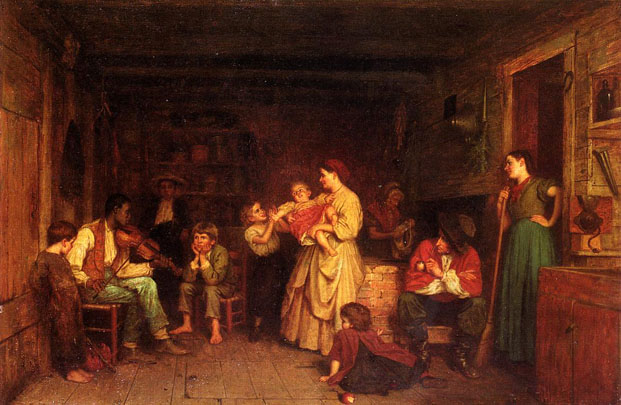
For most of his adult life, Andrew Jackson lived in east Tennessee, where mountaineers with banjos and fiddles sang foot-tapping tunes about common frontier foods. Today, you can still hear some of these old tunes, like “Jimmy Crack Corn” and “When it’s Chitlin Time in Cheatham County.”

“Boil Them Cabbage Down” is another classic folk song played with a fiddle. Some historians say that the origins of this song can be traced back to those Africans who were brought to the southern states as slaves. According to this theory, some "Africans in Niger played primitive instruments that resembled the fiddle, guitar, and banjo, so when the Africans were brought to the United States, they found the fiddle to be a familiar instrument.”

Although the precise origins of this tune will likely always remain a mystery, it is deeply rooted in American folk history and has been recorded by such popular folk singers as Pete Seeger. Here are some of the lyrics:

Boil them cabbage down
Went up on the mountain
just to give my horn a blow
Thought I heard my true love say
Yonder comes my beau

Boil them cabbage down
Turn them hoecakes round
The only song that I can sing
is Boil them Cabbage Down...


For those of you who don’t know, chitlins are the intestines of hogs. To maximize profits, slave owners would usually feed their slaves in the cheapest manner possible. After slaughtering a hog, the best cuts of meat were reserved for the owner's use while the remains (snouts, ears, neck bones, and feet) were given to the slaves to eat.

Today, chitlins are still considered a delicacy in the south. Still, I’m guessing that some of you might not want to eat chitlins, or boiled cabbage for that matter, but you might enjoy this simple recipe for Sauteed Cabbage from Ina Garten

1 small head white cabbage, including outer green leaves (2 1/2 pounds)
2 tablespoons unsalted butter
1 1/2 teaspoons kosher salt
1/2 teaspoon freshly ground black pepper

Cut the cabbage in half and, with the cut-side down, slice it as thinly as possible around the core, as though you were making coleslaw. Discard the core.

Melt the butter in a large saute pan or heavy-bottomed pot over medium-high heat. Add the cabbage, salt, and pepper and saute for 10 to 15 minutes, stirring occasionally, until the cabbage is tender and begins to brown. Season to taste. Serve warm and enjoy!

Friday, July 9, 2010

Dolley Madison Fresh Strawberry Ice Cream

Legend has it that in the early nineteenth century, a freed slave named Sallie Shadd went into her family’s catering business in Wilmington, Delaware. Sallie supposedly achieved fame among the free black population there for a new dessert sensation she created with frozen cream, sugar, and fruit.

When Dolley Madison heard about this new dessert, she supposedly travelled to Wilmington to try it. The First Lady must have loved it because a "magnificent dome of pink ice cream" was served at President Madison’s second Inaugural Ball in 1813, and ice cream often appeared as the official dessert on the White House menu during her husband's two terms of office.

This recipe for strawberry ice cream, which may be similar to the one used by the Madison’s chef, is adapted from The White House Cookbook by Hugo Ziemann, a nineteenth century steward of the White House, and Mrs. F. L. Gillette, a celebrated 19th century cookbook author.

1 1/2 cups sugar
4 cups fresh strawberries, sliced
1 quart heavy fresh cream

In a medium bowl, mix 1 cup sugar with strawberries, let stand for three hours, then mash and strain through a coarse towel.

Add 1/2 cup sugar and combine until dissolved. Beat in cream and freeze for at least three hours.

Thanks for stopping by THE HISTORY CHEF! For a free excerpt of my new book from Simon and Schuster click here

James Hemings: Thomas Jefferson's Head Chef

Before departing for his diplomatic appointment in France, Thomas Jefferson decided to bring his teenage slave James Hemings with him for the “particular purpose” of mastering the art of French cookery.

Between 1785 and 1789, James apprenticed under famous French chefs and pastry cooks and became chef de cuisine in Jefferson’s residence on the Champs-Élysées, earning roughly $48 a year. Of course, these were the tumultuous years leading up to the French Revolution and there was no slavery in France at that time, and so James could have claimed his freedom at any time, but for reasons that remain unexplained, he chose not to do so.

Instead, he returned to the United States and later became head chef at Monticello. When James petitioned for his freedom in 1793, Jefferson agreed upon the following condition:“if the said James shall go with me to Monticello…and shall continue there until he shall have taught such persons as I shall place under him for the purpose to be a good cook…he shall be thereupon made free.”

To fulfill the terms of this manumission agreement, James taught his brother Peter all the cooking techniques he had learned in France. Three years later, James became a free man.

No one knows exactly what became of James after that, but we do know one thing: After Jefferson was elected president in 1800, he asked James to be his head chef in Washington, D.C. James declined this post, however, and a Frenchman by the name of Honoré Julien was head chef at the President’s House during most of Jefferson’s administration.

FAST FACT: Manumission is a fancy legal term for the freeing of a slave. In the United States, manumission of slaves was achieved by a variety of means, including state-ordered manumission and through private manumission agreements, like the agreement between Thomas and James.

Thursday, July 8, 2010

George Washington Glazed Baked Ham

According to historians at Mount Vernon, Martha Washington carefully supervised the preparation of the hams and bacon that were eaten by their many guests. Of all the food produced at Mount Vernon it is said that Martha was “especially proud of her hams.”

After slaughtering and butchering the hogs in December and January, slaves smoked the meat over a fire pit in the smokehouse to preserve it for eating during the coming year. After smoking, the meat was aged and stored in the smokehouse.

Occasionally a thief would break into the smokehouse at night and steal a ham. However, the most notable “ham theft” supposedly occurred in broad daylight, right off the Washingtons' dining room table. The thief was a hound named Vulcan, who “made a running pass at the table and dashed out the door with the savory prize clenched between his teeth.”

A chase ensued, and the ham was recovered but nobody wanted to eat it after that! Although Martha was said to be furious, George reportedly thought the incident was very funny and “delighted in recounting it to guests.”

When preparing this recipe for Glazed Baked Ham, it's best to make the marinade the night before or early in the morning and let the ham marinate for several hours in the refrigerator.

1/3 cup light brown sugar, packed
1/2 cup honey
1/3 cup dry red wine
1/2 cup pineapple juice
1 fully cooked ham, about 6 pounds

In a large bowl, combine the brown sugar, honey, wine, and pineapple juice. Place the ham in the marinade, turn to coat well, and let marinate for 6 hours or overnight in refrigerator.

Preheat the oven to 350°. Place the ham on a rack in a roasting pan, reserving marinade for basting. Bake the ham, basting frequently with the reserved marinade, until a meat thermometer (not touching the bone) reads about 140°, or about 10 minutes per pound.

Thanks for stopping by THE HISTORY CHEF! For a free excerpt of my new book from Simon and Schuster click here!

Wednesday, July 7, 2010

John and Abigail Adams Indian Pudding

When John Adams moved into the President’s House in the new federal city of Washington D.C. it was in a state of disarray, much to his and his wife Abigail’s great frustration and dismay. Nevertheless, they immediately began making plans for the first presidential “levee” to be held on New Year’s Day.

As you can imagine, the celebration was quite grand. Cookies, custards, and cakes, all baked in the new hearths on either side of the enormous kitchen fireplace, were served, along with all kinds of puddings, pastries, trifles, and tarts. Borrowing court etiquette from European kings and queens she had seen while John was U.S. Ambassador to Great Britain, Abigail regally greeted guests from a throne-like chair. Standing proudly beside her was her husband, wearing velvet breeches and lace with fashionably powdered hair.

Although that reception was a lavish affair, John Adams actually preferred plainer fare, and a few of his favorite foods, which can be traced to his New England roots, include Green Turtle Soup, Indian Pudding, and Gooseberry Fool.

If you would like to make some Indian Pudding, this recipe, adapted from simplyrecipes.com, is relatively easy to prepare and is simply delicious!

6 cups of milk
1/2 cup (1 stick) butter
1/2 cup yellow cornmeal
1/4 cup flour
1 teaspoon salt
1/2 cup molasses
3 eggs, beaten
1/2 cup of granulated sugar
1 teaspoon of cinnamon
1 teaspoon of nutmeg
Whipped cream or vanilla ice cream

Scald the milk and butter in a large double boiler or heat the milk and butter for about 5 minutes on high heat in the microwave until it is boiling, then carefully transfer it to a medium saucepan on the stove. Keep hot over medium heat.

Preheat oven to 250°F. In a medium bowl, mix cornmeal, flour, and salt, then stir in molasses. Thin the mixture with 1/2 cup of scalded milk, a few tablespoons at a time, then gradually add the mixture back to into the scalded milk. Cook, stirring occasionally, until thickened, about 3-4 minutes.

Slowly add a half cup of the hot milk cornmeal mixture to the 3 beaten eggs, whisking constantly. Then add the egg mixture back in with the cornmeal mixture and stir to combine.

Stir in the sugar and spices until smooth. Pour into a 2 1/2 quart shallow casserole dish. Bake for 2 hours at 250°F. Let cool for about an hour, then serve with whipped cream or vanilla ice cream and enjoy!

Barack Obama Molasses Whipped Sweet Potatoes

Dating back to 1897, the traditional Senate Inaugural Luncheon features dishes from the home states of the president and vice president. Barack Obama’s inaugural theme "A New Birth of Freedom" paid homage to Abraham Lincoln, who had a taste for wild game and seafood. Menu items included Seafood Stew in Puff Pastry, Duck Breast served with Sour Cherry Chutney, Herb-Roasted Pheasant with Wild Rice Stuffing, and this wonderfully flavorful recipe for Molasses Whipped Sweet Potatoes.

3 large sweet potatoes, about 3 pounds
2 tablespoons unsalted butter
1 teaspoon kosher salt
¼ cup orange juice
½ tablespoon brown sugar
1 tablespoon molasses
1 teaspoon ground cumin
2 tablespoons maple syrup

Preheat the oven to 400 degrees. Place sweet potatoes on a baking sheet and roast until easily pierced with a fork, about one hour. Peel the skin off of the sweet potatoes while still hot.

By hand or mixer, smash potatoes until all large chunks are gone. Combine the potatoes, butter, salt, orange juice, brown sugar, ground cumin, molasses and maple syrup in a large bowl. Continue to mix all together until all lumps are gone. Yields two quarts.

Source: US Senate, Joint Congressional Committee on Inaugural Ceremonies.

John Adams Quick and Easy Boston Baked Beans

Long before John Adams was born in Braintree, Massachusetts, American Indians in the region were eating all kinds of beans. During severe New England winters, food stuffs were usually hard to locate, but beans were relatively easy to find, dry, store, and prepare.

Food historians say that New England Indians mixed beans with maple syrup and bear fat. They then placed the mixture in an earthenware pot, buried it in a pit, and covered it with hot rocks.

After the Pilgrims arrived in Massachusetts, they may have learned how to make baked beans from Indians in the region but probably prepared them with molasses and pork fat instead of maple syrup and bear fat.

This quick and easy recipe provides plenty of the flavorful baked bean goodness you expect and are great on long summer days with grilled hamburgers and hot dogs.

3 15-ounce cans of white beans
1 medium white onion, peeled and chopped
2 garlic cloves, peeled and smashed
1 teaspoon salt
¼ cup ketchup
¼ cup molasses
3 tablespoons apple cider vinegar
1½ teaspoons dry mustard powder
¼ teaspoon freshly ground black pepper
1 slice raw thick-cut bacon
5 slices cooked thick-cut bacon, chopped

Pour beans into a large saucepan. In a separate bowl, mix together the ketchup, onions, molasses, vinegar, garlic, salt, onion, mustard powder, Tabasco sauce, and pepper. Add the mixture to the beans and stir to combine. Add one slice of raw bacon to the mix.

Bring the bean mixture to a simmer. Simmer over low heat until thick, about 20 minutes. Remove bacon slice, if desired. Add more salt to taste. Sprinkle chopped bacon over the top and serve hot.

Thanks for stopping by THE HISTORY CHEF! For a free excerpt of my new book from Simon and Schuster click here!

Thomas Jefferson Macaroni and Cheese

So did you know that Thomas Jefferson first served Macaroni and Cheese at the White House in 1802. Of course, the dish that Jefferson ate is nothing like the boxed version we're familiar with today.

Using pasta and parmesan cheese imported from Italy, Jefferson’s chefs cooked the macaroni until it was soft, then coated it with butter and added cheese. The mixture was then placed in a casserole dish, dotted with more butter and cheese, and baked until it was slightly brown with some crustiness on top.

If you'd like make some Thomas Jefferson Macaroni and Cheese today, here's a quick and simple recipe to try:

Butter, for greasing dish
16 ounces large elbow macaroni
3 cups milk
2 teaspoons all-purpose flour
½ teaspoon salt
¼ teaspoon freshly ground black pepper
2 cups (packed) freshly shredded Parmesan
2 cups (packed) grated mozzarella
2 cups (packed) Romano cheese
2 tablespoons butter

Preheat the oven to 450°F. Butter a 13 by 9-inch glass baking dish and set aside. In a large pot of boiling water, cook the noodles until tender, about 8-10 minutes. Drain, but do not rinse.

In a large bowl, whisk the milk, flour, salt and pepper until blended. Stir in 1 ½ cup Parmesan, 1 ½ cup mozzarella and 1 ½ cup Romano cheese. Add the noodles and butter and toss to coat.

Transfer the noodle mixture to the prepared baking dish. Sprinkle the remaining Parmesan, mozzarella and Romano cheese over the noodle mixture. Bake until the cheese begins to lightly brown on top, about 12-14 minutes. Let stand for 10 minutes before serving. Season with salt and pepper to taste and enjoy!

Thanks for stopping by THE HISTORY CHEF! And for a flash sale today for my book click here!

Monday, July 5, 2010

Andrew Jackson Benne (Sesame) Wafers

Andrew Jackson was so strong-willed that his enemies called him King Andrew I, portraying him as a tyrannical ruler who abused presidential powers and trampled on the constitution.

During his two terms of office, Jackson vetoed the recharter of the Second Bank of the United States, signed the “Tariff of Abominations” which led to the Nullification Crisis and ignored an important Supreme Court decision protecting Native American rights.

Jackson was also no stranger to slavery. More than 150 slaves worked day and night at his stately Tennessee mansion "The Hermitage" where cooks prepared his favorite southern foods, including Braised Duck, Chicken Hash, Old Hickory Soup and Wild Barbecued Goose.

Popular in the south throughout the nineteenth century, Benne Wafers were another Jackson family favorite. Today, these delightfully light, crisp, paper-thin cookies can still be found in bakeries and candy shops throughout the south.

¾ cup sesame seeds, toasted
1 cup firmly packed brown sugar
4 tablespoons (½ stick) butter, softened
1 egg, lightly beaten
½ cup all purpose flour
¼ teaspoon salt
¼ teaspoon baking powder
1 teaspoon vanilla extract

Preheat oven to 325º F. Cover cookie sheet with parchment paper or lightly grease it. In a heavy skillet over medium heat, toast the sesame seeds until they are golden brown, about 4 minutes.

In a medium bowl, beat the brown sugar and butter together until fluffy, about 3 minutes. Beat in the egg. In a separate bowl, whisk together the flour, salt, and baking powder, then add to the butter, sugar and egg mixture and mix until well-combined. Stir in the sesame seeds and vanilla.

Drop by teaspoonful onto prepared cookie sheet about 3 inches apart. Bake for 10 minutes, or until the edges are lightly browned. Let cool for a few minutes and then transfer to a rack to continue cooling.

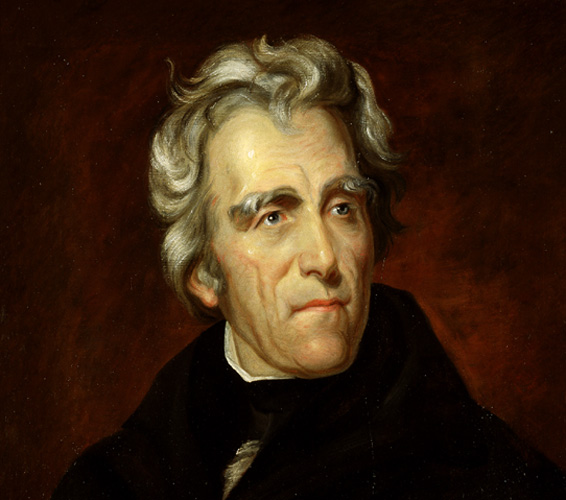
Credit: Jackson in 1824, painting by Thomas Sully.

Saturday, July 3, 2010

John Adams Gooseberry Fool

As a delegate to the Second Continental Congress, John Adams was one of the most vocal advocates of the Declaration of Independence. Contrary to popular belief, the Declaration of Independence was initially approved on July 2, 1776. The delegates then debated and slightly revised it and formally adopted it on the fourth of July. Most historians agree that the Declaration wasn’t signed by all the delegates until nearly a month later, on August 2, 1776.

On July 3, 1776, John wrote a letter to his wife Abigail in which he described these momentous events. This is what he wrote:

The second day of July, 1776, will be the most memorable epoch in the history of America. I am apt to believe that it will be celebrated by succeeding generations as the great anniversary festival…It ought to be solemnized with pomp and parade, with shows, games, sports, guns, bells, bonfires, and illuminations, from one end of this continent to the other, from this time forward forever more.

Although no one knows what the delegates ate on those momentous days, we do know that John Adams was fond of Gooseberry Fool. As an example of how national food preferences change over time, gooseberries were abundant in John's day but are no longer widely available in the United States today.

Unless you want to grow your own little gooseberry patch, you can substitute blueberries and call this dessert Blueberry Fool. Or you can use strawberries or raspberries, whichever you prefer. Either way, this delicious little treat is simple to make and very sweet to eat!

1 pint ripe gooseberries (or blueberries)
½ cup sugar
2 tablespoons water
1 cup cold whipping cream
1 tablespoon sugar
½ teaspoon vanilla extract

Combine sugar, water and berries. Mash some berries to release juice. In a medium saucepan, cook over medium heat until berries are soft. Let cool, then mash with a fork.

When ready to serve, combine cream, sugar and vanilla and whip until it holds soft peaks. Gently fold in berry mixture, leaving visible streaks of berries and cream. Pour into dessert glasses and enjoy!

Credit: Declaration of Independence, painting by John Trumball

Friday, July 2, 2010

Thomas Jefferson Grilled Peaches with Honey

Although native to Asia, peach trees were so abundant in Virginia by the early eighteenth century that one colonist wrote that they grew as wildly as weeds: “We are forced to take a great deal of Care to weed them out, otherwise they make our Land a Wilderness of Peach-Trees.”

While George Washington recorded only two varieties of peaches in his Mount Vernon orchard, Thomas Jefferson cultivated 38 varieties in his Fruit Gardens at Monticello. Jefferson was particularly fond of dried peaches and also used the fruit to make mobby, a peach brandy popular in Virginia.

Mary Randolph's popular 1824 cookbook The Virginia Housewife contains six recipes for peaches, including peach marmalade, peach chips, and peaches in brandy. This recipe for grilled peaches is a snap to make and is great to serve at summer barbecues and other large social gatherings.

4 large ripe peaches, halved and pitted
1 pint French vanilla ice cream
4 teaspoons honey

Heat a grill set to medium. Place peaches on the grill, cut-side down, and cook until grill marks appear, about 3 minutes. Turn over with a metal spatula and grill for another 4 minutes, or until the skin starts to shrivel and the peach softens.

Remove from grill and place 2 halves in 4 separate bowls. Top with the vanilla ice cream, drizzle with the honey and enjoy!

Credit: View of the West Front of Monticello and Garden, painting by Jane Braddick Peticolas

Thanks for stopping by THE HISTORY CHEF! For a free excerpt of my new book from Simon and Schuster click here.

Wednesday, June 30, 2010

George Washington Hoe Cakes

According to his step-granddaughter, Nelly Custis Lewis, George Washington liked to rise with the sun, read or write until seven or seven fifteen, then sneak downstairs for his favorite breakfast of “three small hoe cakes swimming in butter and honey” and “three cups of tea without cream."

So, what are Hoe Cakes? Well, they’re usually made from a simple batter of corn meal, salt and water and fried in grease. Some people say that Hoe Cakes got their name because they were baked on the blade of a hoe by slaves in the field. Others claim that “hoe” was once another term for “griddle” in colonial Virginia and parts of England.

Either way, George sure seemed to enjoy them — and you might, too, if you try them someday! If you'd like to whip up a batch of hoe cakes today, here's a recipe to try that's simple to make and tastes simply delicious!

8 ½ cups white cornmeal
¼ teaspoons dry yeast
1 egg
warm water
shortening
honey and unsalted butter to taste

In large container, mix together 4 cups white cornmeal, 1 ¼ teaspoons dry yeast, and enough warm water to give mixture the consistency of pancake batter (about 3-4 cups).

Cover and set on counter overnight. In the morning, gradually add remaining cornmeal, egg and enough warm water to give the mixture the consistency of pancake batter about (3-4 cups).

Cover and set aside for 15 minutes. Add grease to a heated griddle. Pour batter, by the spoonful, onto the griddle.

When the hoe cake is brown on one side, turn it over and brown the other side. Serve warm with lots of butter and honey and enjoy!

George Washington's Rules of Civility

When George Washington was a schoolboy in Virginia, he was given a list of 110 Rules to live by. To practice his penmanship, the young Washington carefully wrote out each rule and committed it to memory. Some of the rules were special admonitions governing good behavior at the dinner table. Here are some of them:

“Don't Take so big a Bite that you must Chew with your Mouth open.” “Let not your Morsels be too Big for the Jowls.” “Drink not nor Talk with your Mouth full.” “Cleanse not your Teeth with the Table Cloth Napkin Fork or Knife.”

This is still superb advice today! Originally written by French Jesuit priests in the 1590s, the list was later published in a booklet entitled George Washington’s Rules of Civility and Decent Behavior in Company and Conversation. If you would like to read it, it is still available from booksellers today.

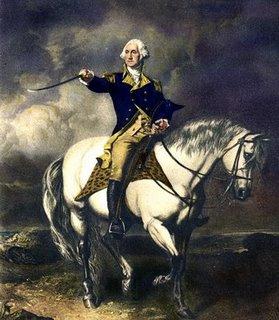
Credit: Washington Receiving a Salute on the Field of Trenton, from the engraving by William Holl (1865) after the painting by John Faed.

Friday, June 25, 2010

"I Like Ike!" Pork Chops with Apples and Onions

During the 1952 presidential campaign, Ike’s wife Mamie was by his side every step of the way, delighting crowds with her quick wit and natural charm. Campaign songs were written about her and colorful buttons and posters proclaimed, “I LIKE IKE, BUT I LOVE MAMIE.”

Historians say that one reason Mamie was so popular as First Lady was that she shared the country’s interests and middle-class values. She watched soap operas, played board games, served TV dinners, and encouraged White House cooks to use boxed cake mixes and Jell-O.

Even Mamie’s personal tastes reflected those of the nation. She was a fan of such hit shows as “I Love Lucy” and let it be known that she and Ike liked to eat their dinner on trays while watching television in the private family quarters at the White House. As First Lady, Mamie was proud of her role as a traditional housewife, and was famously quoted as saying, “Ike runs the country, I turn the pork chops.”

This recipe for Thick-Cut Pork Chops with Apples and Onion from seriouseats.com is adapted from Mad Hungy by Lucinda Scala Quinn.

4 bone-in thick-cut pork chops
Salt and pepper
1 tablespoon olive oil
2 tablespoons butter
1 large white onion, sliced
2 to 3 apples, cored and sliced, about 3 cups
1 cup beer, white wine, cider, or chicken broth

Trim any excess fat from the chops and season liberally with salt and pepper. In a very large, heavy skillet (large enough to hold the chops with room to spare, preferably cast iron), heat the oil over high heat. Once it is shimmering and very hot, add the chops carefully and cook undisturbed for a few minutes for a good sear, about 5 minutes. Turn and sear the other side, then remove the chops to a plate.

Turn the heat to medium-low and swirl in the butter, then add the apple and onions. Cook until the onion is golden and the apple is softened, 8-10 minutes, then deglaze the pan with the beer or other liquid. Return the chops to the pan and cook, turning occasionally and covering with the sauce, for an additional 5-10 minutes, until the chops are done.

If desired, remove the chops and turn the heat to high to thicken the sauce. Serve the chops with the sauce draped over them.

Thursday, June 24, 2010

Andrew Jackson's "Great Cheese Levee" of 1837

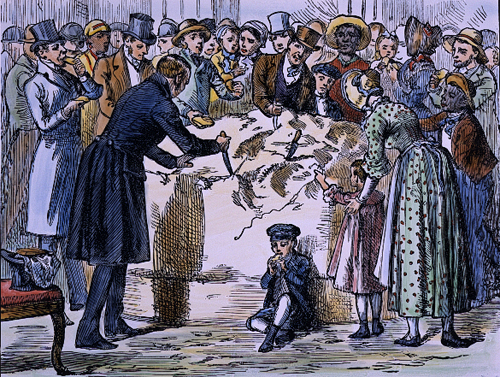
So, did you know that in 1835, a New York farmer presented Andrew Jackson with a mammoth wheel of cheddar cheese. Weighing more than 1,400 pounds, it was four feet in diameter and stood nearly three feet high. Jackson let the gift sit, aging, for two years in the vestibule (lobby) of the White House.

A few weeks before leaving office, Jackson invited the public to a reception in honor of George Washington’s birthday. According to newspaper accounts, more than 10,000 well-wishers swarmed to the White House, hoping to get a glimpse of the departing president – and a piece of the cheese! When the last guests finally left, all that remained of the cheese were the pieces that had been ground into the carpet, smudged across the walls, and smeared on the satin couches and curtains.

If you're in the mood for something cheesy today, this recipe for Extra Cheesy Cheddar Cheese Bread is a great addition for large social gatherings and is a cinch to make at the last minute!!

1 pound shredded sharp cheddar cheese
1/4 cup sour cream
4 cloves garlic, minced
3/4 stick butter, softened
1 large loaf of French bread or biscuits

In a bowl, mix together the cheeses Stir in mayonnaise and sour cream. In a separate bowl, blend butter and garlic. Add butter mixture to the cheese mixture.

Preheat broiler. Slice loaf of bread in half horizontally and lay crust side down on an ungreased cookie sheet. Spread cheese mixture over the bread. Place under the broiler until golden brown, about 5 minutes. Remove from broiler and let sit for 4-5 minutes. Serve warm and enjoy!

Credit: Jackson's Great Cheese Levee, painting by Benjamin Poole (1886)

Sunday, May 23, 2010

Harry Truman's Food Conservation Speech and "Meatless Monday" Tuna Noodle Casserole

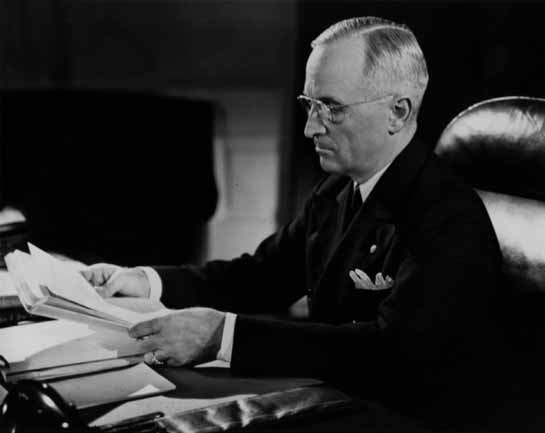
On October 5, 1947, Harry Truman made the first televised presidential address from the White House. In it, he asked Americans to reduce their use of grain in order to help feed starving people overseas.

At the time of his “Food Conservation Speech,” Europe was still recovering from the devastation of World War II and suffering from widespread famine. Truman asked farmers to reduce their use of grain and asked the public to avoid meat on Mondays, eggs and poultry on Thursdays, and to "save a slice of bread each day."

Within days, restaurants all over the country had pledged their support while the New York Times invited readers to write in for a free pamphlet of meatless recipes, including a “canned salmon bake topped with crushed potato chips.” Truman, for his part, lunched on a “symbolic cheese soufflé.”

Tuna Noodle Casserole was another popular "Meatless Monday" dish. If you'd like to whip up a batch, here is a quick and easy, no-nonsense recipe that has been adapted from Bess Truman’s handwritten recipe which is on file at the Harry S. Truman Presidential Library in Independence, Missouri.

12 ounces elbow macaroni
1 can white albacore tuna, drained
1 can cream of celery soup
1/3 cup milk
¾ cup cheddar cheese
½ cup bread crumbs
2 tablespoons butter
Salt and pepper to taste

Preheat oven to 350°F. Grease a 2 ½ to 3-quart casserole dish.

In a medium saucepan, cook the noodles until tender, about 10-12 minutes. Remove and drain well. In a medium bowl, combine the noodles, tuna, soup, and milk. Pour mixture into the prepared baking dish.

Melt butter in a small saucepan over medium heat. Mix together bread crumbs and butter in a small bowl, then sprinkle bread crumb mixture and cheese over the top. Bake for about 25 minutes, or until the bread crumbs are slightly browned. Serve warm and enjoy!

Thanks for stopping by THE HISTORY CHEF! And for a flash sale today for my book click here!

Saturday, May 15, 2010

Andrew Johnson Southern Hush Puppies

Hush puppies are usually made by deep frying cornbread batter in grease or lard. Although no one knows who came up with this fanciful name, some food historians say that it may have been coined during the years of scarcity following the Civil War, when cooks would toss scraps of fried batter to their hungry, yelping dogs, saying, “Hush, puppies!”

Popular in Johnson’s native state of Tennessee throughout the nineteenth century, these delectably greasy little treats were often served with fish or shellfish. Hush puppies and fried catfish is another particularly classic southern combination.

Special equipment: a deep-fry thermometer

1 cup yellow cornmeal
½ cup all-purpose flour
1 teaspoon sugar
2 teaspoons baking powder
½ teaspoon coarse salt
1 large egg
¾ cup buttermilk
Canola oil for frying (about 5-6 cups)

In a medium bowl, mix together cornmeal, flour, sugar, baking powder, and salt. In a small bowl, whisk together egg and buttermilk, then add to cornmeal mixture and stir until well combined.

Fill a large, deep skillet with 2 to 3 inches of oil. Heat oil until it reaches 320°F on a deep-fry thermometer. Working in batches of 6, drop batter, 1 tablespoonful at a time, into the oil and fry until the hush puppies rise to the surface and are golden brown, about 3 minutes.

Transfer with a slotted spoon to a paper-towel-lined plate. Allow oil to return to 320°F between batches. Serve immediately.

Thursday, March 25, 2010

Lady Bird Johnson's Home Made Barbecue Sauce

The food for most of Lyndon Johnson’s barbecues was prepared by a chef named Walter Jetton, who owned a popular catering business in Fort Worth, Texas, a few hours south of the LBJ Ranch. Calling himself “The Barbeque King,” Jetton dressed in a Stetson hat, creased white shirt and black string tie, and often had a whole headless cow rotating on a spit beside a smoldering log fire.

This original recipe for “Mrs. Lyndon Johnson’s Barbecue Sauce” was reprinted in numerous newspapers and magazines throughout the 1960s.

¼ cup butter
¼ cup vinegar
¼ cup ketchup
¼ cup fresh lemon juice
¼ cup Worcestershire sauce
Salt, pepper, red pepper flakes, and Tabasco to taste

Melt butter in a medium sauce pan over medium-high heat. Add other ingredients and bring to a boil. Pour over meat to be barbecued. Yields 1 ½ cups.

Wednesday, March 24, 2010

Zachary Taylor Hominy and Chicken Soup

Zachary Taylor and his beloved war horse "Old Whitey" supposedly shared a love of hominy. Not wanting to request special treatment, General Taylor would let his horse roam around and "sniff out the freshest corn from among the many musty sacks of rations." After Old Whitey had chewed a hole through the sweetest-smelling sack, Taylor would reportedly ask the cooks to quickly whip up a batch since the sack had already been gnawed open! This quick and easy recipe is adapted from epicurious.com.

3 tablespoons olive oil
3 bunches green onions, sliced
4 teaspoons ground cumin
2 1/2 teaspoons paprika
8 cups chicken broth
1 (14 1/2-ounce) can tomatoes in juice
1 purchased roast chicken, meat shredded, skin and bones discarded
3 (15-ounce) cans golden or white hominy in juice
1 cup chopped fresh cilantro
salt and pepper to taste

Heat oil in heavy large pot over medium-high heat. Add green onions, cumin, and paprika and sauté for 5 minutes.

Add broth, tomatoes with juice, and chicken. Puree hominy with juice in processor or blender. Mix into soup and bring to boil. Reduce heat and simmer for 15 minutes. Stir in cilantro. Serve warm and enjoy!

Tuesday, March 23, 2010

George Washington Garlic Mashed Potatoes

So did you know that by the time he became president, George Washington had lost almost all of his teeth? Because of constant pain constant from ill-fitting dentures, George had to eat soft foods (like mashed potatoes and hoe cakes) throughout most of his adult life.

Contrary to popular belief, George did not wear a set of wooden dentures. Instead, a talented New York dentist named John Greenwood handcrafted his dentures from elephant ivory, hippopotamus tusks and parts of horse and donkey teeth. This recipe for roasted garlic mashed potatoes, taken from Martha Washington's Booke of Cookery, has been adapted for modern cooks.

4 large russet potatoes, peeled and quartered
2 garlic cloves, peeled
2 teaspoons coarse salt
1 stick unsalted butter
¾ cup heavy cream

In a large pot of cold water, bring the potatoes and garlic to a boil. Salt the water and cook until the potatoes are tender, about 20 minutes. Drain and return the potatoes to the pot. Mash over low heat with the butter, cream and 2 teaspoons salt. Serve warm and enjoy!