Thursday, June 30, 2016

Zachary Taylor, A Large Basket of Cherries, and Two Pitchers of Iced Milk

After participating in Fourth of July festivities at the Washington Monument on a blistering hot day, Zachary Taylor devoured a large basket of cherries and downed two pitchers of iced milk and suddenly fell ill with a terrible stomach ache. Five days later, he was dead.

At the time, the United States was embroiled in the bitter conflict over slavery and many people believed that  Taylor had been poisoned. Today, most historians agree that he died from cholera or acute gastroenteritis, an inflammation of the stomach and gastrointestinal tract.

Either way, if Taylor were here with us today, he'd no doubt steer away from anything prepared with cherries. That's understandable, but it's no reason for us to do the same, especially when there are so many fabulous recipes for preparing fresh sweet and sour summer cherries, like this one for Cherry Cobbler from Emeril Lagasse or this one from tinynewyorkkitchen.com :


Filling:

6 cups tart red cherries, pitted
1 1/4 cups sugar
1/4 cup water
4 teaspoons cornstarch

Topping:

1 cup flour
1/4 cup sugar
2 tablespoons brown sugar
1 teaspoon baking powder
1/2 teaspoon cinnamon
3 tablespoons butter
1 egg, beaten
3 tablespoons milk

Preheat oven to 400 degrees F. In a saucepan combine filling ingredients and cook, stirring until bubbling and thickened. Pour into an 8-inch square baking dish. Meanwhile, stir together flour, sugars, baking powder, and cinnamon. Cut in butter until it is crumbly. Mix together egg and milk. Add to flour mixture and stir with a fork just until combined. Drop topping by tablespoonfuls onto filling. Bake for 25 minutes until browned and bubbly.

A LITTLE HISTORY: Before he became president, Taylor fought in the War of 1812, the Black Hawk War, and the second Seminole War before achieving fame in the Mexican-American War. On February 23, 1847, Taylor led his troops against General Santa Anna at the Battle of Buena Vista. When the smoke finally cleared, Taylor's force of 6,000 had defeated a Mexican army of 20,000 and "Old Rough and Ready" was a national hero!


Credit: Oil Portrait of Zachary Taylor by Joseph Henry Bush, 1849 (White House Historical Assocation)

Thursday, June 23, 2016

Abraham Lincoln's Lunch: A Delicious History of the United States as Told Thru Tales of Food & Drink

I'm REALLY excited to announce that my first children's book will be published by HarperCollins/Walden Pond Press, thanks to my rock-star literary agent Daniel Lazar at Writers' House and dream editor Jordan Brown!! And in other news: I'm thrilled to announce that I'm a new agent at Sandra Dijkstra Literary Agency and my submission guidelines are here!

Wednesday, June 15, 2016

Taylor Swift, the NFL and the Launch of Michelle Obama's "Let's Move!" Campaign

On September 8, 2010, Michelle Obama and NFL Commissioner Roger Goodell announced that the First Lady’s Let’s Move! Campaign and NFL PLAY 60 were teaming up to fight childhood obesity and help kids lead healthier, more active lives.

The announcement was made at Woldenberg Park in New Orleans during the NFL PLAY 60 Youth Football Festival, part of the NFL’s celebration to kick off the 2010 season. After her remarks, the First Lady took part in football drills, along with students from a local elementary school and former NFL players. Lending support on the sidelines was former country singer turned mega-pop-star Taylor Swift decked out in a patriotic blue and white polka dotted sundress.


Earlier in the day, Mrs. Obama gave a speech in which she encouraged kids to “Play 60” and join her in competing for the President’s Active Lifestyle Award. To earn an award, children need to "engage in physical activity for 60 minutes every day, five days a week, for six weeks." And to show everyone just how much fun it can be, Mrs. Obama sportingly pledged to work toward earning her own award. This is what she said:

I’m going to do it. And I want kids across the country to join me. Actually, I want all you all to join me. Don't just leave it on the kids. I want you all to join me. So in a couple weeks -- I'm not sure when it’s going to start -- starting soon, I'm going to be recording my progress online, so if I start falling behind, I want everyone to be checking on me and make sure that I'm not slacking. Send me emails to shame me into staying on track. So I’m excited about it, and I think it’s something that’s very doable. And the thing is, is that if your kids see you doing it -- your grandparents, uncles, teachers -- they’re going to be engaged.

At the launch of the Let's Move! campaign, President Barack Obama signed a Presidential Memorandum creating "the first ever Task Force on Childhood Obesity to conduct a review of every single program and policy relating to child nutrition and physical activity."


According to the Let's Move! website, the Task Force’s recommendation focuses on the four pillars of the First Lady's campaign: empowering parents and caregivers; providing healthy food in schools; improving access to healthy, affordable foods; and increasing physical activity.

Of course, the First Lady also emphasizes healthy, organic foods at the White House, as demonstrated by the Obama's fabulous kitchen garden, the first at the White House since the Roosevelt's Victory Garden that was planted during World War II.

And now for my manuscript wish list and submission guidelines, click here!

Thursday, April 7, 2016

Teddy Roosevelt, a Brooklyn Candy Shop Owner, and the Creation and Naming of the Teddy Bear


So did you know that the Teddy Bear was invented in honor of President Theodore Roosevelt? It all began when he went on a four-day bear hunting trip in Mississippi in November of 1902. Although Roosevelt was known as an experienced big game hunter, he had not come across a single bear on that particular trip.

According to historians at the National Park Service:

Roosevelt’s assistants, led by Holt Collier, a born slave and former Confederate cavalryman, cornered and tied a black bear to a willow tree. They summoned Roosevelt and suggested that he shoot it. Viewing this as extremely unsportsmanlike, Roosevelt refused to shoot the bear.

The news of this event spread quickly through newspaper articles across the country. The articles recounted the story of the president who refused to shoot a bear. However, it was not just any president, it was Theodore Roosevelt the big game hunter!


So that's how Roosevelt's name became associated with a bear. But the story doesn't end there because when a political cartoonist named Clifford Berryman read reports about the incident, he decided to lightheartedly lampoon it. Then, when a Brooklyn candy shop owner by the name of Morris Michton saw Berryman’s cartoon in the Washington Post on November 16, 1902, he came up with a brilliant marketing idea.


You see, Michtom's wife Rose was a seamstress and made stuffed animals at their shop, and so he asked her to make a stuffed toy bear that resembled Berryman's drawing. He then showcased his wife's cute cuddly creation in the front window of their shop along with a sign that read "Teddy's Bear."

After receiving Roosevelt’s permission to use his name, Michtom began mass producing the toy bears which became so popular that he launched the Ideal Novelty and Toy Company, and, by 1907, more than a million of the cuddly bears had been sold in the United States. And so NOW you know how Theodore Roosevelt, a political cartoonist and a Brooklyn candy shop owner led to the creation and naming of the Teddy Bear!

Now...I'm guessing that you probably don't want to feast on a juicy bear steak like those that Roosevelt and his fellow hunters enjoyed, but you might like these cute Teddy Bear Cupcakes that are fun to make and great to serve at children's birthday parties and play dates.


1 box Betty Crocker® SuperMoist® yellow cake mix
1 cup water
1/2 cup creamy peanut butter
3 eggs
1 container Betty Crocker® Whipped chocolate frosting
1/3 cup miniature semisweet chocolate chips
48 teddy bear-shaped graham snacks

In large bowl, beat cake mix, water, peanut butter and eggs with electric mixer on low speed 30 seconds. Beat on medium speed 2 minutes, scraping bowl occasionally. Divide batter evenly among muffin cups. Bake 13 to 18 minutes or until toothpick inserted in center comes out clean and tops spring back when touched lightly in center. Cool 10 minutes. Remove from pan to cooling rack. Cool completely, about 30 minutes.

Reserve 1/4 cup of the frosting. Spread remaining frosting over tops of cupcakes. Sprinkle each cupcake with 1/2 teaspoon of chocolate chips; press gently into frosting. Spread about 1/2 teaspoon reserved frosting on flat sides of 2 graham snacks. Place on cupcakes, pressing candles slightly into cupcakes to hold in place.

For a free sample of The Presidents' Favorite Foods and Drinks, click here

Wednesday, April 6, 2016

James Polk, the Treaty of Guadalupe Hidalgo, and Food on the Range

So did you know that in 1848 James Polk signed the Treaty of Guadalupe Hidalgo which ended the Mexican-American War and gave most of present-day Texas, New Mexico, Arizona, Colorado, California, Wyoming, and Utah to the United States?

With the addition of these vast tracts of land, more and more cowboys headed to the southwest, where they herded cattle north to market and sold them for beef. As they galloped along, cowboys would sing songs about food like "Trouble for the Range Cook" and "Starving to Death on My Government Claim."

"Git Along Little Dogies" is another classic cowboy tune. In it, a cowboy tells the dogies (the calves in the herd) that it’s their misfortune (and none of his own) that they will soon be sold at market. Maybe you’ve heard it!

As I walked out this morning for pleasure,
I met a cowpuncher a jogging along;
his hat was throwed back and his spurs was a jingling,
and as he advanced he was singing this song.

Yippee ti yi yo, get along little dogies
It's your misfortune and none of my own
Yippee ti yi yo get along little dogies
For you know that Wyoming will soon be your home...


It's early in spring that we round up the dogies,
And mark 'em and brand 'em and bob off their tails;
We round up our horses and load the chuckwagon,
And then throw them dogies out onto the trail.

Whoopee ti yi yo, git along, little dogies,
It's your misfortune And none of my own;
Whoopee ti yi yo, Git along, little dogies,
You know that Wyoming will be your new home.


As cowboys drove cattle north, cooks drove Chuck Wagons (which carried all of the food and supplies for meals) ahead of the herds to set up camp for the night. Meals on the range typically consisted of beef, hash, beans, chili peppers, coffee, biscuits, sugar, and dried fruit.


Like cowboys, cooks would sing snappy tunes about food while working hard on the range. In “Punchin’ Dough” am exhausted, overworked cook tells some bothersome and ungrateful cowboys that cooking is just as demanding as herding cattle (you can listen to it here ):

Come, all you young waddies, I'II sing you a song
Stand back from the wagon, stay where you belong
I've heard you complaining' I'm fussy and slow,
While you're punchin' the cattle and I'm punchin' dough.

Now I reckon your stomach would grow to your back
If it was'n't for the cook that keeps fillin' the slack
With the beans in the box and the pork in the tub
I'm a-wonderin' now, who would fill you with grub?

When you're cuttin' stock, then I'm cuttin' a steak,
When you're wranglin' hosses, I'm wranglin' a cake.
When you're hazin' the dogies and battin' your eyes,
I'm hazin' dried apples that aim to be pies…


Meanwhile, as cowboys were devouring biscuits and beans on the range, President Polk was dining on fancy French cuisine at the White House. But Polk was no stranger to grub. As a boy growing up on the frontier, he reportedly ate Black Bear Steak and Barbecued Deer. Like other frontier folk, basic country fare, like Tenesseee Ham and Corn Pone, was what pleased Polk the most!

If you'd like to wrangle up some corn pone, here's a simple recipe to try:

1 tablespoon of shortening
3/4 cup of boiling water
1 cup yellow corn meal
1 teaspoon of salt

Melt shortening in heavy 8 or 9-inch skillet. Heat water to boiling point and pour immediately over corn meal and salt. Add melted shortening; stir to blend well. As soon as mixture has cooled enough to handle, divide into four equal portions. Shape each portion into a pone about 3/4 inch thick by patting between the hands. Place in pan and bake at 450°F for about 50 minutes or until golden brown. Serve warm and enjoy!

For more on my manuscript wish list and submission info click here!

Tuesday, March 22, 2016

Lucy Hayes, the Turf Protection Act and Brief History of the Easter Egg Roll at the White House

According to whitehouse.gov, some historians claim that Dolley Madison originally suggested the idea of a public egg roll on White House grounds while others tell stories of informal egg-rolling parties dating back to Abraham Lincoln's administration. What is clear, however, is that, beginning in the 1870s, Washingtonians from all social levels celebrated Easter Monday on the west grounds of the U.S. Capitol where children rolled brilliantly dyed hard-boiled eggs down the terraced lawn.

This practice ended in 1876, however, when lawmakers complained that eggs shells were destroying the grass. To resolve this problem, a group of party-poopers in Congress passed the Turf Protection Act which banned egg rolls from Capital grounds, and President Ulysses S. Grant signed the bill into law later that year. Fortunately, the tradition was revived in 1878 when First Lady Lucy Hayes invited children of all ages to roll Easter eggs on the White House lawn, a tradition that has continued ever since.

According to this article in Time Magazine:

Some 53,000 people attended the egg roll in 1941...though in modern times the number is generally under 20,000. Calvin Coolidge's wife mingled through crowds while holding a pet raccoon named Rebecca, while Mrs. Warren G. Harding put on the uniform of her beloved Girl Scouts for the event. Showcasing modern technology, Eleanor Roosevelt welcomed crowds and addressed listeners across the country via radio in 1933, while the Clinton administration proudly announced that 1998's egg roll would be the first broadcast on the Internet.

This year, the Obamas will host the 138th annual White House Easter Egg Roll on Monday, March 28, when more than 35,000 people will join them on the South Lawn for games, stories, and, of course, the traditional egg roll.


And while the menu for this year's White House Easter Brunch hasn't been released, the Chicago Sun-Times reported that menu items in 2008 included Honey Baked Ham with Maple Mustard Sauce, Eggs Benedict, spinach salad, waffles, sauteed asparagus, biscuits and cheese grits. If you'd like whip up some Eggs Benedict for your Easter brunch this Sunday, here's a simple and simply delicious recipe to try from the Food Network:


1 teaspoon vinegar
4 eggs
4 thin slices Canadian bacon
2 English muffins

Hollandaise sauce:

3 egg yolks
1 tablespoon hot water
1 tablespoon lemon juice
1 stick unsalted butter, melted and hot
Salt and pepper
Paprika and chopped parsley

In large skillet, bring 2 inches of water and vinegar to a boil. Crack one egg into a glass. Reduce water to a simmer and pour egg into water. Add remaining eggs and cook for 4 minutes. Remove eggs with a slotted spoon and drain. In a non-stick skillet heat the bacon until warm. Toast the English muffins until golden.

For sauce: Place yolks, water and lemon juice into blender. Blend for 1 minute. With blender running, pour butter through open hole of lid. Season with salt and pepper. To assemble: Top each muffin with bacon and a poached egg. Pour the warm sauce over and garnish with paprika and the chopped parsley.

FAST FACT: The Easter Egg Roll was held at the White House every year in the 20th century except during World War I, World War II, and the Truman Renovation of the White House, when it was moved to nearby locations or cancelled. Ronald Reagan was the first president to hide autographed eggs for children to find and Richard Nixon and First Lady Pat Nixon were the first to include the Easter Bunny in the festivities. Years earlier, First Lady Grace Coolidge made an appearance at the Easter Egg Roll in the 1920s with her famous pet racooon Rebecca!

For more on my manuscript wish list and submission info click here!

Friday, March 18, 2016

Five March Madness Tips from Machiavelli


It's that time of year, baby! March Madness is in full swing. What will it take to succeed? Talent, depth, experience, confidence and strong leadership and strategy are key. On these points, coaches and players would be well-advised to take some tips from the great sixteenth-century political strategist, Niccolò Machiavelli. Sounds strange, right? But some of the strategies of warfare and statecraft that Machiavelli prescribes can be successfully applied on the court.

Consider these tips:

1. Divide and Conquer

In The Prince and his other political works, Machiavelli offers concrete advice on how to wage a successful war. In particular, he advises that a leader “ought to endeavor to divide the forces of the enemy, either by making him suspicious of his men…or by giving him cause to separate his forces and, because of this, become weaker.”

Similarly, in basketball as in war, a strong offense simply isn’t enough. Defensive efficiency is key, especially for potential Cinderella teams that lack the talent and depth of top programs. And since there's not many obviously dominant squads this year, there will be plenty more opportunities for high-seed havoc-wreaking teams to upset top-seeds by “dividing” their forces and forcing mistakes, as Machiavelli would advise, and turning those errors into buckets.

2. Cultivate Machiavellian Virtú.

In The Prince, Machiavelli refers to his central concept of virtú. Unlike the modern term “ virtue" that connotes moral goodness, virtú, for Machiavelli, is the essential quality, the touchstone, of political and military success.

In particular, the concept entails the idea of a tremendous inner fortitude to overcome even the most formidable opposition and embraces such traits as boldness, bravery, foresight, flexibility, ingenuity, action and decisiveness. And these very same traits, as Machiavelli would advise, are also critical for success on the court.

3. Before Deciding upon Any Course, Consider the Perils and Dangers it Presents

With the shot-clock ticking off, players often take perilous shots. That’s what makes the games so exciting, and maddening, when they do or don’t pay off. So what’s a young player under pressure to do?

“Before deciding upon any course,” Machiavelli cautions, “men should consider the dangers it presents, and if its perils exceed the advantages, they should avoid it, even though it had been in accordance with their previous determination.”

In other words, if the perils of a high-risk shot exceed its advantages, players should avoid it at all costs. It’s all about poise under pressure, as Machiavelli would advise, and clarity of thought.

4. Study the Actions of Illustrious Men

To succeed on the battlefield, Machiavelli advises that “men ought to study…the actions of illustrious men to see how they have borne themselves in war, to examine the causes of their victories and defeat, so as to avoid the latter and imitate the former.”

In other words, both princes and players would be well-advised to study the actions of past champions. That might seem so obvious you might dismiss it. But, as Machiavelli would admonish, those teams that fail to do so are doomed.

5. It is Better to be Feared than Loved

In one of his most widely maligned maxims, Machiavelli advises that “it is best to be both feared and loved, but because it is difficult to unite them in one person, it is safer to be feared than loved.”

Nowhere does Machiavelli’s brutal realism come out more clearly than here. But he’s talking about loyalty and obedience, and he backs this up by saying that “men have less scruple in offending one who is beloved than one who is feared, for love is preserved by the link of obligation which, owing to the baseness of men, is broken at every opportunity for their advantage; but fear preserves you by a dread of punishment which never fails.”

Here again, Machiavelli’s advice can be applied on the court. Consider Bob Knight, who is not only one of the winningest coaches in collegiate basketball, but also inspired the loyalty and even “love" of his players.

Why? Because, despite his obnoxious bullying tactics, he cared deeply about his players and the game — and consistently leading his teams to victory by any means that paid off. And what could be more Machiavellian than that?

Suzy Evans is the author of Machiavelli for Moms (Simon & Schuster). and Forgotten Crimes: The Holocaust and People with Disabilities

Friday, March 11, 2016

Richard Nixon, Elvis Presley, and Deep Fried Peanut Butter, Bacon and Banana Sandwiches

Of all the requests made each year to the National Archives for reproductions of photographs and documents, one item has been requested more than any other. That item, more requested than the Bill of Rights or even the Constitution of the United States, is the photograph of Elvis Presley and Richard Nixon shaking hands on the occasion of Presley's visit to the White House on June 23, 1970.

That most unlikley of meetings was initiated by Presley, who, according to historians at the the National Archives, sent Nixon a hand-written letter requesting a visit with the president and suggesting that he be secretly appointed a "Federal-Agent-at-Large" in the Bureau of Narcotics and Dangerous Drugs. This is what Elvis wrote:

Dear Mr. President

First, I would like to introduce myself. I am Elvis Presley and admire you and have great respect for your office. I talked to Vice President Agnew in Palm Springs three weeks ago and expressed my concern for our country. The drug culture, the hippie elements, the SDS, Black Panthers, etc. do NOT consider me as their enemy or as they call it The Establishment. I call it America and I love it. Sir, I can and will be of any service that I can to help The Country out.

So I wish not to be given a title or an appointed position. I can and will do more good if I were made a Federal Agent at Large and I will help out by doing it my way through my communications with people of all ages. First and foremost, I am an entertainer, but all I need is the Federal credentials...

I am Glad to help just so long as it is kept very Private. You can have your staff or whomever call me anytime today, tonight, or tomorrow. I was nominated this coming year one of America's Ten Most Outstanding Young Men. That will be in January 18 in my home town of Memphis, Tennessee. I am sending you the short autobiography about myself so you can better understand this approach. I would love to meet you just to say hello if you're not too busy.

Respectfully,
Elvis Presley


Other than their brief meeting at the White House, Nixon and Elvis seemed to have little in common, with the exception of a deep love of their country and some rather unusual cravings and tastes. Nixon, for example, reportedly liked to slather ketchup on cottage cheese, and Elvis liked to eat such things as Fried Dill Pickles, Gelatin made with a Shasta Drink, and Peanut Butter and Banana Sandwiches Fried in Bacon Grease.

According to an article in the New York Times, the King also had strange late-night cravings for Coconut Flakes with Mini Marshmallows; Peanut Butter and Cheese on Wonder Bread; Fool's Gold Loaf, which was a hollowed-out loaf of bread stuffed with a jar of peanut butter, a jar of grape jelly, and a pound of fried bacon; and "a version of the Fluffer Nutter, with peanut butter, bananas, Marshmallow Fluff and Wonder Bread rolled in crushed peanuts!"

While these concoctions might make even the most seasoned junk-food junkies reach for their TUMS, this recipe for Elvis Presley's Fried Peanut Butter Sandwich from Nigella Lawson is a slightly healthier alternative and might be worth trying "If You're Hungry Tonight."

2 slices white bread
2 tablespoons butter
1 small ripe banana
2 tablespoons creamy peanut butter

Place 2 pieces of white bread in the toaster. Heat skillet over medium heat with 2 tablespoons butter. While the bread is toasting, in a small bowl, using a fork mash the ripe banana until it reaches a smooth consistency.

Using a knife, take both pieces of the toasted bread and spread 2 tablespoons of creamy peanut butter, topping 1 side with the mashed banana. Place 1 slice of bread on top of the other forming a sandwich. Place sandwich in hot skillet browning each side, flipping with a spatula, about 2 minutes per side. Take out of skillet, slice on a diagonal and serve on a plate.

Sunday, March 6, 2016

A Royal State Dinner at the Reagan White House

The wedding of Prince Charles and Lady Diana Spencer on July 29, 1981 has been aptly described as one of the most celebrated spectacles of the Reagan era. But because of the assassination attempt on President Reagan four months earlier, he couldn't attend, but he encouraged his wife Nancy to “serve as the United States representative at the event.”

Rising to the occasion, Mrs. Reagan traveled to England and spent one week in London, which was the longest amount of time she had been away from her husband in their then-twenty-nine years of marriage. During her stay, the First Lady attended eighteen events on behalf of the nation, including "a ball at Buckingham Palace, a dinner at the American Embassy, tea with the Queen Mother, and lunch with Prime Minister Margaret Thatcher.”


According to the Ronald Reagan Foundation,

Mrs. Reagan was an especially appropriate delegate for the United States to send to the Royal Wedding. The Reagans had met Prince Charles many years earlier, when Ronald Reagan was Governor of California. Also, in March of 1975 Ronald and Nancy had met Margaret Thatcher, and the future president and future prime minister found they shared a special connection even then...

Over the years, the President and Mrs. Reagan expressed their immense respect for their British friends in many ways, saving the first and last state dinners to honor Margaret Thatcher. Her Royal Majesty Queen Elizabeth II attended the first dinner in February 1981, and the Queen returned the honor when she hosted a state dinner for the Reagans’ visit to London when the president addressed Parliament in 1982.


The following year, Queen Elizabeth II and her husband Prince Philip visited Rancho del Cielo, the Reagans’ Santa Barbara ranch, and invited the Reagans aboard the royal yacht Brittania to celebrate an anniversary dinner. But of all the Royal visits to the Reagan White House, none were more memorable than the star-studded State Dinner held in honor of the Prince and Princess of Wales on November 9, 1985. As the BBC reported:

Prince Charles and Princess Diana have ended the first day of their much-vaunted trip to the USA at a gala dinner in Washington, hosted by President Reagan and his wife Nancy. They mixed with movie stars, such as Clint Eastwood, John Travolta, Tom Selleck and the singer Neil Diamond as well as politicians and businessmen.

A small group of anti-British IRA supporters protested outside and there were a few slip-ups during the glamorous event. For a moment President Reagan forgot the Princess of Wales' name during an after-dinner speech to guests. "Permit me to add our congratulations to Prince Charles on his birthday just five days away," he said, "and express also our great happiness that...er...Princess David...Princess Diane (sic) is here on her first trip to the United States."


According to the report, the Princess herself, still suffering from jetlag, momentarily forgot to return the toast. But all that was forgotten when she famously took to the dance floor with John Travolta in her midnight blue velvet dress and sapphire and diamond choker.

Earlier in the evening, an elegant dinner was held in the State Dining room, where ballet great Mikhail Baryshnikov was seated next to Princess Diana, while Prince Charles sat between actress Beverly Sills and the First Lady. In addition to Neal Diamond, Clint Eastwood, Tom Selleck, and Travolta, other well-known personalities who attended the affair included fasion icons Gloria Vanderbilt and Estee Lauder, Olympic figure skater Dorothy Hamill, and architect I.M. Pei.


According to White House chef Henry Haller, the dinner menu that evening "was carefully designed to suit the noble tastes of the Prince and Princess, and to appeal to the varied tastes of their table mates. Since the Prince favors fish and fowl, the meal featured fennel-flavored lobster mousse as the first course and lightly glazed chicken for the entree."

If you'd like to whip up some Lobster Mousse for your next formal gathering, here is a delicious recipe to try from the New York Times:

1/2 pound cooked lobster meat
3/4 cup clam broth
1 tablespoon unflavored gelatin
2 ribs celery, chopped fine
2 tablespoons finely chopped onion
1 1/2 teaspoons Dijon mustard
1/2 cup minced parsley
1/2 cup heavy cream, whipped
3/4 cup mayonnaise
Salt, white pepper to taste
Juice of one lemon
Curly kale

Cut lobster into 1/2-inch pieces. Sprinkle gelatin over broth. Place over low heat; stir until thoroughly dissolved. Cool. Whip cream. Combine celery, onion, mustard, parsley, whipped cream, 1/4 cup mayonnaise, salt and pepper, lobster and cooled broth and mix thoroughly.

Spoon into 1-quart mold and seal tightly with plastic wrap. Refrigerate until firm, at least four hours or overnight. To serve, mix remaining mayonnaise with lemon juice. Unmold mousse and serve on curly kale, with lemon mayonnaise poured over the top. Serve with homemade Melba toast.

For more on my manuscript wish list and submission info click here!

Saturday, February 27, 2016

Ronald Reagan Inaugural Jelly Beans

Shortly after Ronald Reagan became Governor of California in 1967, he began eating pectin jelly beans to help him quit smoking. When a new brand of jelly beans, called Jelly Belly beans, appeared on the market in 1976, Reagan switched to them and would often share them with his staff and visiting officials.

Reagan enjoyed these sweet little treats so much that he sent a letter to the chief executive of the company that produced them, stating, "we can hardly start a meeting or make a decision without passing around the jar of jelly beans." Even after he became president, Reagan's fondness for Jelly Bellies didn't diminish, and large colorful jars of them were often prominently displayed on his desk in the Oval Office, in the Cabinet Room, and even on Air Force One.


When Jelly Bellies first appeared on the market, there were only eight flavors: Very Cherry, Lemon, Cream Soda, Tangerine, Green Apple, Root Beer, Grape, and Licorice, which was reportedly President Reagan's favorite.

Today, there are more than 50 official and creatively-named flavors to choose from, including Bubble Gum, Buttered Popcorn, Cappuccino, Caramel Corn, Chili Mango, Chocolate Pudding, Cotton Candy, Green Apple, Kiwi, Juicy Pear, Lemon Drop, Margarita, Orange Sherbet, Piña Colada, Pomegranate, Raspberry, Sizzling Cinnamon, Strawberry Cheesecake, Toasted Marshmallow, Top Banana, Tutti-Fruitti, Very Cherry, Wild Blackberry, and Watermelon.

Of course, jelly beans taste great alone, but they can also be used in cookies, cakes, and in this official recipe for Jelly Belly Pudding Parfait:

1 5.1 ounce package vanilla instant pudding mix
1 3.4 ounce package butterscotch flavor instant pudding mix
5 cups milk
2 ounces Jelly Bellies (your choice)
8 fan wafer cookies

Directions: Select serving of parfait glasses that hold 3/4 to 1 cup capacity. In two separate bowls, prepare pudding mixes according to package directions. Fill glasses with alternating layers of vanilla and butterscotch pudding. Chill 5-10 minutes. Garnish parfaits with Jelly Belly beans on top and a fan wafer if desired.

FOOD FACT: In 1981, three-and-a-half tons of Jelly Belly beans were shipped to Washington, D.C. for Ronald Reagan’s inauguration. Blueberry, one of the most popular flavors today, was developed so there would be patriotic red, white and blue jelly beans at the festivities - and a jelly bean mural of Reagan was even made with these delicious sweet little treats!


FOOD FACT: In addition to the 50 official flavors, the Jelly Belly Company frequently produces "rookie" flavors that are added to the roster if they become popular enough. Some of the more curious flavors that have since been withdrawn from the market include Baked Bean, Bloody Mary, Buttered Toast, and...Roasted Garlic!

Tuesday, February 23, 2016

Pauline Wayne, the Last White House Dairy Cow

So did you know that President William Howard Taft kept a Holstein dairy cow named Pauline Wayne on the White House lawn? For two years, Pauline dutifully supplied Taft and his family with fresh milk every day.

Shortly before Taft left office in 1913, Pauline was shipped back to her former owner in Wisconsin. After that, pasteurized milk replaced raw milk at the White House. A New York Times article dated February 2, 1913 announced the departure of Taft's beloved cow:

Pauline Wayne, President Taft’s famous Holstein cow, will follow him into retirement March 4. The president today called in Senator Walter Stephenson of Wisconsin, who two years ago took Pauline to the White House, and gave her back to her former owner. Pauline has not been in the best of health in several months.

Taft believes that if she is taken back to Wisconsin and put on Senator Stephenson’s farm again, her youthful vigor will revive. The Senator was glad to recover Pauline, as she had supplied milk to the family of the President for two years, and he thought she would add dignity to his herd.


After leaving office, Taft served as a professor at Yale Law School until President Warren Harding appointed him Chief Justice of the United States Supreme Court. To Taft, the appointment was his greatest honor. So much so that, years later, he wrote, “I don't remember that I ever was President.”

FOOD FACT: A French scientist named Louis Pasteur discovered pasteurization in the 1860s. During his many experiments, Pasteur discovered that when you heat a food to a high enough temperature, the heat will kill certain (but not all) bacteria.


Raw milk, by the way, can be pasteurized by heating it to 145 degrees F for about thirty minutes. In the years prior to pasteurization, many lethal diseases were transmitted through raw or contaminated milk. One particularly sad example is that of Abraham Lincoln, whose mother died when he was "in his tenth year" after she drank milk from a dairy cow that had grazed on White Snakeroot, a very poisonous plant.

Here's a brief excerpt from my Publishers Marketplace agent profile - and for more on my manuscript wish list and "How to Submit" click here!

Monday, February 22, 2016

Bill Clinton Healthy Chicken Enchiladas


According to an article in the Dining & Wine section of the New York Times, Bill Clinton has somehow become "an arbiter of international fine dining, conferring a sort of informal Michelin star just by showing up." And, if you travel enough, "you will eventually hear a tip that goes something like: 'When you’re in Madrid, try Casa Lucio. Bill Clinton ate there with the King of Spain.' Or “Check out Le Pont de la Tour in London. Bill Clinton loves it.'"

So how, exactly, did Mr. Clinton, whose name still conjures up memories of Saturday Night Live skits with greasy cheeseburgers and french fries become known as “earth's No. 1 restaurant maven” overseas? 


Well...New York Times reporter David Segal explained it this way:

It’s widely (and correctly) assumed that he has good connections everywhere he visits, so he’s unlikely to wind up at a dud. More than most celebrities, he seems like a person who appreciates good food, and before he had heart surgery, he was known for his wide-ranging appetite.

And when Mr. Clinton visits a restaurant, everybody in the room knows it. Douglas Band, an aide who frequently travels with Mr. Clinton...says his boss introduces himself to every diner, as well as every waiter and every kitchen staff member. He will always pose for photographs and sign guest books [and someone] from his staff will send a thank-you note a few days later...

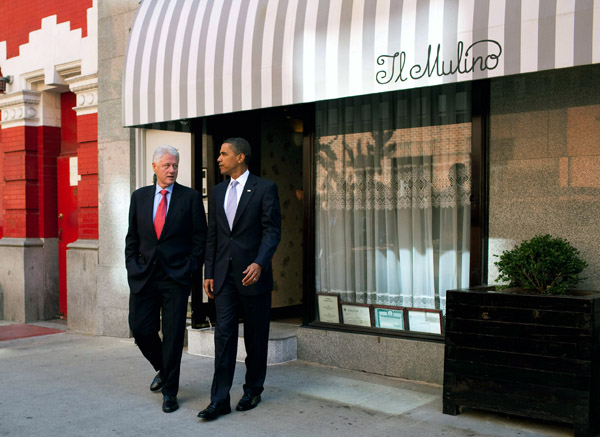
It’s also true that Mr. Clinton’s patronage in the United States has provided P.R. boosts for places like Il Mulino in Manhattan and Georgia Brown’s in Washington...But when it comes to Bill Clinton and overseas restaurants, the upside is on a far greater scale. Managers and owners from Beijing to Iceland and points between say an appearance by Mr. Clinton can be transformational, launching an obscure restaurant to fame...


Mr. Clinton follows a mostly vegan diet these days, and during his travels on behalf of Democratic candidates in recent years, he reportedly dined on such vegan menu items as Miso Barley Soup, Black Bean Burritos, and Cauliflower Potato Curry. The 42nd president also explained to aarp.org "how we can -- and for our health must -- learn to love eating vegetables, too.


It has also been reported that Clinton is particularly fond of chicken enchiladas so it's not surprising that a healthful recipe for this dish appears in The Clinton Presidential Center Cookbook. If you'd like to whip up some of Bill Clinton's favorite healthy chicken enchiladas for dinner this week, here's a great recipe from the Daily Beast to try:


2 (4 oz) cans chopped green chillies, drained
1 garlic clove, minced
cooking oil
1 (28 oz) can tomatoes
2 cups chopped onion
2 tsps salt, divided
tsp oregano
3 cups shredded, cooked chicken
2 cups sour cream
2 cups shredded cheddar cheese
cup cooking oil
15 corn or flour tortillas

In a large skillet over a medium-high heat, sauté the chillies and garlic in a small amount of oil. Drain the tomatoes, reserving cup of liquid. Break up tomatoes and add to skillet. Add the onion, 1 tsp salt, oregano, and reserved liquid. Simmer, uncovered, until thickened (about 30 minutes).

Remove from heat, transfer to a bowl and set aside. In a large bowl, combine chicken, sour cream, cheese, and remaining salt. In the same skillet over a medium heat, heat cup oil. Dip tortillas in the oil until they become limp and drain well on paper towels. Fill tortillas with chicken mixture; roll up and arrange side by side, seam side down, in a 9x13x2-inch baking dish. Pour tomato mixture over the enchiladas. Bake at 350°F for 20 minutes.

FOOD FACT: The Clinton Presidential Center Cookbook contains 250 recipes from the former president's lifelong friends, family members, celebrities, and White House staff and cabinet members. Some of the tasty and homey regional recipes include Muhammad Ali's Favorite Bread Pudding, Bono's Black Velvet, Sophia Loren's Penne Alla Puttanesca, James Carville’s Jambalaya, Mary Steenburgen’s Garlic Cheese Grits and Barbara Streisand’s Southern Lemon Icebox Pie!
For more on my manuscript wish list and submission info click here!

Thursday, February 18, 2016

Thomas Jefferson Macaroni and Cheese

In honor of #NationalDrinkWineDay today, let's raise a glass or two to that fine-wine-and-mac-and-cheese-loving president, Thomas Jefferson, who claimed in 1818 that "in nothing have the habits of the palate more decisive influence than in our relish of wines." But Jefferson's own drinking habits were formed more than thirty years earlier while he was serving overseas as U.S. Minister to France.

According to historians at Monticello:

Before his journey to France in 1784, Jefferson, like most of his countrymen, had been a consumer of Madeira and port, with the occasional glass of "red wine." As he recalled in 1817, "[T]he taste of this country [was] artificially created by our long restraint under the English government to the strong wines of Portugal and Spain."

The revolution in his own taste in wine followed swiftly on the breaking of the bonds of British colonial government. Thereafter Jefferson rejected the alcoholic wines favored by Englishmen as well as the toasts that customarily accompanied them. He chose to drink and serve the fine lighter wines of France and Italy, and hoped that his countrymen would follow his example.

So Jefferson preferred to serve the fine, light wines of Italy and France to his many dinner guests at the President's House. It has also been said that he first served Macaroni and Cheese there in 1802. Of course, the dish that he served was nothing like the boxed versions that we're so familiar with today.

Using pasta and parmesan cheese imported from Italy, Jefferson’s chefs cooked the macaroni until it was soft, then coated it with butter and added cheese. The mixture was then placed in a casserole dish, probably dotted with a bit more fresh butter and cheese, and baked until it was slightly brown with some golden crustiness on top.


If you'd like whip up some Thomas Jefferson Macaroni and Cheese tonight as you sip on a glass or two of fine wine, here's a recipe to try that's simple to make and tastes simply DELICIOUS:

Butter, for greasing dish
16 ounces large elbow macaroni
3 cups milk
2 teaspoons all-purpose flour
½ teaspoon salt
¼ teaspoon freshly ground black pepper
2 cups (packed) freshly shredded Parmesan
2 cups (packed) grated mozzarella
2 cups (packed) Romano cheese
2 tablespoons butter

Preheat the oven to 450°F. Butter a 13 by 9-inch glass baking dish and set aside. In a large pot of boiling water, cook the noodles until tender, about 8-10 minutes. Drain, but do not rinse.

In a large bowl, whisk the milk, flour, salt and pepper until blended. Stir in 1 ½ cup Parmesan, 1 ½ cup mozzarella and 1 ½ cup Romano cheese. Add the noodles and butter and toss to coat.

Transfer the noodle mixture to the prepared baking dish. Sprinkle the remaining Parmesan, mozzarella and Romano cheese over the noodle mixture. Bake until the cheese begins to lightly brown on top, about 12-14 minutes. Let stand for 10 minutes before serving. Season with salt and pepper to taste and enjoy!

Here's a brief excerpt from my Publishers Marketplace agent profile - and for more on my manuscript wish list and "How to Submit" click here!

Monday, February 8, 2016

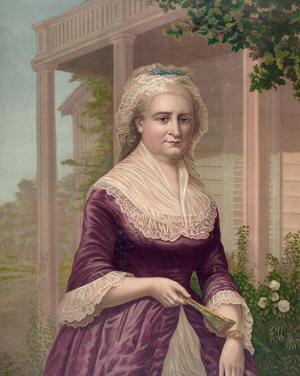
Martha Washington Apple Puffs

Martha Washington’s Booke of Cookery and Booke of Sweetmeats is a family cookbook that Martha compiled and used for fifty years. It contains more than five hundred recipes, mostly dating back to Elizabethan and Jacobean times, the golden age of English cookery. In her introduction to the Booke of Cookery, Karen Hesse explains some reasons why the art of home cooking has been neglected for so long by historians:

Few scholars are cooks – and ever fewer cooks scholars. Perhaps this accounts for the fact that no other aspect of human endeavor has been so neglected by historians as home cooking.

I cannot help but feel that this neglect is also related to the ageless depreciation of the work of women. Yet since time immemorial – when not searching for food, making baskets and pottery, tilling the soil and tending livestock, spinning and weaving, and bearing and raising children, of course – women have been inventing and perfecting the art of cooking.

The importance of agriculture and the significance of the spice routes were always well understood by the historians...but the homely art of the hearth has never been worthy of the same study as are other disciplines.


Hesse’s points are well-taken and will hopefully help stimulate more research into the fascinating and FUN field of culinary history. In the meantime, if you'd like to get a sense of the type of recipes that are contained in Martha's cookbook, here's a quaint "receipt" titled, "To Season Apples for Puffs"

Take apples, pare & cut them in quarters, & core them, & put them into colde water; & set them on ye fire in a pan; let them boyle softly, then put them into a dish, & cover them over a chafing dish of coles, & put to it some slyced nutmegg, slyced giner, & 2 or three colves, some slyced orring & leamon pill candied, or citron pill & a little red wine. & sweeten them with sugar, & then put them into your puffs.


Now, you could try to make this recipe today, but, as Hesse explains, "Most apples nowadays disintegrate when boiled, no matter how softly." That said, a better bet might be to try this more recent recipe for Apple Turnovers from the Food Network's Ina Garten:


1 teaspoon grated orange zest
3 tablespoons freshly squeezed orange juice
1 1/4 pounds tart apples, such as Empire or Granny Smith (3 apples)
3 tablespoons dried cherries
3 tablespoons sugar, plus extra to sprinkle on top
1 tablespoon all-purpose flour
1/4 teaspoon ground cinnamon
1/8 teaspoon ground nutmeg
Pinch kosher salt
1 package frozen puff pastry, defrosted
1 egg beaten with 1 tablespoon water, for egg wash

Preheat the oven to 400 degrees F. Combine the orange zest and orange juice in a bowl. Peel, quarter, and core the apples and then cut them in 3/4-inch dice. Immediately toss the apples with the zest and juice to prevent them from turning brown. Add the cherries, sugar, flour, cinnamon, nutmeg, and salt.

Flour a board and lightly roll each sheet of puff pastry to a 12 by 12-inch square. Cut each sheet into 4 smaller squares and keep chilled until ready to use. Brush the edges of each square with the egg wash and neatly place about 1/3 cup of the apple mixture on half of the square.

Fold pastry diagonally over apple mixture and seal by pressing the edges with a fork. Transfer to a sheet pan lined with parchment paper. Brush top with egg wash, sprinkle with sugar, make 2 small slits, and bake for 20 minutes, until browned and puffed. Serve warm or at room temperature.

FOOD FACT: Other entries in Martha's Booke of Cookery include, "How to souse a pig of 3 or 4 shillings," To roste a shoulder of muton with blood," "To make a caule's foot pie," "To pickle cowcumbers," "To Stew Sparrows," and "To Make a Pigeon Pie." Oh my!!

Here's a brief excerpt from my Publishers Marketplace agent profile - and for more on my manuscript wish list and "How to Submit" click here!

Sunday, January 24, 2016

Bill Clinton Air Force One Tuna Melt on Croissant!

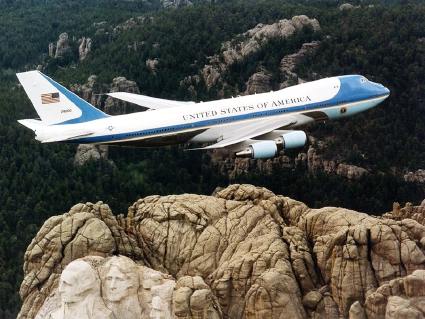
Regardless of where in the world the president travels, if he flies in an Air Force jet, the plane is called Air Force One. According to White House officials, Air Force One is technically the "call sign" of any Air Force aircraft carrying the president. In practice, however, the name "Air Force One" is used to refer to one of two highly customized Boeing 747-200B series aircraft, which carry the tail codes 28000 and 29000.

Emblazoned with the words United States of America and an image of the American flag and Seal of the President of the United States, Air Force One is an undeniable presence wherever it flies. This is how the interior of this amazing, high-tech jet is described on the White House website:

Capable of refueling midair, Air Force One has unlimited range and can carry the President wherever he needs to travel. The onboard electronics are hardened to protect against an electromagnetic pulse, and Air Force One is equipped with advanced secure communications equipment, allowing the aircraft to function as a mobile command center in the event of an attack on the United States.

Inside, the President and his travel companions enjoy 4,000 square feet of floor space on three levels, including an extensive suite for the President that features a large office, lavatory, and conference room. Air Force One includes a medical suite that can function as an operating room, and a doctor is permanently on board. The plane’s two food preparation galleys can feed 100 people at a time.


Although it's difficult to find copies of specific Air Force One menus, The Old Foodie tells us that the following luncheon items were served aboard Air Force One on February 6, 1994:

Assorted Relishes
Vegetable Soup
Tuna Melt on Croissant
Chips
Choice of Beverage
Cookies

Now, this is a surprisingly sparse and ordinary menu to present to a sitting president, don't you think? BUT...that was back in 1994, when Bill Clinton was in office, which leads me to believe that perhaps this particular menu was inspired by his advisors' well-meaning desire to steer the president away from the greasy cheeseburgers and french fries that he once seemed to enjoy so much like and nudge him toward more healthy choices to help trim his then-less-than-slender waistline.


Although that recipe for Tuna Melt on Croissant isn't easily obtainable today, Barack Obama did kindly provide his favorite recipe for Tuna Salad during an interview with "60 Minutes" correspondent Steve Kroft early in the 2008 presidential campaign. If you're in the mood for tuna salad today, here is former President Obama's take on Toasted Tuna Salad Sandwiches:

Tuna
Grey Poupon mustard
Mayonnaise
Chopped gherkins
Toasted Bread

Whatever items might appear on its many in-flight menus, be they simple Tuna Melts on Croissants or crystal-filled dishes of Russian caviar, Air Force One truly is an "undeniable presence" wherever in the world it flies!

FAST FACT: According to the White House website: Air Force One is maintained and operated by the Presidential Airlift Group, part of the White House Military Office. The Airlift Group was founded in 1944 as the Presidential Pilot Office at the direction of President Franklin D. Roosevelt.

For the next 20 years, various propeller driven aircraft served the President. In 1962, President John F. Kennedy became the first President to fly in his own jet aircraft, a modified Boeing 707. Over the years, several other jet aircraft have been used, with the first of the current aircraft being delivered in 1990 during the administration of President George H. W. Bush.

Here's a brief excerpt from my Publishers Marketplace agent profile - and for more on my manuscript wish list and "How to Submit" click here!

Saturday, January 16, 2016

FDR's Beloved Dog "Fala" and the Election of 1944!

On November 10, 1940, a cute black Scottish terrier puppy arrived at the White House as a gift for President Franklin Delano Roosevelt and his family. At first, the dog’s name was "Big Boy," but the president soon renamed him “Murray the Outlaw of Falahill” after a distant Scottish ancestor.

One of the most famous presidential pets, Fala, as he was nicknamed, went just about everywhere with the President and quickly became part of his public image. In her Pulitzer-Prize-winning biography, No Ordinary Time, presidential historian Doris Kearns Goodwin wrote:

Fala accompanied the president everywhere, eating his meals in Roosevelt's study, sleeping in a chair at the foot of his bed. Within a few weeks of his arrival, the puppy was sent to the hospital with a serious intestinal disturbance. He had discovered the White House kitchen, and everyone was feeding him. When he came home, Roosevelt issued a stern order to the entire White House staff: "Not even one crumb will be fed to Fala except by the President." From then on, Fala was in perfect health.

While being pampered at the White House and traveling with Roosevelt, Fala had the good fortune to meet many famous political leaders, including British Prime Minister Winston Churchill and Mexican President Manuel Camacho.


Thrust as he was into the national spotlight, it’s perhaps not surprising that Fala became embroiled in a political controversy during the presidential campaign of 1944. You see, earlier that year, Fala had faithfully accompanied his master on a diplomatic trip to the Aleutian Islands. Shortly after the president returned home, a rumor began circulating that Fala was accidentally left on one of the islands and that the Navy had to send a destroyer back to retrieve him.

Capitalizing on the rumors, Republicans accused Roosevelt of spending millions of taxpayers' dollars in the effort to get his dog back. Responding sharply but light-heartedly to these and other accusations, FDR delivered his famous “Fala Speech” at a campaign dinner in Washington D.C., before the International Brotherhood of Teamsters, Chauffeurs, Warehousemen and Helpers of America. These are some of the remarks that President Roosevelt made that evening:

These Republican leaders have not been content with attacks on me, or my wife, or on my sons. No, not content with that, they now include my little dog, Fala. Well, of course, I don't resent attacks, and my family doesn't resent attacks — but Fala does resent them.

You know, Fala is Scotch, and being a Scottie, as soon as he learned that the Republican fiction writers in Congress and out had concocted a story that I'd left him behind on an Aleutian island and had sent a destroyer back to find him — at a cost to the taxpayers of two or three, or eight or 20 million dollars — his Scotch soul was furious.

He has not been the same dog since. I am accustomed to hearing malicious falsehoods about myself — such as that old, worm-eaten chestnut that I have represented myself as indispensable. But I think I have a right to resent, to object, to libelous statements about my dog.


Sadly, less than a year after he delivered that speech, President Roosevelt died. In her autobiography, Roosevelt's wife Eleanor described her recollections of Fala's reaction to his master's untimley death:

his legs straightened out, his ears pricked up and I knew that he expected to see his master coming down the drive as he had come so many times. Later, when we were living in the cottage, Fala always lay near the dining-room door where he could watch both entrances just as he did when his master was there...Fala accepted me after my husband's death, but I was just someone to put up with until the master should return.


FAST FACT: Fred D. Fair was Roosevelt’s porter on the Ferdinand Magellan, the presidential Pullman rail car. In a Washington Post article, Mr. Fair recalled his memories of the president's beloved dog in a letter titled "Feeding Fala":

I served him his meals, made his bed. We would serve the president highballs before dinner. Before the meal, I would fix Fala's food. He would never go into the dining room until you called him. We'd serve him in there. But you couldn't serve Fala yourself, oh no. You had to hand it to the president, and he'd feed Fala out of his hand. Many times, I remember dignitaries and other important folks waiting for their supper until Mr. Roosevelt finished feeding Fala."

Here's a brief excerpt from my Publishers Marketplace agent profile - and for more on my manuscript wish list and "How to Submit" click here!

Tuesday, January 12, 2016

Super Bowl Parties at the Obama White House and Healthy Oatmeal Raisin Cookies!


The private Family Theater at the White House is occasionally used by presidents to rehearse major speeches such as the State of the Union Address each January, but more often it's where the First Family can watch just about any movie they please, often sent direct from Hollywood before its release.

According to this article in the Guardian Unlimited, many presidents have enjoyed private screenings of their favorite films in this luxurious, state-of-the-art theatre that features four comfortable arm chairs and forty red upholstered seats. So, what are some of the presidents' favorite flicks? According to the article:

Starting with All the President's Men - about the Watergate scandal that ultimately brought him to office — Jimmy Carter held 480 screenings at the White House over four years...The devout Baptist started off insisting that only family films be shown, but eventually relented and became the first president to watch an X-rated film at the family theatre: Midnight Cowboy...

Ronald Reagan watched very few films at the White House. He and Nancy watched most of their movies on their weekends at Camp David, preferring Jimmy Stewart movies, High Noon (the president's favorite), and, on special occasions such as the president's birthday, his own films.

Bill Clinton also loved High Noon, but his taste in movies mirrored the style of his presidency. It ranged from the earnest and complex — Schindler's List and American Beauty were among his favorites — to simple and earthy, like the Naked Gun movies.

George Bush is a fan of the Austin Powers series and has been known to raise his little finger to his lips in imitation of the characters Dr Evil and Mini-Me. Since the September 11 attacks, however, his viewing has become more somber. In early 2002, after the worst of the fighting was over in Afghanistan and plans were being hatched to invade Iraq, President Bush watched more war movies, like We Were Soldiers, about Vietnam, and Ridley Scott's soldier's-eye view of Mogadishu in 1993, Black Hawk Down.

Like his predecessors, President Obama rehearses speeches in the theatre and has enjoyed star-studded, pre-release screenings of such blockbusters as Julie & Julia (with stars Meryl Streep and Stanley Tucci in attendance) and Slumdog Millionaire, as well as the HBO miniseries "The Pacific," with executive producers Steven Spielberg and Tom Hanks in attendance.


And, last month, two stormtroopers and R2-D2 surprised reporters with an appearance in the White House briefing room while President Obama rushed to finish a press conference so he could watch the latest Star Wars film. A private, pre-release screening of Star Wars: The Force Awakens was held for Gold Star Families, an organization for those who lost family members in the Iraq War.


An avid sports fan, Obama also hosted a Super Bowl party in 2009 in the White House Theatre, where he and his guests tried out special 3D effects as they watched the Pittsburgh Steelers narrowly defeat the Arizona Cardinals by a score of 27-23. And when it came time for some Super Bowl snacks, the president rolled up his sleeves and personally served Oatmeal Raisin cookies to his guests.

Although that particular recipe might be difficult to find, you can try this one from Martha Stewart if you'd like to whip up a batch of Healthy Oatmeal Raisin Cookies at your Super Bowl party this Sunday:


1/2 cup whole-wheat flour
1/2 cup all-purpose flour
1 teaspoon baking powder
1/3 cup vegetable oil
2/3 cup packed dark-brown sugar
1 large egg
1 teaspoon pure vanilla extract
1/2 cup rolled oats (not quick-cooking)
1/2 cup dried currants or raisins

Preheat oven to 350 degrees. In a medium bowl, whisk together flours and baking powder; set aside. In a large bowl, whisk together oil, sugar, egg, and vanilla. Add flour mixture, and stir to combine; mix in oats and currants.

Using two tablespoons of dough per cookie, roll into balls; place on two baking sheets lined with parchment paper, 1 1/2 inches apart. Bake until lightly browned, 15to 17 minutes, rotating sheets halfway through. Cool 5 minutes on sheets, then transfer cookies to a wire rack to cool completely. Store in an airtight container at room temperature, up to 5 days.

FAST FACT: According to the White House Museum website, the Family Theatre was converted in 1942 from a long cloakroom when the current East Wing building was constructed. Since then, some presidents have considered it to be the greatest perk of living in the White House, including Bill Clinton, who remarked, "The best perk out in the White House is not Air Force One or Camp David or anything else. It’s the wonderful movie theater I get here, because people send me these movies all the time.”

For more on my manuscript wish list and submission info click here!

Tuesday, January 5, 2016

Lou Henry Hoover and the First Organized Girl Scout Cookie Drive in 1935

So did you know that Herbert Hoover’s wife "Lou" served as president of the Girl Scouts and helped coordinate one of the first Girl Scout Cookie Drives in 1935? Sixty five years later, in April of 2000, the Herbert Hoover Presidential Library and Museum held an exhibit entiitled, American Women! A Celebration of Our History. One exhibit depicted Lou Hoover’s lifelong commitment to the Girl Scouts. This is how the placard read:

A woman nicknamed "Daisy" started the Girl Scouts of the U.S.A. with 18 girls. And a tomboy called "Lou" helped the organization grow into its current membership of over 3.5 million! Lou Henry grew up enjoying the outdoor life, and was the first women to receive a degree in geology from Stanford. She traveled the world with her husband Herbert Hoover, and assisted him with his mining ventures and famine relief activities.

During World War I she met up with Juliette Low [Daisy], and was a Girl Scout for the next 25 years. As First Lady and national leader of the Girl Scouts, Hoover quietly aided people in need during the Depression, and was also the first to desegregate White House social functions.

Lou remained a Scout the rest of her life and led the first Girl Scout cookie drive in 1935. Juliette Low and Lou Henry Hoover brought together girls from the North and South, wealthy and poor, black and white, athletic and handicapped – instilling confidence that all women can develop their potential to be whatever they wish to be.


In the 1920s and 1930s, Girl Scouts all across the country baked their own simple sugar cookies with their mothers. They then packaged their coookies in wax paper bags sealed with a sticker and sold them door-to-door for 25 to 35 cents a dozen.


Today, of course, there is a wide array of commercially baked Girl Scouts cookies to choose from, including such traditional favorites as Samoas, Tagalongs, Trefoils, and Thin Mints! If you'd like to whip up a batch of cookies with your kids today, here is the original recipe for Early Girl Scout Cookies® from The Girl Scouts of the United States of America.

1 cup butter
1 cup sugar plus additional amount for topping (optional)
2 eggs
2 tablespoons milk
1 teaspoon vanilla
2 cups flour
1 teaspoon salt
2 teaspoons baking powder

Cream butter and the cup of sugar; add well-beaten eggs, then milk, vanilla, flour, salt, and baking powder. Refrigerate for at least 1 hour. Roll dough, cut into trefoil shapes, and sprinkle sugar on top, if desired. Bake in a quick oven (375°) for approximately 8 to 10 minutes or until the edges begin to brown. Makes six- to seven-dozen cookies.

For more on my manuscript wish list and submission info click here!