Showing posts with label The White House Family Cookbook. Show all posts

Sunday, March 6, 2016

A Royal State Dinner at the Reagan White House

The wedding of Prince Charles and Lady Diana Spencer on July 29, 1981 has been aptly described as one of the most celebrated spectacles of the Reagan era. But because of the assassination attempt on President Reagan four months earlier, he couldn't attend, but he encouraged his wife Nancy to “serve as the United States representative at the event.”

Rising to the occasion, Mrs. Reagan traveled to England and spent one week in London, which was the longest amount of time she had been away from her husband in their then-twenty-nine years of marriage. During her stay, the First Lady attended eighteen events on behalf of the nation, including "a ball at Buckingham Palace, a dinner at the American Embassy, tea with the Queen Mother, and lunch with Prime Minister Margaret Thatcher.”


According to the Ronald Reagan Foundation,

Mrs. Reagan was an especially appropriate delegate for the United States to send to the Royal Wedding. The Reagans had met Prince Charles many years earlier, when Ronald Reagan was Governor of California. Also, in March of 1975 Ronald and Nancy had met Margaret Thatcher, and the future president and future prime minister found they shared a special connection even then...

Over the years, the President and Mrs. Reagan expressed their immense respect for their British friends in many ways, saving the first and last state dinners to honor Margaret Thatcher. Her Royal Majesty Queen Elizabeth II attended the first dinner in February 1981, and the Queen returned the honor when she hosted a state dinner for the Reagans’ visit to London when the president addressed Parliament in 1982.


The following year, Queen Elizabeth II and her husband Prince Philip visited Rancho del Cielo, the Reagans’ Santa Barbara ranch, and invited the Reagans aboard the royal yacht Brittania to celebrate an anniversary dinner. But of all the Royal visits to the Reagan White House, none were more memorable than the star-studded State Dinner held in honor of the Prince and Princess of Wales on November 9, 1985. As the BBC reported:

Prince Charles and Princess Diana have ended the first day of their much-vaunted trip to the USA at a gala dinner in Washington, hosted by President Reagan and his wife Nancy. They mixed with movie stars, such as Clint Eastwood, John Travolta, Tom Selleck and the singer Neil Diamond as well as politicians and businessmen.

A small group of anti-British IRA supporters protested outside and there were a few slip-ups during the glamorous event. For a moment President Reagan forgot the Princess of Wales' name during an after-dinner speech to guests. "Permit me to add our congratulations to Prince Charles on his birthday just five days away," he said, "and express also our great happiness that...er...Princess David...Princess Diane (sic) is here on her first trip to the United States."


According to the report, the Princess herself, still suffering from jetlag, momentarily forgot to return the toast. But all that was forgotten when she famously took to the dance floor with John Travolta in her midnight blue velvet dress and sapphire and diamond choker.

Earlier in the evening, an elegant dinner was held in the State Dining room, where ballet great Mikhail Baryshnikov was seated next to Princess Diana, while Prince Charles sat between actress Beverly Sills and the First Lady. In addition to Neal Diamond, Clint Eastwood, Tom Selleck, and Travolta, other well-known personalities who attended the affair included fasion icons Gloria Vanderbilt and Estee Lauder, Olympic figure skater Dorothy Hamill, and architect I.M. Pei.


According to White House chef Henry Haller, the dinner menu that evening "was carefully designed to suit the noble tastes of the Prince and Princess, and to appeal to the varied tastes of their table mates. Since the Prince favors fish and fowl, the meal featured fennel-flavored lobster mousse as the first course and lightly glazed chicken for the entree."

If you'd like to whip up some Lobster Mousse for your next formal gathering, here is a delicious recipe to try from the New York Times:

1/2 pound cooked lobster meat
3/4 cup clam broth
1 tablespoon unflavored gelatin
2 ribs celery, chopped fine
2 tablespoons finely chopped onion
1 1/2 teaspoons Dijon mustard
1/2 cup minced parsley
1/2 cup heavy cream, whipped
3/4 cup mayonnaise
Salt, white pepper to taste
Juice of one lemon
Curly kale

Cut lobster into 1/2-inch pieces. Sprinkle gelatin over broth. Place over low heat; stir until thoroughly dissolved. Cool. Whip cream. Combine celery, onion, mustard, parsley, whipped cream, 1/4 cup mayonnaise, salt and pepper, lobster and cooled broth and mix thoroughly.

Spoon into 1-quart mold and seal tightly with plastic wrap. Refrigerate until firm, at least four hours or overnight. To serve, mix remaining mayonnaise with lemon juice. Unmold mousse and serve on curly kale, with lemon mayonnaise poured over the top. Serve with homemade Melba toast.

For more on my manuscript wish list and submission info click here!

Wednesday, February 22, 2012

Ronald Reagan Macaroni and Cheese

On the evening of January 11, 1989, President Ronald Reagan delivered his Farewell Address from the Oval Office at the White House. In it, he spoke reverently of the past, of his accomplishments during his eight years in office, and of his vision of America’s promise.

Near the end of his address, Reagan turned his attention toward patriotism, freedom, and the future, and said that “All great change in America begins at the dinner table” in the daily conversations between parent and child. This is what he said:

My fellow Americans...we're about to enter the '90s, and some things have changed. Younger parents aren't sure that an unambivalent appreciation of America is the right thing to teach modern children. And as for those who create the popular culture, well-grounded patriotism is no longer the style. Our spirit is back, but we haven't reinstitutionalized it. We've got to do a better job of getting across that America is freedom - freedom of speech, freedom of religion, freedom of enterprise. And freedom is special and rare. It's fragile; it needs protection.

So, we've got to teach history based not on what's in fashion but what's important: Why the Pilgrims came here, who Jimmy Doolittle was, and what those 30 seconds over Tokyo meant...Let's start with some basics: more attention to American history and a greater emphasis on civic ritual. And let me offer lesson No. 1 about America: All great change in America begins at the dinner table. So, tomorrow night in the kitchen I hope the talking begins. And children, if your parents haven't been teaching you what it means to be an American, let 'em know and nail 'em on it. That would be a very American thing to do...


After leaving office, Reagan and his wife Nancy quietly retired to a mansion on a private, tree-lined street in the exclusive community of Bel Air, California. Despite the many elegant State Dinners that he surely must have become accustomed to during his two terms of office, those who were close to the president say that he retained a childhood taste for Meatloaf, Hamburger Soup, and other simple foods of his youth.

One his "all-time favorites," however, according to White House Chef Henry Haller, was Macaroni and Cheese, so much so that Reagan requested that a dish of it be delivered to him while he was recuperating at a hospital after being seriously wounded in an assassination attempt that took place on March 30, 1981, less than 100 days into his presidency.

“The dish was served in the manner the President prefer[ed],” Haller explained, “with the noodles well cooked and covered with a light cheese spiked with mustard.” If you’d like to serve up some of President Reagan’s Favorite Macaroni and Cheese for dinner tonight while talking to your kids about what it means to be an American, here is the original recipe from The White House Cookbook by Henry Haller:

½ pound macaroni
1 tablespoon butter
1 egg, beaten
3 cups grated sharp cheddar cheese
1 cup warm milk
1 teaspoon salt
1 teaspoon dry mustard
½ teaspoon Worcestershire sauce
A pinch of paprika

Preheat oven to 350°F. Butter a 2-quart casserole dish. Add macaroni to 2 quarts of boiling salted water and cook for 10 minutes. Drain well in a colander. Transfer to a mixing bowl. Stir in butter and beaten egg. Add 2-1/2 cups of the grated cheese.

In a small bowl, combine milk with salt, mustard and Worcestershire sauce. Spoon macaroni and cheese into the prepared casserole. Pour milk mixture over and sprinkle top with the remaining cheese. Sprinkle with paprika.

Bake on middle shelf of preheated oven for 35 to 40 minutes, or until macaroni is firm to the touch and the top is crusty and browned. Serve at once, either as a light entree accompanied by a hot green vegetable and a crisp salad, or as a side dish with Hamburgers or Meat Loaf.

FAST FACT: Also injured in the assassination attempt was White House Press Secretary James Brady who suffered a gunshot wound to the head, while a Secret Service Agent was shot in the chest and a Washington, D.C. police officer was hit near the spine. Historians at the Miller Center say that "as Reagan was rushed to George Washington University Hospital for emergency surgery, administration aides downplayed the severity of the injuries. According to Political Affairs Director Lyn Nofziger, Reagan was in good spirits, at one point teasing the medical staff, 'Please tell me you're Republicans.'"

Credit: Ronald Reagan wearing cowboy hat at Rancho Del Cielo, Ronald Reagan Presidential Library and Museum (1976)

For a free excerpt of my new book from Simon and Schuster click here!

Wednesday, November 2, 2011

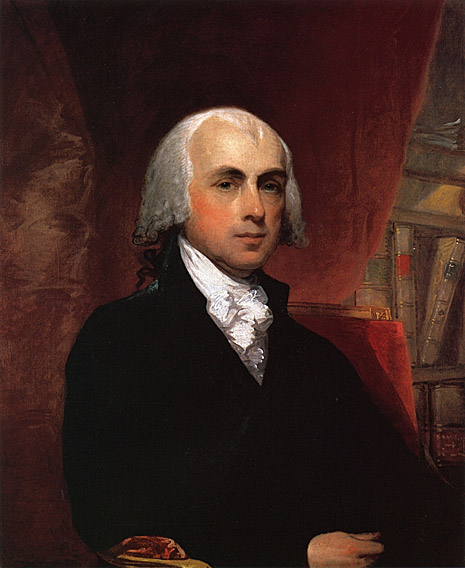
James Madison, the Potomac Oyster Wars, and the Constitutional Convention

So you probably know that James Madison was one of the drafters of the Constitution and later helped spearhead the drive for the Bill of Rights, but what you might not know is that he also played a major role in negotiating an end to the Potomac Oysters Wars which indirectly helped pave the way to the Constitutional Convention. This is how the story briefly goes:

In the seventeenth century, watermen in Maryland and Virginia battled over ownership rights to the Potomac River. Maryland traced its rights to a 1632 charter from King Charles I which included the river. At the same time, Virginia laid its claims to the river to an earlier charter from King James I and a 1688 patent from King James II, both of which also included the river.

In 1776, after more than a century of conflict, Virginia ceded ownership of the river but reserved the right to “the free navigation and use of the rivers Potowmack and Pocomoke." Maryland rejected this reservation and quickly passed a resolution asserting total control over the Potomac. After the Revolution, battles over the river intensified between watermen from both states.

To resolve this problem, leaders from Maryland and Virginia appointed two groups of commissioners which, at the invitation of George Washington, met at Mount Vernon in May of 1785. James Madison led the Virginia contingent and Samuel Chase led the Maryland delegation. Their discussions led to the Compact of 1785, which allowed oystermen from both states free use the river.

Peace prevailed until the supply of oysters began to dwindle, at which point Maryland re-imposed harvesting restrictions. Virginia retaliated by closing the mouth of the Chesapeake and watermen from both states engaged in bloody gun battles which lasted, with periodic breaks, for more than a century.

Today, these battles are known as the Potomac Oyster Wars. They are important in their own right, but they have a larger historical significance because they revealed one of the main weaknesses of the Articles of Confederation, which was that the federal government didn't have the power to control commerce among the states, a setup that was creating constant chaos and conflict.

With this problem in mind, Madison and the others who convened at Mt. Vernon in May of 1785 agreed to meet the following year at Annapolis to discuss the need for a stronger federal government. Not many delegates showed up and so they agreed to convene the following May in Philadelphia, which is, of course, where the Constitution was drafted.

And so NOW you know how James Madison and a little bivalve from the Potomac helped pave the way to the Constitutional Convention!

FACT: Under the Articles of Confederation, the federal government didn't have the power to raise its own army, regulate commerce between the states, or coin money for the country. To pass a law, Congress needed the approval of nine out of the 13 states, and in order to amend the Articles it needed the approval of all 13 states, which made it nearly impossible to get anything done! The Articles also didn't provide for an Executive or Judicial branch so there was no separation of powers.

Wednesday, October 5, 2011

Theodore Roosevelt, Muckrakers, and the "Monarchical Manners" of the White House

In keeping with the progressive, muckraking nature of the times, a journalist for Harper's Weekly complained about "the monarchical manners" of the White House during Theodore Roosevelt's administration.

In particular, the journalist alleged that "since Mr. Roosevelt became President there have been witnessed behind the White House doors an exclusiveness, a rigor of etiquette, and a display of swords and gold braid such as no one of his predecessors ever dreamed of...The atmosphere of the White House, once democratic and free, has become tainted with the manners of monarchy."

Similar criticisms were expressed in a June 1906 Washington Post column in which Roosevelt was condemned for indulging in extravagant dining practices at the White House. Responding to the allegations, a spokesman for the president sent a letter to the Post which appeared the next day:

When anyone endeavors to create a widespread impression that the President and his family sit down to a four or five course breakfast, a six or seven course luncheon, and a ten-course dinner, the President feels that a denial is not inappropriate. Instead of a breakfast consisting of oranges, cantaloupes, cereals, eggs, bacon, lamb chops, hot cakes, and waffles, President Roosevelt insists that the regular White House breakfast consists of hard boiled eggs, rolls, and coffee.

Instead of a luncheon of such delicious viands as Little Neck clams, stuffed olives, celery, consommé of chicken, fish sauté, eggs a la turque, Spring lamb, new string beans, asparagus, mashed potatoes, lettuce, tomatoes, strawberries and ice cream, President Roosevelt declares that when alone he always contents himself with a bowl of bread and milk.

When Mrs. Roosevelt or the children are present, the luncheon consists of cold meat, tea, cantaloupe in season, and bread. Instead of a ten-course dinner, the President declares that nine times out of ten a three-course dinner is served, and the other time a two-course dinner.


Despite the muckrakers' monarchical allegations, Roosevelt's reputation inside the White House was that of a simple family man. Ike Hoover served in the White House for forty-two years, eventually serving as Chief Usher in charge of day-to-day operations. In his memoirs, published in 1934, Hoover provided insight into the Roosevelt family’s daily dining habits:

The entire family [sat] down [for] breakfast at eight o'clock. After breakfast the President spent an hour or so in his study, perhaps reading, while Mrs. Roosevelt arranged the details of the day's program. The President went to his office at nine-thirty or ten o'clock, and Mrs. Roosevelt for a walk or shopping...All returned just about in time for lunch. Those famous lunches!

Something indeed was wrong when there were not two or more guests for this meal. To prepare properly for a certain number was almost a physical impossibility, for notice was continually coming from the office that someone had been invited at the last minute, and many times the family and guests had to wait until the table was made larger before they could be seated. The place was really a transient boardinghouse, and how every one got enough to eat was the wonder of the household...


Although Hoover didn't mention what particular dishes were served at those famous Roosevelt luncheons, researchers tell us that TR's diet consisted of "quite a bit of game from hunting expeditions" and that he was also fond of Southern Fried Chicken with White Gravy and Grits. If you'd like to whip up some Southern Fried Chicken for your next family luncheon or dinner this week, here's a simple and simply delicious recipe to try from Paula Dean:

3 eggs
1/3 cup water
About 1 cup hot red pepper sauce
2 cups self-rising flour
1 teaspoon pepper
House seasoning, recipe follows
1 (1 to 2 pound) chicken, cut into pieces
Oil, for frying, preferably peanut oil

In a medium size bowl, beat the eggs with the water. Add enough hot sauce so the egg mixture is bright orange. In another bowl, combine the flour and pepper. Season the chicken with the house seasoning. Dip the seasoned chicken in the egg, and then coat well in the flour mixture. Heat the oil to 350 degrees F in a deep pot. Do not fill the pot more than 1/2 full with oil. Fry the chicken in the oil until brown and crisp. Dark meat takes longer then white meat. It should take dark meat about 13 to 14 minutes, white meat around 8 to 10 minutes.

FAST FACT: As for the Roosevelt's evenings, Hoover noted that "it was more to the liking of the family to spend a quiet evening in the library, either playing cards or reading the current magazines. The whole family were fiends when it came to reading. No newspapers. Never a moment was allowed to go to waste; from the oldest to the youngest they always had a book or a magazine before them. The President...would just devour a book and it was no uncommon thing for him to go entirely through three or four volumes in the course of an evening. Likewise we frequently saw one of the children stretched out on the floor flat on his stomach eating a piece of candy and with his face buried deep in a book."

Tuesday, September 13, 2011

Barack Obama and the "Controversy" over Chicken Fingers in the White House Bowling Alley

So did you know that there's a one-lane bowling alley at the White House? According to the White House Museum website, bowling lanes were first built on the ground floor of the West Wing in 1947 as a birthday gift for President Harry Truman in "the location of what is the present-day Situation Room."

During the Eisenhower administration, the bowling lanes were moved to the Old Executive Office Building to make way for a mimeograph room. Ten years later, friends of Richard Nixon , an avid bowler, paid for a new one-lane alley to be built in the White House in an underground area below the driveway leading to the North Portico.

Since then, many presidents and politicians have thrown a strike or two in the bowling alley, but perhaps no one has enjoyed this perk of living in the White House more than the presidents' children and grandchildren.

According to an article in the Los Angeles Times, President George Bush and his wife Barbara were enjoying a big family dinner shortly after moving into the White House when the First Lady realized that her twin granddaughters Jenna and Barbara were not at the table. Turning to the butler, Mrs. Bush reportedly asked if he knew where they were, to which he replied, "In the bowling alley, waiting to be served."

Not fully amused, the First Lady ordered the girls back to the family quarters by "sending word that Bush grandchildren do not eat in the bowling alley, they eat with the family in the dining room." She also light-heartedly warned the White House staff to "beware of young charm artists."

But much bigger political "scandals" involving the White House bowling alley arose in October of 2009. According to new reports, things got a little tense during a White House Press Briefing when CBS correspondent Chip Reid questioned White House Press Secretary Robert Gibbs about a Washington Times story that accused the White House of "selling access to the bowling alley," among other things.

Following up on a question posed by a CNN reporter, Reid asked Gibbs if the Obama administration would release the names of donors who were given special access to White House advisors and "perks like the bowling alley.” Gibbs caustically responded by noting that the administration would indeed be releasing "the names of everyone who visited the White House, with whom they met, and for what time period."

Not satisfied, Reid pressed the bowling alley issue further, at which point Gibbs, defusing the spat with humor, quipped, "I can report to you that [my son] Ethan Gibbs, with the bumpers down, bowled a couple of games while eating some chicken fingers.”

Now, while most of you probably haven't had the chance to bowl a few games at the White House while eating chicken fingers, you can make this tasty recipe for Crispy Chicken Fingers before knocking down a few pins at your local bowling alley!

1 1/4 pound boneless, skinless chicken breasts, cut across into 1-inch pieces
1/2 cup lowfat buttermilk
Cooking spray
4 cups whole-grain corn cereal
1/4 teaspoon salt
Freshly ground pepper

Preheat oven to 400 degrees F. Combine the chicken and buttermilk in a shallow dish. Cover and chill for 15 minutes. Spray a baking sheet with cooking spray. Put the cereal in a sealed plastic bag and crush with a rolling pin. Transfer the crumbs to a shallow dish.

Season the chicken with the salt and a few grinds of pepper. Dip each piece of chicken in the cereal to fully coat and arrange on the baking sheet. Bake until cooked through, about 8 minutes. Leave the chicken on the baking sheet to cool slightly. Serve warm with ketchup or honey mustard sauce. To read an excerpt from my new book click here

Thursday, June 16, 2011

Civil War Rations and Hard Tack Crackers

Civil War rations generally consisted of 12 ounces of pork or bacon or one pound of fresh or salt beef; beans or peas; rice or hominy; sugar; coffee or tea; and hard biscuits or crackers known as Hardtack. Hardtack was usually square or rectangular in shape with small holes baked into it, similar to the soda crackers we are familiar with today.

According to historians, factories in the north “baked thousands of hardtack crackers every day, packed them in crates, and shipped them out by wagon or rail.” Sometimes the hardtack didn't get to the soldiers until weeks, or even months, after they had been made. By then, the crackers were so hard that soldiers called them "tooth dullers" or "sheet iron crackers."

Older crackers were often infested with maggots or weevils and so soldiers referred to them as "worm castles" because of “the many holes bored through them by these tiny pests.” Civil War soldiers dreaded these crackers so much that they sang a wartime tune about them called “Hard Tack, Come Again No More!” Here are some of the lyrics:

Let us close our game of poker, take our tin cups in our hand
As we all stand by the cook's tent door
As dried monies of hard crackers are handed to each man.
O, hard tack, come again no more!

CHORUS: 'Tis the song, the sigh of the hungry:
"Hard tack, hard tack, come again no more."
Many days you have lingered upon our stomachs sore.
O, hard tack, come again no more!

'Tis a hungry, thirsty soldier who wears his life away
In torn clothes - his better days are o'er.
And he's sighing now for whiskey in a voice as dry as hay,
"O, hard tack, come again no more!" - CHORUS

'Tis the wail that is heard in camp both night and day,
'Tis the murmur that's mingled with each snore.
'Tis the sighing of the soul for spring chickens far away,
"O, hard tack, come again no more!" - CHORUS


But to all these cries and murmurs, there comes a sudden hush
As frail forms are fainting by the door,
For they feed us now on horse feed that the cooks call mush!
O, hard tack, come again once more!

'Tis the dying wail of the starving:
"O, hard tack, hard tack, come again once more!"
You were old and very wormy, but we pass your failings o'er.
O, hard tack, come again once more!


Despite the bad rap that Hardtack got, soldiers prepared it in a number of ways. Some would crumble it into coffee or tea or soften it in water and fry it in bacon grease. Others made a popular dish called "skillygallee" by crumbling the crackers into salted fried pork. If you’d like to get a sense of what Hardtack tastes like, here is a simple recipe to try from americancivilwar.com:

2 cups of flour
1/2 to 3/4 cup water
1 tablespoon of Crisco or vegetable fat
6 pinches of salt

Mix the ingredients together into a stiff batter, knead several times, and spread the dough out flat to a thickness of 1/2 inch on a non-greased cookie sheet. Bake for one-half an hour at 400 degrees. Remove from oven, cut dough into 3-inch squares, and punch four rows of holes, four holes per row into the dough. Turn dough over, return to the oven and bake another half hour. Turn oven off and leave the door closed. Leave the hardtack in the oven until cool. Remove, eat with coffee or tea and sing "Hardtack, Come Again No More!"

FOOD FACT: According to researchers at visitgettysburg.com, rations also consisted of fresh vegetables (sometimes fresh carrots, onions, turnips and potatoes), dried fruit, and dried vegetables when available. Men also "foraged and scavenged the countryside for fresh food at times." Many also "received supplements mailed from their family, or they could buy foods from sulters who followed the troops selling pickles, cheese, sardines, cakes, candies, beer, and whisky, even though the troops were forbidden to drink alcohol."

For the announcement for my new children's book, please click here!

Tuesday, May 31, 2011

Dining with Silent Cal

Nicknamed Silent Cal, Calvin Coolidge’s quiet ways became legendary. His wife Grace often told a story about how a woman seated near the president at a dinner party claimed to have made a bet that she could get at least three words out of him. Without looking at her, Coolidge flatly replied, “You lose.”

Despite his reputation for prolonged silences and inhospitality, Coolidge and his wife welcomed more guests to the White House then any of their recent predecessors, and they regularly entertained many famous Americans, including John D. Rockefeller III, Will Rogers, Douglas Fairbanks, Mary Pickford, John Barrymore, Helen Keller, and Charles Lindbergh.

Plagued by asthma and lifelong digestive problems, Coolidge’s culinary habits were as quirky as his personality. At his regular White House breakfasts for congressmen and senators, Coolidge was as stoic as usual and carefully avoided the flavorful sausages, griddlecakes, bacon, and eggs in favor of a plain cereal made of “two parts whole wheat and one part rye.”

The Coolidges were also great animal lovers and allowed dozens of pets to roam freely around White House grounds. In addition to at least ten dogs, three cats, and dozens of exotic birds and wildlife, including thirteen Peking ducks, two African lion cubs (named Tax Reduction and Budget Deficit), a donkey, a goose, canaries, a wombat, and an Australian wallaby, the Collidges also had a rambunctious pet raccoon named Rebecca.

Rebecca was sent to the Coolidges to be part of their Thanksgiving dinner but the president was reportedly so delighted with her that he had a little house built for her on the White House lawn and could often be seen playing with her after his afternoon paperwork was done. Treated like a family member, Rebecca was occasionally allowed to dine upstairs in the private family quarters at the White House, where she was reportedly served such sumptuous dishes as baked chicken, persimmons, scrambled eggs and green shrimp. Not bad for a raccoon!

FOOD FACT: Published in 1931, the first edition of Irma Rombauer's The Joy of Cooking included sections on canning, pickling, and instructions on how to use meats such as squirrel, opossum and raccoon. Ew!

Tuesday, August 10, 2010

Jimmy Carter and "The Grits Factor"

Even before Jimmy Carter and his family moved into the White House, reports in the press "began to highlight the Carters' Southern style of life and the public was forewarned that the White House would soon serve grits to guests."

According to White House chef Henry Haller, grits were included on the menu for the Carters' first breakfast at the White House. A staple dish for the Carters and their Southern visitors, grits, as Haller tells us, "soon became standard fare for White House guests from all over the world. The White House kitchen quickly realized that many of the Carters' distinguished visitors really expected to be served grits, and most were pleasantly surprised to discover they actually liked the taste of the ground hominy dish."

The key to preparing palatable grits, according to Chef Haller, is to avoid a watery product by cooking completely and stirring often. Grits, as many southerners would surely agree, taste great served hot with lots of melted butter or baked with a flavorful cheese.

Because President Carter was fond of Grits Baked with Cheese, this dish was often included on the Carter family's weekend breakfast menu. If you would like to whip up a batch, here is simple recipe to try from The White House Family Cookbook by Henry Haller:

4 cups chicken bouillon
1 cup enriched white hominy
1 teaspoon Worcestershire sauce
1 stick (1/2 cup) butter
2 cups grated sharp cheddar
4 eggs yolk
1/4 to 1/2 cup cold milk
4 egg whites, at room temperature

Preheat oven to 350 F. Grease inside of a 2-quart casserole dish. Bring buillon to a boil in a 2-quart saucepan; add grits gradually, stirring with a wire whisk. Reduce heat and continue cooking, stirring vigorously, until mixture thickens. Cover and cook for 15 minutes, sirring often. Remove from heat and add Worcestershire sauce, butter, and 1 1/2 cups of the cheese, stirring until well-balanced.

In a small bowl, blend egg yolks with 1/2 cup of milk. Pour into grits and mix thoroughly; add more milk if necessary, thinning to the consistency of cream of wheat. In a clean, dry bowl, beat egg whites until stiff. Fold into grits. Pour into prepared baking dish. Sprinkle with the remaining 1/2 cup of cheese. Bake on middle of shelf of preheated oven for 30 minutes or until fluffy and brown. Serve at once and enjoy!

FOOD FACT: According to an article in the New York Times, grits is "the first truly American food." When a sea-weary group of English settlers came ashore at Jamestown, Virginia in the spring of 1607, they were reportedly greeted by a band of friendly Indians offering "bowls of a steaming hot substance consisting of softened maize seasoned with salt" and bear grease.

The settlers liked it so much they quickly adopted it as a part of their own diet and "set about devising a milling process by which the large corn grains could be ground into smaller particles without losing any nutriments." Today, of the 150 million pounds of grits milled each year in the United States, more than two-thirds (or one hundred million pounds!) is consumed in the South.

Source: Henry Haller, The White House Family Cookbook, Henry Haller [New York: Random House, 1987)

Credit: Oil Portrait of Jimmy Carter by Herbert E. Abrams (1982) White House Historical Association (White House Collection)