Sunday, May 23, 2010

Harry Truman's Food Conservation Speech and "Meatless Monday" Tuna Noodle Casserole

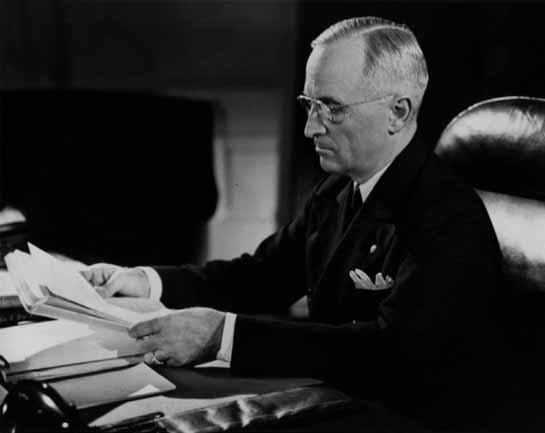
On October 5, 1947, Harry Truman made the first televised presidential address from the White House. In it, he asked Americans to reduce their use of grain in order to help feed starving people overseas.

At the time of his “Food Conservation Speech,” Europe was still recovering from the devastation of World War II and suffering from widespread famine. Truman asked farmers to reduce their use of grain and asked the public to avoid meat on Mondays, eggs and poultry on Thursdays, and to "save a slice of bread each day."

Within days, restaurants all over the country had pledged their support while the New York Times invited readers to write in for a free pamphlet of meatless recipes, including a “canned salmon bake topped with crushed potato chips.” Truman, for his part, lunched on a “symbolic cheese soufflĂ©.”

Tuna Noodle Casserole was another popular "Meatless Monday" dish. If you'd like to whip up a batch, here is a quick and easy, no-nonsense recipe that has been adapted from Bess Truman’s handwritten recipe which is on file at the Harry S. Truman Presidential Library in Independence, Missouri.

12 ounces elbow macaroni
1 can white albacore tuna, drained
1 can cream of celery soup
1/3 cup milk
¾ cup cheddar cheese
½ cup bread crumbs
2 tablespoons butter
Salt and pepper to taste

Preheat oven to 350°F. Grease a 2 ½ to 3-quart casserole dish.

In a medium saucepan, cook the noodles until tender, about 10-12 minutes. Remove and drain well. In a medium bowl, combine the noodles, tuna, soup, and milk. Pour mixture into the prepared baking dish.

Melt butter in a small saucepan over medium heat. Mix together bread crumbs and butter in a small bowl, then sprinkle bread crumb mixture and cheese over the top. Bake for about 25 minutes, or until the bread crumbs are slightly browned. Serve warm and enjoy!

Thanks for stopping by THE HISTORY CHEF! And for a flash sale today for my book click here!

Saturday, May 15, 2010

Andrew Johnson Southern Hush Puppies

Hush puppies are usually made by deep frying cornbread batter in grease or lard. Although no one knows who came up with this fanciful name, some food historians say that it may have been coined during the years of scarcity following the Civil War, when cooks would toss scraps of fried batter to their hungry, yelping dogs, saying, “Hush, puppies!”

Popular in Johnson’s native state of Tennessee throughout the nineteenth century, these delectably greasy little treats were often served with fish or shellfish. Hush puppies and fried catfish is another particularly classic southern combination.

Special equipment: a deep-fry thermometer

1 cup yellow cornmeal
½ cup all-purpose flour
1 teaspoon sugar
2 teaspoons baking powder
½ teaspoon coarse salt
1 large egg
¾ cup buttermilk
Canola oil for frying (about 5-6 cups)

In a medium bowl, mix together cornmeal, flour, sugar, baking powder, and salt. In a small bowl, whisk together egg and buttermilk, then add to cornmeal mixture and stir until well combined.

Fill a large, deep skillet with 2 to 3 inches of oil. Heat oil until it reaches 320°F on a deep-fry thermometer. Working in batches of 6, drop batter, 1 tablespoonful at a time, into the oil and fry until the hush puppies rise to the surface and are golden brown, about 3 minutes.

Transfer with a slotted spoon to a paper-towel-lined plate. Allow oil to return to 320°F between batches. Serve immediately.

Thursday, March 25, 2010

Lady Bird Johnson's Home Made Barbecue Sauce

The food for most of Lyndon Johnson’s barbecues was prepared by a chef named Walter Jetton, who owned a popular catering business in Fort Worth, Texas, a few hours south of the LBJ Ranch. Calling himself “The Barbeque King,” Jetton dressed in a Stetson hat, creased white shirt and black string tie, and often had a whole headless cow rotating on a spit beside a smoldering log fire.

This original recipe for “Mrs. Lyndon Johnson’s Barbecue Sauce” was reprinted in numerous newspapers and magazines throughout the 1960s.

¼ cup butter
¼ cup vinegar
¼ cup ketchup
¼ cup fresh lemon juice
¼ cup Worcestershire sauce
Salt, pepper, red pepper flakes, and Tabasco to taste

Melt butter in a medium sauce pan over medium-high heat. Add other ingredients and bring to a boil. Pour over meat to be barbecued. Yields 1 ½ cups.

Wednesday, March 24, 2010

Zachary Taylor Hominy and Chicken Soup

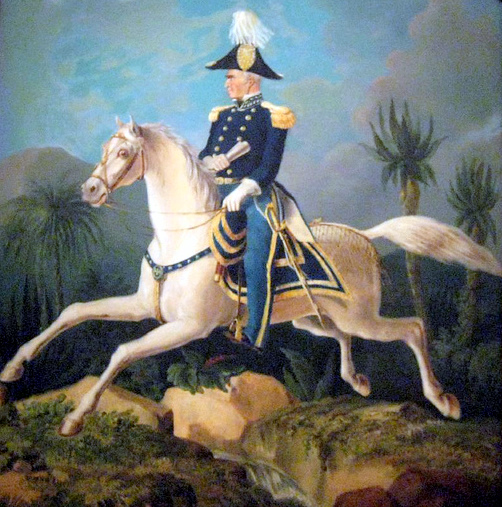
Zachary Taylor and his beloved war horse "Old Whitey" supposedly shared a love of hominy. Not wanting to request special treatment, General Taylor would let his horse roam around and "sniff out the freshest corn from among the many musty sacks of rations." After Old Whitey had chewed a hole through the sweetest-smelling sack, Taylor would reportedly ask the cooks to quickly whip up a batch since the sack had already been gnawed open! This quick and easy recipe is adapted from epicurious.com.

3 tablespoons olive oil
3 bunches green onions, sliced
4 teaspoons ground cumin
2 1/2 teaspoons paprika
8 cups chicken broth
1 (14 1/2-ounce) can tomatoes in juice
1 purchased roast chicken, meat shredded, skin and bones discarded
3 (15-ounce) cans golden or white hominy in juice
1 cup chopped fresh cilantro
salt and pepper to taste

Heat oil in heavy large pot over medium-high heat. Add green onions, cumin, and paprika and sauté for 5 minutes.

Add broth, tomatoes with juice, and chicken. Puree hominy with juice in processor or blender. Mix into soup and bring to boil. Reduce heat and simmer for 15 minutes. Stir in cilantro. Serve warm and enjoy!

Tuesday, March 23, 2010

George Washington Garlic Mashed Potatoes

So did you know that by the time he became president, George Washington had lost almost all of his teeth? Because of constant pain constant from ill-fitting dentures, George had to eat soft foods (like mashed potatoes and hoe cakes) throughout most of his adult life.

Contrary to popular belief, George did not wear a set of wooden dentures. Instead, a talented New York dentist named John Greenwood handcrafted his dentures from elephant ivory, hippopotamus tusks and parts of horse and donkey teeth. This recipe for roasted garlic mashed potatoes, taken from Martha Washington's Booke of Cookery, has been adapted for modern cooks.

4 large russet potatoes, peeled and quartered
2 garlic cloves, peeled
2 teaspoons coarse salt
1 stick unsalted butter
¾ cup heavy cream

In a large pot of cold water, bring the potatoes and garlic to a boil. Salt the water and cook until the potatoes are tender, about 20 minutes. Drain and return the potatoes to the pot. Mash over low heat with the butter, cream and 2 teaspoons salt. Serve warm and enjoy!

Tuesday, November 3, 2009

James Monroe Virginia Spoon Bread

While serving in the Continental Army, James Monroe crossed the Delaware with George Washington, fought at the Battle of Trenton, and endured the harsh winter at Valley Forge.

Among the soldiers at Valley Forge were Benedict Arnold, Alexander Hamilton, the Marquis de Lafayette, and the future Supreme Court Chief Justice John Marshall. Another soldier encamped there was Dr. Albigence Waldo, a surgeon from Connecticut, whose diary provides perhaps the best account we have of conditions that winter at Valley Forge:

Dec. 22nd., Lay excessive Cold & uncomfortable last Night, my eyes are started out from their Orbits like a Rabbit's eyes, occation'd by a great Cold, and Smoke. What have you got for Breakfast, Lads ? " Fire Cake & Water, Sir." I am ashamed to say it, but I am tempted to steal Fowls if I could find them, or even a whole Hog, for I feel as if I could eat one…But why do I talk of hunger & hard usage, when so many in the World have not even fire Cake & Water to eat...

After the war, Monroe returned to Virginia and studied law under Thomas Jefferson. He then served as governor of Virginia and was later appointed U.S. Minister to France. Like Jefferson, Monroe developed a fondness for fancy French cuisine but retained a taste for Virginia Spoon Bread and other simple foods of his youth.

Because it has a consistency similar to pudding, Spoon Bread is usually served straight from the baking pan with a large spoon. If you would like to make some, here is a simple recipe to try:

¾ cup cornmeal
1 teaspoon salt
1 cup water
3 tablespoons melted butter
2 eggs
1 cup milk
2 teaspoons baking powder

Combine cornmeal and salt in a mixing bowl. Gradually add boiling water. Stir in melted butter.

In a small mixing bowl, beat eggs and milk. Add egg and milk mixture to the cornmeal mixture. Add baking powder and mix.

Pour into a greased baking dish. Bake at 350° for about 30 minutes, until set and lightly browned. Serve straight from the baking dish with a spoon and enjoy!

By the way, did you know that in Emmanuel Luetz’s painting “Washington Crossing the Delaware” James Monroe is depicted directly behind Washington, holding an American flag up against the storm? If you would like to see this painting (it measures 12 feet high and 21 feet long), it is on display at the Metropolitan Museum of Art in New York City.